
Via Lemovicensis: Improvements
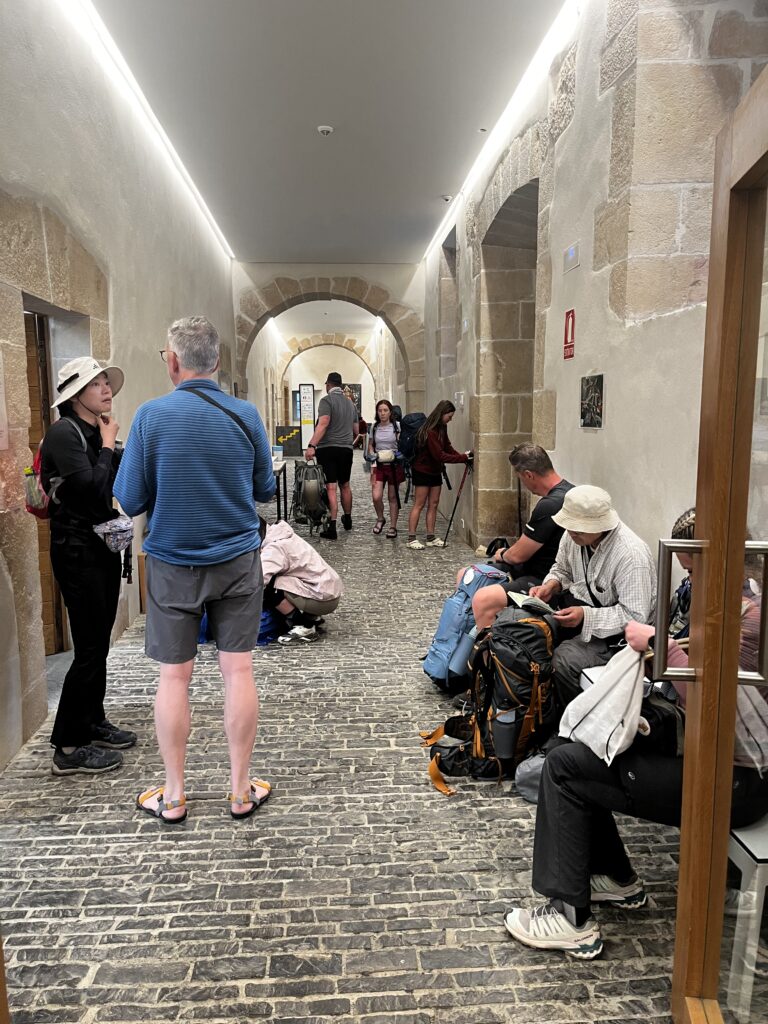
Lights on at 6 AM in the Roncesvalles albergue. There are hundreds of pilgrims here.
Herve and I got breakfast in the hotel next door. It started at 7 AM, and we were out of the door by about 7:45. We were definitely not leading the pack today.
The weather was cool but that would not last.
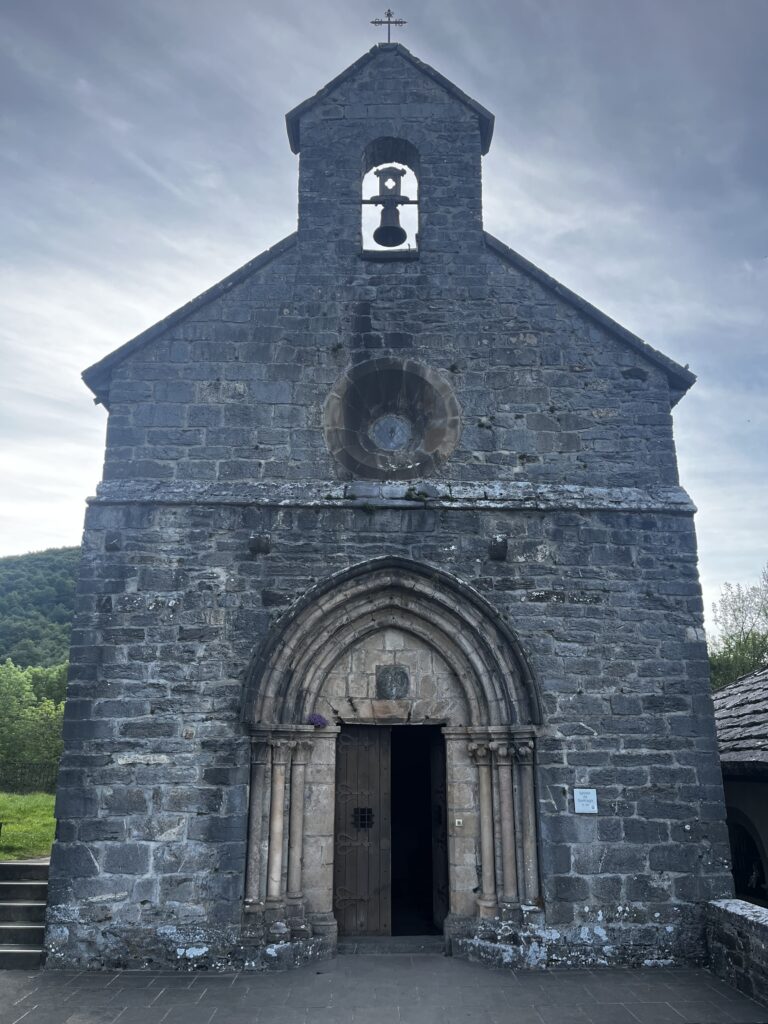
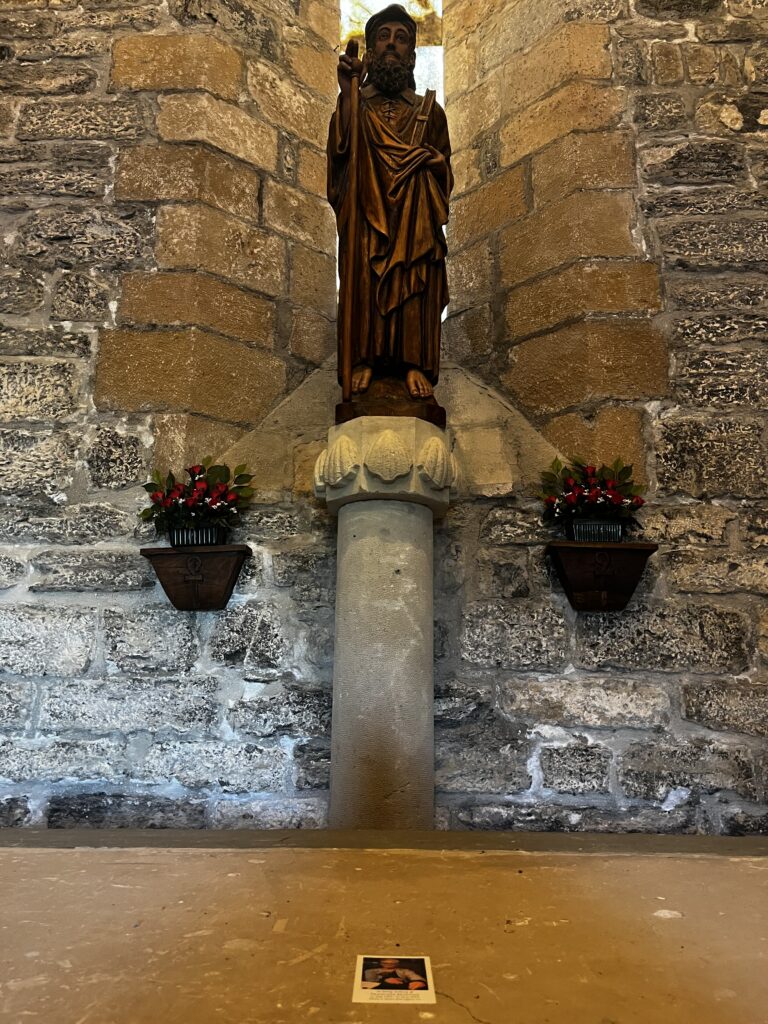
Before leaving, I visited the little 14th century Chapel of Santiago. I prayed for the intentions of the Camino and its success, as well as for Francine. I left one of her cards on the altar before I left.
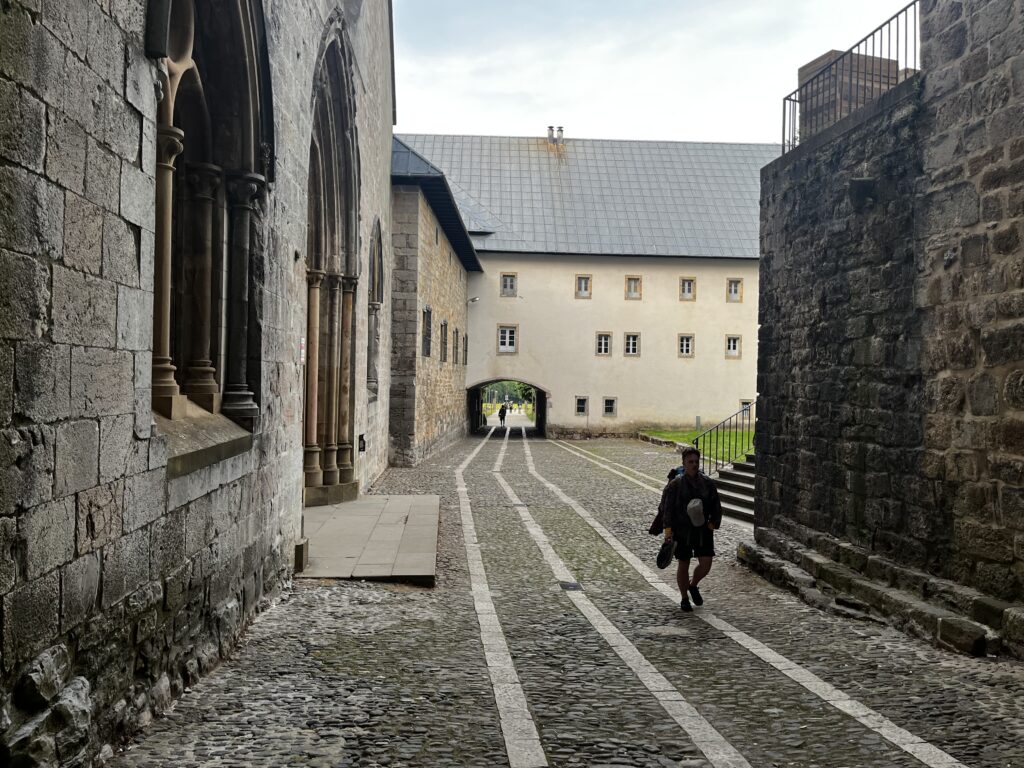
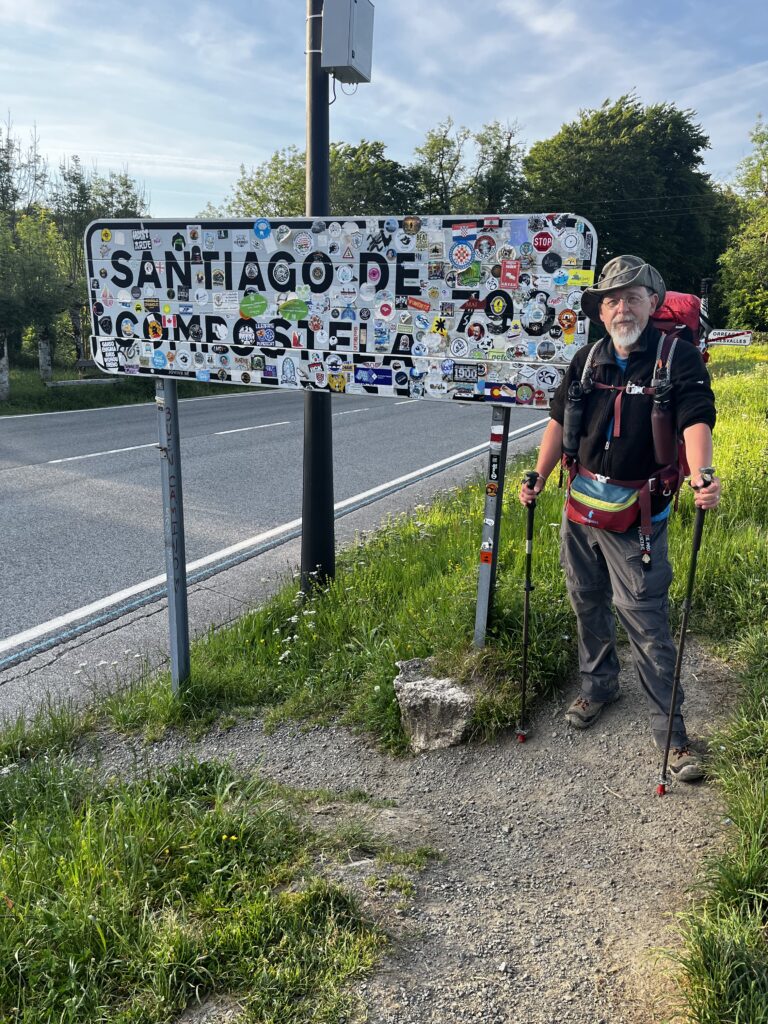
Herve and I took the usual photos going out of town. Silly but fun.
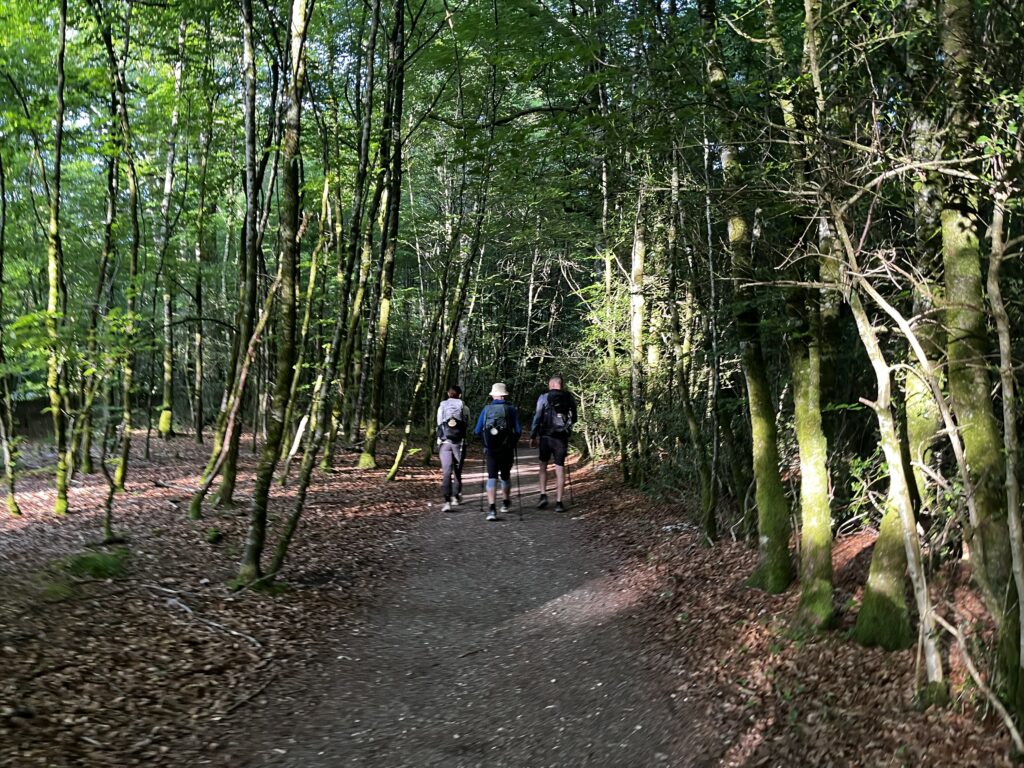
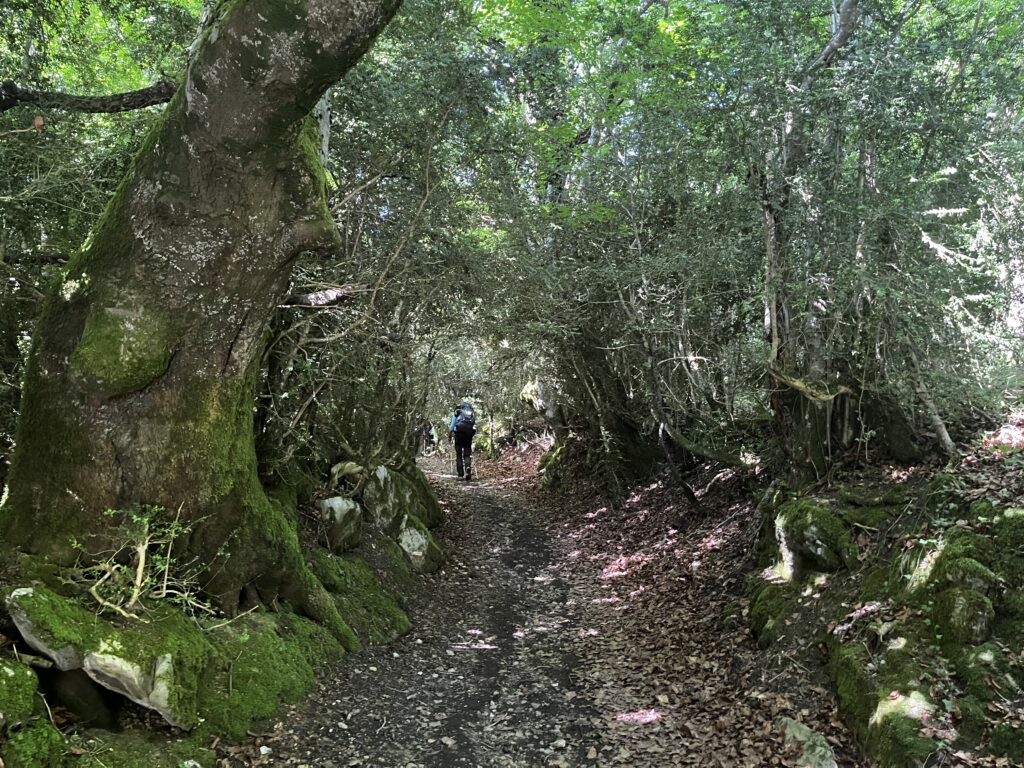
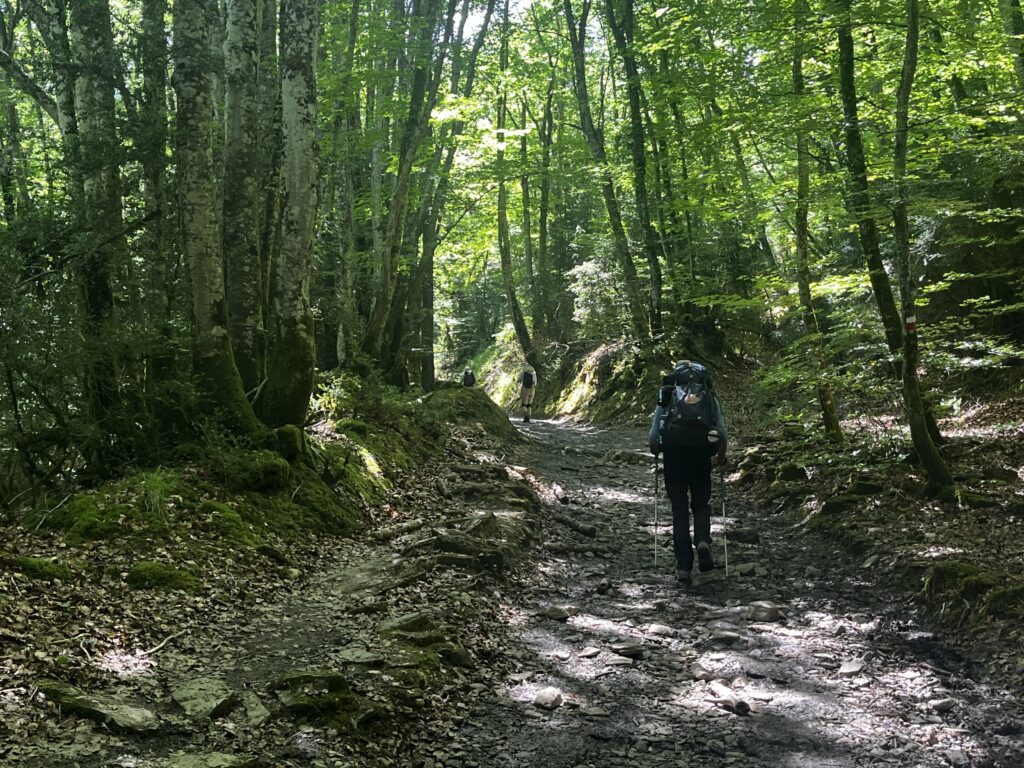
Then we were cruising on the forest path out of Roncesvalles, through the “haunted” forest. The trees were close and dark, even though it was after 8 AM by now.
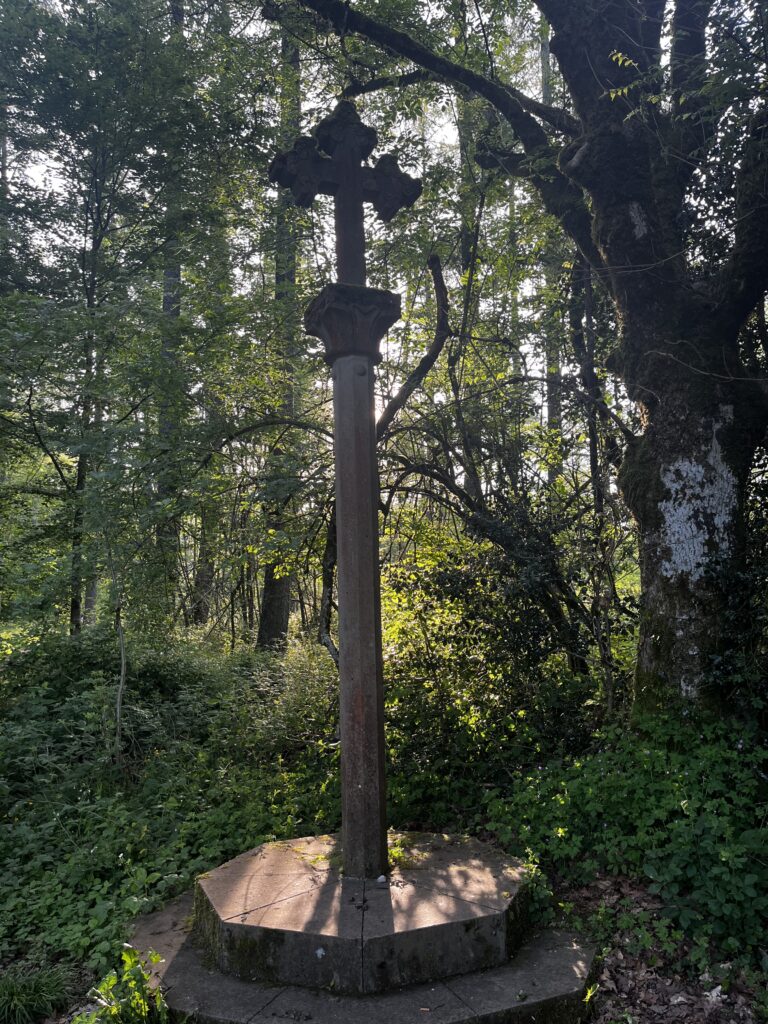
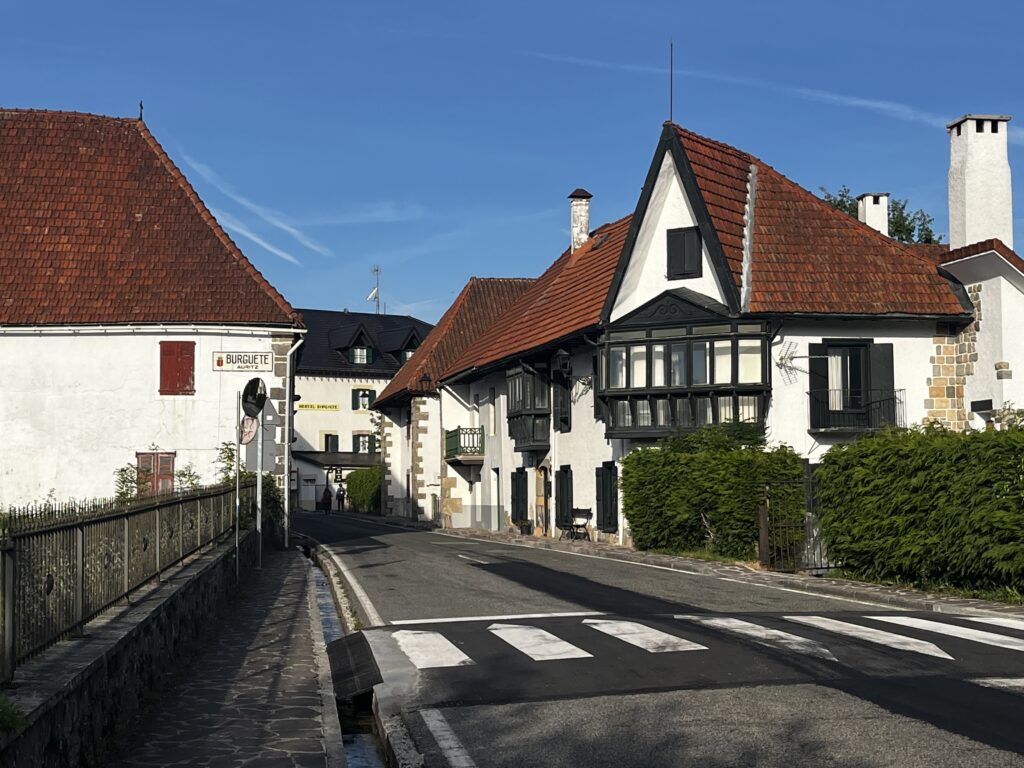
At about 8:15, we passed the Cross of Roland, one of several sites that claim to be the place where the great Frankish champion died. From here it was just about five minutes into the village of Burguete. And normally this means second breakfast!
Sadly, the place where I’ve had second breakfast in this village on three separate Caminos, Bar El Fronton, was closed today. I was more sad at this than I probably should’ve been.
The only constant of the Camino is change. I hope the place is just closed for the day or temporarily. It’s practically an institution, and I would hate to see it go.
The church, of course, was locked.
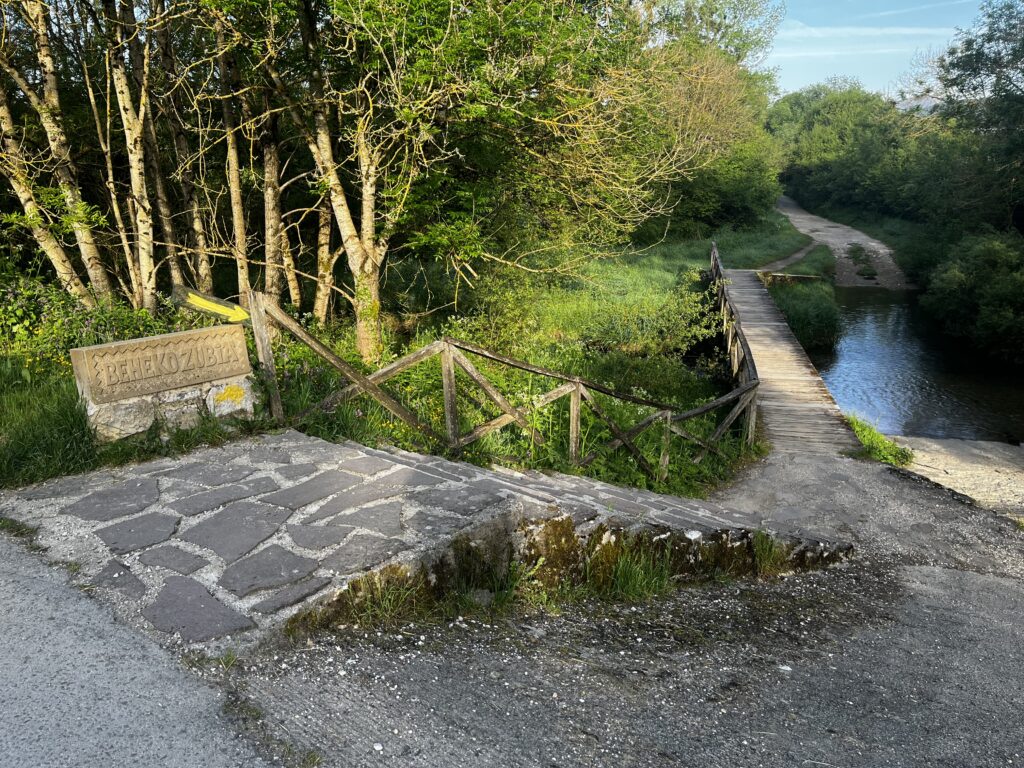
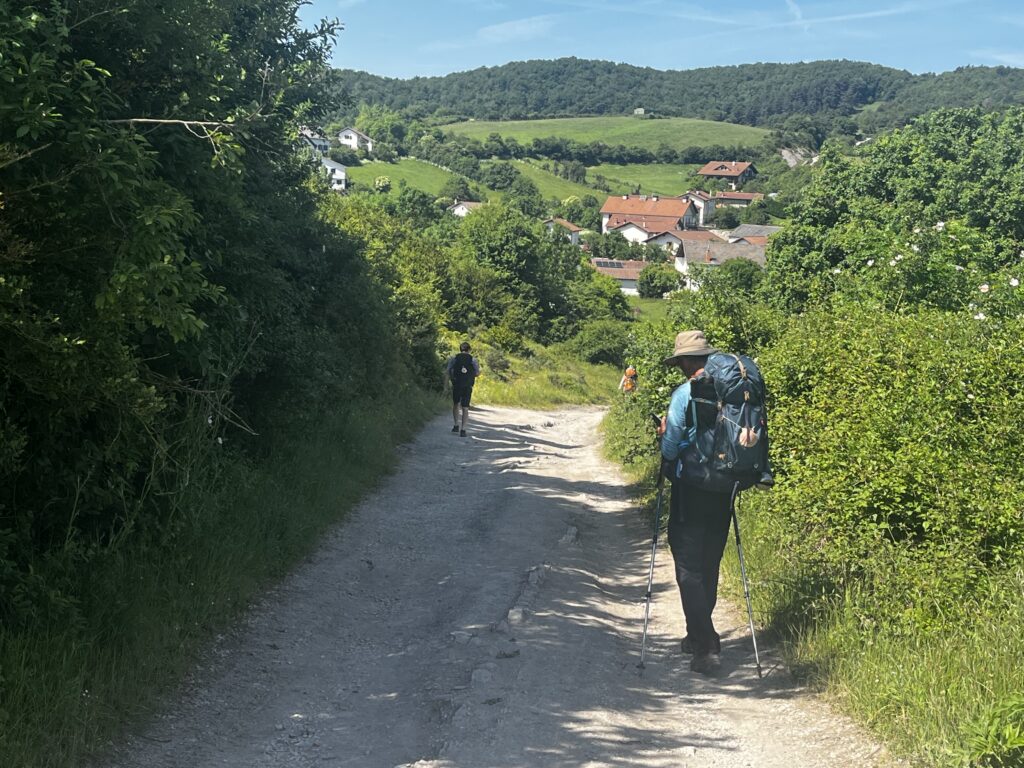
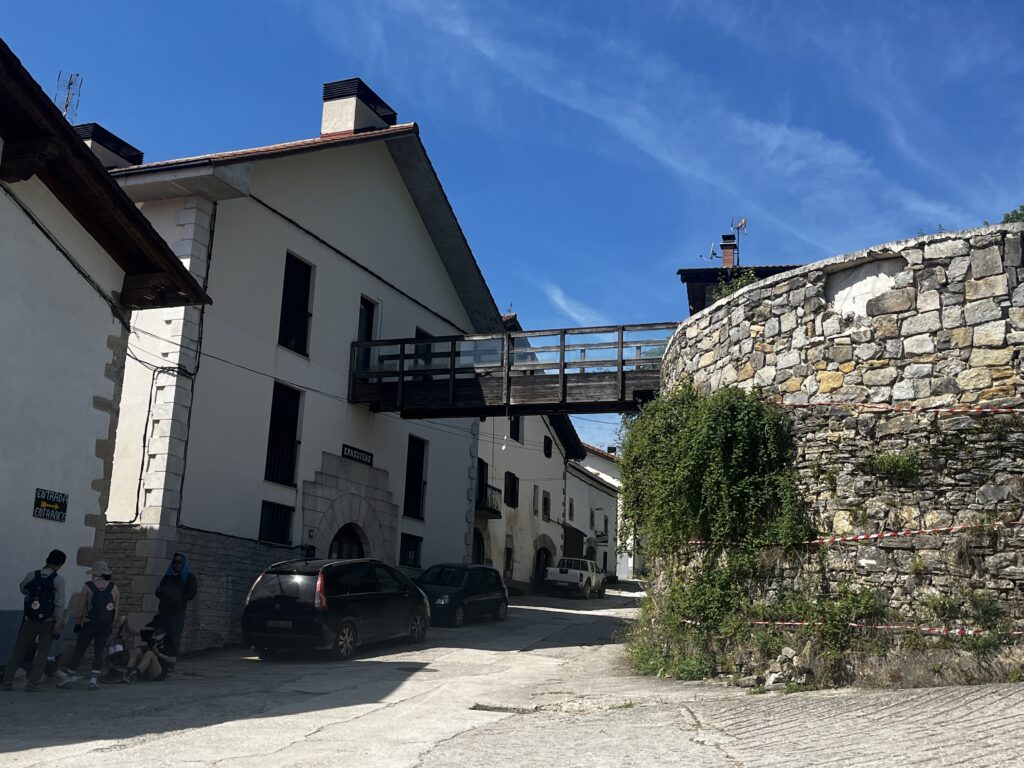
On the way out of the village, the Camino turns through a neighborhood of farm houses before crossing over the river.
After this, it was gravel and asphalt, relatively flat though clearly not well maintained.
At about 8:35 AM, I took off my fleece at a cattle rate. While we passed some more farm buildings, the Camino was concrete, but this took us to an asphalt road through farms and hills and woods. The Pyrenees loomed to our right.
Within just a kilometer or so, the road disintegrated first to concrete and stone, and then to dirt and stone.
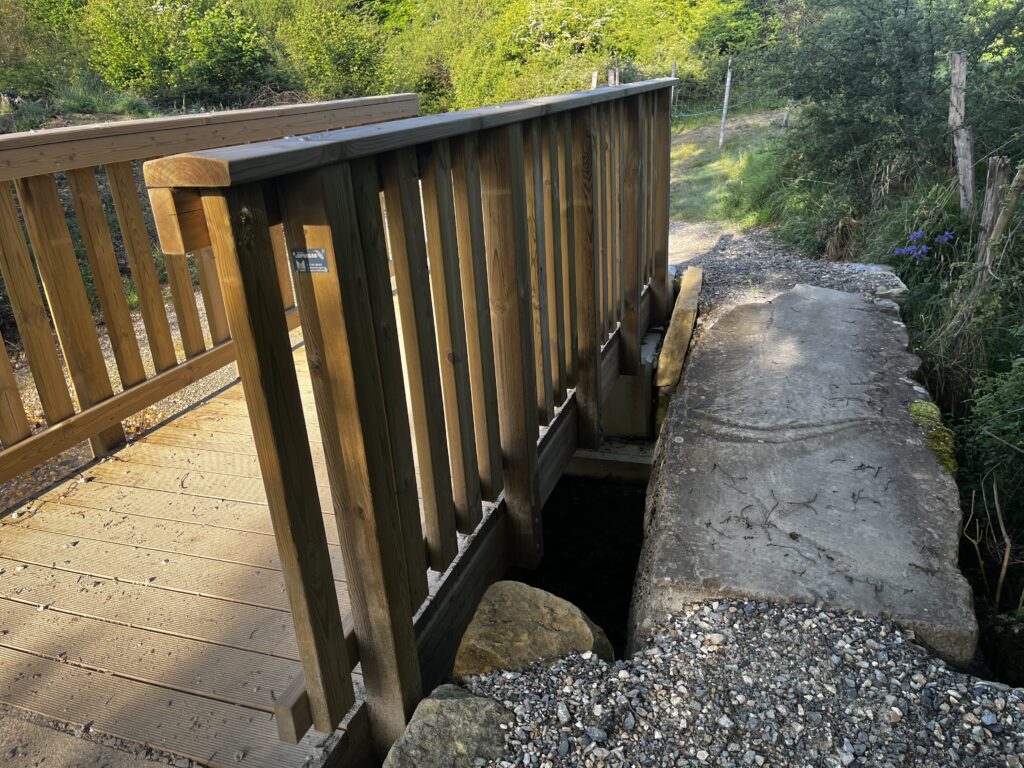
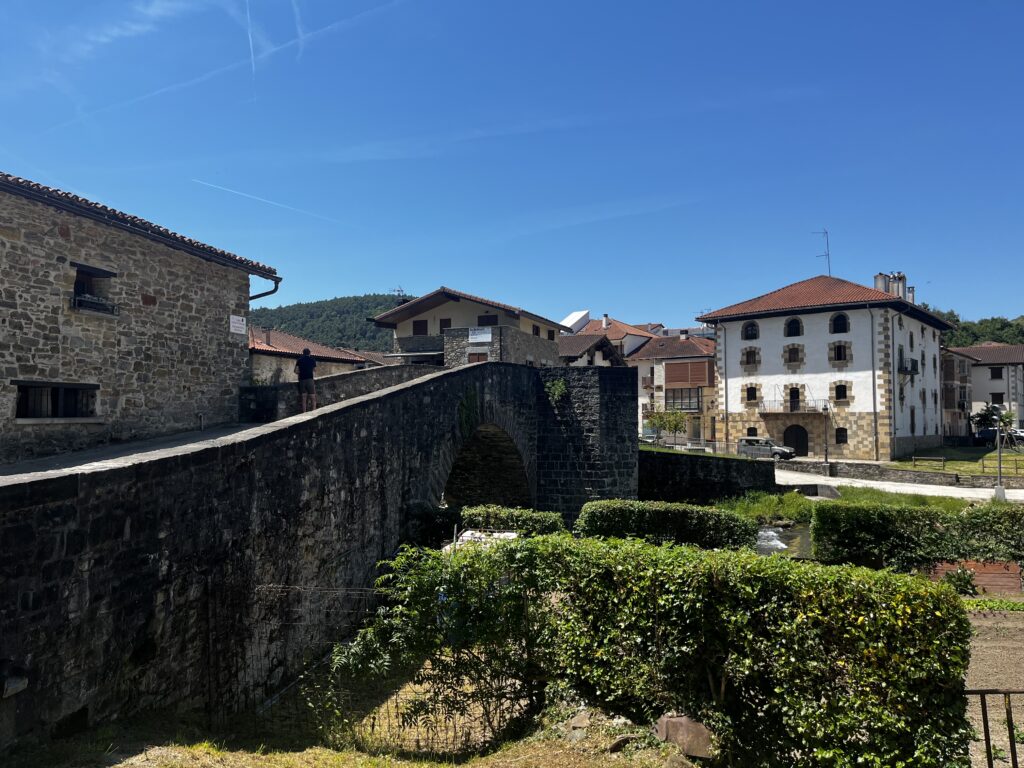
At about 8:50 AM, we came to one of the iconic parts of this day – a stone slab bridge. Sadly, in their attempt to “improve” the Camino, a wooden bridge has been built beside it.
I understand – that I’m all for – making the Camino safer. But this doesn’t make it safer, it just takes away some of the character of it.
Fortunately, a second stone slab bridge right afterwards is still unimproved.
The route now was gravel over dirt, in and out of the forest. As we crossed another stream, Herve said something that really resonated with me. This place is like something out of a fairytale. And it is.
At 9:05 AM, the Camino joined an asphalt road through the woods.
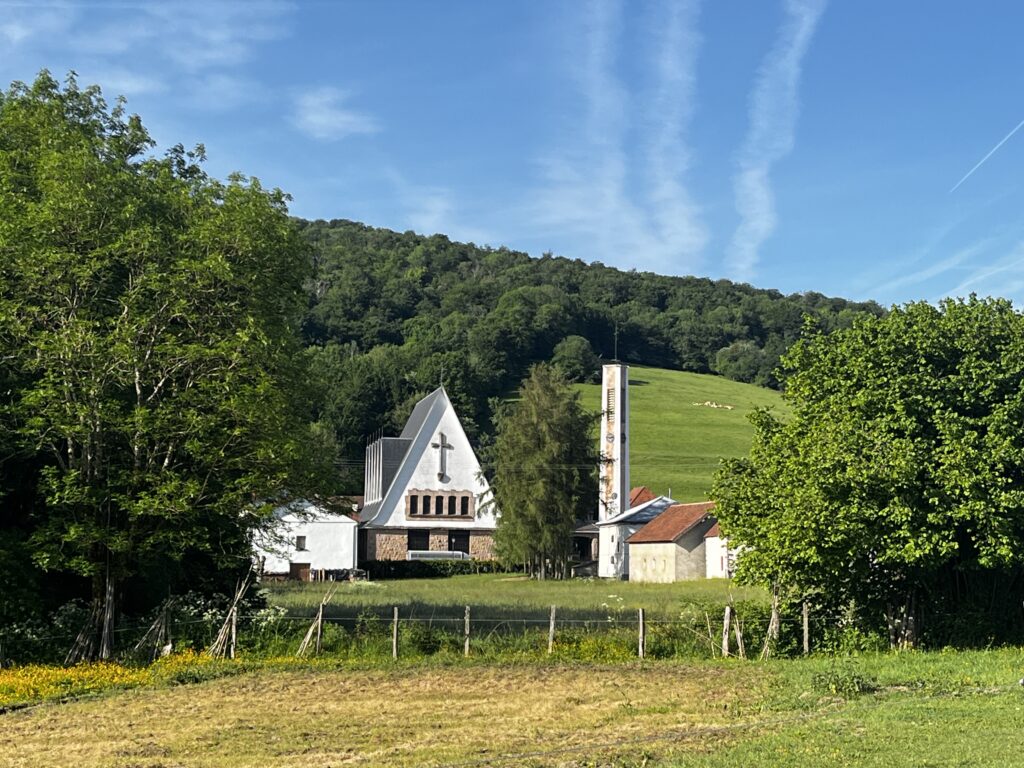
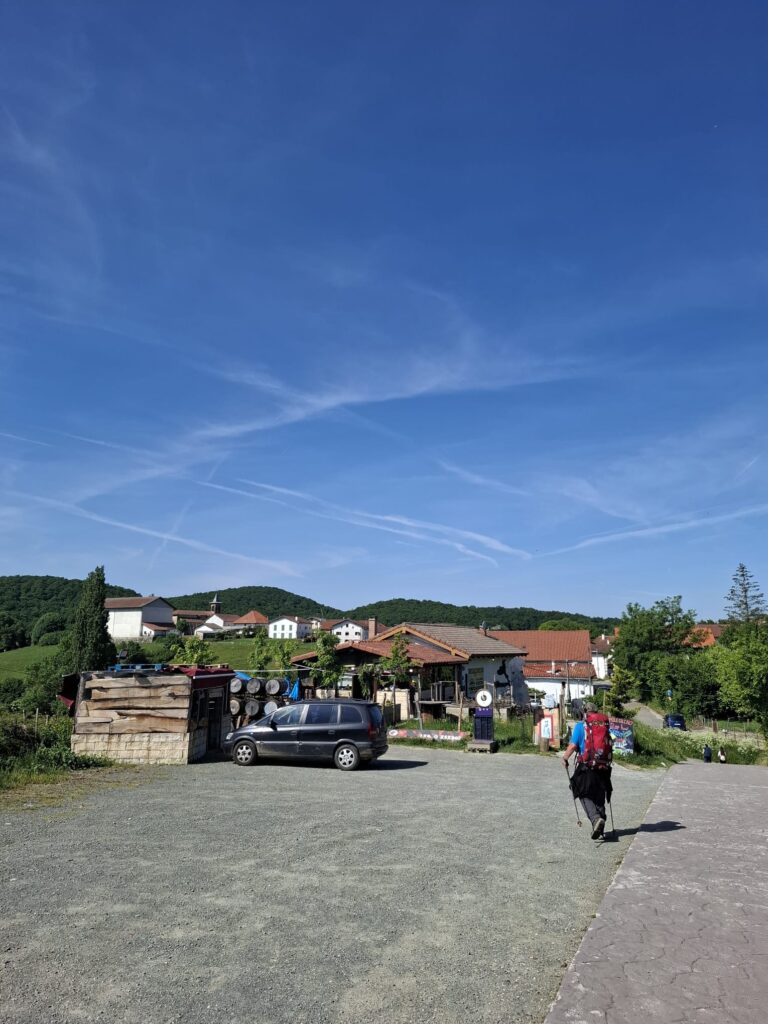
Just about 10 minutes later, we entered the village of Espinal, with its traditional Basque architecture and its very modern church.
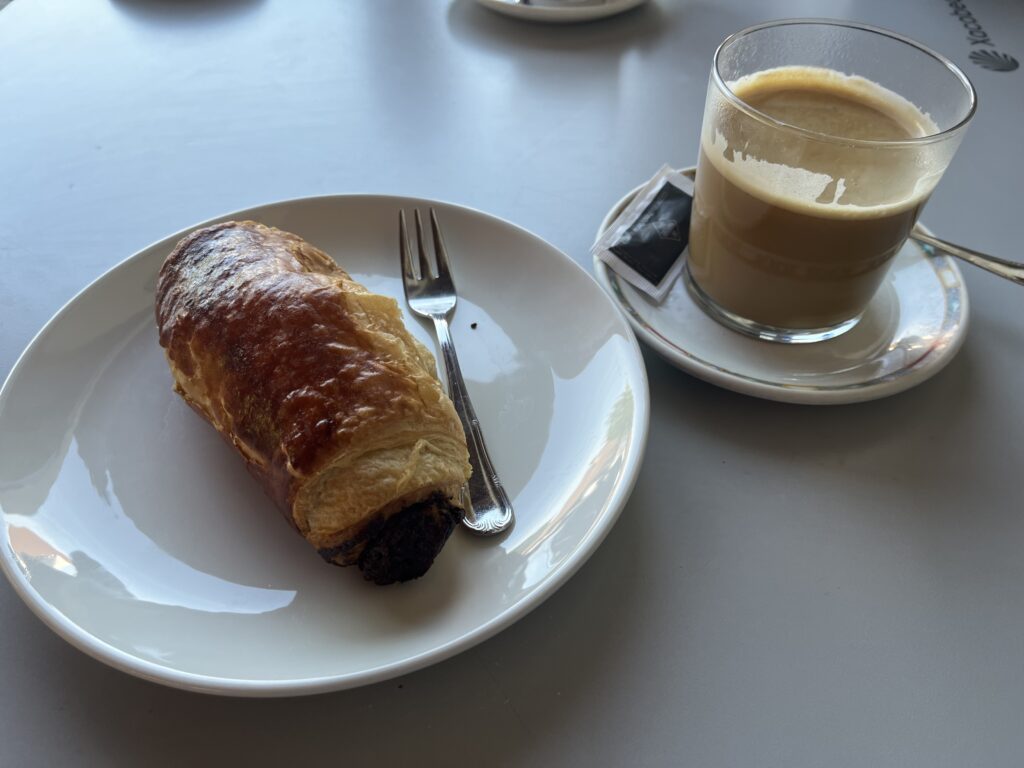
Here, we stopped at a café and I had my first proper Camino breakfast: café con leche y napolitano. This has been my traditional breakfast here since 2013. Breakfast of champions!
Amy and then Katie dropped by and ate with us. We were on the road again by 9:50 AM.
The church, of course, was locked.
The way out of the village was asphalt winding uphill through the open countryside. Soon enough, the path was gravel, and we were once again in the woods.
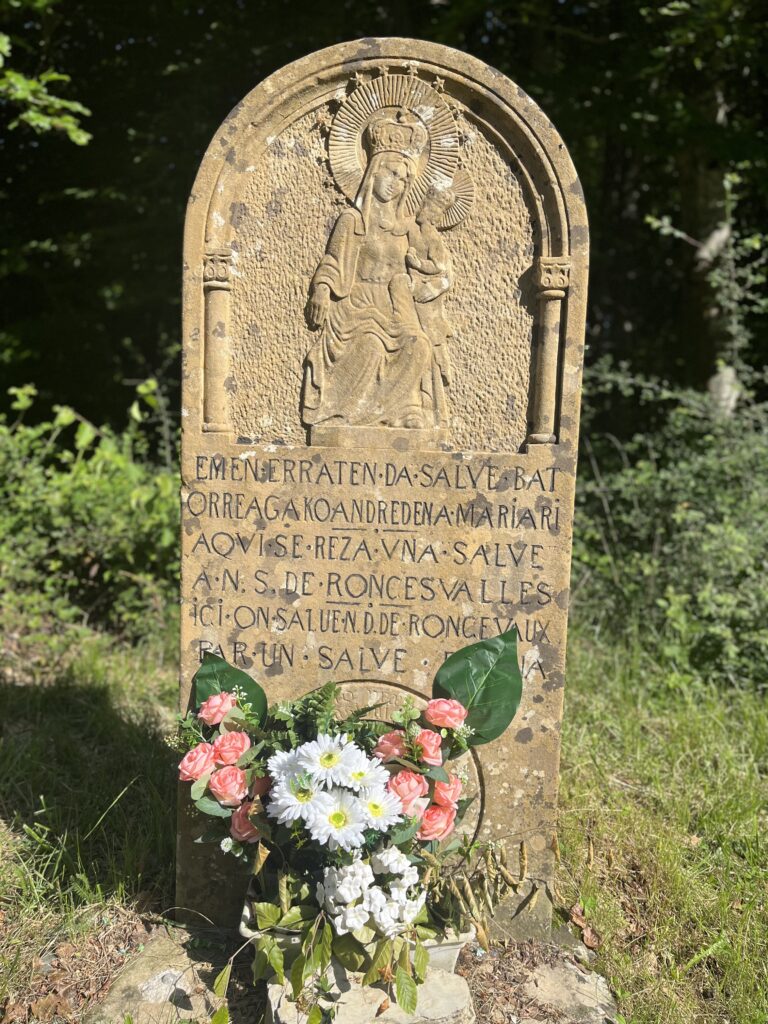
At about 10:15, the Camino crossed a busy road. Here was a small shrine to Our Lady of Roncesvalles that I remember with fondness from previous Caminos.
There were more loose stones scattered across the path now, and periodically we passed through the cattle gate.
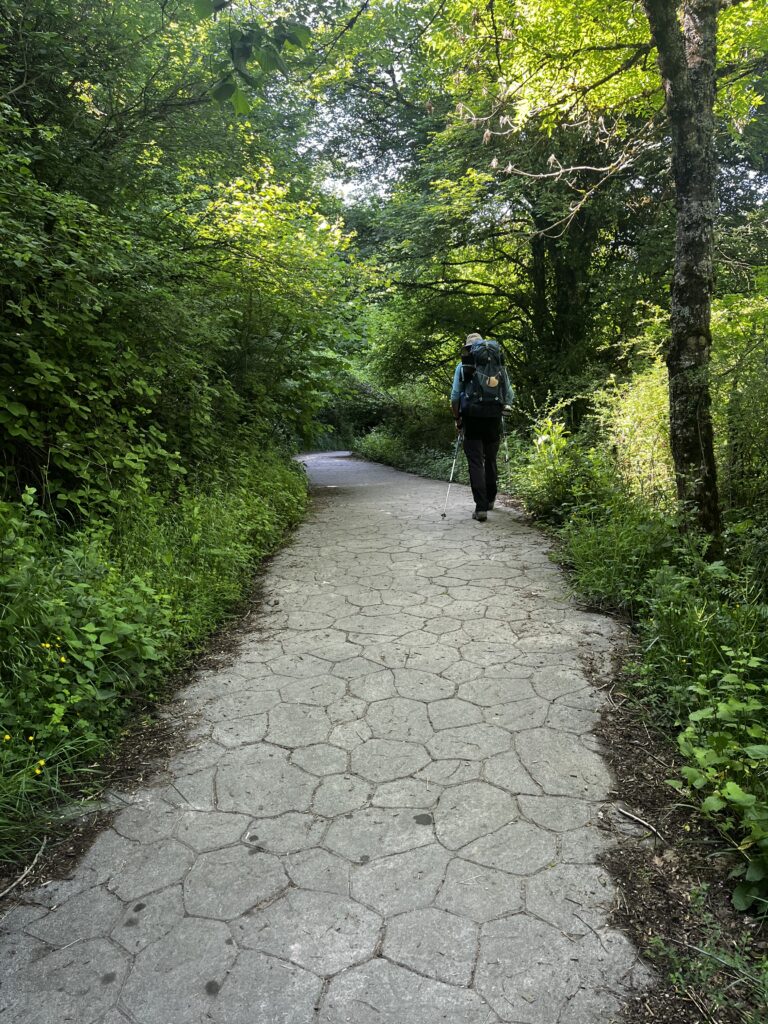
Sometime before 10:30, we came to a huge section that was just… paved. In my memory, this was a rough trail.
Then it was back to a soft dirt trail through the woods – which somehow were now closer and darker than before. But then it was another long paved section, downhill.
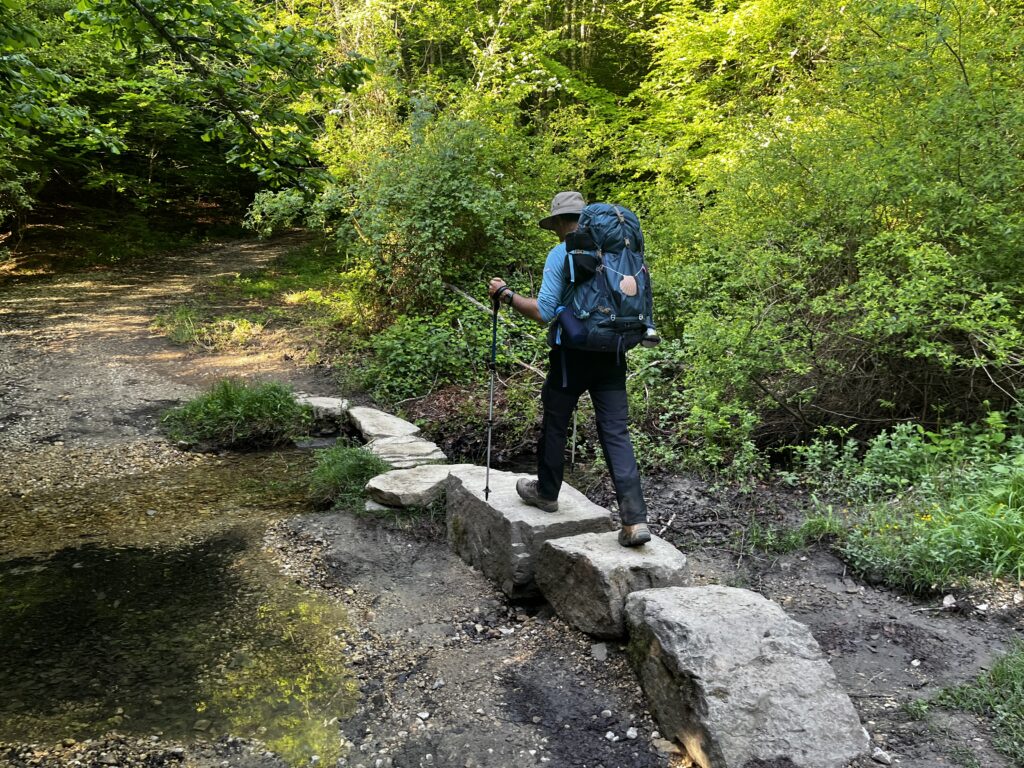
At about 10:40, we crossed over a stream on concrete blocks. I remember this bridge from years past, and I don’t recall ever experiencing a traffic jam here before. We literally had to wait in a queue.
The number of people here is just bonkers. Maybe it’s my rose-coloured memory, but I do not recall so many people here on previous Caminos, not by a longshot.
All of this stone paving must be awfully dangerous when the rains come.
At about 10:55, we arrived in the village of Bizkarreta. We stopped in the first bar for a Coca-Cola and the use of their facilities. We left at about 11:10.
The church, of course, was locked.
All morning, I’ve been trying to figure out if these paved sections were stone or concrete. There were a few damaged areas as we left the village, and I was able to confirm that it is in fact concrete cast to look like stone. And I can also confirm that it is very slippery when wet. There was a lot more of it today.
At 11:25, the Camino turned back into the forest on a trail of dirt and stone. Periodically, we would cross roads, some of them quite busy, but always, it was back to the forest trail.
At about 11:35, we spotted the hillside hamlet of Lintzoain. Through this area, the pathway widened into a gravel road and was much more in the open.
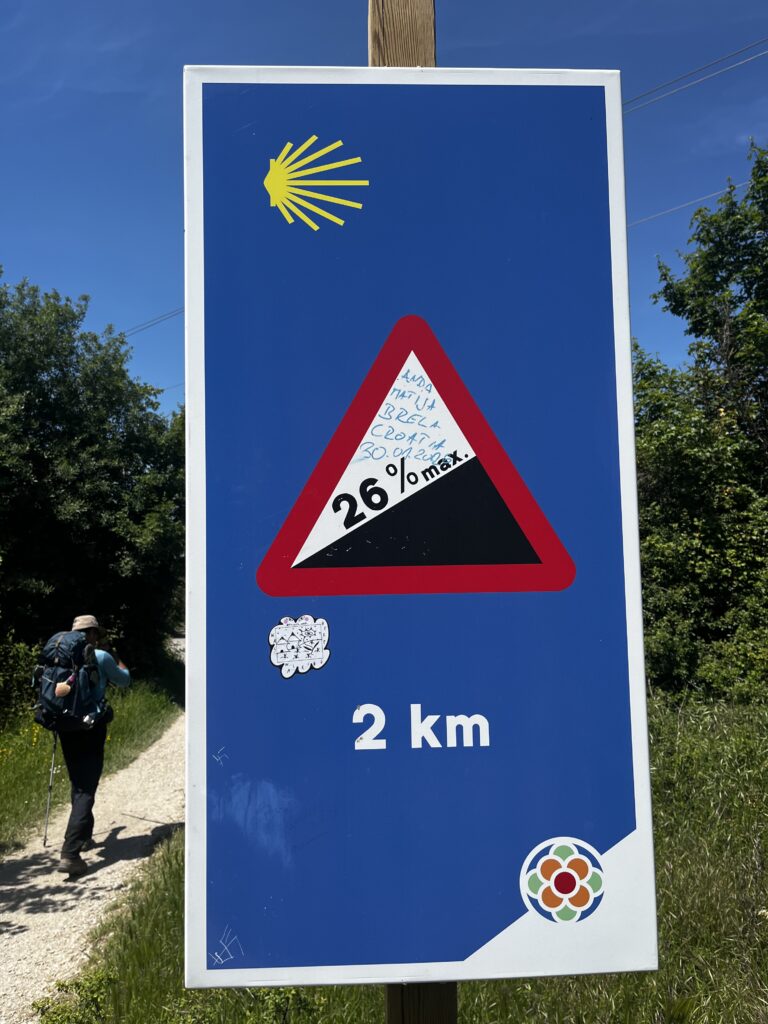
A short, but very steep, section of concrete absolutely wiped us out. We scuttled forward a hundred meters or so into the shade of the trees, and I drained one of my water bottles.
Then it was a wide dirt and gravel road through the open countryside to the sound of cowbells in the distance. then concrete. Then stones. Always uphill.
The heat was killing me, even in the shade. I think we are going to have to leave earlier tomorrow.
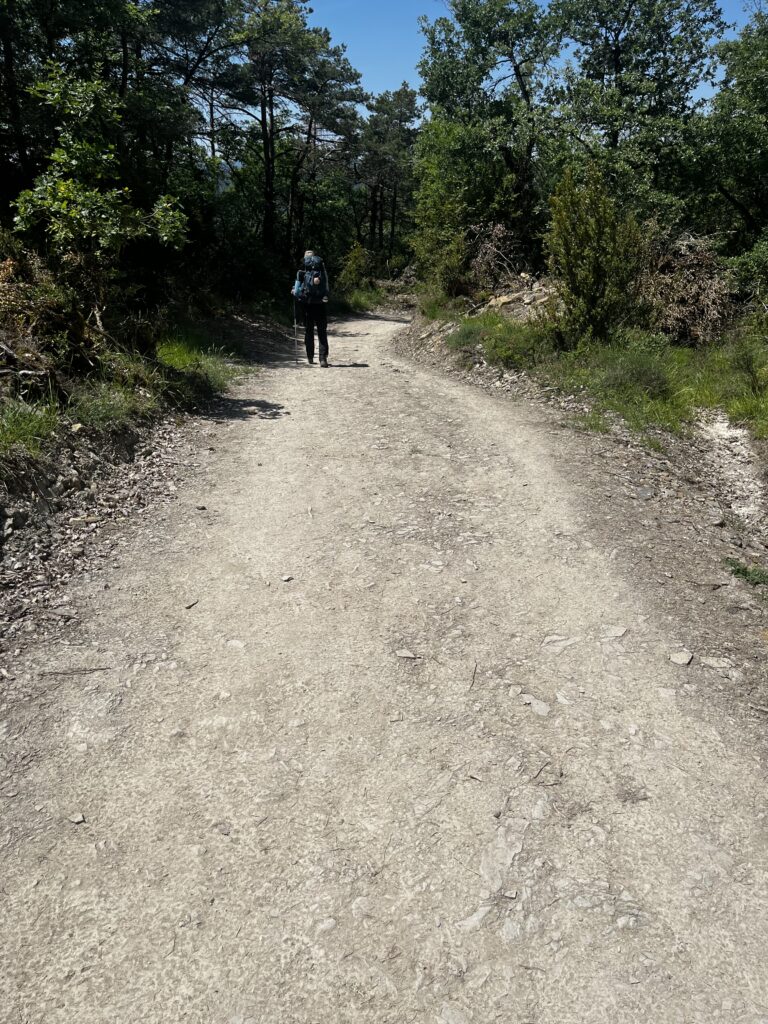
Finally, we returned to the forest, with its cool breezes. The trail was wide and smooth dirt, trending downhill, with some notable exceptions.
The trail varied as we went forward, sometimes dirt, sometimes bare stone, and sometimes gravel. We were mostly in the forest, but would occasionally come out into the full heat of the day.
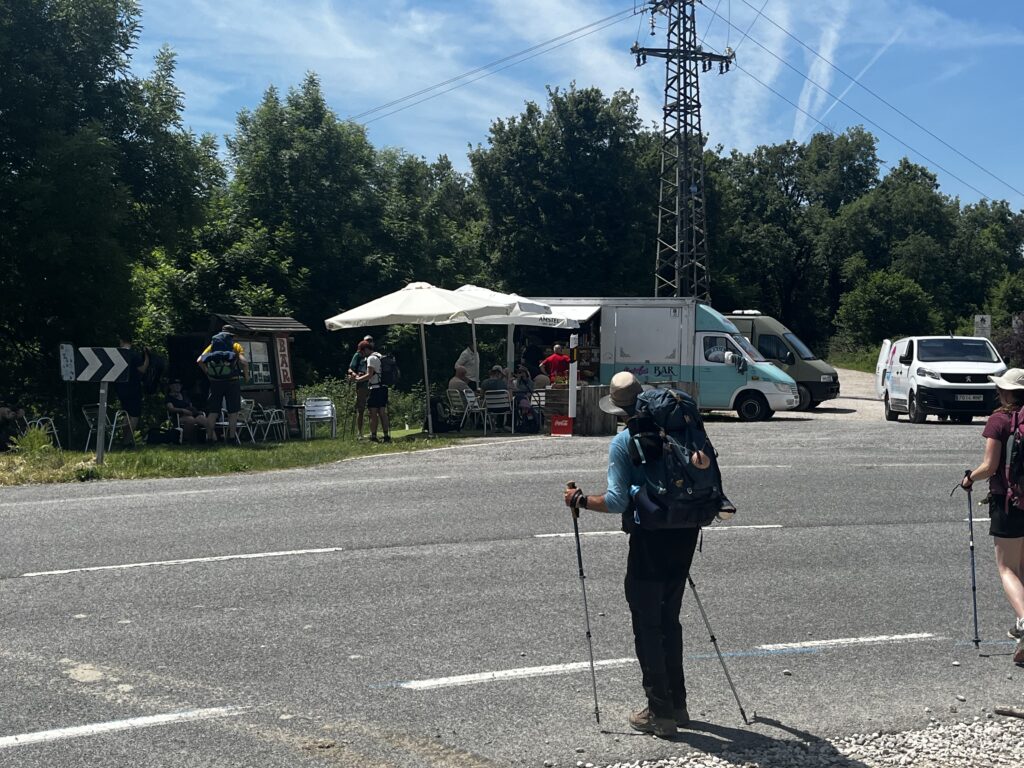
At about 12:45, at a road crossing, we stopped at a food truck for my first Kas Limón of this Camino.
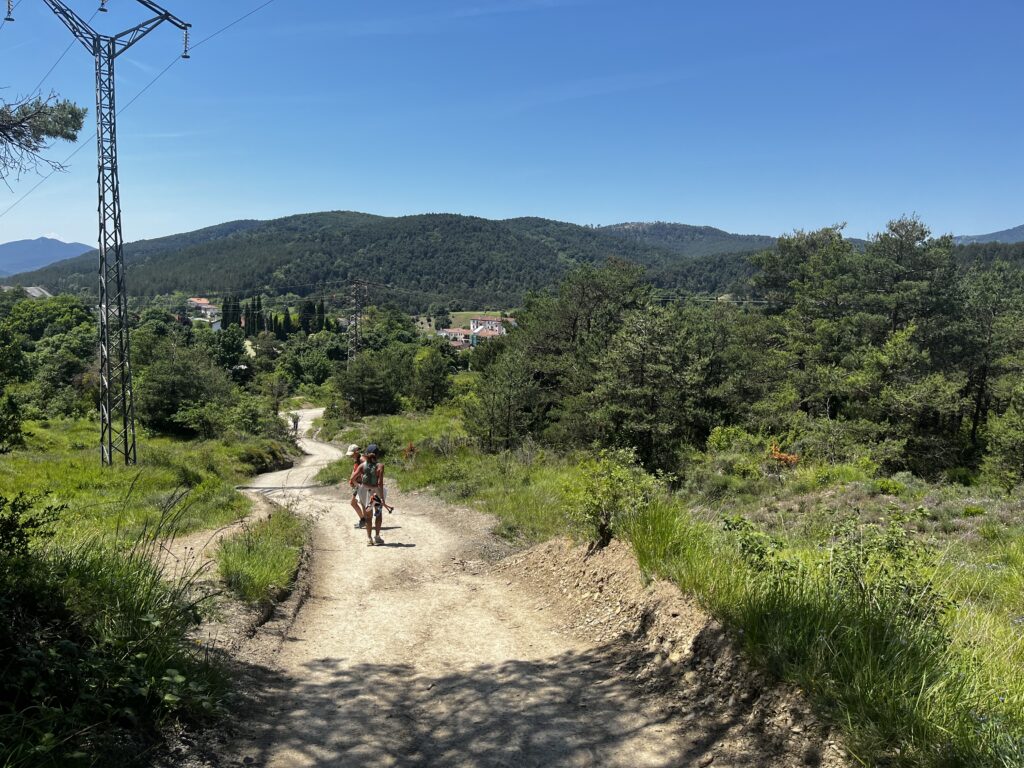
Then we began the descent into Zubiri. In years passed, this steep, rocky path was full of boulders, large and small, some stuck into the ground, some loose.
It was dangerous, particularly if you were careless or if it was raining. In 2016, Francine and I went down this route in the rain. It was slow, and there were times when we had to help each other through particularly tough bits of terrain. Forever after this, when one or the other would mention some new bit of tough terrain they had encountered, the other would inevitably reply, “but was it Zubiri tough?”
Anyway, a few years ago the Spanish government came in and ground down all the boulders. There are still some sections of loose rock, though they are easy enough to avoid, and of course the slope is still very steep in some places, but this is now more of a roadbed than a trail in any sense of the word.
I absolutely understand why they did it, but I think they may have gone a little overboard.
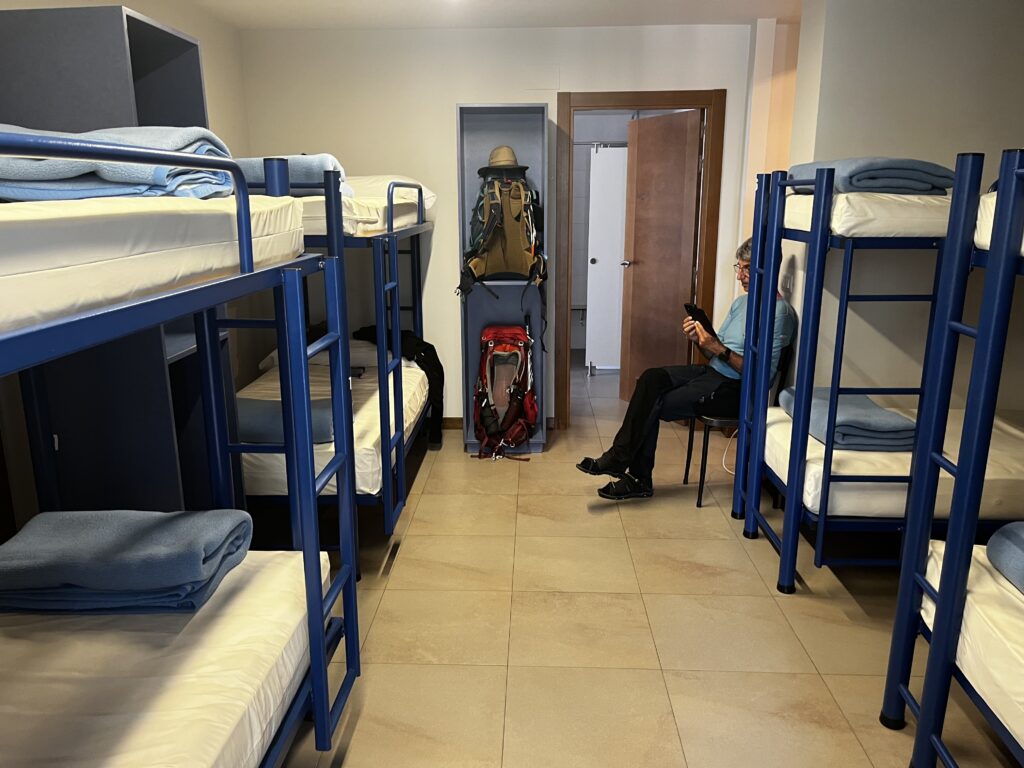
Herve and I crossed the bridge into Zubiri at exactly 2 PM. We secured beds in an albergue within ten minutes. It wasn’t my first choice of places, but it was very nice and literally around the corner from my first choice.
We are also sharing a room with Tom from Germany, who was my bunk mate last night in Roncesvalles, and John, who I met at Beilari in Saint-Jean.
First lunch, then showers, then laundry, then a look around the town.
The church was open!
The original village church was torn down in the 19th century, and this one, dedicated to San Esteban (Saint Stephen), was put up in its place. It’s a tiny, homey place, and the interior furnishings are cobbled together from a variety of Baroque and 19th- and 20th-century sources. It has a certain quirky charm and homeyness that, for me at least, makes it very conducive to prayer.
So I did. I prayed Vespers here a little early, as my opportunity to pray the hours in a church recently has been limited.
Dinner at the albergue was entirely too much food. And everybody ate everything.
Tomorrow to Pamplona, where today it was reportedly 40° C (104° F). Yikes.
Date: 22 May 2026
Place: Zubiri
Today started: Roncesvalles
Today’s Photos!
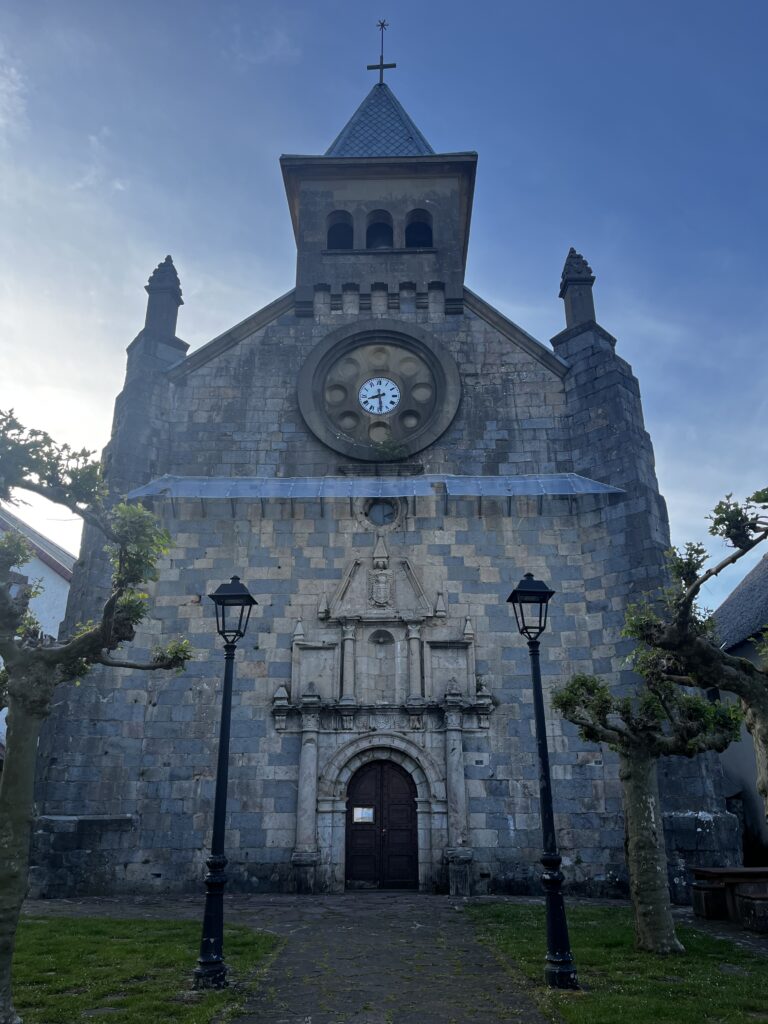
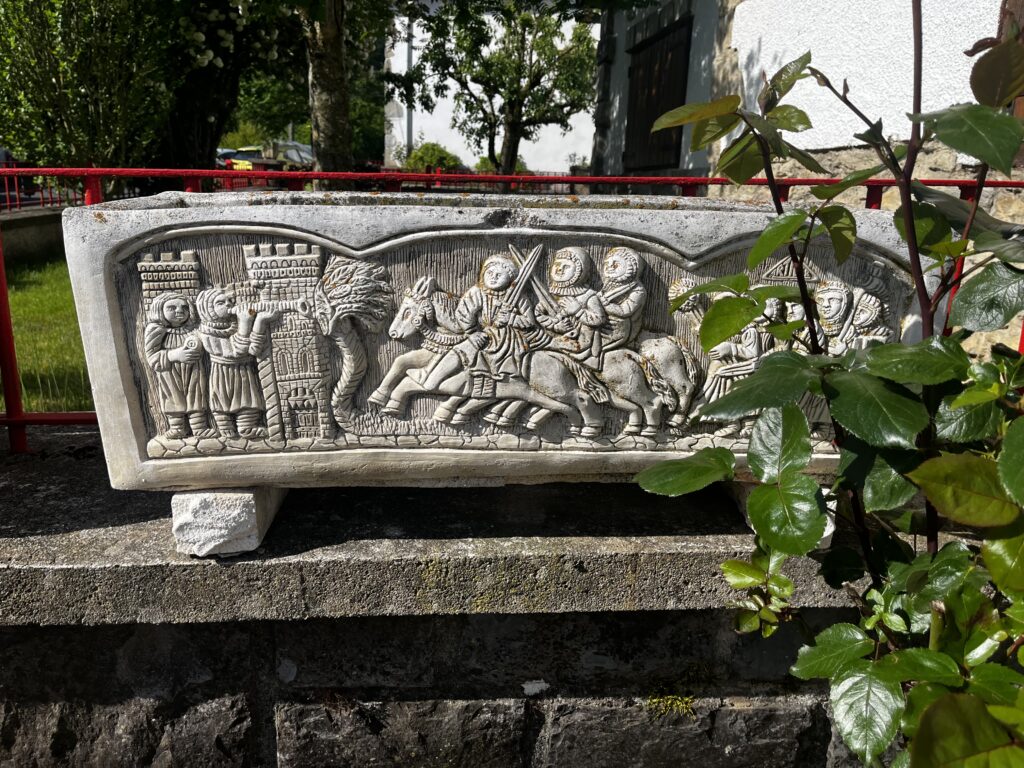
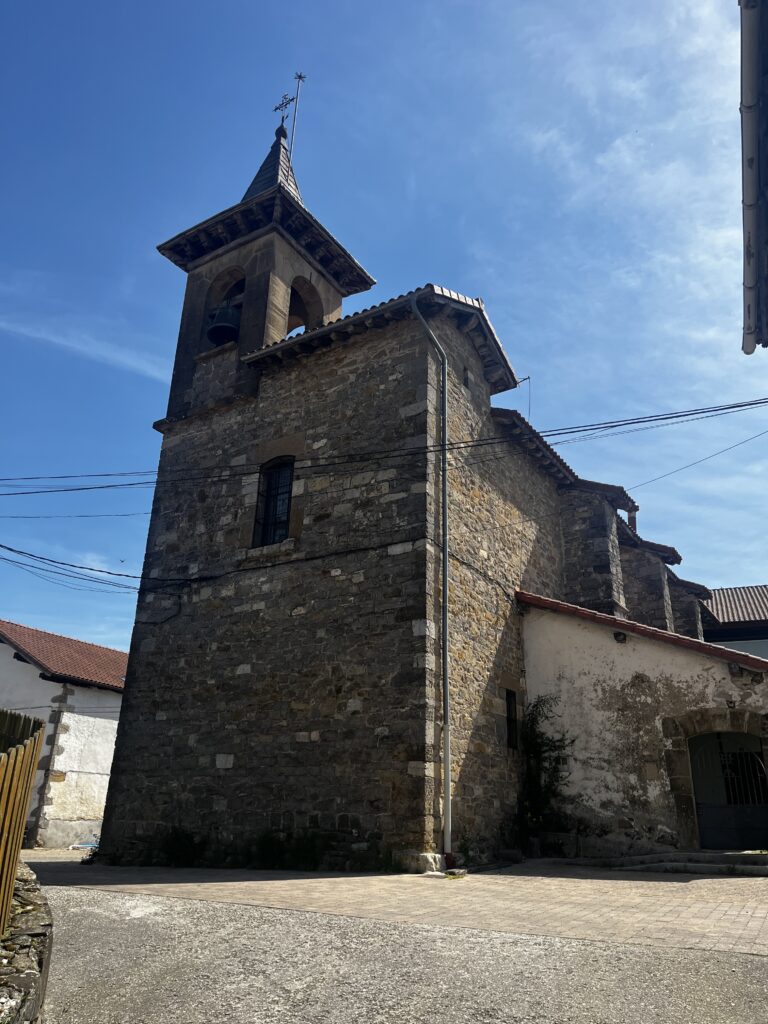
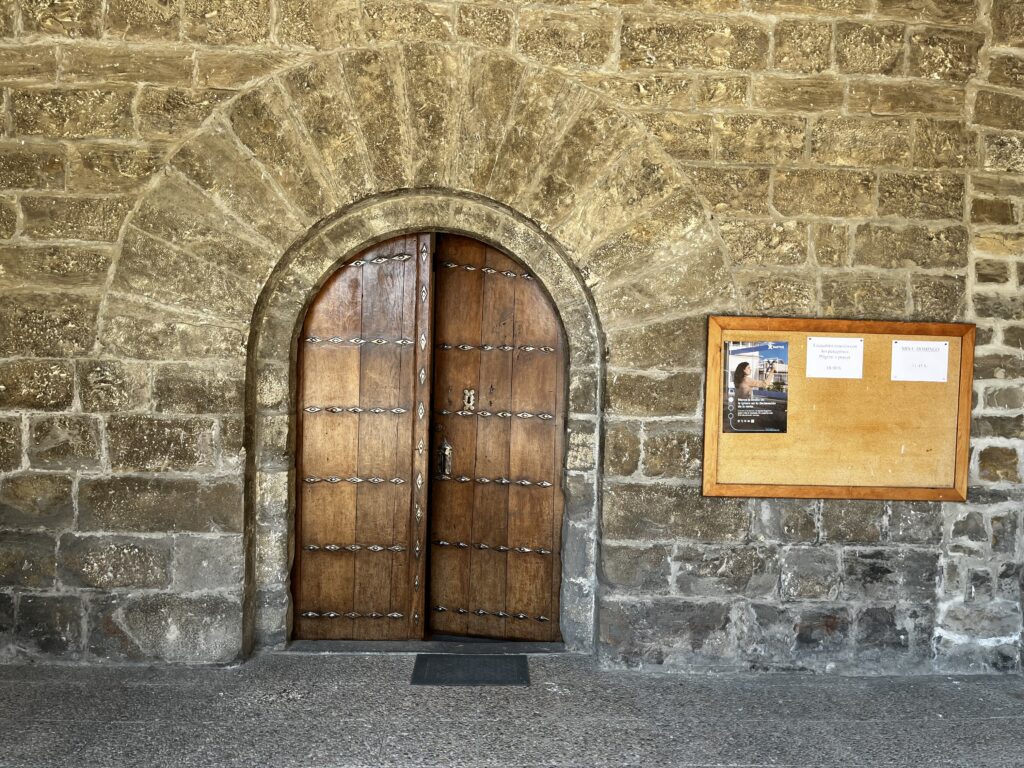
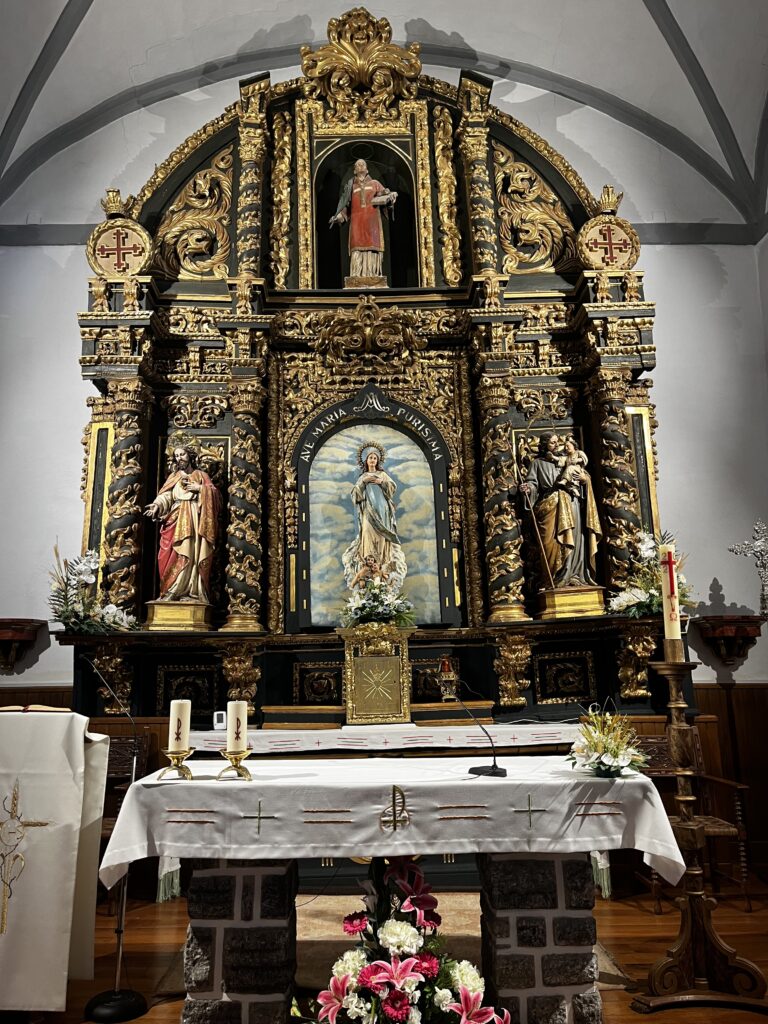
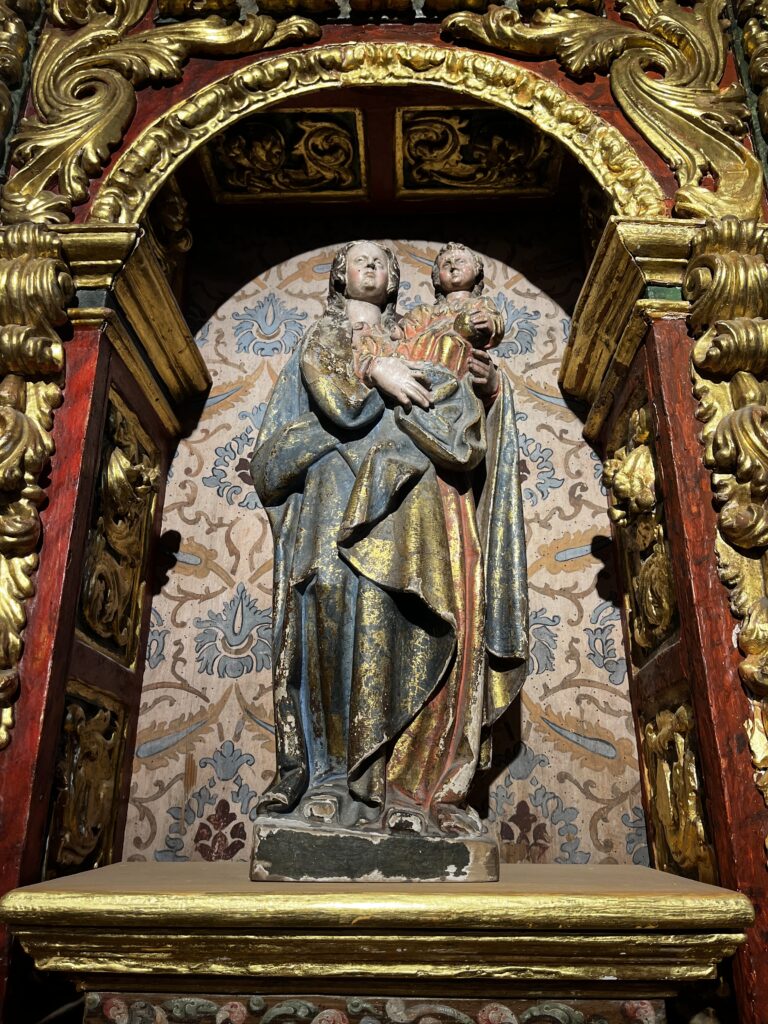
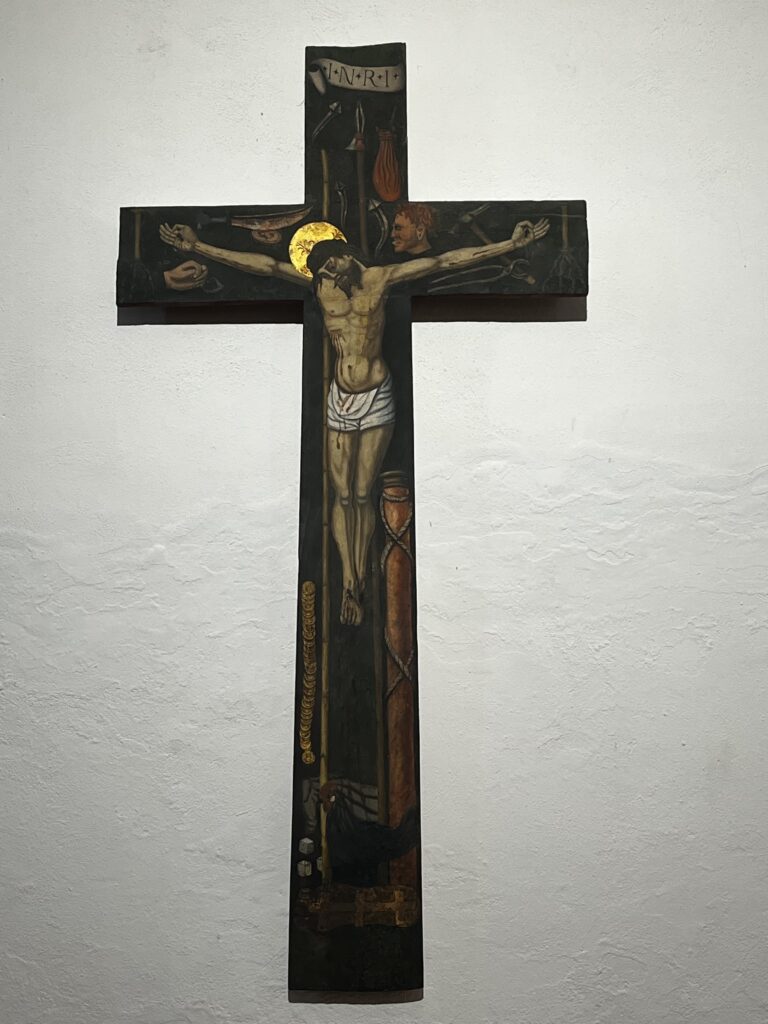
“The church, of course, was locked” – a sad theme happy subverted!
Looked like a great day! Spain seems to be a great country!
I absolutely love Spain.