
Via Lemovicensis: an Inadvertent Record
This morning I tried something different. I shipped about half the contents of my backpack forward and carried the rest.
The hotel breakfast began at 7:30, and we were out the door by 8:15 AM. My bag had already been picked up for transport. In retrospect, it would have been better to leave at 6 AM and grab breakfast at a café on the way.
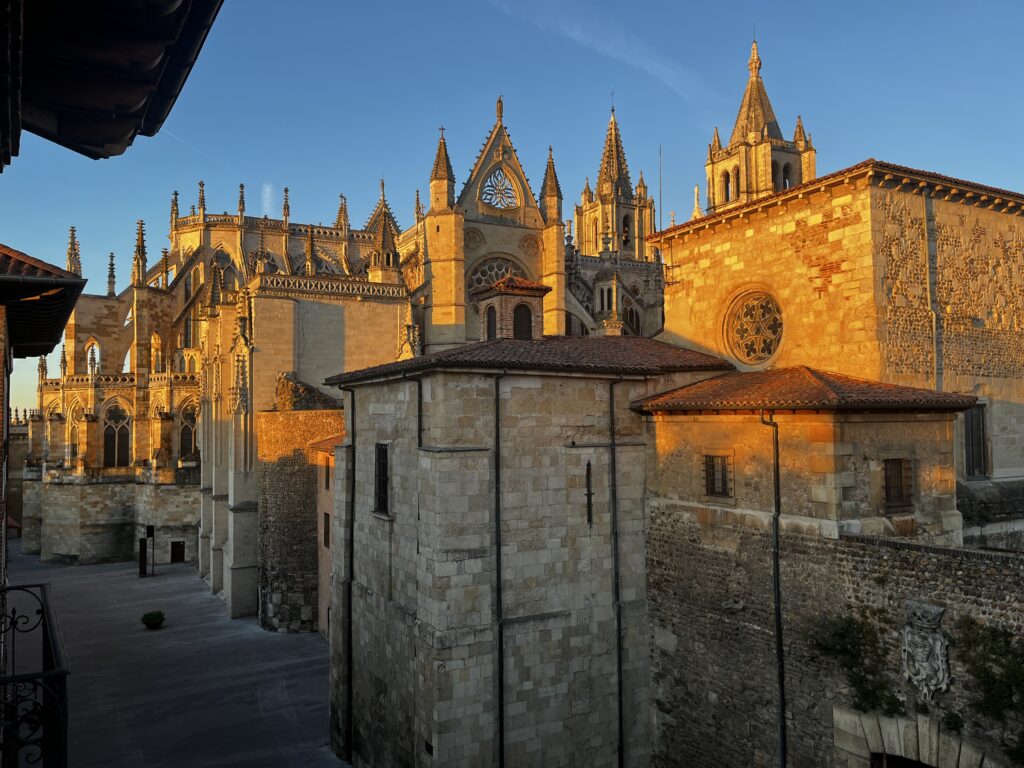
Morning was cold and clear, but the forecast for the afternoon it was quite warm. The goal was to get as far as we could as quickly as we could. My back was still sore, and I definitely had a few twinges walking up the stairs to the cathedral plaza. Long steps and stretches were the way to go.
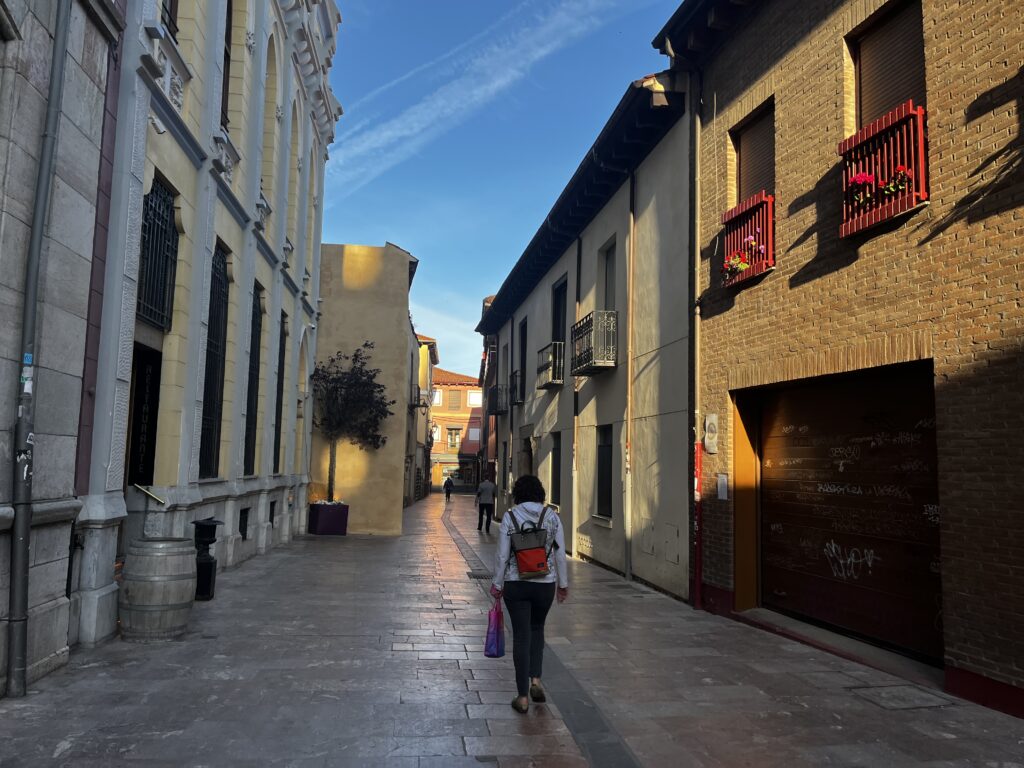
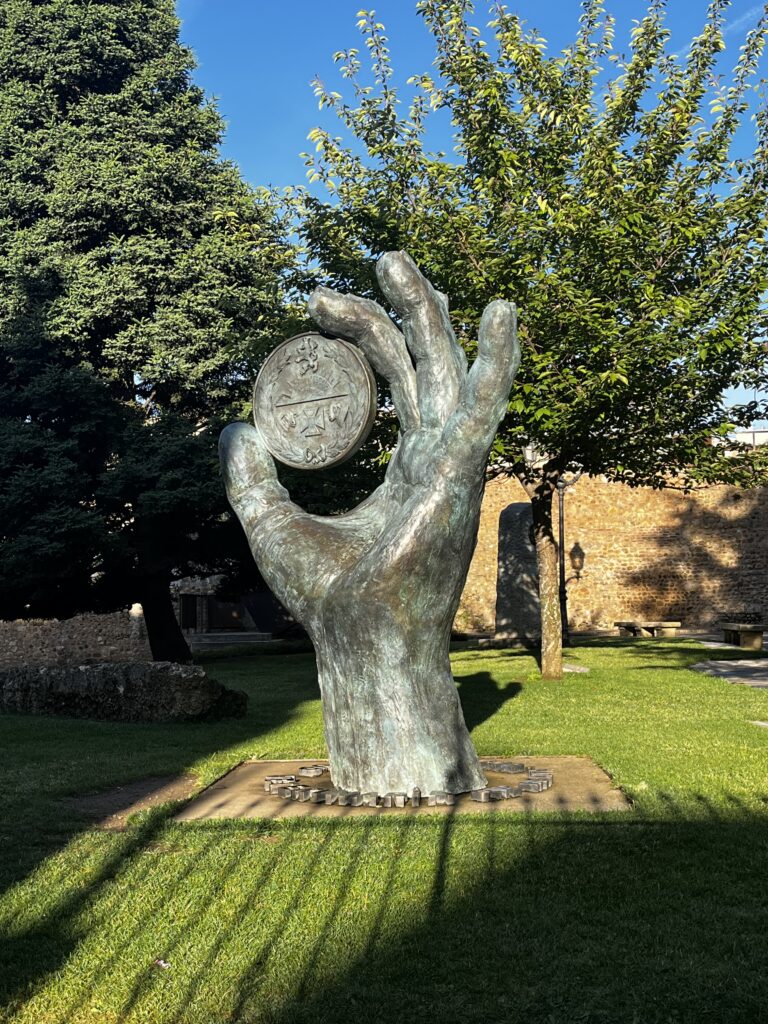
The Camino wound through the magnificent city of León. We passed the Basilica of San Isodoro. I very much would have liked to have visited it yesterday, but I napped entirely too long. I might have to add León to the growing list of cities to visit on their own.
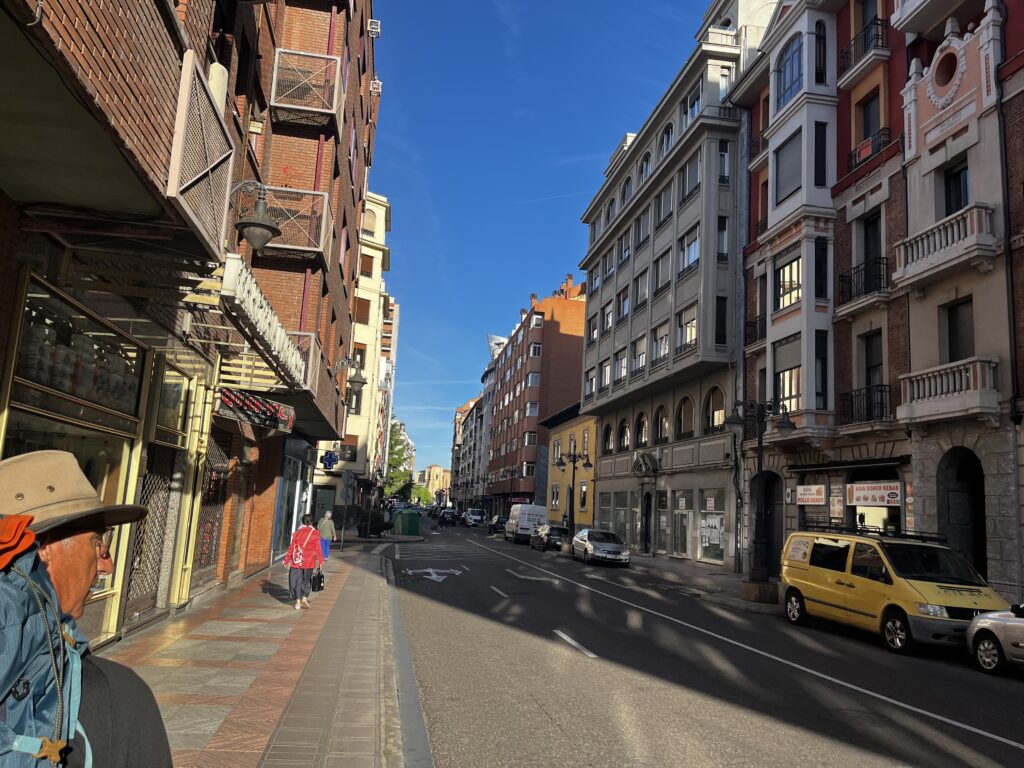
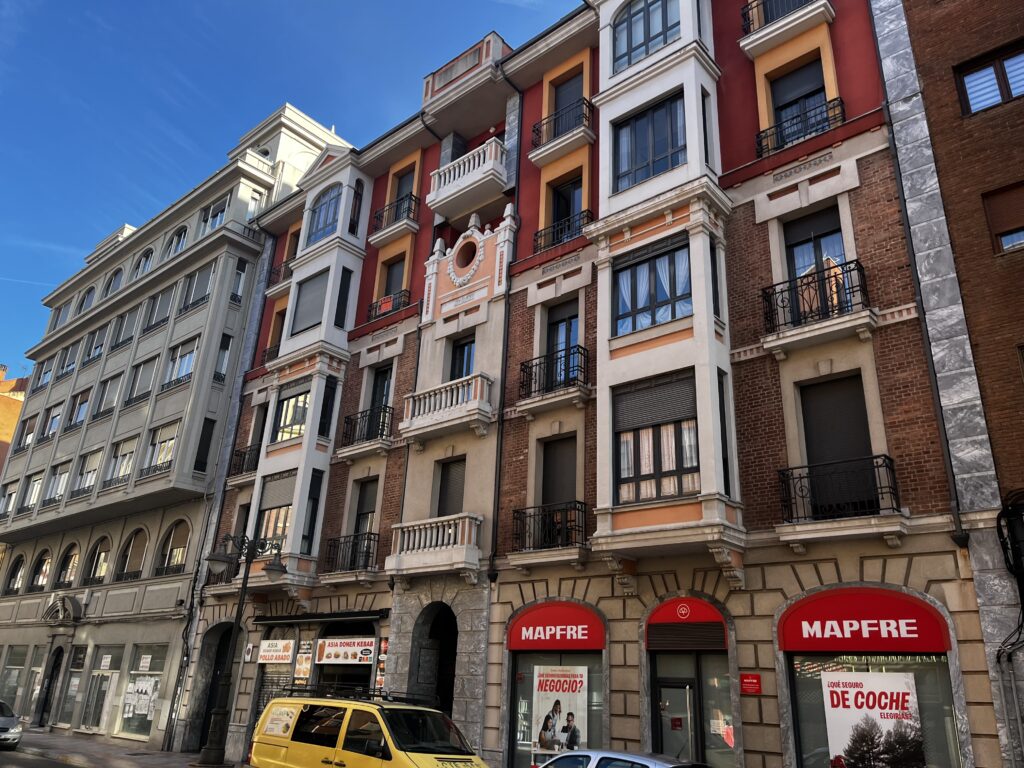
We passed a remnant of the old city wall and into a more modern part of the city at just about 8:30. We walked down a commercial avenue where the buildings were anywhere from 7 to 9 stories tall, and the styles ranged from 19th century elegance right through Franco cinderblock.
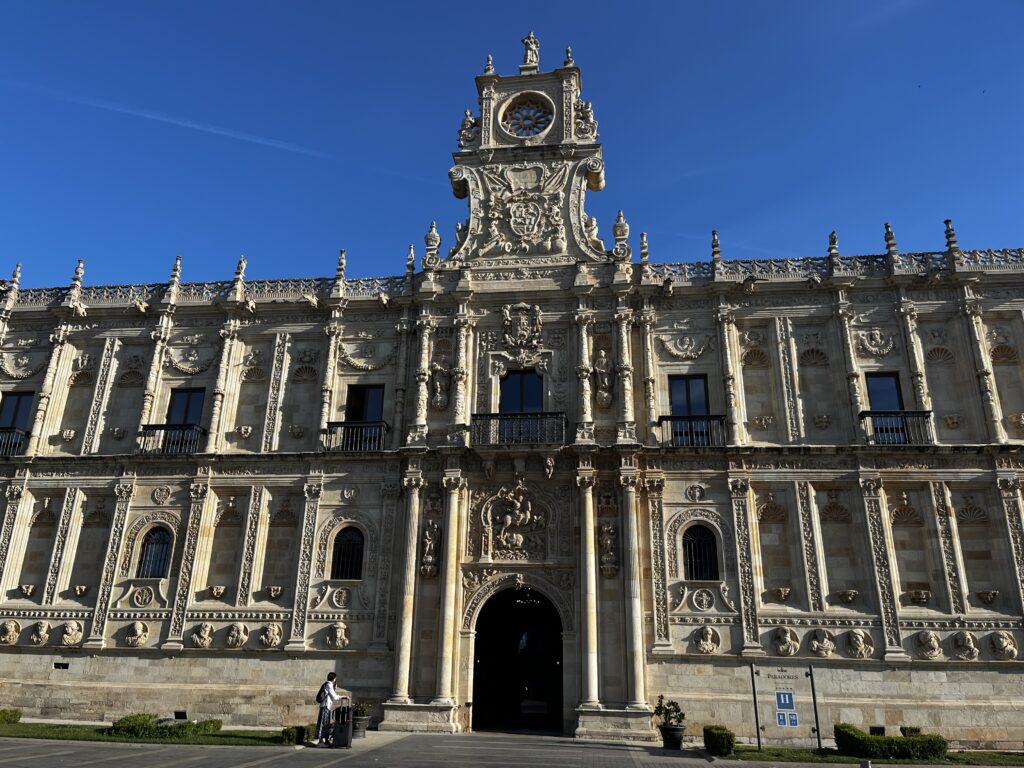
We passed the parador, featured in the movie “The Way”, crossed over the Rio Bernesga, and then by a beautiful tree-shrouded park, from sunshine into shadow.
We continued down a wide commercial boulevard and met up with Julie, a French/Spanish pilgrim we met a few days ago.
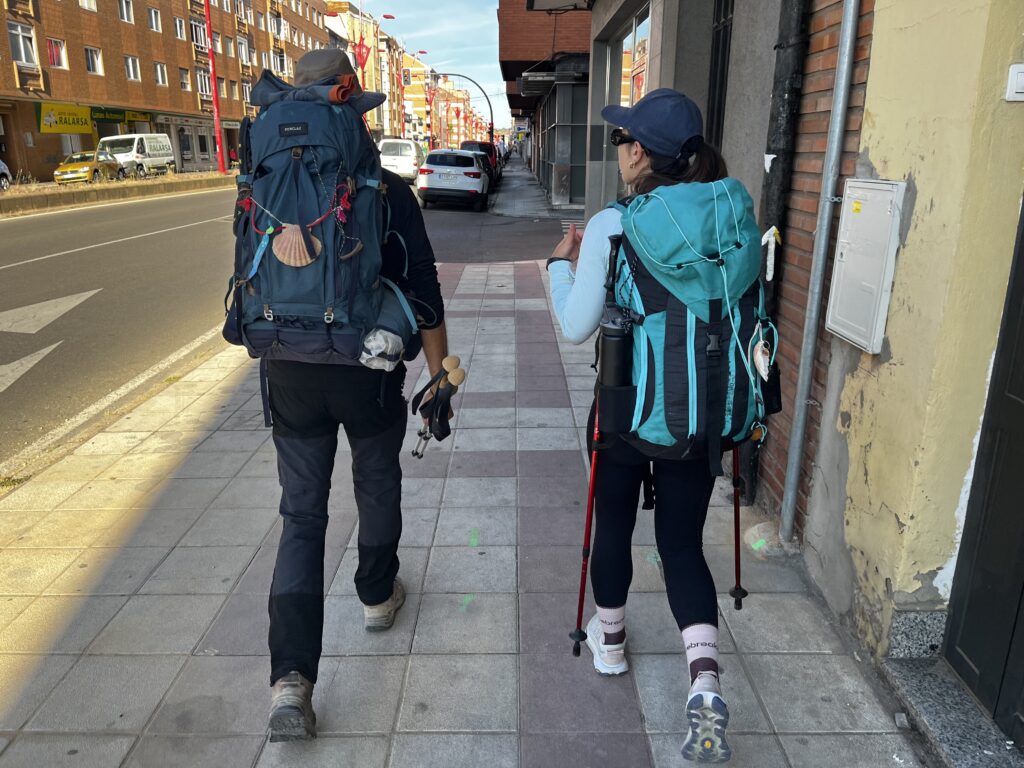
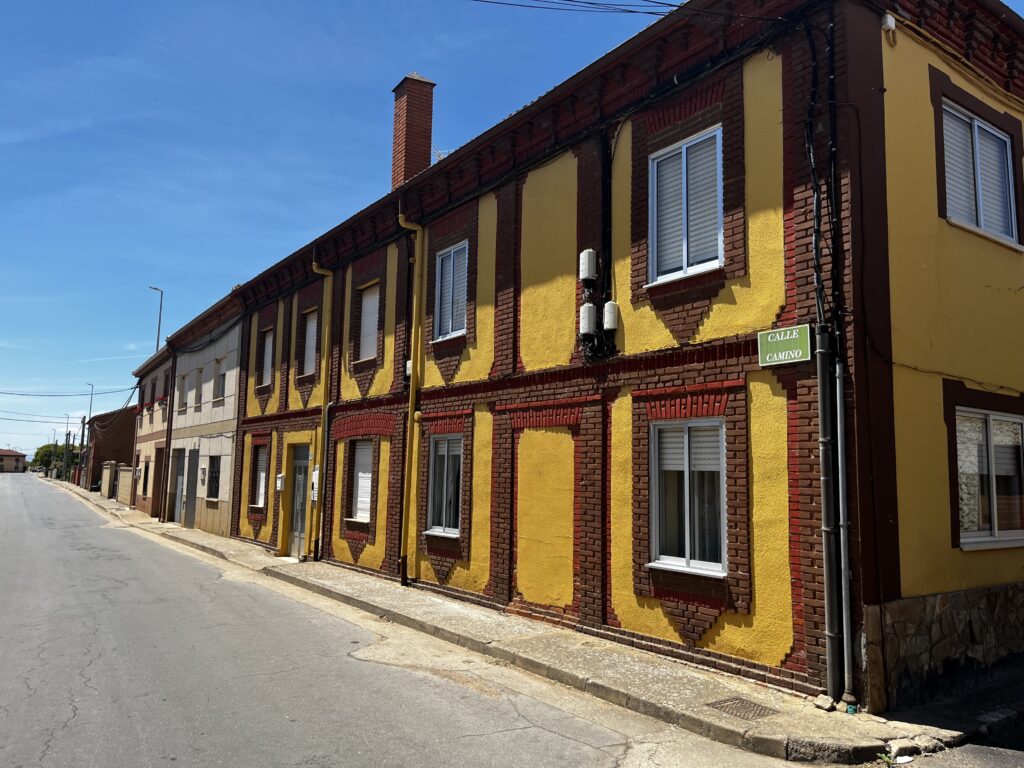
At about 8:55, we left the city of León and entered the very urban adjoining town of Trobajo del Camino. It was frankly difficult to notice any difference. If it wasn’t for the signage, you’d have no idea.
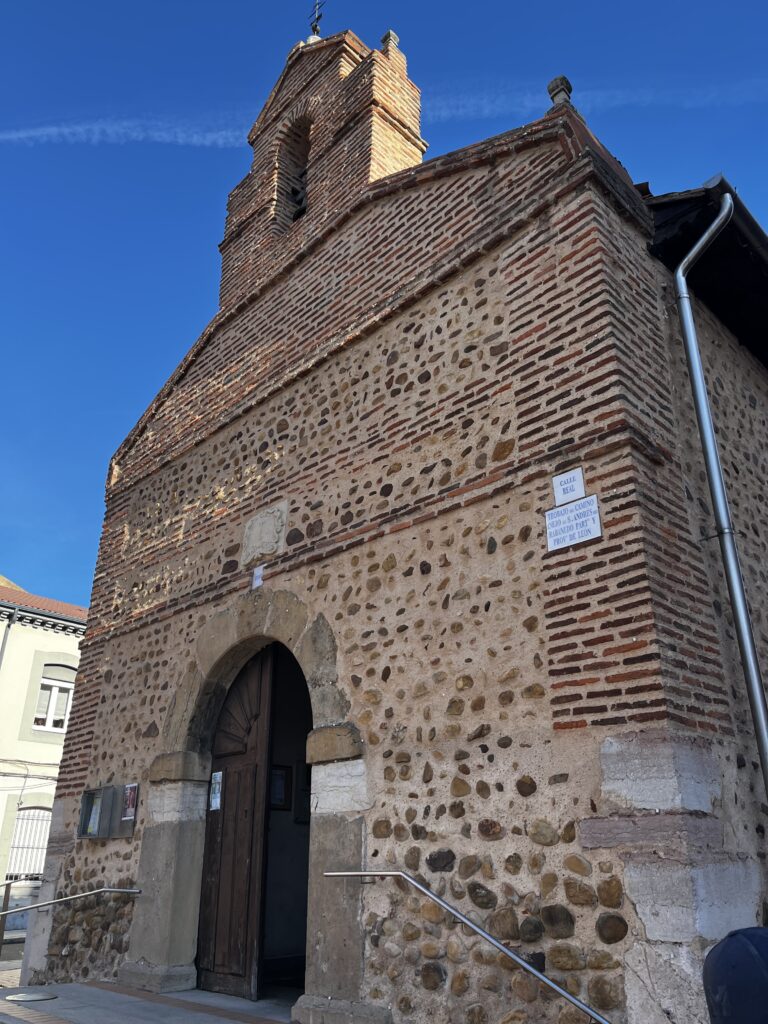
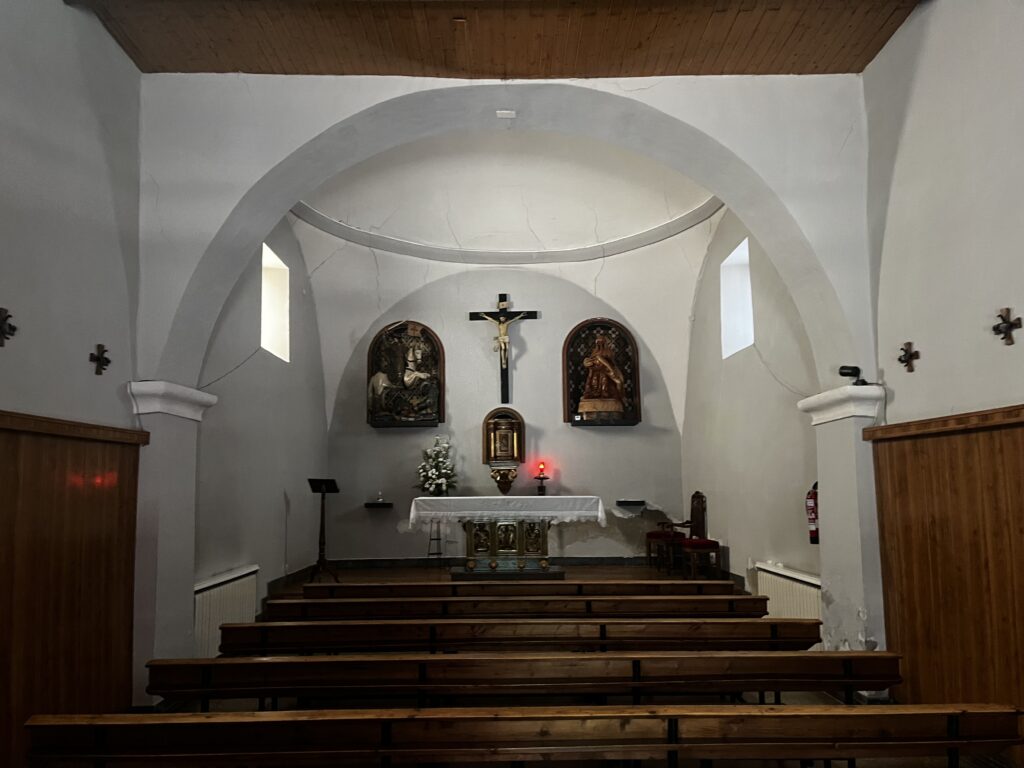
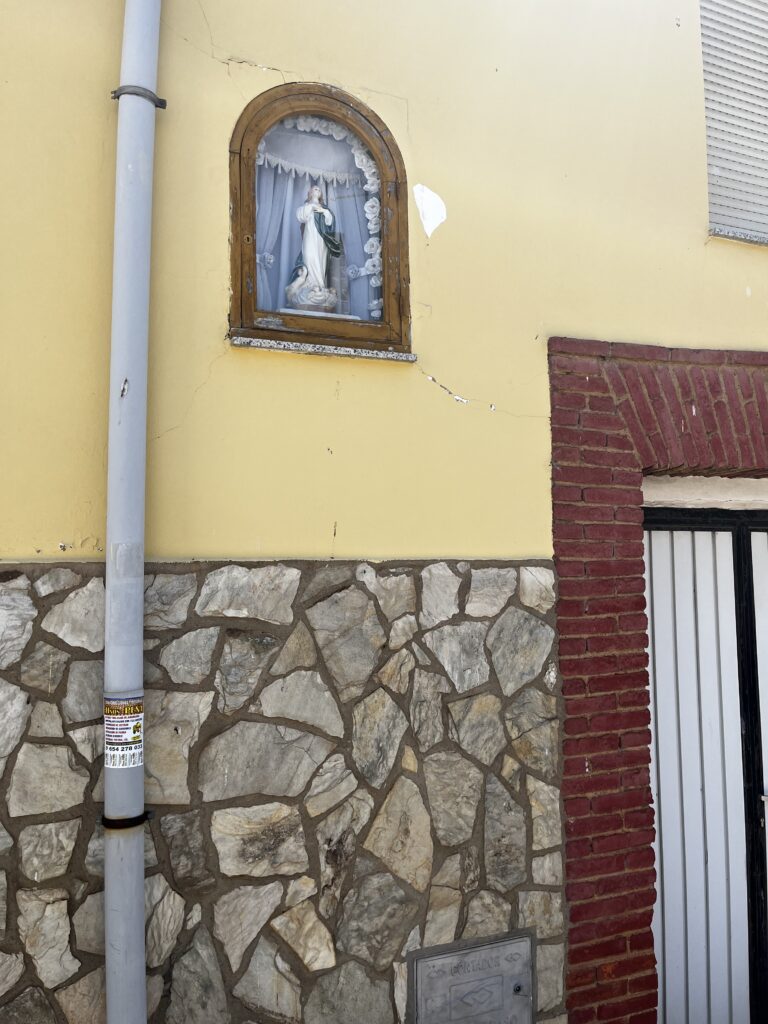
I stopped into a little neighborhood chapel to pray at about 9:15. It seemed very out of place amongst the urban buildings.
As the avenue progressed, there were more and more apartments and fewer commercial establishments.
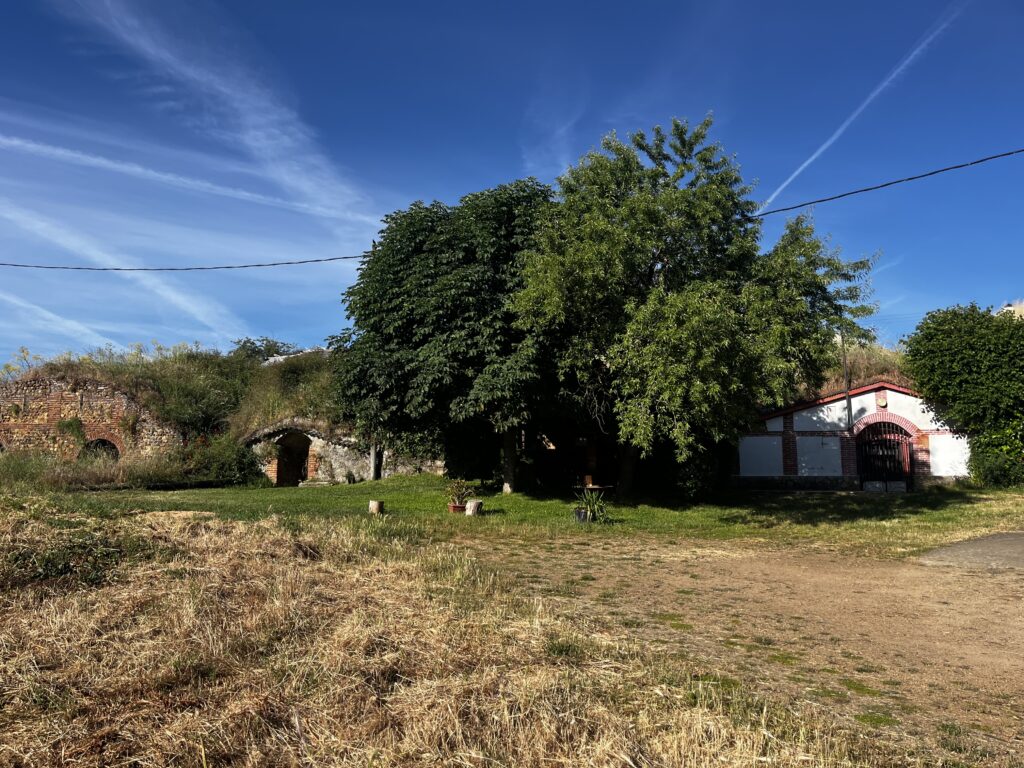
At 9:25, we left the avenue entirely and the Camino took us past a series of bodegas that Julie referred to as the Shire. We all spent a moment taking off our fleeces in the Shire.
We soon found ourselves walking through a depressingly industrial district. I blame Saruman.
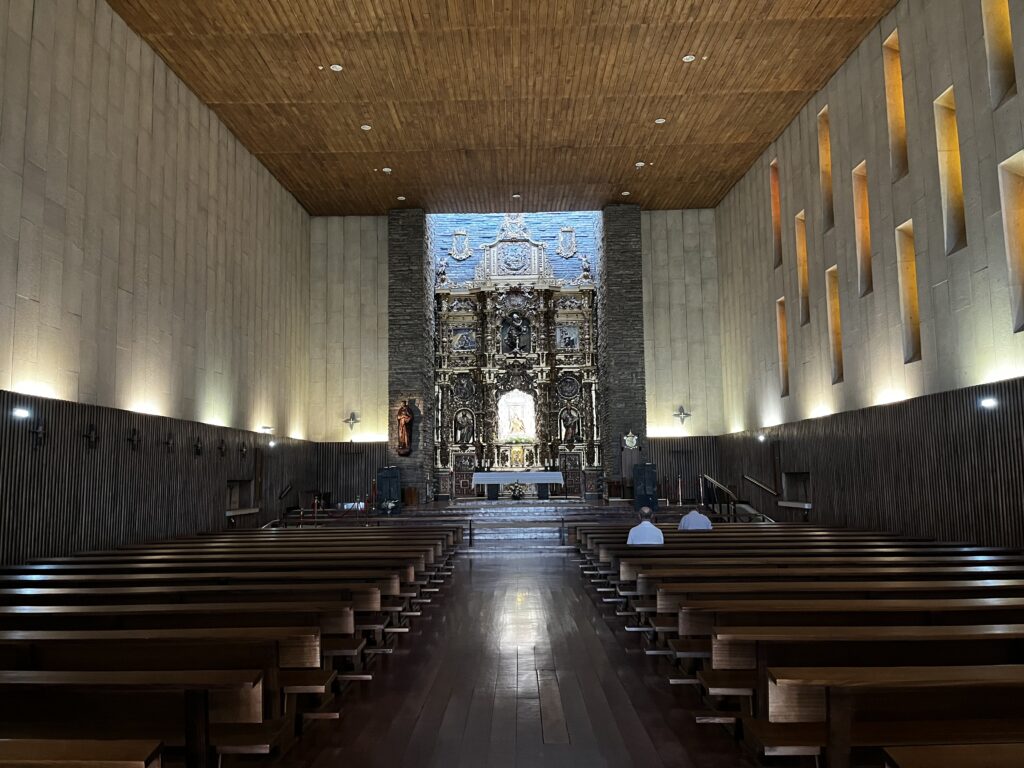
At 9:55 the three of us entered the suburb of La Virgen del Camino, named after a Marian apparition and subsequent statue in the church here. We stopped in a local place for second breakfast, and then Herve and I took our leave of Julie, who will be walking a slightly different route today.
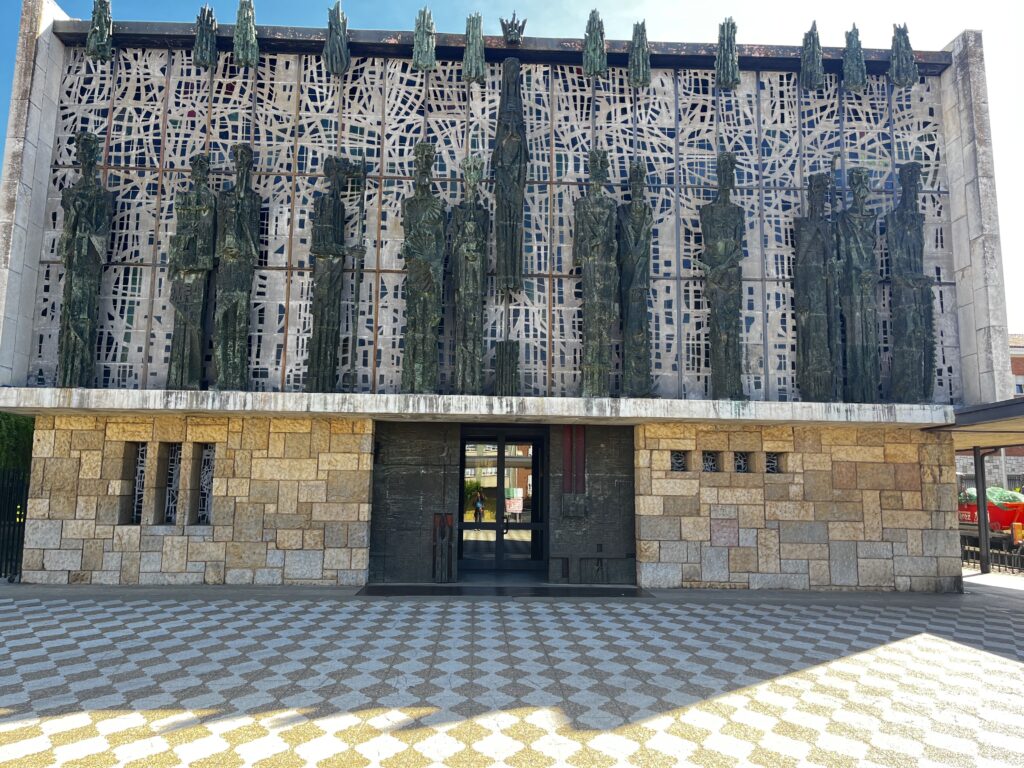
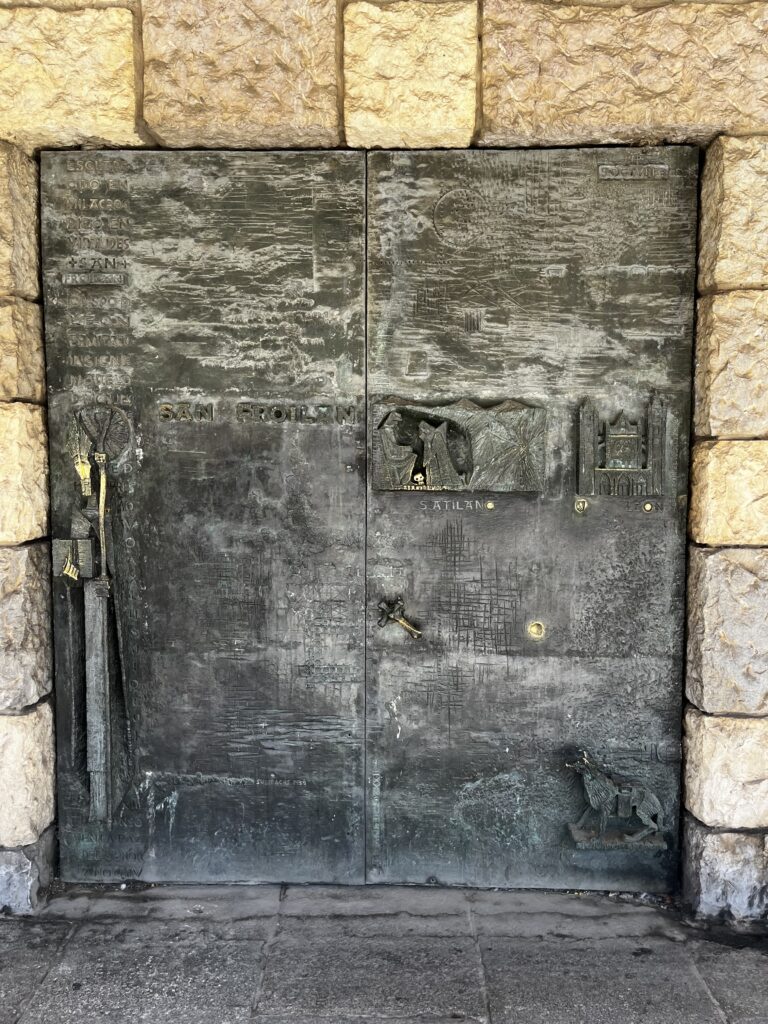
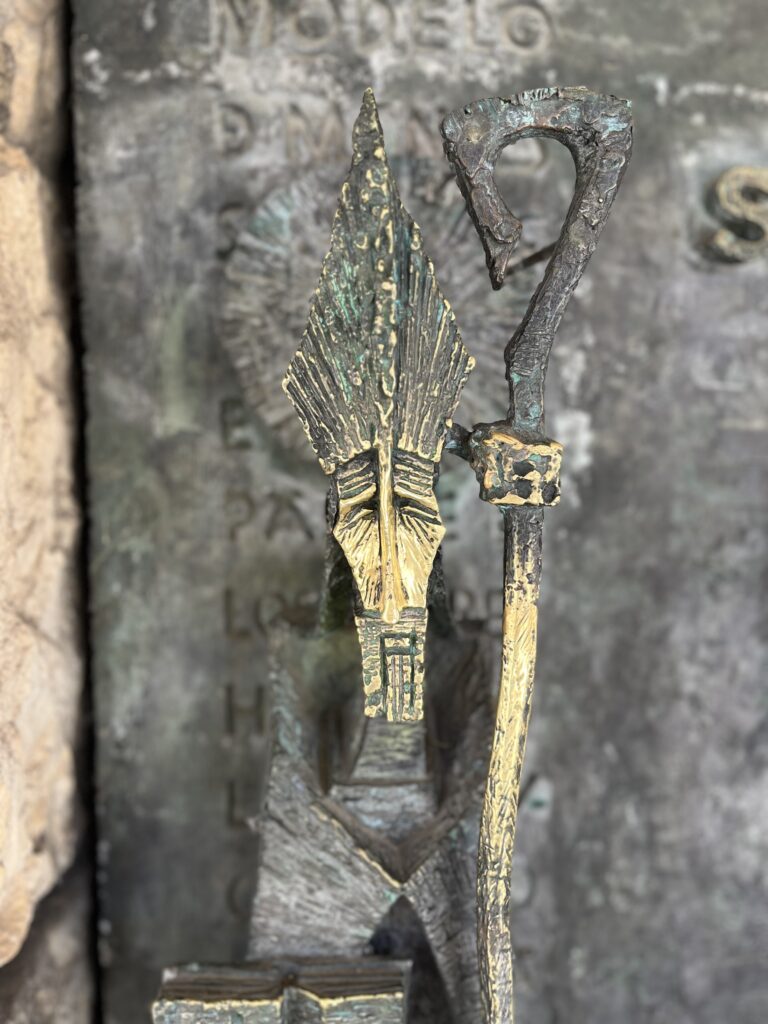
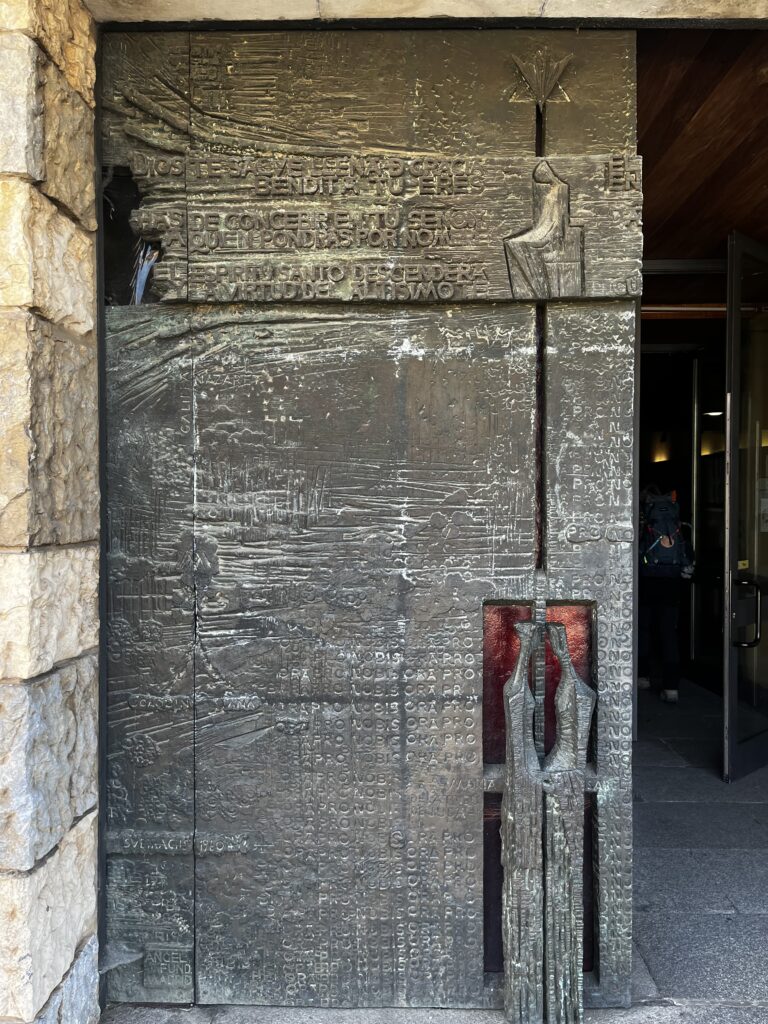
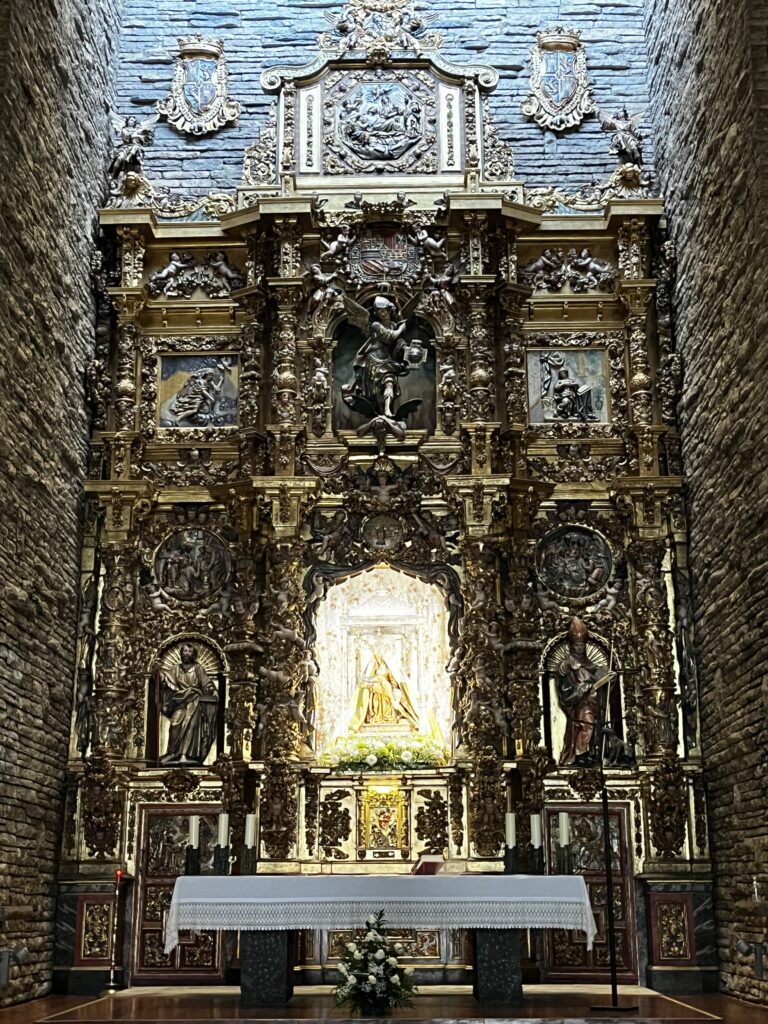
Finally we arrived at the church. This is a thoroughly modern structure. Normally, I am not a fan of these, but this place absolutely takes itself seriously. The style almost looks like it could come from another planet, but it’s consistent, proportionate, and weirdly beautiful.
And for whatever reason, the Baroque retablo seemed much more at home here than similar ones shoehorned into Gothic churches.
I prayed here for a bit, and as we were leaving a very old nun sitting in the back pew solemnly nodded her head to me.
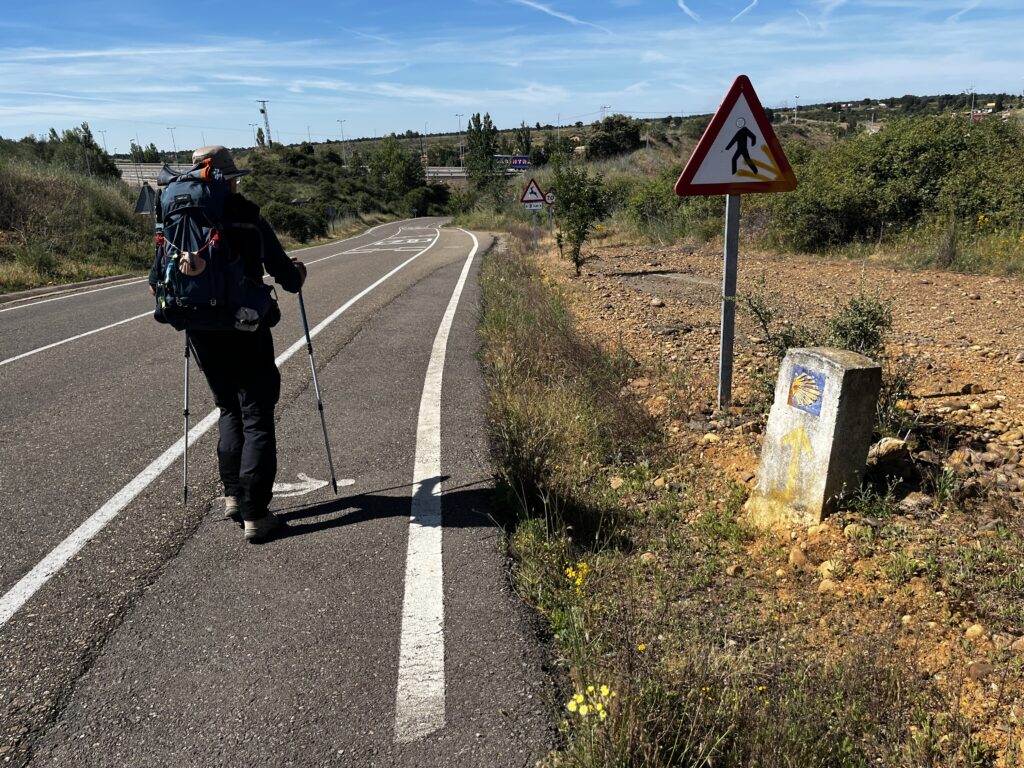
By the time we left, it was 11 AM and we were wildly behind schedule. The Camino took us on a bike path. We had our eyes open for an upcoming fork in the road – our plan today was to take a marginally longer variant of the Camino that avoided a lot of the road walking of the main route.
When we came to the fork, it was a stark choice between a sidewalk and a gravel road. We chose the gravel – the alternate route. After all, it was only 2 km longer (or less) than the main route.
Spoiler alert: it was not just 2 km longer than the main route.
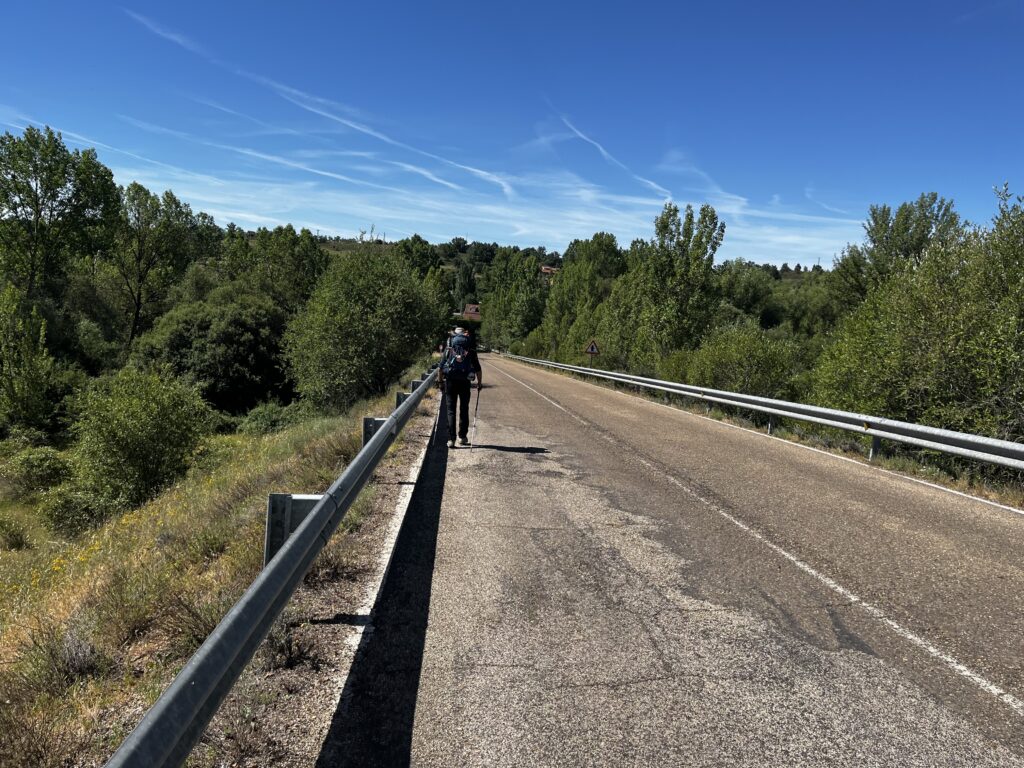
We soon found ourselves on a road of red dirt and occasional stones and gravel walking through fields. Sadly, this didn’t last very long. We passed on asphalt through a complicated highway interchange and on a bridge over another highway, the pedestrian part of which was entirely too narrow for my taste.
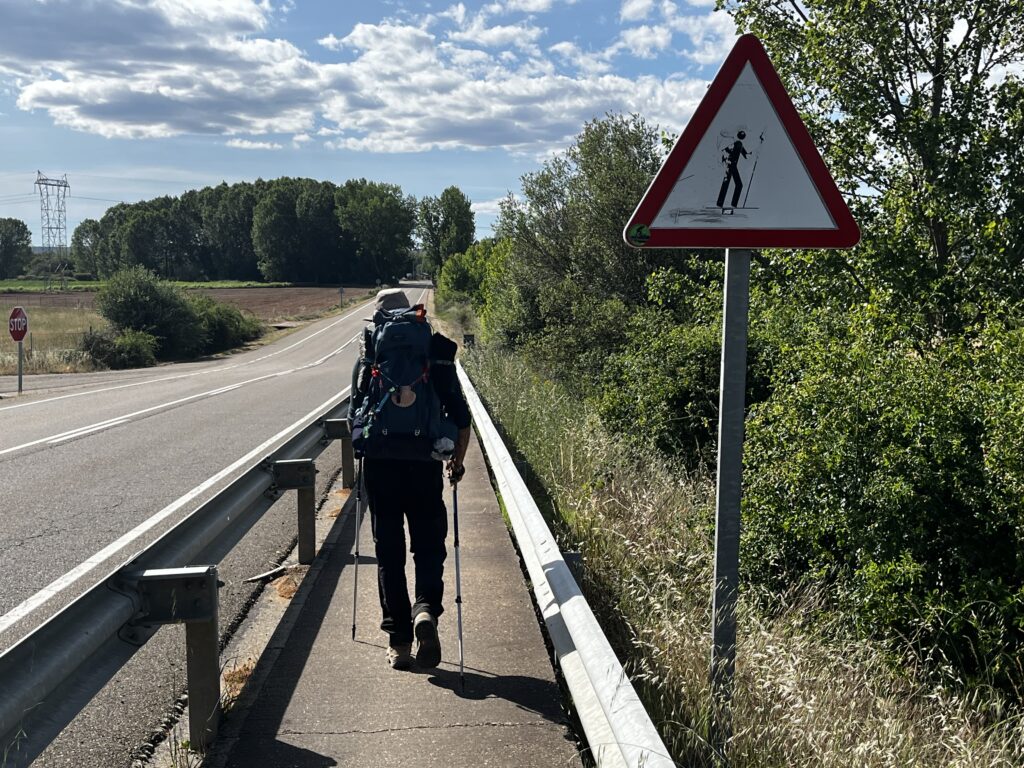
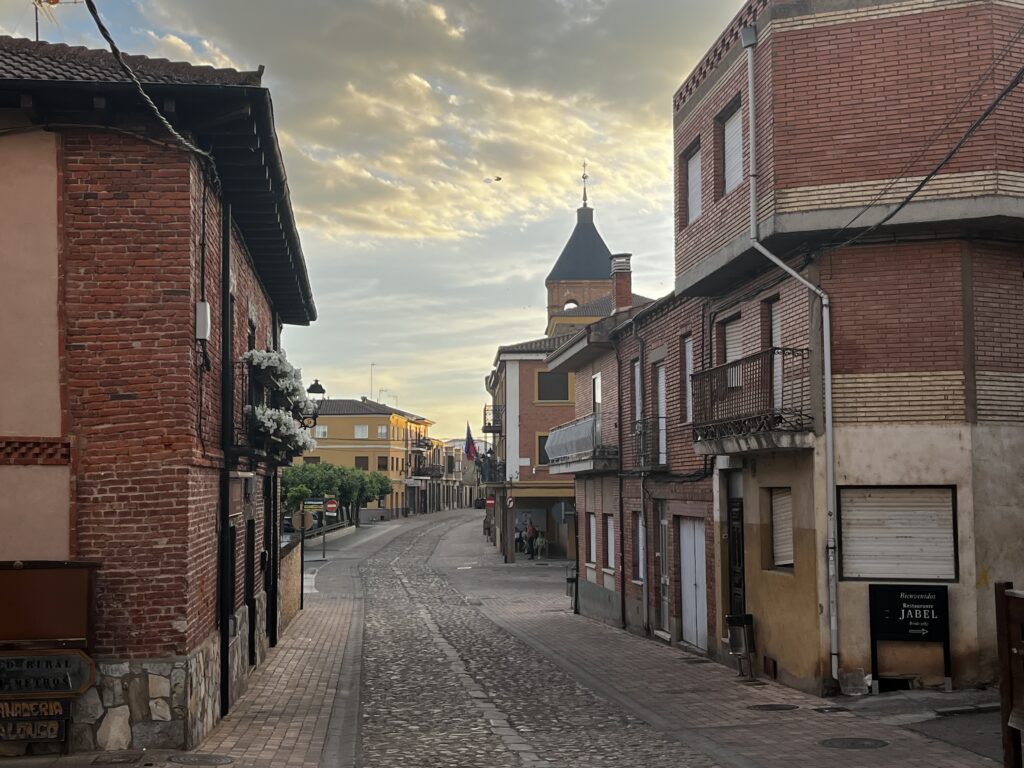
From here we walked a sidewalk into the village of Fresno del Camino. This place seems very planned and suburban. By 11:30, we were doing a bit of shoulder walking along a two-lane road. There was almost no traffic.
The terrain was now increasingly hilly and there were more and more trees as the Meseta slowly came to its end.
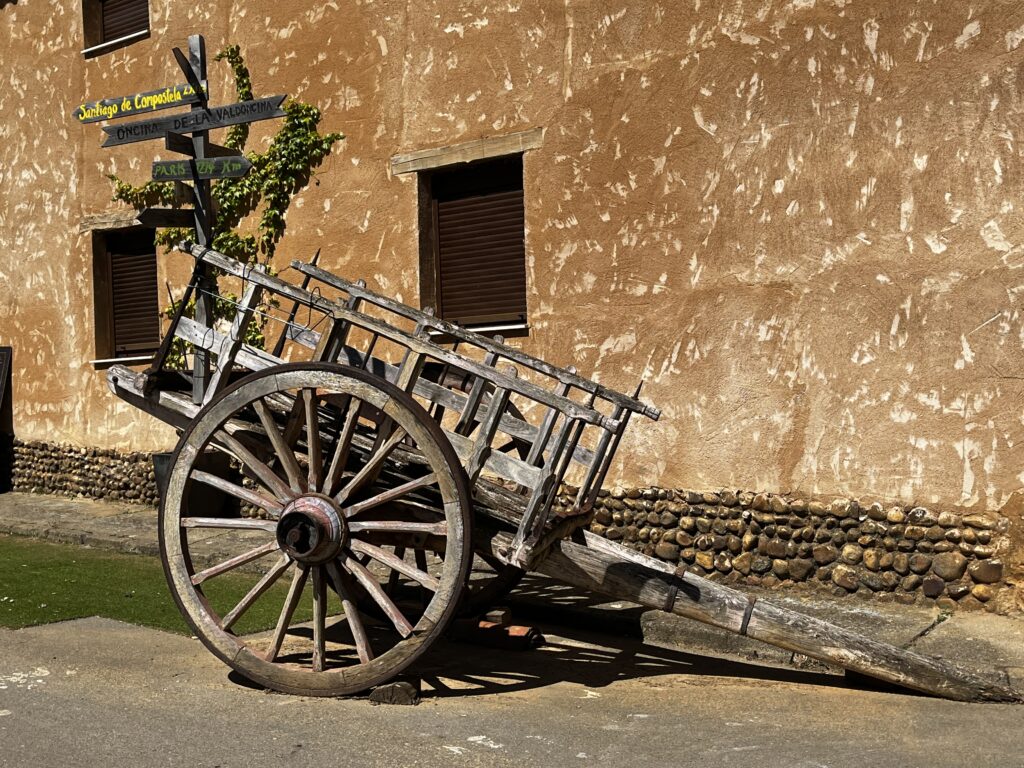
The road took us into the hamlet of Oncina de la Valdoncina. It seems a pleasant enough place, and it provides another data point in my developing theory that the longer the place name, the smaller the village.
Many of the houses here are made of mud brick, something that we’ve seen with increasing frequency since the day we walked into Carrión.
We stopped in an impossibly swank hotel for a quick pick-me-up soda. Out of the village, the Camino resumed on the red dirt, gravel, and stone path. For the first time since we started on the alternative route, we passed a pair of pilgrims.
The terrain here was like the Meseta of past days, with some more hills and trees thrown in for fun. It very much had the feeling of a last hurrah, though.
The road eventually acquired a layer of grey gravel, intermittent at first, but stronger later.
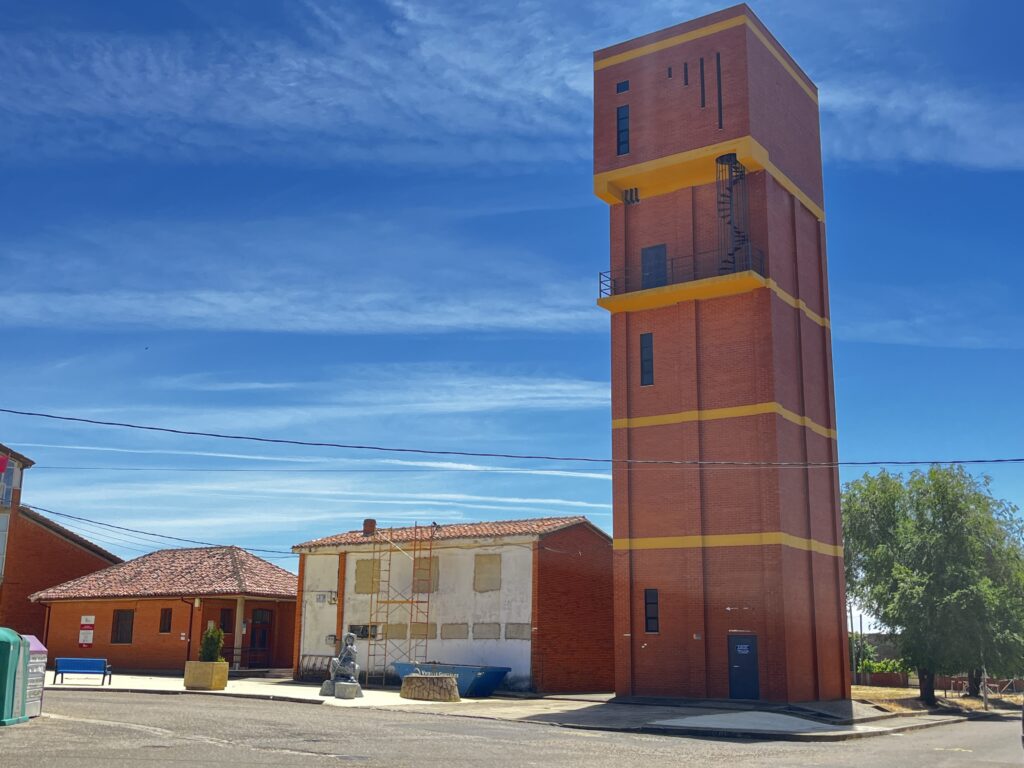
This road took us to the village of Chozas de Abajo just after 1 PM. Although most of the buildings in the village are traditional, there was a very unusual multi-story construction that looked like a series of little Lego box houses piled one atop the other. It turned out to be a water tower.
On the way into the village, we met a German pilgrim named Klaus on his way to León. He began his Camino at his home near Stuttgart in 2019. He walks about 400 km over the course of a few weeks each year.
He says it’s good for his mental health.
Last year, he made it to Santiago. This year, he started his journey back home. He will finish today in León, and next year come back to walk from León to Logroño.
He was an amazing character to meet: warm, friendly and very funny.
As we were leaving the village, we met a pilgrim couple from Colorado briefly. Then it was back to the stony path next to the asphalt road through the last gasp of Meseta.
I often tell people that I never book ahead on the Camino in Spain. This is largely true, with three notable exceptions: I always reserve in Roncesvalles (because it’s required), whenever I’m taking a rest day, and in Santiago.
To this I now must add a fourth exception. I have now for two days booked ahead because I am injured, and I’m sending my pack (or parts thereof) ahead.
In France it’s a totally different story. In France, you must almost always book ahead except in the larger towns and cities.
Sometime around 1:45, we started passing rolls and stacks of hay in the fields beside us. Somewhere along this stretch, we even passed a little farmhouse.
At 2 PM, our intended lunchtime stop finally came into view. Herve was a couple of hundred meters ahead of me by now, though the sight of the village did spur my speed.
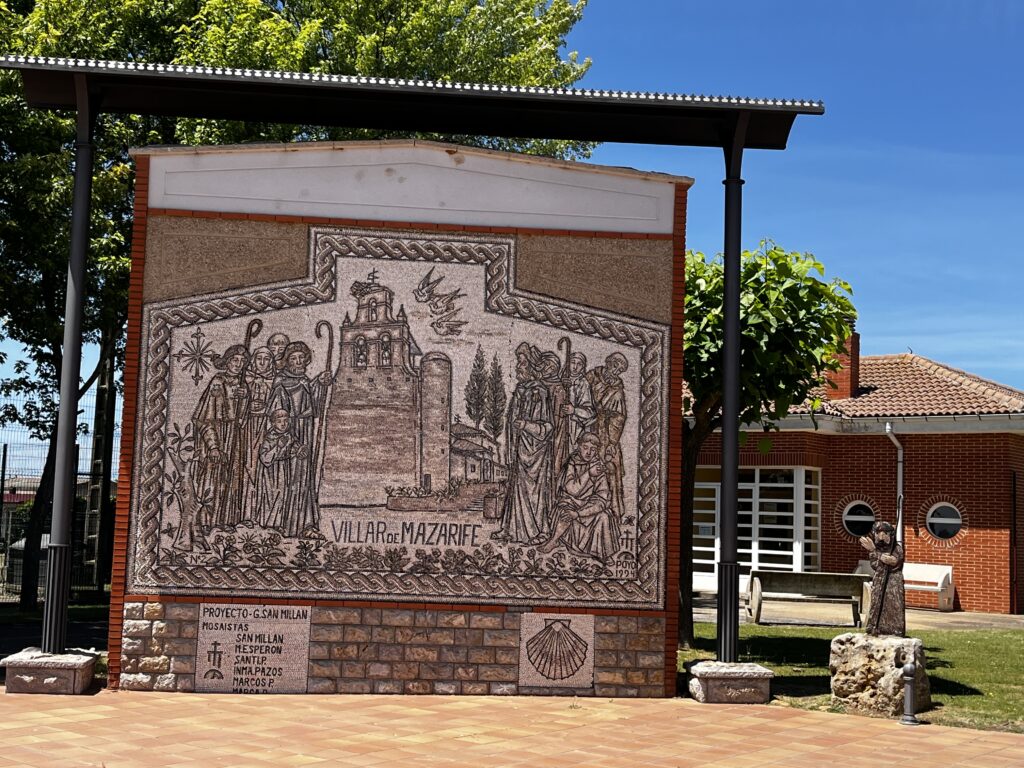
By the time we entered Villar de Mazarife about ten minutes later, I had caught up with him. From here, it was a sidewalk to an albergue with a bar for lunch.
The hospitalera was absolutely fantastic, and she fed us ham and peas. Not a thing I think I’ve ever had before, but uncommonly delicious.
By the time we left, it was already 3:15, and we had a couple of hours still to go. We were definitely taking long breaks today, which was extending the time on what was already going to be a long day.
The weather was nice, not too hot thanks to a cool breeze, and I felt like I could walk for days. We roadwalked out of the village and back into the flat farmland. It was only when the breeze failed that I realized how hot the air temperature actually was. After just a few minutes, I put up my umbrella.
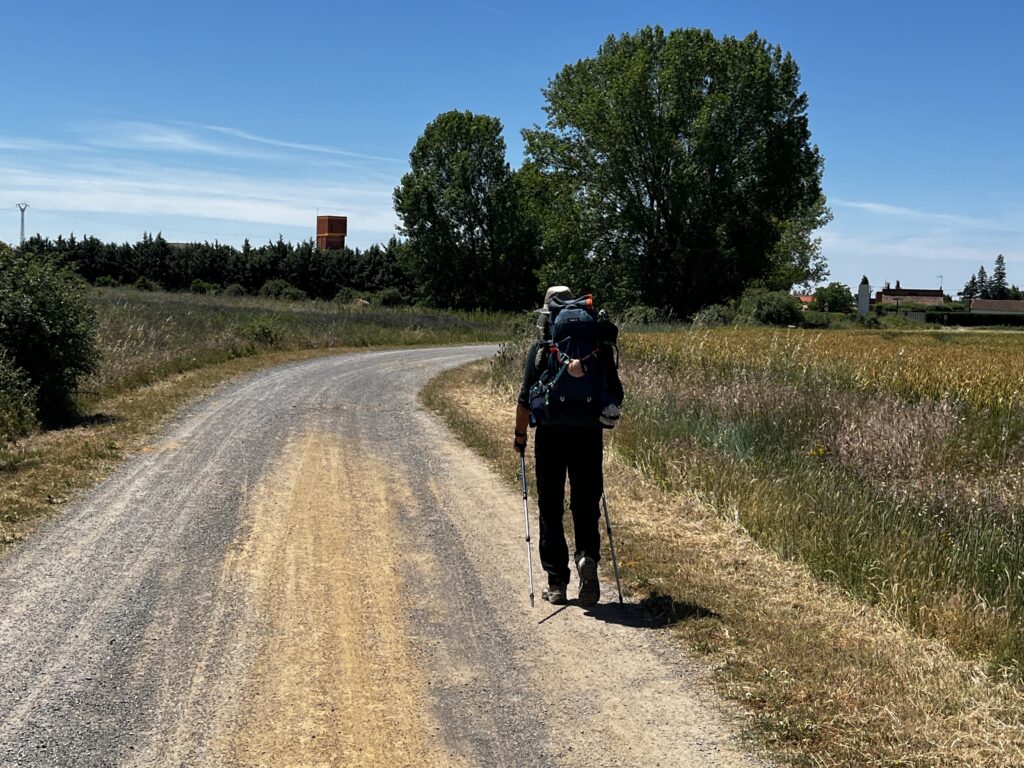
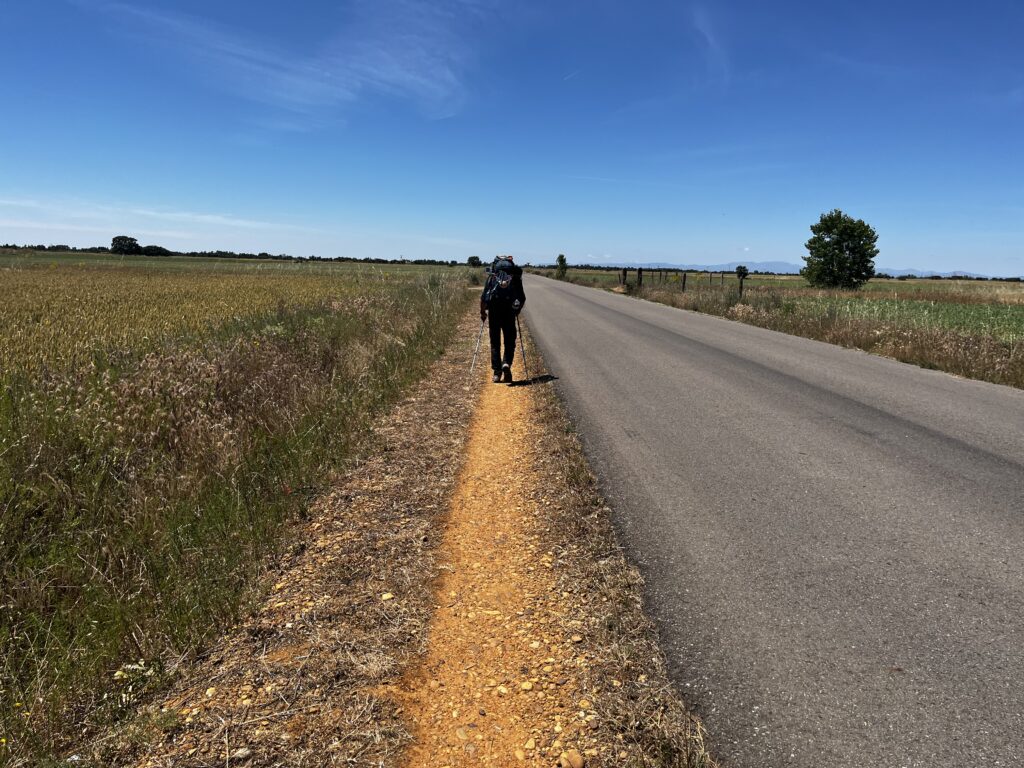
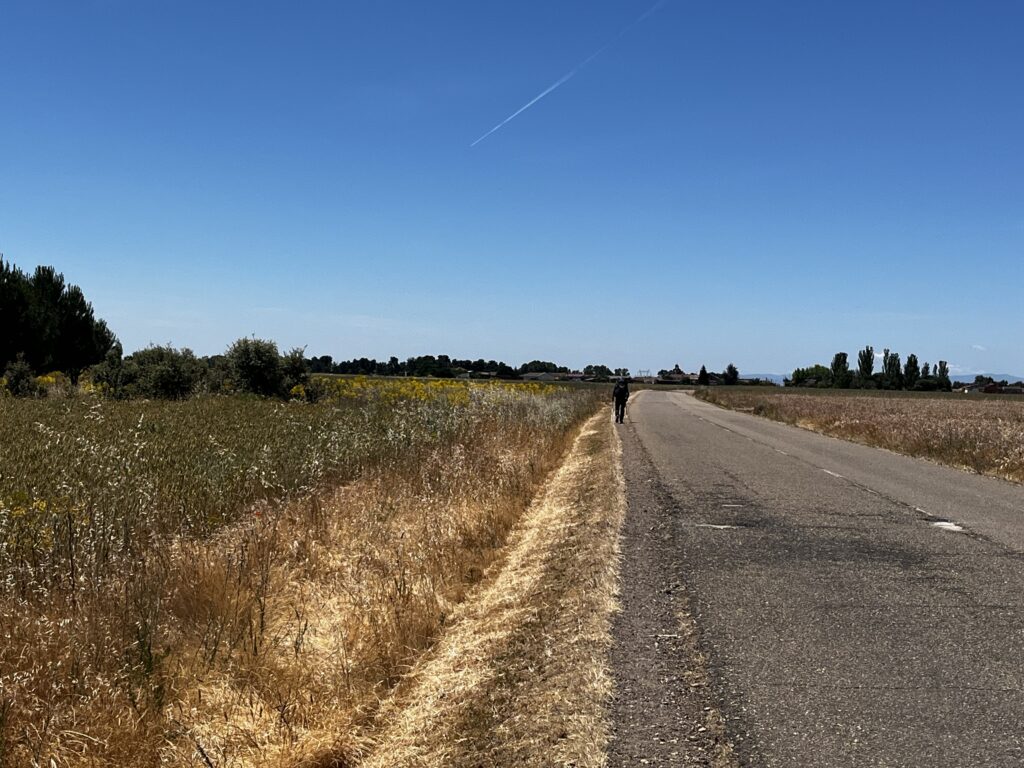
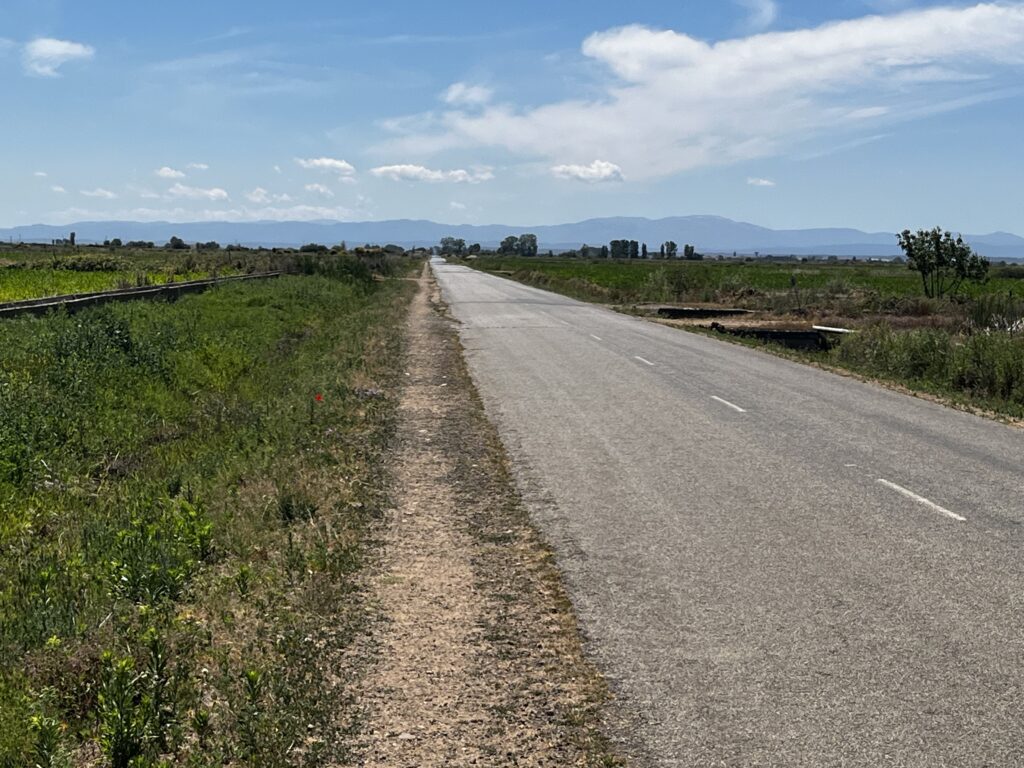
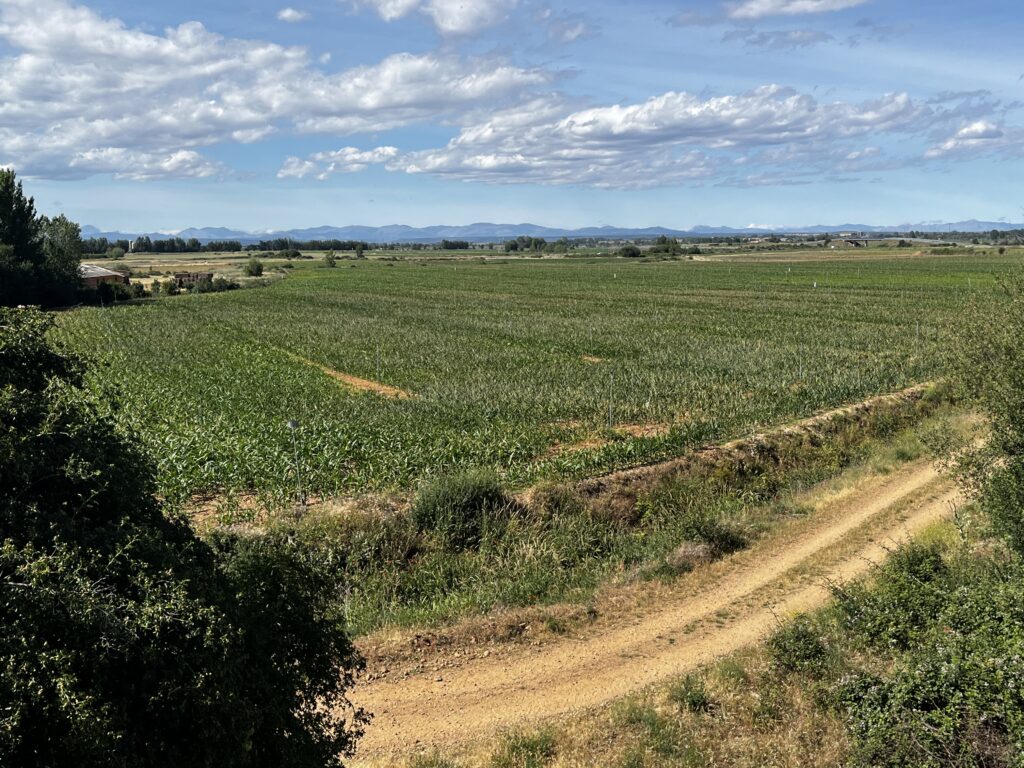
As far as the eye could see, the Camino was a little gravel path next to an asphalt road with very little traffic, heading straight towards the purple mountains on the horizon.
I had renewed energy after lunch, and now it was my turn to get ahead of Herve.
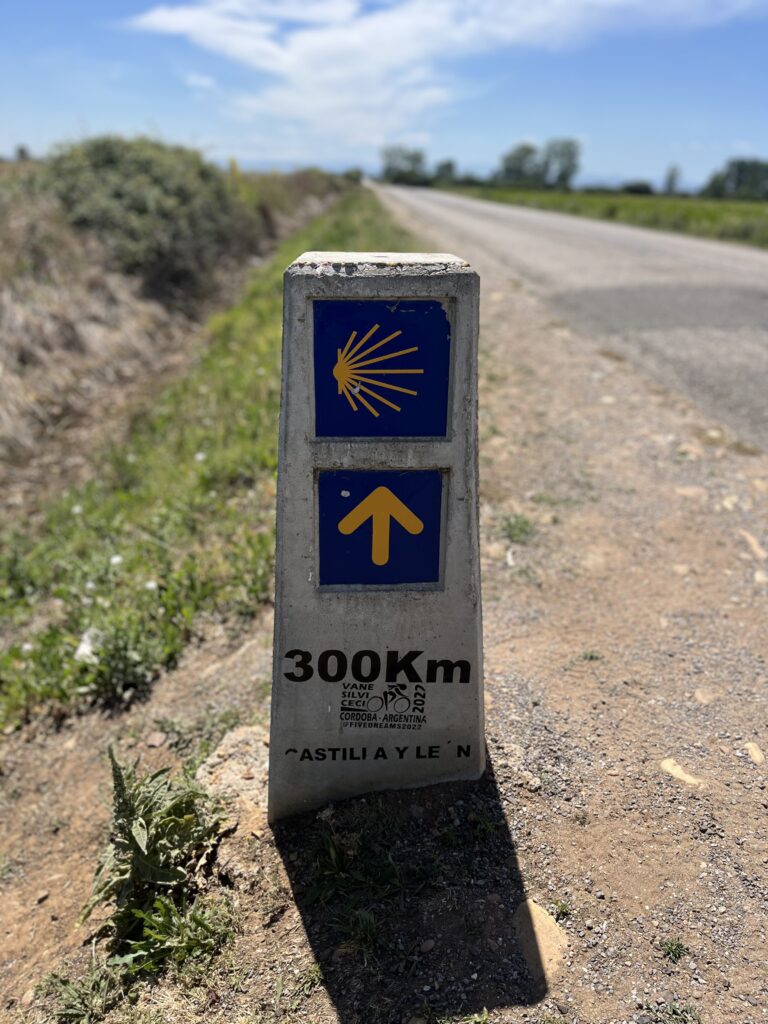
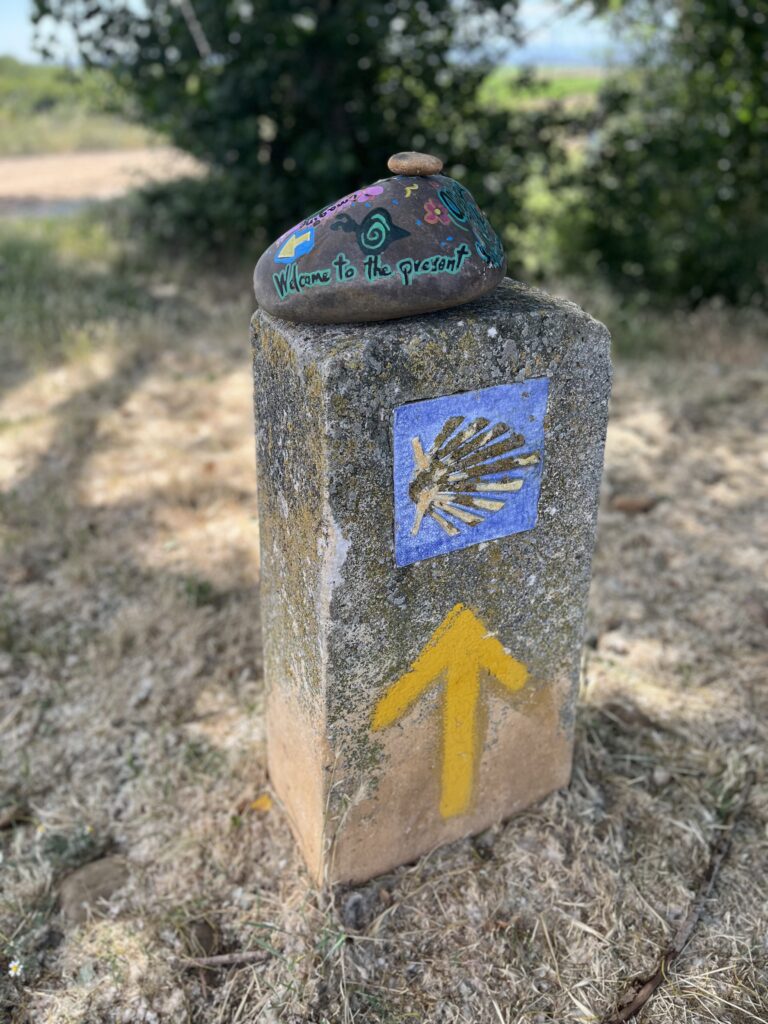
At about 3:50, I passed the 300 km marker. It’s hard to wrap my head around the idea that there’s only 300 km (more or less) to Santiago.
I haven’t updated the chart in a few days, but I have probably walked 1600 km since Vézelay.
And now there’s only 300 to go.
At about 4 PM, I saw a village in the distance. It did not appear to be on the route, but rather over to the right. By this point I had counted three vehicles on this road, and two of them were tractors.
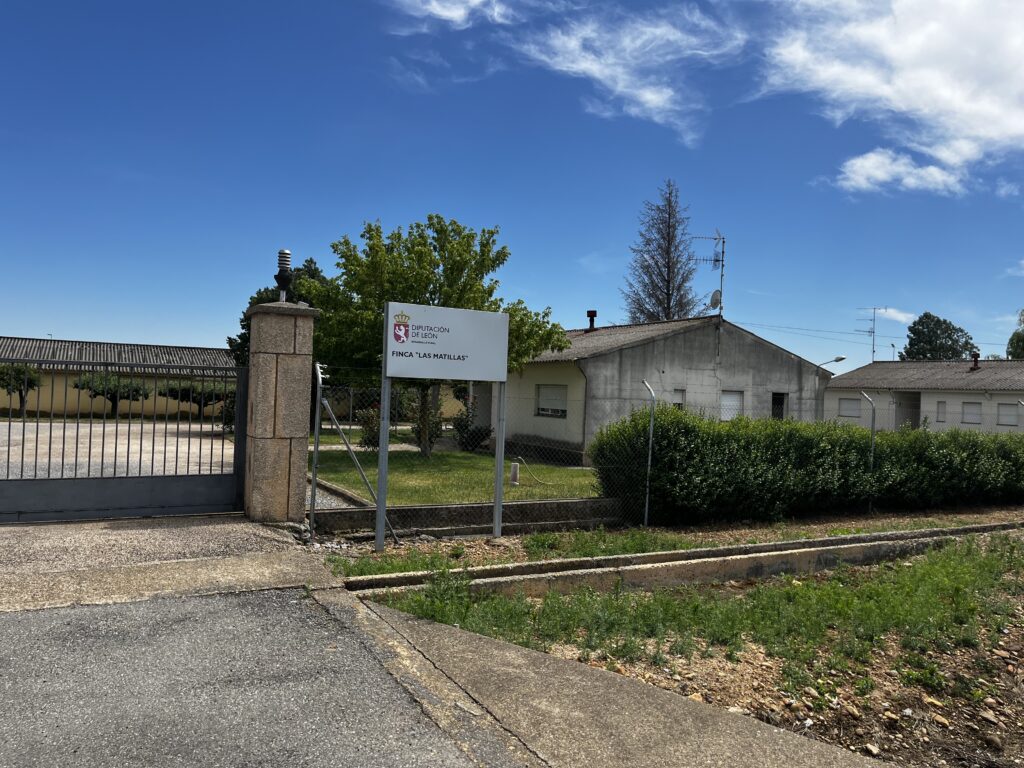
At about 4:10, I passed by a complex of government farm buildings, ominously behind barbed wire and a locked gate.
Sometime after this, I passed the village of La Milla del Páramo, perhaps a kilometer or so off the road to the right. This was just about the time where the asphalt road turned, and the Camino did not, continuing forward on a broad dirt road, littered with stones and gravel.
About 4:30, I crossed over an irrigation canal that had several picnic tables set up around it near the road.
After the road curved a few times through the trees, it came out again into flat-ish farm country. In the distance ahead, I could see a village.
Although I wasn’t feeling particularly warm, I was definitely drinking a lot of water.
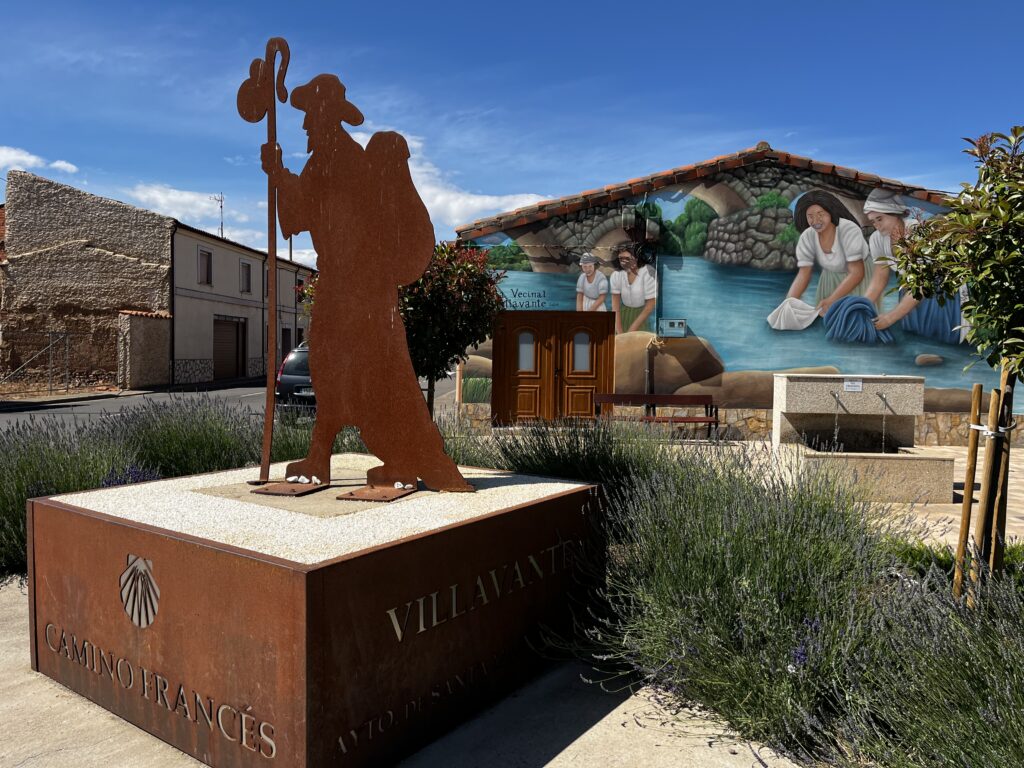
At about 5:10, the Camino left the road and entered the village of Villavante. I found the first open bar and waited for Herve. We had some Kas Limón, replenished water, and were on our way by 5:35.
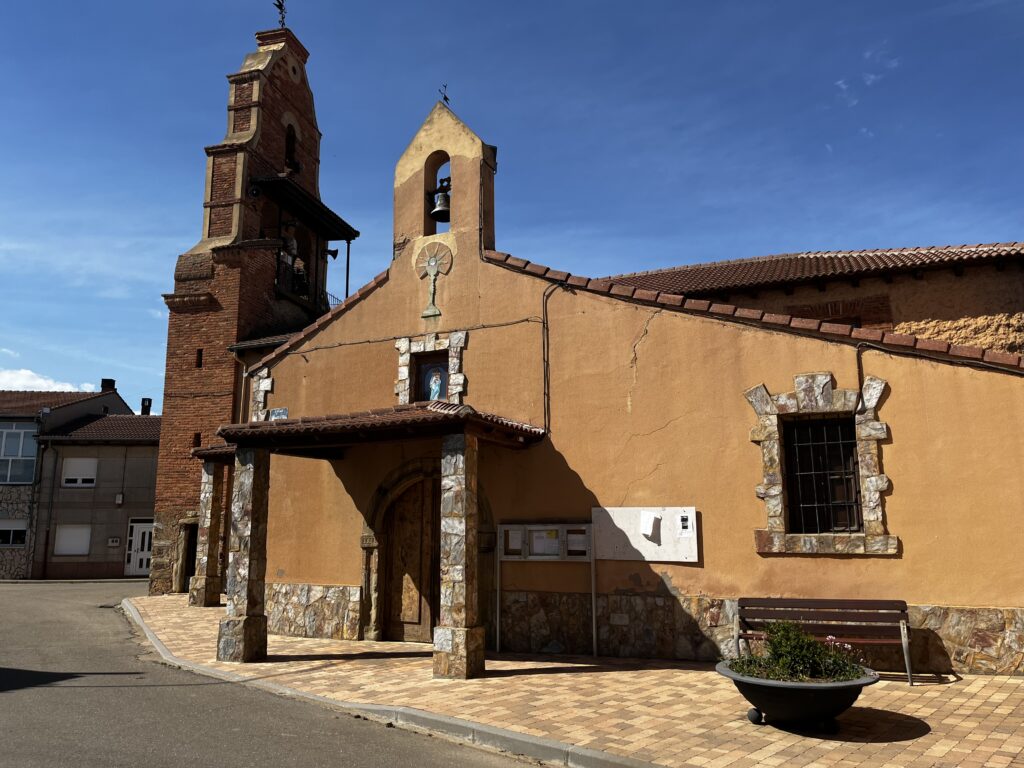
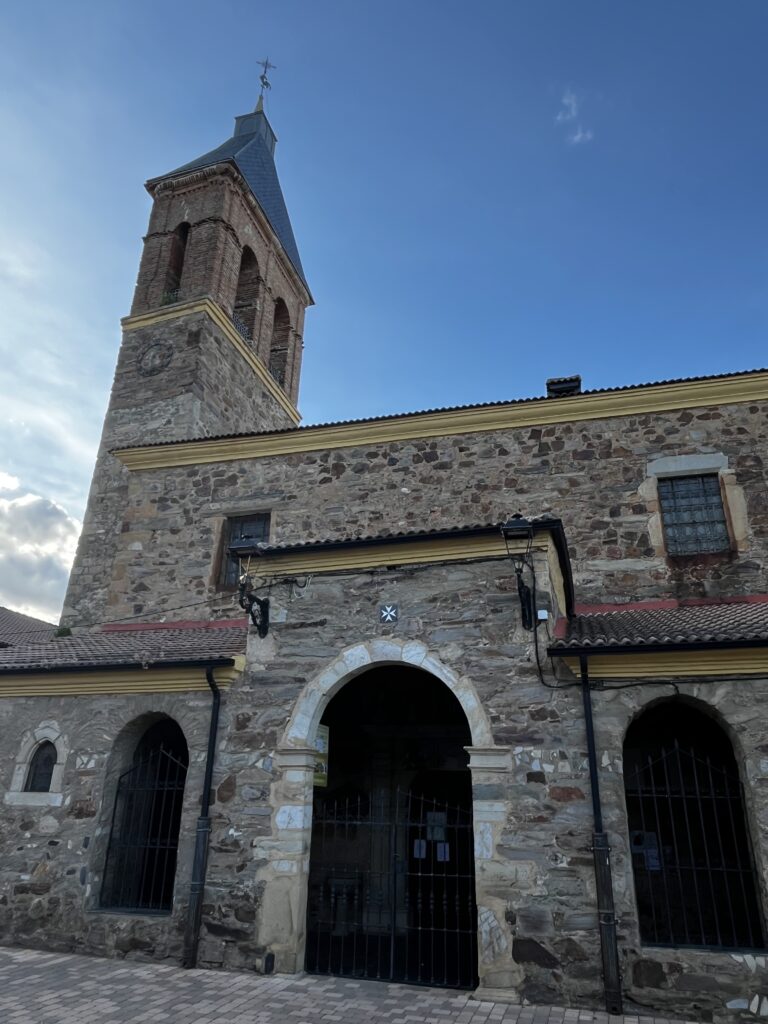
The little village church was locked.
Herve and I roadwalked out of the village and across a bridge over railroad tracks. Once we ran out of village and asphalt, the Camino followed a dirt and gravel road similar to countless others we’ve walked today.
This one ran next to the railroad tracks in a long, straight line for several hundred meters before the Camino abruptly turned down a virtually identical road (without a railroad) in a long, straight line with cornfields to either side.
At about 6:10, the Camino took us over a highway bridge. From here, we walked on the shoulder of a two-lane road for perhaps half a kilometer before navigating a tricky roundabout.
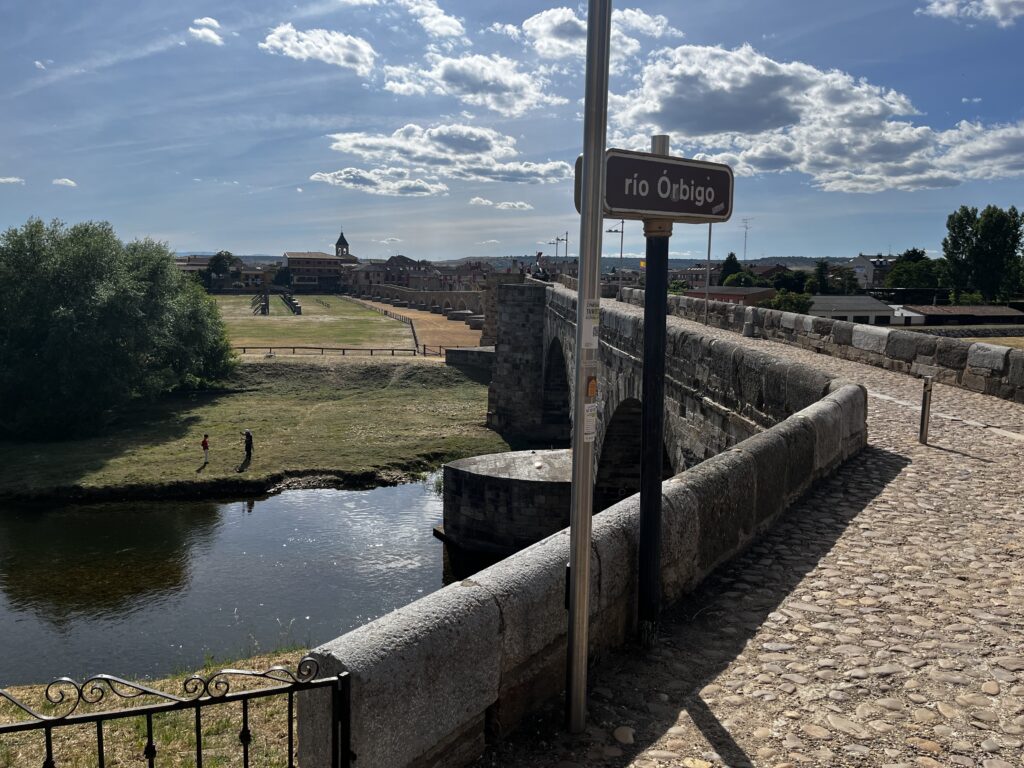
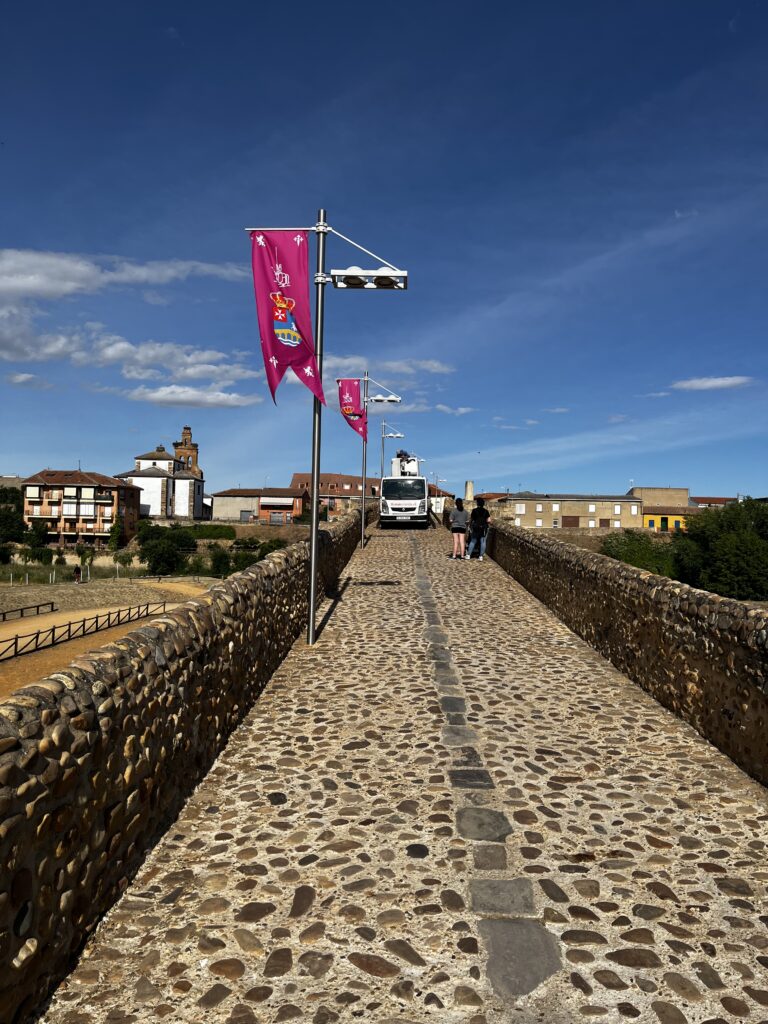
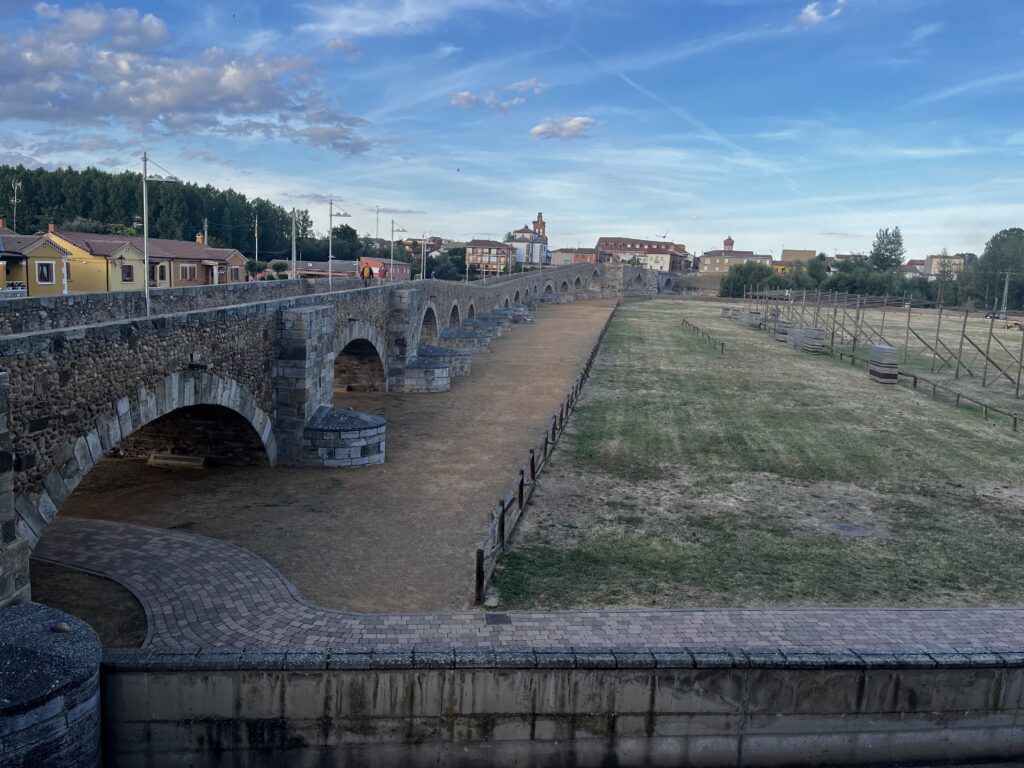
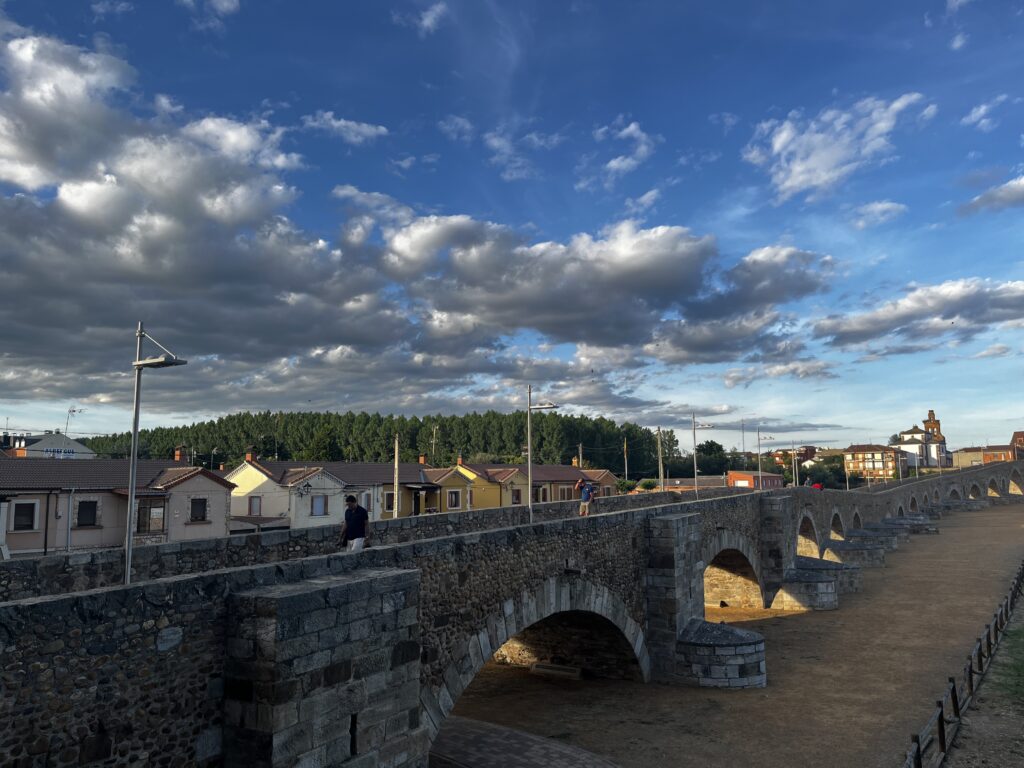
We roadwalked on asphalt through the hamlet of Puente de Órbigo. Herve rested on a bench briefly while I pressed on, crossing over the Río Órbigo on the long medieval bridge. The bridge is associated with a romantic tale of spurned love, mania, and jousting.
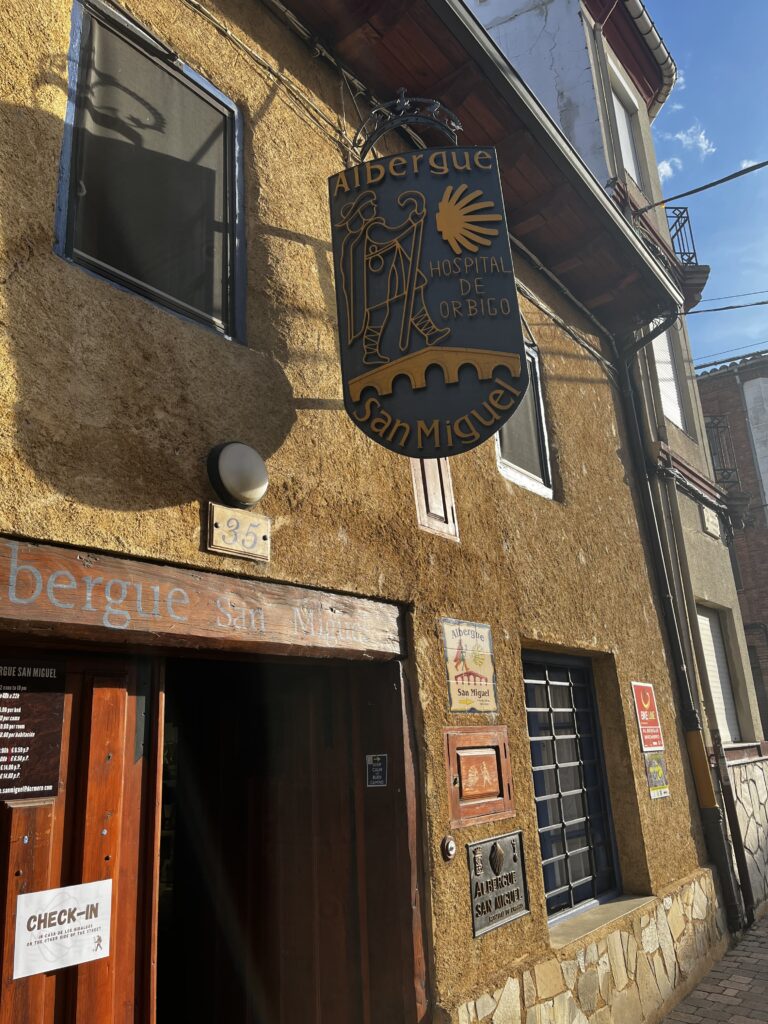
After crossing the bridge, I was in the village of Hospital de Órbigo. This is a beautiful place, and I’ve always wanted to stay here. Every previous time I’ve passed through, it’s been for lunch.
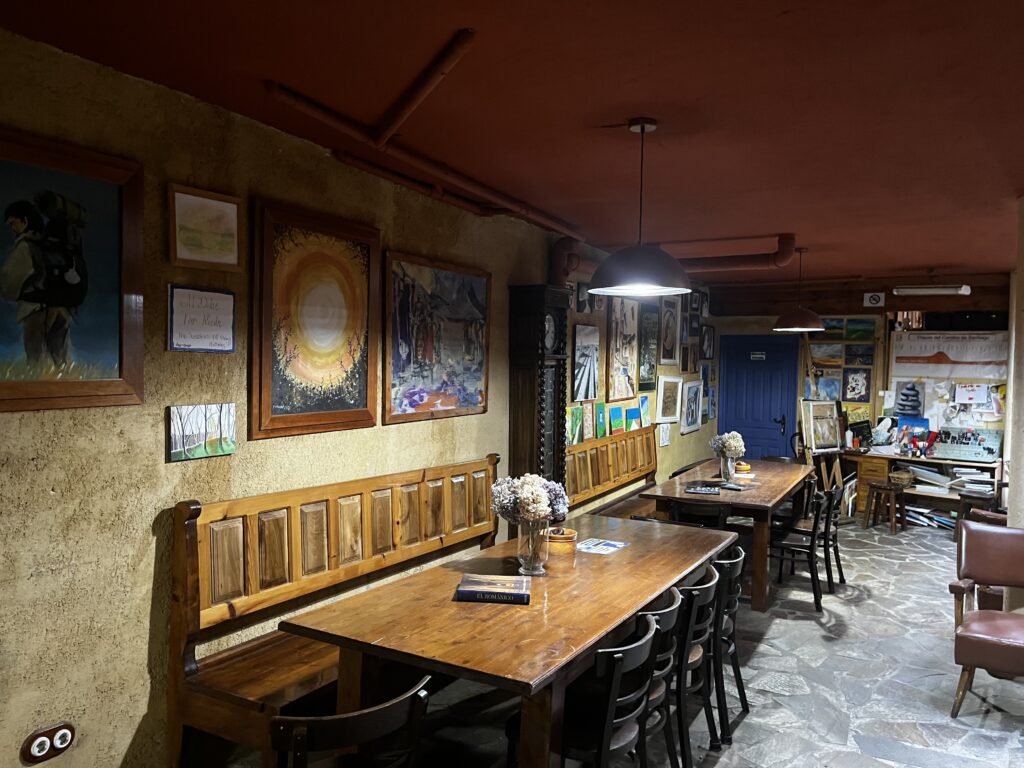
I arrived in my albergue at about 6:40, the latest I’ve arrived possibly this entire Camino. Herve arrived just a few minutes after me.
Today I inadvertently tied my all-time one-day long distance record: 38.9 km. I was told the alternate was maybe 1.5 km longer than the main route, but it was closer to 8 km longer.
Rule 1: all distances on the Camino are lies.
I will say, though, that my back feels pretty good now. And, of course, tomorrow is going to be a very short day of (hopefully) just 16 km into the city of Astorga.
Date: 10 June 2026
Place: Hospital de Órbigo
Today started: León
Today’s Photos!
Glad you are better, you really moved this day!