
Via Lemovicensis: Transitions
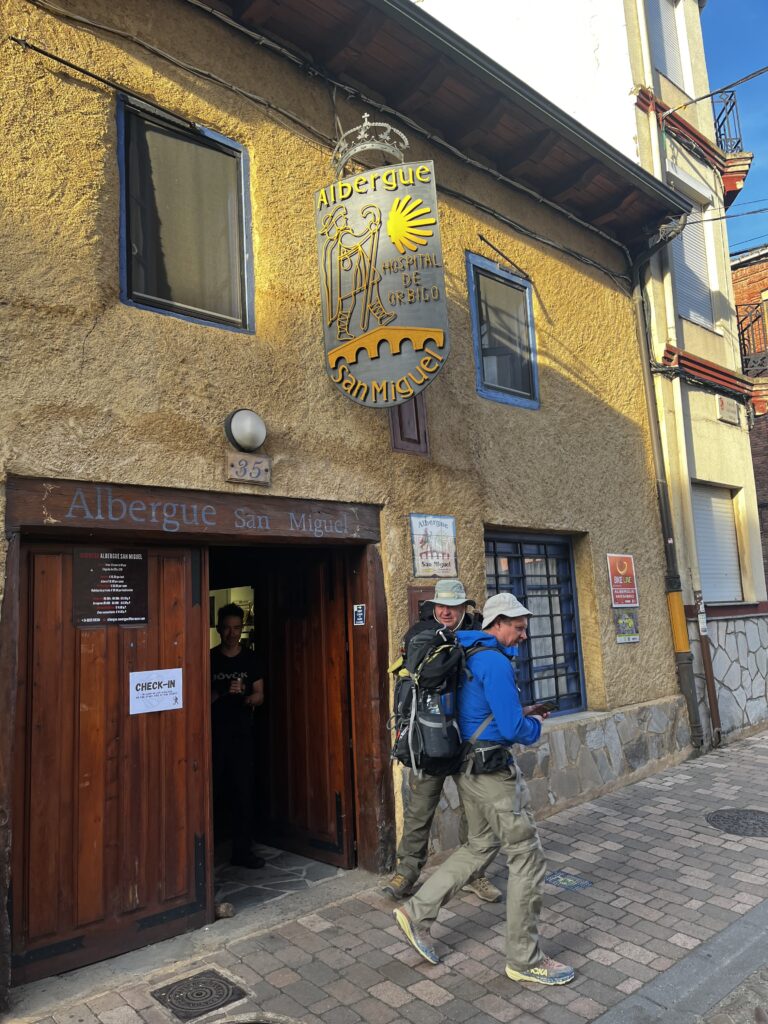
A late start to the morning. After yesterday’s walk, we might be forgiven for oversleeping. After breakfast, Herve and I headed out the door just after 8:05.
It’s probably the last morning I’ll be able to say that, as his plan is to take a rest day in Astorga, and I will continue on.
The morning was cool, but not cold, and the sky was blue. Today was the first day since my injury that I carried my full pack. I figured that since this was a short day, it was a good test case to see how I was doing.
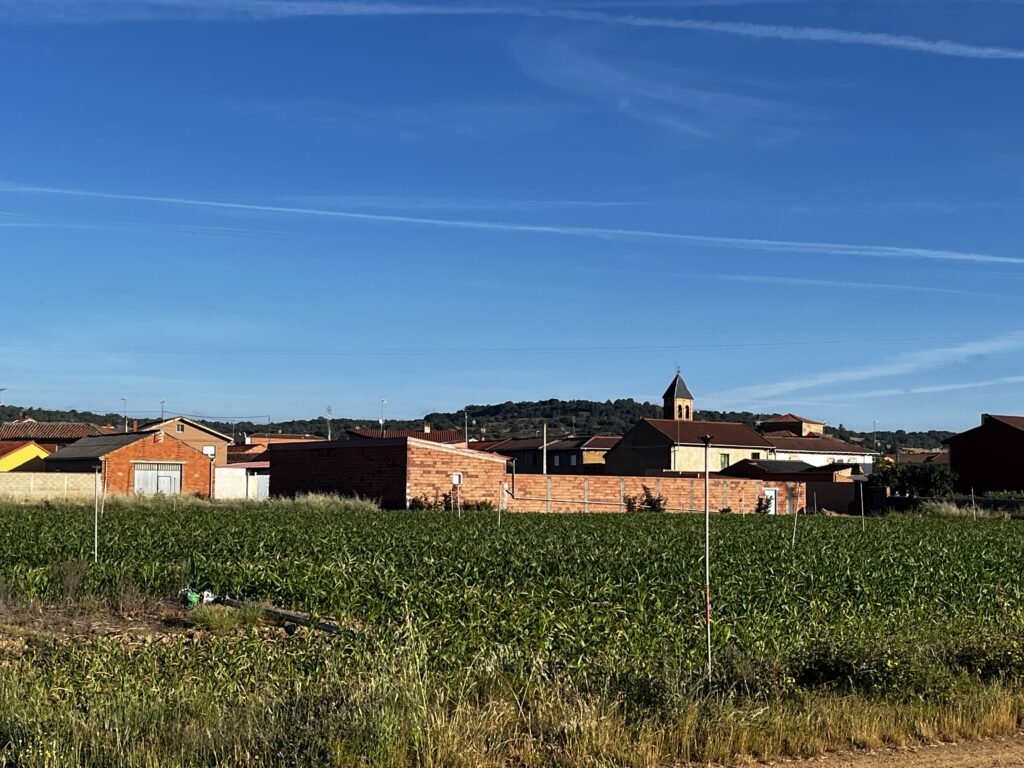
At the end of the village, the Camino turned down a broad gravel road through cornfields.
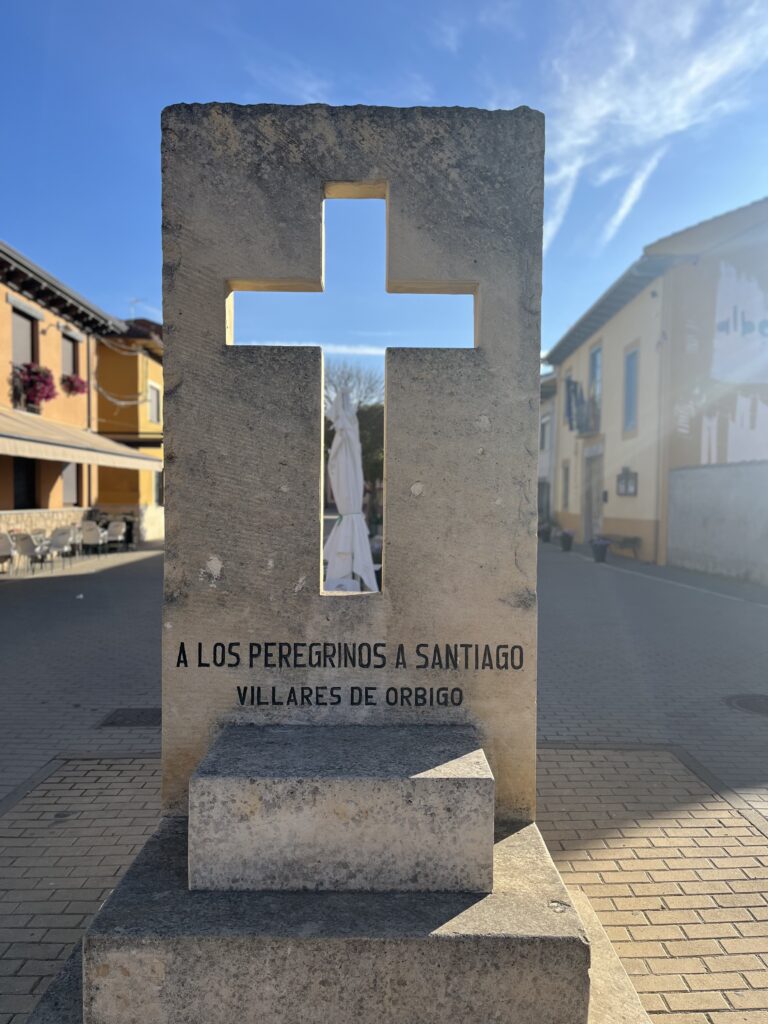
At about 8:35, we arrived in the village of Villares de Órbigo, and the day was already warming up. We stopped at a café for freshly squeezed orange juice and to take off our fleeces.
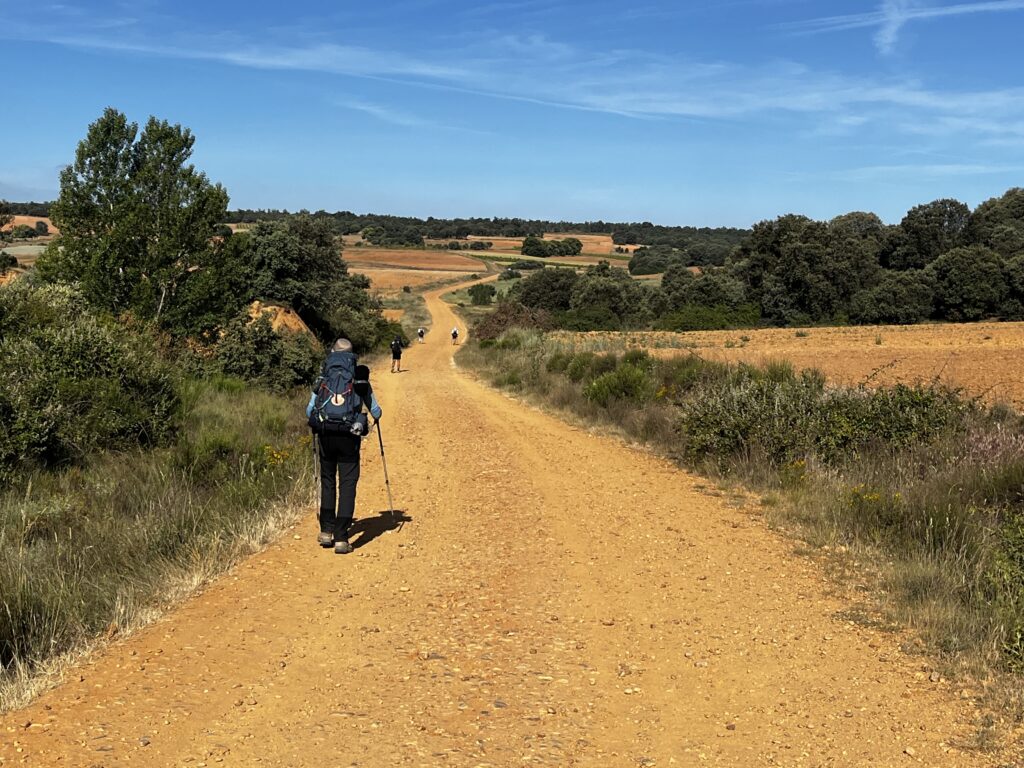
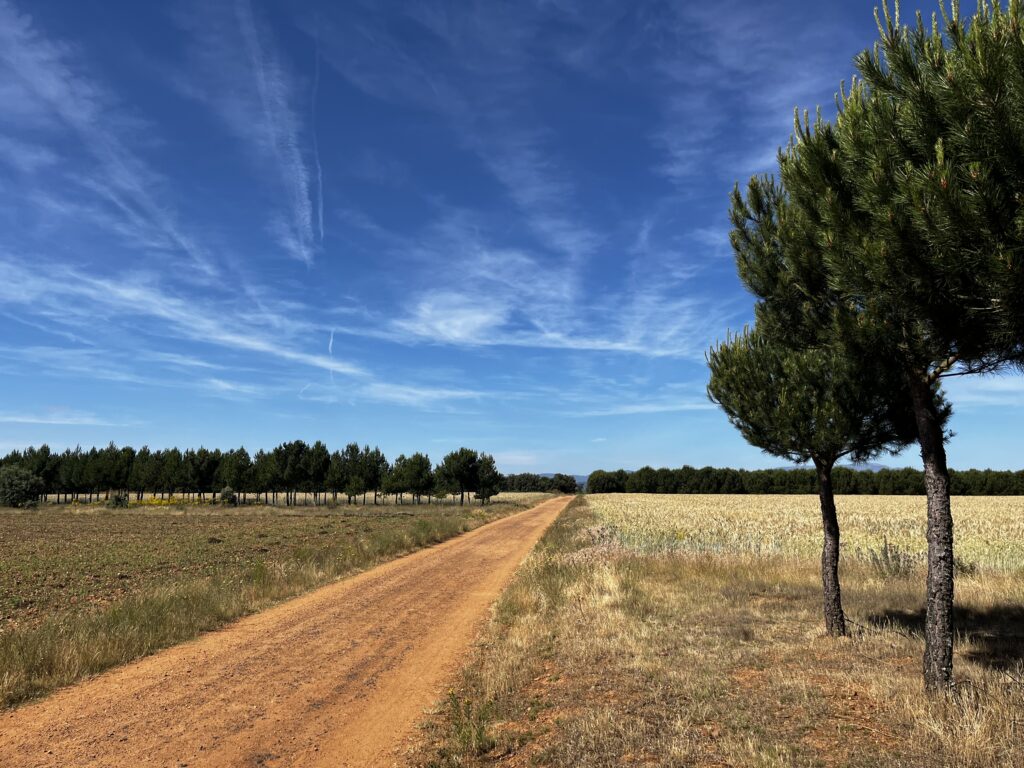
After the village, the Camino continued on a winding dirt road through the trees and fields.
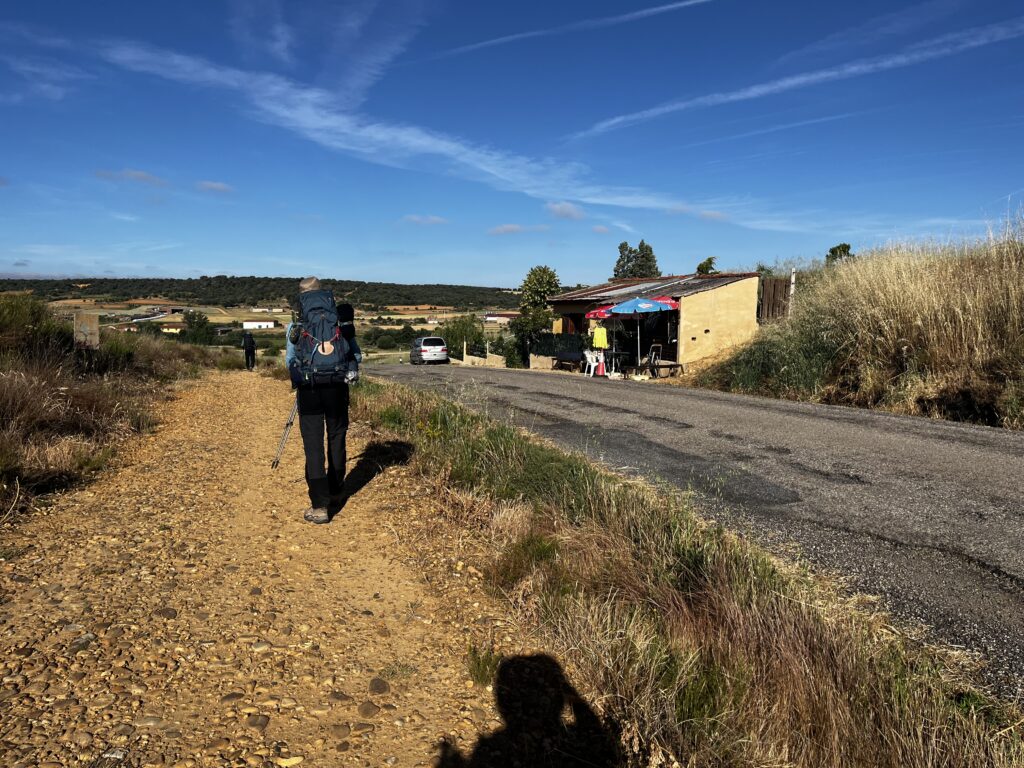
At about 9:20, after we climbed a bit of a hill, we found a snack bar at the top. Truly, we are now in the last 300 km of the Camino. Below us in the valley we could see the next village.
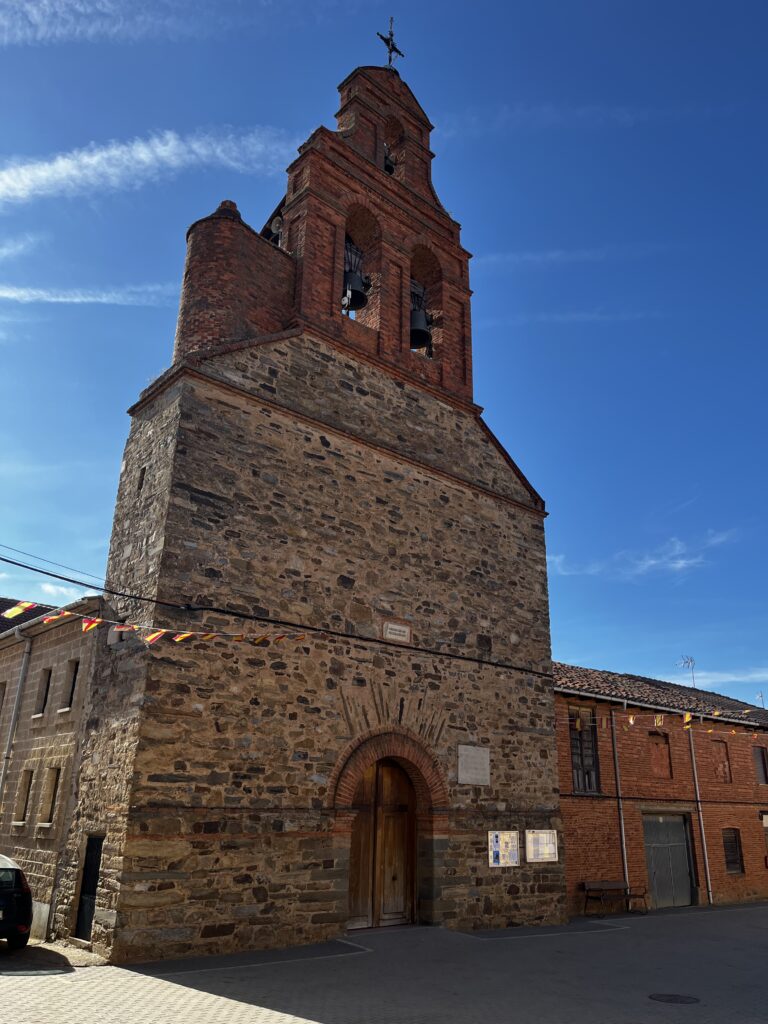
We walked into the village of Santibáñez de Valdeiglesia that just before 9:30. Despite the traditional architecture and materials of the village church, it was only built in 1987. It was, of course, locked.
Back in 2013, Francine began walking her first Camino from the same village I started in this morning. She ostensibly began in León, but because we didn’t want her first day walking to be through the urban tangle of the big city, we took a bus ahead.
I didn’t actually walk the section between León and Hospital de Órbigo until ten years later. And now, I’ve walked it on two different routes.
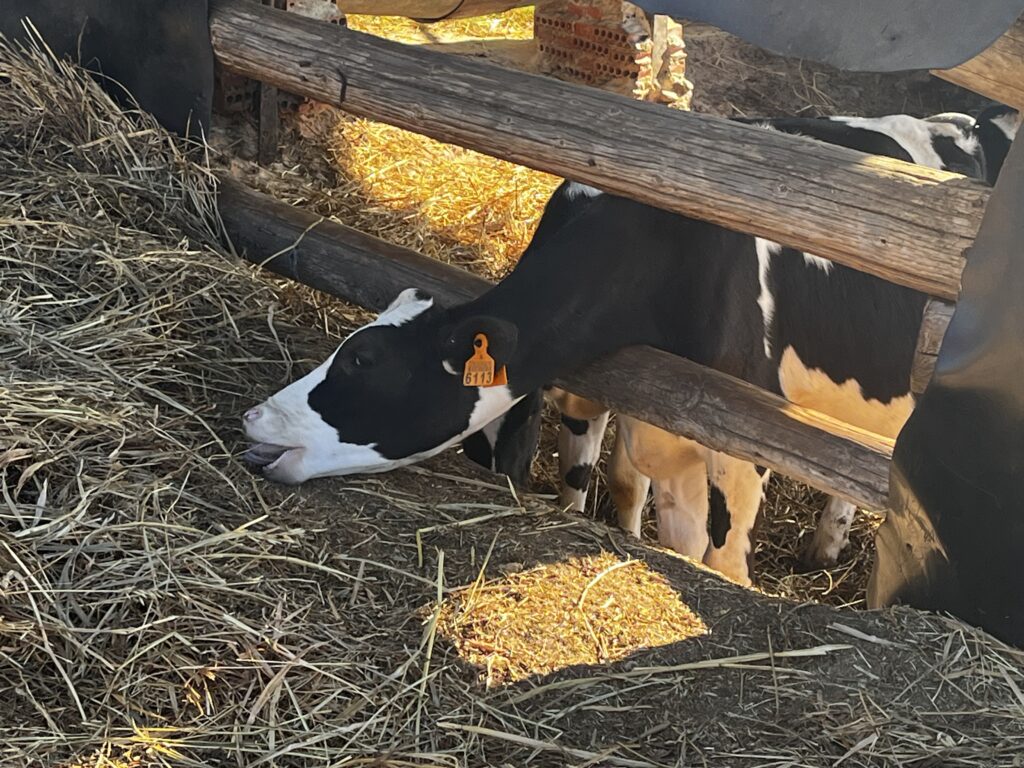
After the village, we returned to the stony dirt road. We passed a couple of barns full of cows and then out into the fields. A bird of prey rode the thermals over our heads.
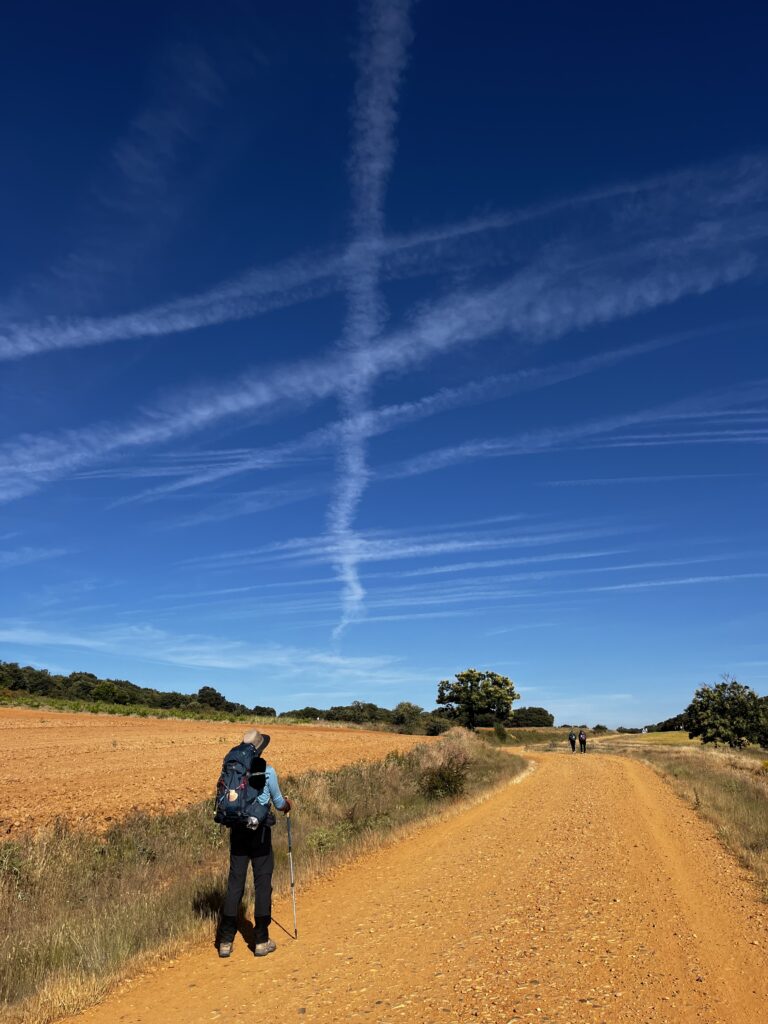
The land now was low, gently rolling hills. The only echoing memory of the Meseta was the occasional broad, flat field or meadow.
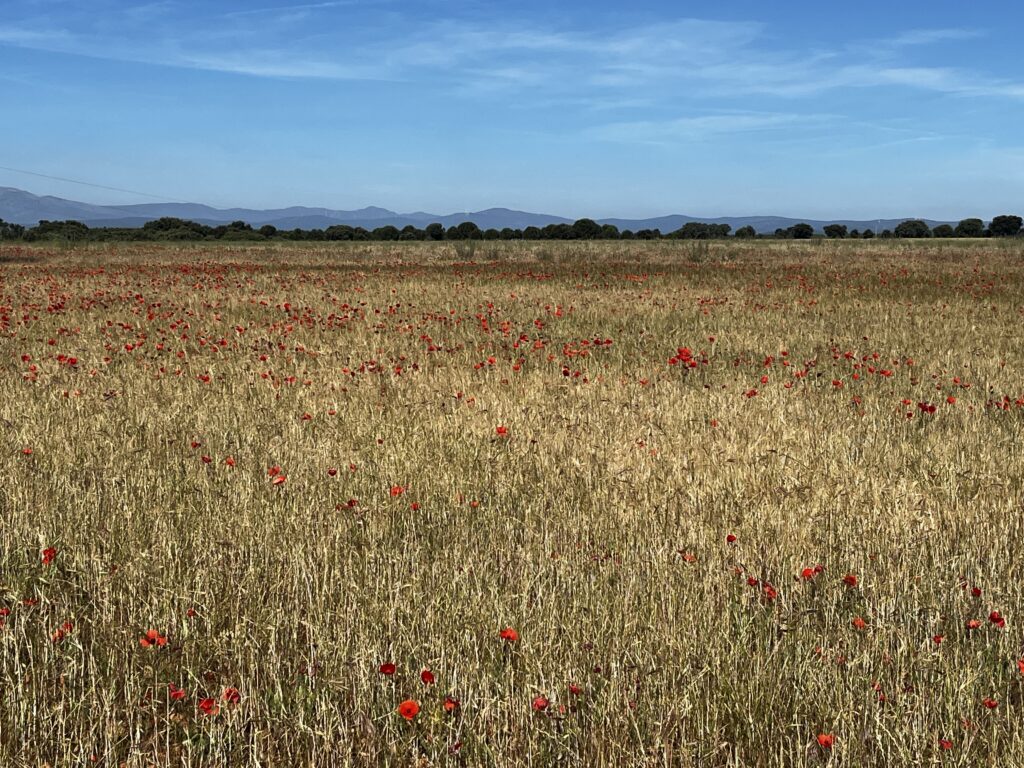
The Camino wound its way through small plowed fields and grassy meadows, strewn with wildflowers, bounded everywhere by lines of trees. Forests crowned many of the hills and in places poured down into the valleys.
We were definitely moving slower than usual; at one point we were passed by a pilgrim pulling a trolley. I had seen him earlier, smoking at a picnic table by the side of the road.
I remember ten years ago this area was a morass of mud and clay that would stick to your shoes so thick that you’d have to scrape it off after just two steps.
I took photos of the ground at the time, and it looked like the surface of Mars. Now, it was dry dust.
My back was feeling much better. It was still sore, but it felt stronger than in previous days. Perhaps more importantly, I had no spasms, even when I misstepped or slipped. I think carrying the backpack helps. It forces me to walk straighter, and the weight seems to be supporting my core.
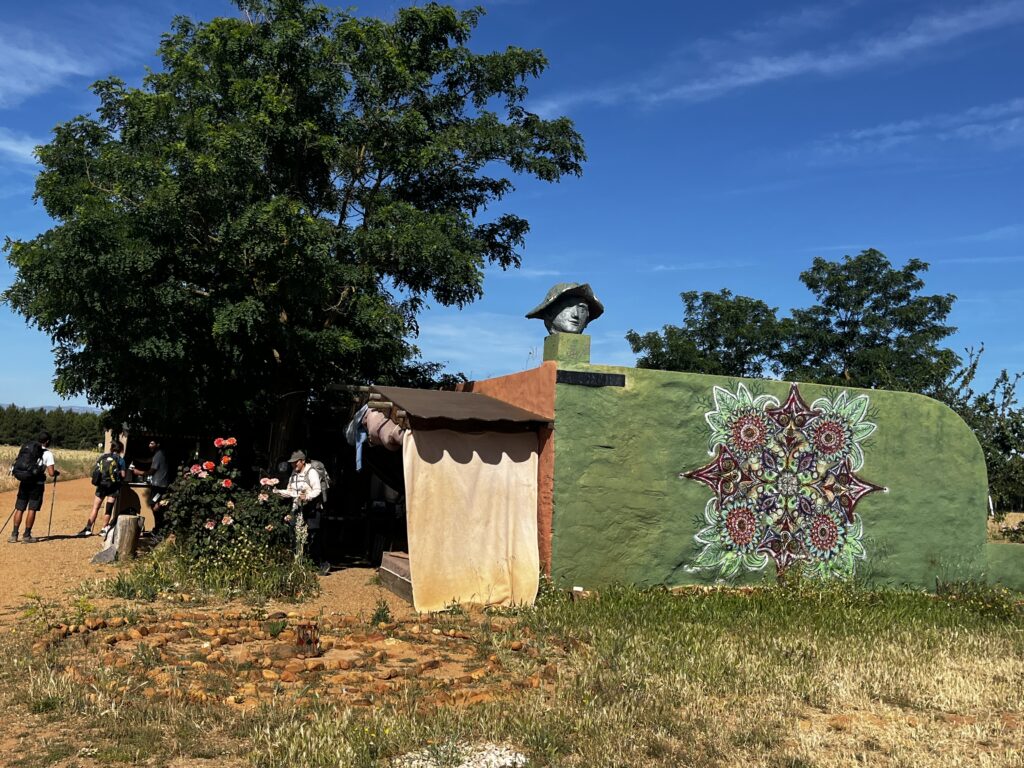
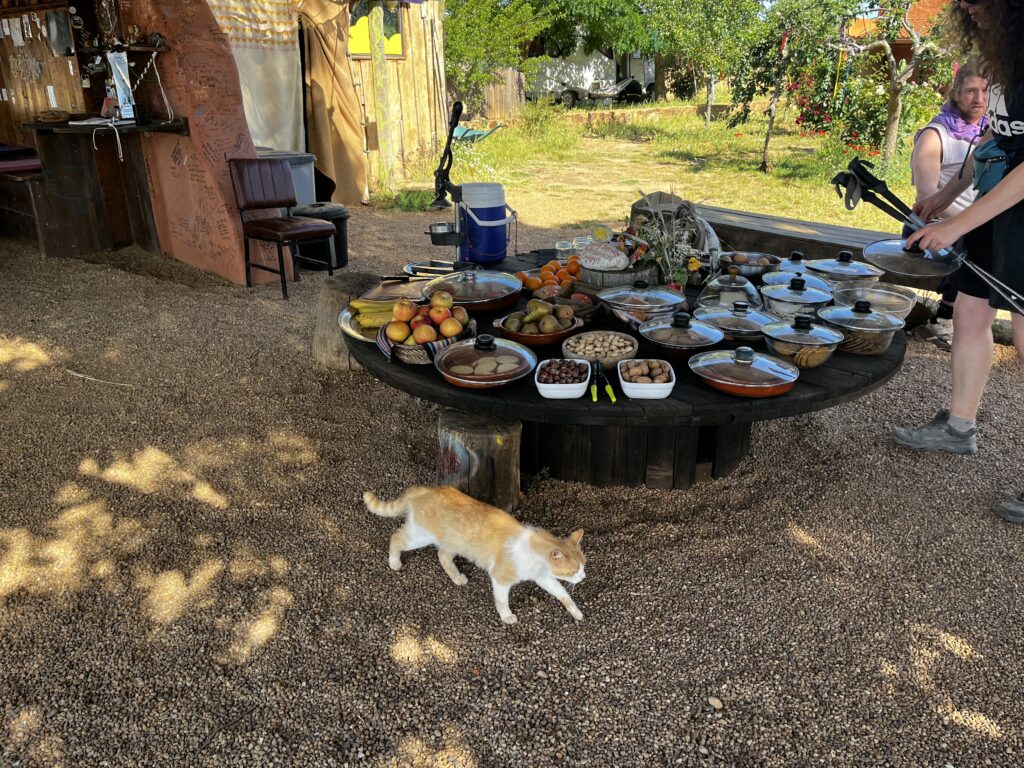
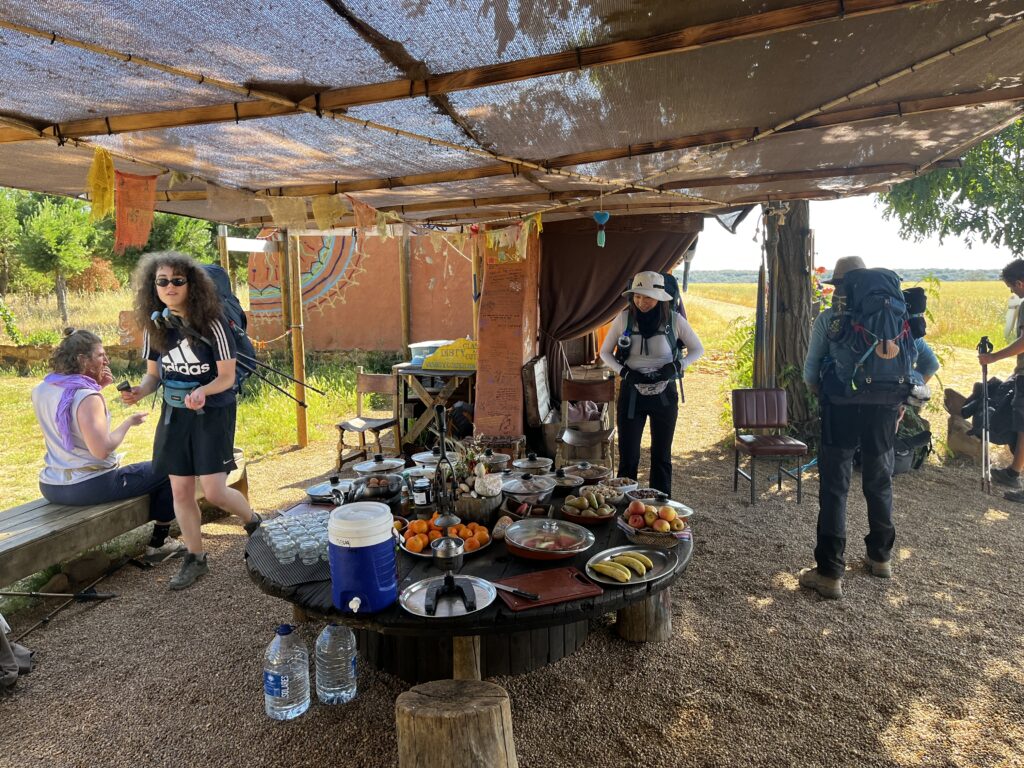
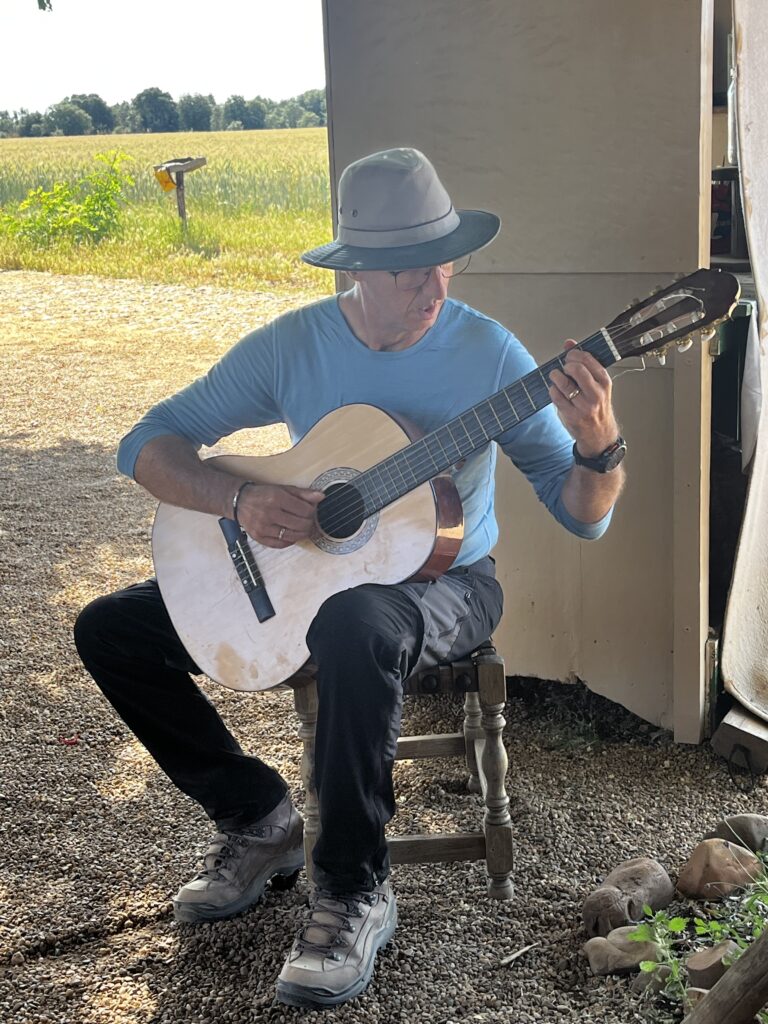
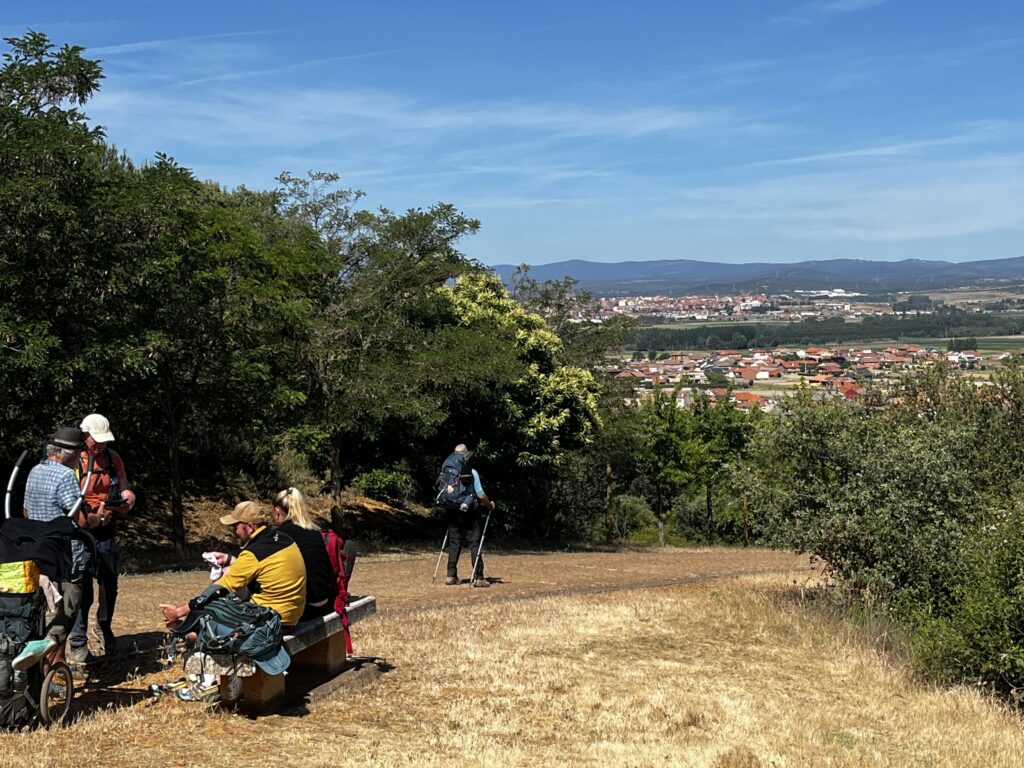
At about 10:45, at the top of a hill, we came to another little rest area. This was a donativo paradise with drinks and fruits and nuts. Smiling pilgrims crowded around, and the air was filled with chattering and laughter. We took a break, of course, and Herve played guitar. A little moment of magic.
Remember Rule 4: donativos are not free.
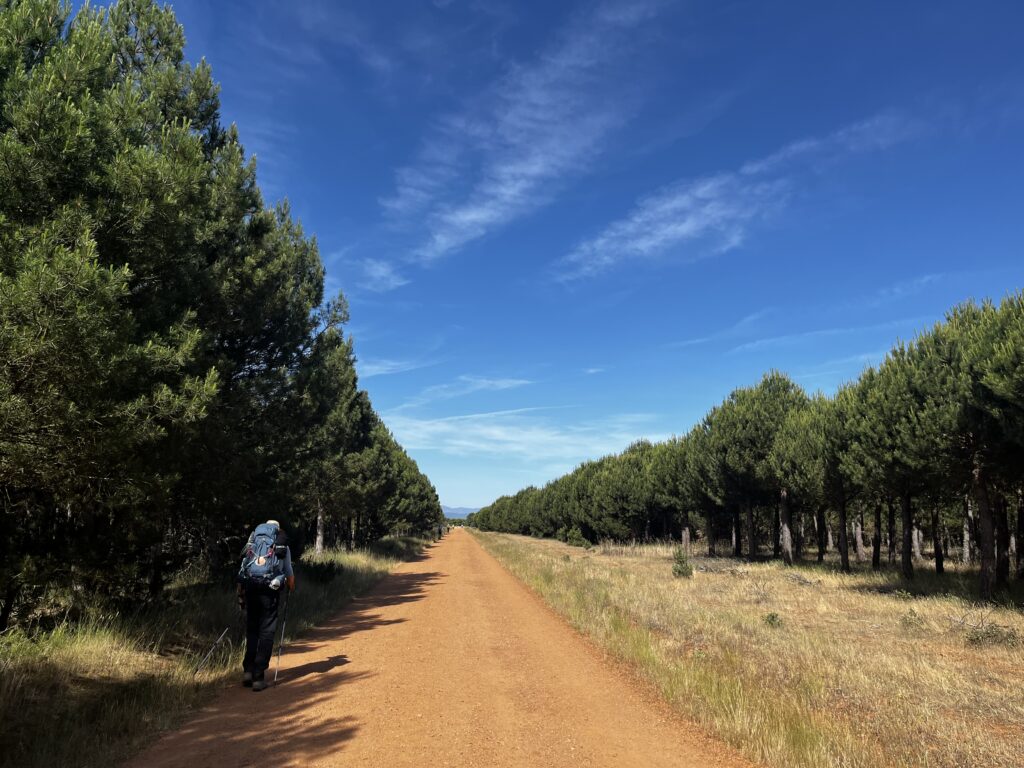
By the time we left, it was 11:05. The Camino took us through a pine tree farm. We had a clear view of the mountains ahead, and already they reminded me of our passage through the Pyrenees.
The guy with the trolley passed us again.
When we emerged from the tree farm, the Camino took a turn, and we could see Astorga in the distance on our right.
As the morning wore on, the landscape alternated between plowed earth and wheatfields and small sections of farmed pine.
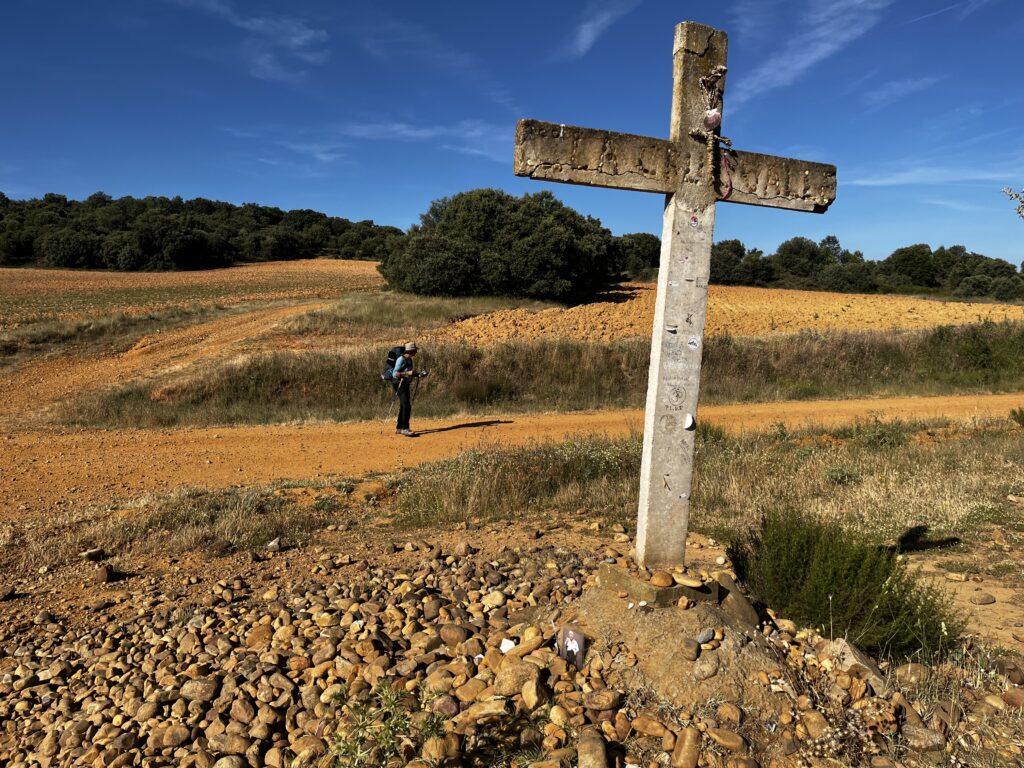
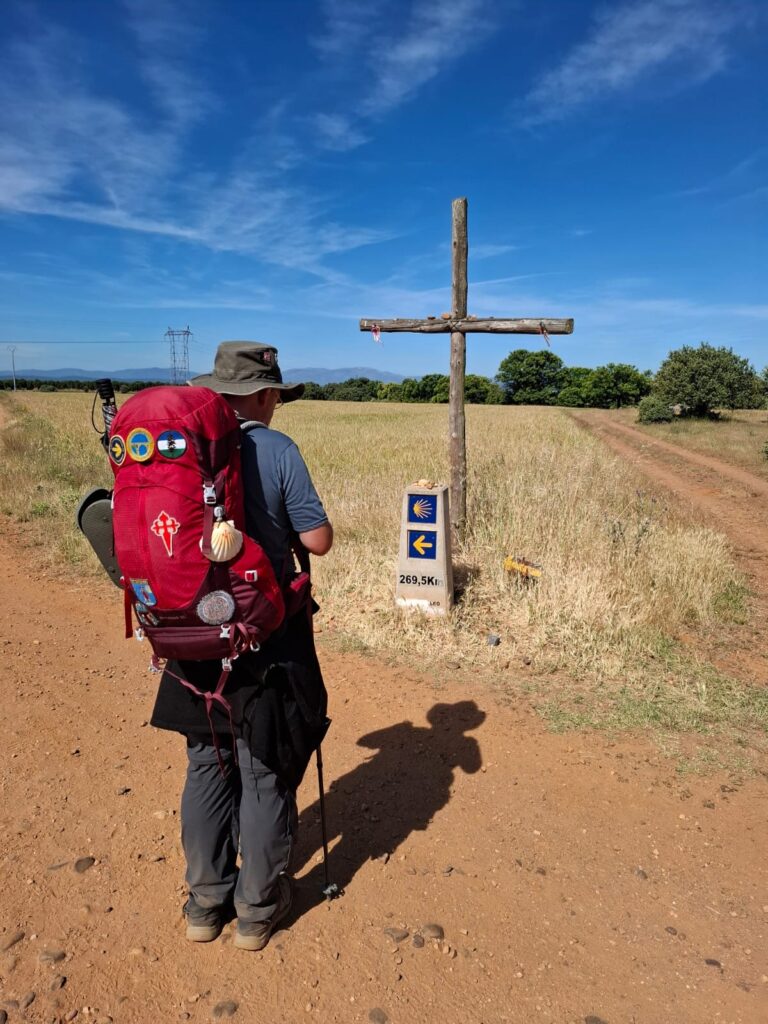
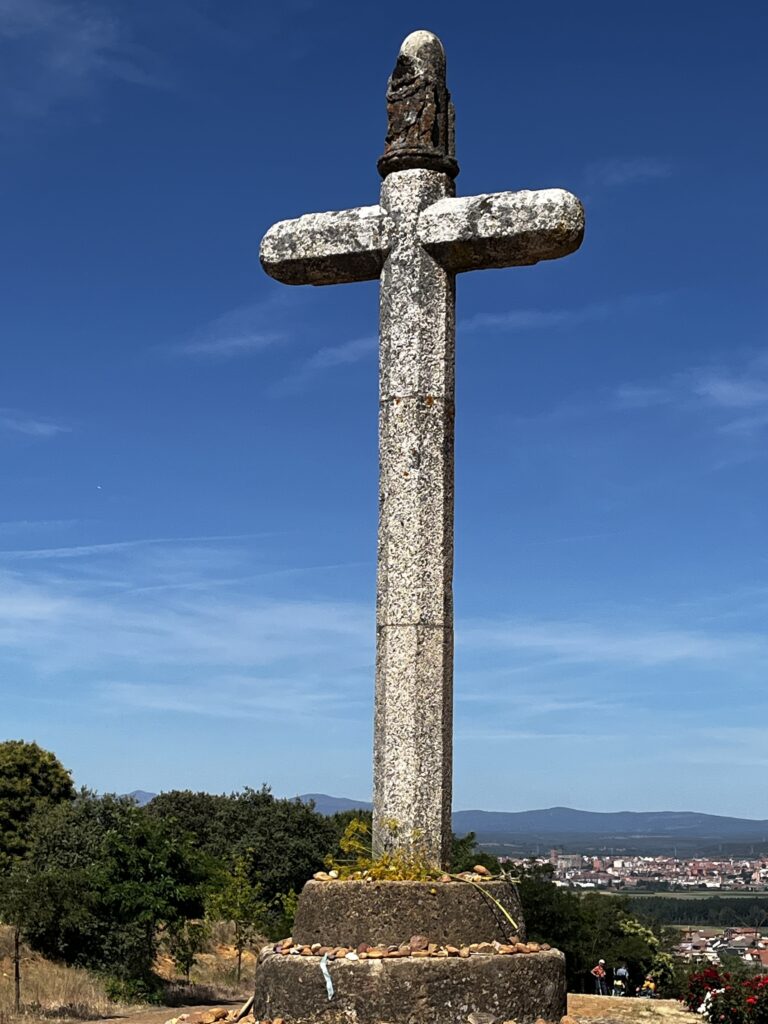
At about 11:30, we came to a roadside cross guarding the downhill road into the city of Astorga. The view is tremendous from this point. The steep downhill walk on concrete, less so.
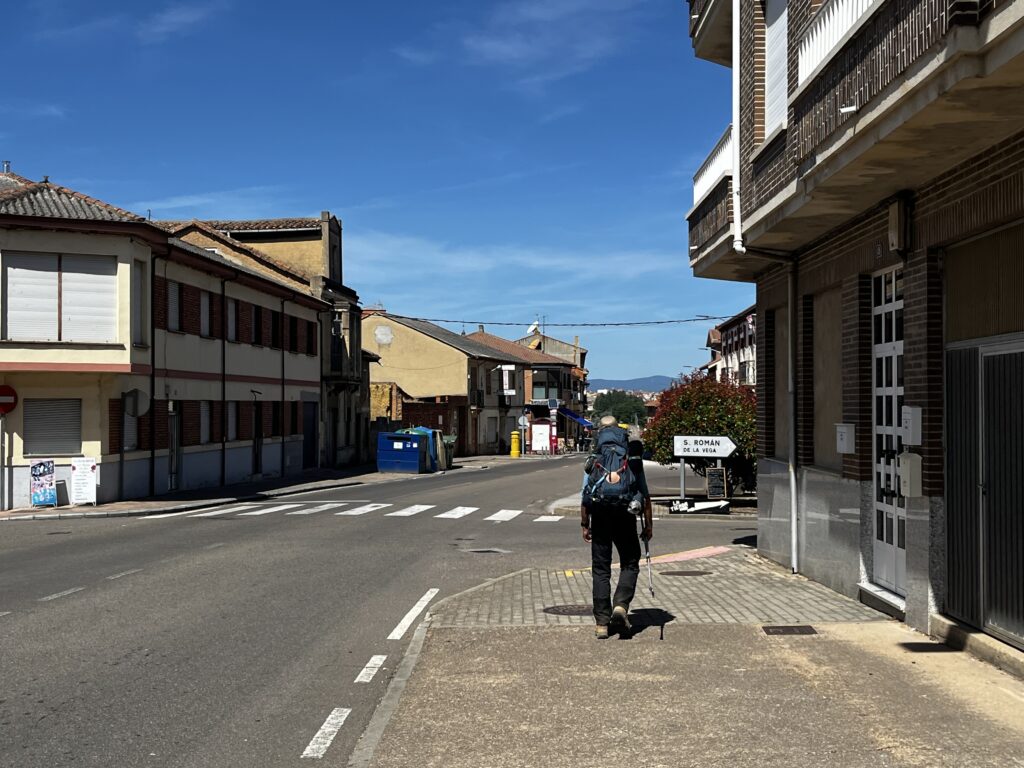
In less than ten minutes, this brought us to the suburban village of San Justo de la Vega. From here, it was sidewalks. This may not be the prettiest town – especially along the busy commercial street that the Camino followed – but it is certainly lively.
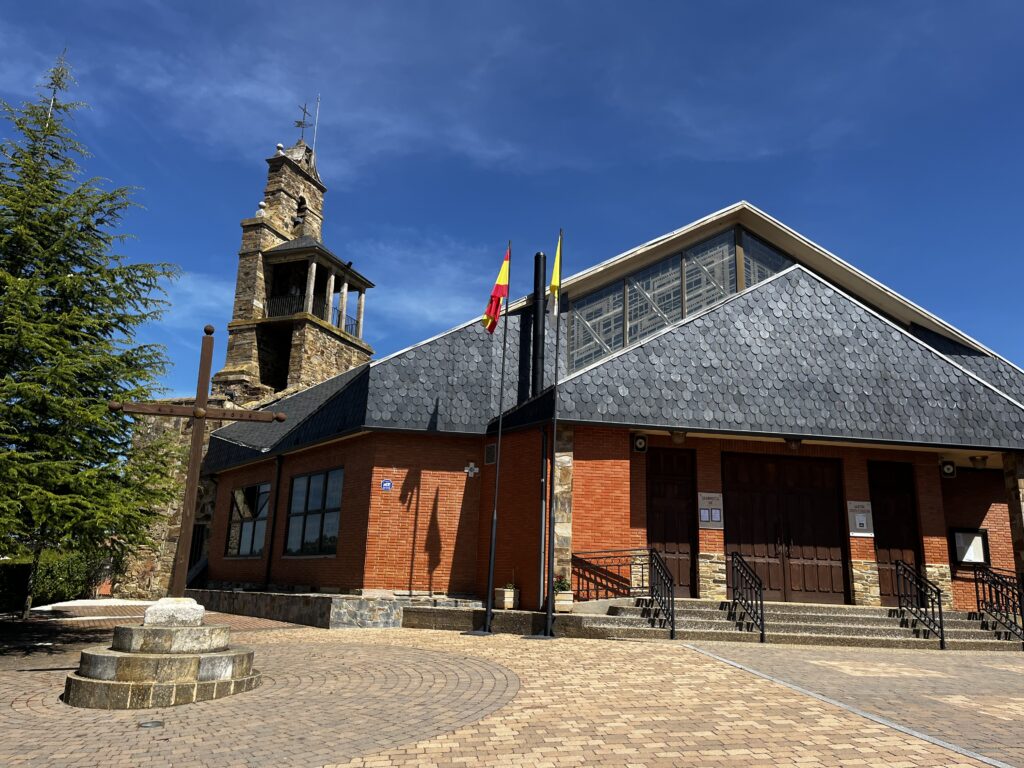
The village church is a thoroughly modern construction with the bell tower retained from the original church. We had to completely walk around the church to find the entrance, which was however locked.
We left the village at noon and continued following the main street, which was now a highway. It took us on a metal pedestrian bridge next to a stone bridge over the Río Tuerto.
The sidewalk continued along the highway, open fields to our left and woodland to our right. Thankfully, the Camino left the highway and struck out through the woods on a gravel road.
The woods ended in a few acres of cornfield, and then we were walking through the industrial outskirts of the city of Astorga.
This was followed by another short section of wheatfield and a hopyard, and then a small stone bridge over stream.
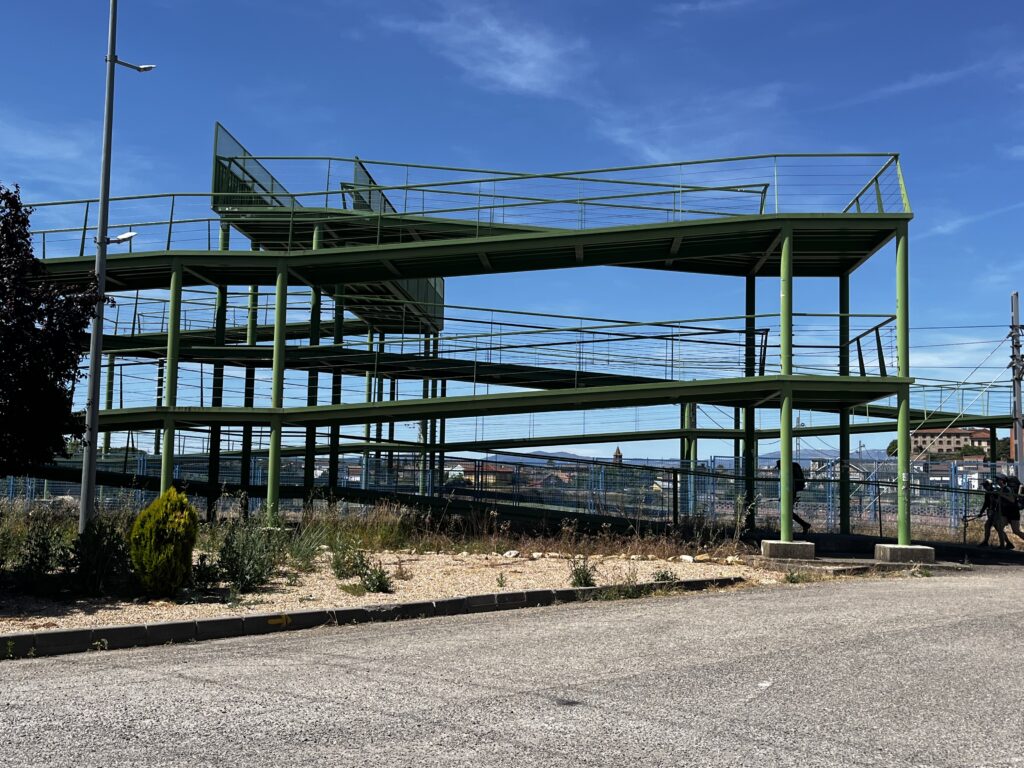
Then we came to the most bonkers bridge you’ve ever seen. It literally winds its way up three stories, crosses over a single line of unused railroad track, and then winds its way back down.
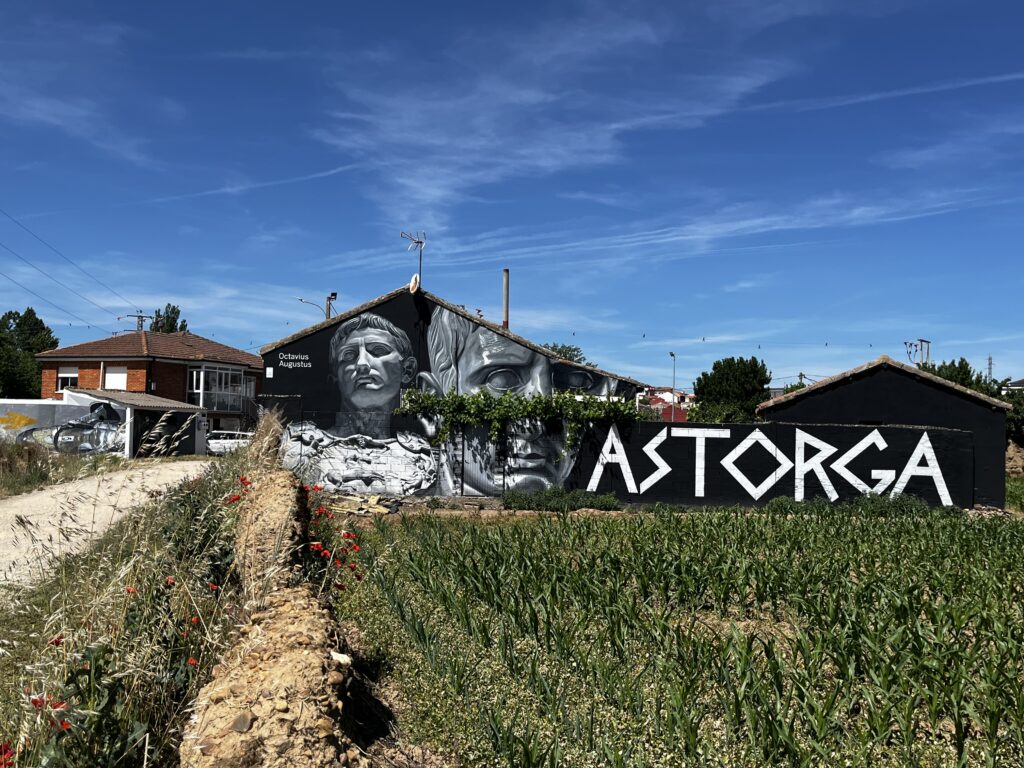
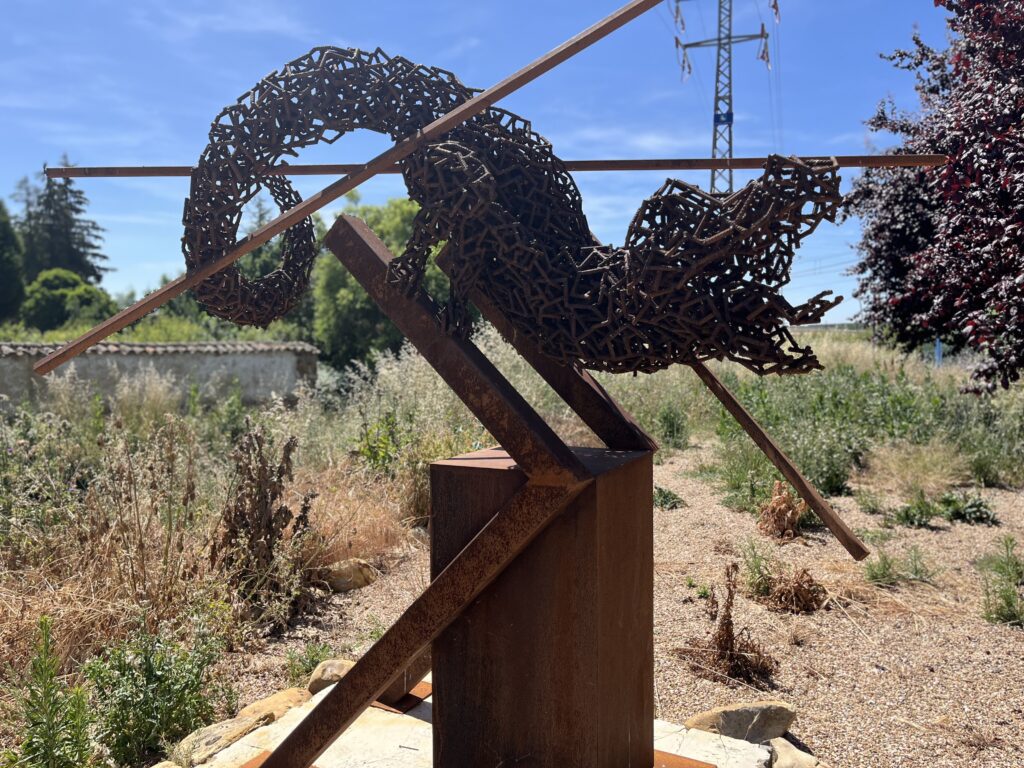
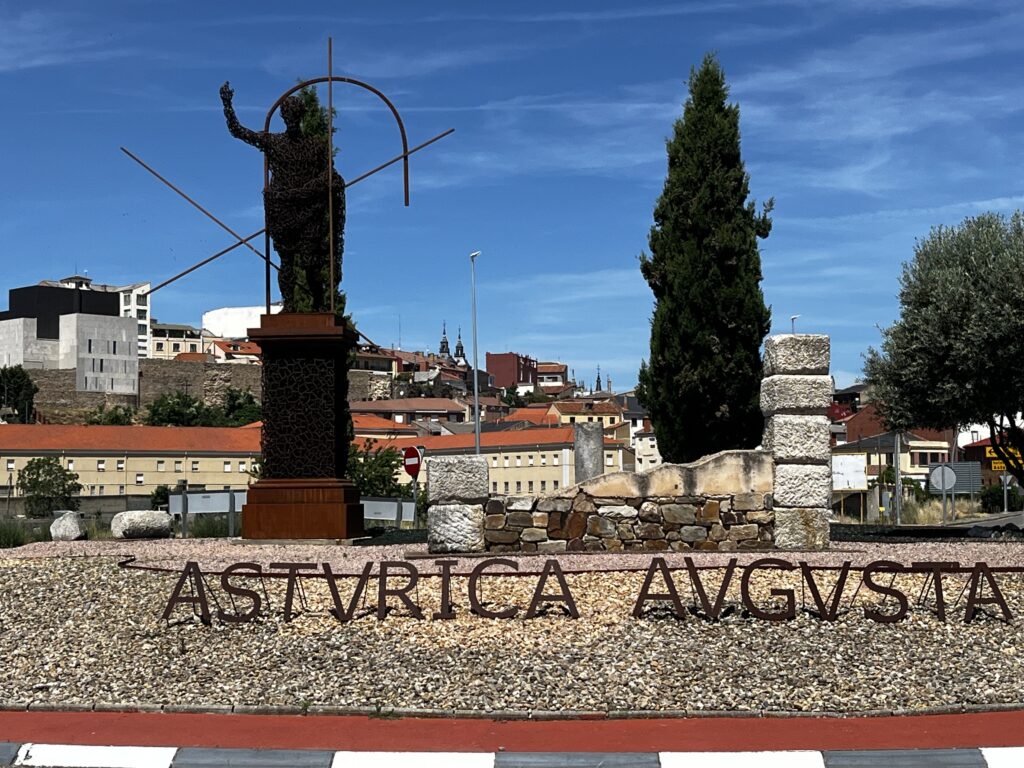
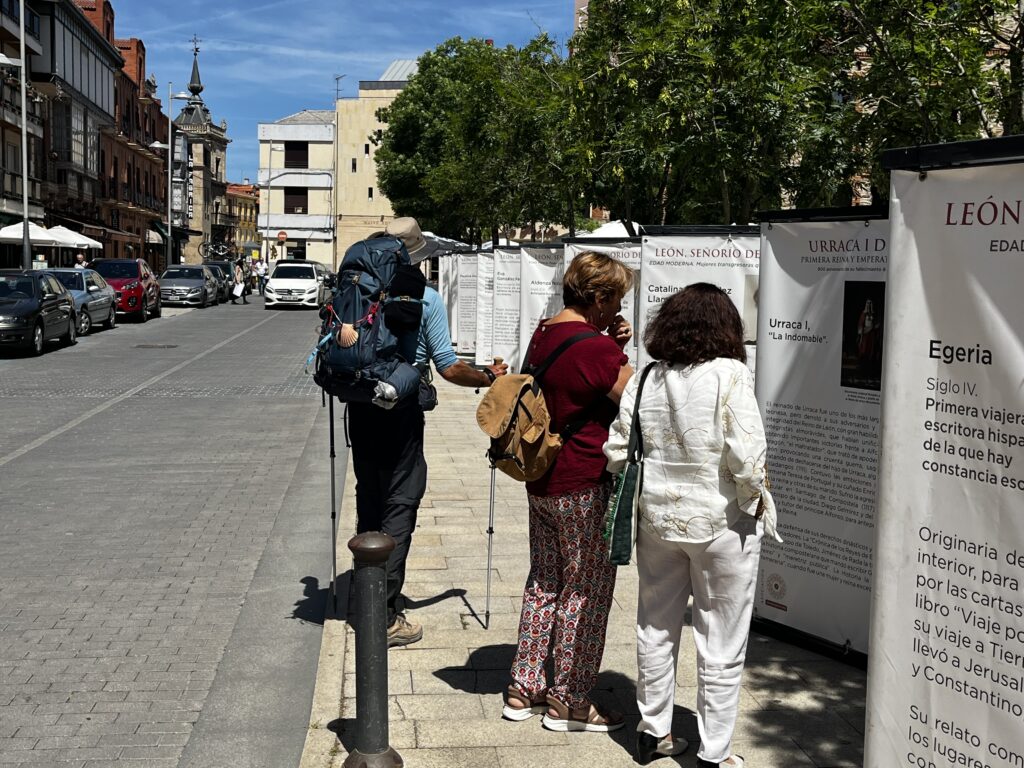
There are some relatively new and fascinating pieces of public art as you come into the city. I found myself constantly stopping to admire them and to take photos.
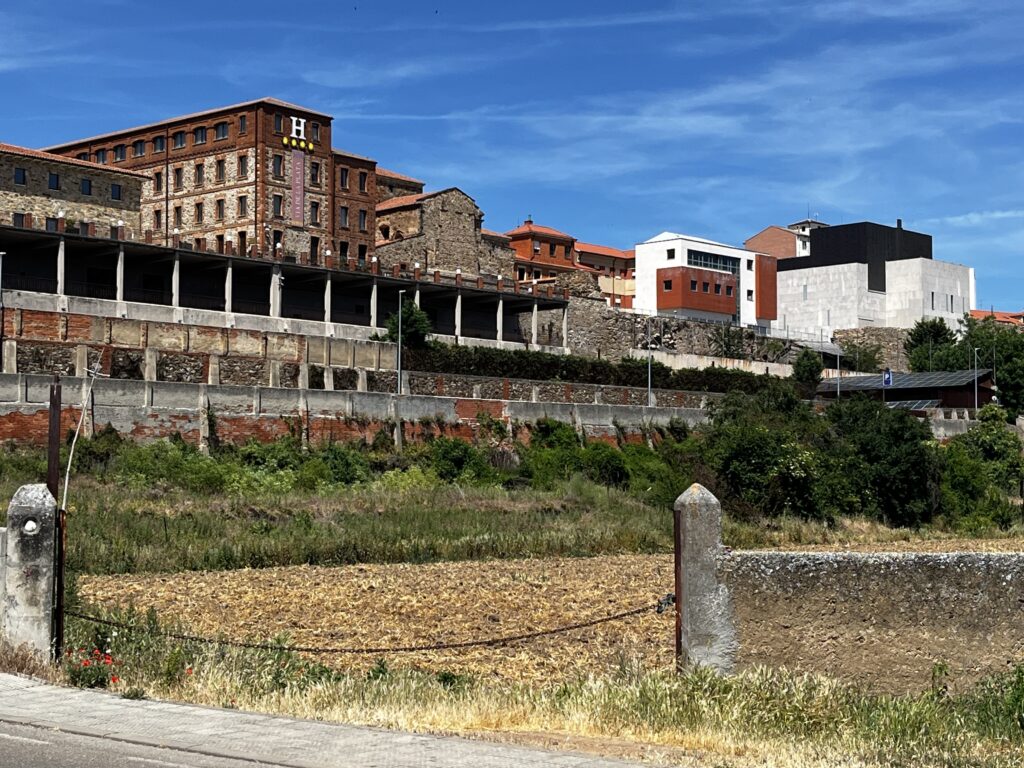
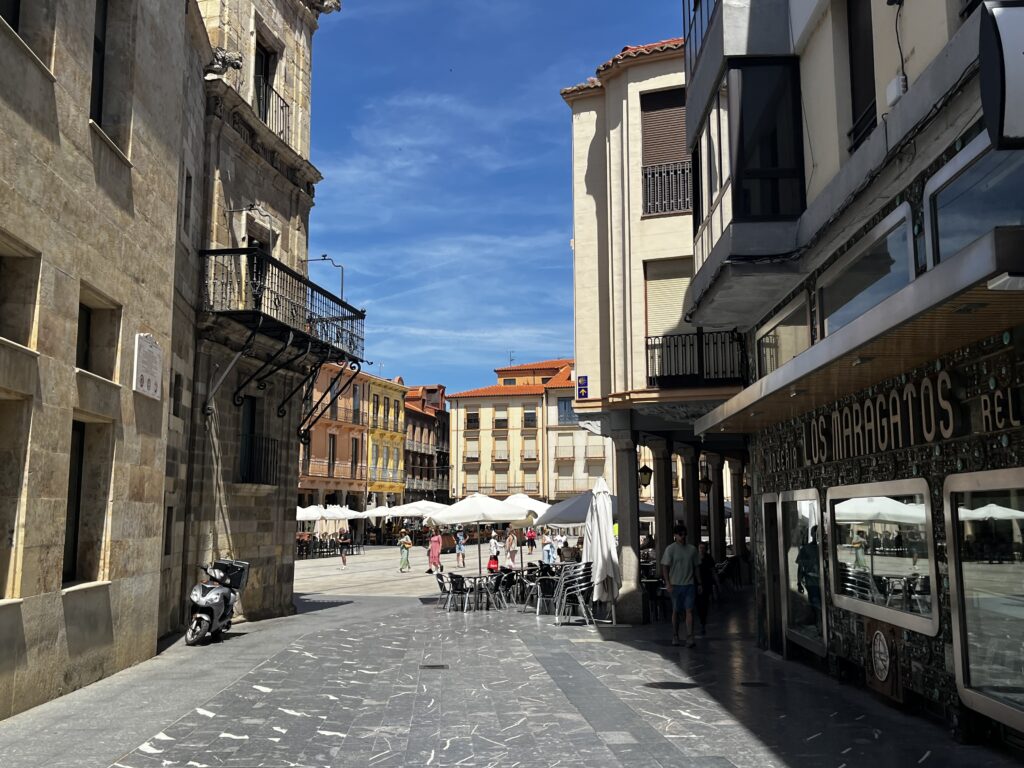
Astorga is built atop an ancient Roman city, and the central portion is on top of a hill where you can see the remains of Roman and medieval walls.
The thing about hill towns is you have to climb up the hill. Just after we got to the top, we heard an unfortunate church bell clonk 1 PM.
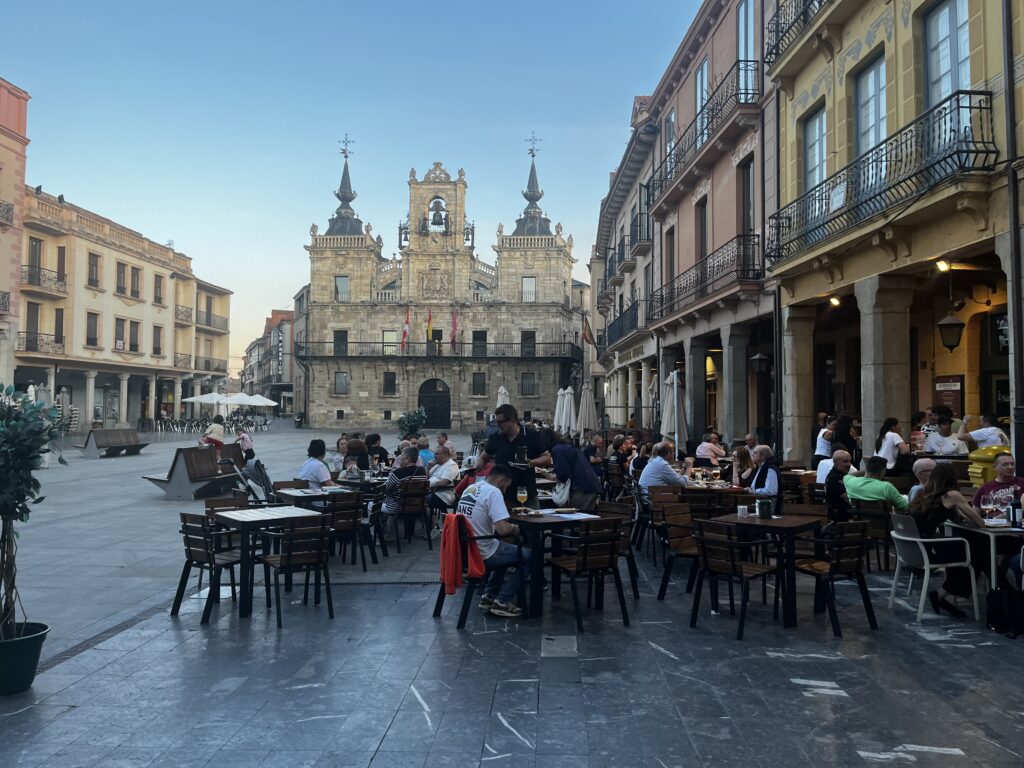
Ten minutes later we were sitting at a table in front of the Gaudi Palace ordering lunch.
After lunch we made our way to our albergues. Herve had reserved in advance, since he will spend two nights here. I headed for the place I always stay in Astorga, Albergue de San Javier.
It turned out that this was exactly where Herve had reserved.
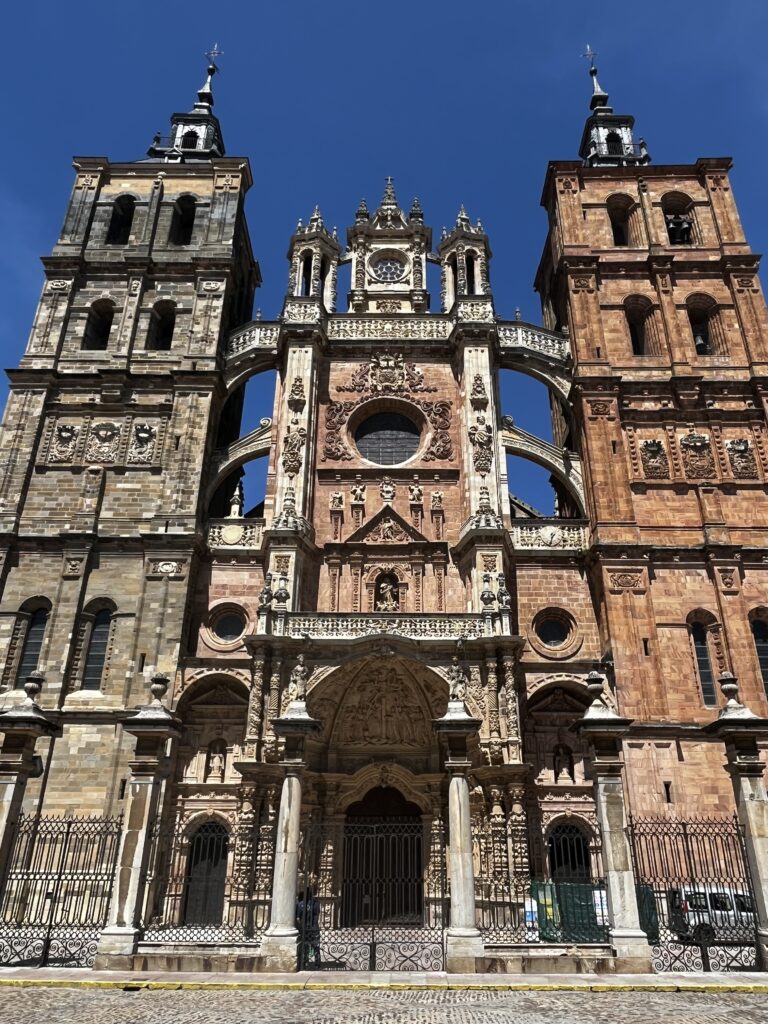
After the usual pilgrim chores, I headed for the cathedral.
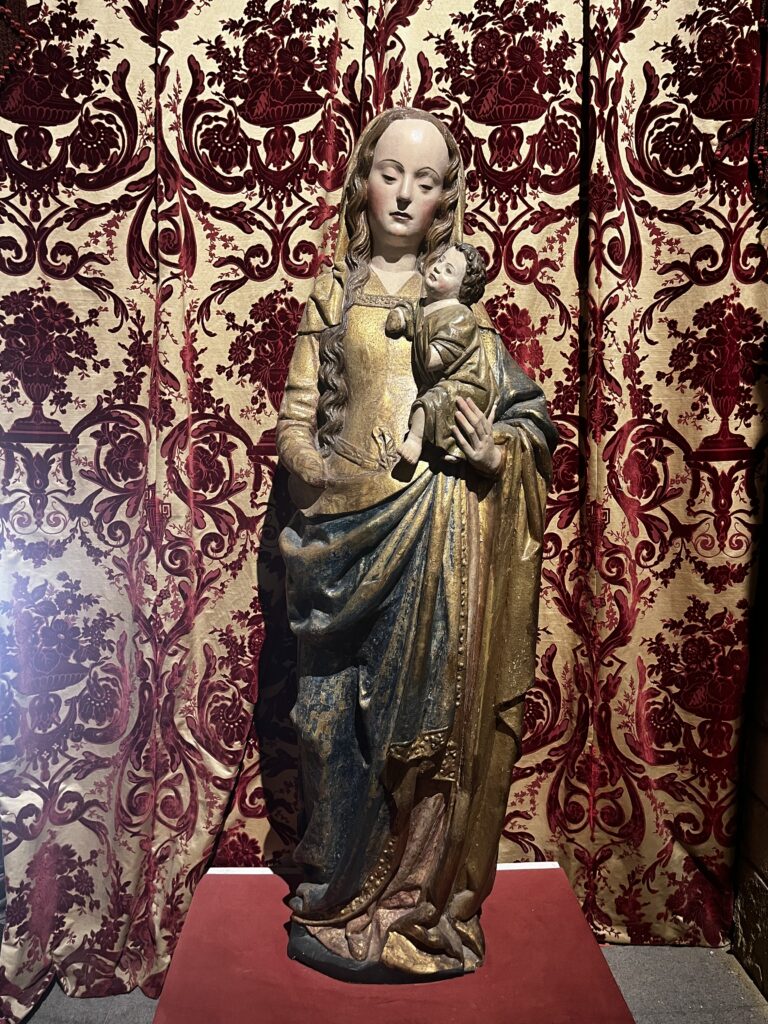
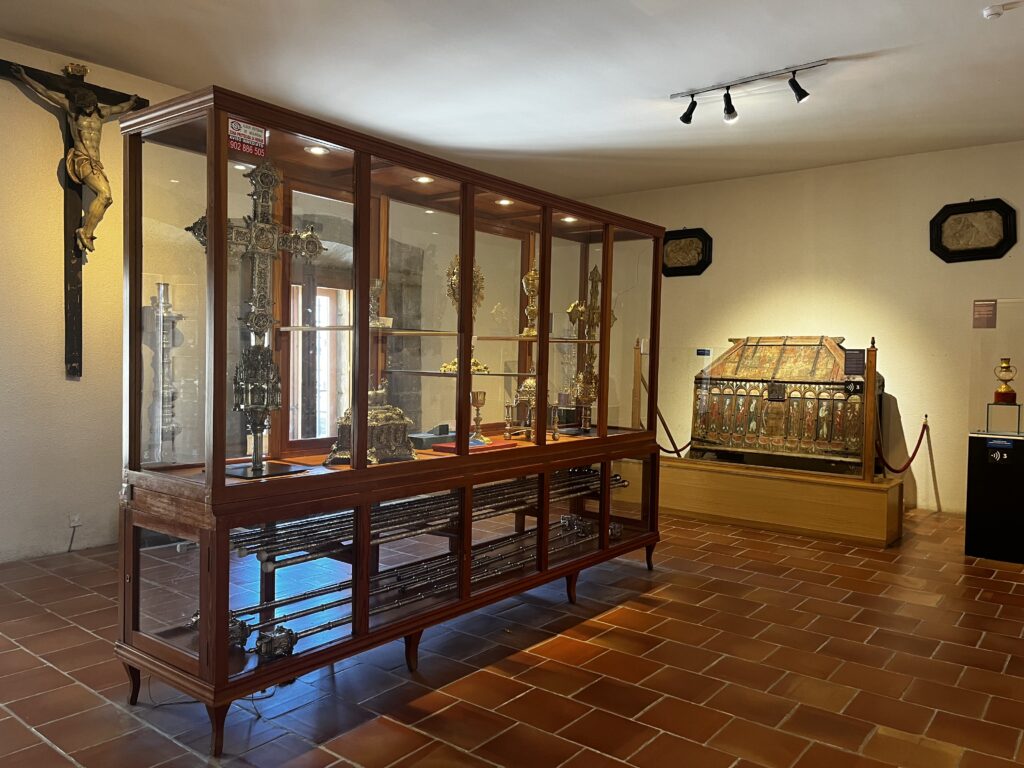
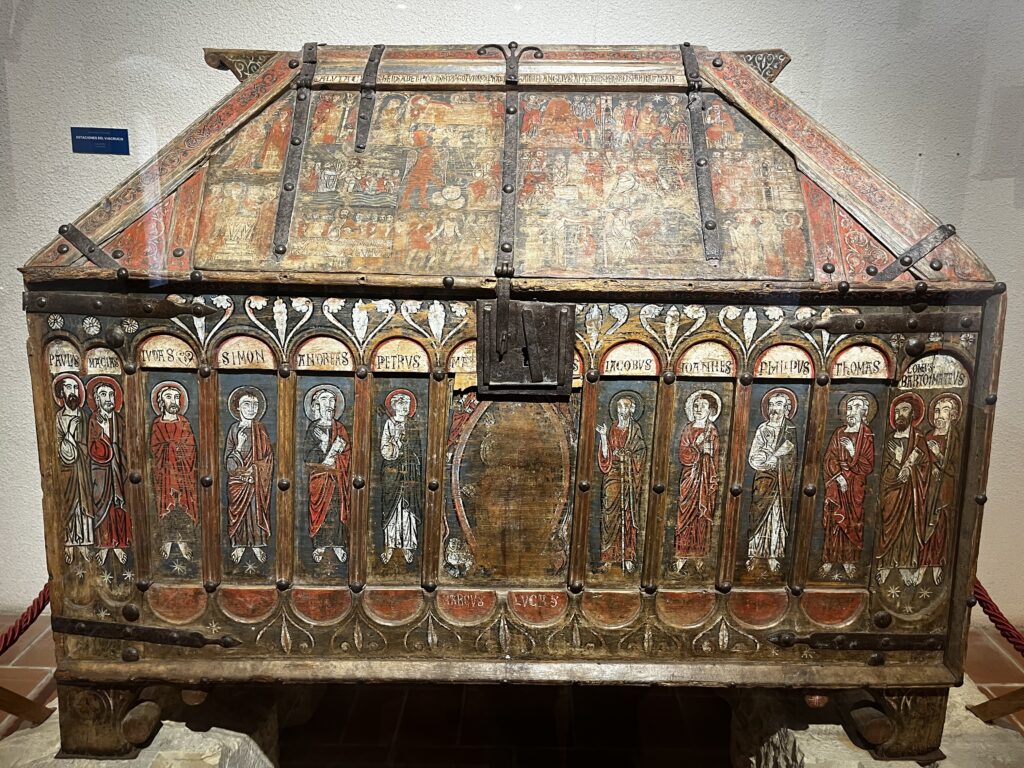
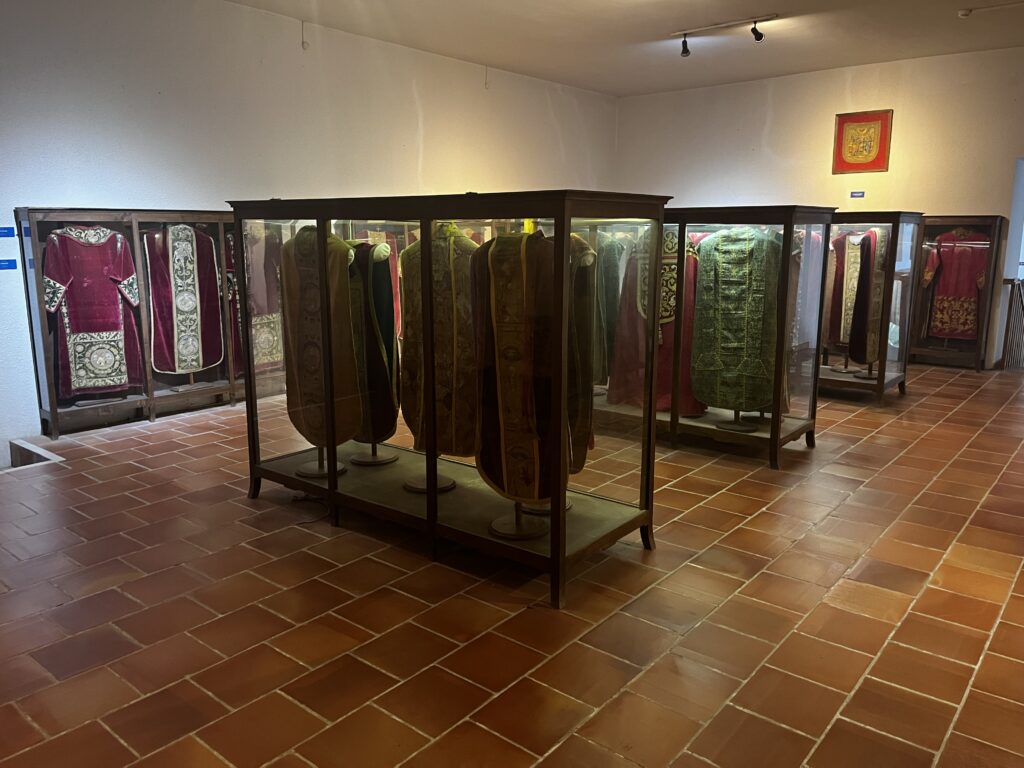
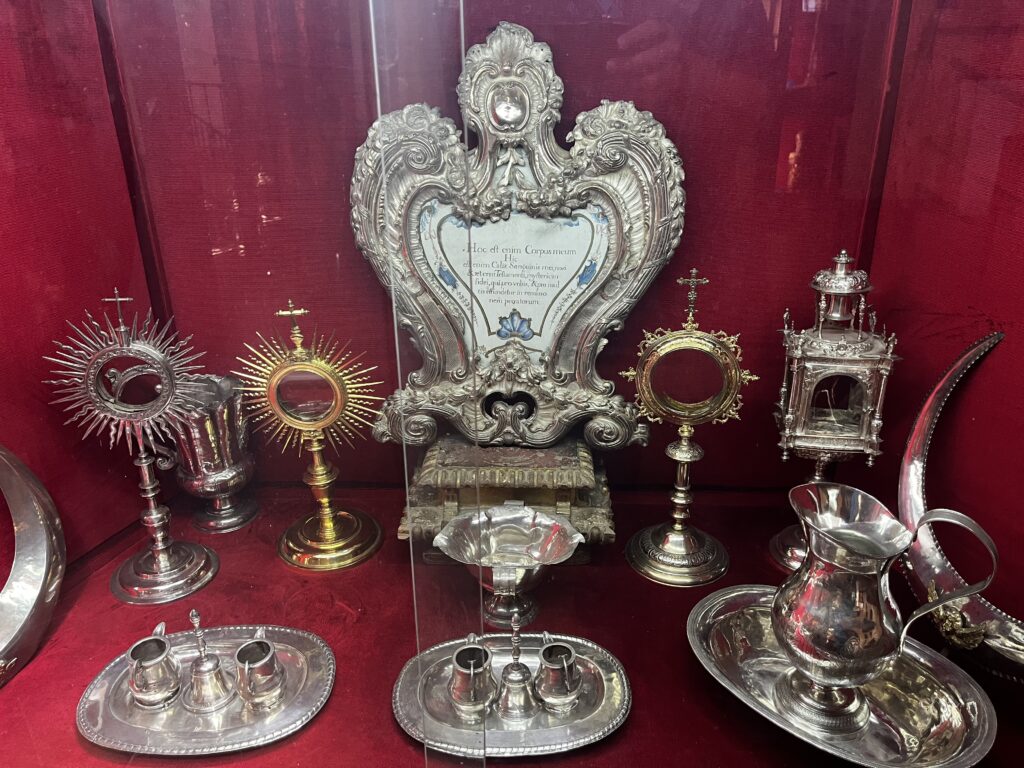
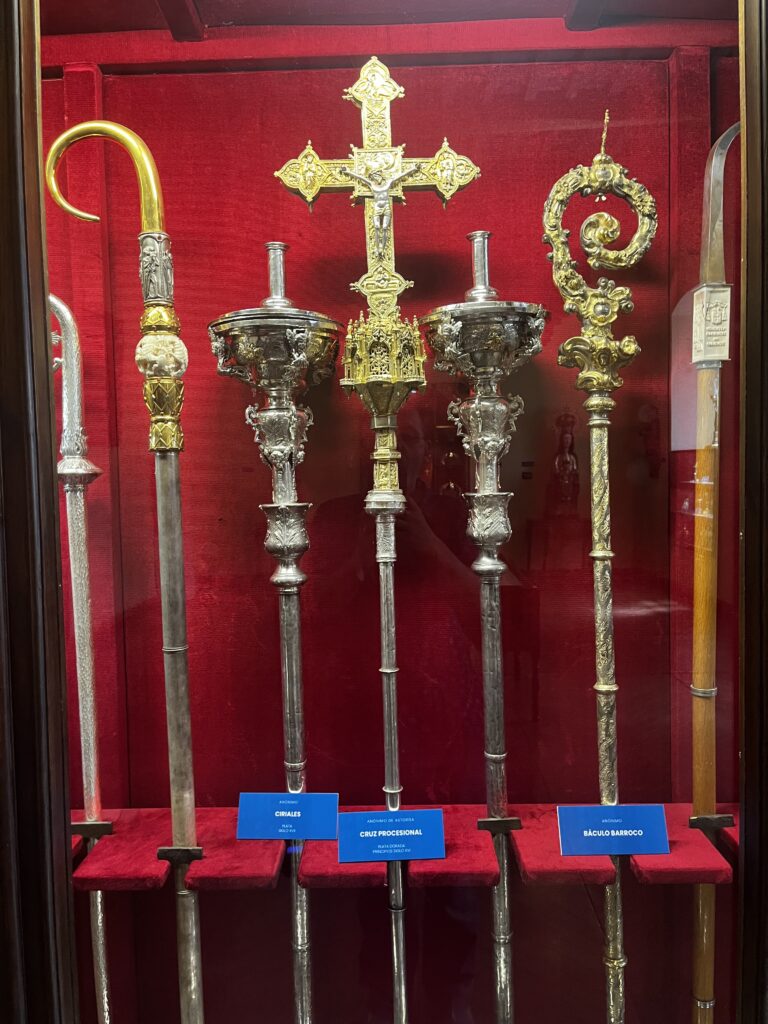
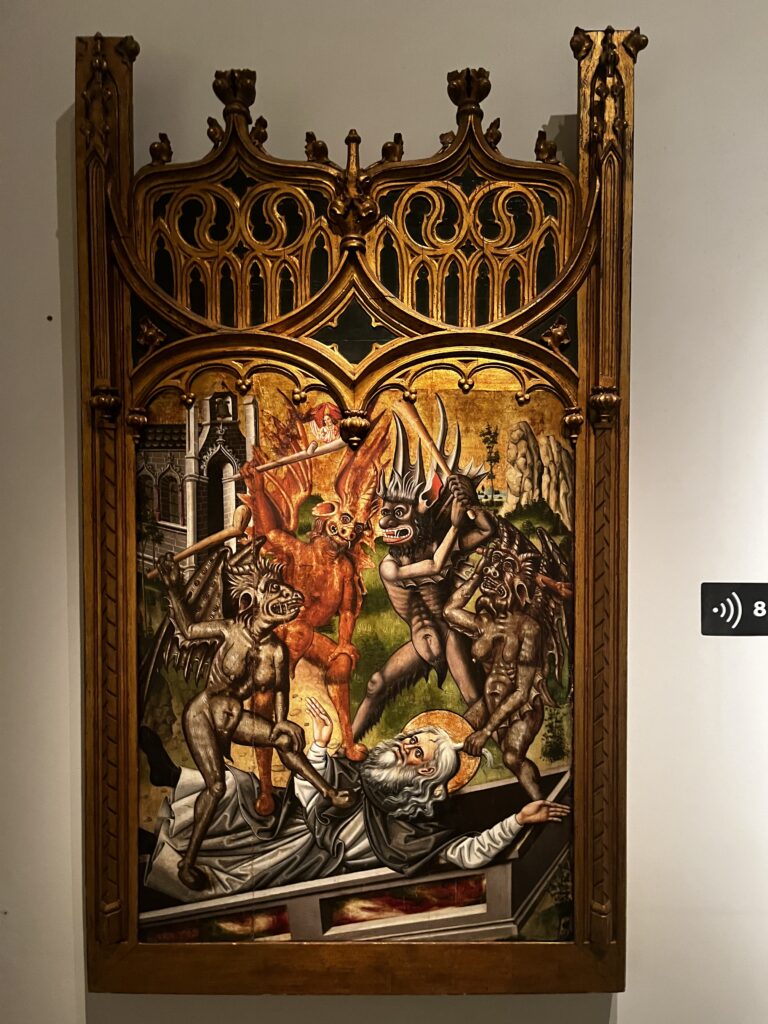
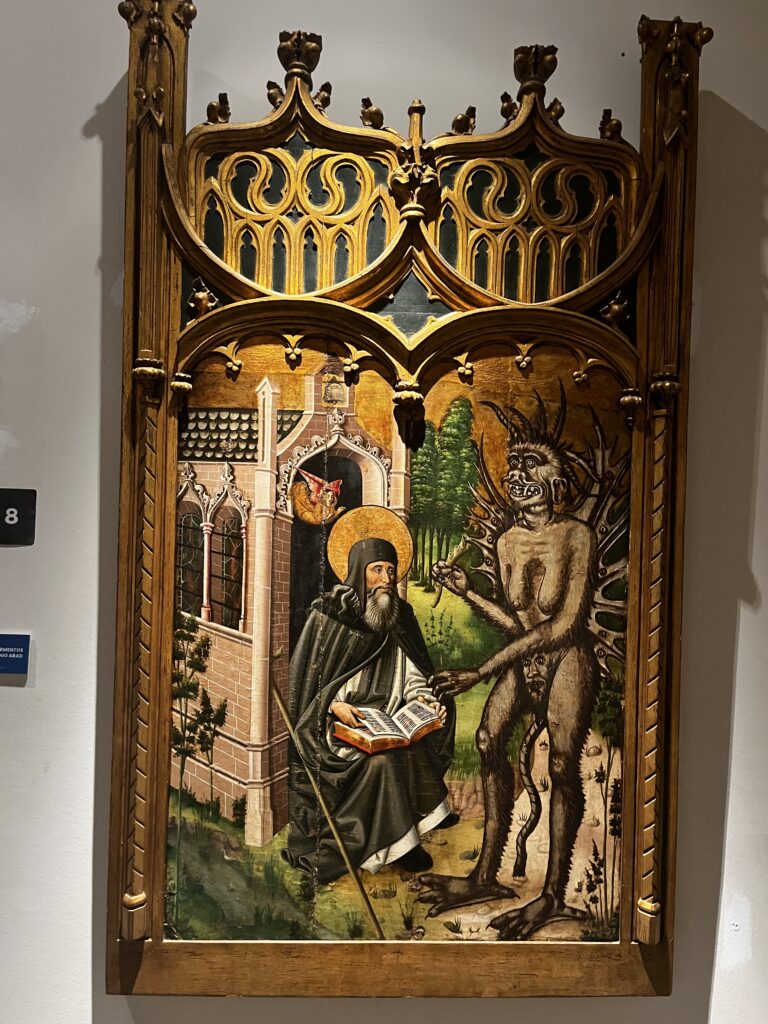
The cathedral museum houses an astonishing collection, including sacred art and vesture from the last 900 years or so.
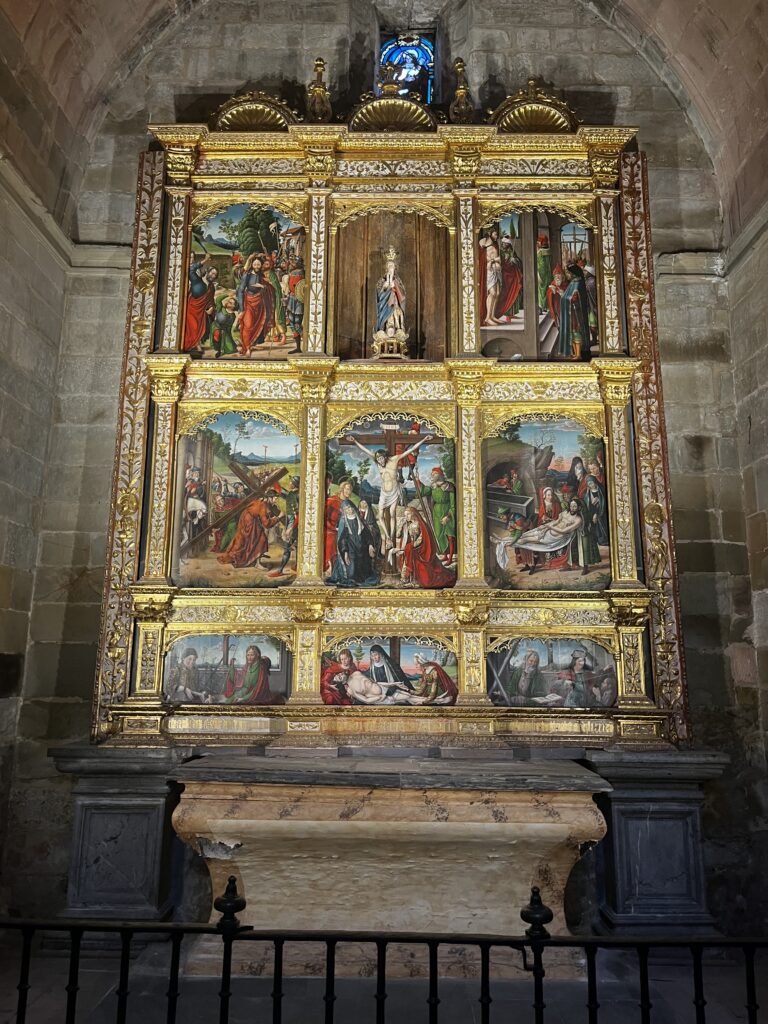
I am particularly fond of a series of four panels from an old Gothic altarpiece depicting the Temptations of Saint Anthony. They are amazingly vivid, and the artwork could have been done yesterday.
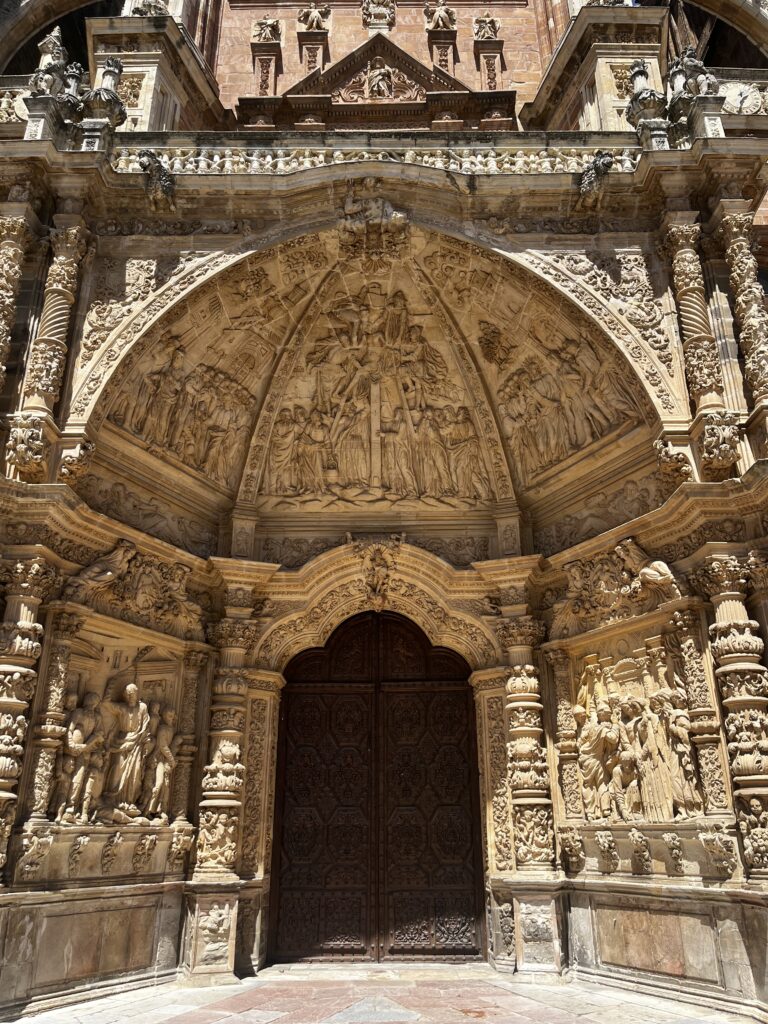
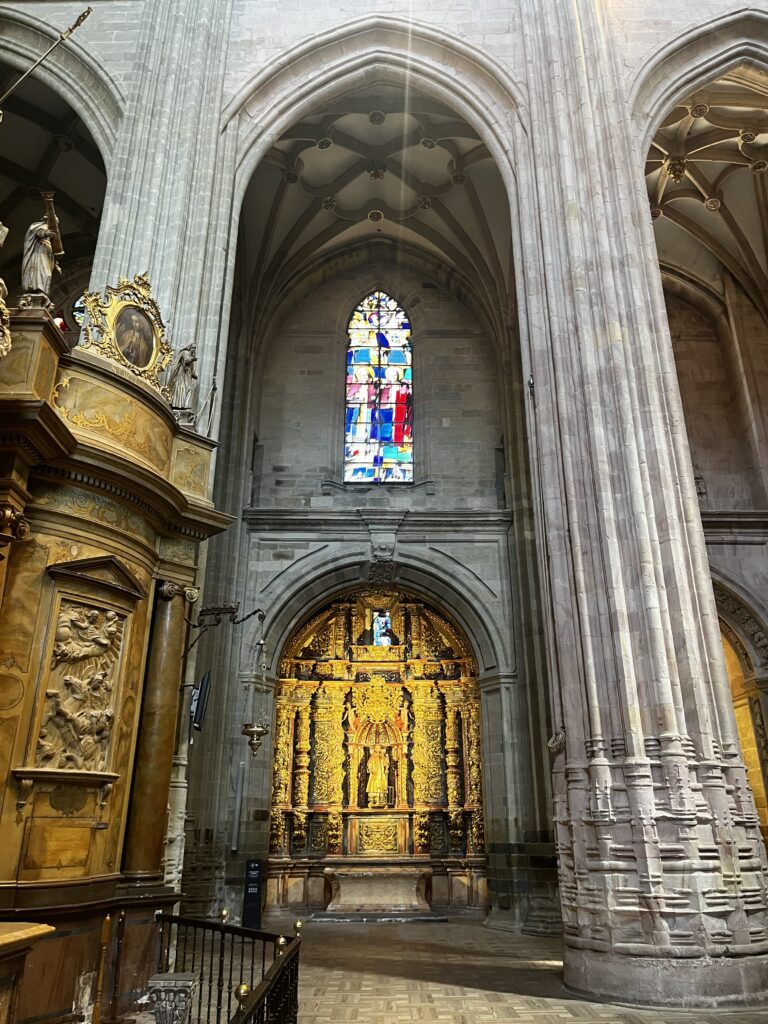
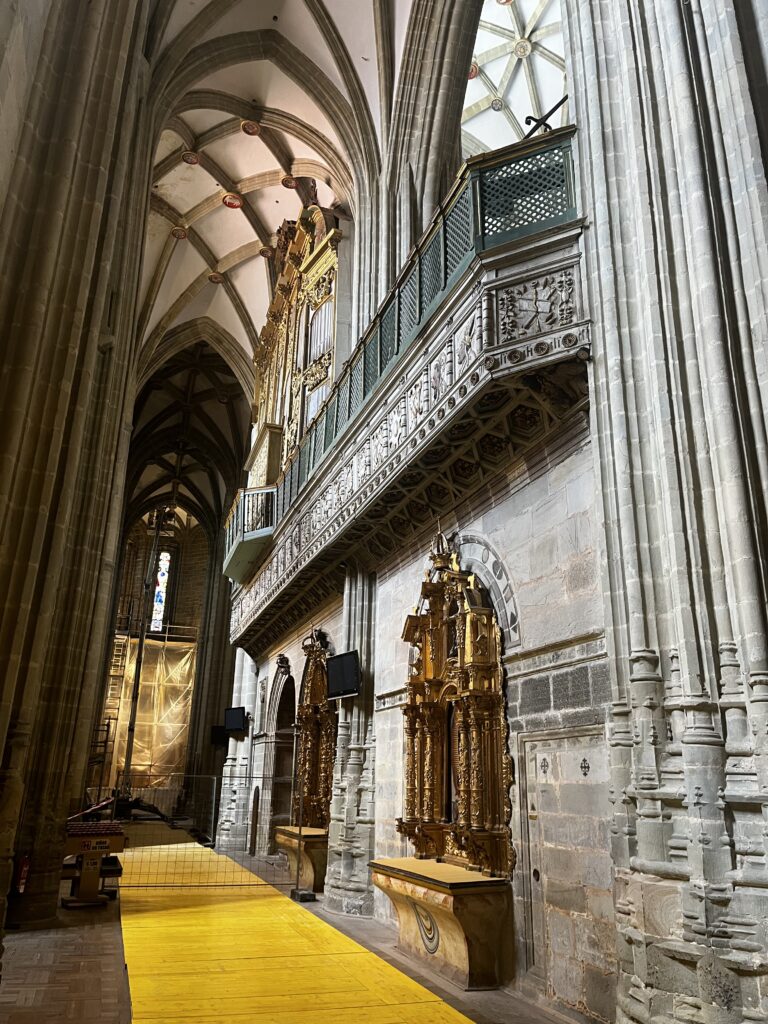
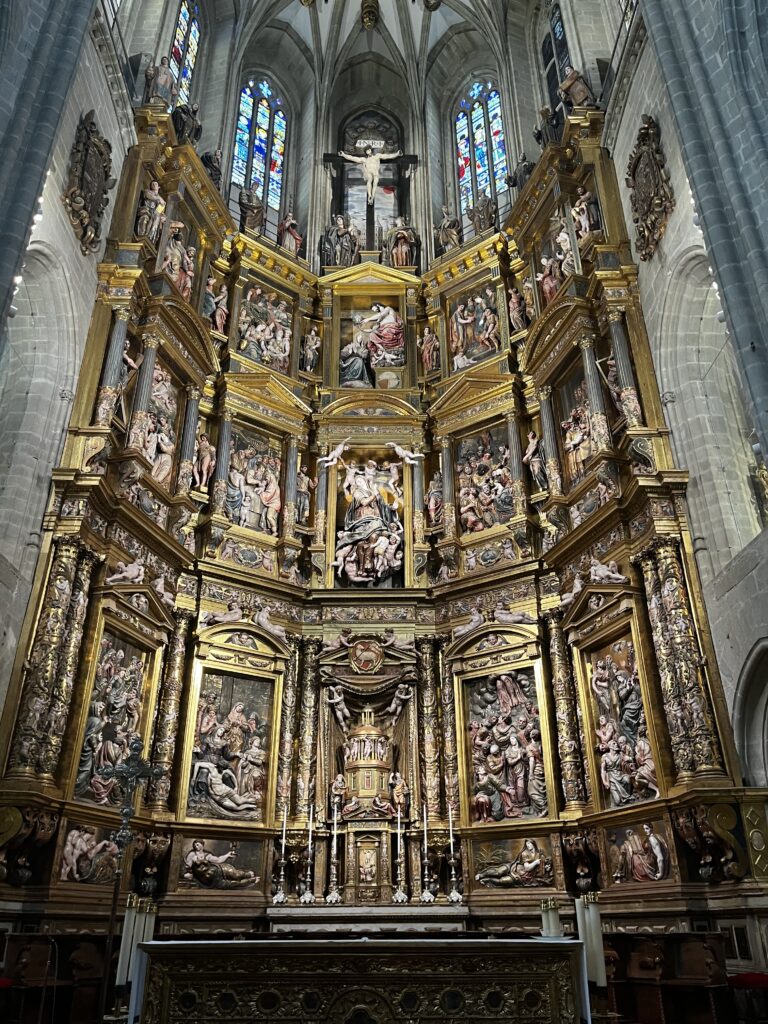
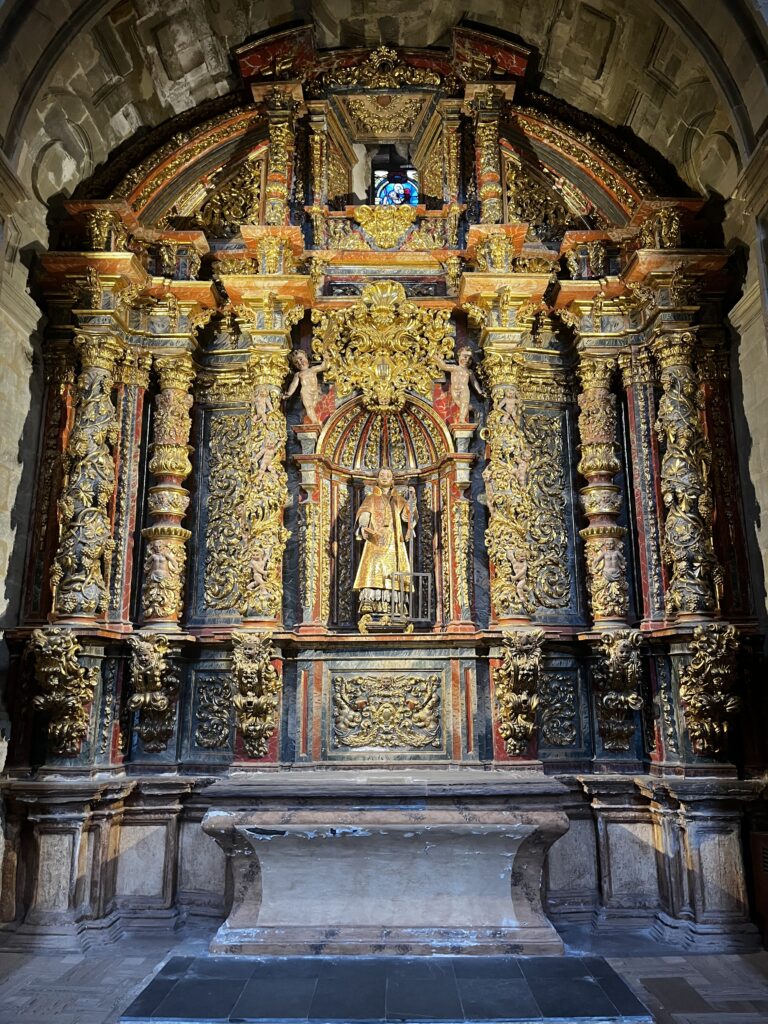
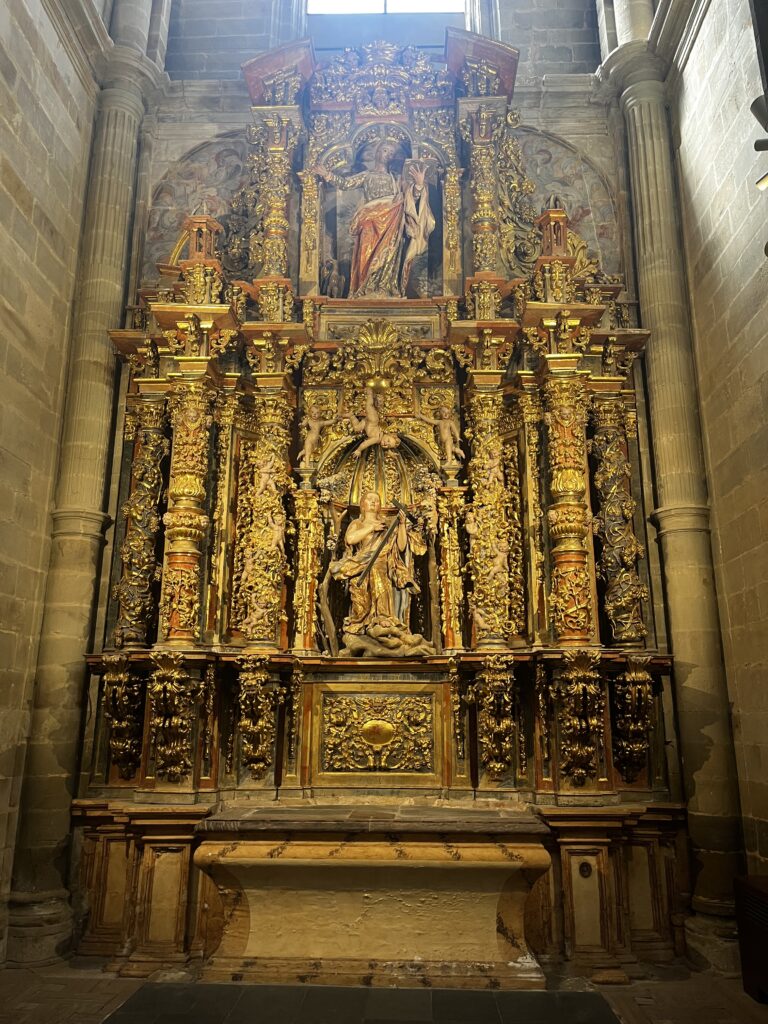
The cathedral itself is Gothic, but not in a particularly Spanish style. If anything, it seems to resemble a florid late German Gothic. There are, of course, the usual Spanish Baroque retablos in the side altars. Some of these are quite impressive, including especially the chapel of Saint Lawrence.
The choir is an astonishing piece of carving work, with each seat having a carving of a different figure from scripture or the history of the church. Even the grotesque metal faces that emboss the gateway are, each of them, different.
Sections of the cathedral were undergoing restoration work during my visit, and the constant hum of machinery was more than a little distracting.
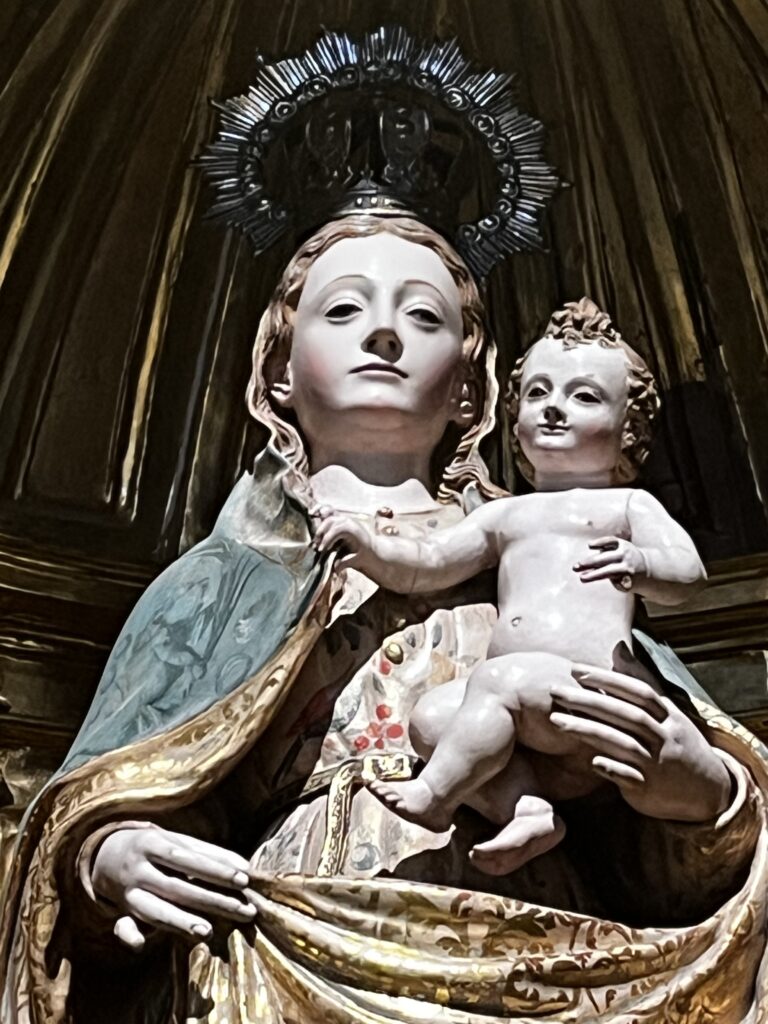
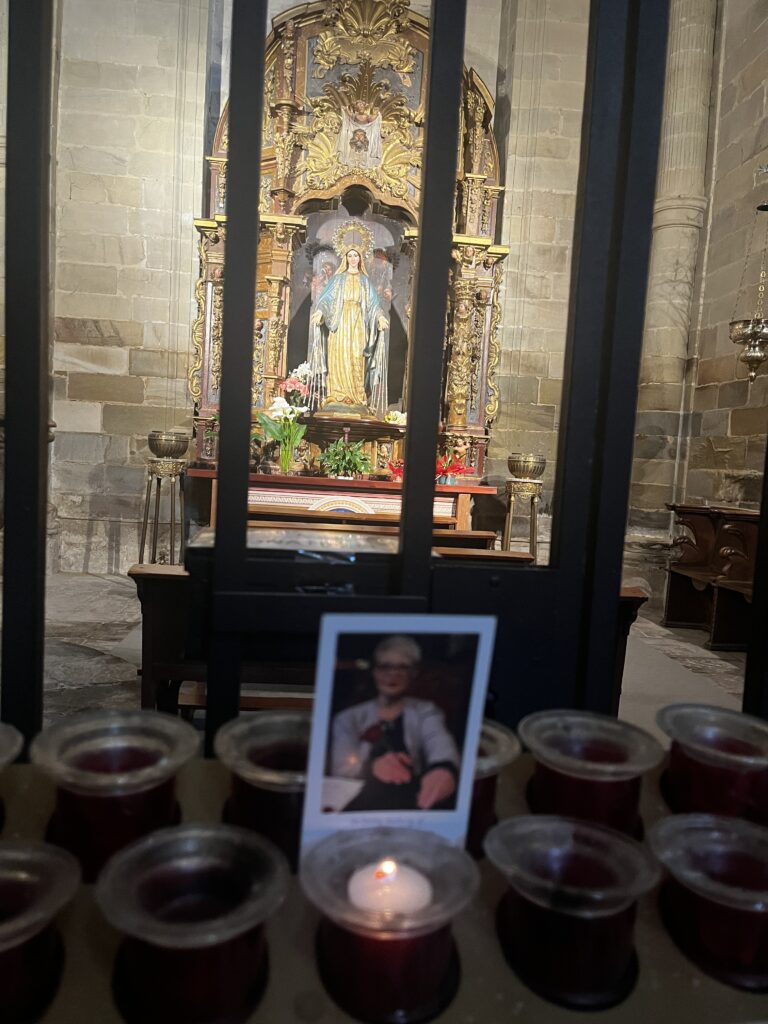
I prayed Vespers in the Chapel of the Miraculous Virgin, and I lit the candle for Francine here.
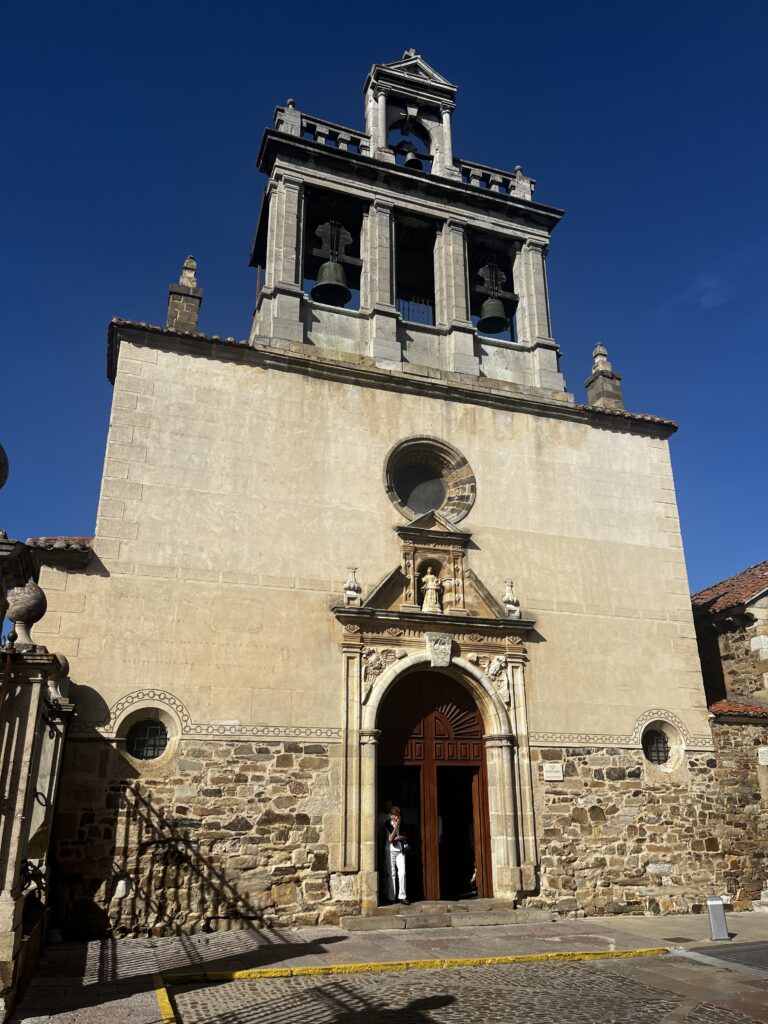
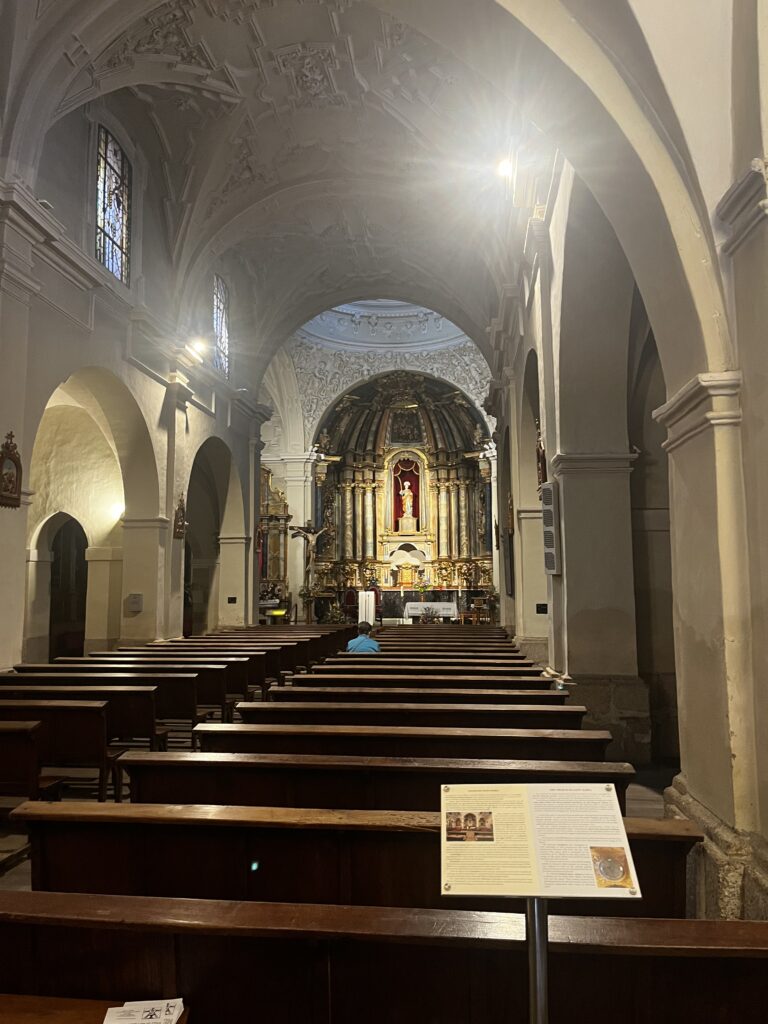
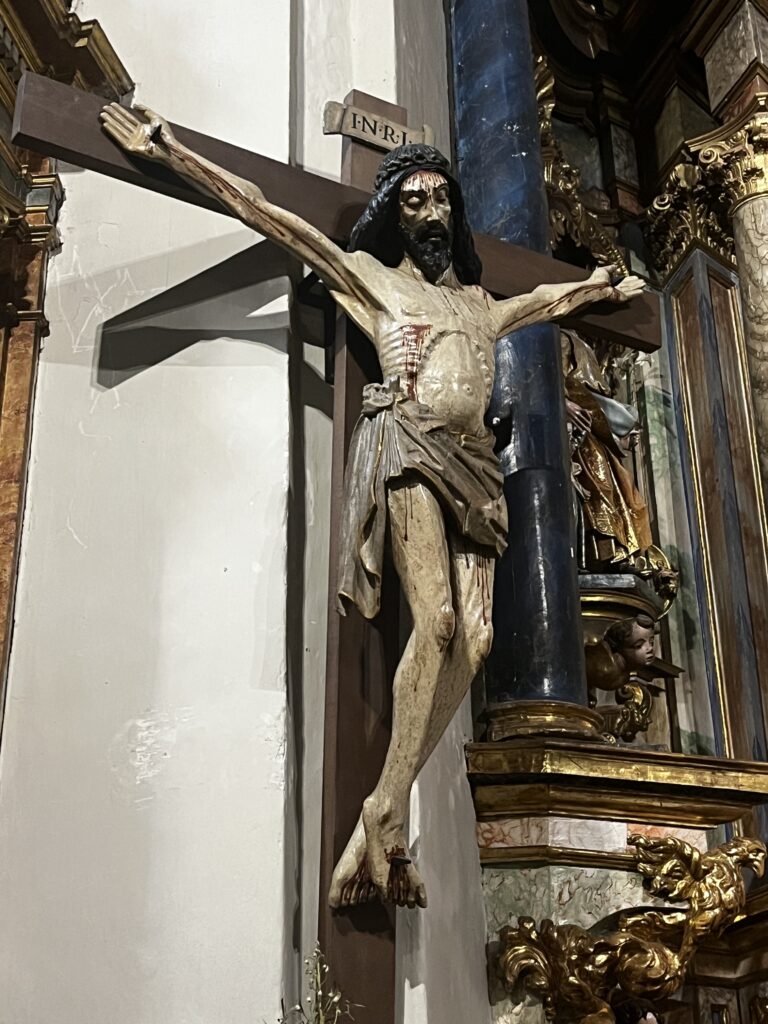
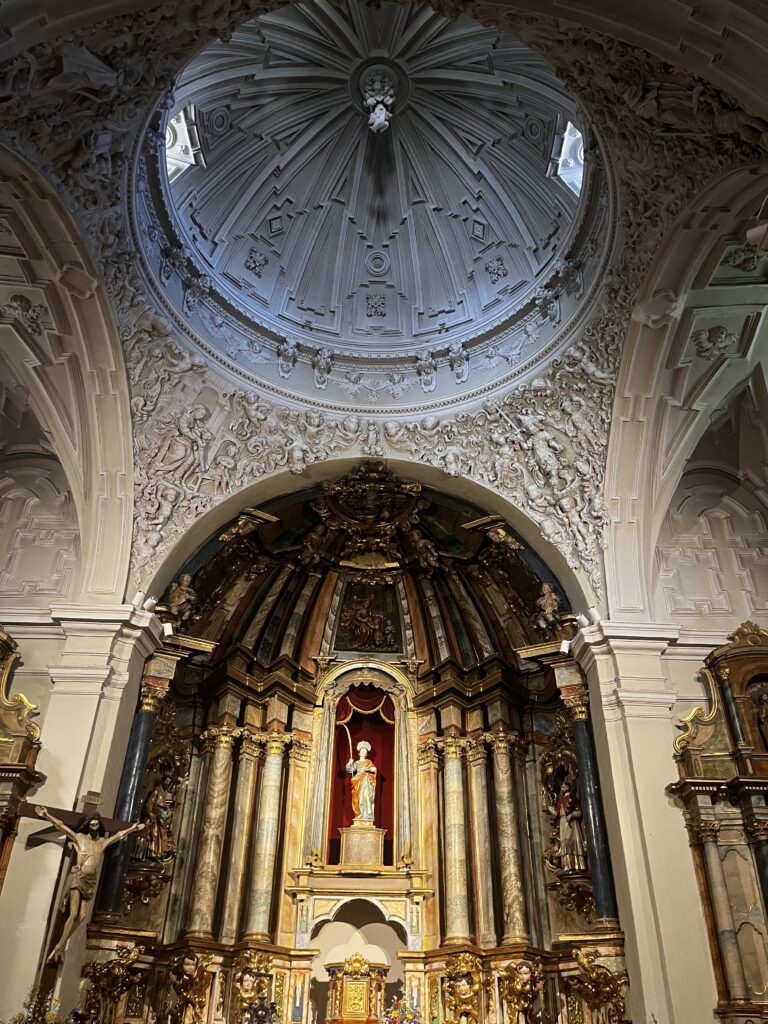
After the cathedral, I went next door to the church of Santa Marta, a second century martyr who is the patron saint of Astorga. This is an absolutely gorgeous jewelbox of a church, which somehow has one of the most arrestingly realistic crucifixes I have seen.
The main altar in the sanctuary is off-center, a fact that annoyed my sense of balance, particularly since the rest of the apse is beautifully symmetrical. The retablo – which fills the whole of the apse – also employs forced perspective to make it seem taller than it is.
Although there was a constant stream of people coming in and going out, I managed some time for prayer here as well.
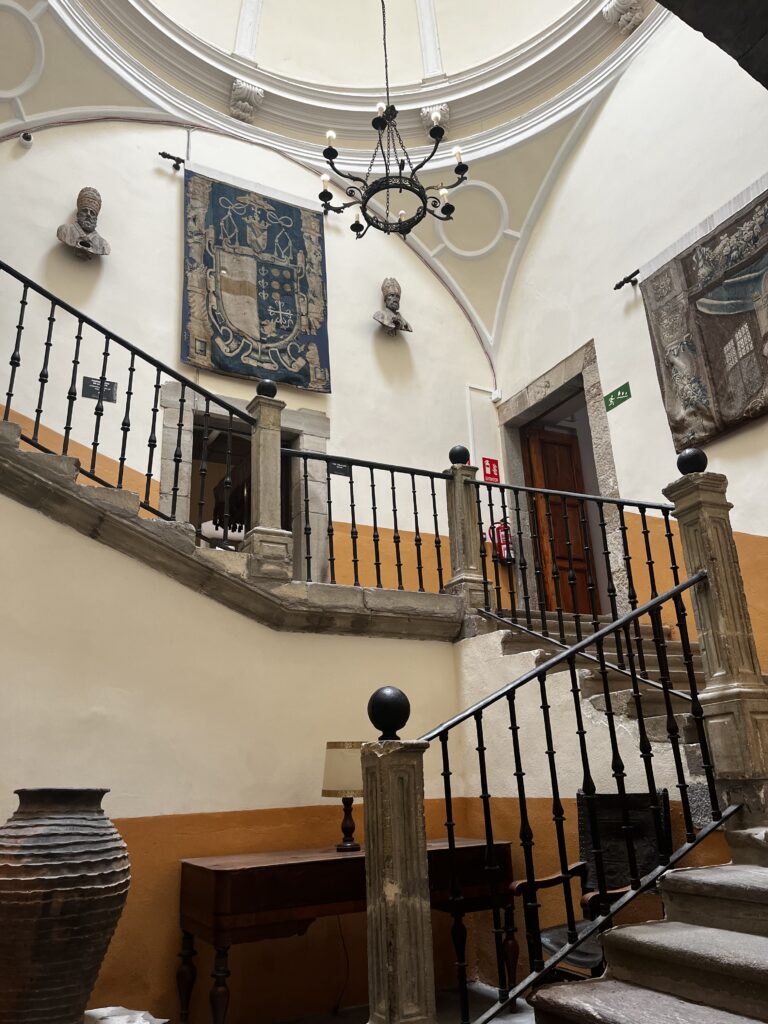
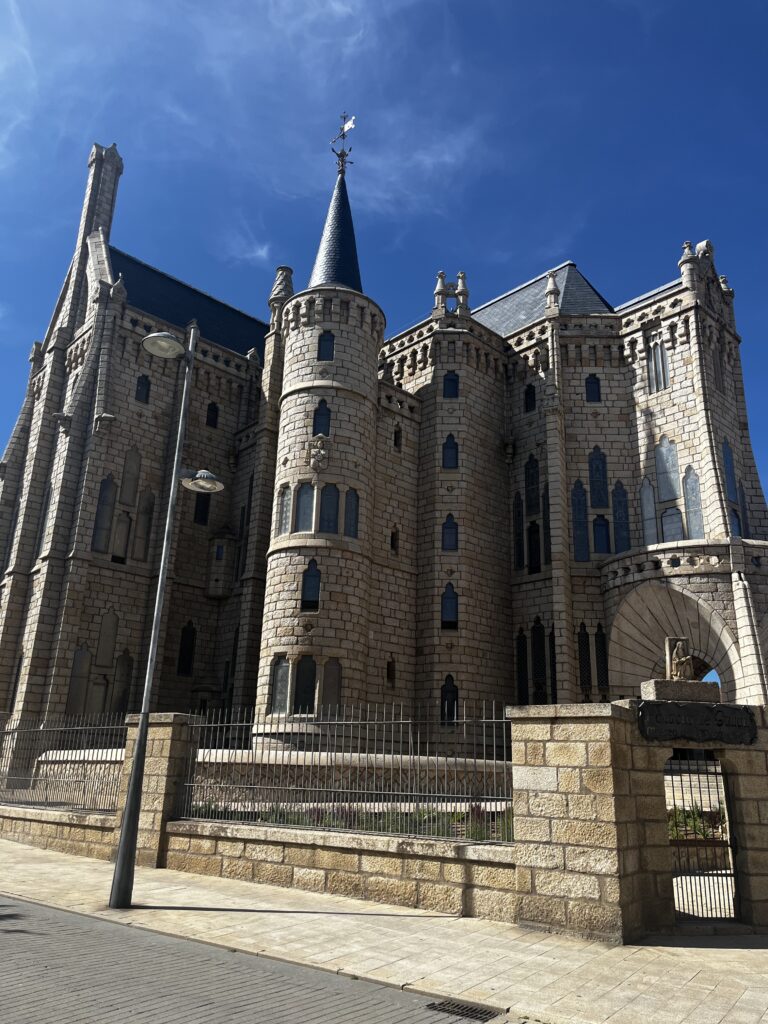
In the little plaza next to these stands the Palacio de Gaudí, designed and built by the venerable Antoni Gaudí. This building was originally supposed to be the Episcopal palace – the home of the Bishop of Astorga. No Bishop has ever actually lived here, though. Once it was completed, it was made into a museum.
The one place in Astorga that I wasn’t able to get to this time is the chocolate museum. They’ve been producing chocolate in this city for five hundred years, and they know what they’re doing.
Date: 11 June 2026
Place: Astorga
Today started: Hospital de Órbigo
Today’s Photos!

Glad your back is better!