
Via Lemovicensis: Valcarce and Up to Galicia
Last night I slept hard. I woke with a start at about 6:15. I was slow packing up and was the last person out of the albergue this morning. I still somehow managed to leave before 7 AM.
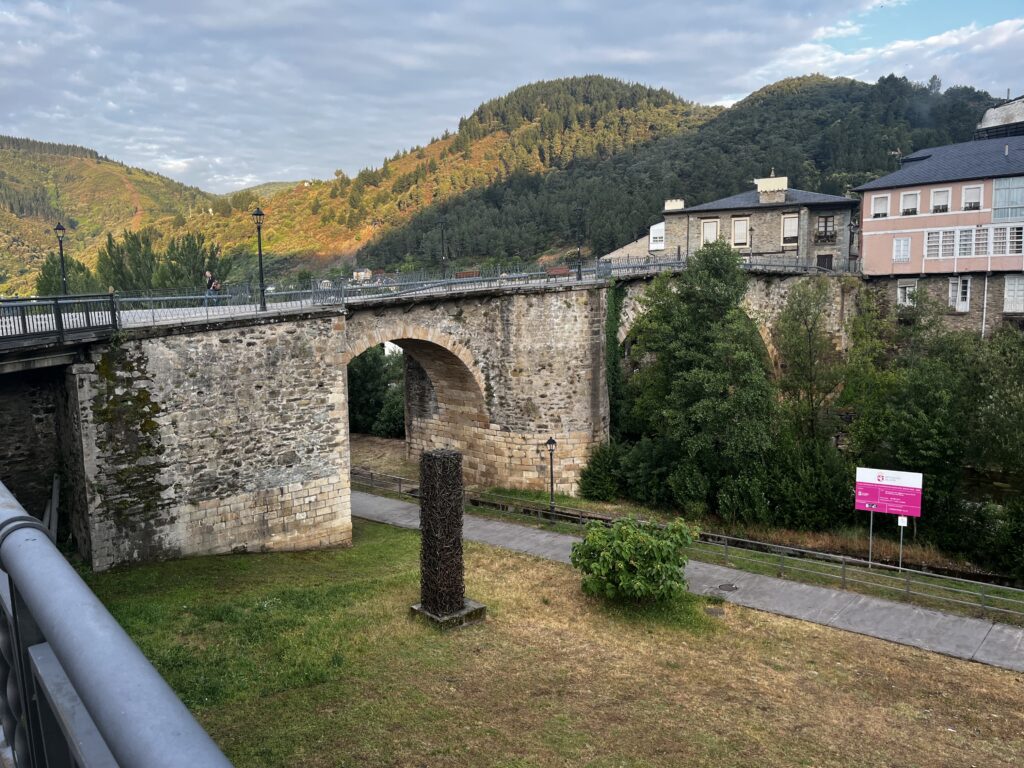
This turned out for the best, because the café across the street opened at seven. I met and had a breakfast with Ginger from Victoria BC, and by 7:20 we were walking on the stone bridge over the Río Burbia and out of town.
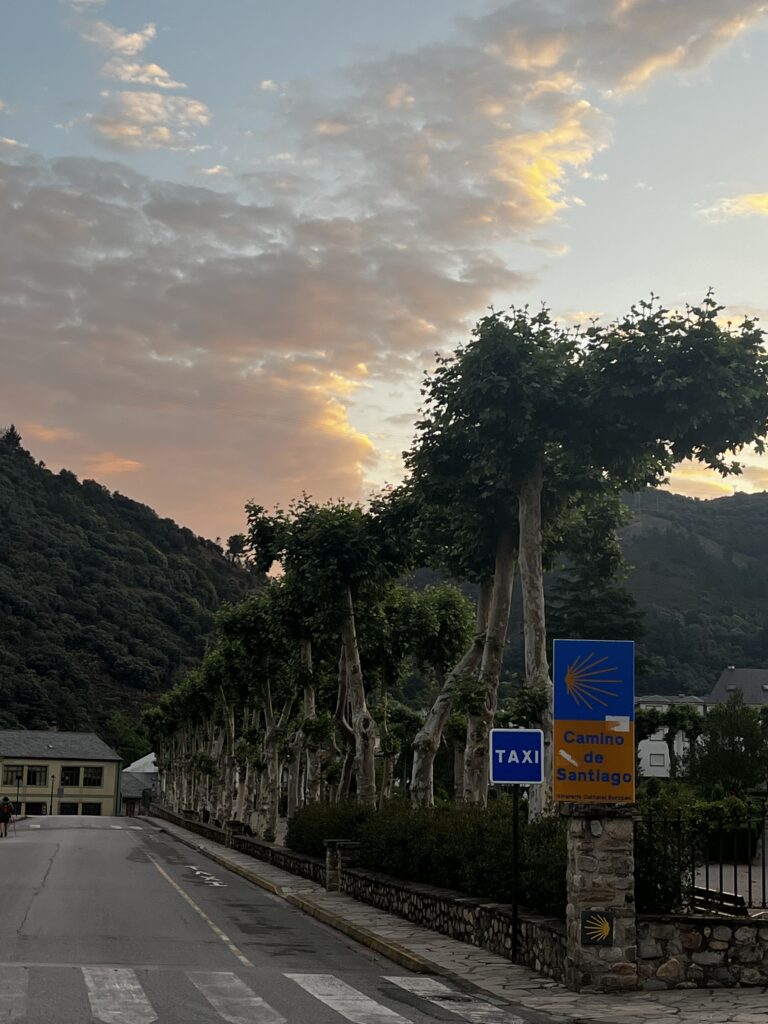
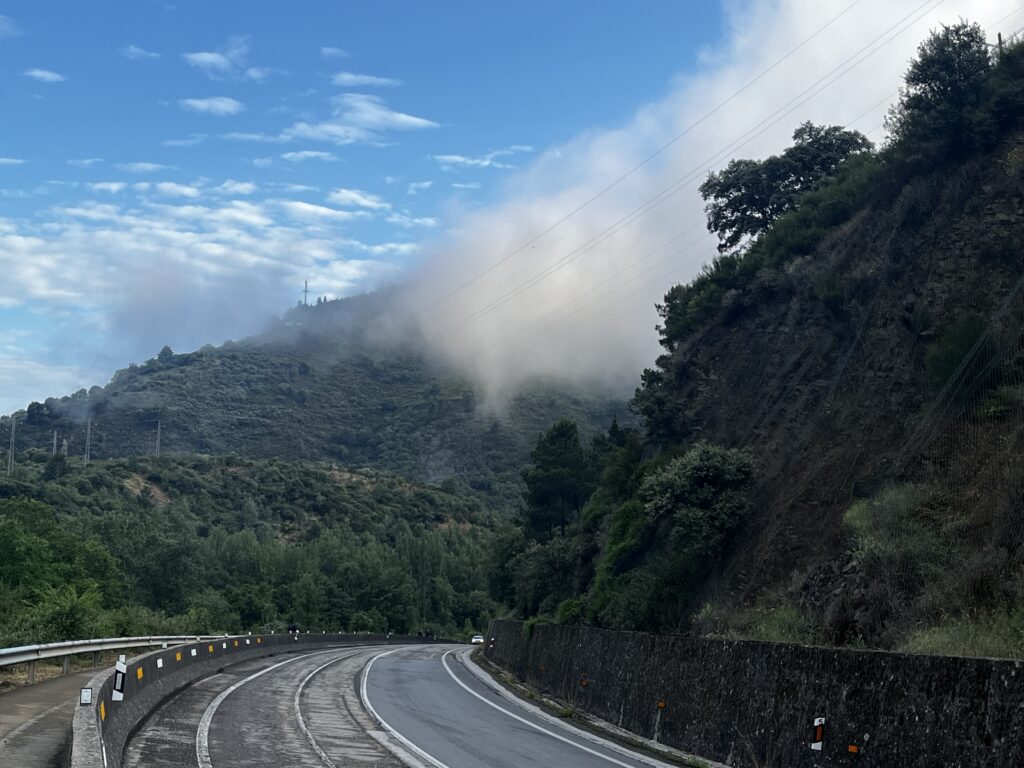
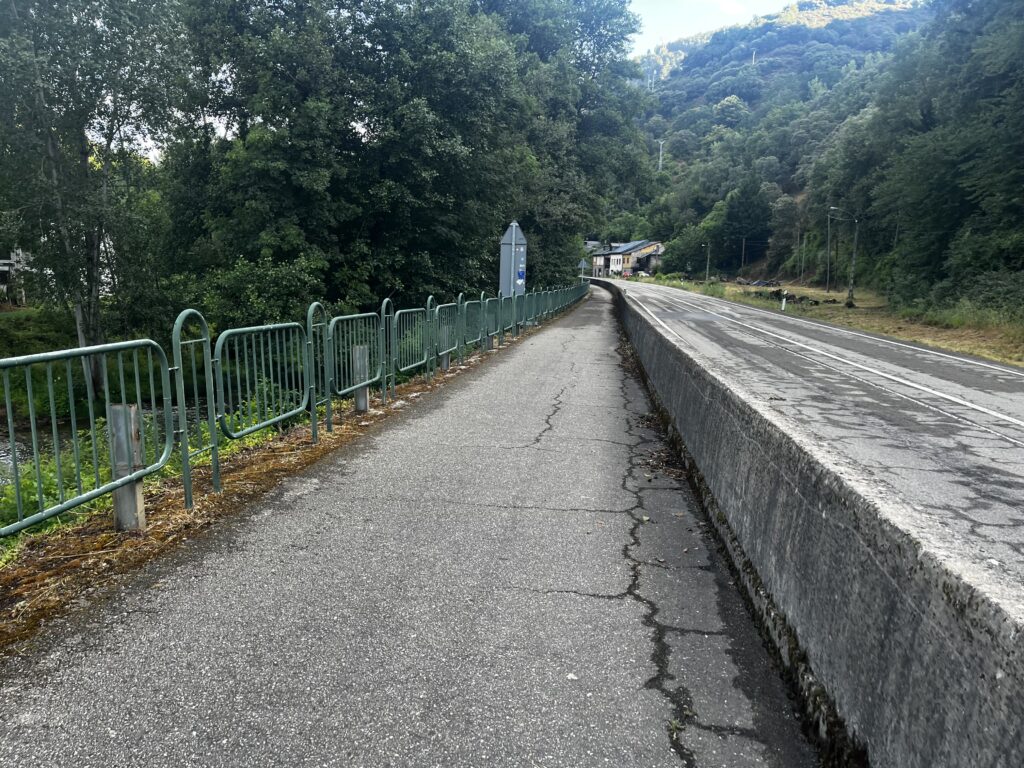
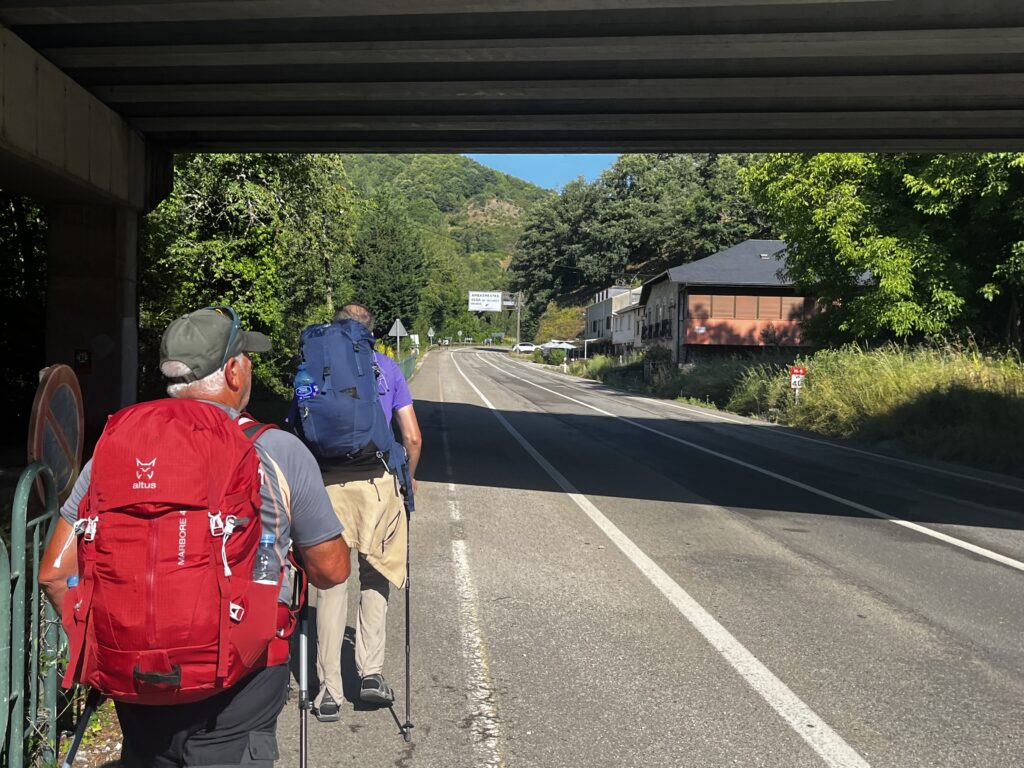
We walked on a sidewalk next to a highway through the steep wooded hills, all the time in deep pilgrim conversation. What is it that lets us be so open and so much more capable of listening while on Camino?
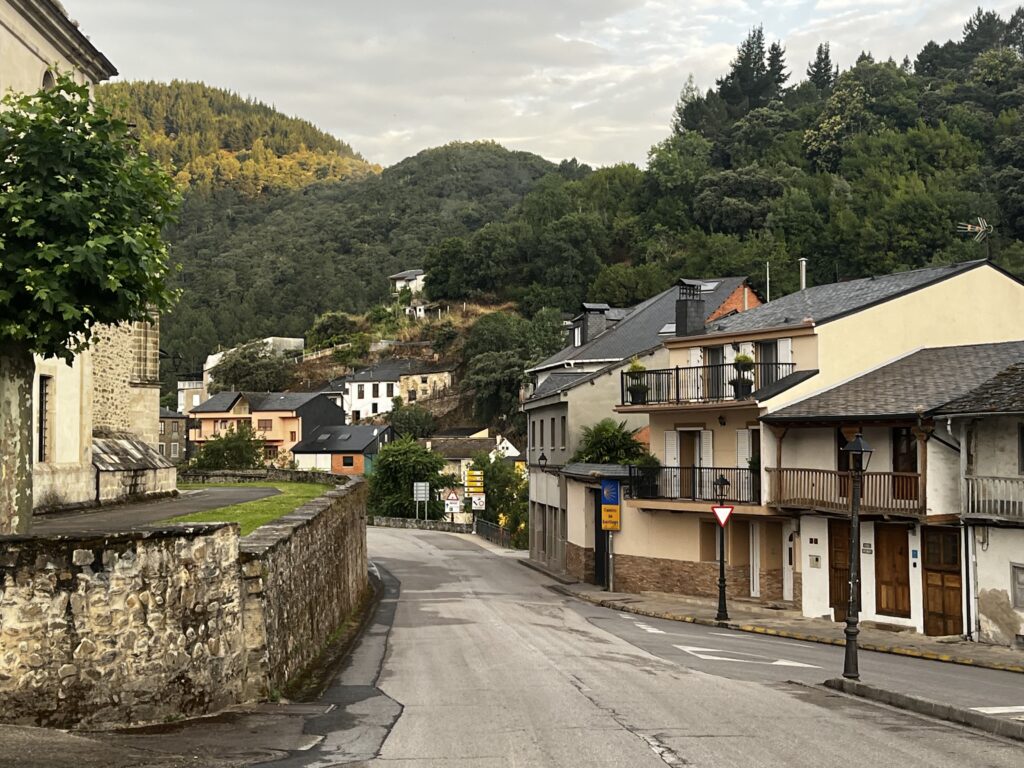
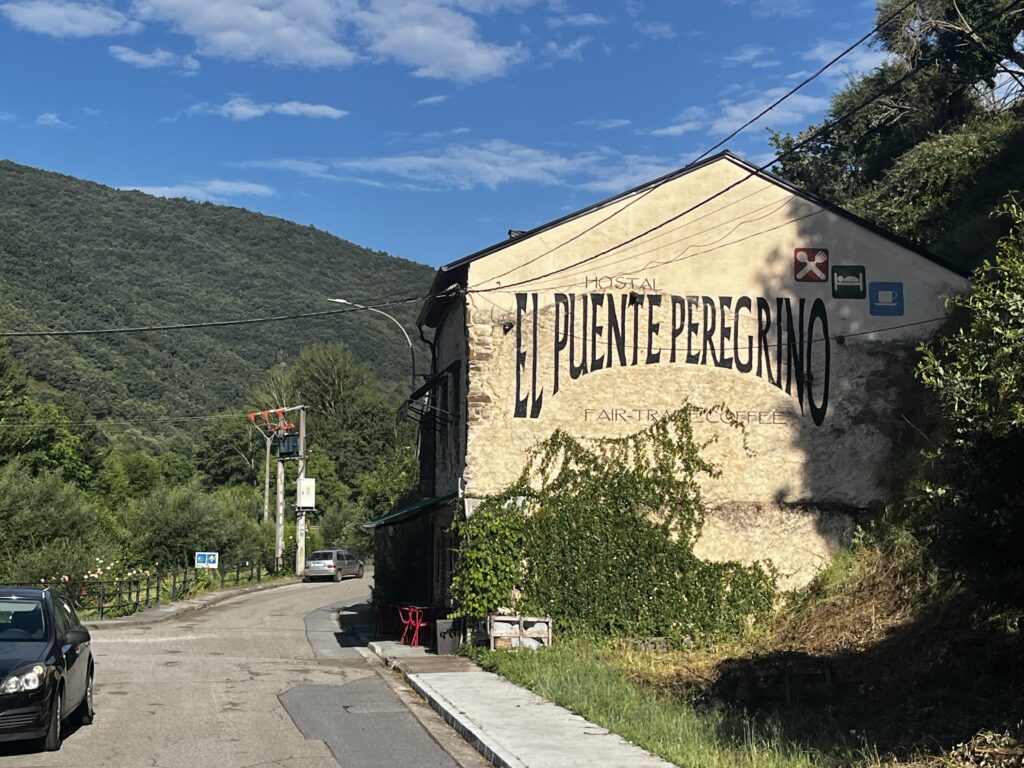
At about 8:15, we left the highway for roadwalking on a two-lane asphalt road through the woods. This brought us into the village of Pereje. There’s not much here, except for a delightful café, where we stopped for Café con Leche and zumo.
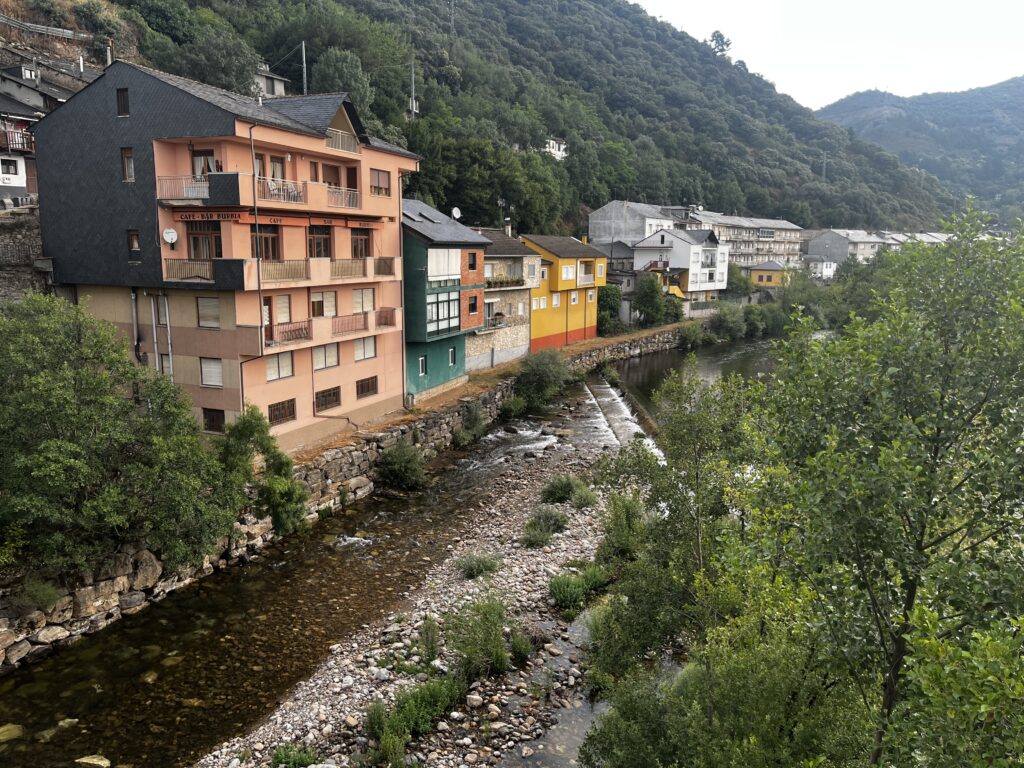
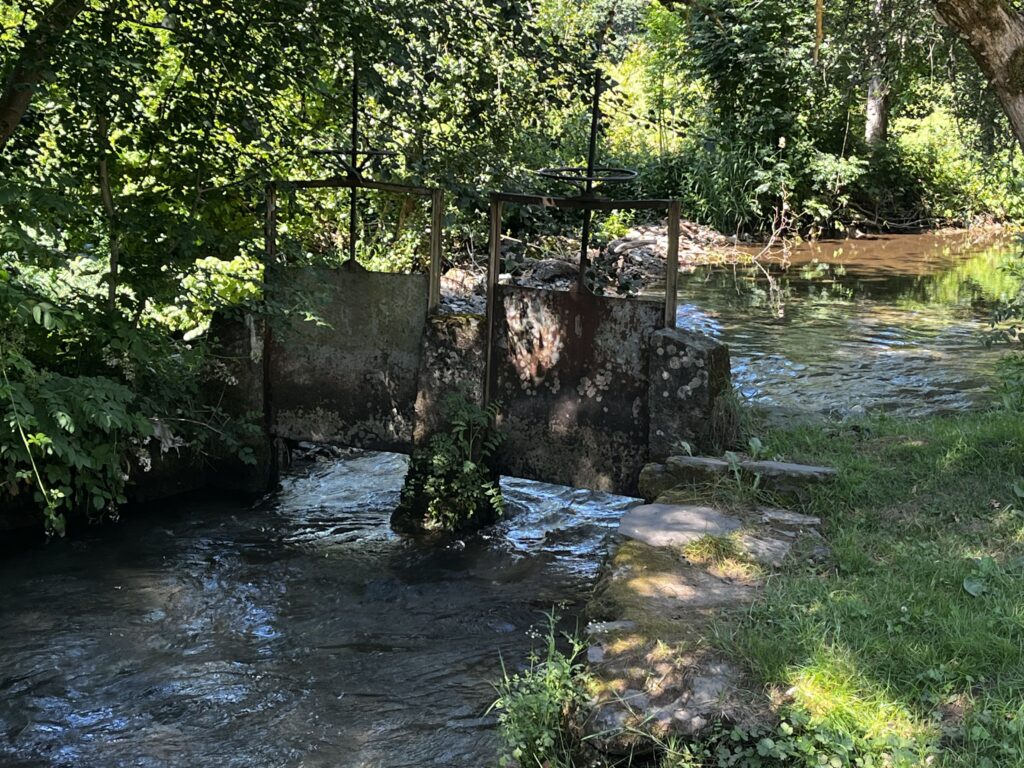
After the village, it was once again a sheltered pedestrian walkway next to a highway, this time following the Río Valcarce to our left. This river would be my companion for most of the day.
We passed under highway bridges and over the river several times before we again crossed the highway onto an access road into the village of Trabadelo.
This is a long, skinny village stretched out along Camino like so many others today. Here, the cafés were closed, which I found an odd thing. Nevertheless, at about 9:45, Ginger stopped on a bench for a rest while I continued on in search of an open bar and Kas Limón.
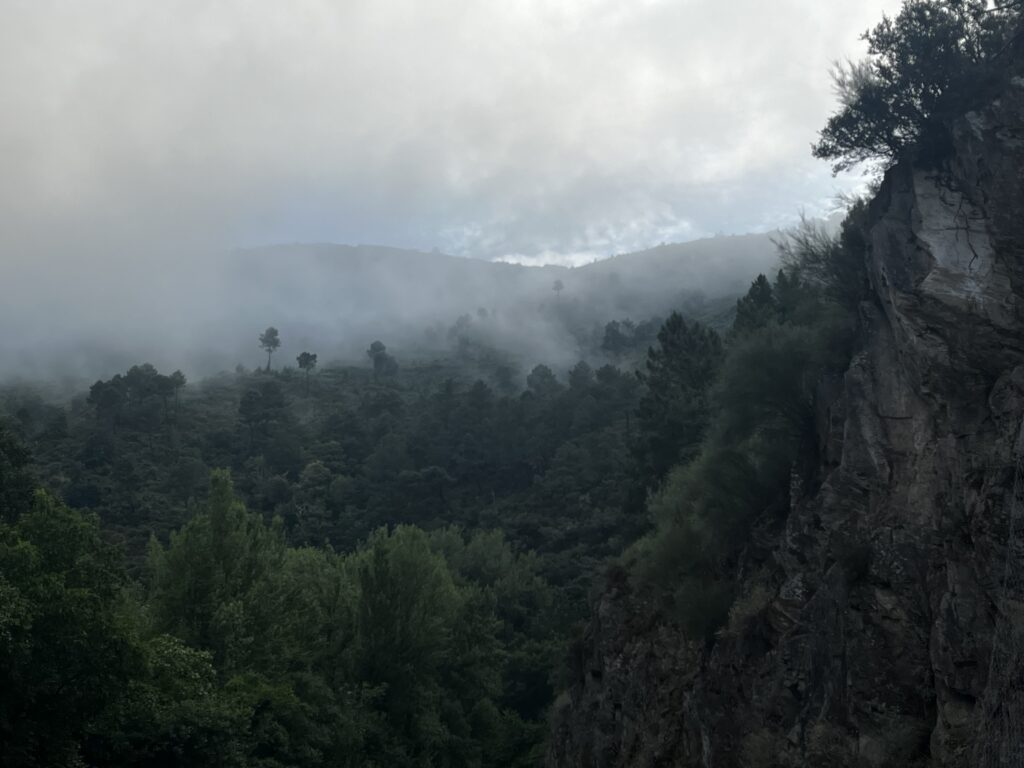
After the village, I walked a long asphalt access road through the woods back to the highway. The day was already starting to heat up, and I was thankful for the shade.
At just about 10 AM, the highway crossed over the river twice in quick succession; I had already lost count of the number of times I’d crossed the river today. There would be many more to come.
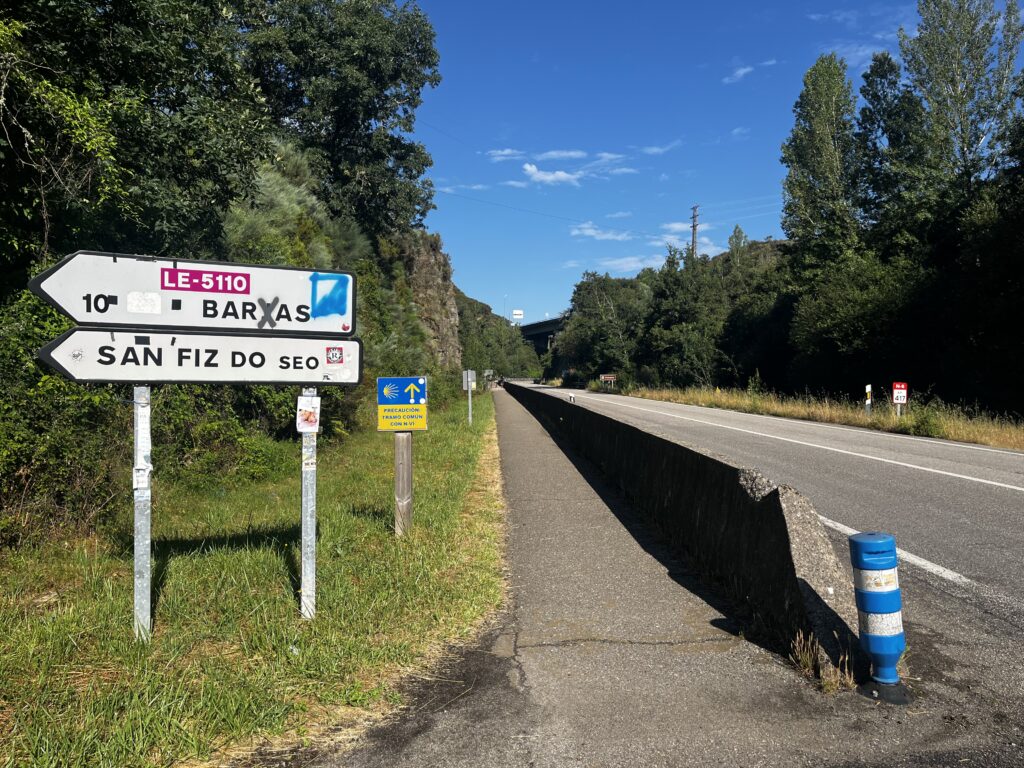
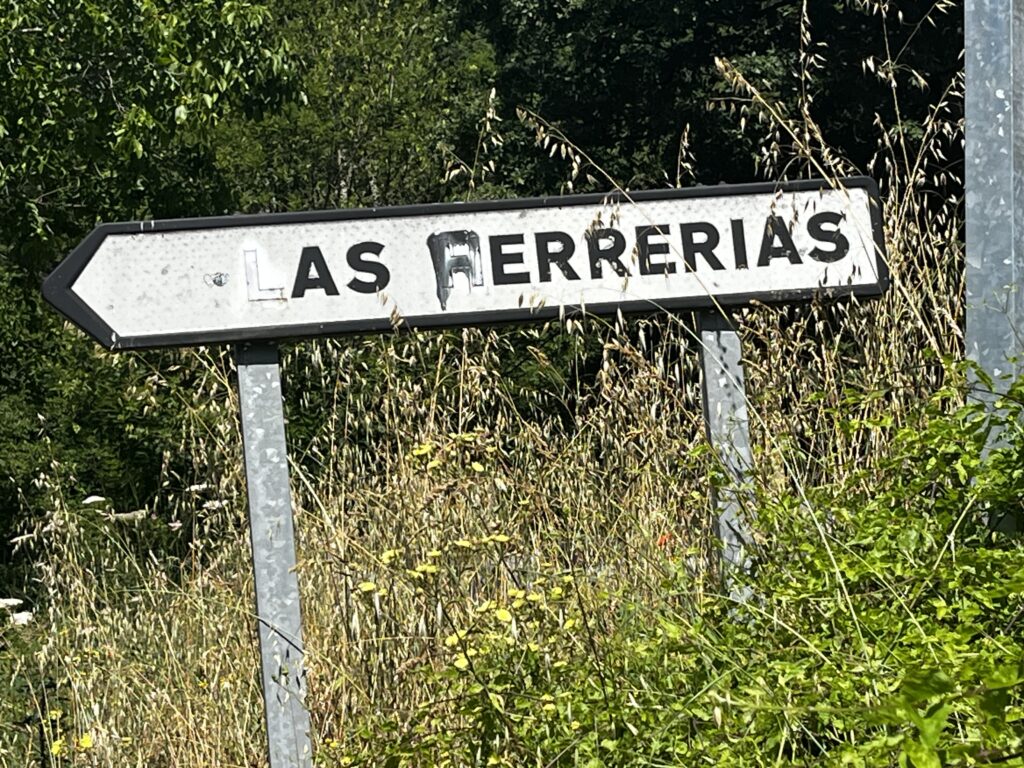
I saw many defaced road signs today. Although I am not yet in Galicia, this is already an area where the Galician language is spoken. You will often find road signs have been defaced to correct them to the proper Galician, not Spanish, spelling of place names.
A cyclist passed me, his radio blaring the song “Highway to Hell”. I giggled. I mean, it wasn’t that hot yet.
About 10:10, I passed the same group of three pilgrims that had been so dismissive of me the day I wasn’t carrying my pack. Exactly as before, I wish them a buen Camino. This time they were all smiles and greeted me back.
Even on Camino, perception makes your reality.
About ten minutes later, I passed the glorified truckstop of La Portela de Valcarce. There’s a hotel, a service station, an enormous parking lot, and not much else.
Just after this, though, was the village of A Portela de Valcarce, where the Camino finally left the highway. I very much appreciated the cooling breeze here, as the road through the village paralleled the river.
After the village, it was back to walking on the side of a highway. New highway, different shoulder, same asphalt. Fortunately, it didn’t last too long before the Camino turned onto a two-lane asphalt road through the woods into the village of Ambaestas.
I had been looking for an open café or bar ever since I left Ginger sitting on the bench, and thus far every place had been closed. Every village church I had passed had been closed as well, but that’s a whole different story.
I counted three bars or cafés in Ambaestas, and every one of them was closed. The way out of the village continued along the road, though now there was a sidewalk.
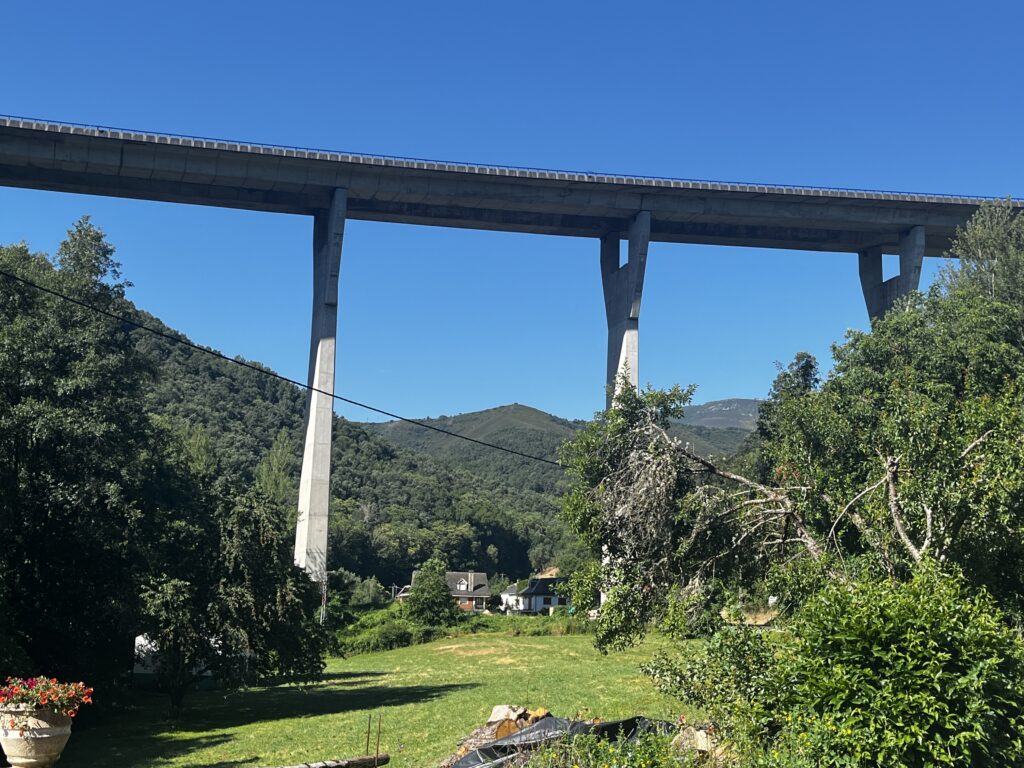
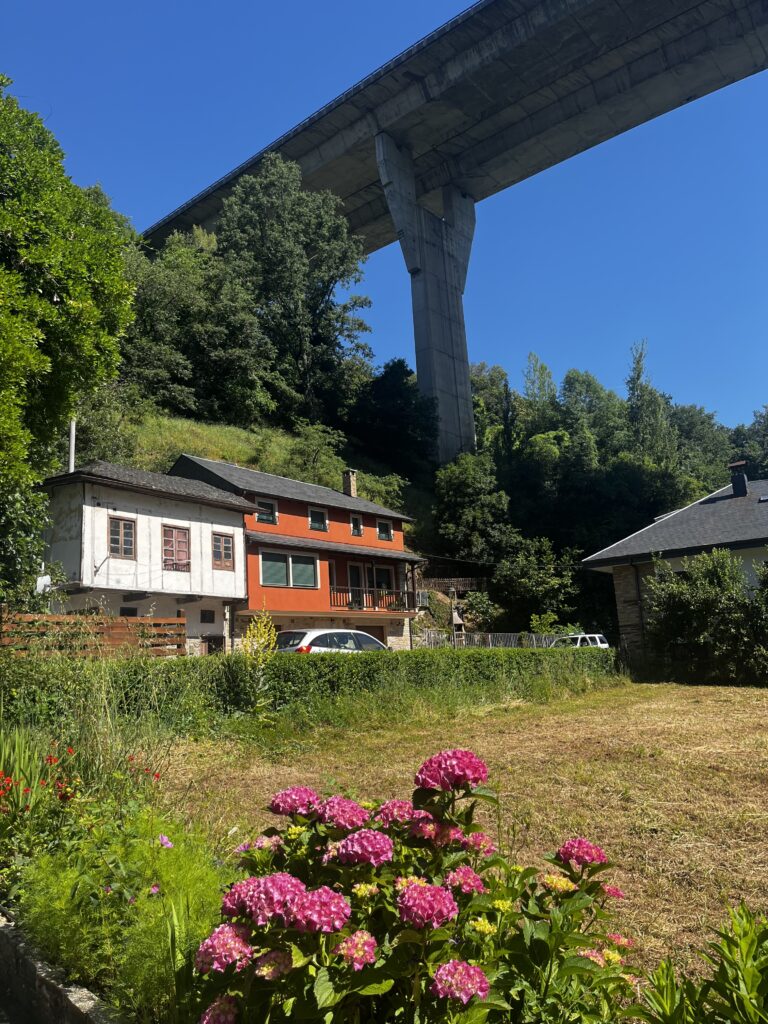
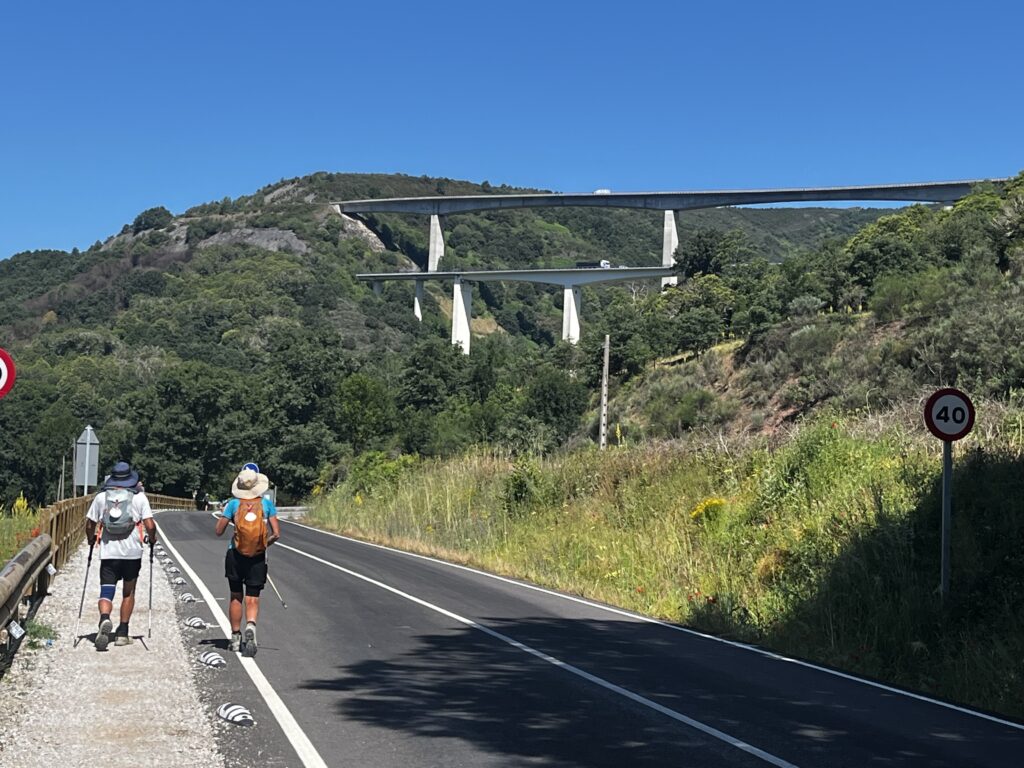
At about 10:45, I entered the village I considered my last, best hope for second breakfast: Vega de Valcarce. The highway flies over the village on improbably tall bridges, making this a very distinctive place. I had memories of a bakery here, and I hoped my memories weren’t playing me false.
The panadería was still here, and it was open. I ran into a number of familiar faces here, mostly leaving as I arrived. Both Erik and Frederick left wearing their recovery slides, with their hiking shoes tucked into their packs.
Second breakfast was quickly procured and inhaled. I will never confirm nor deny I may have had seconds.
By the time I left, it was 11:30. Yikes! By now, it was hot and sunny enough that I’d put up the umbrella before I even left. Under its shade, the breeze was a delight, but already I could feel the heat coming up from the asphalt.
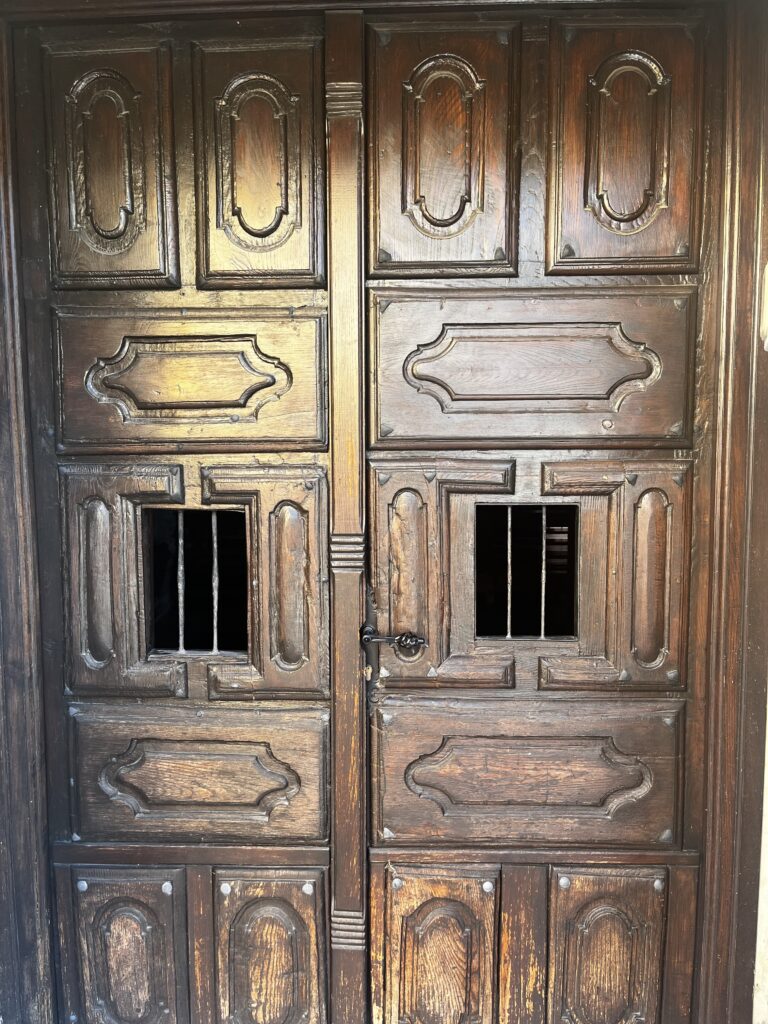
The village church was, of course, locked, but some windows provided a look inside at least.
After the village, it was back to the sidewalk along the road. The road continued to follow beside the river. After a while, the sidewalk ended, to be replaced by a gravel path.
The road continued through the forest, though given the width of the road there was often no shade to be had except under my umbrella.
By about 11:50, I was starting to pass small meadows to either side of the road, some with grazing cows.
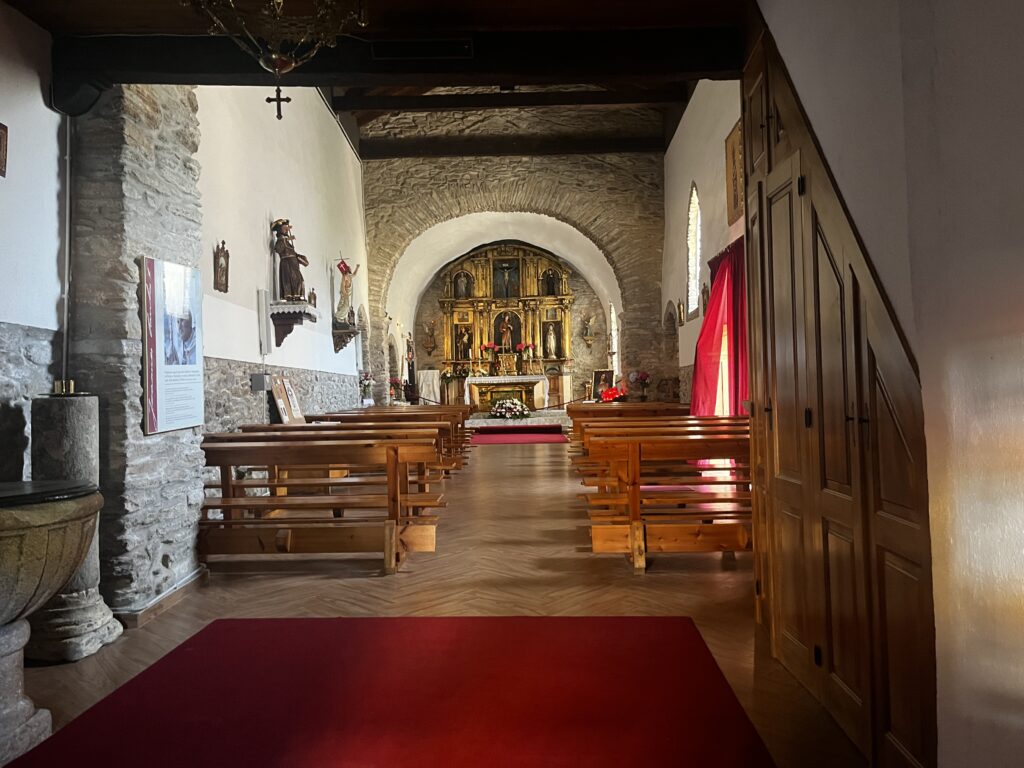
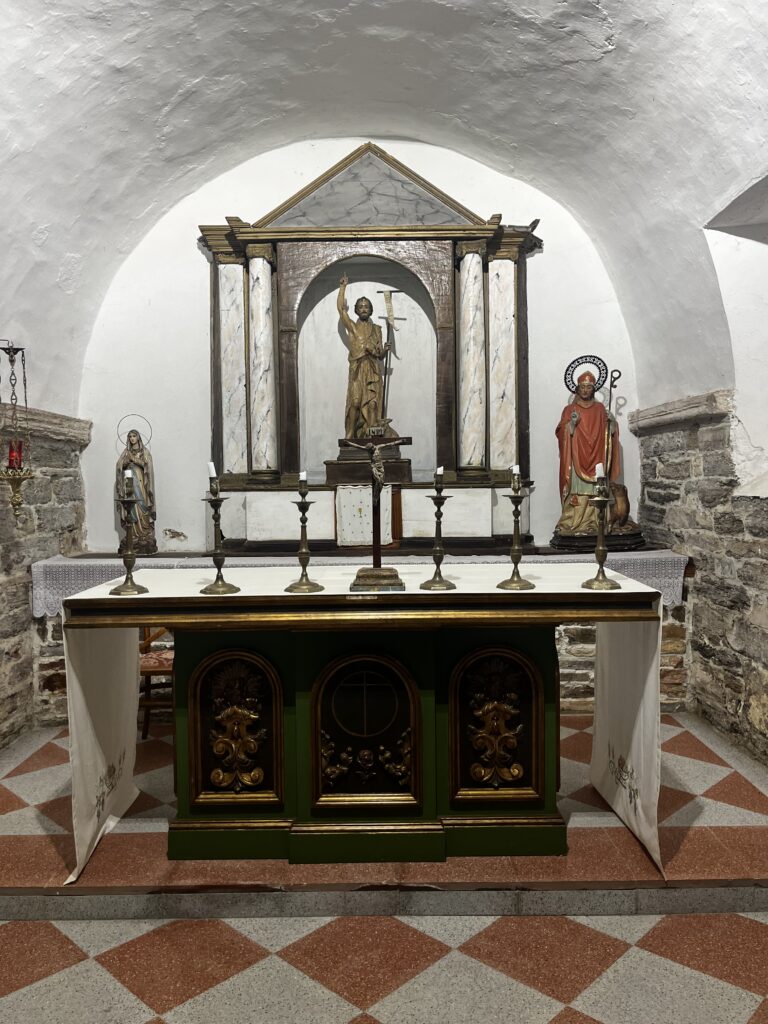
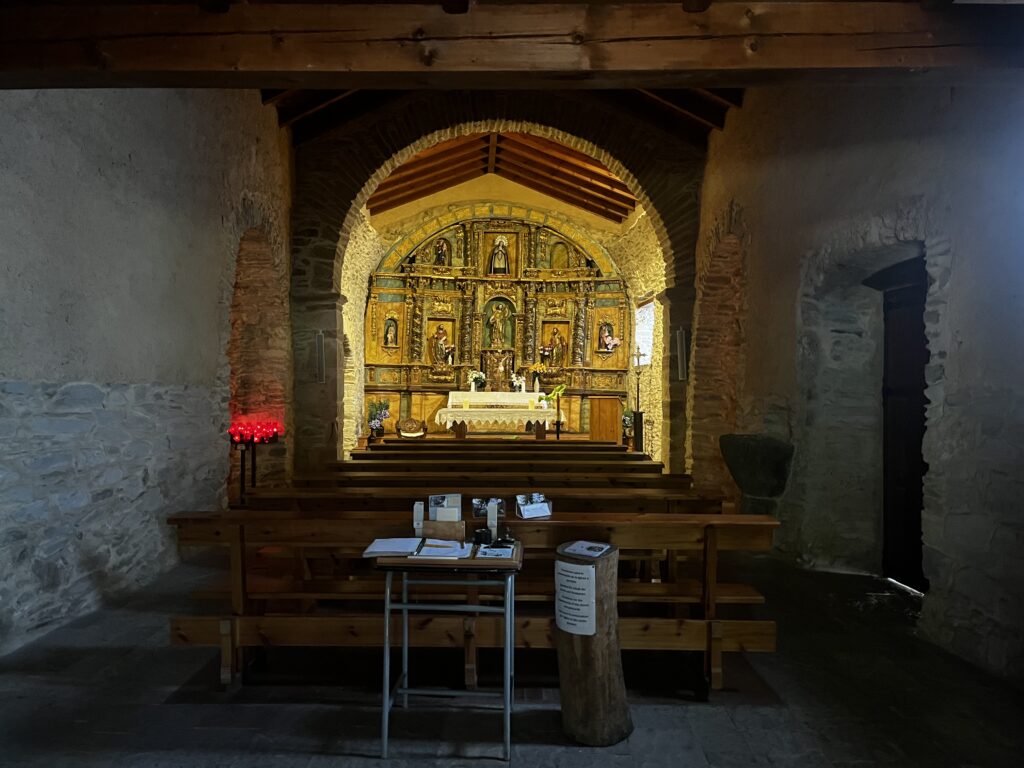
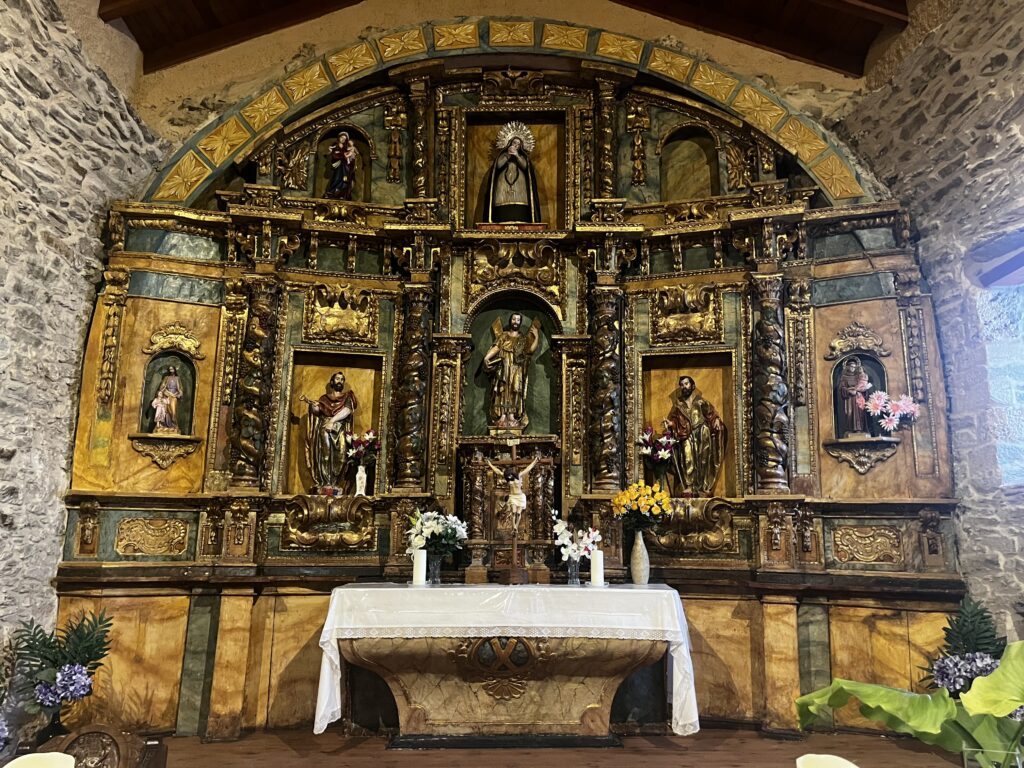
I entered the village of Ruitelán – another “flyover” village – just before noon moving at a fair clip. Nevertheless, when I saw that the village church was actually open, I popped in to visit and pray.
This is clearly not a wealthy community. The church is quite rustic, but it is also clearly well taken care of and well loved.
Liturgy geek moment: even in this humble little church, the altar was arranged in the Benedictine fashion with six candlesticks and crucifix. I found it quite dignified.
After the village, there was no sidewalk, and there was no gravel path. I was roadwalking on hot asphalt. In some places, there was actually a narrow dirt path past the crash barrier on the side of the road, but it was so overrun with grass that it was impossible to use my sticks there.
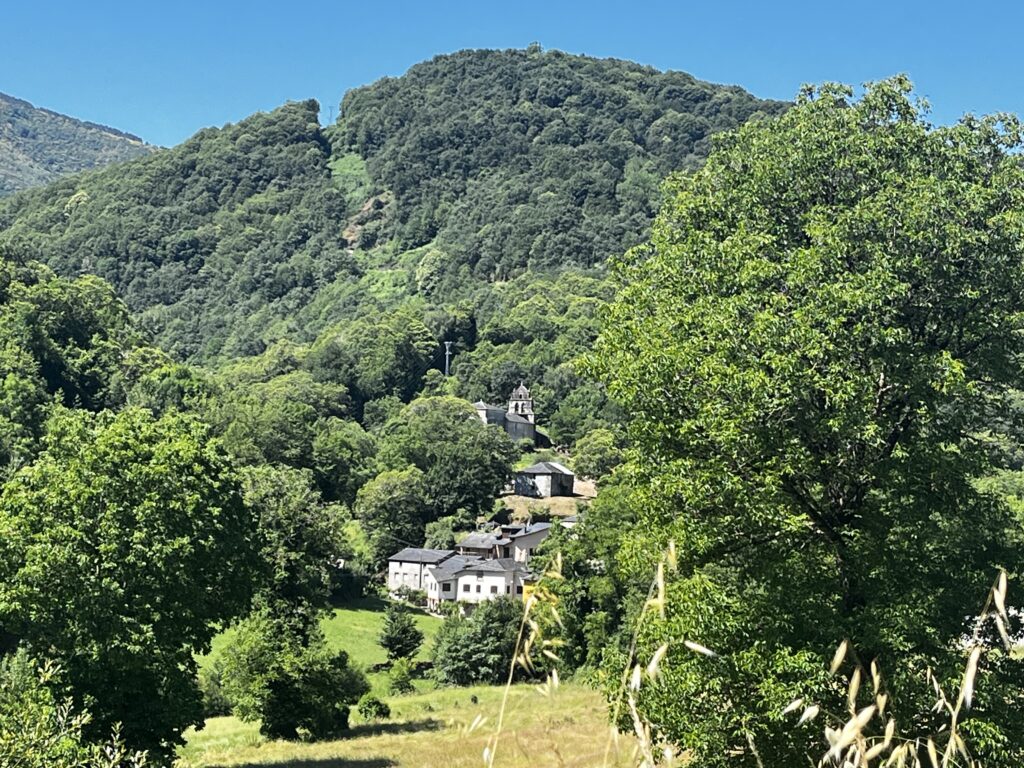
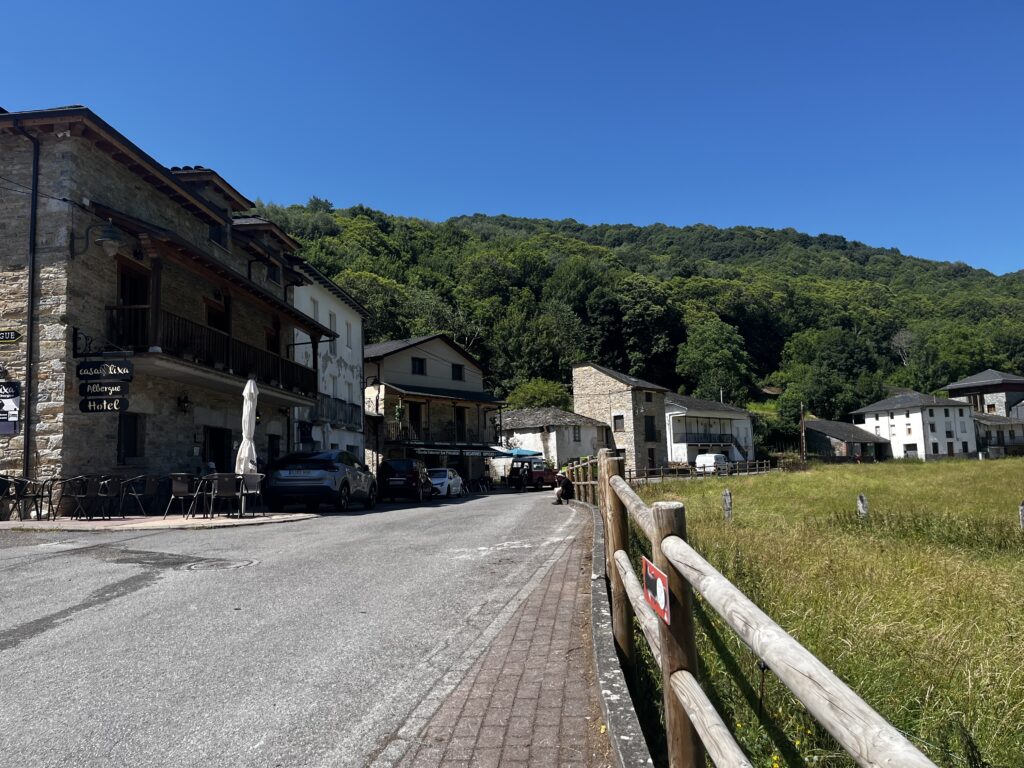
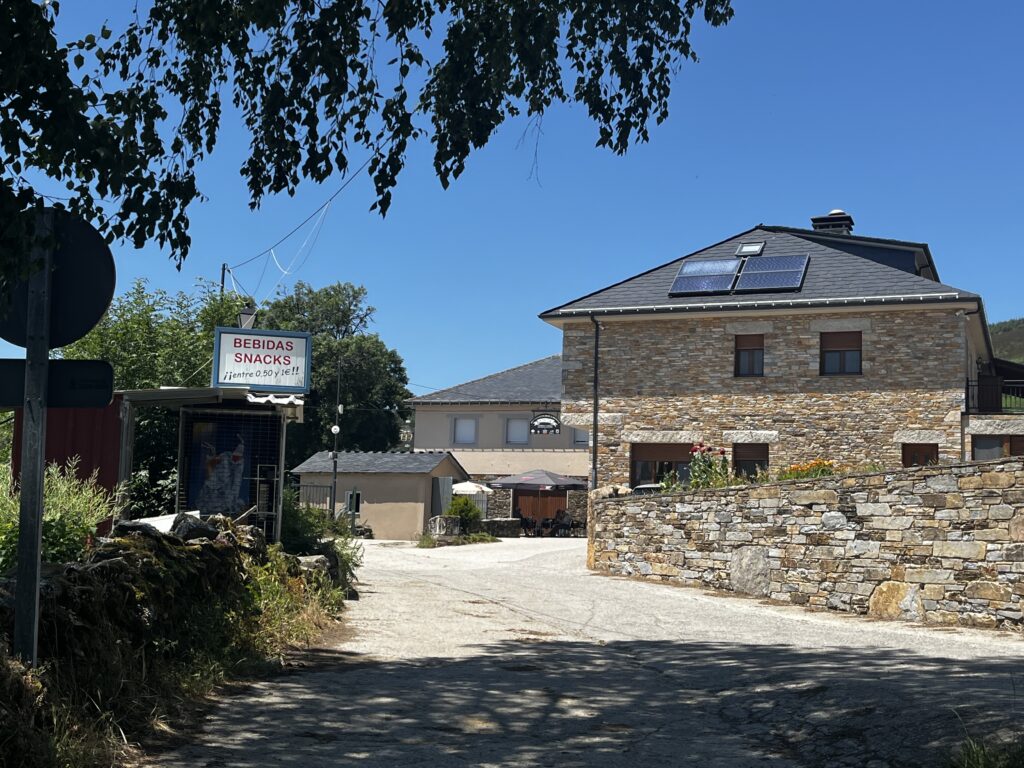
The road was now definitely climbing by the time I entered the hillside village of Las Herrerías de Valcarce at 12:30. The Camino left the main road for a very narrow asphalt access road to go down into the village, which in Galician is apparently called As Ferrías.
This village is full of albergues; for those wishing to tackle the hill up to Galicia fresh in the morning, this village is the most logical stopping point for the day. I, however, I am not that person.
This is also a place where you can rent a horse to take you up the hill. A few days ago five of us tried to reserve for this, but we were told the next available open slots were towards the end of June.
So I was going to have to tackle the hill this afternoon. But first, lunch.
I saw Julie sitting in front of one of the little bars , so I joined her and had my lunch. While I was eating, Ginger finally caught up and gave a quick hello before she ducked into her albergue. We also had a brief conversation with a New Zealand woman who had bicycled from the Netherlands.
All in all, a very pleasant lunch. I left at 12:55, umbrella unfurled. The village seemed to go on and on along its one little street. Moments after I passed the last house, I passed the first house of the next little hamlet, Hospital. Based on the signage in one of the yards here, the full traditional name of this hamlet may or may not be Hospital Inglés. I’d love to know the story behind that.
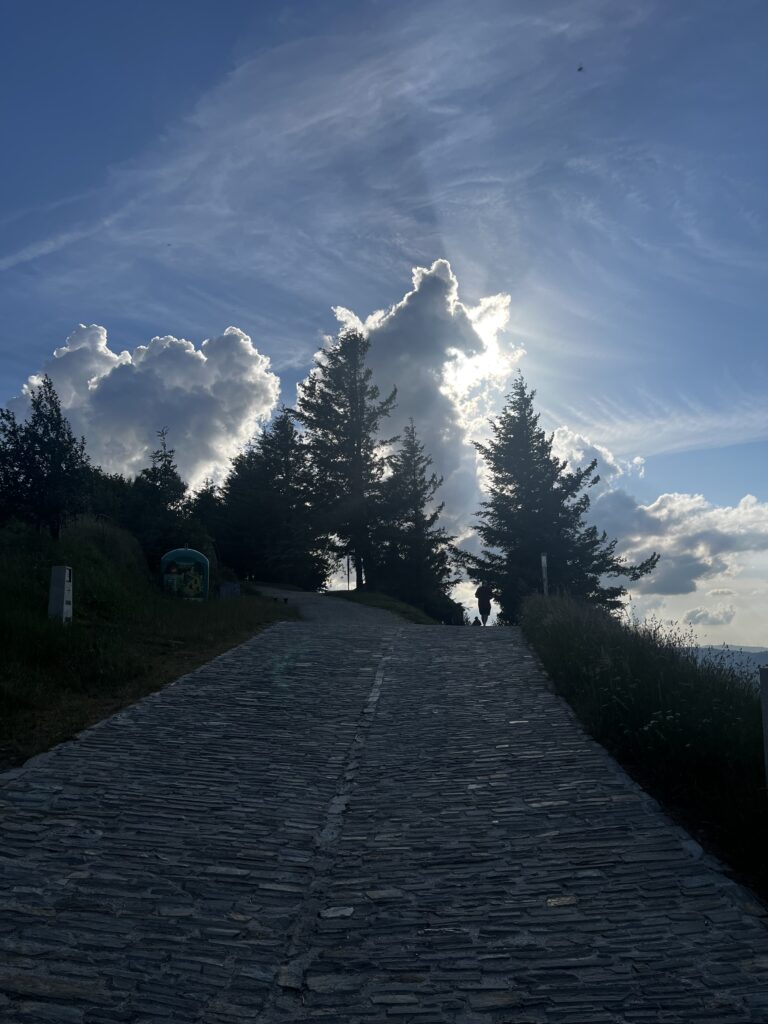
From here, it was roadwalking uphill. The hillside rose on my right, and a stream burbled in the valley on my left. As I climbed up to the pass, the cooling breeze was more than offset by the scorching heat of the asphalt underfoot.
At about 1:20, the Camino finally turned off the asphalt onto a dirt path through the forest. The change in temperature was immediate.
The path was relatively level for a while. It even went downhill slightly for a bit as I proceeded through the forest, bluff to my right and stream to my left.
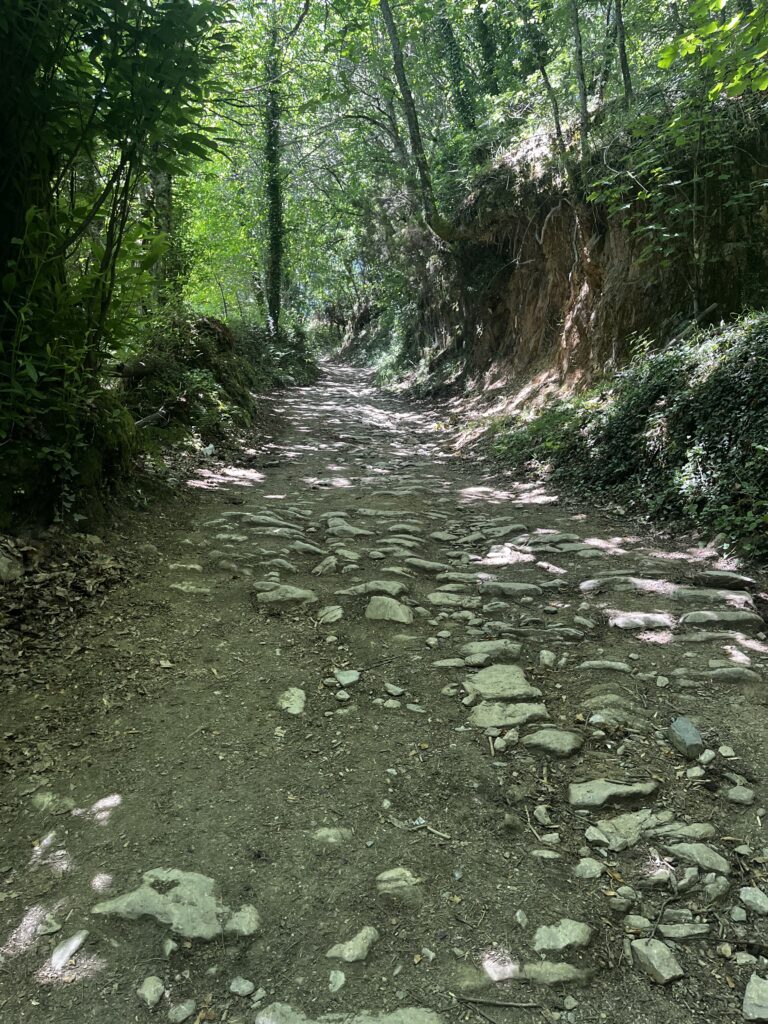
It wouldn’t last. Soon the steep, stony switchbacks began. This is also the path they take the horses up and down, so there were extra surprises to keep an eye out for.
The path was never ending. You’d get to the end of one section and think, “surely I must be at the top of the pass”, only to find another switchback. On and on. Boulders and horse droppings.
In the sunny sections, the air was warm and humid. In the shaded sections, it was still humid. Either way, I was bathed in sweat.
When the occasional little breeze would come, it was as refreshing as if it were the very breath of God.
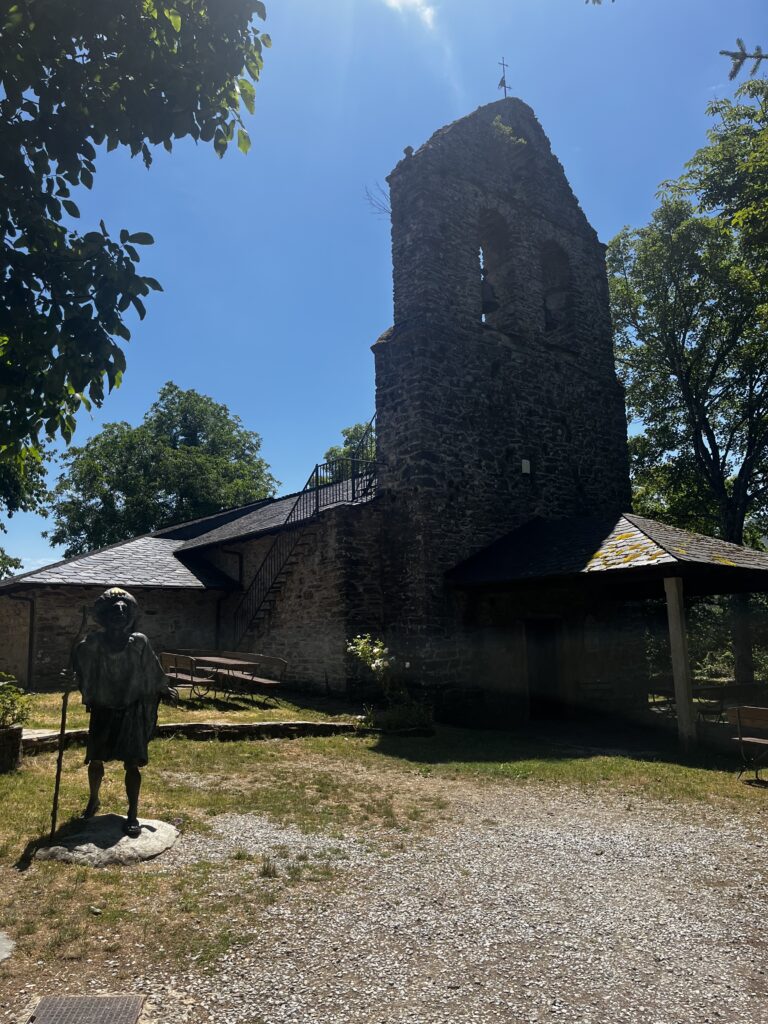
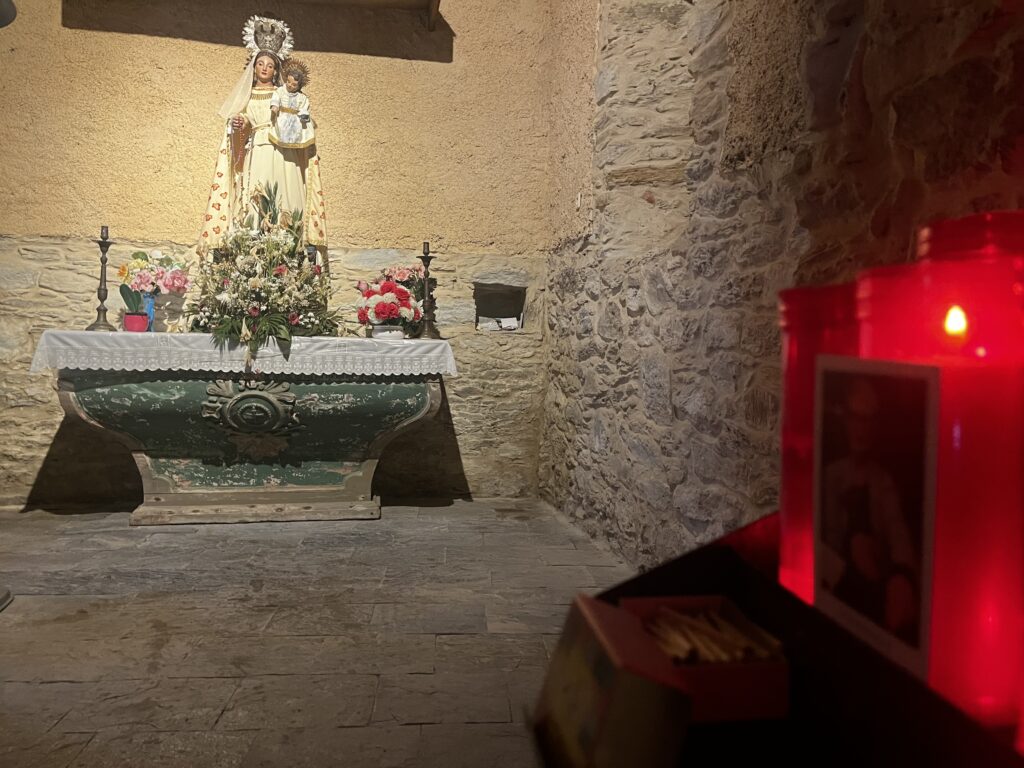
I arrived, exhausted, in the little village of La Faba at about 1:40. I took a slight detour to visit the church where three years ago I had found a kitten sleeping in the presider’s chair.
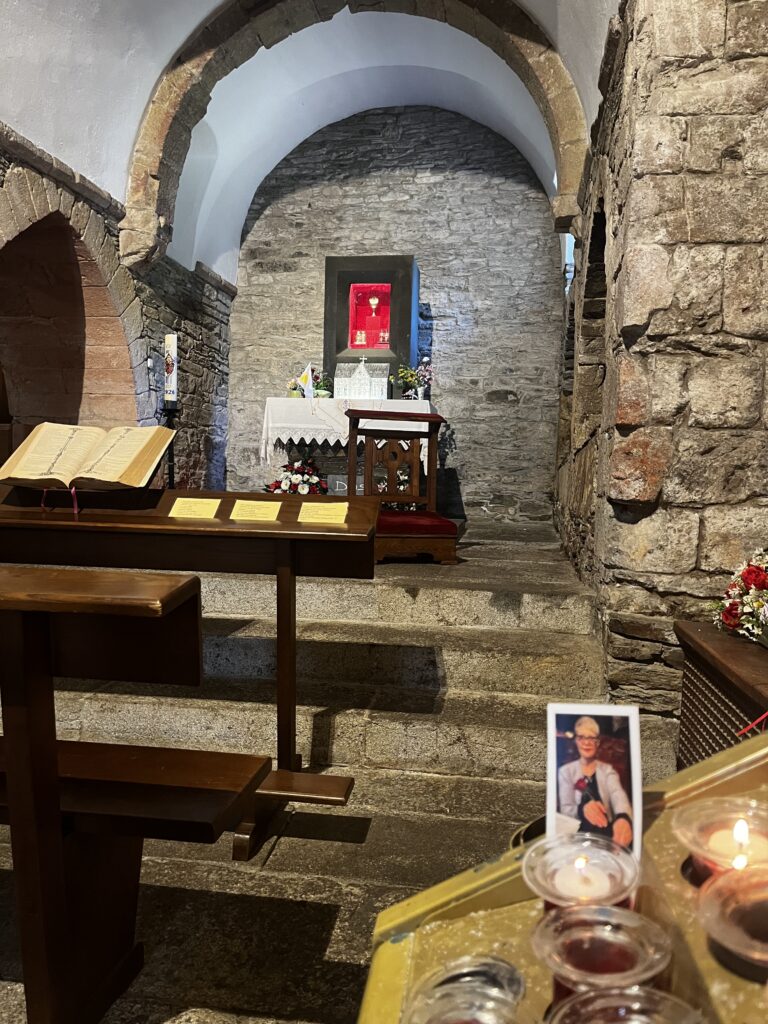
The cat wasn’t in, but I did pray here and light a candle for Francine before continuing on my way.
Soon enough, I was back on the narrow rocky climb through the forest. As I gained altitude, there were fewer and fewer trees. Sometime after 2 PM, I put up the umbrella again.
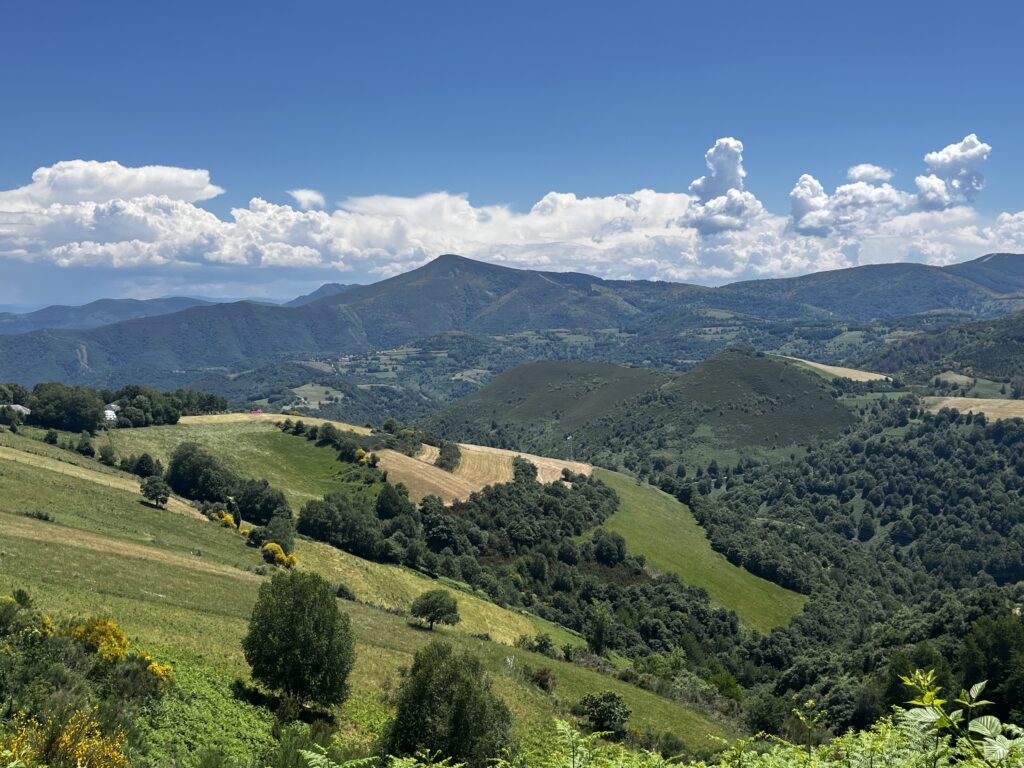
The landscape was now rolling hills of pasture dotted with woodlands. The path alternated between dirt littered with rocks and bare stone.
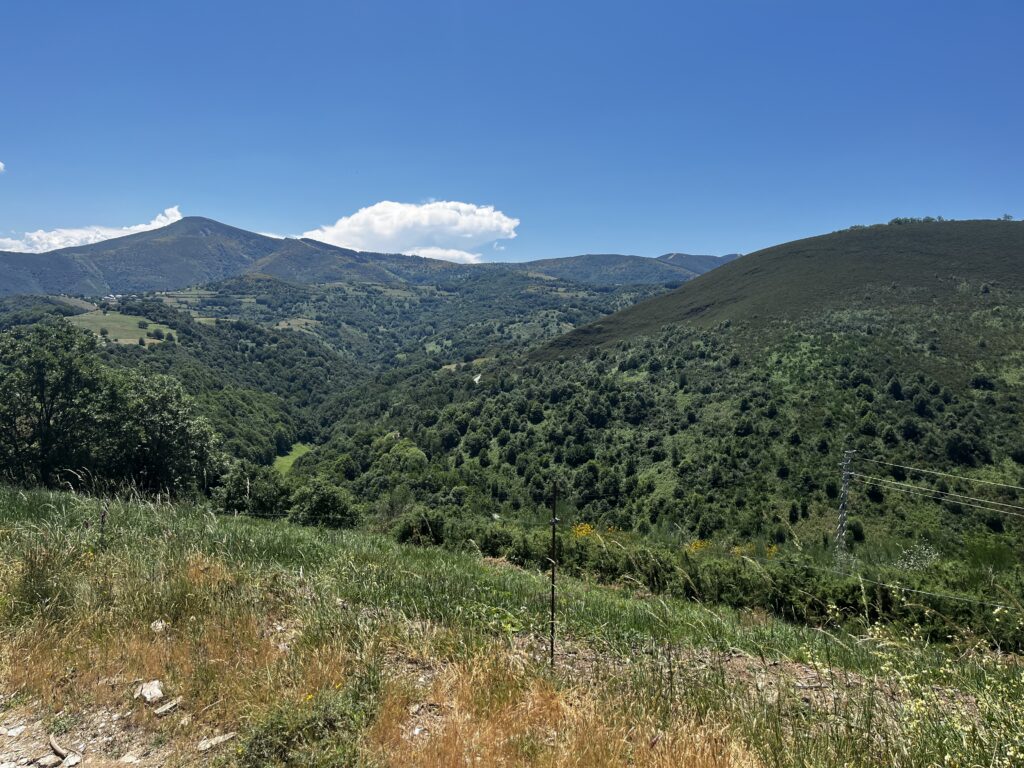
Still, the path climbed. As I approached the top of a ridge, the valley spread out to my left in wondrous array, and far below me I could see the road.
At about 2:15, the path went under a little stand of trees. I paused for a five minute rest here in the cool breeze, sitting on a log.
And then it was back to the climb.
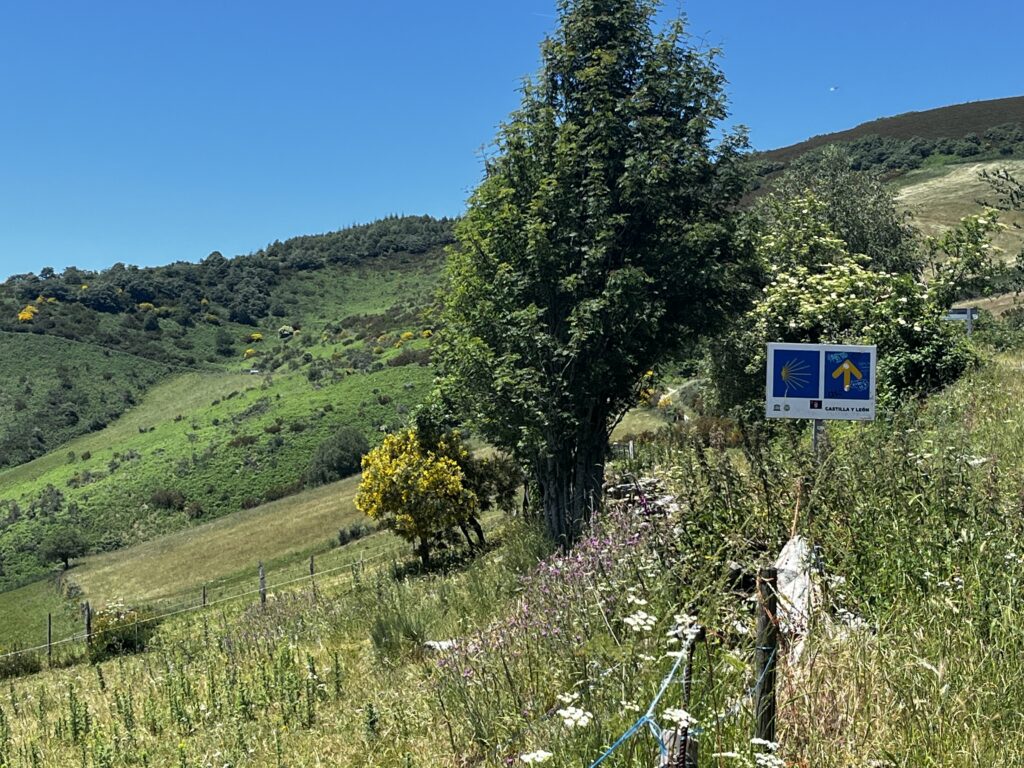
At about 2:35, I entered the hillside hamlet of La Laguna de Castilla. This is the final village of El Bierzo. In fact, it’s the final village of Castilla y León.
I stopped at the bar here for a bit of a rest and a Kas Limón. The table on the terrace was perfectly positioned for a cross breeze. It was absolutely delightful.
But the final few kilometers would not walk themselves, so by 3 PM I was walking again.
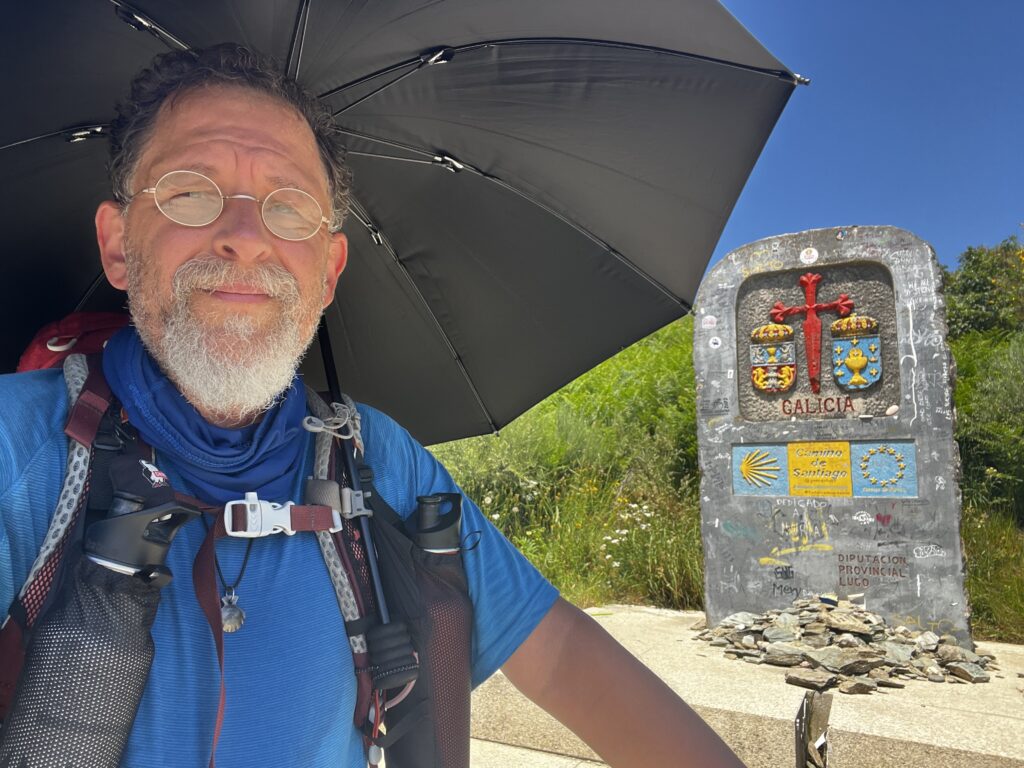
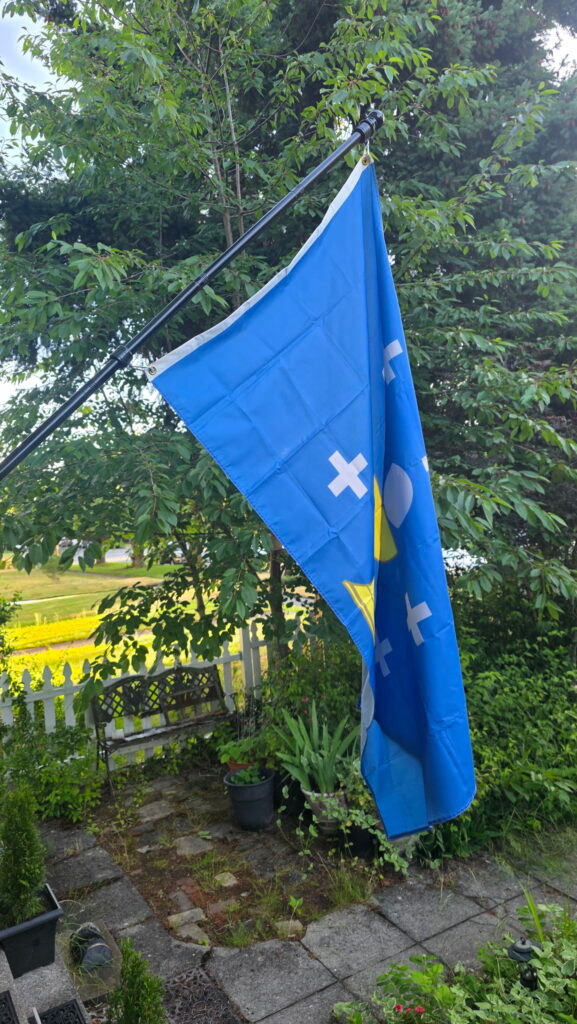
About fifteen minutes later I passed the marker on the Galician border. I was now in my final region of this pilgrimage, with roughly 161 km until Santiago. At Pistachio House, the Galician flag was raised.
There was a strong, cool headwind as I passed this point, and I could feel my body temperature dropping. Ahead of me was forest.
The breeze didn’t last, and there was still a way to go until I reached the highest point of the pass, but I definitely had a spring in my step now.
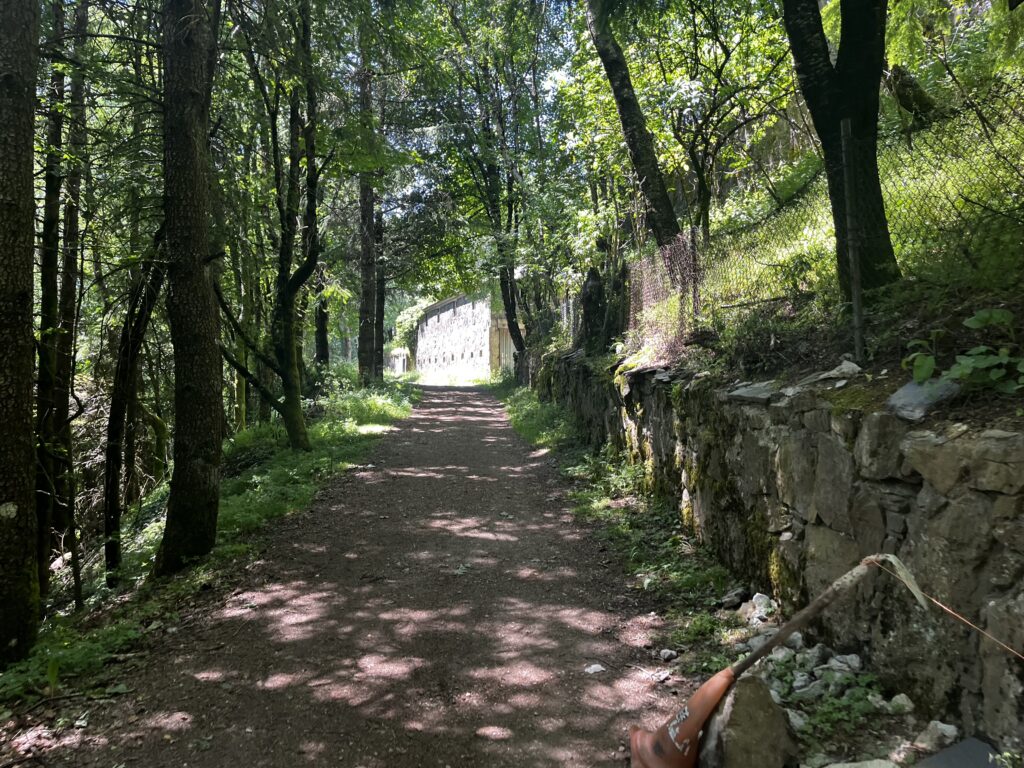
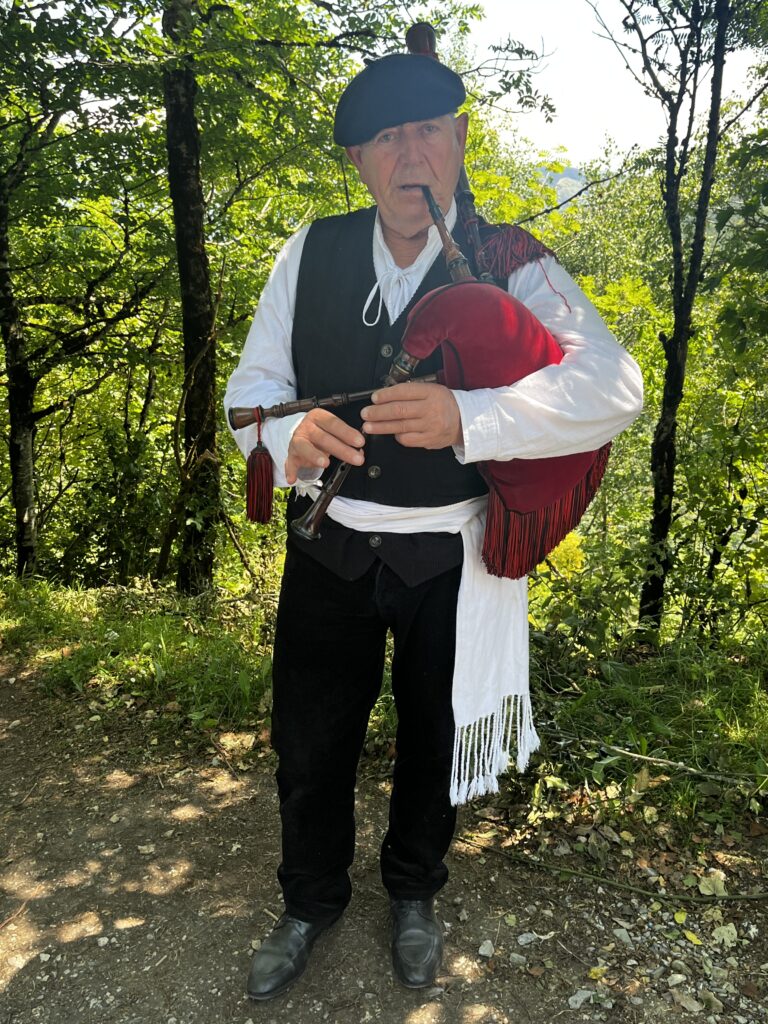
At about 3:30, a telltale and familiar stone wall appeared on my right, and ahead of me I could hear the wail of the Galician bagpipe.
Just a few minutes later, I walked into one of my favorite villages in the world, O Cebreiro.
The church wouldn’t open for another twenty minutes, so I made my way to the Xunta albergue to secure a bed. There was a queue.
I wasn’t checked in until about 4:10. There was also a queue for the shower, and it was 5 PM before I left the albergue.
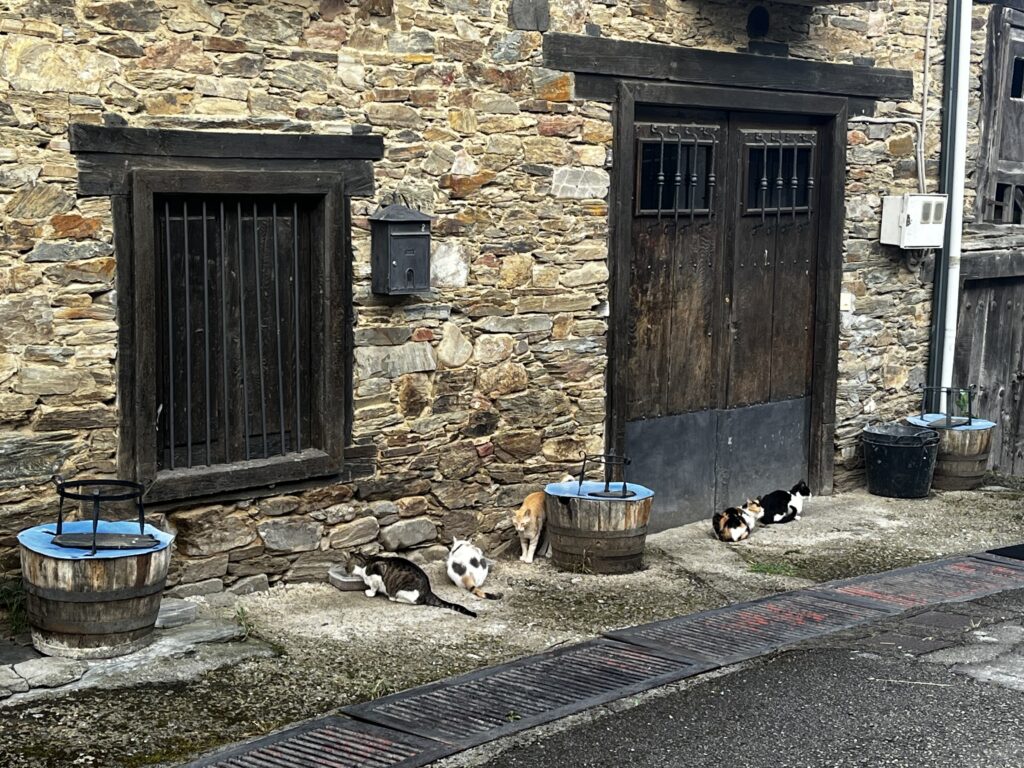
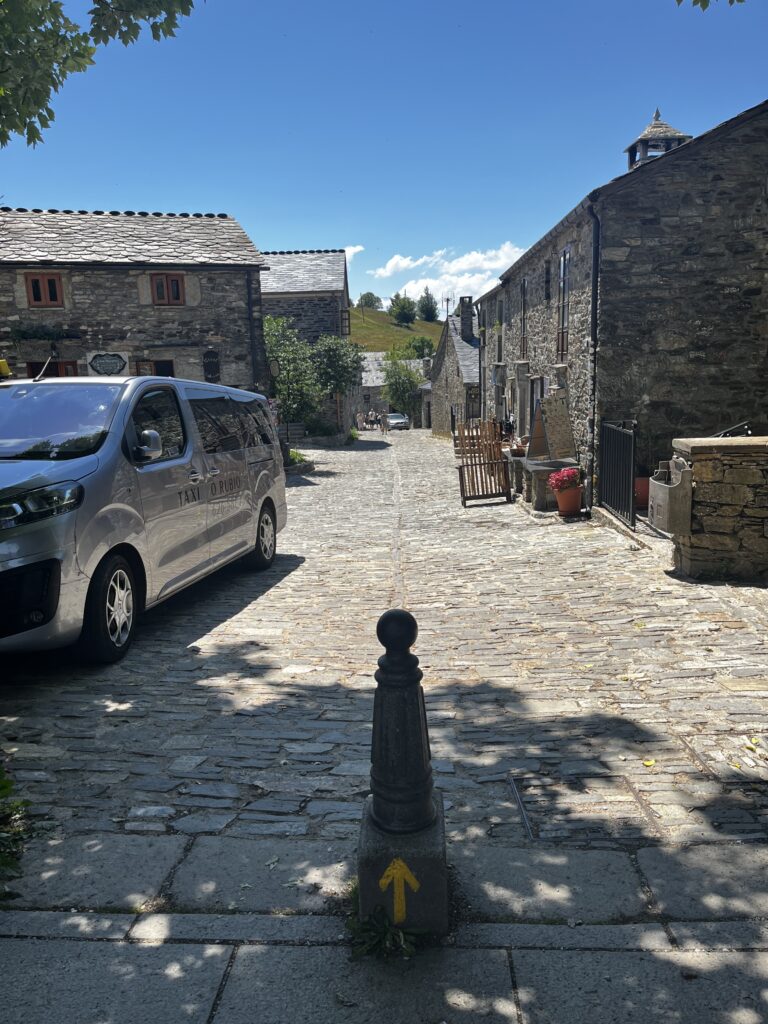
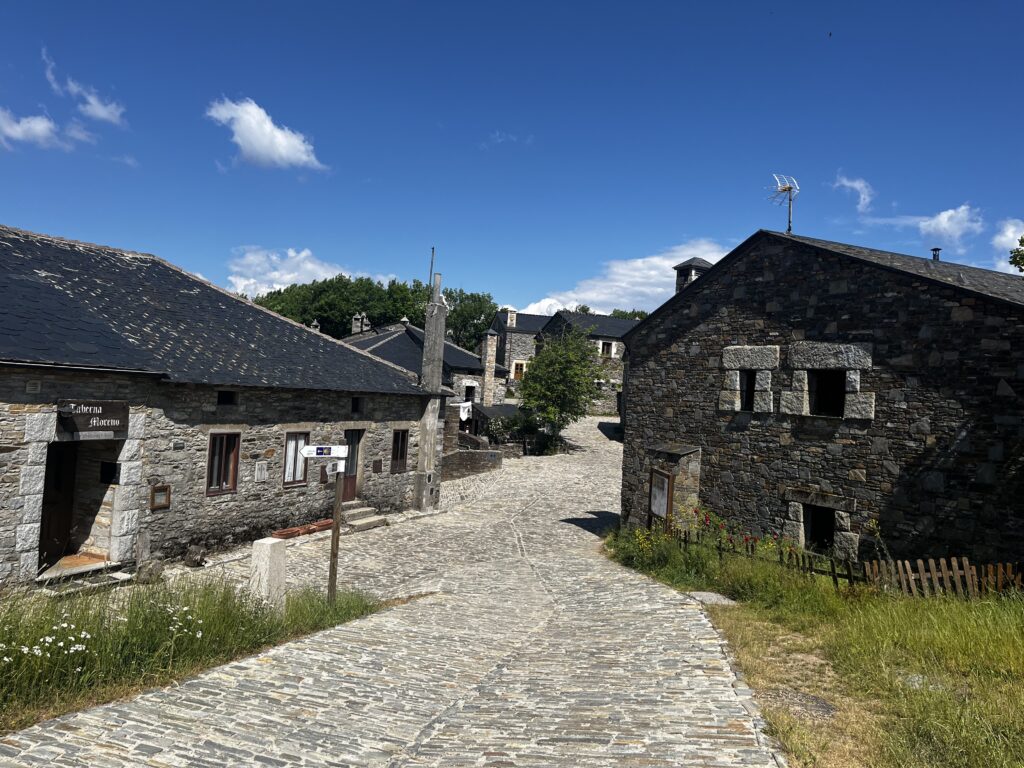
The village of O Cebreiro sits at the top of a ridge between the valley of El Bierzo on the one side and Galicia on the other. Everything is made of stone and roofed with slate, giving it a very distinctive look.
Francine also loved this little village – it’s one of the reasons we began our 2018 Camino here.
This village is also, in many ways, responsible for the revival of the Camino in the 20th century.
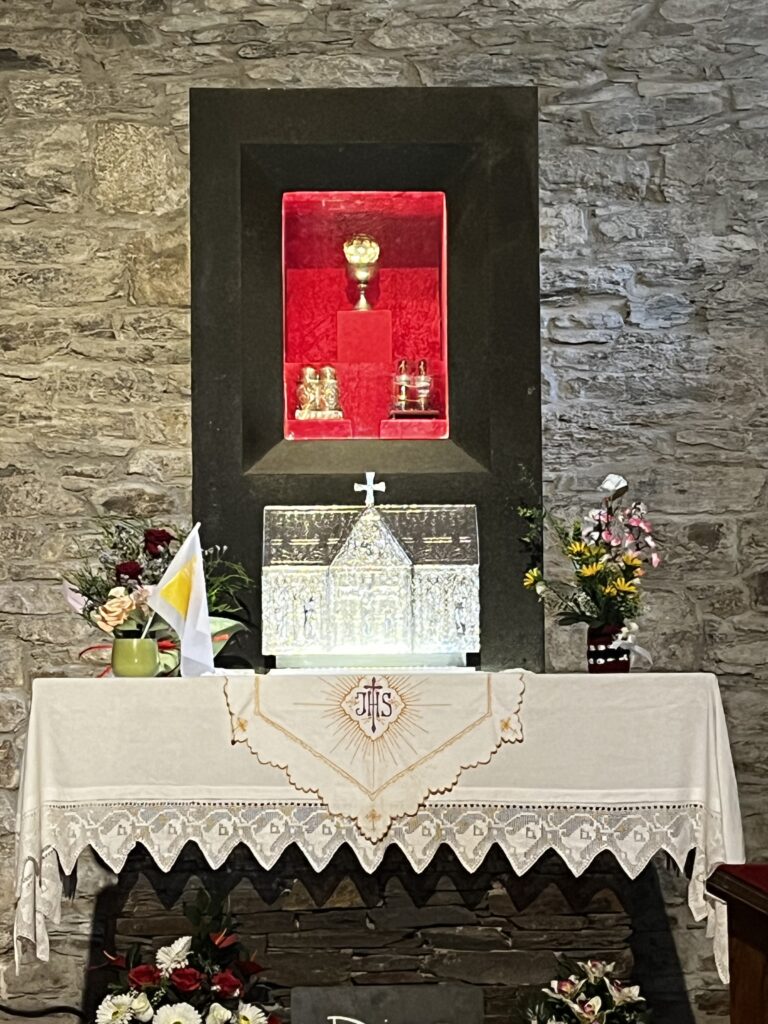
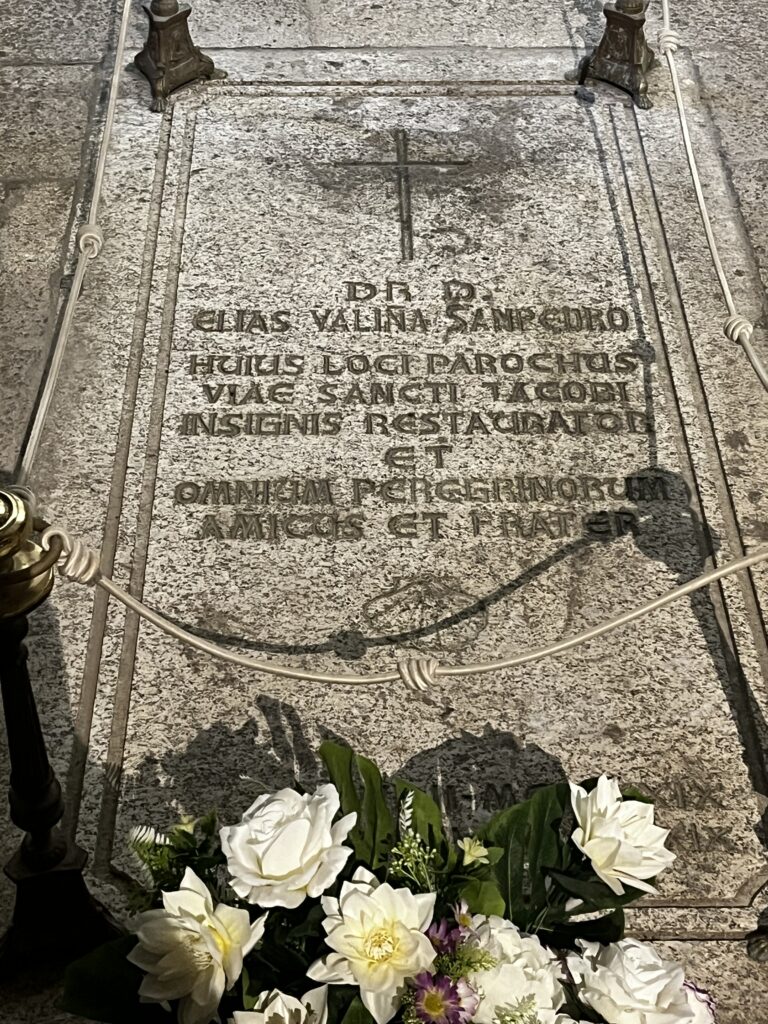
I visited the little ninth-century village church and paid my respects to Don Elias, who is buried here. He is the 20th-century rejuvenator of the Camino, and a man I believe to be a saint. And then I prayed here and lit a candle for Francine.
I had dinner with Moses from Atlanta. Fascinating conversations as usual!
Date: 15 June 2026
Place: O Cebreiro
Today started: Villafranca del Bierzo
Today’s Photos!
Looked and sounded like a hilly walk today, and sounded like great company.