
Via Lemovicensis: Penultimate
Despite best efforts, I didn’t make it out of the albergue much before 7 AM. A chunk of Melide’s old city has its streets torn up for what appears to be water or sewage work. Finding the Camino actually proved to be quite challenging.
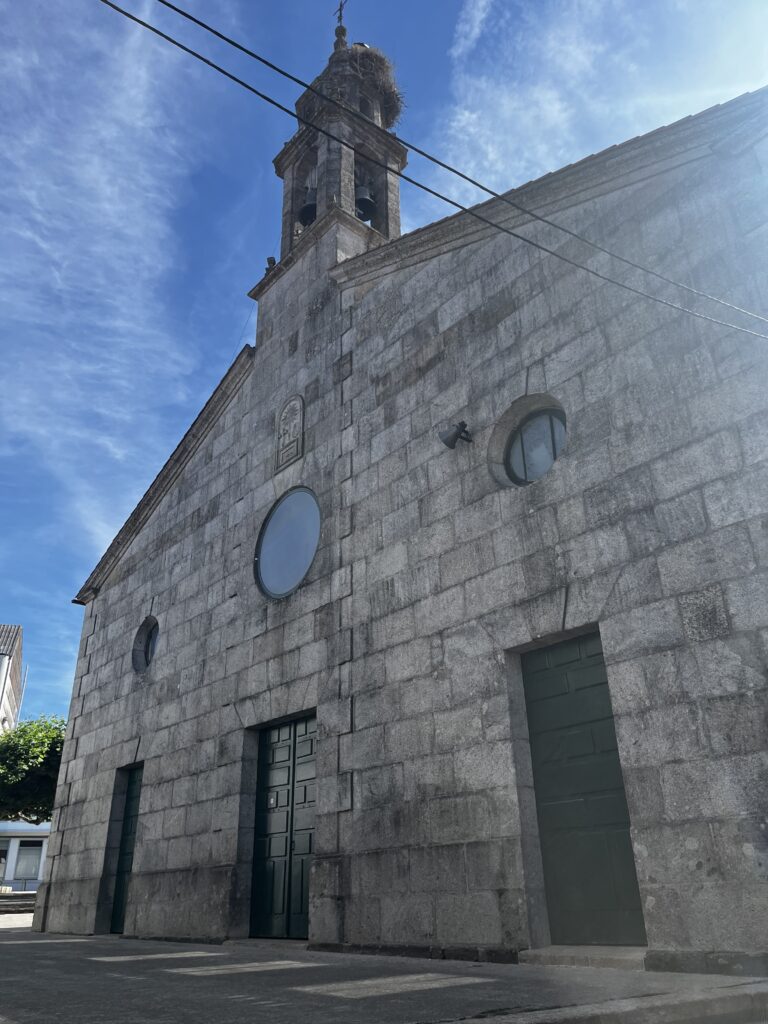
The first church I passed on the way out of town was locked, and there was a group of approximately fifty Spanish schoolchildren and their chaperones doing stretches in the little courtyard there.
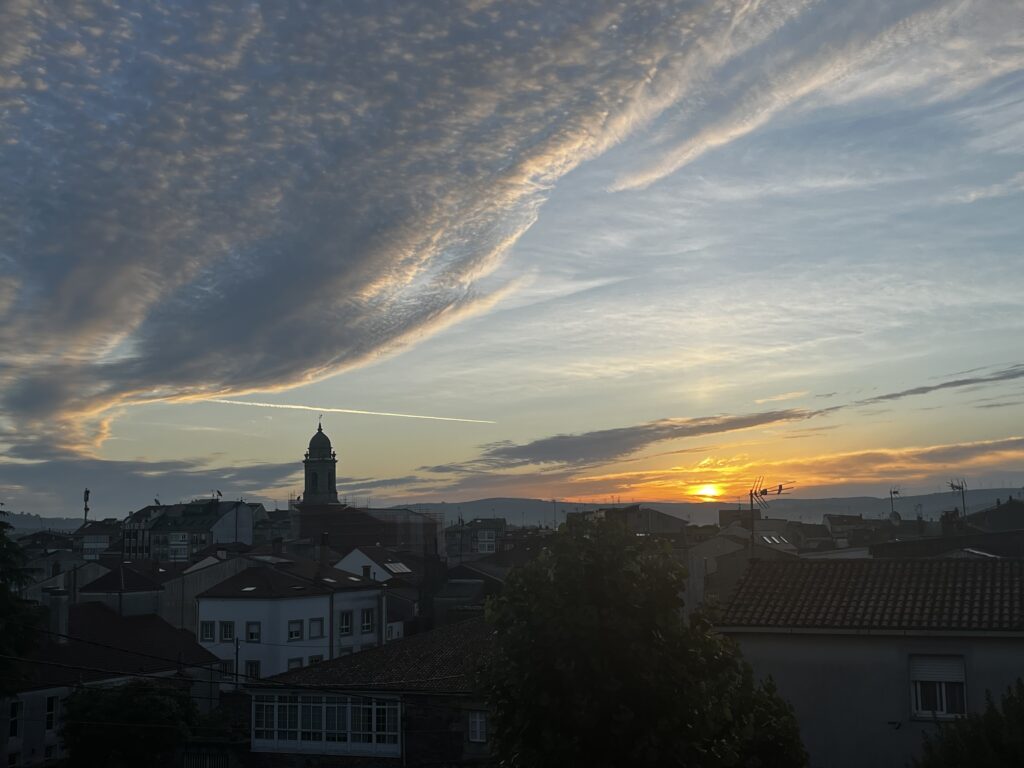
I did manage to get some lovely photos of the city from the hilltop there before I hurried away.
The path out of the city is very different from the path in. After passing the church, I was more or less immediately on a steeply downhill dirt path with an old stone wall on one side and garden plots on the other.
The morning air felt temperate, but the weather report said that it would be brutally hot later this afternoon. Hopefully the fact that I will be mostly under a tree cover will help.
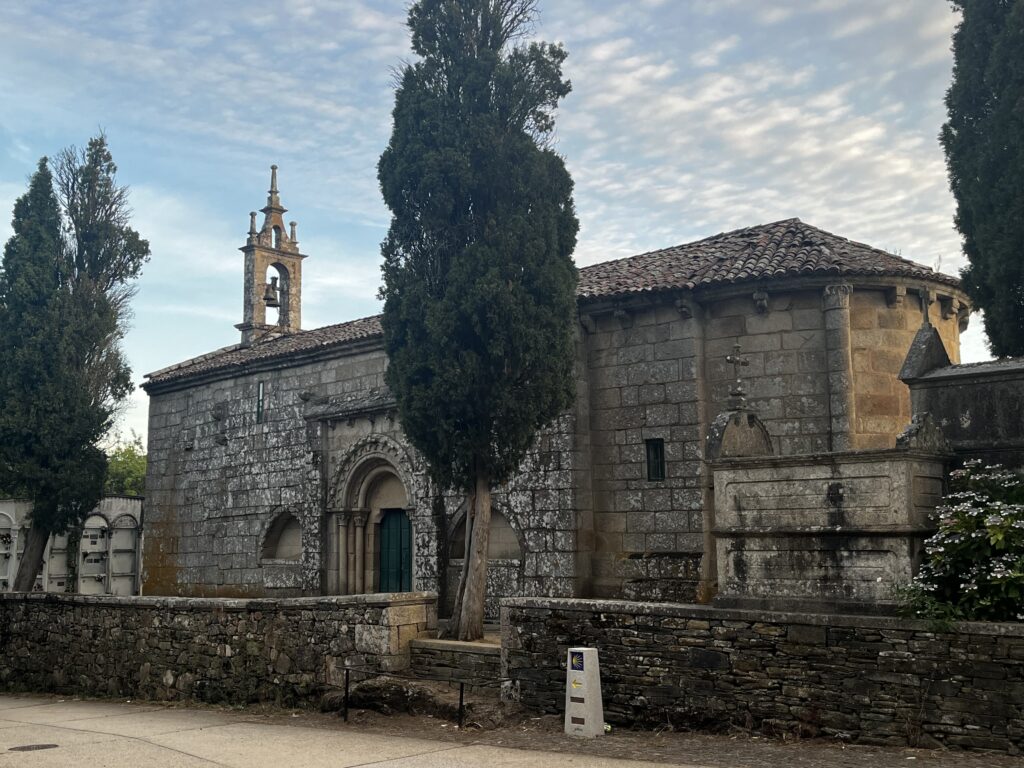
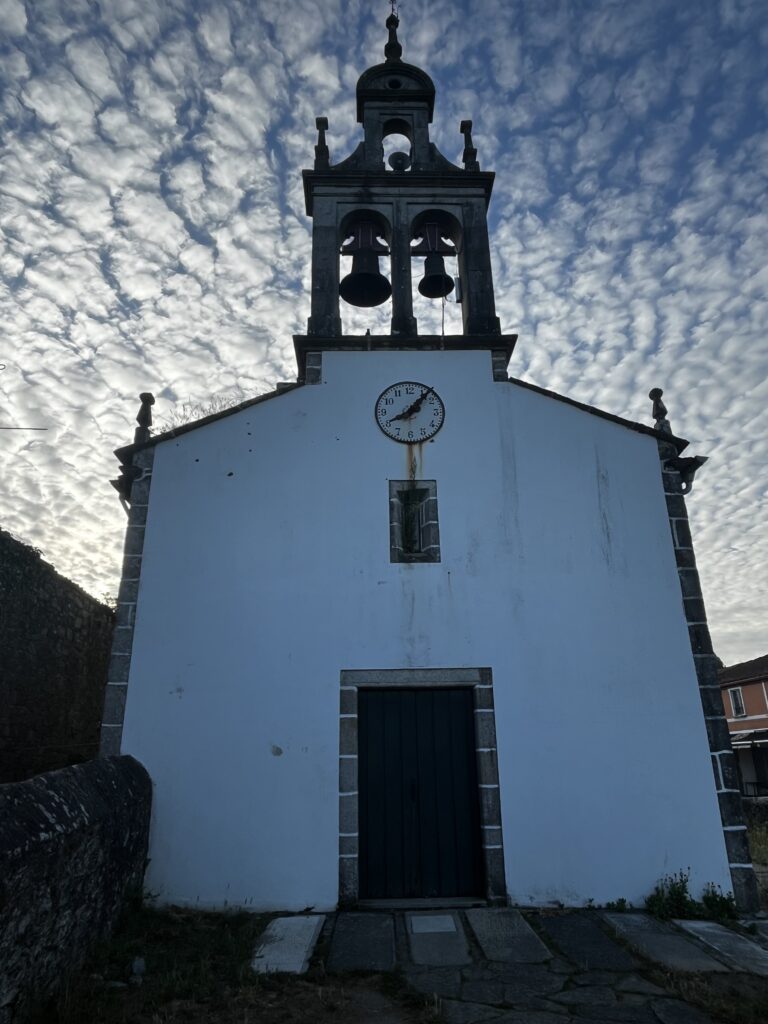
And then suddenly, I was walking on a sidewalk through the urban suburb of Santa Maria de Arriba. By 7:15, I had passed my second locked church. I feared that today would be a litany of the same.
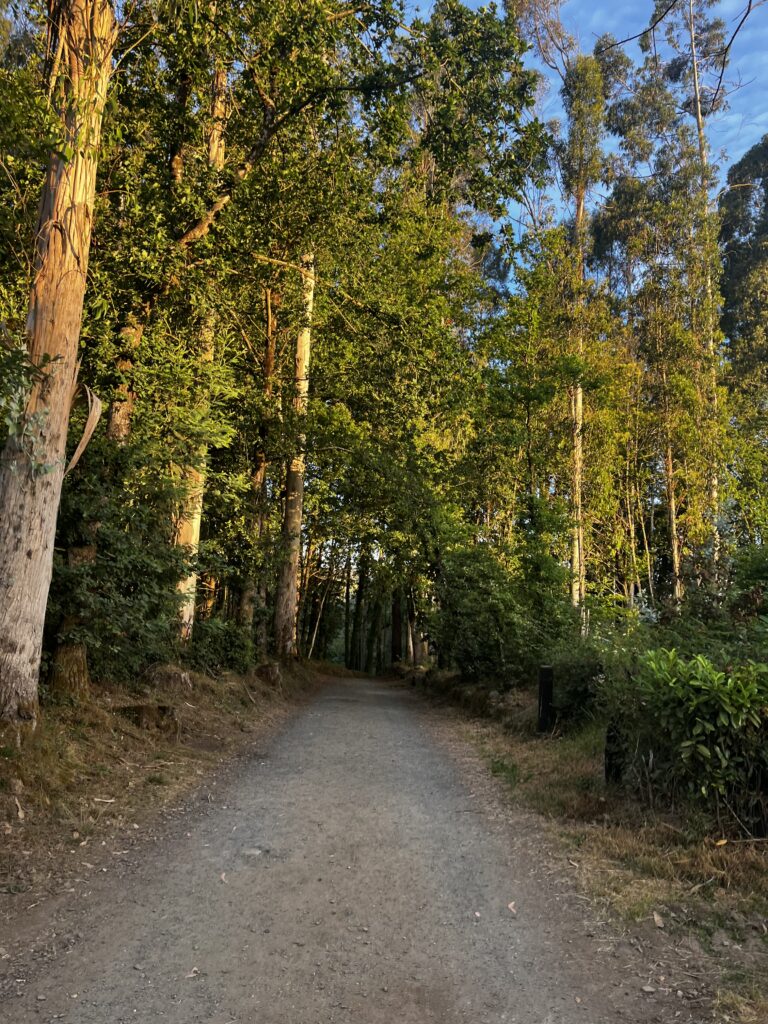
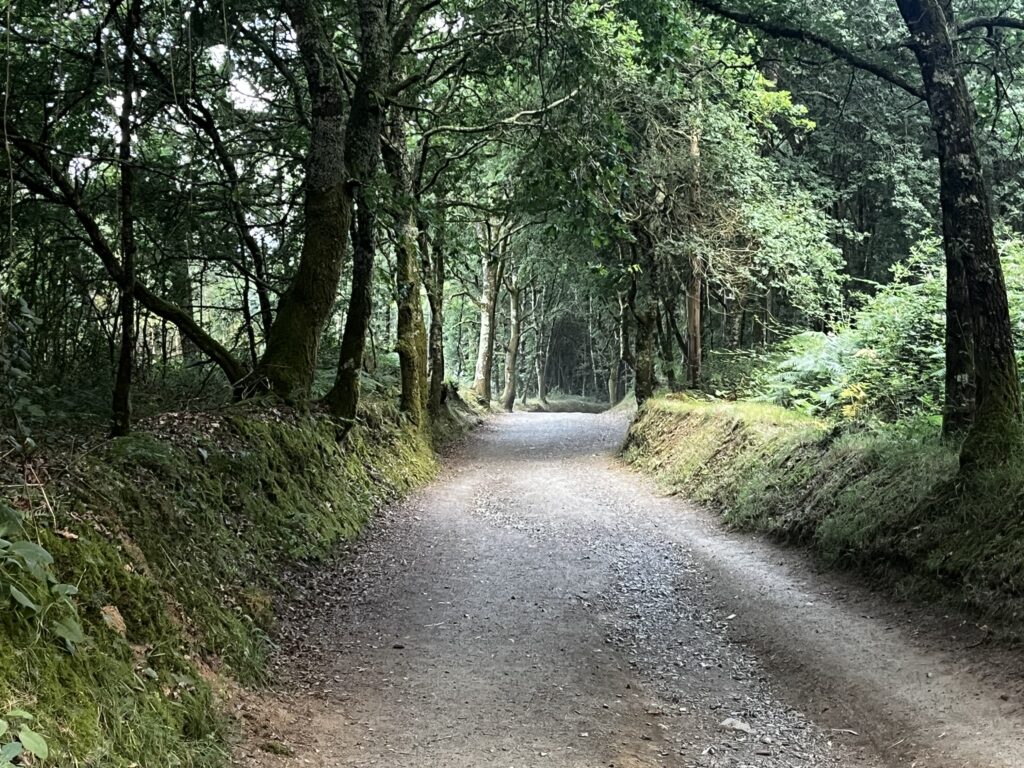
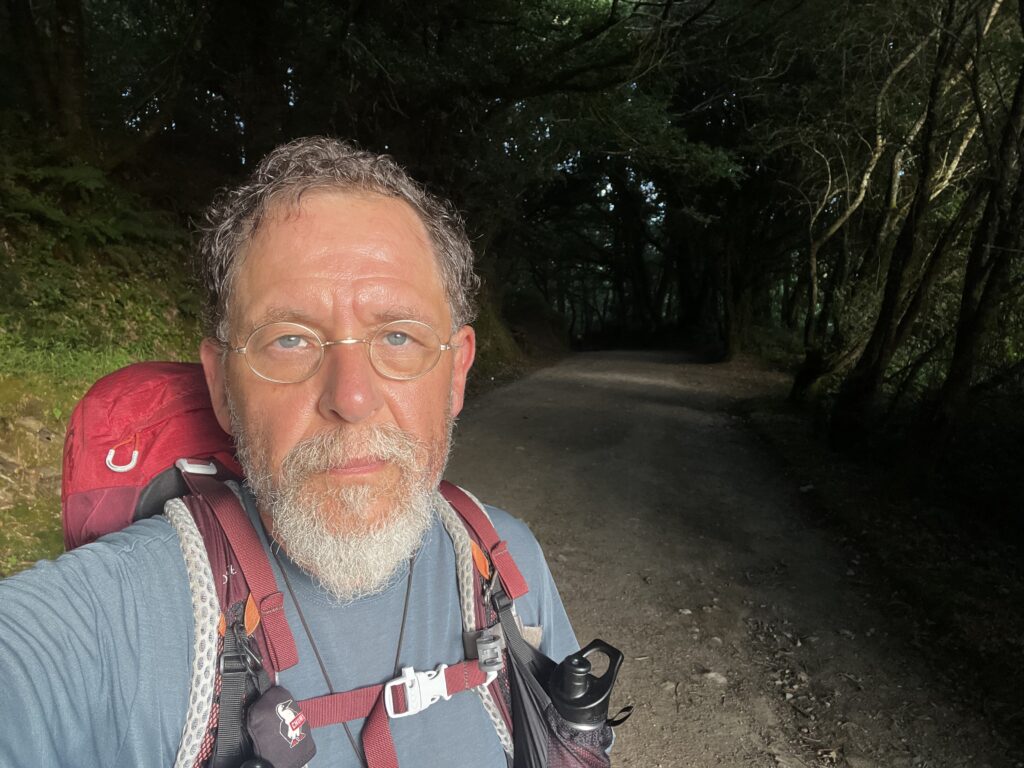
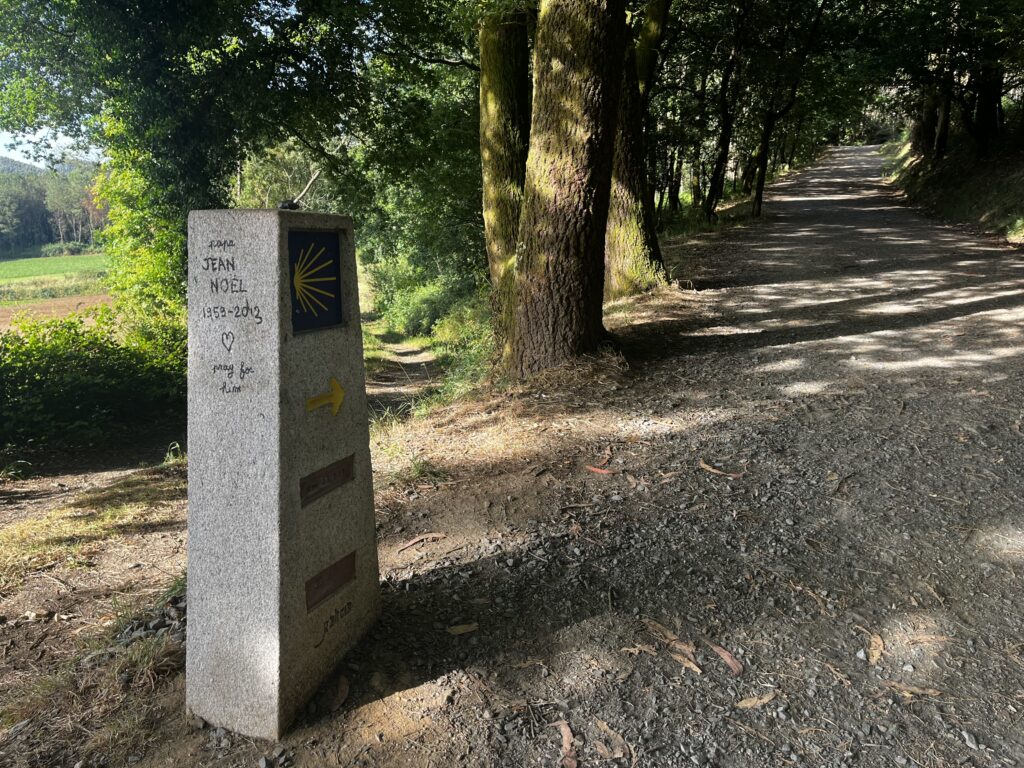
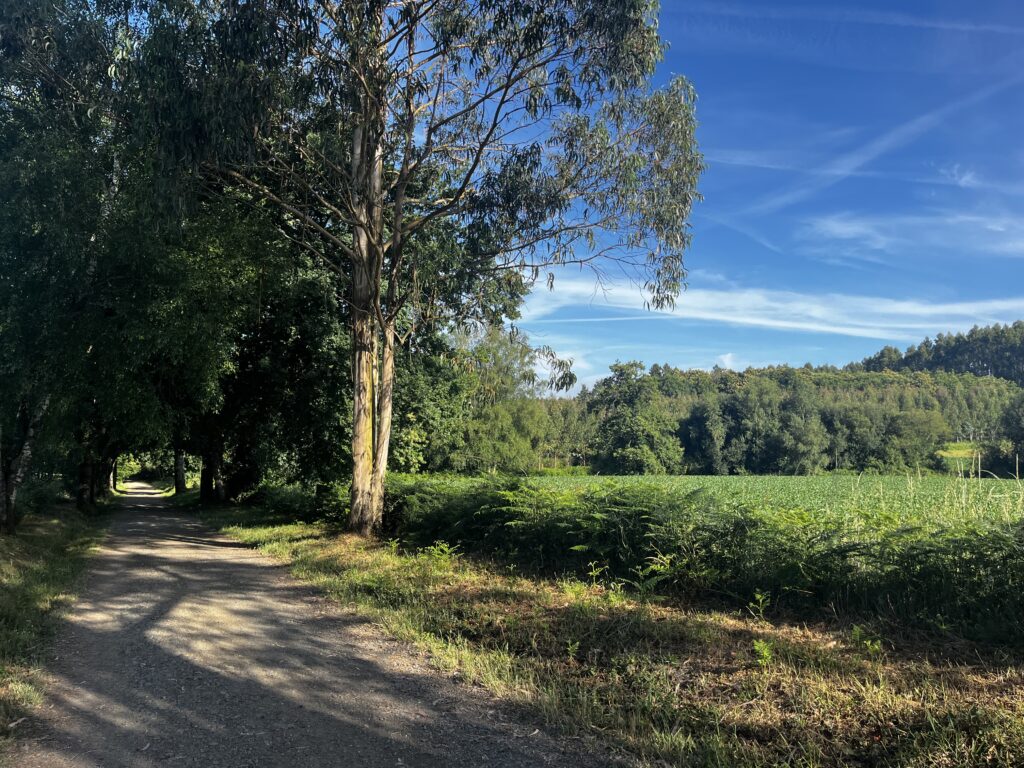
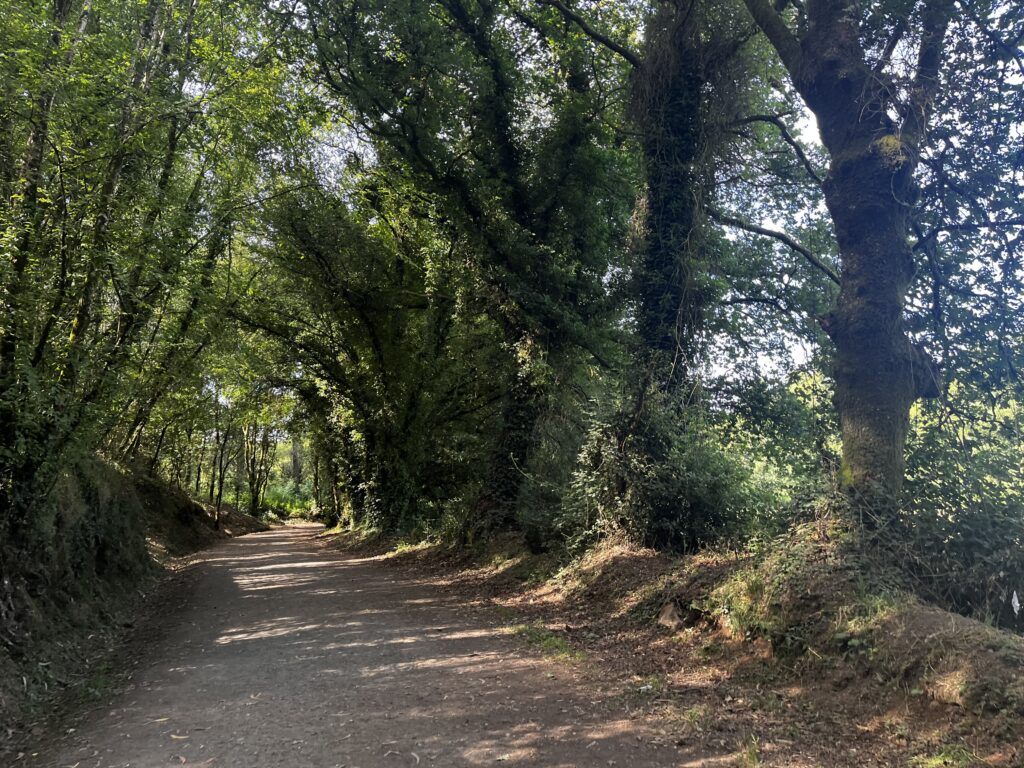
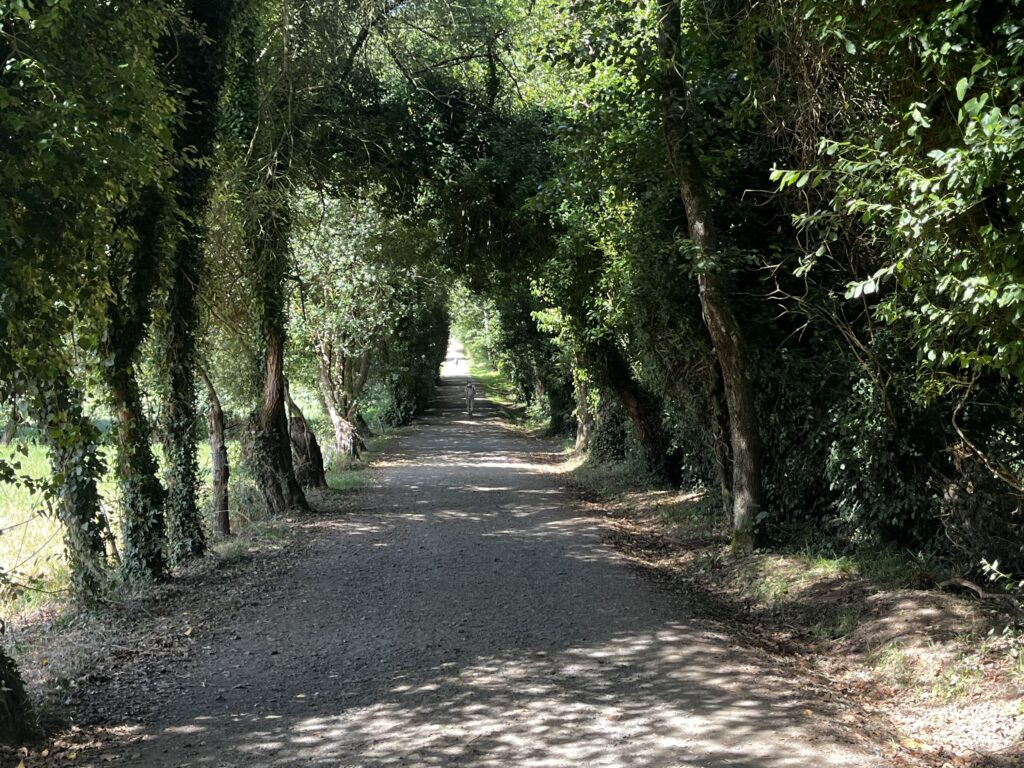
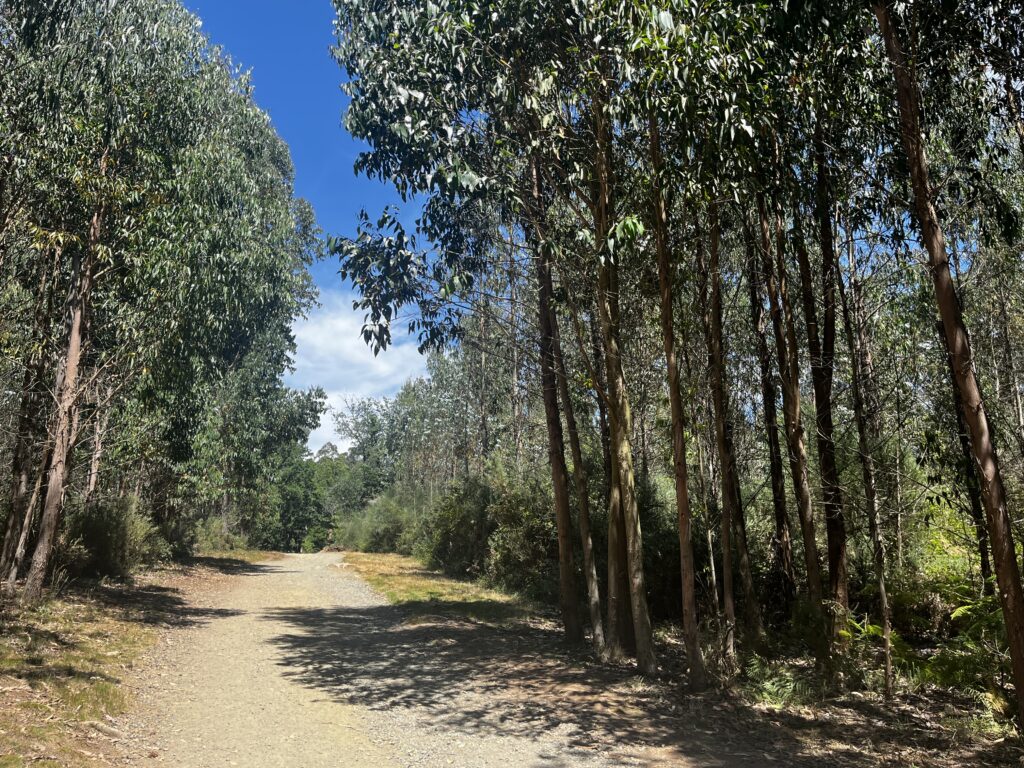
Soon enough, the Camino returned to the old familiar dirt and gravel road through trees and fenced pastures and gardens. Within just a kilometer or two, I was already in the forest.
On this, the penultimate day of the walking portion of my pilgrimage, I reflected a little on the pilgrim routine.
I think one of the things that attracted both Francine and I to the Camino is its complete inversion of modern life in the West. At home, our lives are complicated, but usually pretty easy. On Camino, our lives become simple, but more difficult.
I don’t think it’s just a matter of focus.
What do I mean when I say that our lives at home are complicated but easy? Complicated is obvious: adulting can be a morass of details. Jobs, bills, and navigating obtuse and impersonal bureaucracy becomes a way of life.
And then there’s “easy”. I realize that I am incredibly privileged to live in a complex technological society where I can meet my basic needs without undo physical labor.
I also realize that’s not true of everyone. It’s not even true of everyone in our society, and the impersonal complexity of our culture can sometimes make it difficult. Our own physical, mental, and emotional challenges can make it difficult.
But yes, I’m playing the game of life on the easy setting.
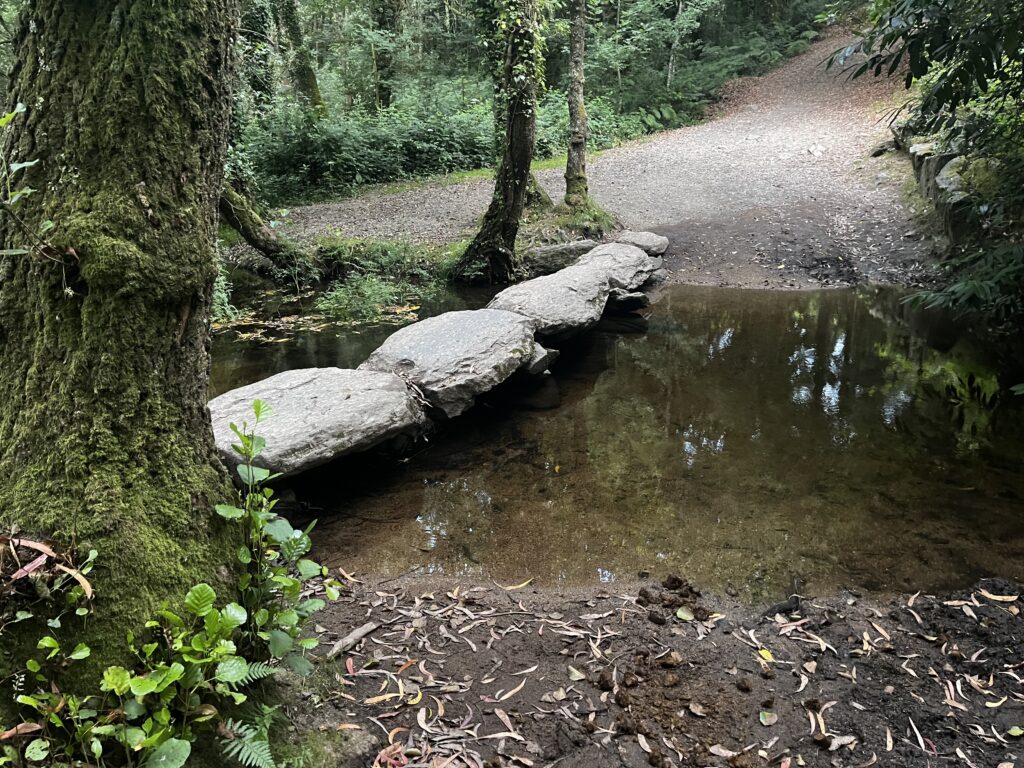
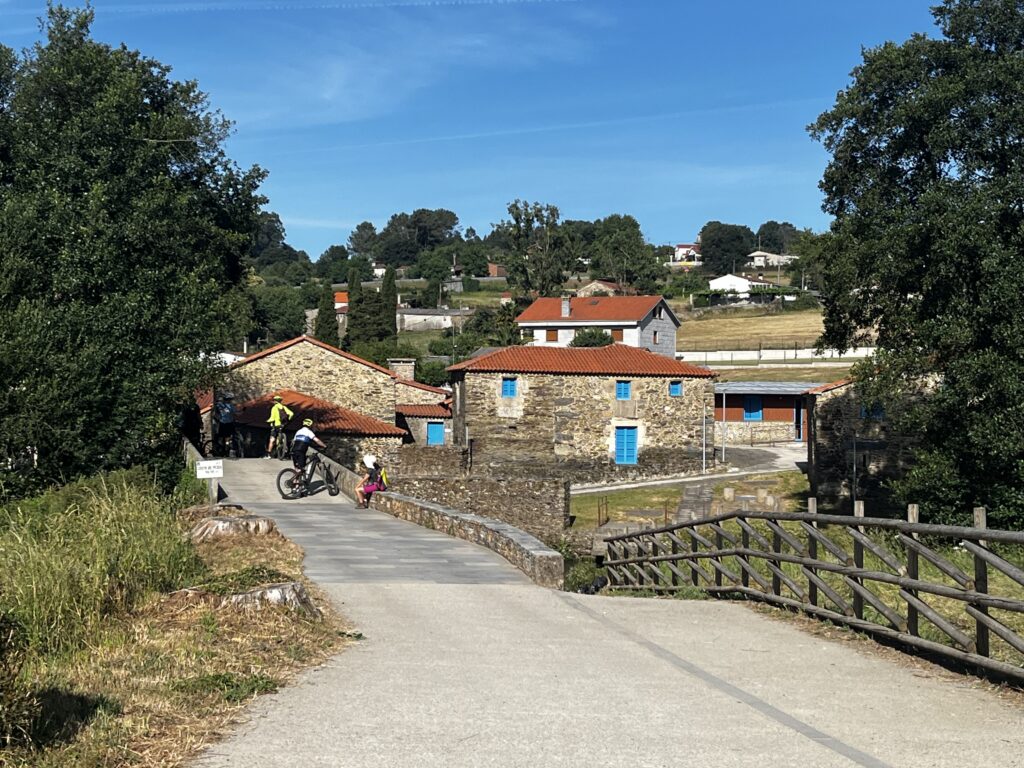
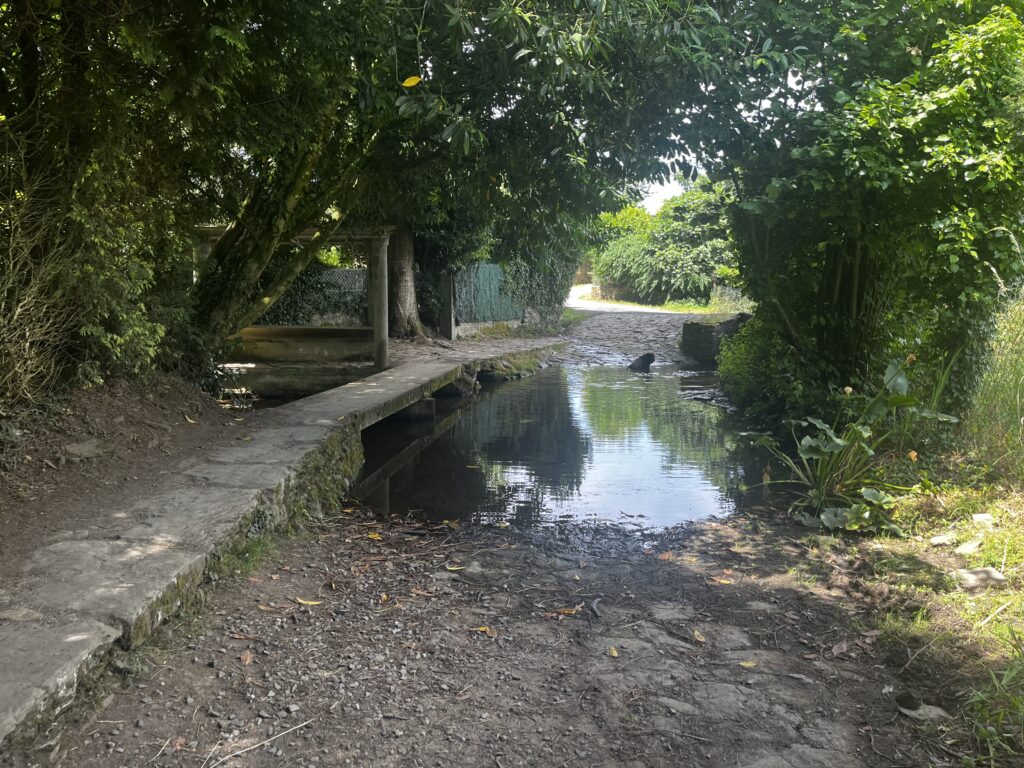
At about 7:30, I came to a stone slab bridge over a wide stream. On previous Caminos, this site often had someone stamping passports or selling trinkets. I remember one year a very resolute dog stood guard over the bridge, eyeing each pilgrim as they crossed.
Today, I was the only one there.
The Camino inverts our world order. The complexities of the world are irrelevant to the basic questions: where am I going to eat and sleep? What’s the weather? How far can I walk today? How are my feet feeling?
On the one hand, every day follows the same routine, and on the other hand where that routine takes place is different every day. So while there is a routine, the routine never becomes boring.
And the walk is difficult, make no mistake. As much as I grouse about the “Disneyfication” of the Camino – the making smooth of the rough ways – just the fact that you’re walking for anywhere between four and eight hours a day is difficult.
Your body is made for walking, but we in the West, particularly in the United States, have largely fallen out of the habit. And I think that this has deleterious effects, not only on our physical health, but on our mental and emotional health as well. Walking is good therapy, as even Saint Augustine knew.
Certainly this particular long walking pilgrimage has given me the opportunity to reflect, to pray, to mourn, and to heal in a way that I don’t think would have been possible at home in the busy world.
And at this point, I had less than fifty kilometers to go. God willing, I would be in Santiago tomorrow.
At about 7:40, the Camino followed the highway just briefly near a scattered hamlet called O Raído, and then it was back to the woods, where a donkey brayed so loudly near me that I about jumped out of my skin.
That will get your heart going.
This morning, I saw a pilgrim who had two collapsible plastic bowls dangling from her backpack. I couldn’t figure out the reason until I passed her and saw that she had a little carry bag in the front with a cute little purse dog poking its head out.
Maybe this part of the Camino isn’t so difficult after all.
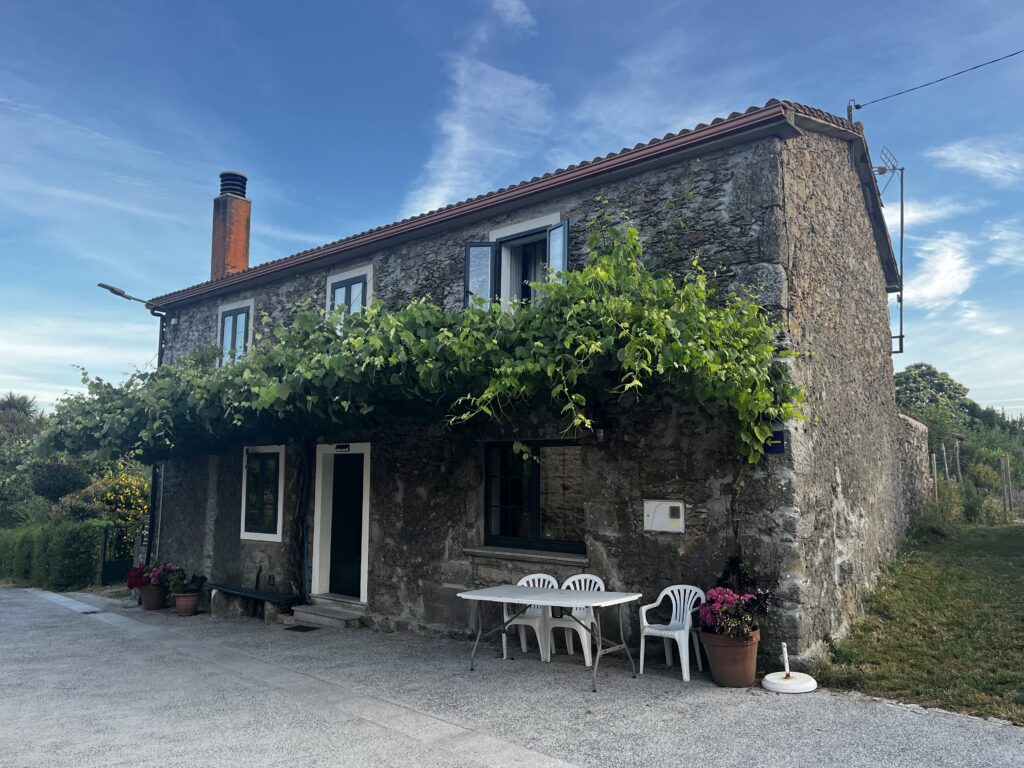
At about 7:50, I passed through the hamlet of Parabispo, which seems to consist of two farmhouses, a fruit stand, and a bar.
Unlike virtually every other day of my Caminos, I do not have any idea where I will end today. My goal is to get as far as I possibly can to make tomorrow’s walk as short as I possibly can.
There are two primary reasons: I want to get into Santiago as early as I can in the day, and tomorrow is going to be a lot warmer than today.
There are at least half a dozen good stopping points past the halfway mark of the remaining kilometers.
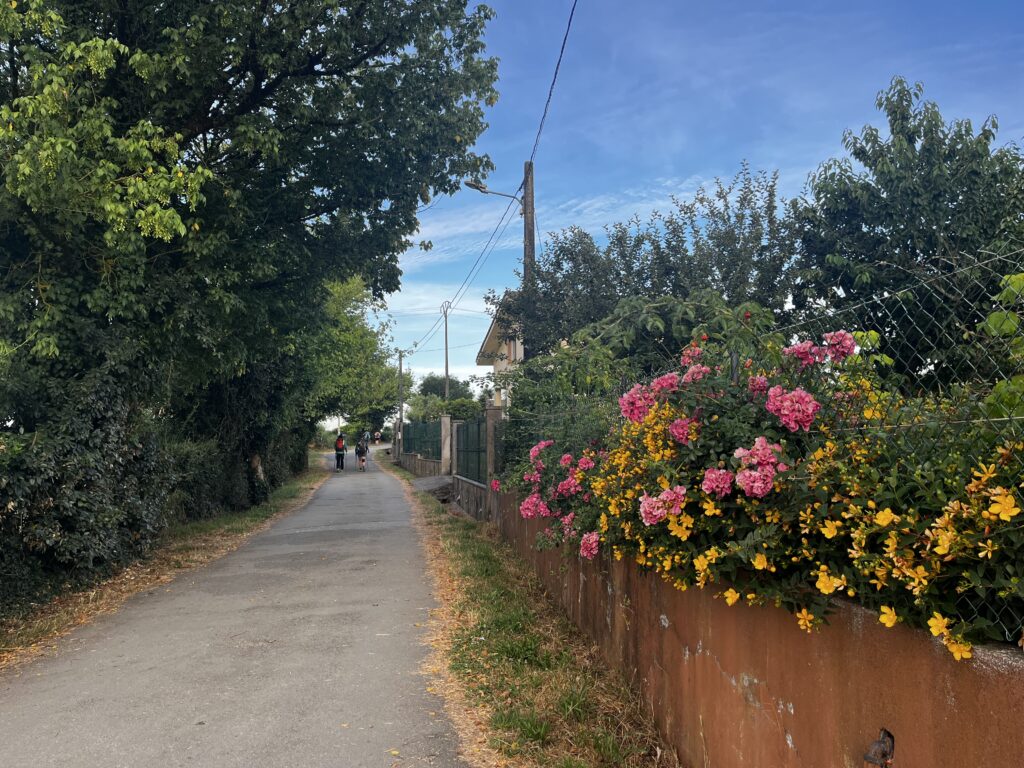
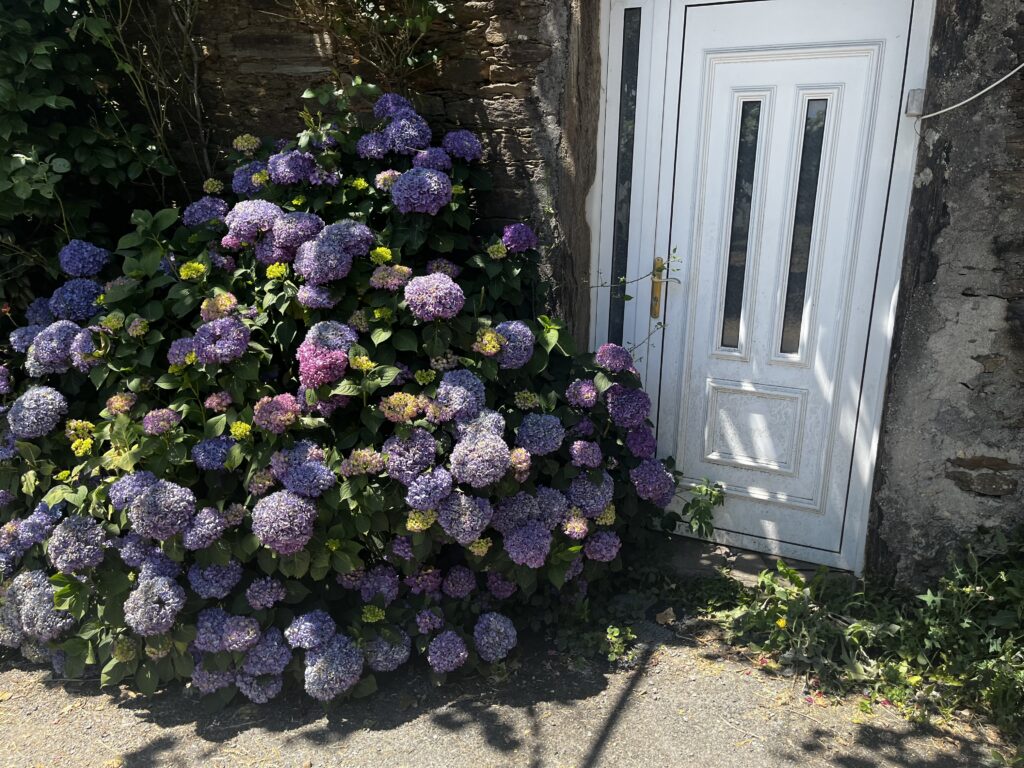
Right around 8 AM, I passed through the charming flower-garden hamlet of A Paroxa. The gravel path has typically become asphalt through these little places, even though the access to them is on gravel.
Unlike most of the places I’ve walked in France and Spain that have discreet villages surrounded by large tracts of farm, meadow, or forest, this section of Galicia seems to be a constant string of little hamlets.
The famous German beer garden in Boente de Arriba was closed, which was no surprise considering it was just after 8 AM, but I was a little disappointed that the café wasn’t open yet. I would’ve enjoyed some German bread and coffee. I was definitely looking for second breakfast at this point.
About 8:10, I crossed the highway into the village of Boente de Abaixo and hoped to visit one of my favorite little churches, Santiago de Boente.
This little church, with its folk art statue of Santiago, was a meaningful and moving stop on our earliest Caminos. I still have a holy card with the image of that statue tucked into my breviary.
When I last visited three years ago, they had put up a glass wall preventing anyone from actually entering the nave. The rack of holy cards was gone.
Today, the church was simply locked.
The Camino took me back into the dark Galician woods.
About 8:20, the Camino passed underneath a highway. After this, there were more meadows in the forest mix, giving the forest a much brighter air.
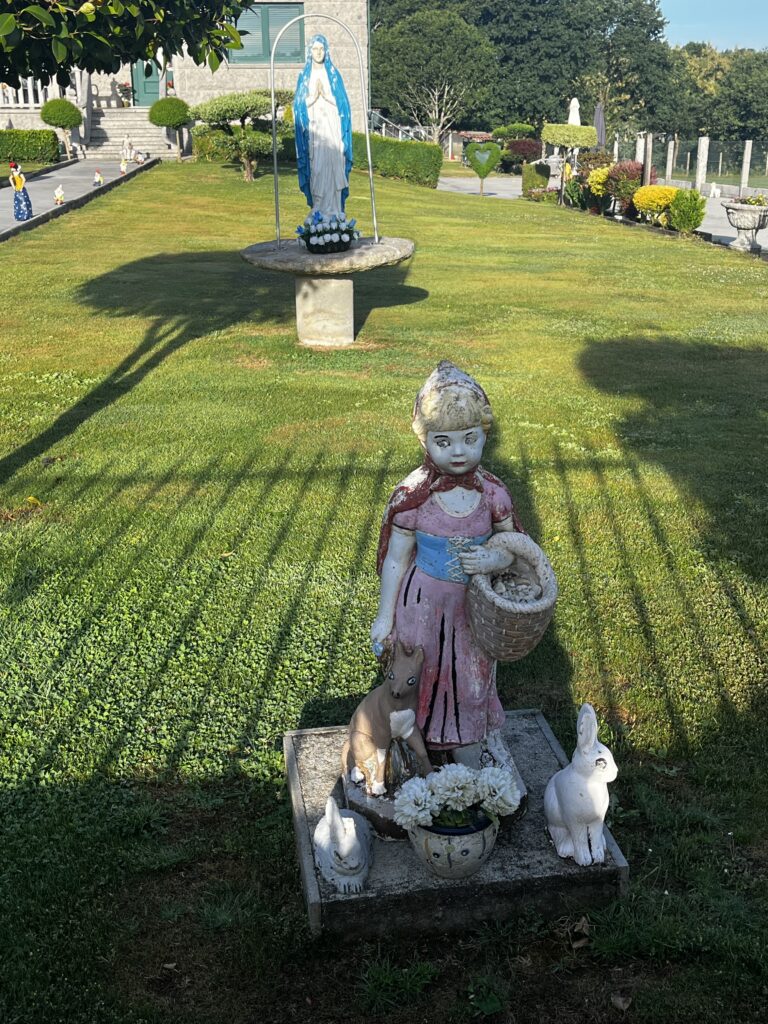
About ten minutes later, the Camino briefly met up with a busy highway and then continued on a gravel sidewalk next to an asphalt frontage road into the hamlet of A Fonte Prata. There’s a house here with the creepiest painted statue of Little Bo Peep.
The air was already starting to heat up, and I was sweating after the relatively brief uphill climb into the village.
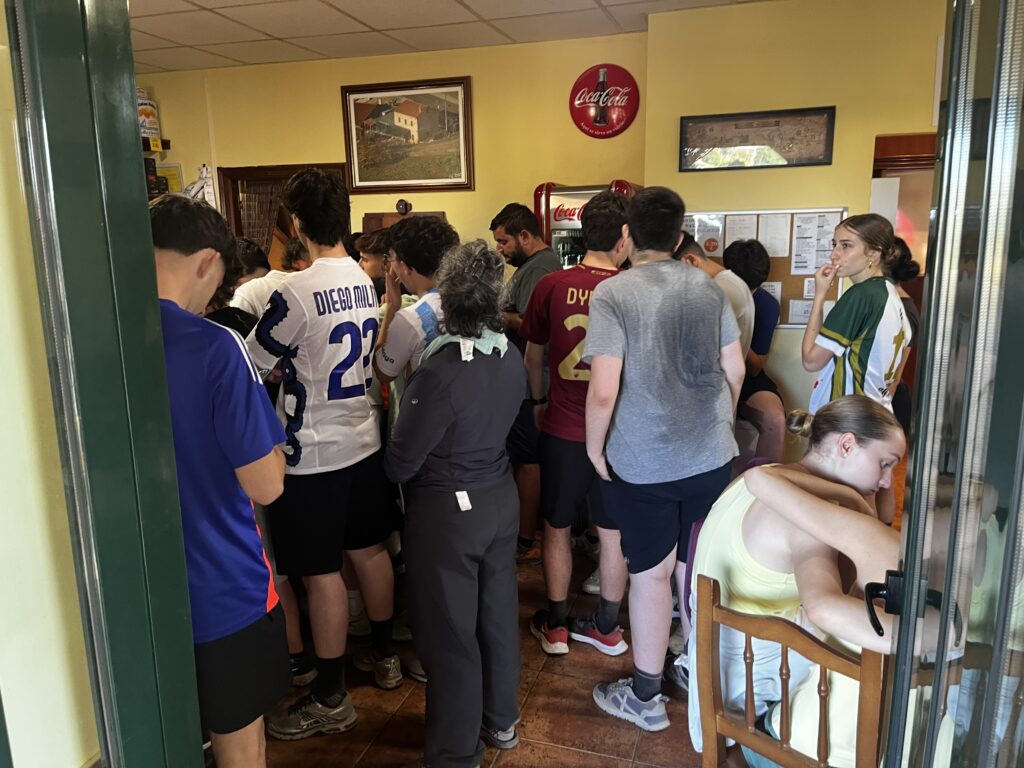
Here I stopped in a little albergue/bar for second breakfast. Years ago, Francine and I had taken refuge here in the pouring rain. They have redecorated, and they seem to be under new management, but the place continued to be a welcome refuge this morning.
By the time I left at 9:05, the place was absolutely crawling with teenagers. From here, the Camino was roadwalking on asphalt through mostly farmland, punctuated by little farming hamlets.
Rather surprisingly, I ran into Moses and Veronica. I had just assumed that they were somewhere behind me, but I was clearly wrong.
At some point, the asphalt blessedly ended and I was walking a dirt and gravel road again.
At about 9:45, I crossed a bridge over a highway before heading back into the woods. These reminders of the “real” world seem to be more frequent now.
In the distance, I began to hear sounds like a shotgun blast echoing through the hills. At first I thought it might be one of those auto-cannons that farmers used to frighten off birds, but the reports were coming in far too frequently, and soon became a steady stream of overlapping shots. Is there a military practice range near here?
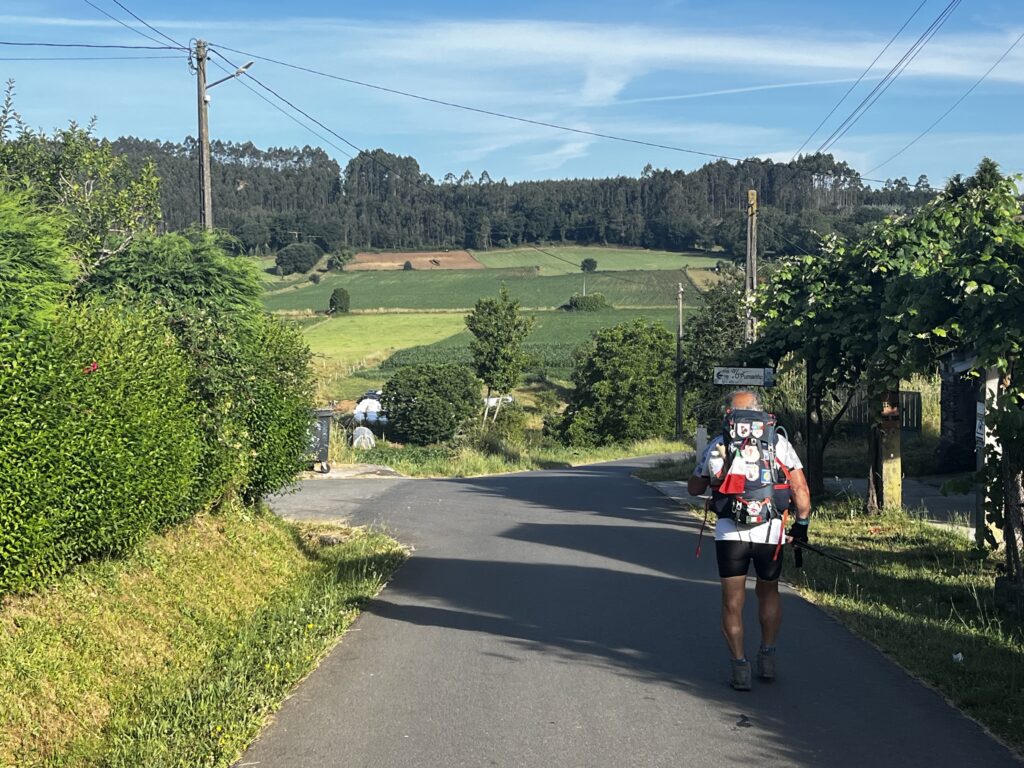
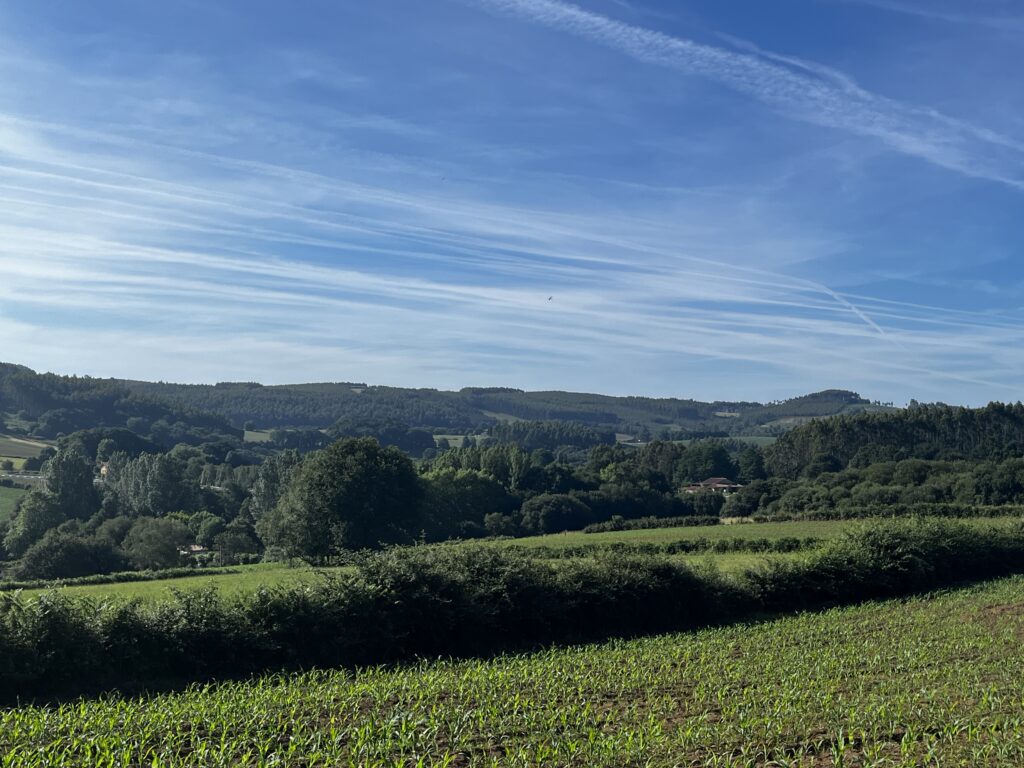
There was more and more open farmland now with some stunning views of the hills around, and I was once again roadwalking on asphalt.
I somehow arrived at the pilgrim paradise of Ribadiso before 10 AM. In a much earlier iteration of my plan, I would have spent the night here last night.
The medieval bridge here and pilgrim hostel have been maintained by various organizations and people throughout time, but it was originally established by Franciscan tertiaries sometime before the 14th century.
I ran into Veronica and walked with her for a while.
From here the Camino wound up the hill into the urban fabric of Arzúa. At 10:20, we entered the city proper.
We stopped for a soda here. While we were sitting there, both Moses and Katie walked past. We left about 10:50. Within minutes we were walking through the countryside. Truly beautiful.
By 11:05 we had walked through the hamlet of As Barrosas onto a dirt road through the forest.
At about 11:20 we passed through the hamlet of Pregontoño, and as we passed we waved at Moses who was sitting at the bar.
We passed under a highway and then uphill into open farmland.
At 11:35 we walked through the hamlet of A Peroxa, a weird mix of suburban homes and farmhouses.
After this we were happily back in the woods.
At about 11:55, we passed through the hamlet of A Taberna Vella. This place consists essentially of two bars facing each other across the road, one of which is Heidi’s place, a place of happy memory. Alas, today both were closed.
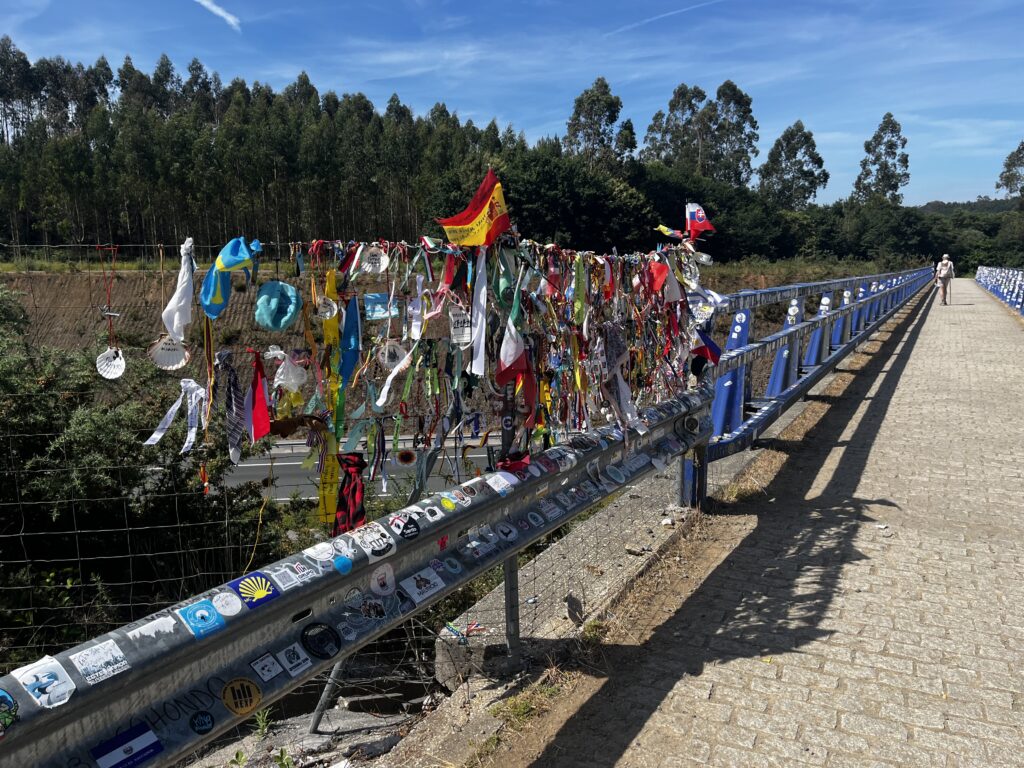
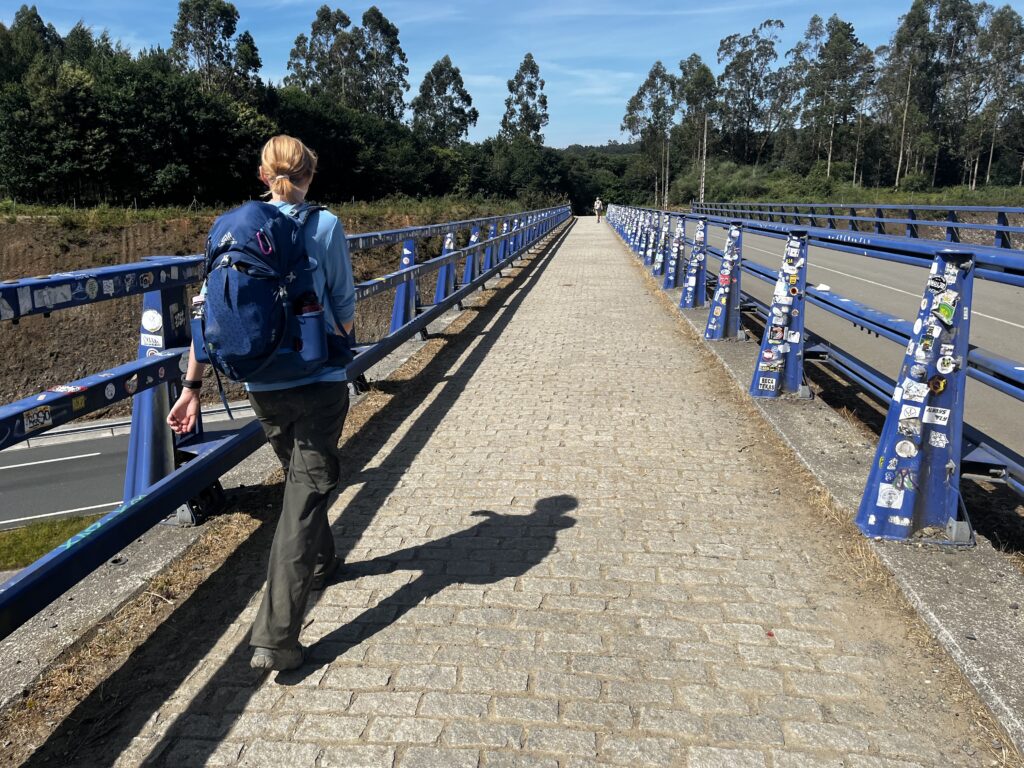
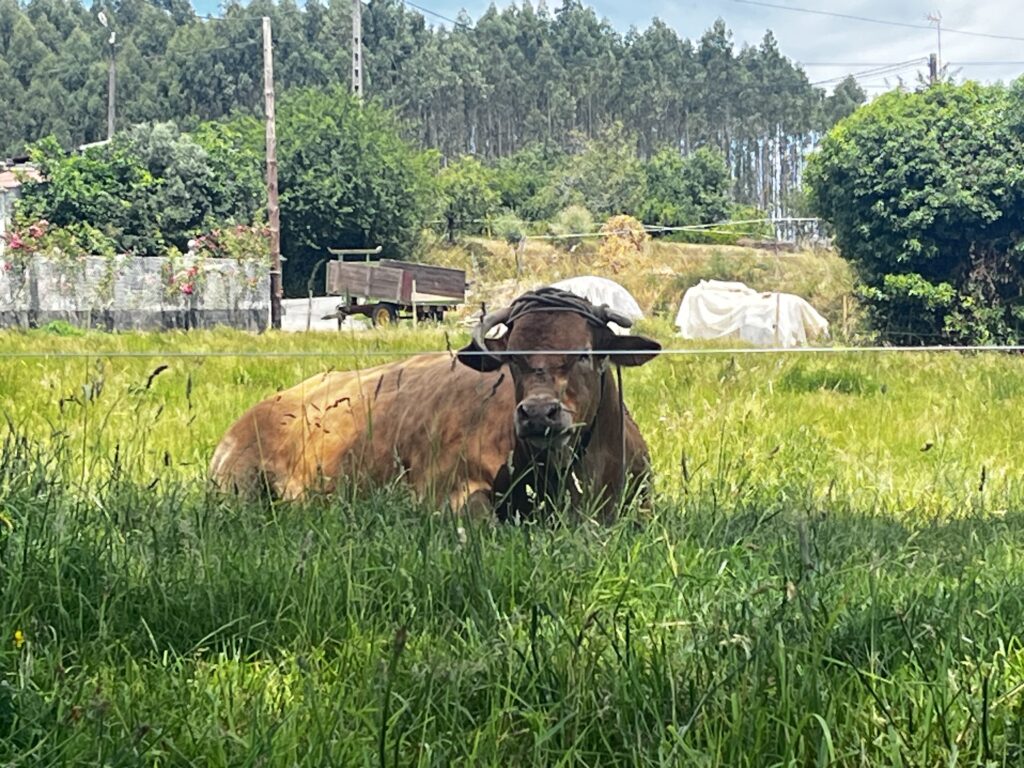
At noon we crossed over a long highway bridge completely covered in stickers. Just five minutes later we were walking through the cowtown hamlet of A Calzada. We stopped at the local bar here for soda and a delicious slice of apple pie. It was exactly what I needed. Although I didn’t realize it at the time, this was effectively lunch.
The humidity was so bad this morning that as I took my pack off I realized my shirt was completely soaked through.
We left about 12:35, and I was about 22 km into my day.
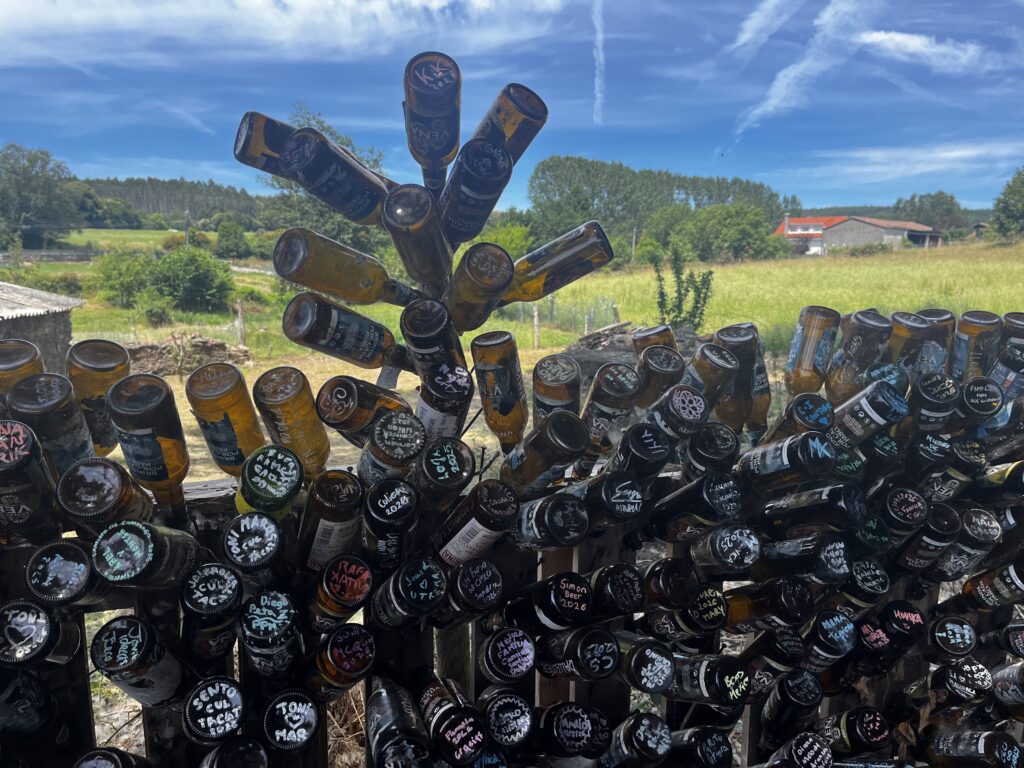
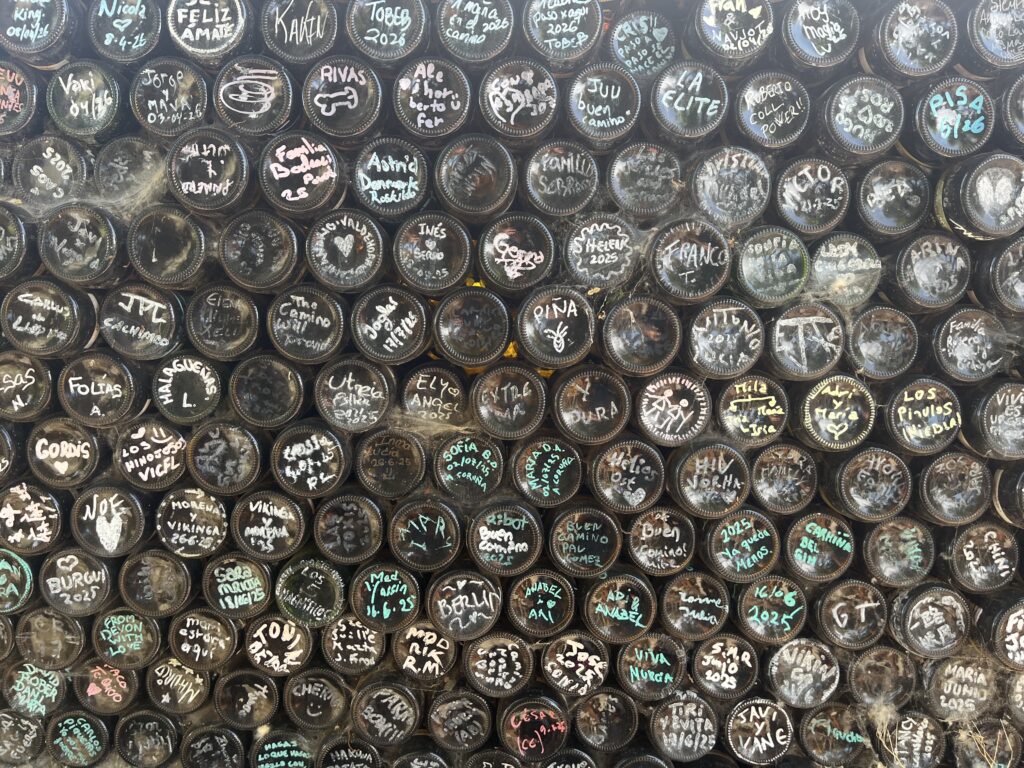
We passed through the rather large farming hamlet of A Calle. Here at exactly 1 PM, we stopped for a break at a famous beer garden decorated with beer bottles marked by the pilgrims from the past years. It was more to rest our feet than anything else, though we both did get a beer.
There were once two bottles here with my name on them and one with Francine’s.
Thirty minutes later, we were on the move again. Just as we were leaving, Moses and Kaitie both caught up to us. I’m not entirely certain how or when we had passed Katie.
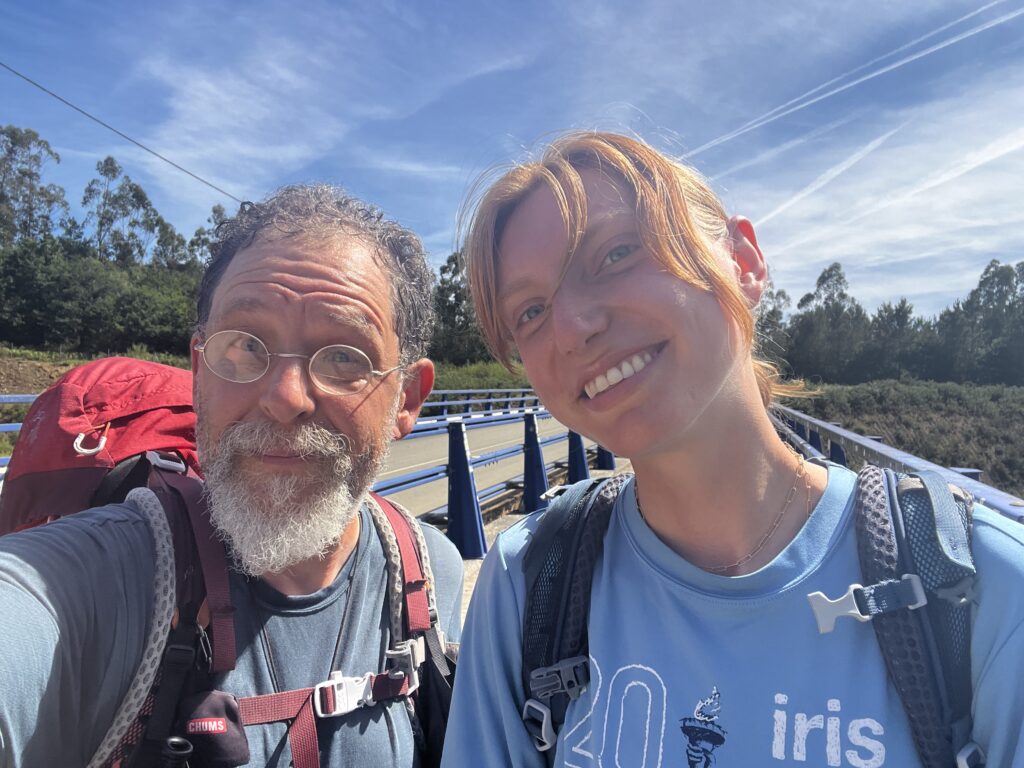
After this, I walked and talked with Katie the rest of the day. I first met her in Saint-Jean, the very first day of her Camino, and through the weeks we’ve met up repeatedly.
We walked through A Boavista at about 1:50; this is another hamlet where all the buildings seem to be bars.
We passed through the outskirts of the village of Salceda at 2:05 PM. Katie had a reservation here, but she felt strong and wanted to keep walking.
Five minutes later, we came out of the forest to walk through the central part of the village along the highway.
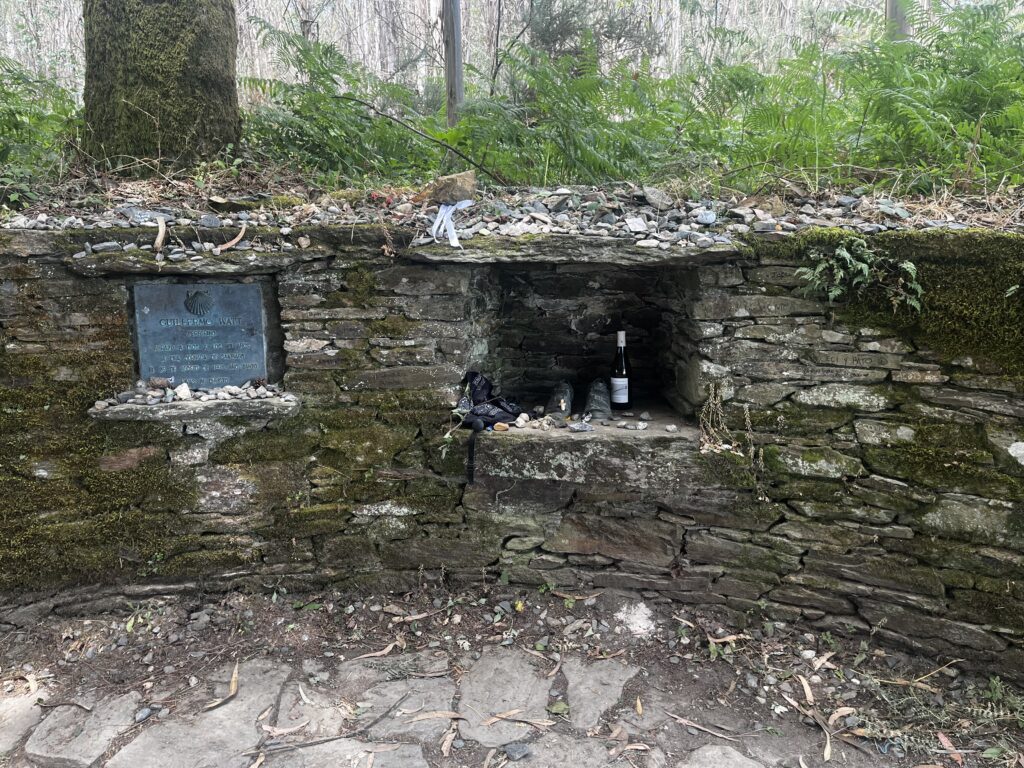
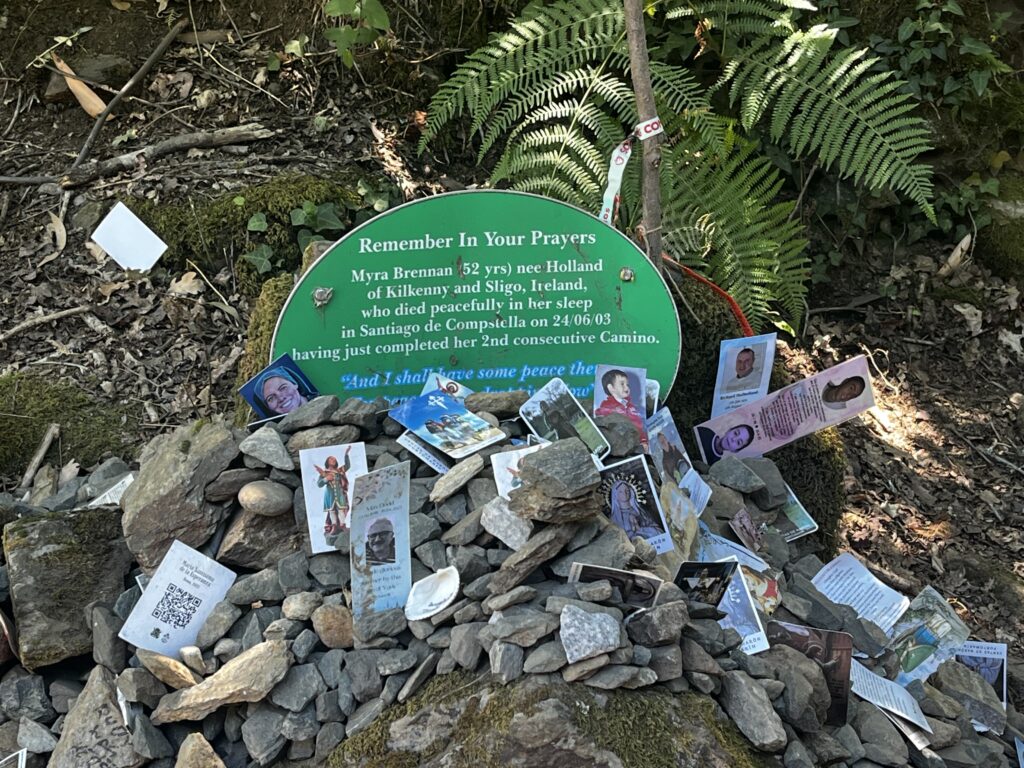
Eventually, we’d be headed back to the woods, but at the moment I was a sweaty mess. At about 2:20, we passed the memorial to Guillermo Watt, a pilgrim who died at this point on the Camino back in 1993 at the age of 69, just one day shy of Santiago.
Although there are many, many memorials to fallen pilgrims along the Camino route, this one is almost certainly the most famous. It actually shows up as a monument on several of the maps I’ve been using.
We continued to move with alacrity, passing through the suburban hamlet of O Xen at about 2:25.
About ten minutes later, we passed under the highway and past a man selling cherries by the roadside into the alley facing the backyards of the hamlet of A Brea.
After this, the Camino became a gravel path next to a two-lane road for a while. By 3 PM, this had brought us to the dispersed village of O Empalme and a bar that I think I’ve gone in on every Camino. This time, it was to replenish the water bottles.
The heat had truly moved in now, and there was a pretty nice breeze and we remained mostly under a tree cover.
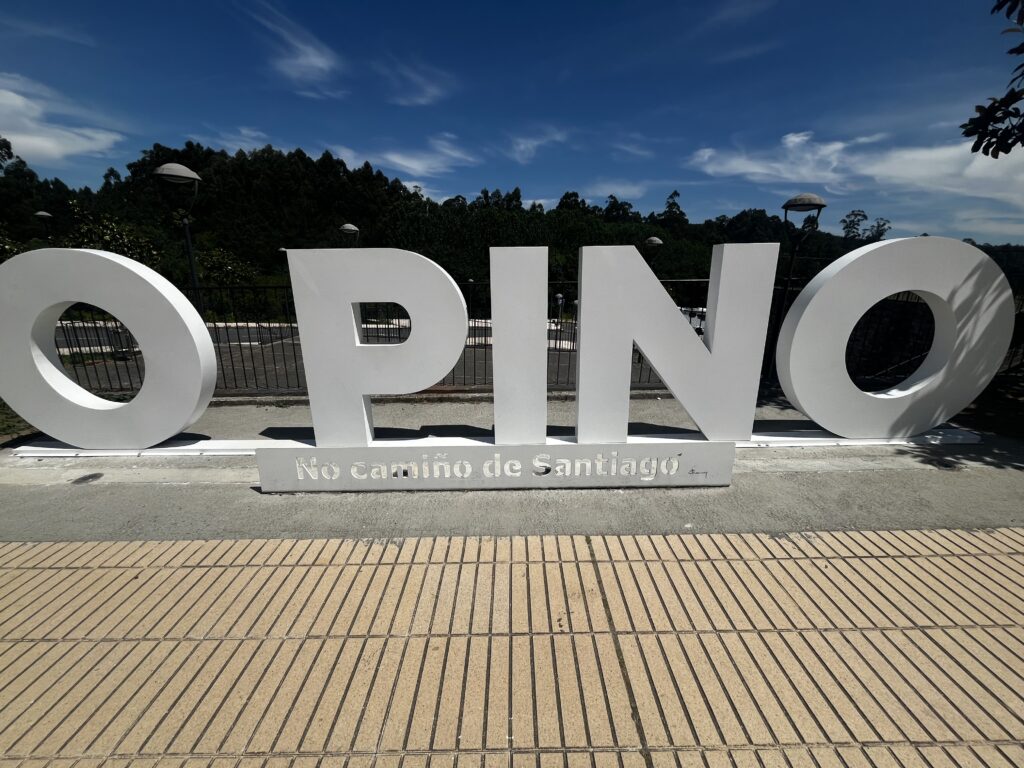
As we walked into Santa Irene, I made the decision not to stop. I was feeling pretty good, and it was only a few kilometers further to Arca. Or O Pedrouzo. Or O Pino. The town apparently has three different names depending on which cultural group you belong to.
Lack of shade meant I finally had to put up the umbrella at 3:25 PM.
Shortly after this, we passed under a highway tunnel and into the Hamlet of A Rúa.
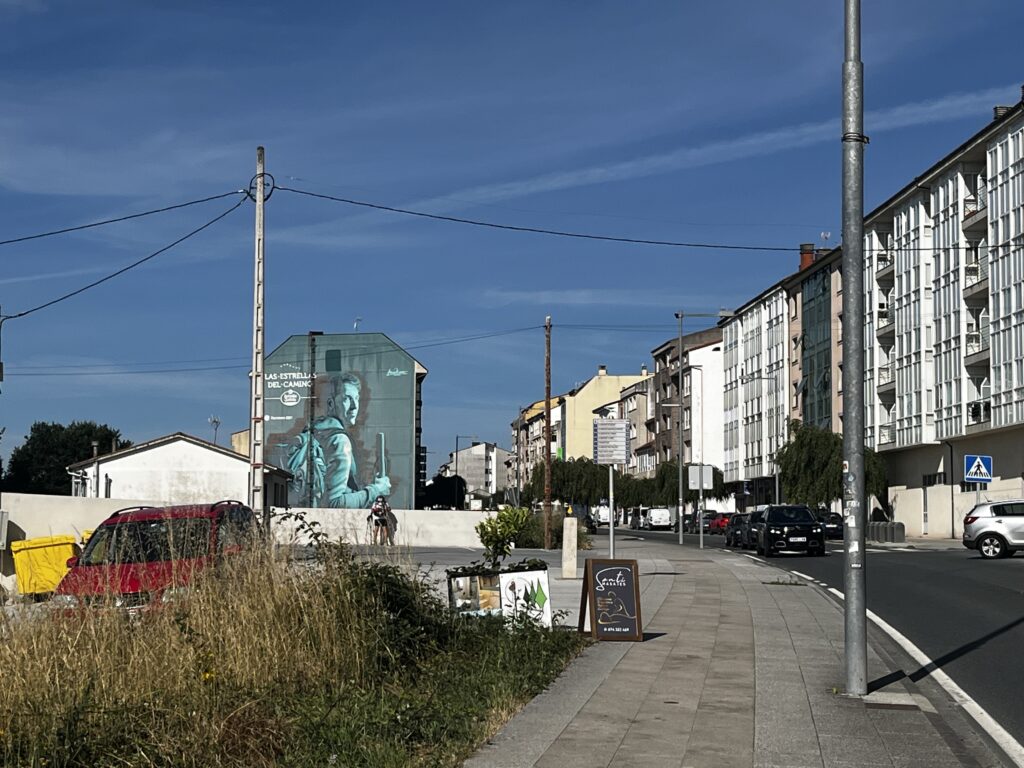
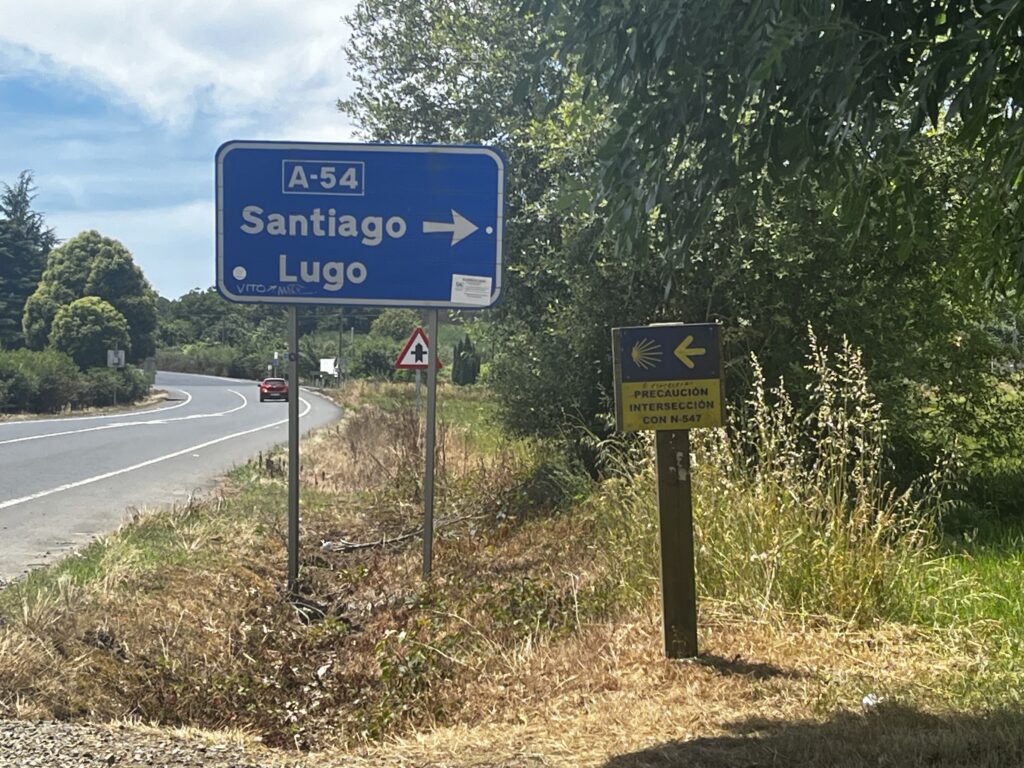
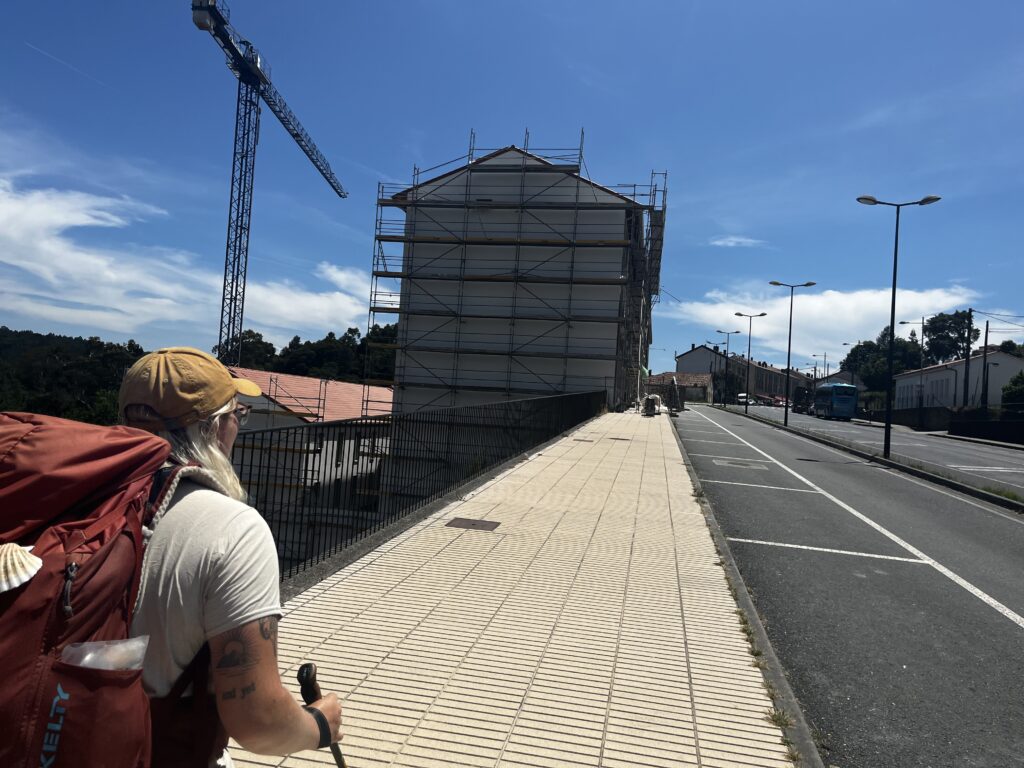
At about 3:45, we left the Camino to do a little bit of beside the highway walking into Arca/O Pedrouzo. The town isn’t actually on the Camino, but it’s near enough that it has become a well-used stop.
So much so, in fact, that there’s plenty of new construction going on.
After doing a little albergue shopping, Katie and I were finally checked in at about 4:15 PM.
I have so far walked more than 1950 km in the past 73 days, and there’s something like 20 km to go.
Tomorrow. I arrive, God willing, in Santiago de Compostela tomorrow.
It will be one year to the day since she passed to God. One year since the smartest, wisest, funniest, and most beautiful human being I’ve ever known left this earth forever.
Tomorrow.
Date: 20 June 2026
Place: Arca/O Pedrouzo/O Pino
Today started: Melide
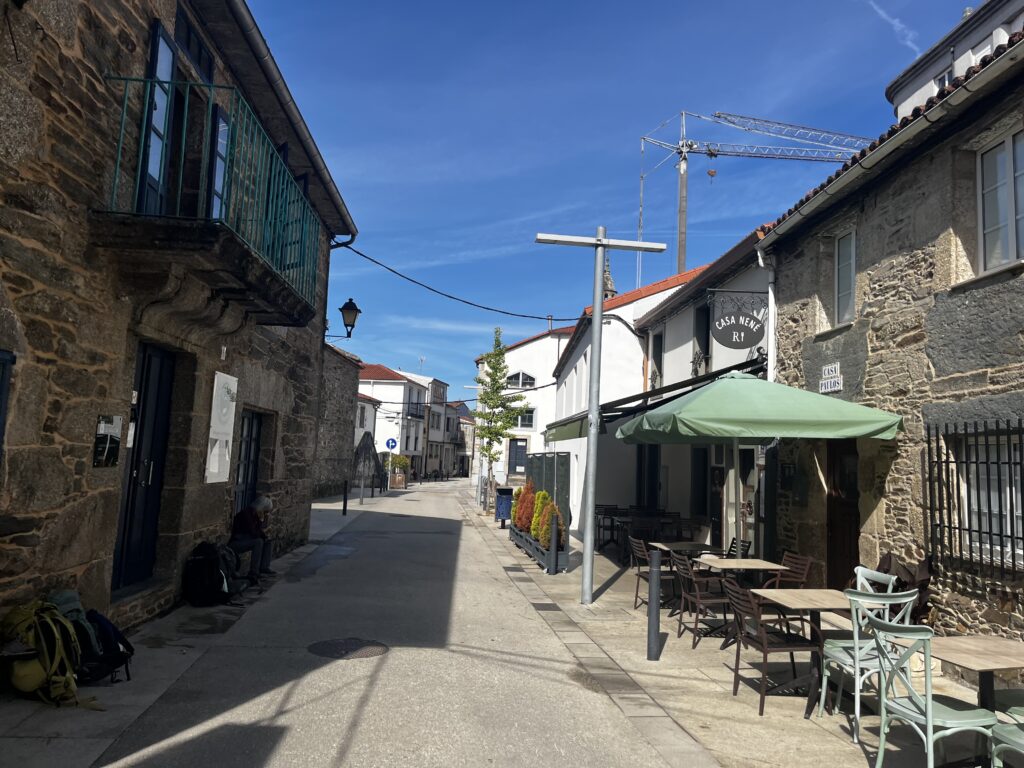
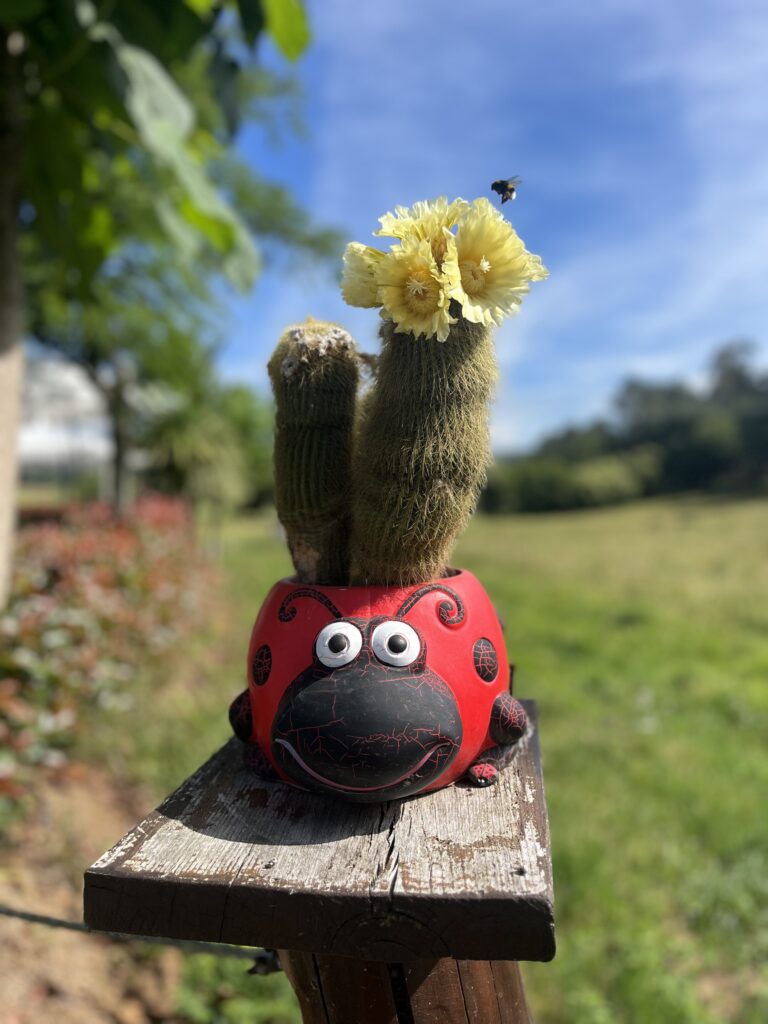
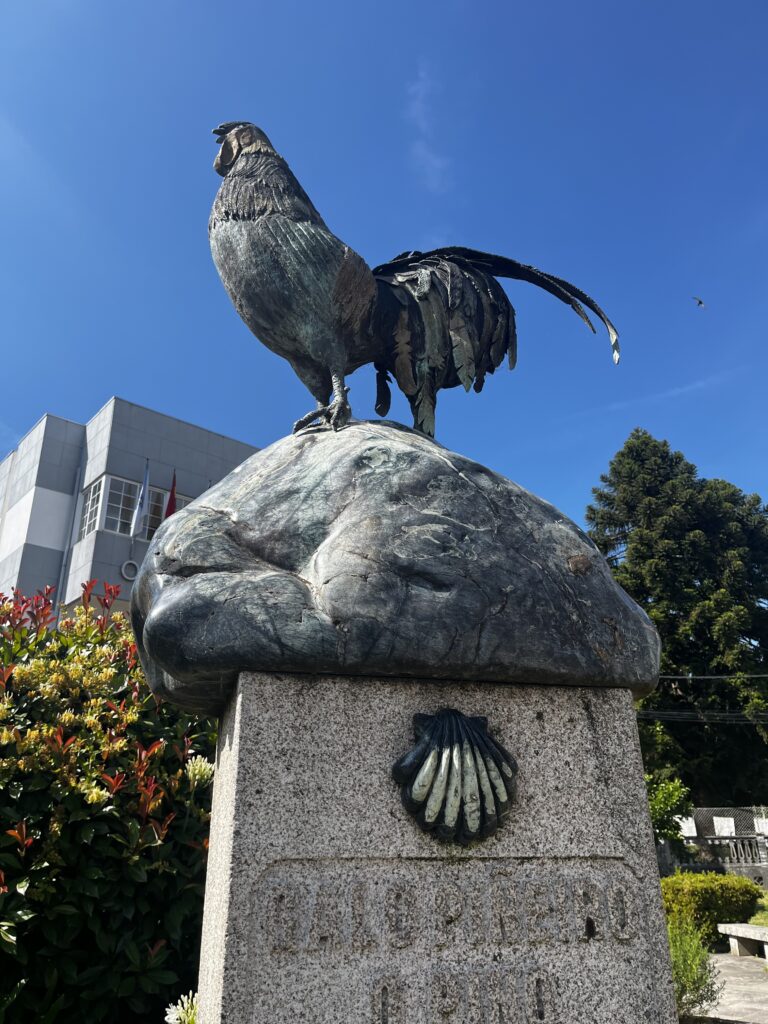
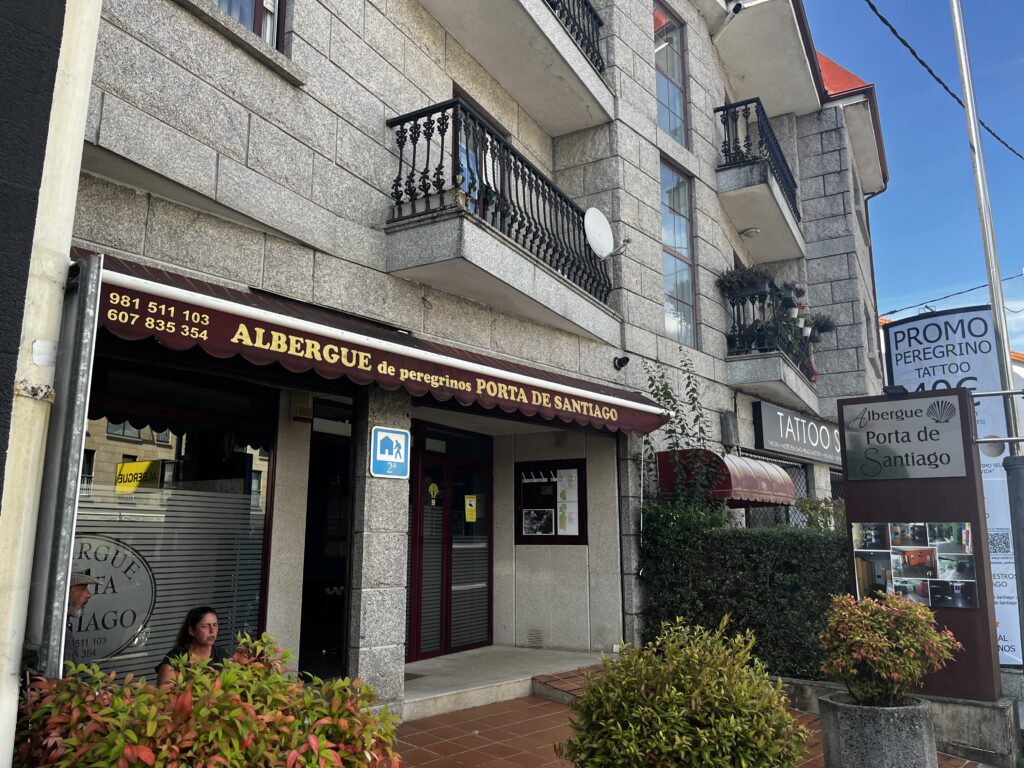
Today’s Photos!
Thank you for inviting us to be with you, albeit in this modest way, along your Camino. By God’s grace, I have an extra Mass slot tomorrow and will be offering Mass for Francine & you (late evening our time, most likely). May God especially bless you on this first anniversary of her heavenly birthday.
Thank you so much! I very much appreciate it.
Thank you Thom for taking us on this fascinating journey and for you very personal. Your amazing writing ability has been much appreciated!! Looking for to the celebration in Santiago tomorrow!
You are most welcome! Thank you for supporting me with your prayers.
“May God especially bless you on this first anniversary of her heavenly birthday.” Yeah, a 100%.