
Via Lemovicensis: Into La Rioja
This morning I slightly overslept, and Herve and I left about 6:30 – half an hour after I wanted to leave. The morning air was cold, but there was no cloud in the sky and the day I promised heat.
We walked through the old town gate, through the newer part of the village, and passed the cemetery. The Camino here returned to the same gravel road we had yesterday, past farm houses, an old 12th-century hermitage, and a couple of very out of place apartment buildings, before heading out once more into the rolling farmland.
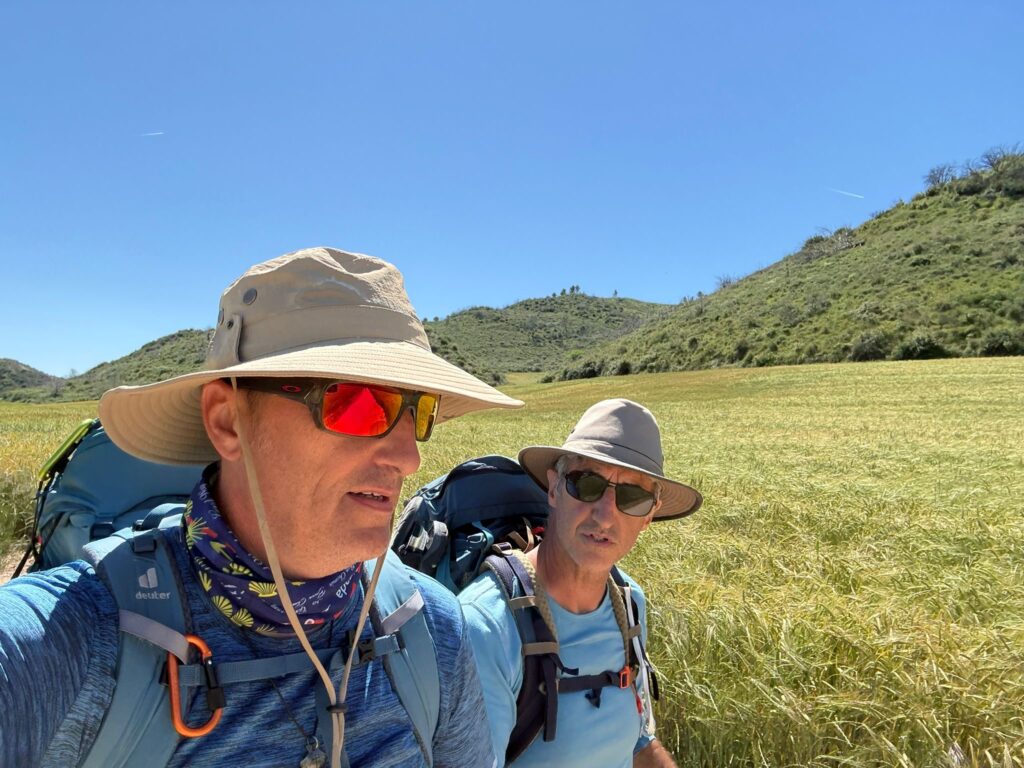
We passed several pilgrims and groups of pilgrims in our early morning power walk looking for coffee. When we caught up with Mattie from Colorado, she decided to match our pace. The three of us had a great conversation, and the kilometers flew by.
At 7:30, the Camino turned onto an asphalt road. Fifteen minutes later, we were at a bar/albergue in Sansol for breakfast, already having walked almost 8 km. We wolfed down our breakfast and were walking again by about 8:05.
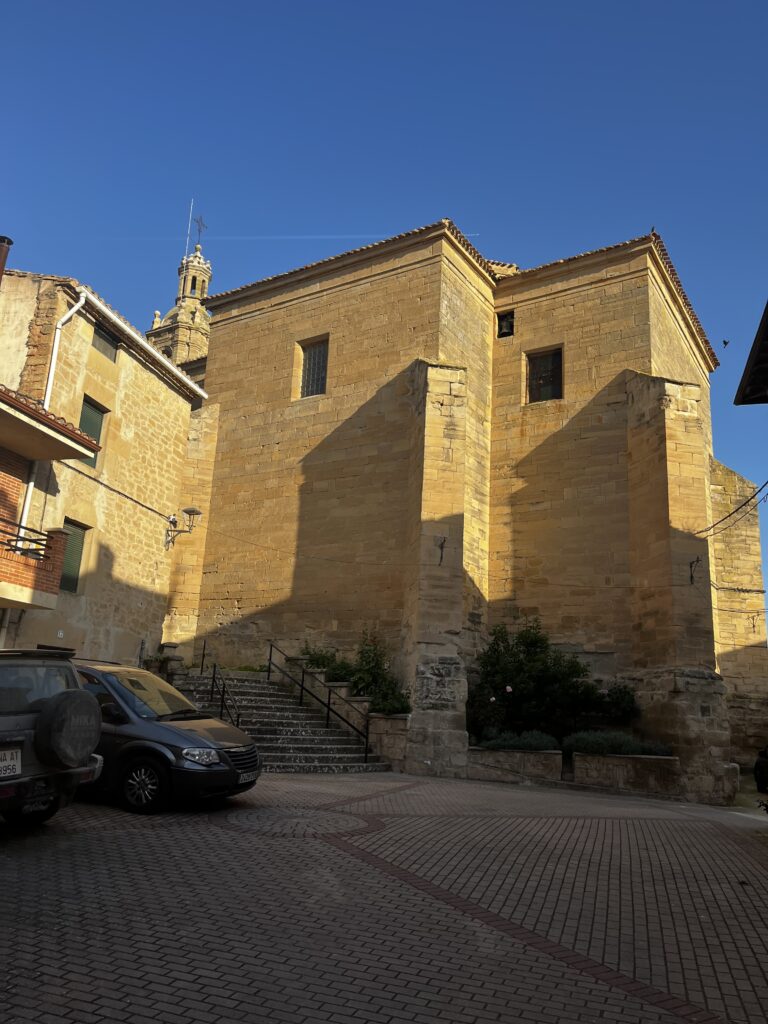
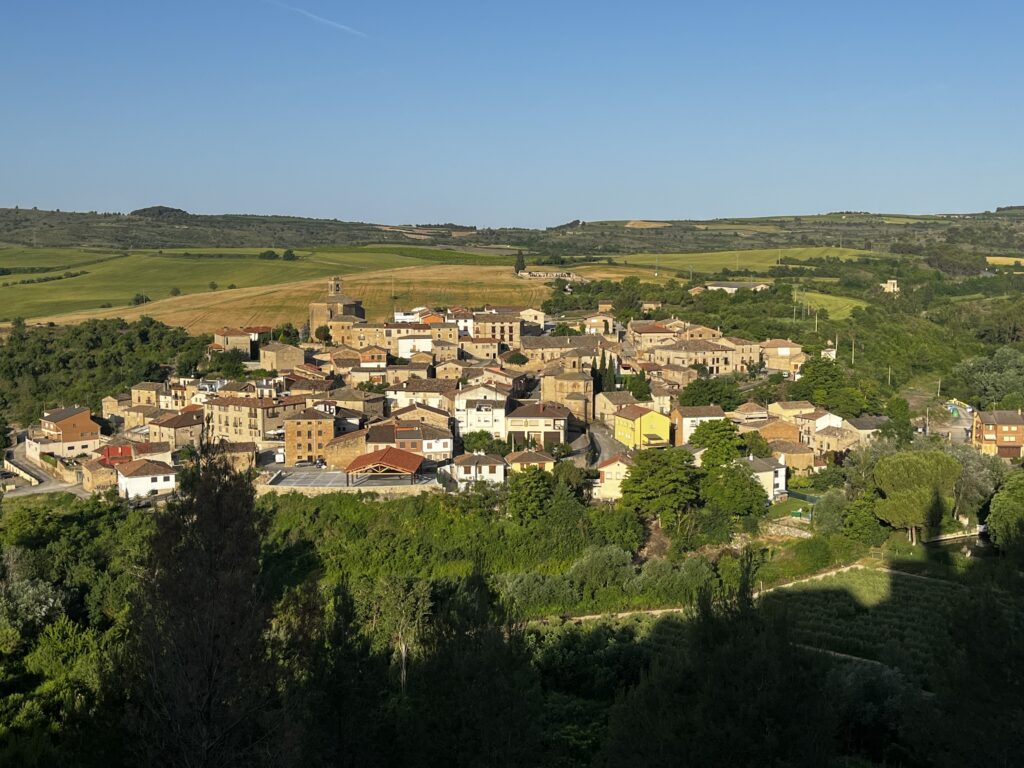
The church of San Zoilo stands atop a steep hill in the middle of the village. The Camino doesn’t actually pass it, instead it circles around the base of the hill. When I got to the top of the hill, I discovered that the church was locked, of course, but there was an amazing view of the neighboring village of Torres del Rio.
Which was our next stop.
These two little hill villages are less than a kilometer apart, separated by a river valley. The path connecting them was stones setting concrete.
The thing about hill towns, is you have to climb the hill.
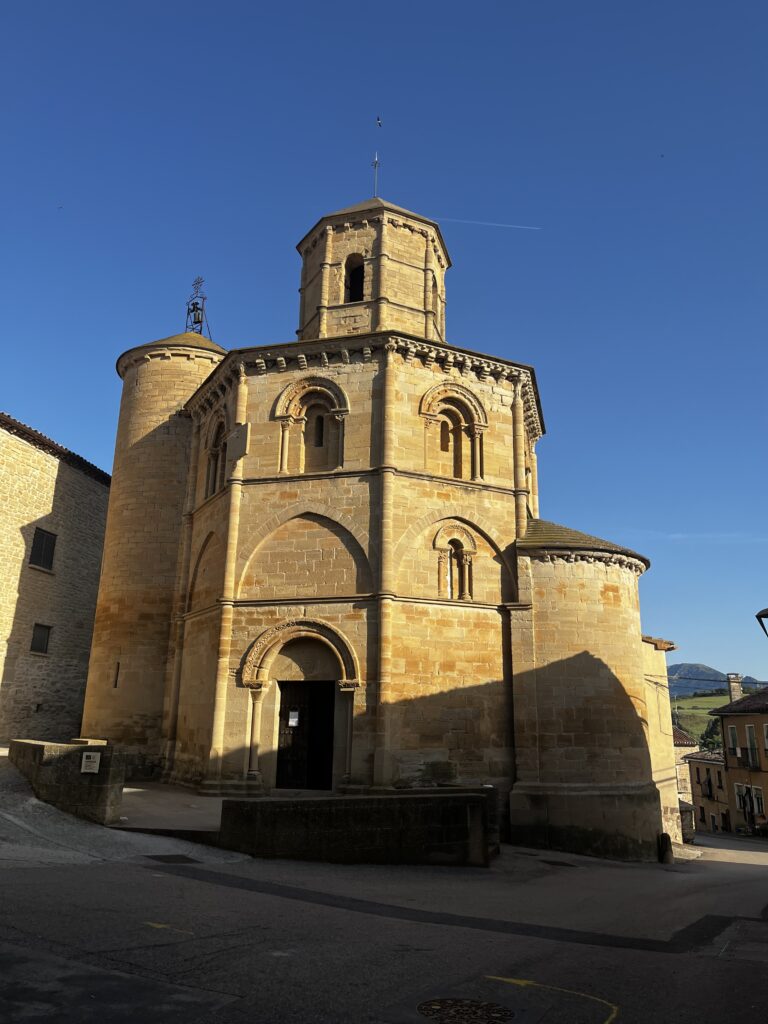
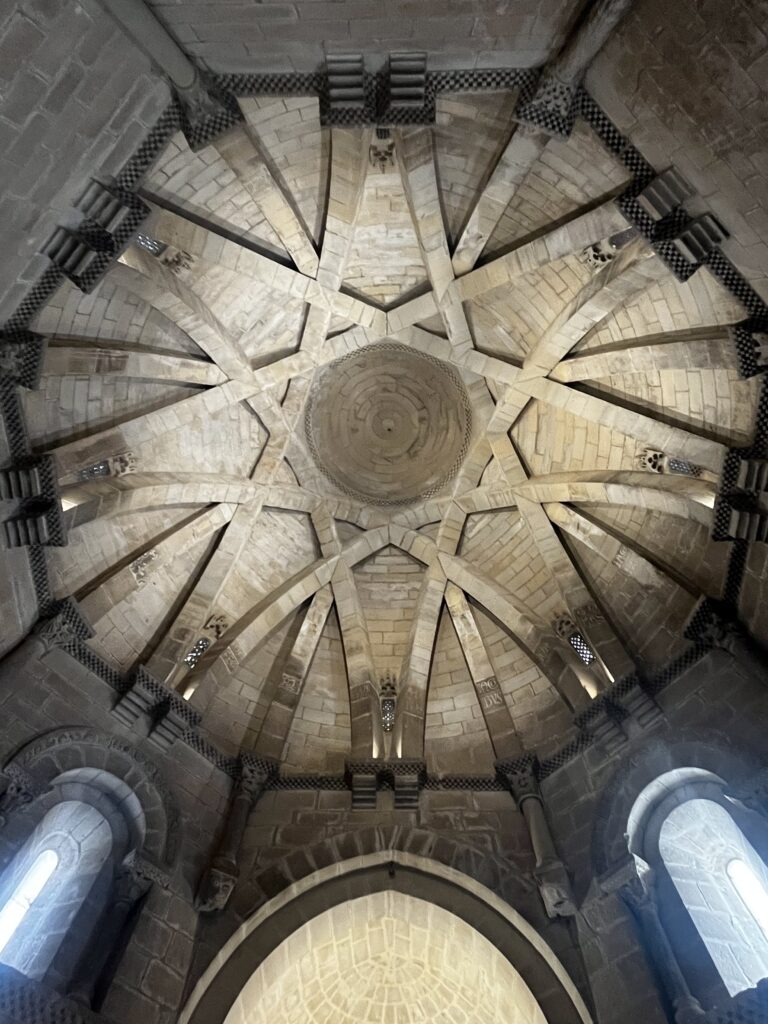
The little church of Santo Sepulchro was actually open, and I had the opportunity to make a little visit and pray. This is one of only two octagonal churches in all of Spain – Eunate being the other.
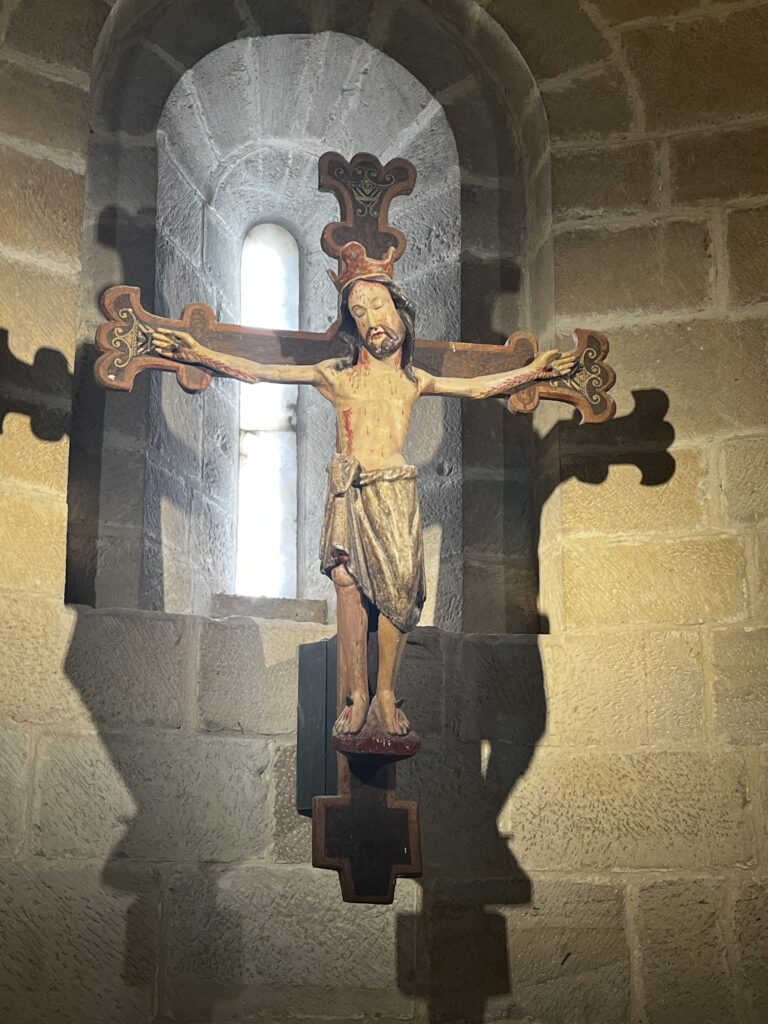
There’s a haunting quality about the medieval crucifix here. Christ is unusually crowned, and his face bears a look I would describe as serenely suffering.
For a while after this, I was walking with Mattie from Colorado. She was an army nurse, recently discharged. We talked about the pilgrimage, Francine, and our faith – I think it might be the first long conversation on the subject I’ve had with an Eastern Orthodox pilgrim.
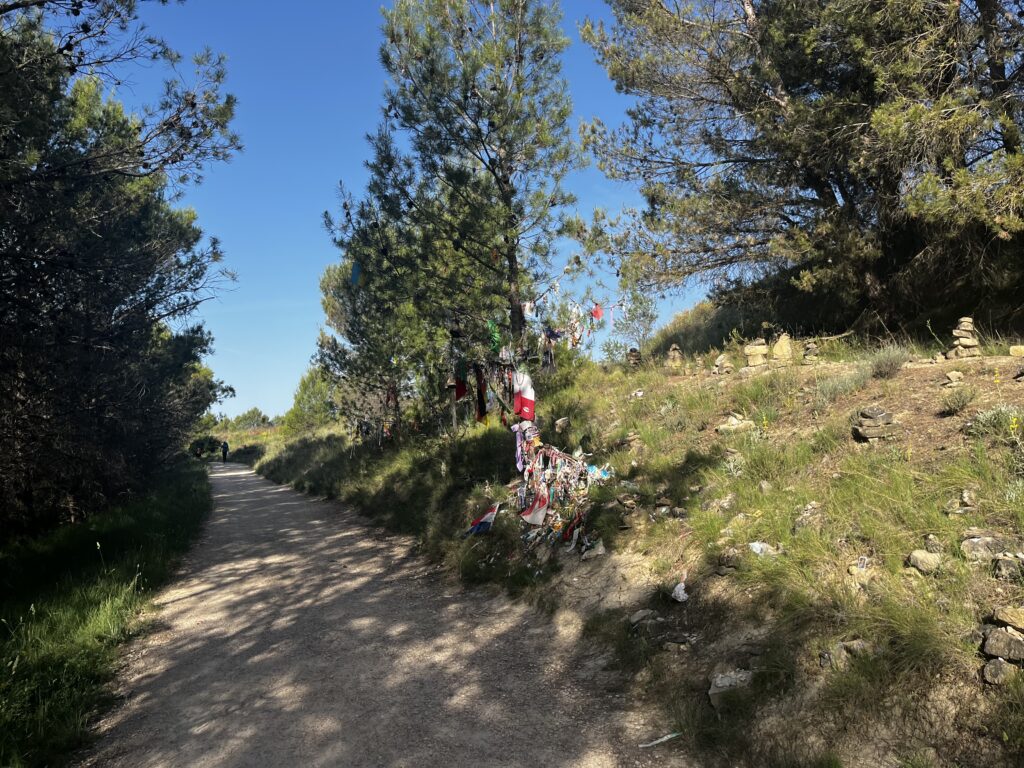
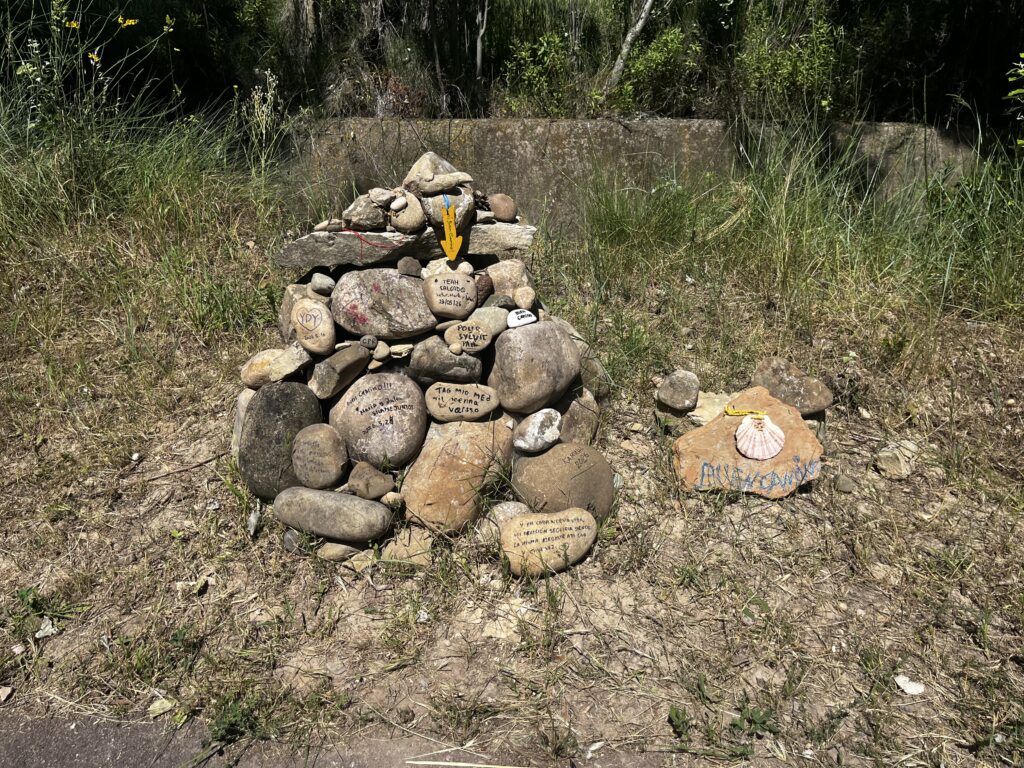
At about 9:15, we passed a place festooned with flags in the middle of nowhere.
After this, Camino narrowed down to a little gravel path through scrub and hills. For a hot minute, we were walking on the freeway shoulder until the path again went into the hills.
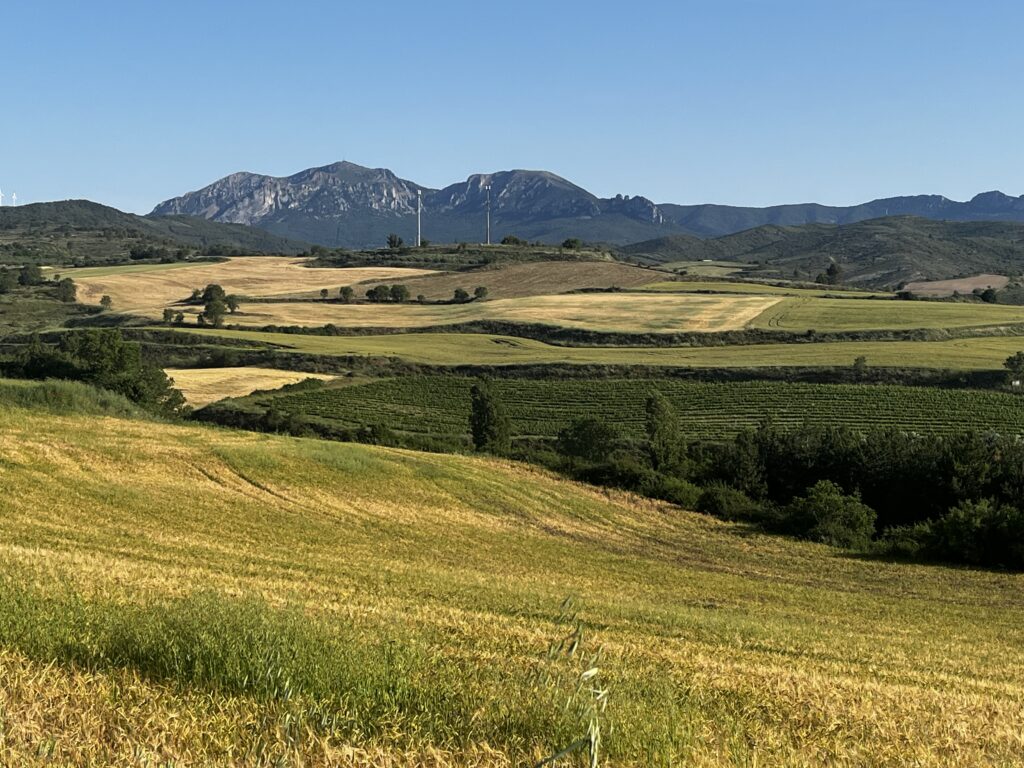
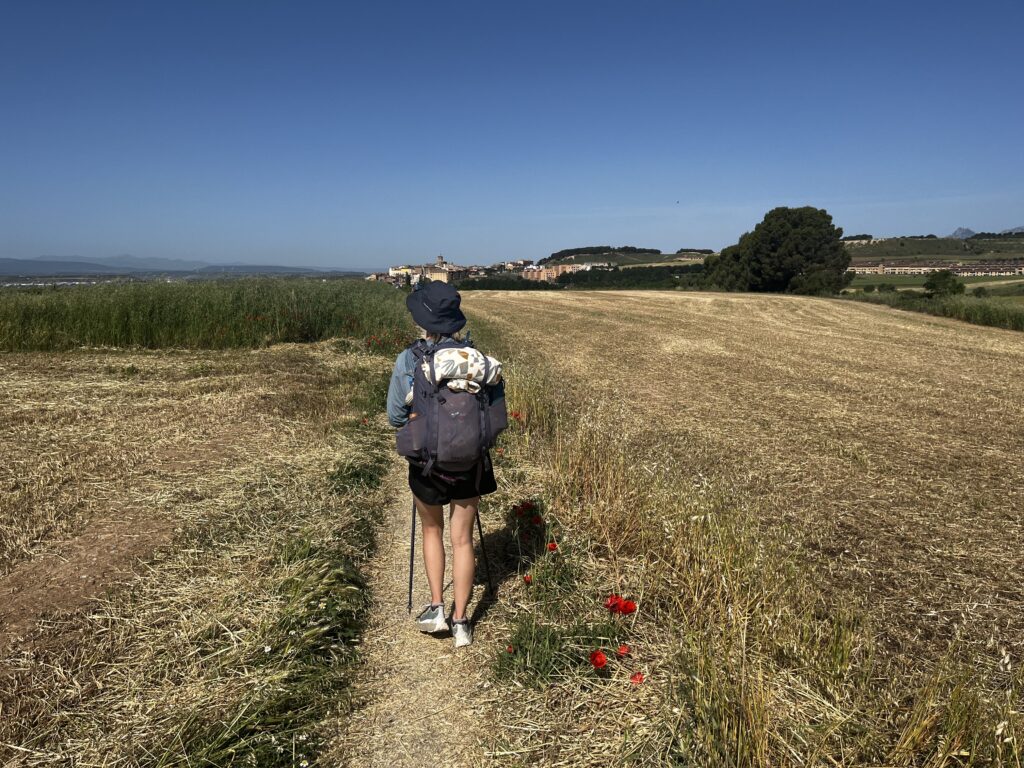
The hill country was much more varied than yesterday. Definitely a rough path in places! We passed through forests and vineyards with grows of olive trees in the valleys below.
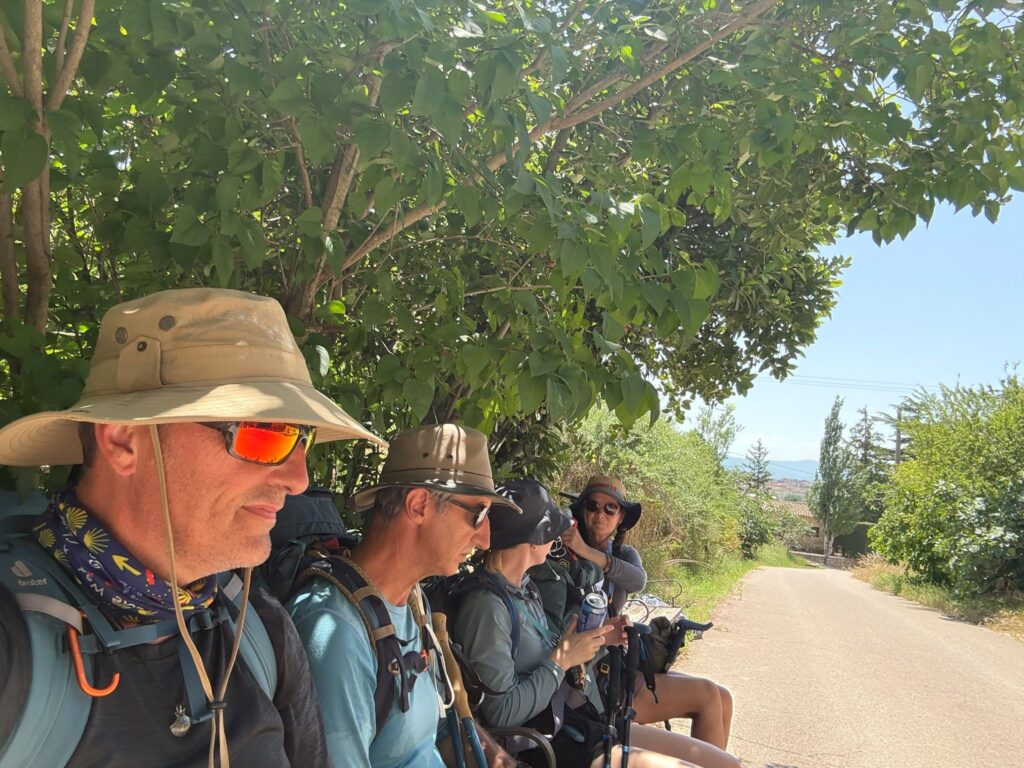
At about 10 AM, a number of pilgrims stopped under the shade of trees at some picnic tables. In addition to Mattie, there was Herve, Tom, Amy, Richard from Austria, and many others. Time for a quick pocket apple!
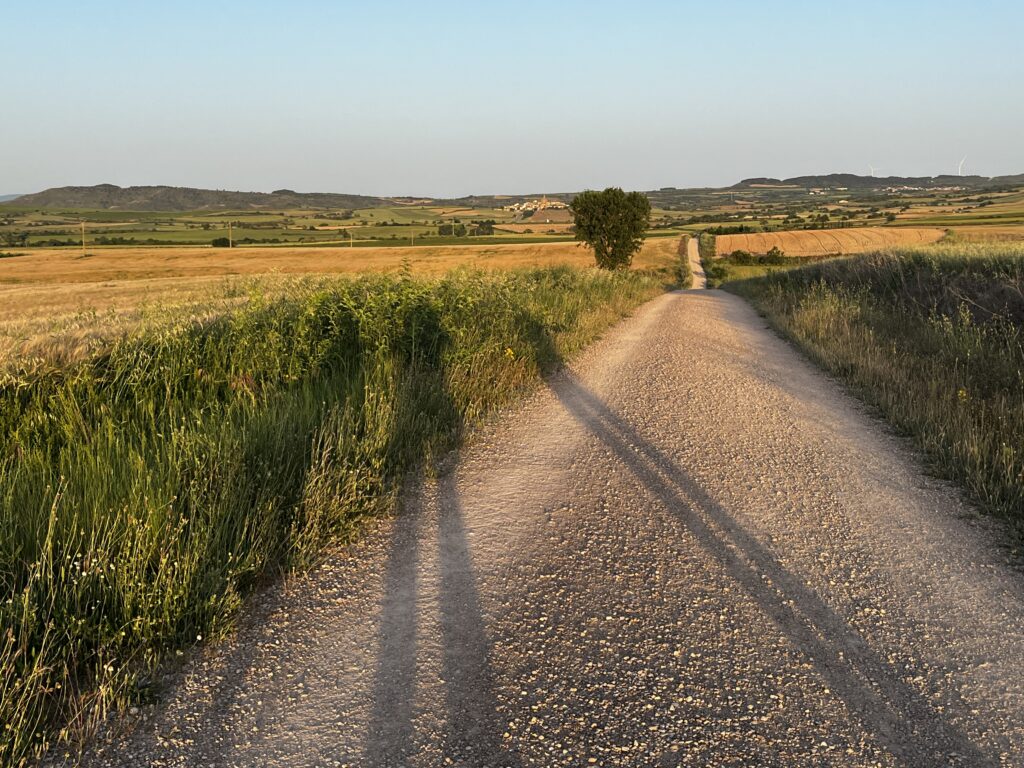
After this the Camino was in general a gravel path, quite rough in places, it went through the vineyards and hill country.
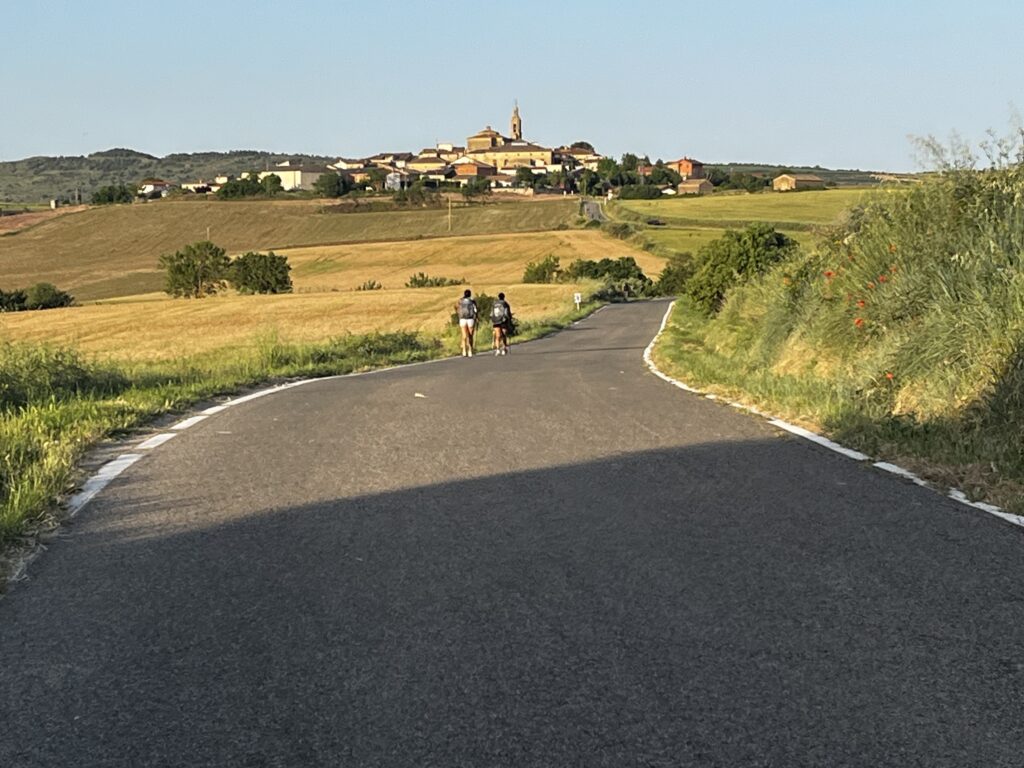
By 10:30, we had joined a two-lane highway to road walk towards the city of Viana. The hill country rolled away from us, with vineyards on our left and scrubland our right.
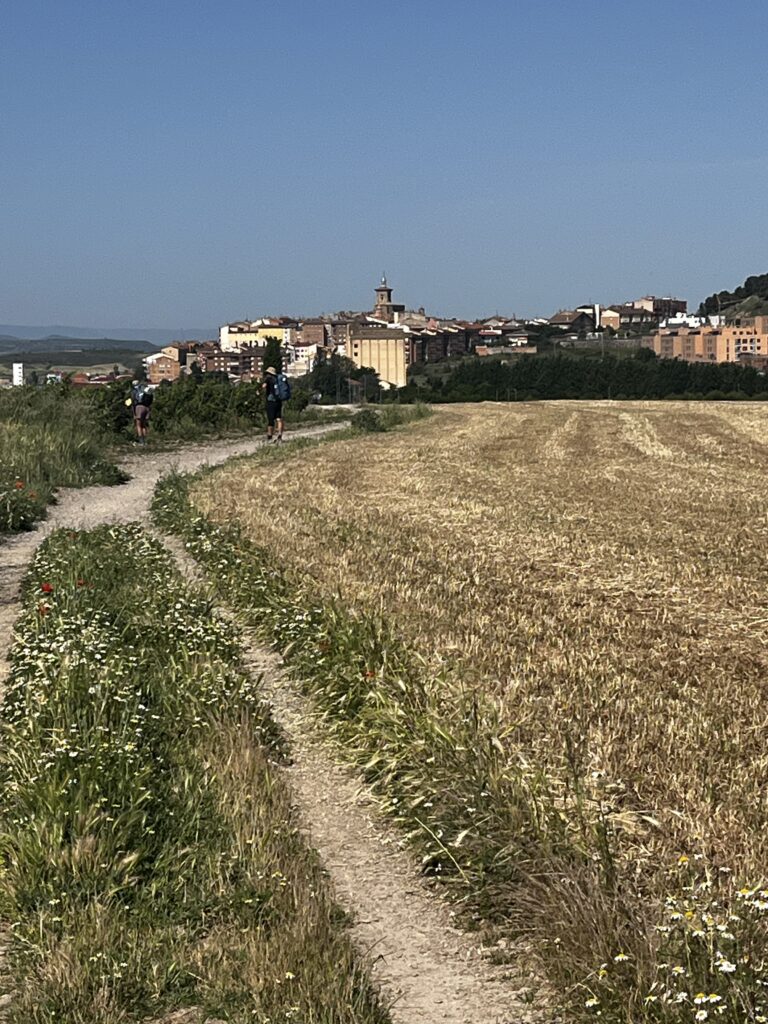
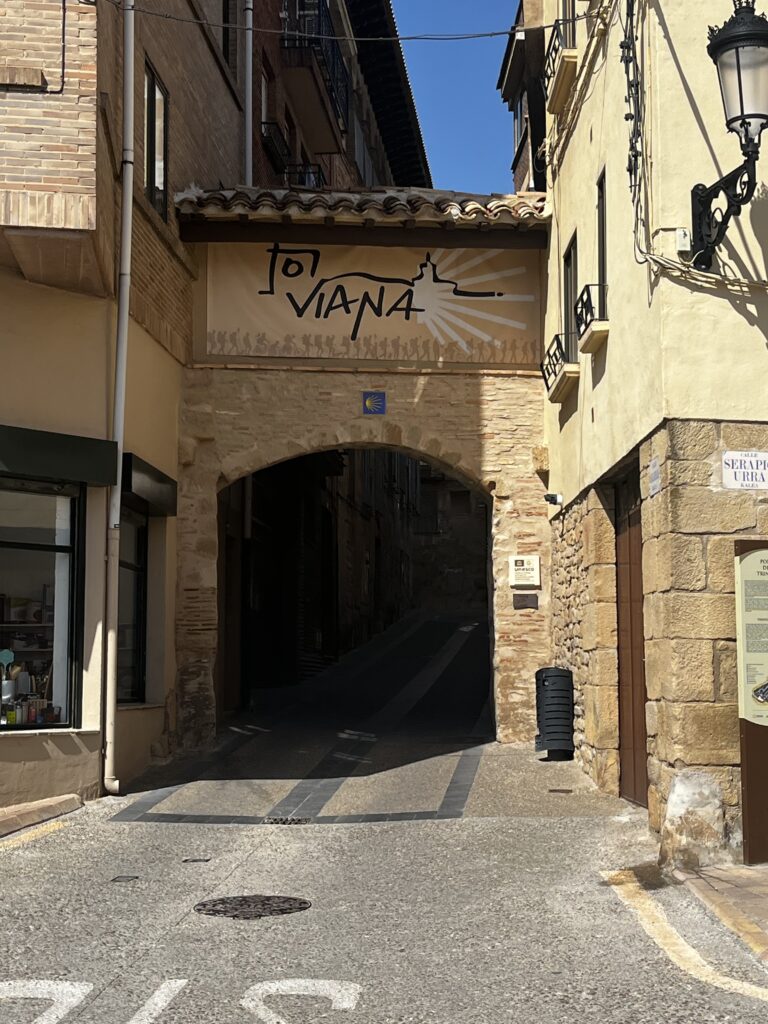
The final approach was made on a little narrow gravel path through the fields. By 11 AM, we were in the city.
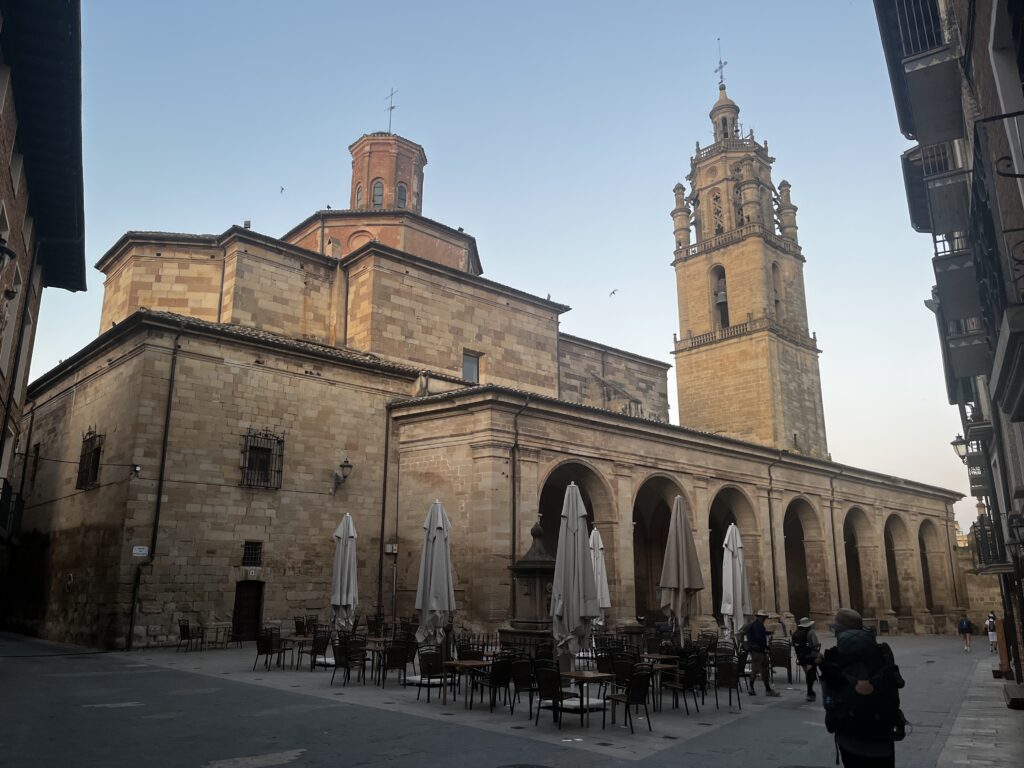
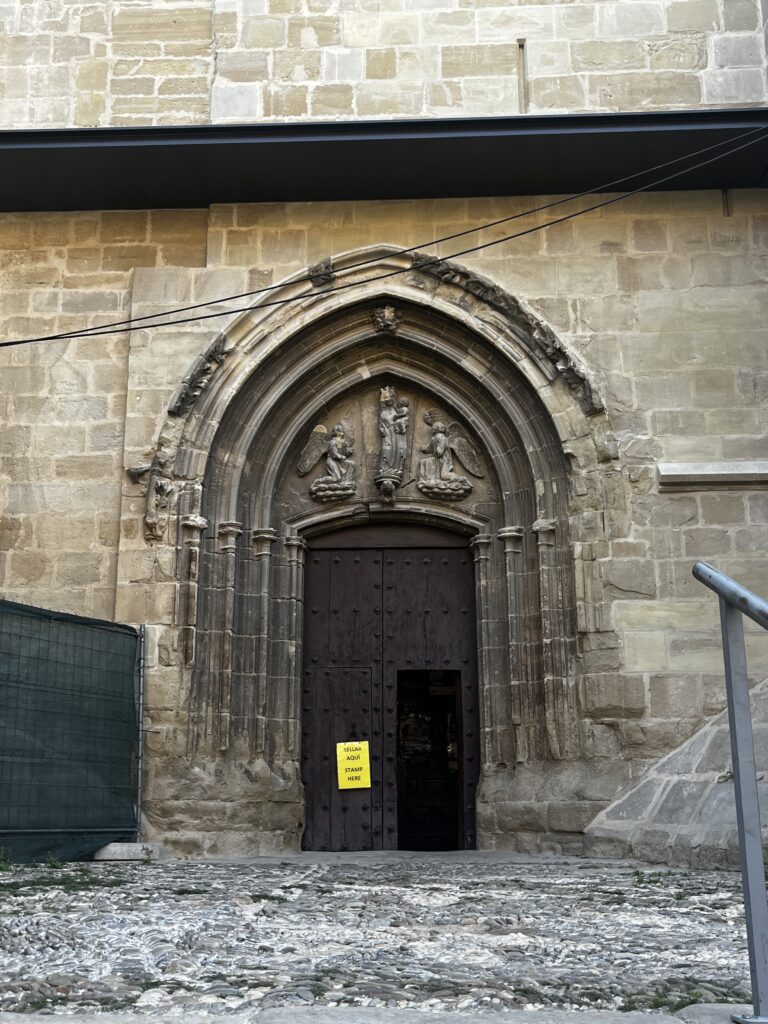
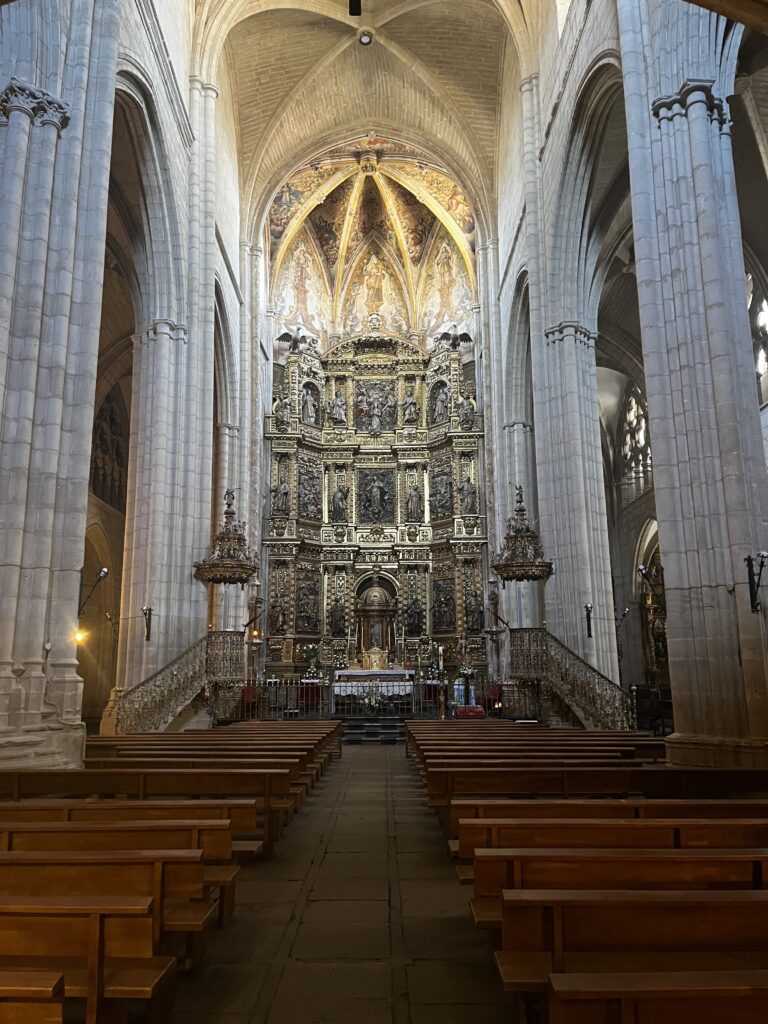
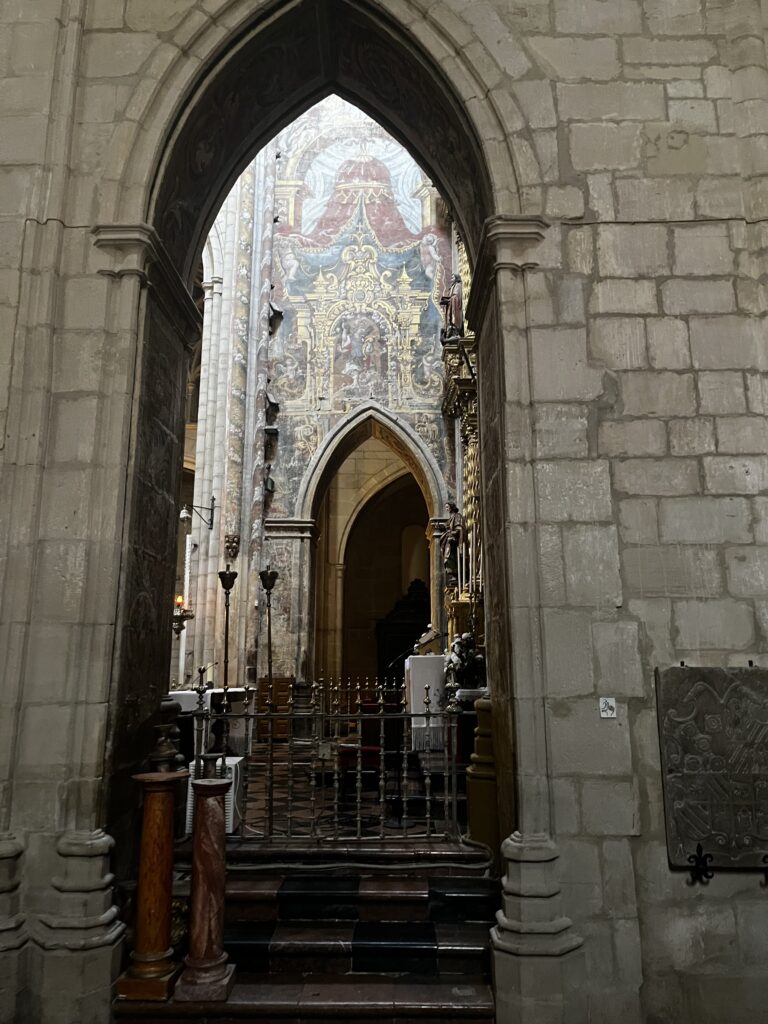
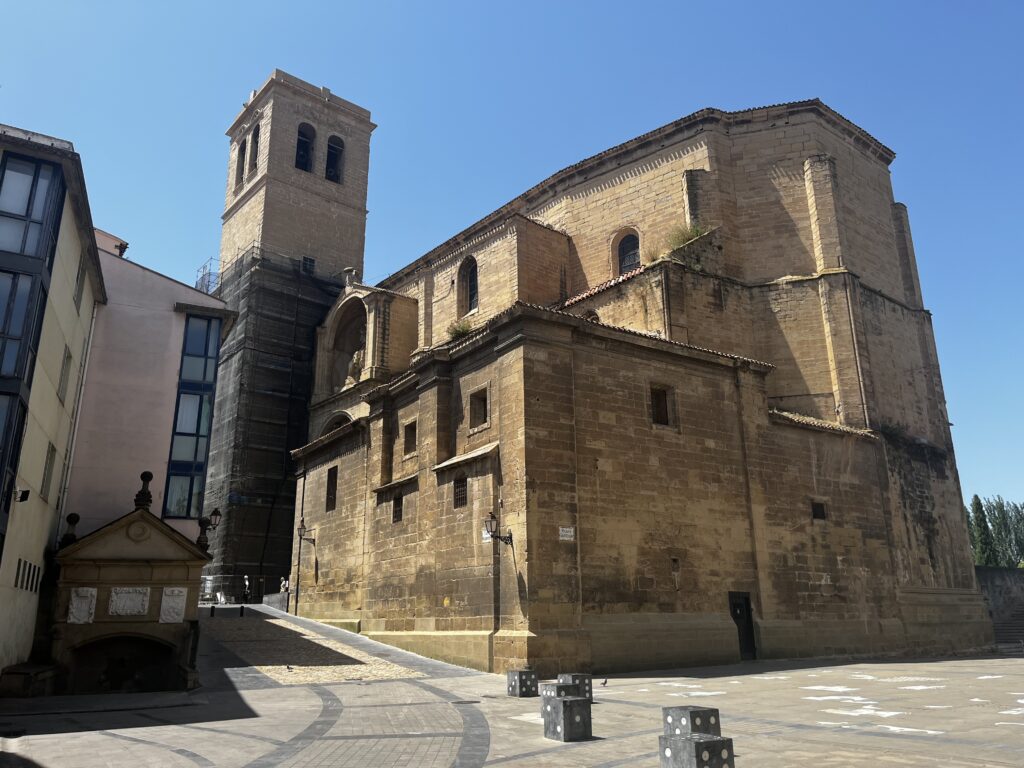
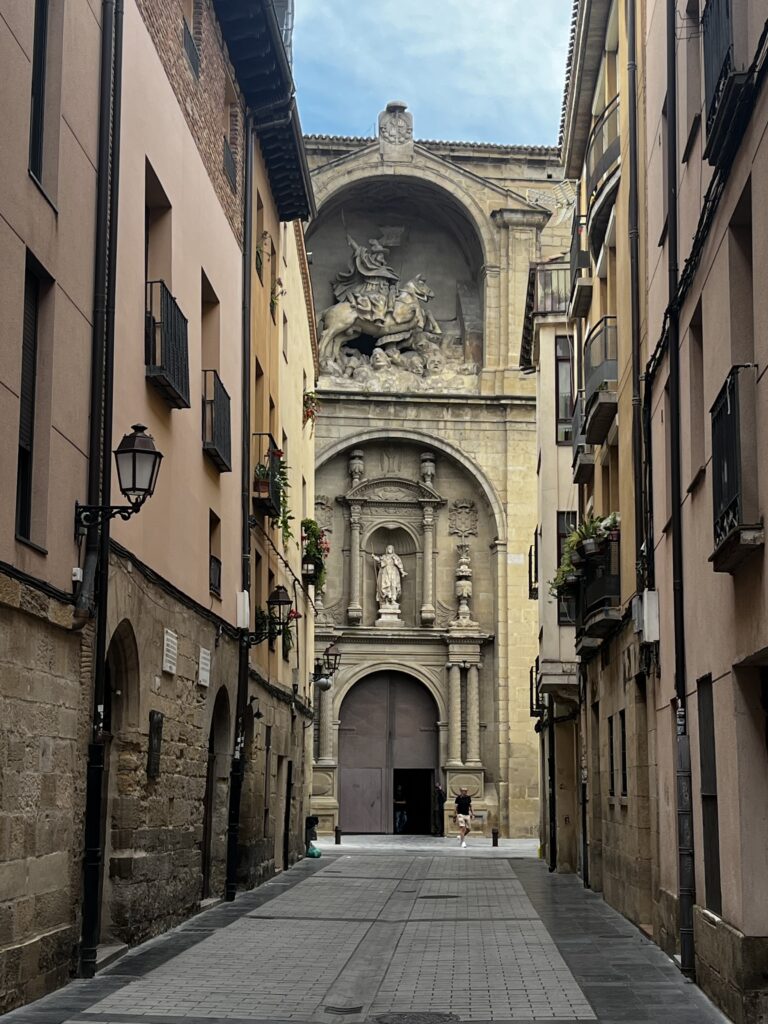
The first stop was the church, which is currently covered in scaffolding.
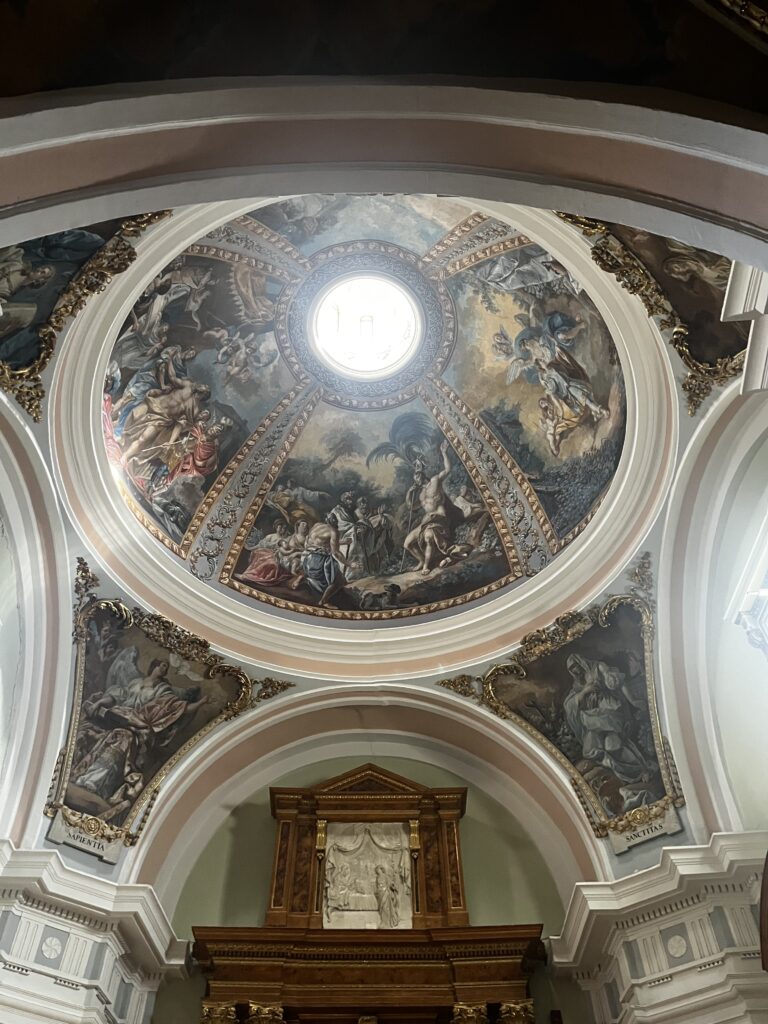
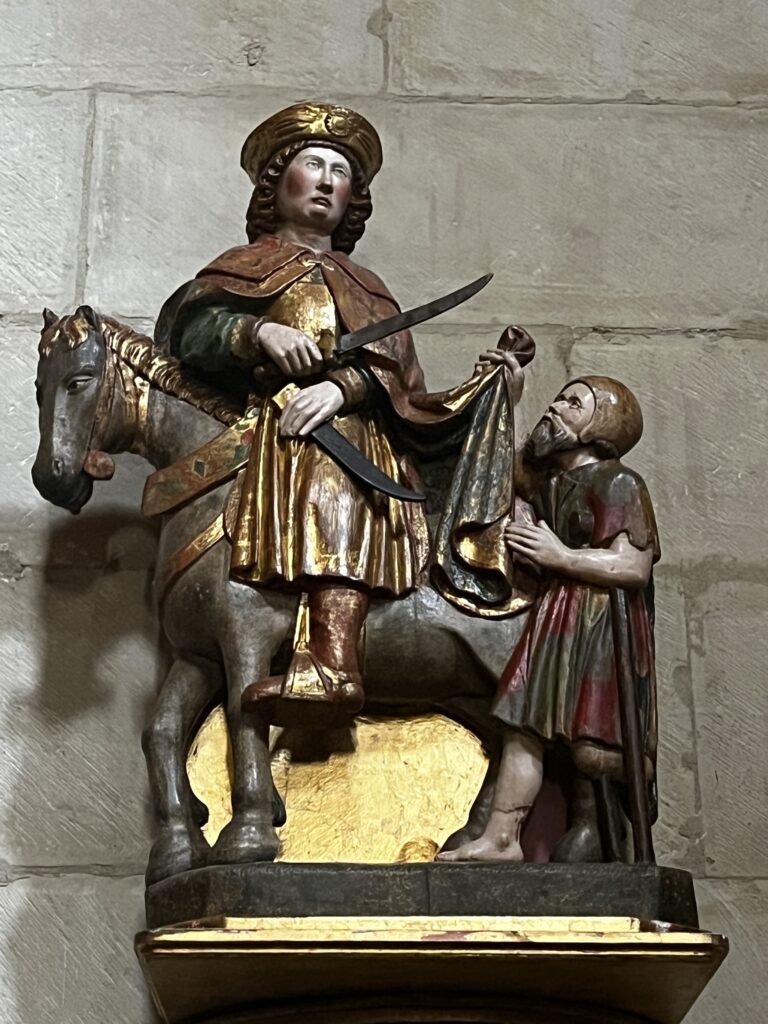
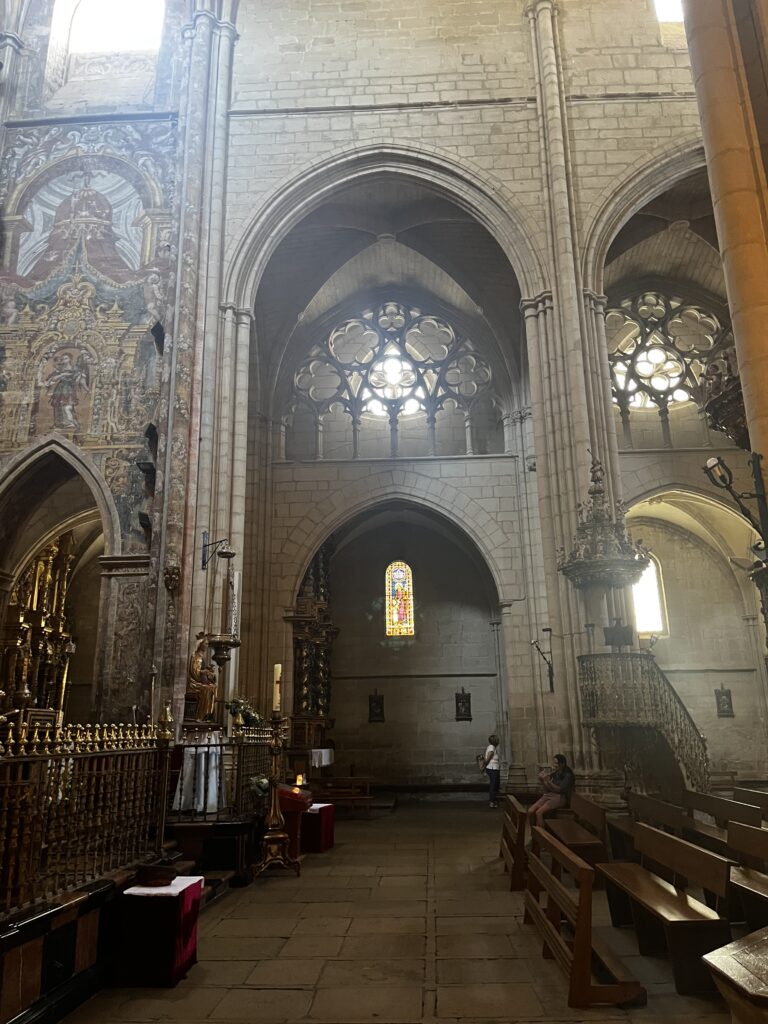
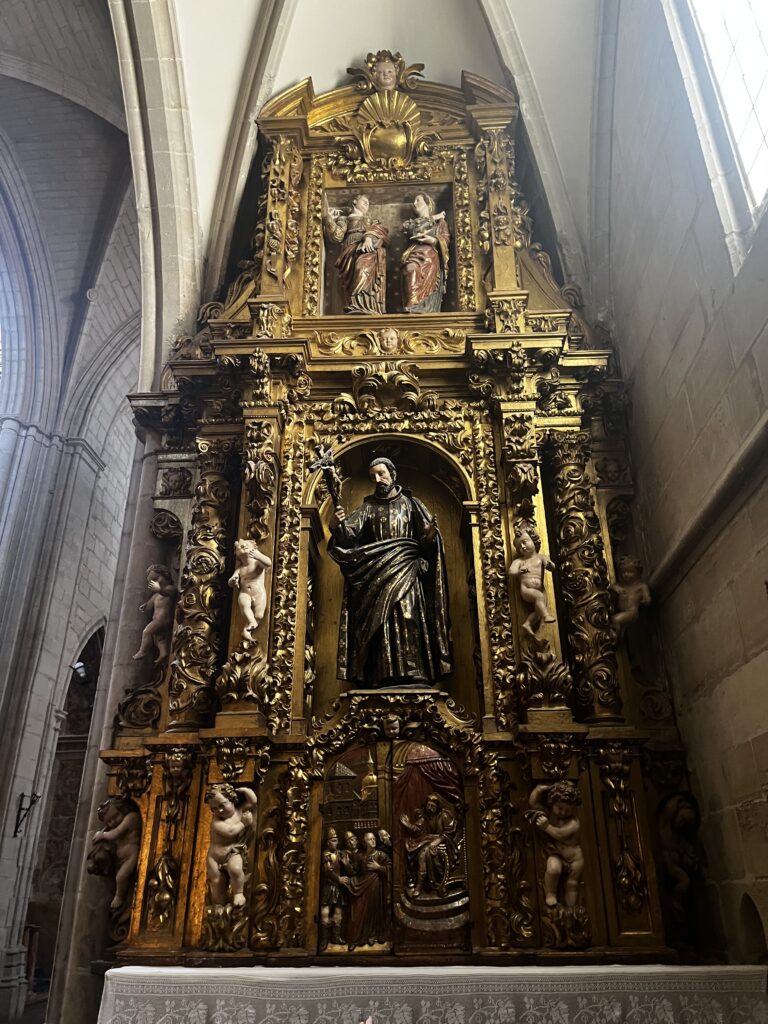
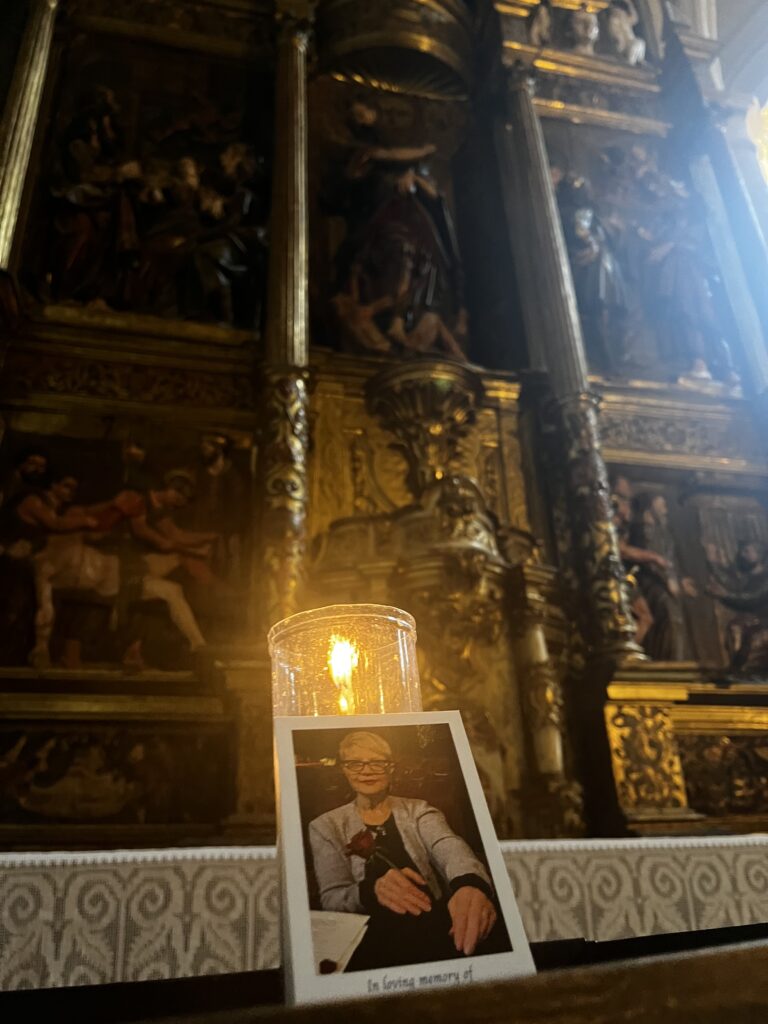
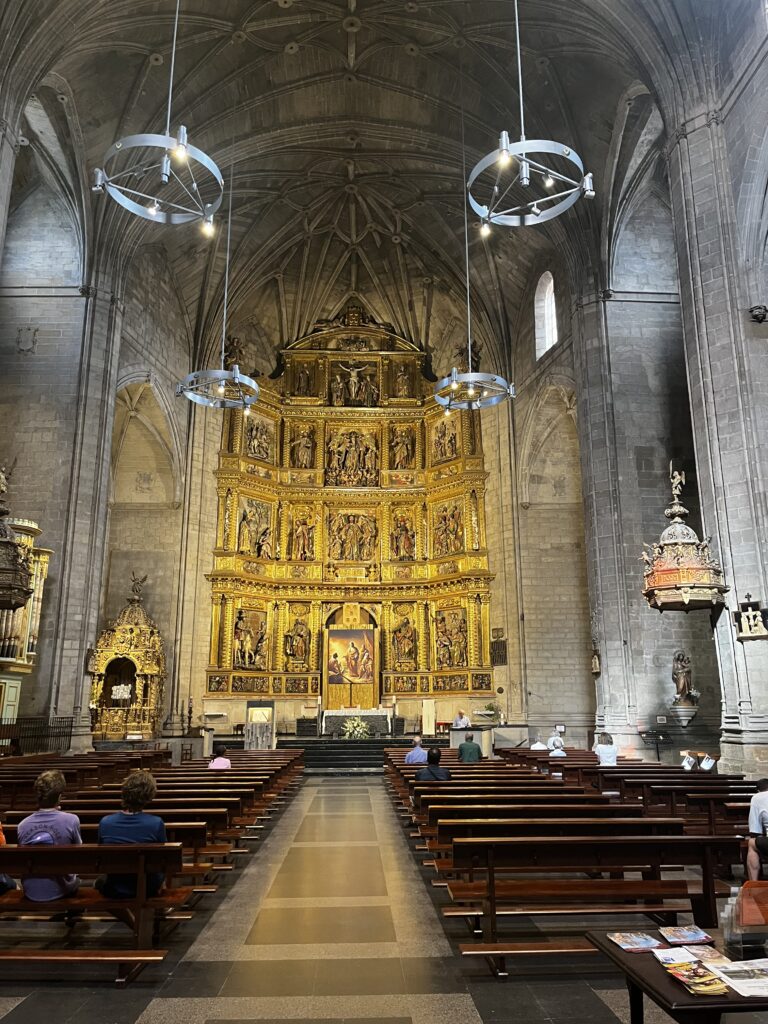
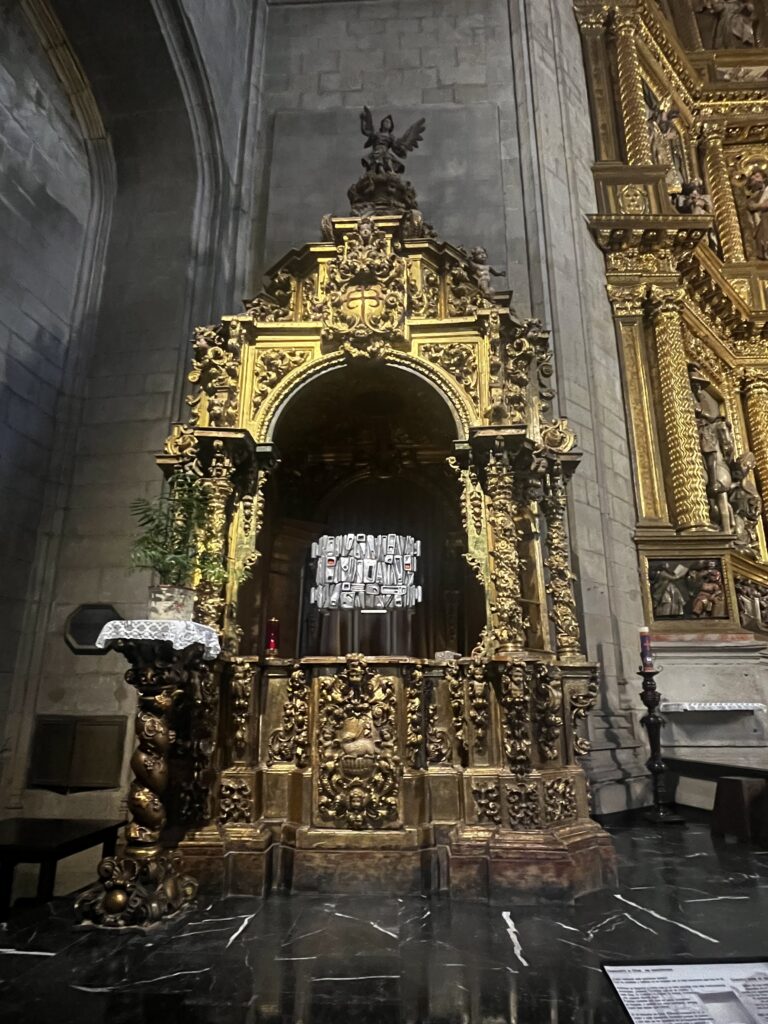
The interior is baroque, with a plethora of side altars and little chapels. I was moved to pray in the little chapel of Saint Bartholomew, and I lit a candle for Francine there.
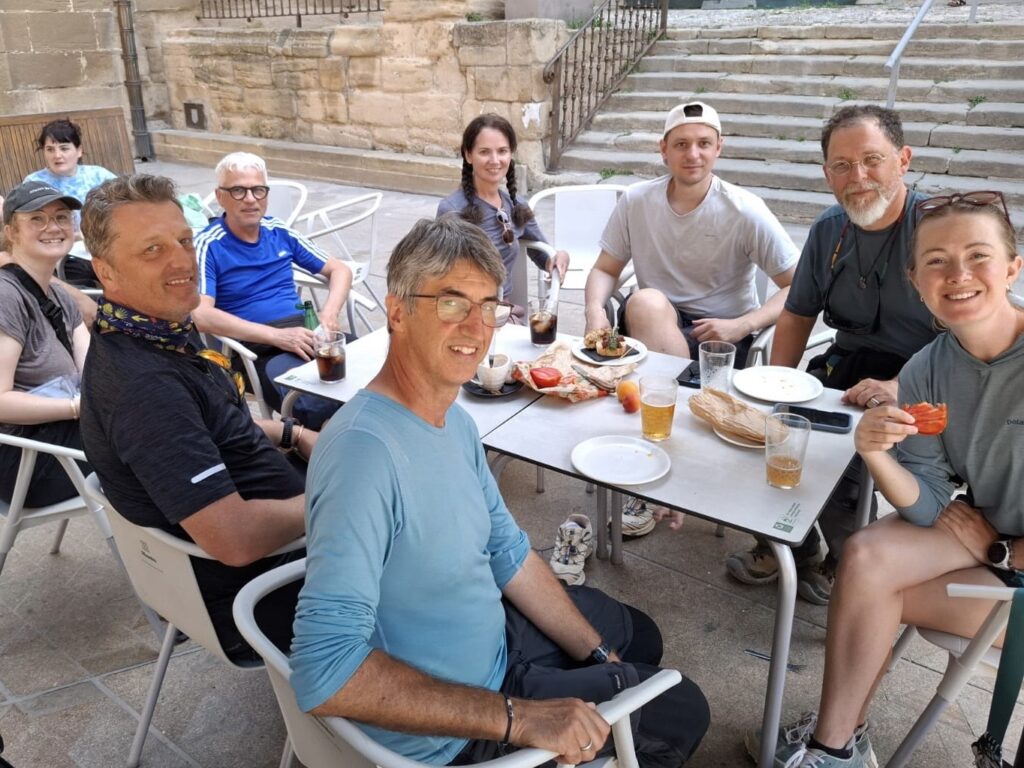
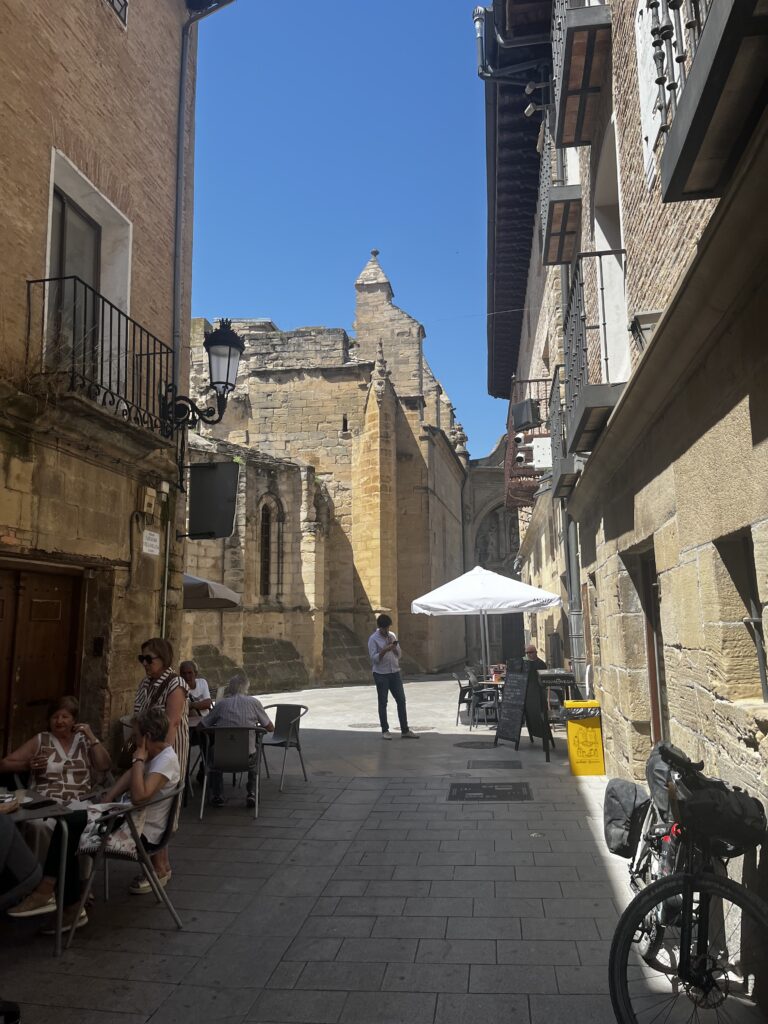
Lunch in Viana followed, with a troop of pilgrims on the plaza in front of the church with a fresh breeze – needless to say, we stayed entirely too long. It was past 12:30 by the time I left in the company of Tom and Herve.
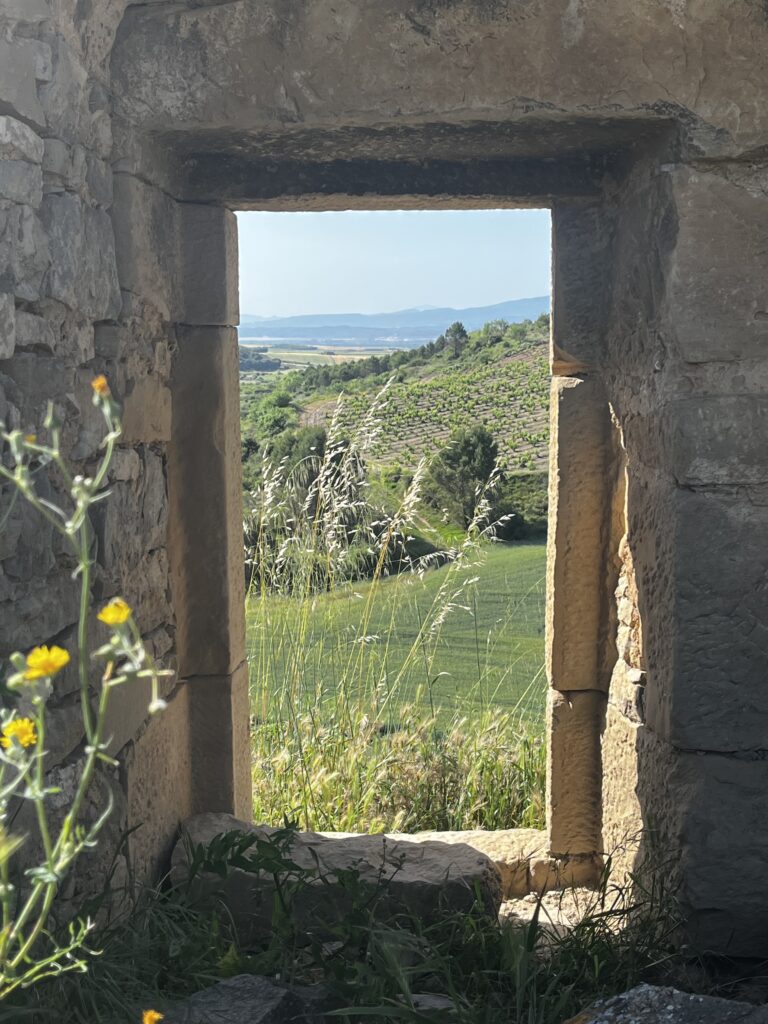
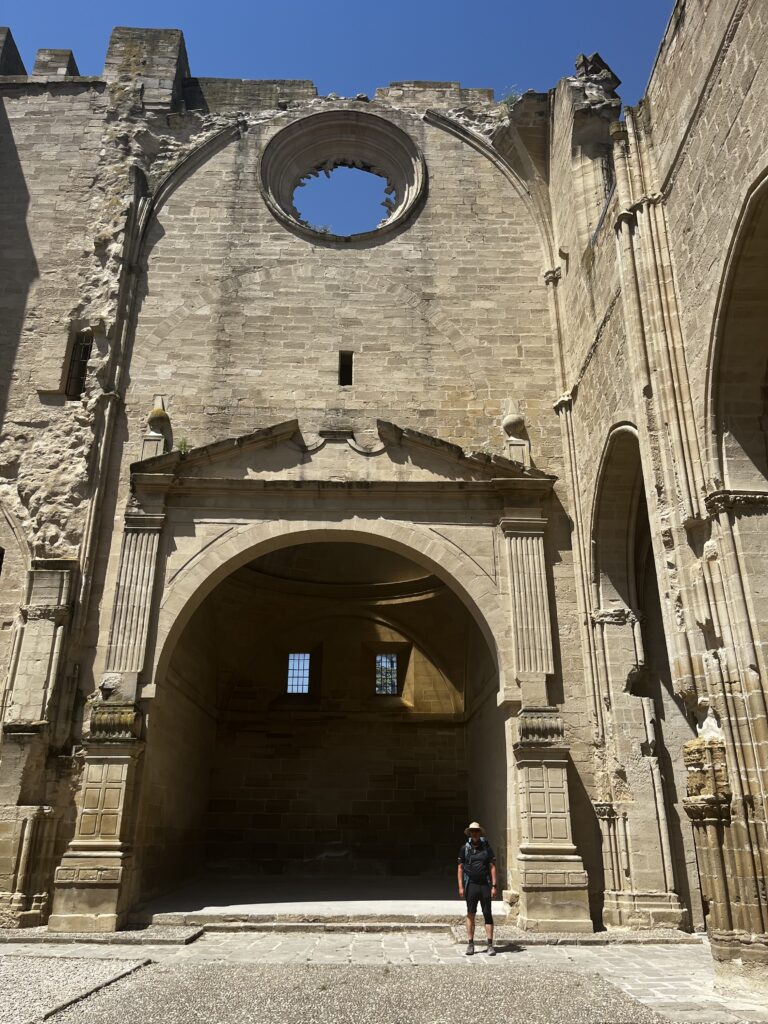
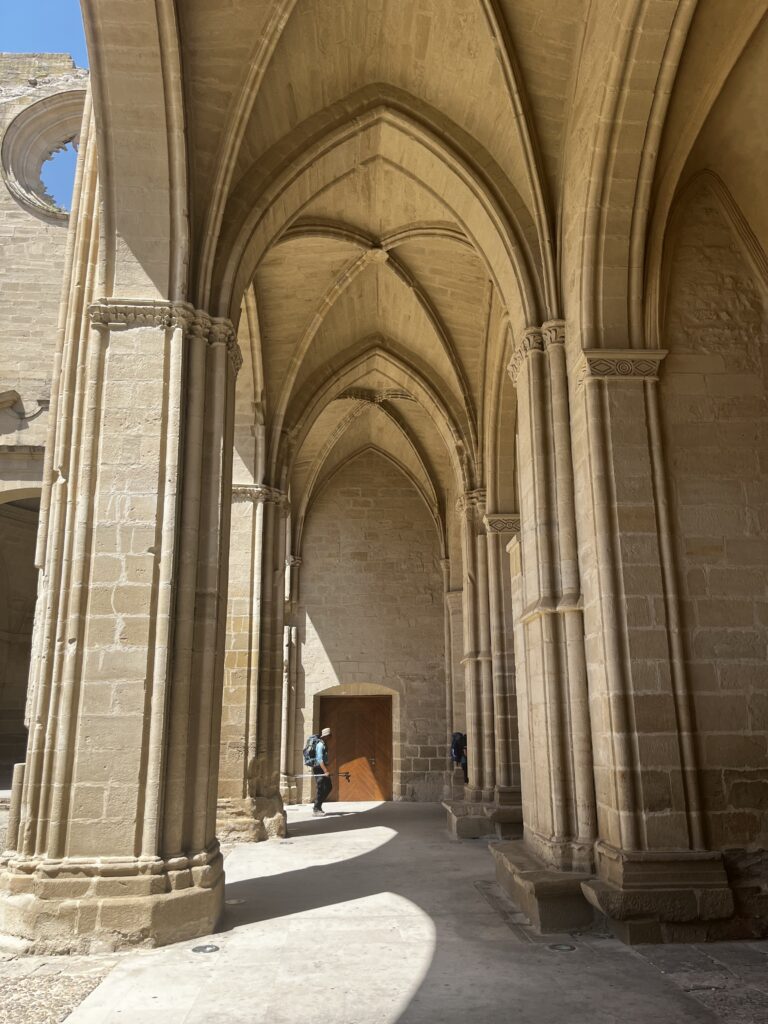
On the way out of town we stopped in the ruins of San Pedro. This was a major church in the city at one time, and the ruin has become a public space. I find it a haunting place.
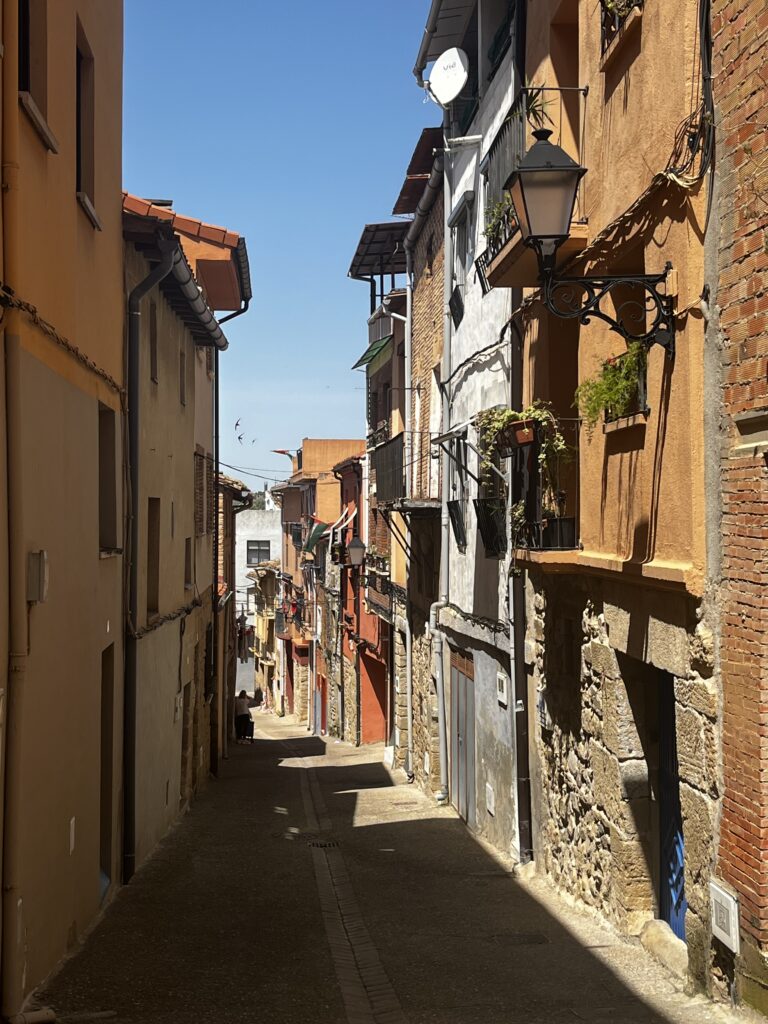
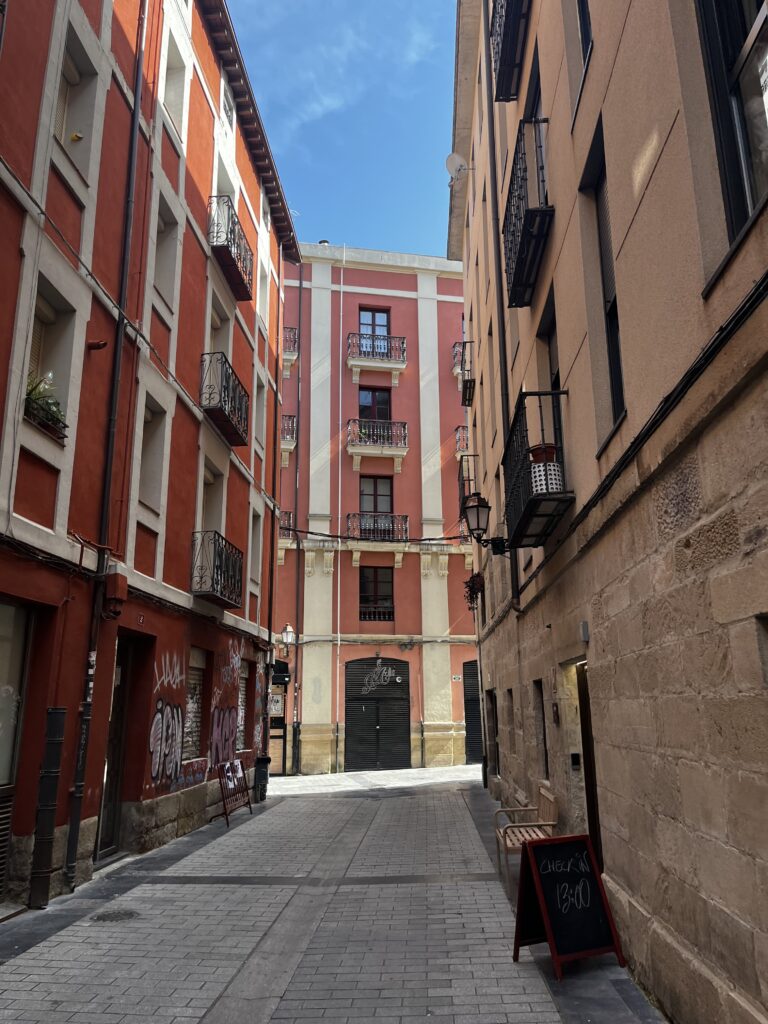
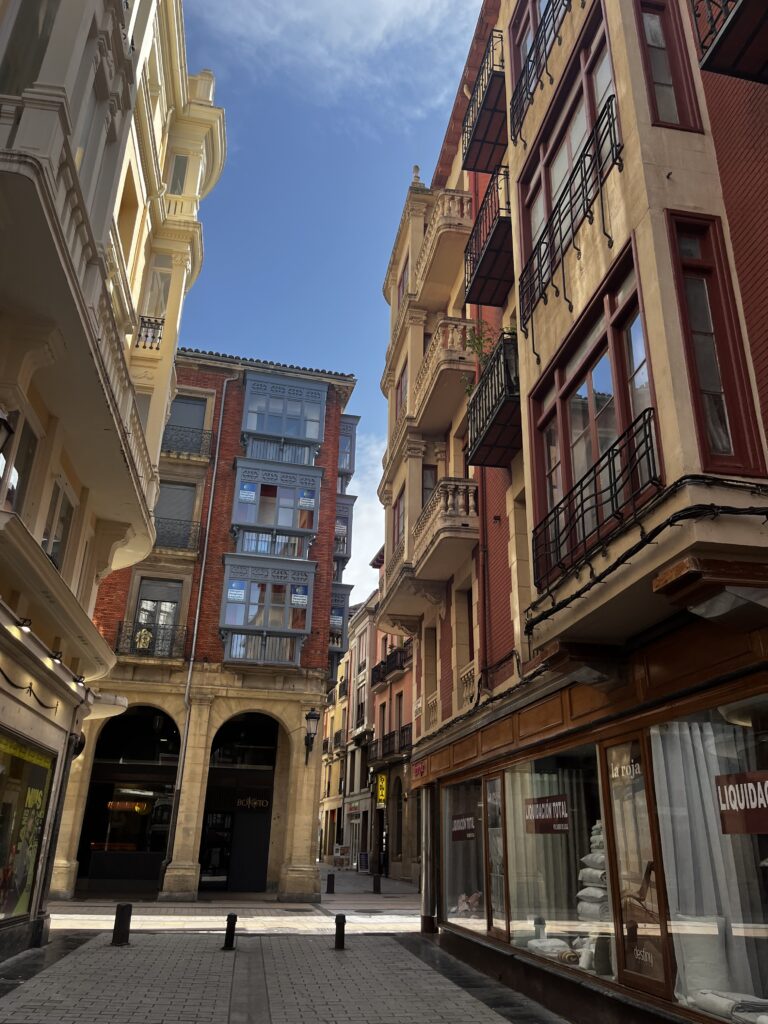
Within just a few minutes after leaving, the Camino took us out through the old city gate of San Felices and downhill through a maze of closely packed urban neighborhoods. Towards the end, we went through a place with very modern row houses and new construction before heading through the more rural suburbs.
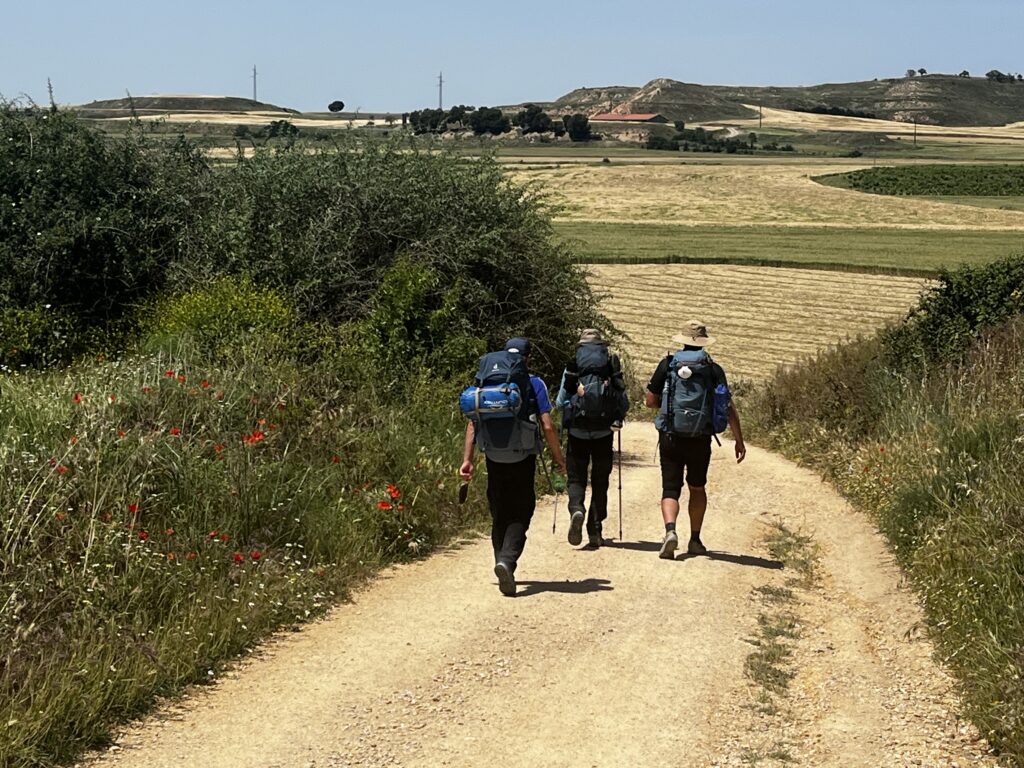
By 12:50, we were back on the gravel road. After passing by some back gardens, we were once again out into the hill country. There was a brief stretch of walking on asphalt, but fortunately it did not last long.
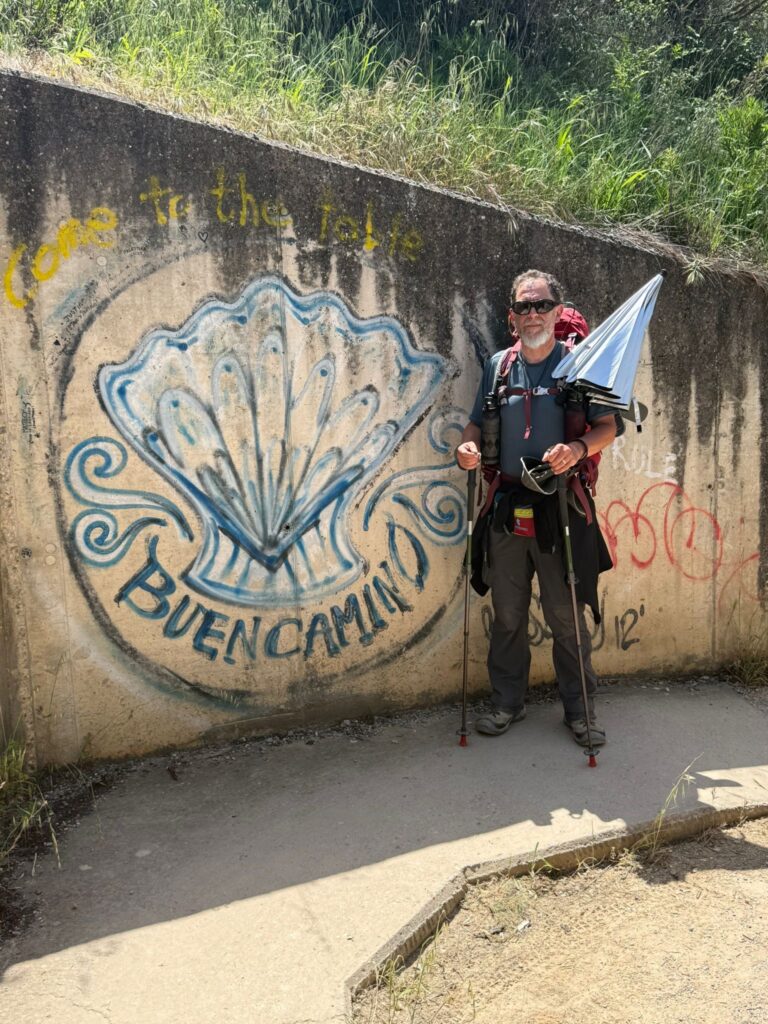
We passed through a freeway tunnel at about 1 PM, with Camino shell graffiti of happy memory. I have a photo of myself here in 2013, in 2016 with Francine, and 2023. It’s something of a milestone along the way for me.
After this, it was road walking on asphalt. I could feel the heat of it through my shoes. The road surface periodically switched to concrete, which wasn’t any better.
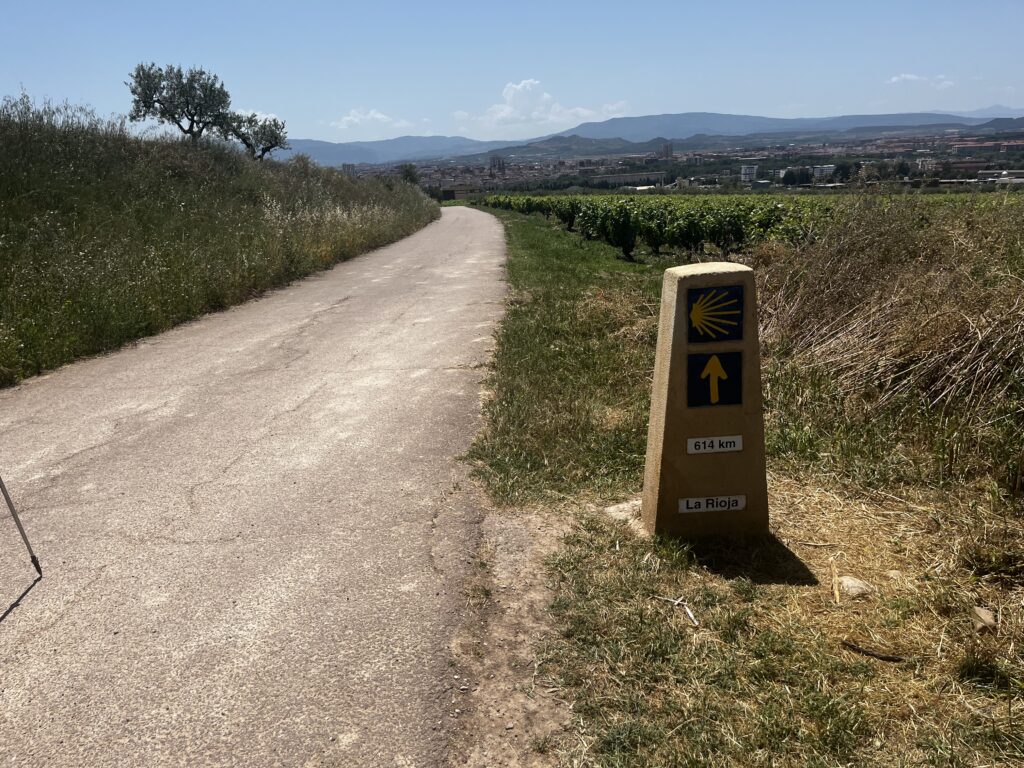
As we approached La Rioja, vineyards were becoming much more frequent. For the first time since leaving France, we passed a section with vineyards on both sides of the road. We were now joined by Richard from Austria, who we had met at dinner a few nights ago and who had shared our albergue the last two nights.
About 1:20, we passed the chapel of Nuestra Señora de Cuevas, one of the patrons of Viana. Unfortunately, it was locked.
After this, it was back to the gravel road and back to the open hill country.
Within just about a kilometer, the road had lost its gravel and was now mostly dirt with occasional sections of large stones or even semi dried mud. It was a slower surface to walk on the gravel, especially as we headed uphill.
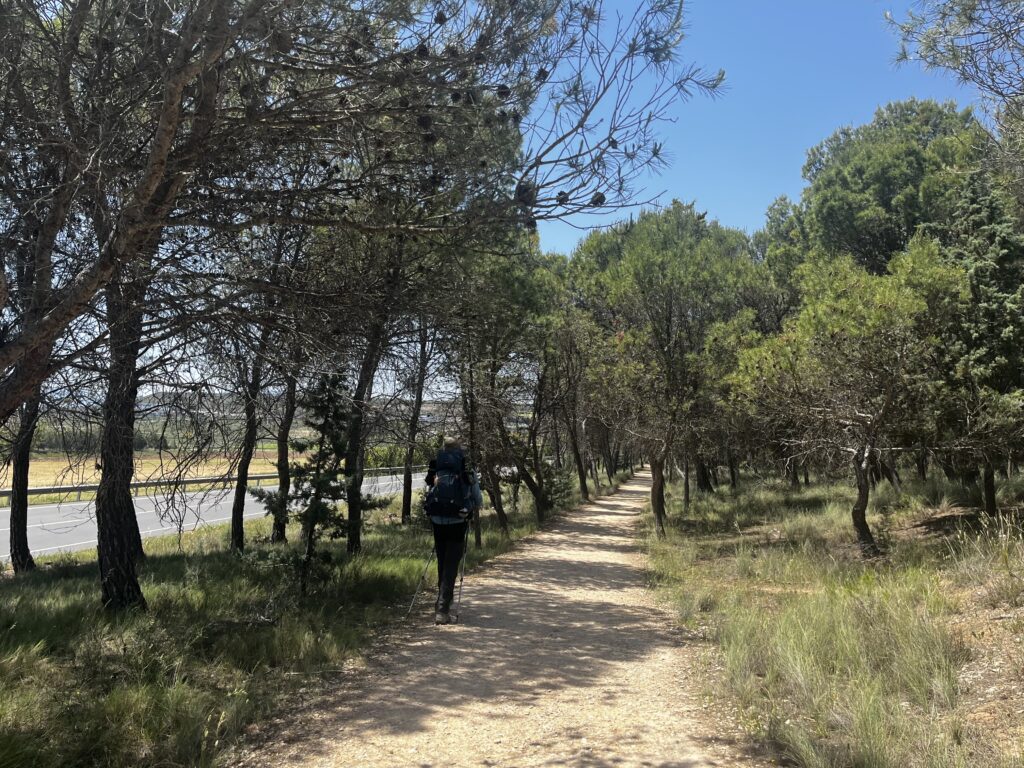
After a relatively steep hill, the Camino turned off the road onto a smooth gravel path perhaps half the width of the road and headed for the trees. They were pine, and smelled heavily.
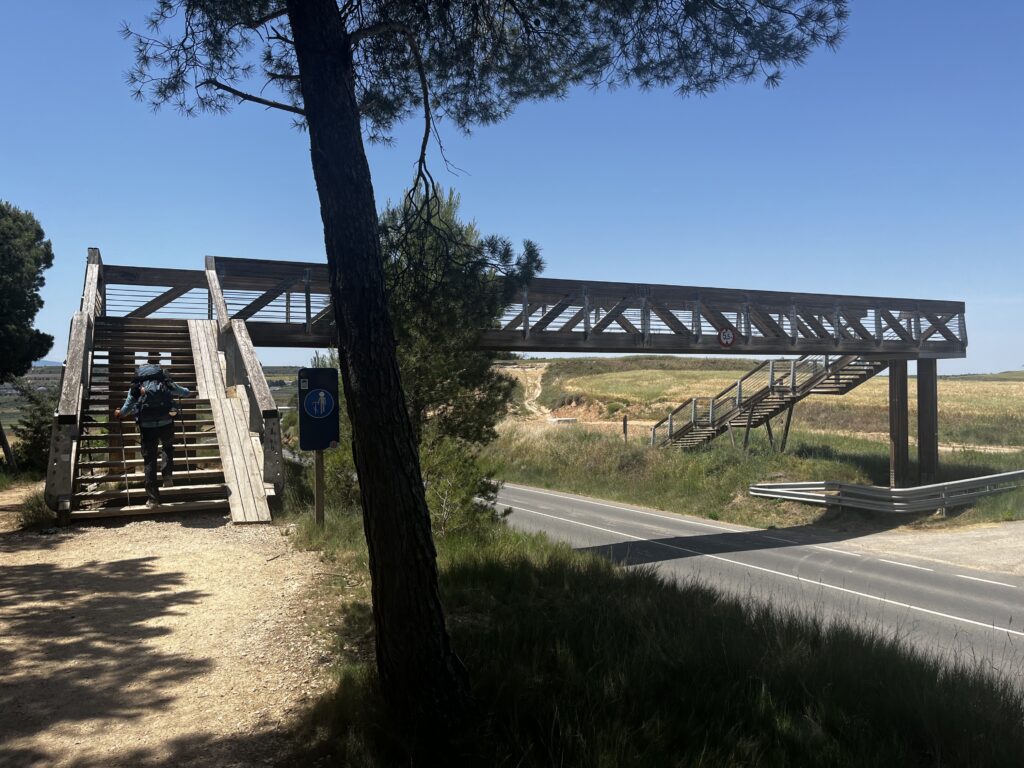
We passed out of the woods and over a highway on a wooden bridge. After the bridge, the path paralleled the highway, often under the cover of pine trees. We could already see warehouses and office parks in the distance across the highway.
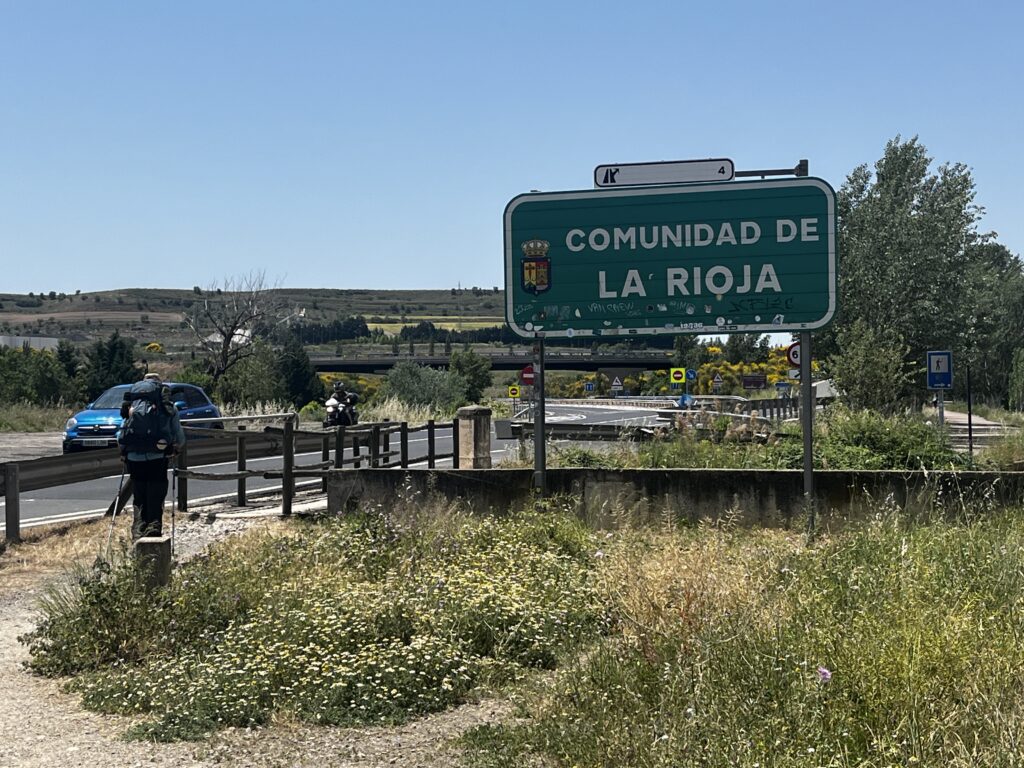
At about 1:50, we passed out of the last of the pine forest and into the industrial zone. And here it is that we left Navarra and entered the region of La Rioja.
The Camino continued to parallel the highway, but now it was back to hot asphalt. You could see the air shimmer with heat over some of the more distant buildings.
We all stopped for a brief rest under a freeway overpass. We refilled our water at a nearby fountain, ate a cookie, and continued on the asphalt.
A hill now rose on our left, and although we could see city on almost every side of us, it was in the distance. Our most immediate terrain was bare hills and small vineyards.
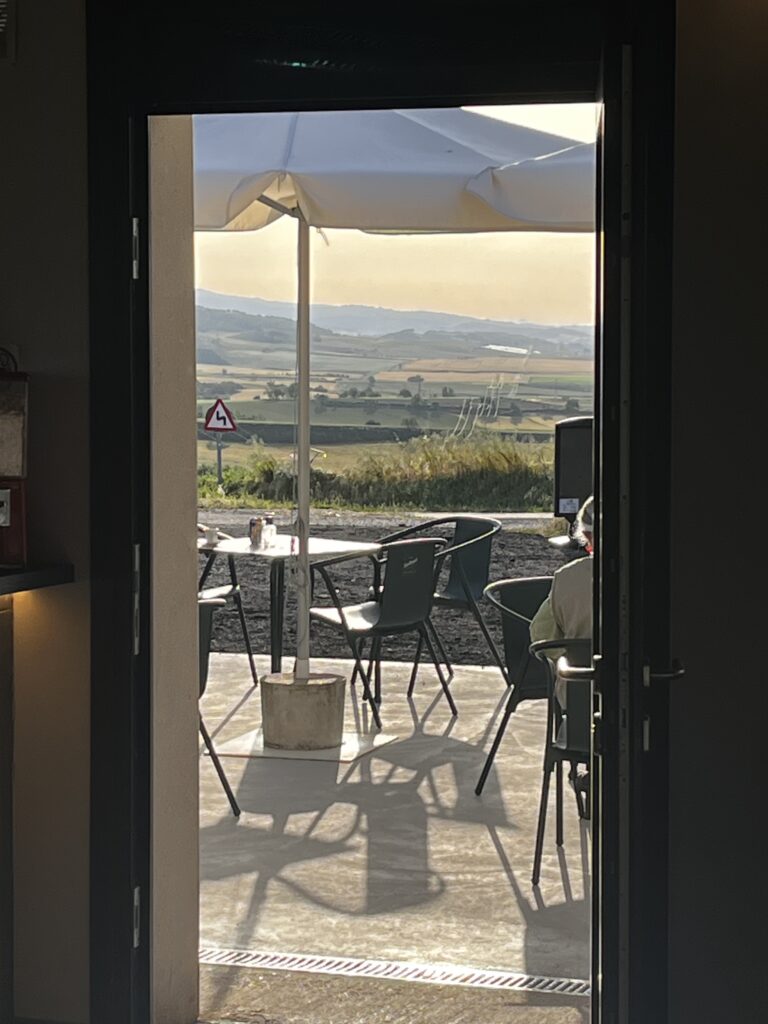
About 2:25, houses started lining the road. We stopped for a cold Kas Limón at a roadside stand.
Ten minutes later, we were on the road again, going sharply downhill into the city.
At about 2:40, the Camino briefly diverted off the road onto a narrow gravel path surrounded by tall grasses and wildflowers. And then it was back to the road.
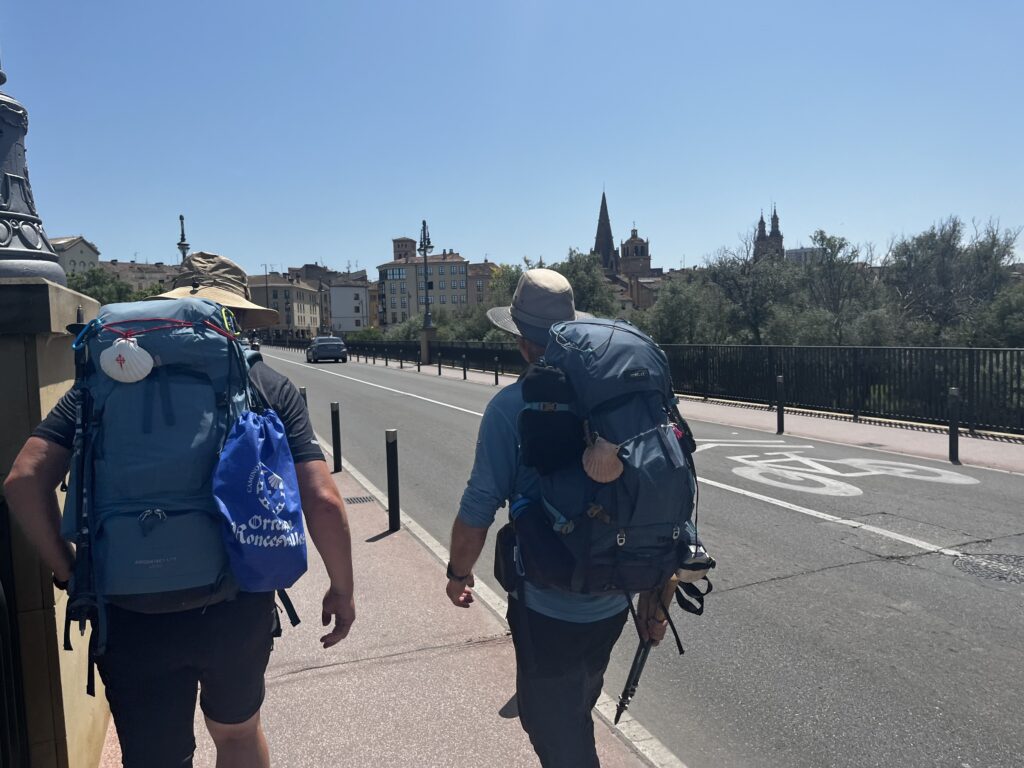
We entered the city by means of a long urban park and then crossing crossing the bridge over the Rio Ebro into Logroño.
By 3 PM, we were in the Albergue Parroquial de Santiago. This is where Francine volunteered in 2023, and as we were being checked in all I could see was a photo she sent me of her at that same desk.
Later it was Vespers and Mass in the church, followed by a communal dinner.
Date: 27 May 2026
Place: Logroño
Today started: Los Arcos
Today’s Photos!
Is Roberto still supervising the Donativo in Logroño? Such memories of volunteering with Francine!
Yes, I believe so, if he’s the fellow who led us in Ultreïa.
Looked like a great group of folks you had for companions today!