
Via Lemovicensis: Capital to Capital
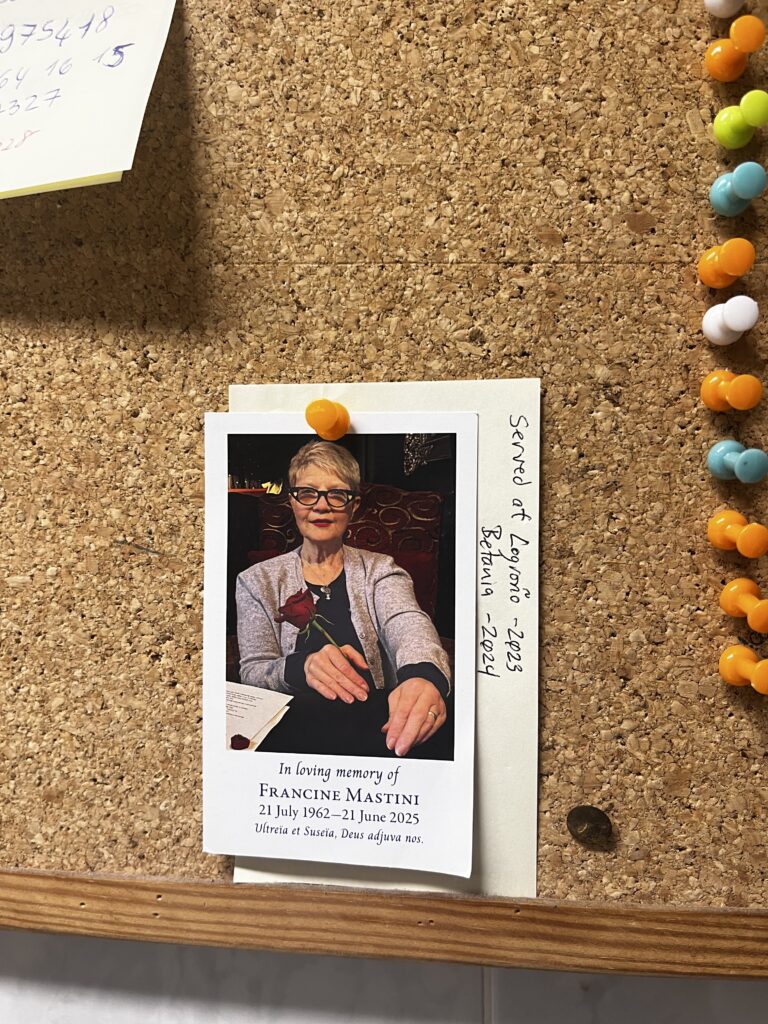
Last night my roommates were Herve, Tom, and Mattie. This morning at breakfast, I talked with one of the hospitaleras, and she let me pin one of Francine’s cards to the hospitalero message board in the kitchen.
Tom and Mattie left slightly before us, but Herve and I were out the door at about 6:20. It was already warm outside.
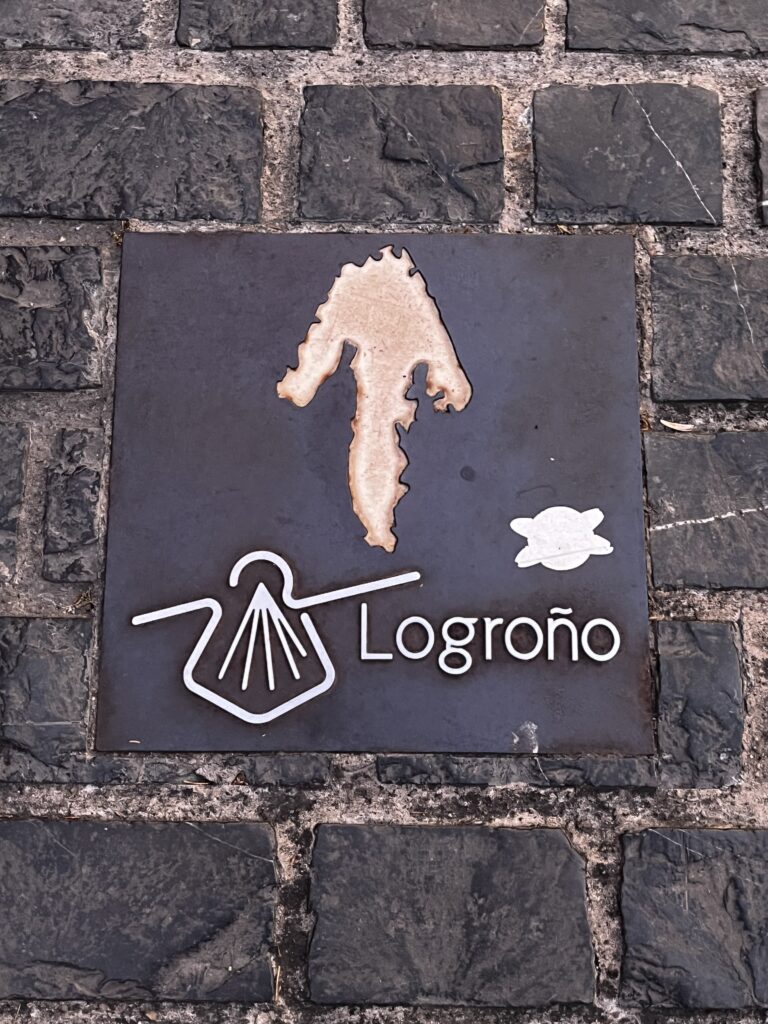
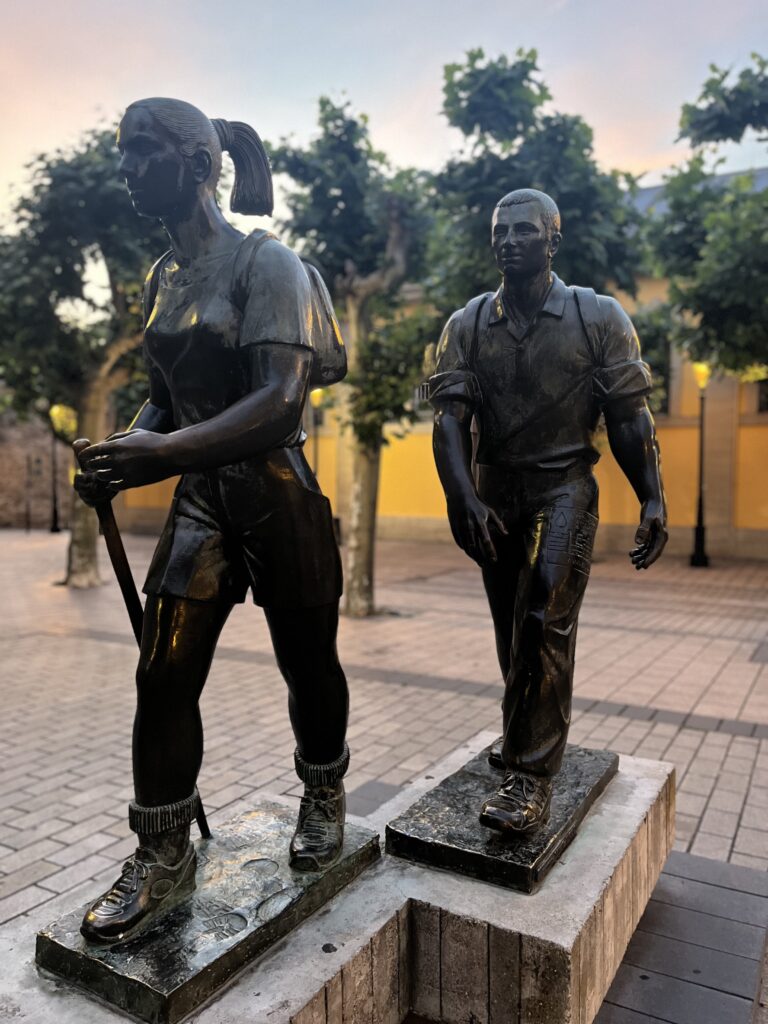
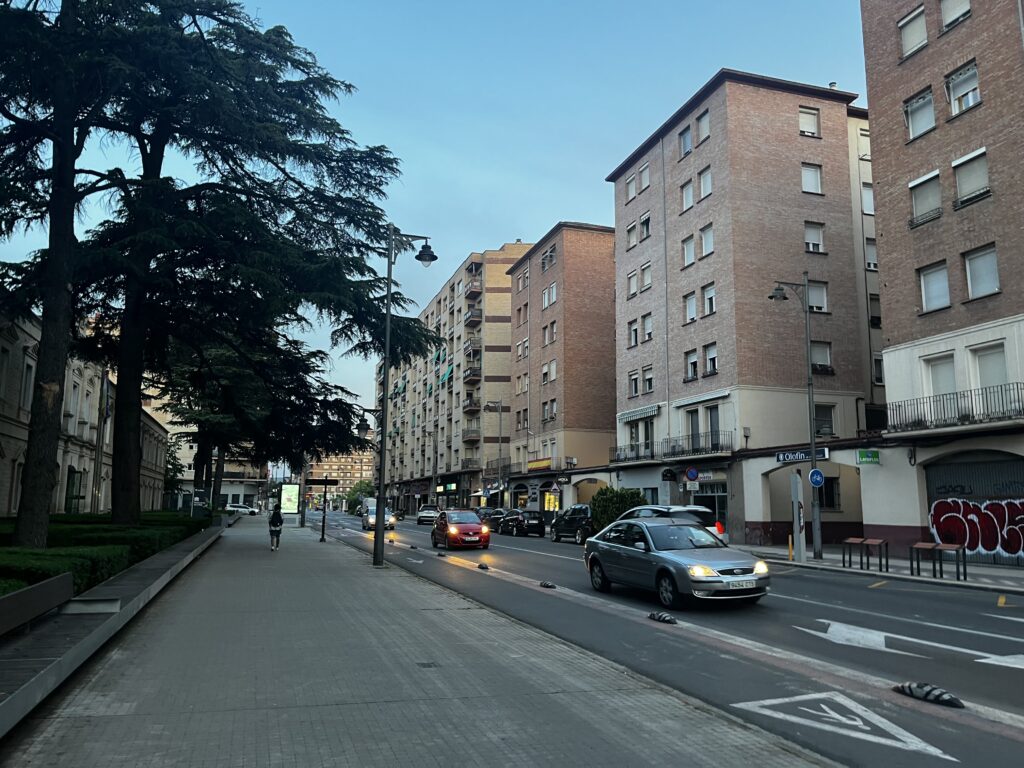
Once we passed the gate and left the old city, we walked along a major avenue through the intensely urban landscape of Logroño. We stopped for a quick second breakfast, knowing that once we left the city the next village wasn’t for another 12 km.
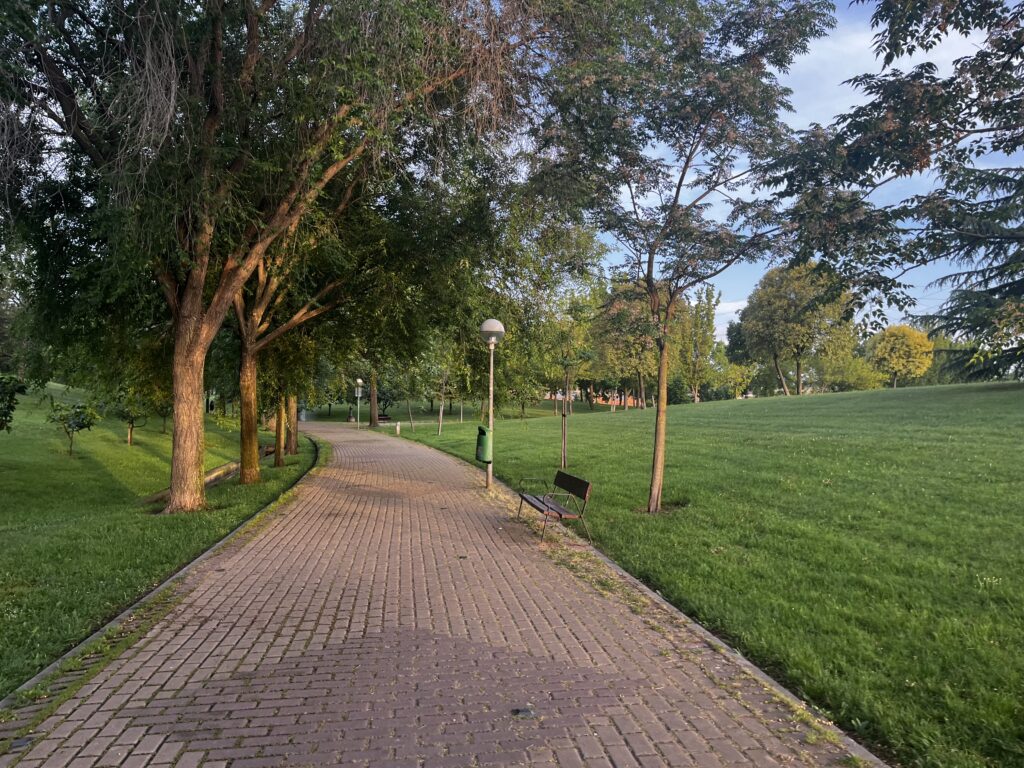
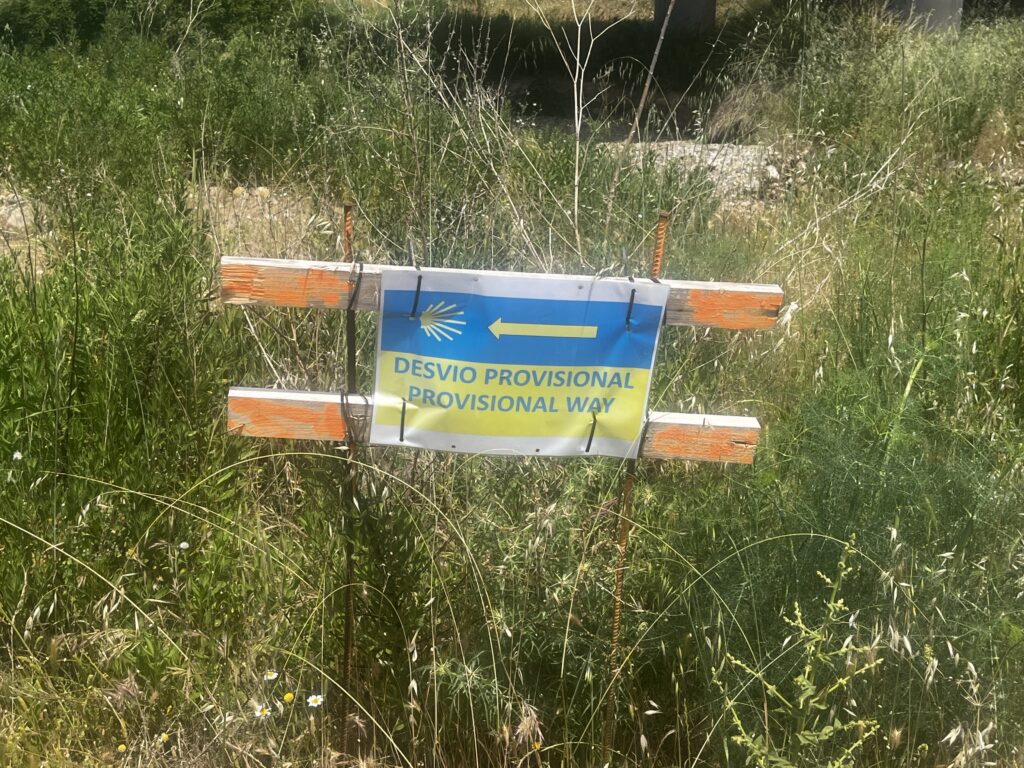
We had a bit of a reroute through the city, because of a bridge being closed. Eventually, we were able to get back on the route in a long grassy urban park with broad, tree-lined paths of brick and stone.
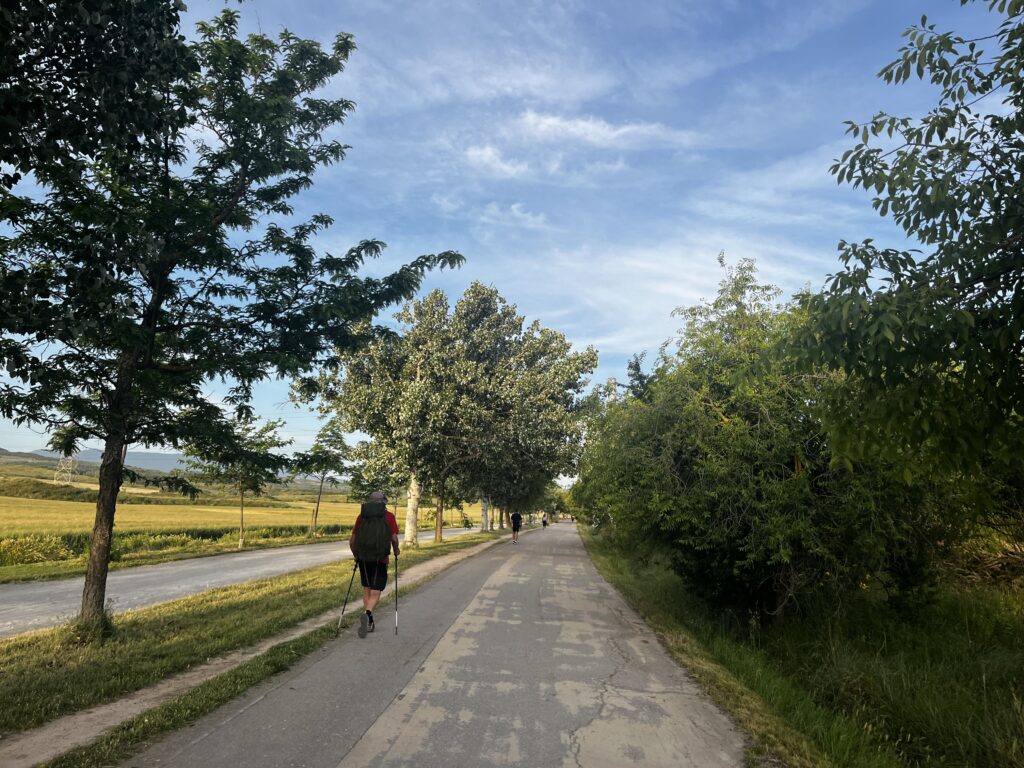
The park just went on and on. Eventually, the path became as asphalt. At about 7:25, we started seeing plowed fields to one side. The other side was open meadow now.
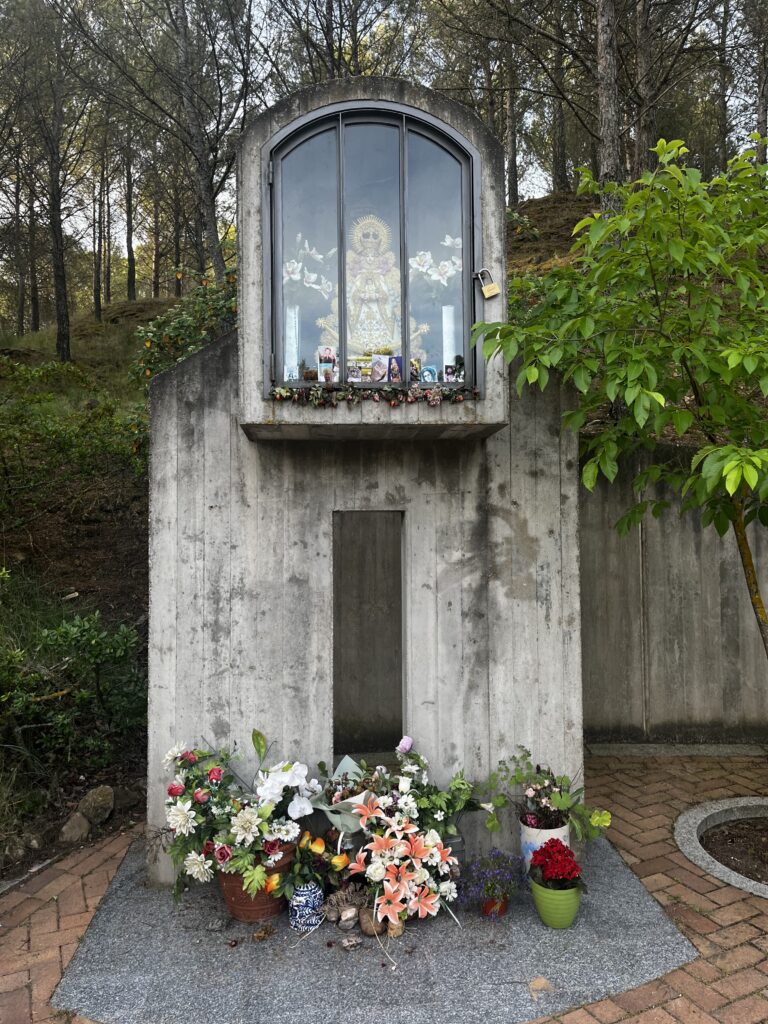
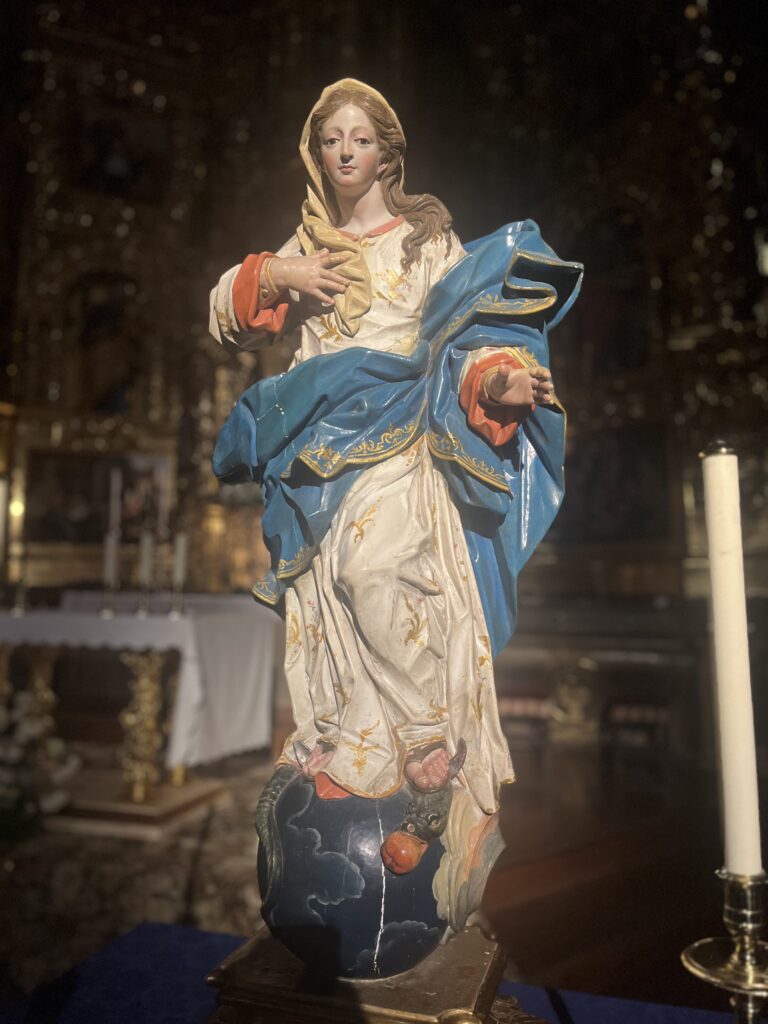
The path was full of locals walking and jogging and biking. At about 7:40 we turned slightly into the woods. At this point, the park expanded again beyond just being a promenade to having playgrounds, woods, and even a lake. Not to mention a shrine to the Blessed Virgin.
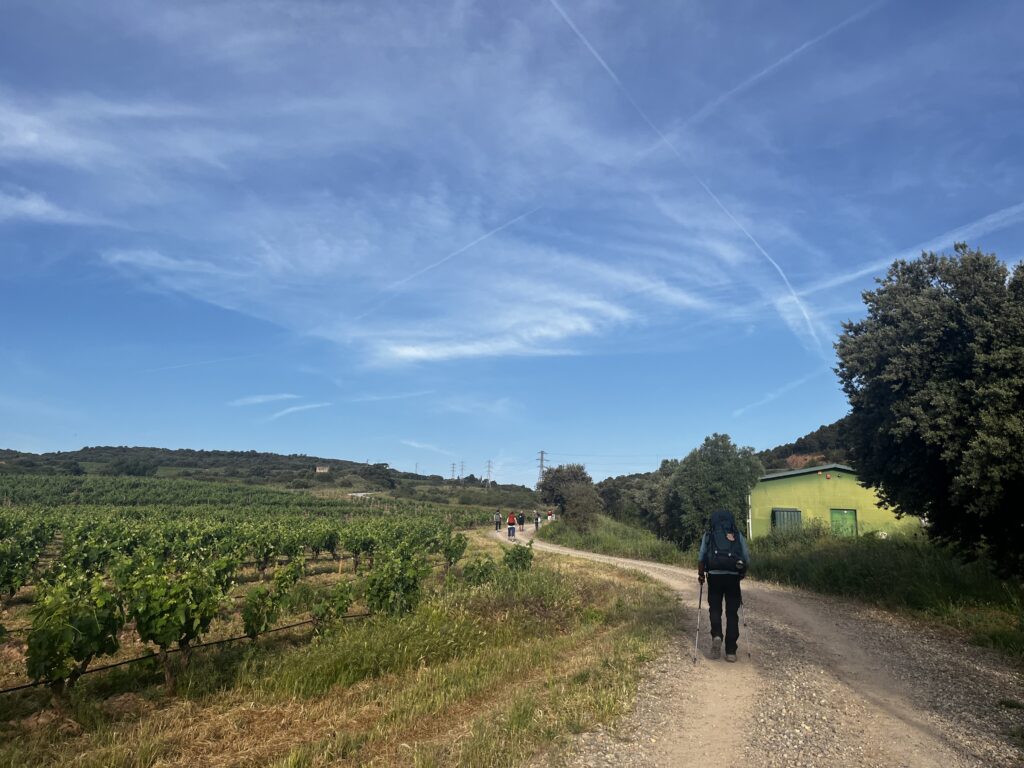
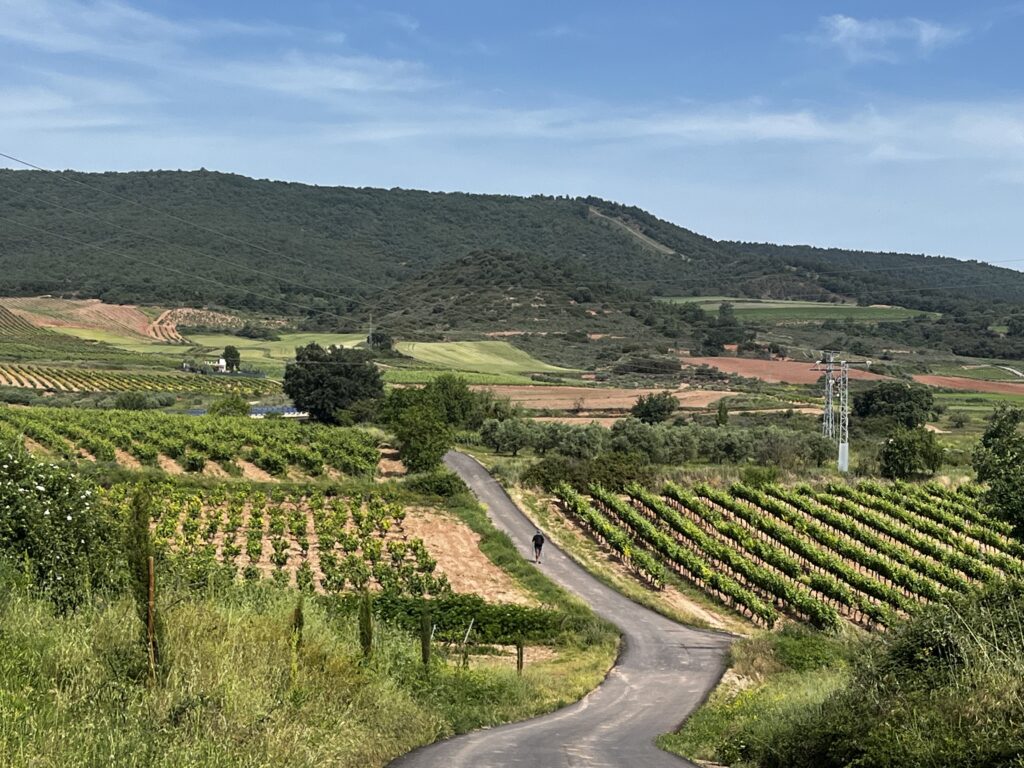
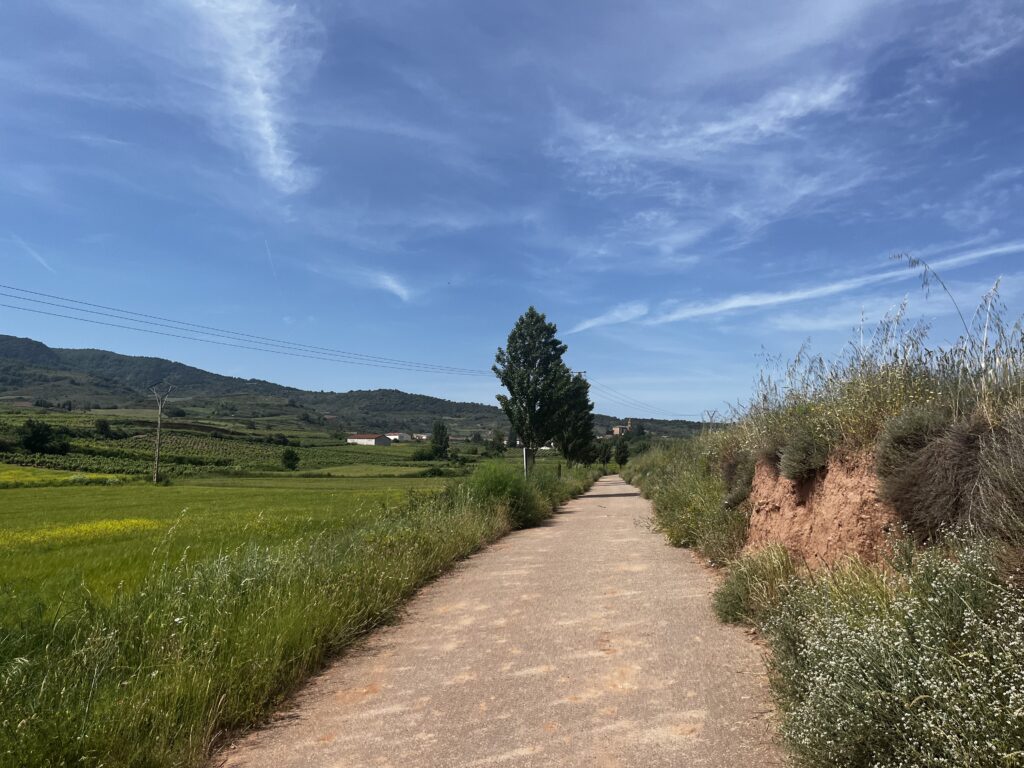
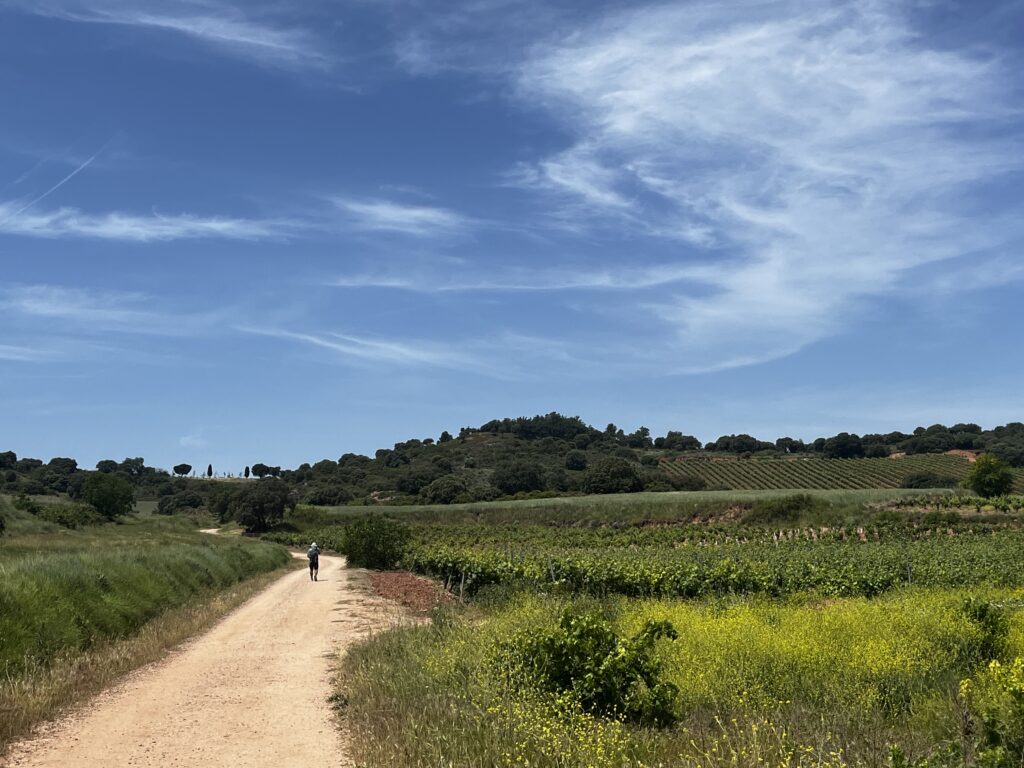
Just past the lake, the path became the broad gravel we’ve been used to for the past few days, and it continued out through trees and into the hilly countryside, flush with vineyards.
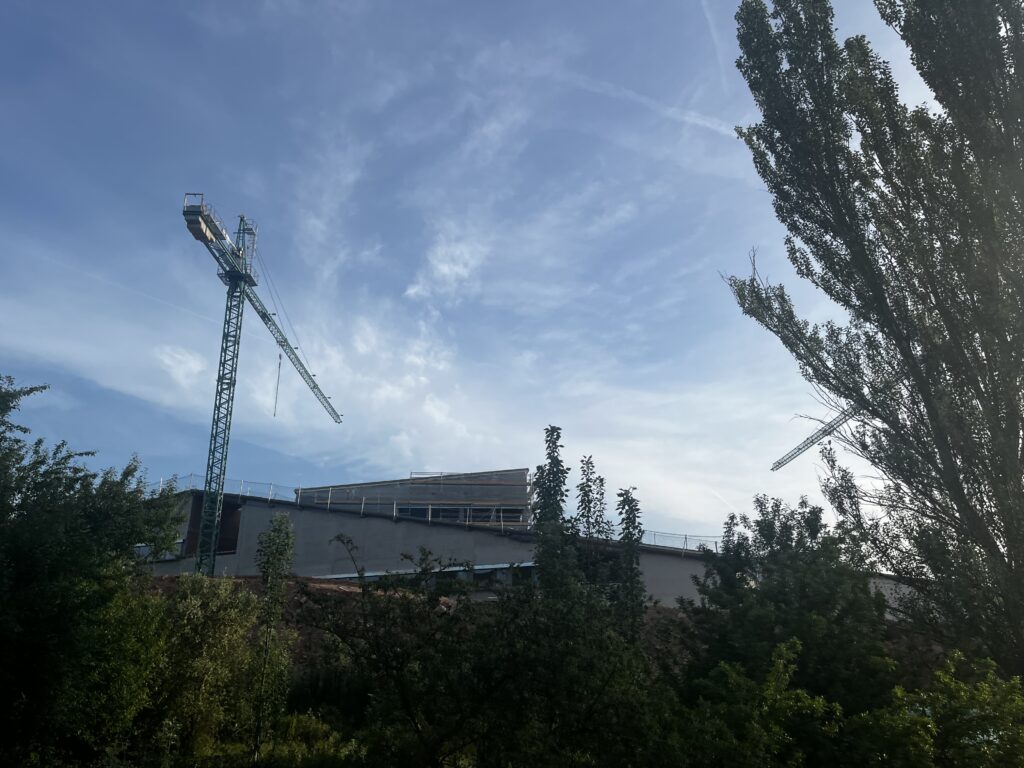
About 8:10, with a vineyard to one side, we passed by some ongoing construction of what appears to be a factory. The Camino is changing, and so must I.
There was a short section of concrete road after this, perhaps half a kilometer, before we returned to the gravel.
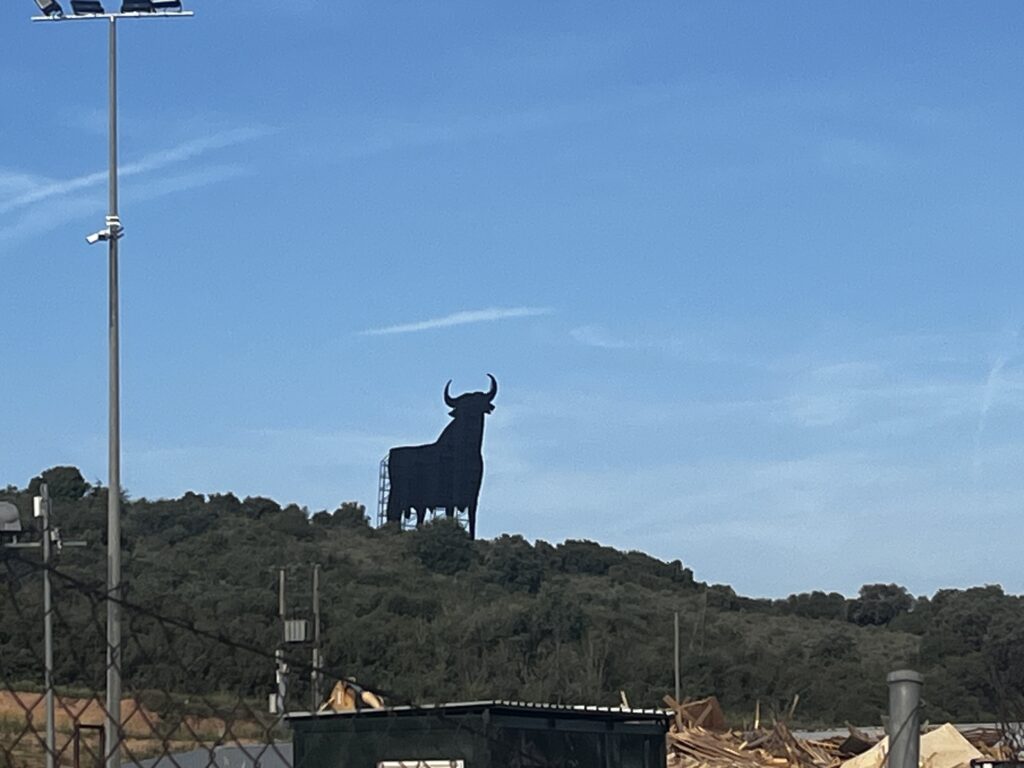
At about 8:25, the Camino joined a narrow asphalt road? Bike path? parallel to and above a busy highway. It was along this section that we passed the Bull – a long ago advertisement that has somehow now become a sort of cultural icon here.
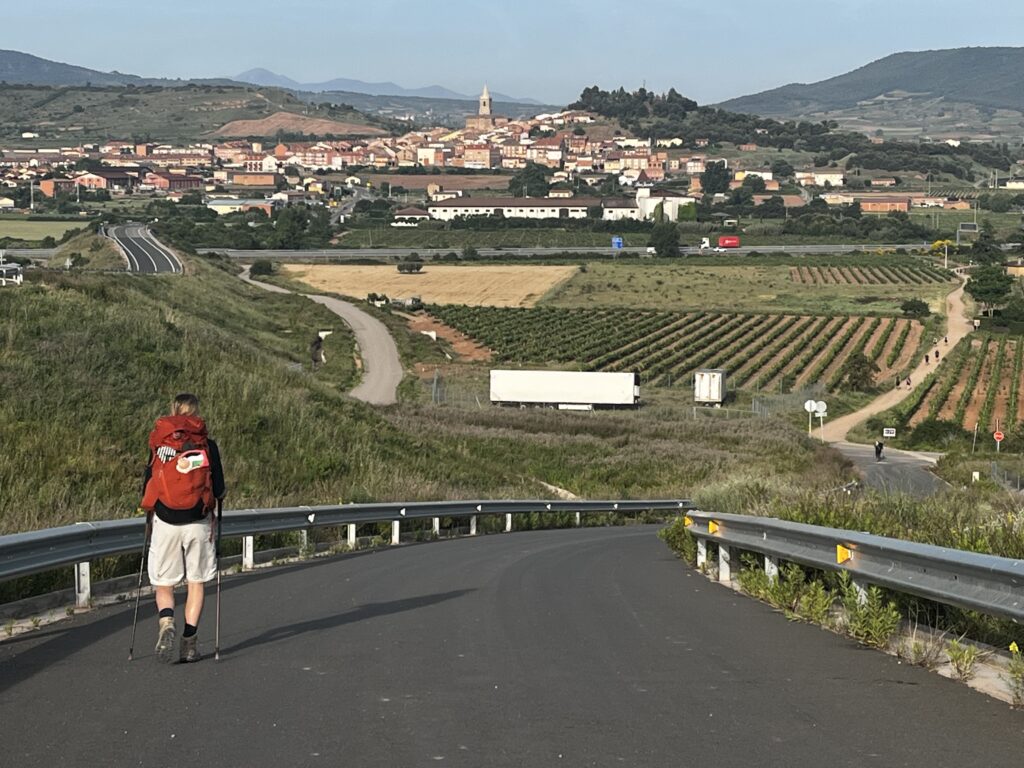
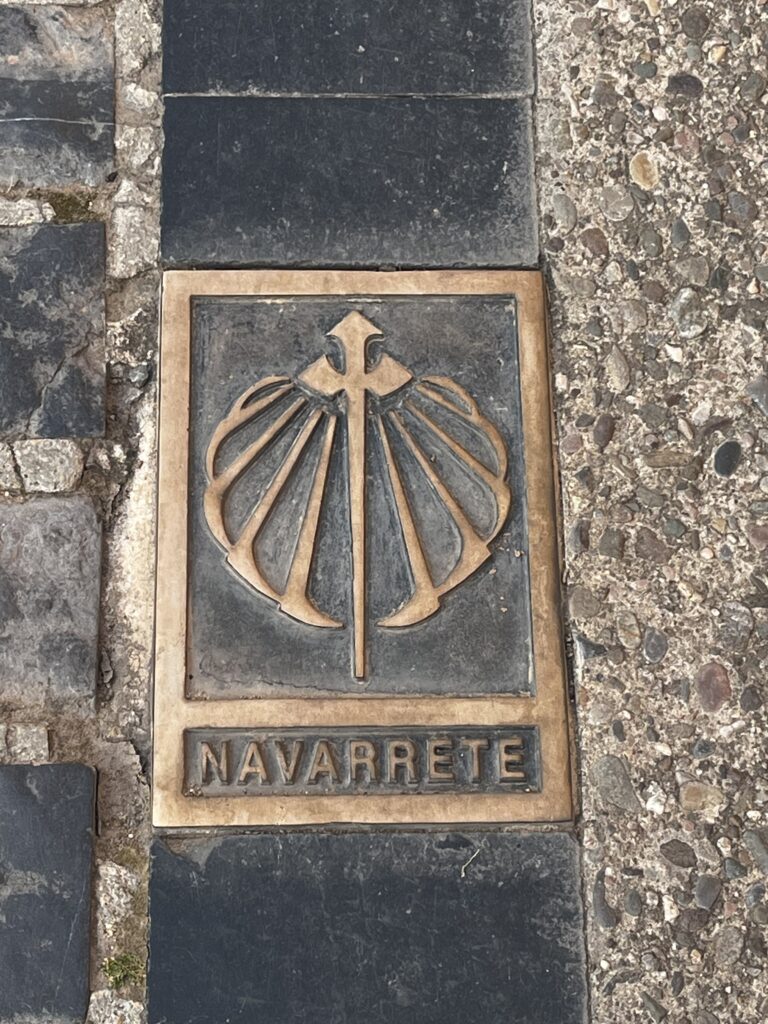
About 8:40, we crossed over the highway, which was strangely silent. From here, we could already see the village of Navarette, our next destination. It was one hill over, so we descended into the valley and climbed up the other side.
As we entered the village, we passed the ruins of San Juan de Acre, the original medieval pilgrim hostel here. From the road, we took some flights of wooden steps up into the village.
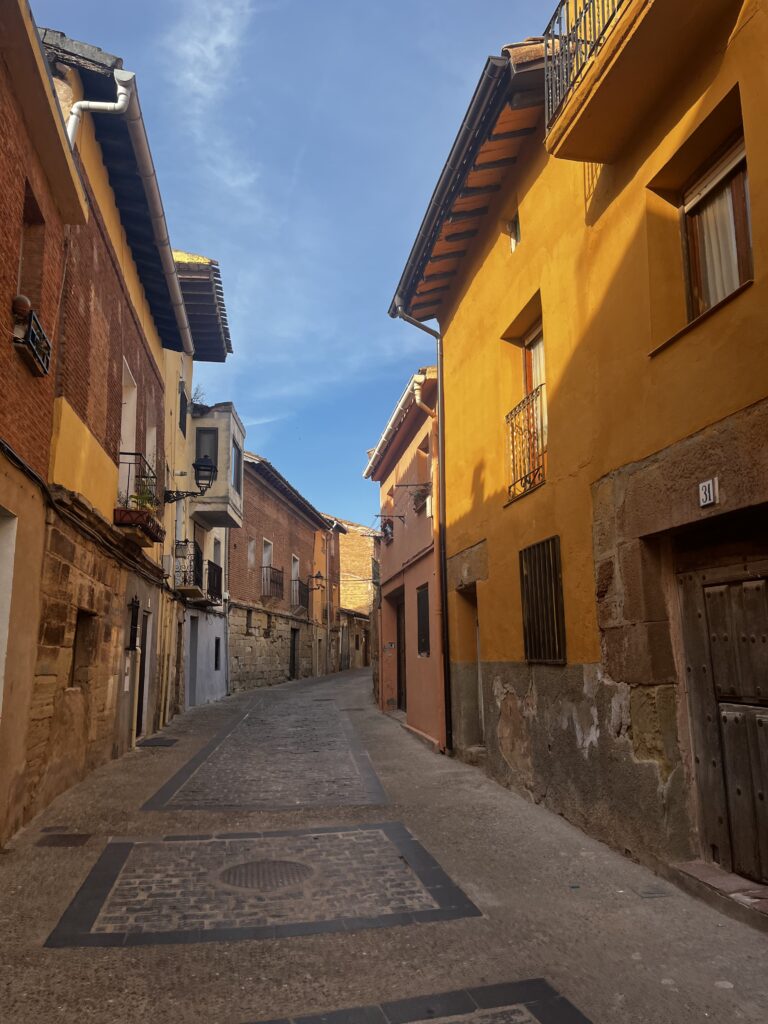
We entered the medieval center of Navarrete just after 9 AM. We stopped for a snack of café con leche and tortilla Español.
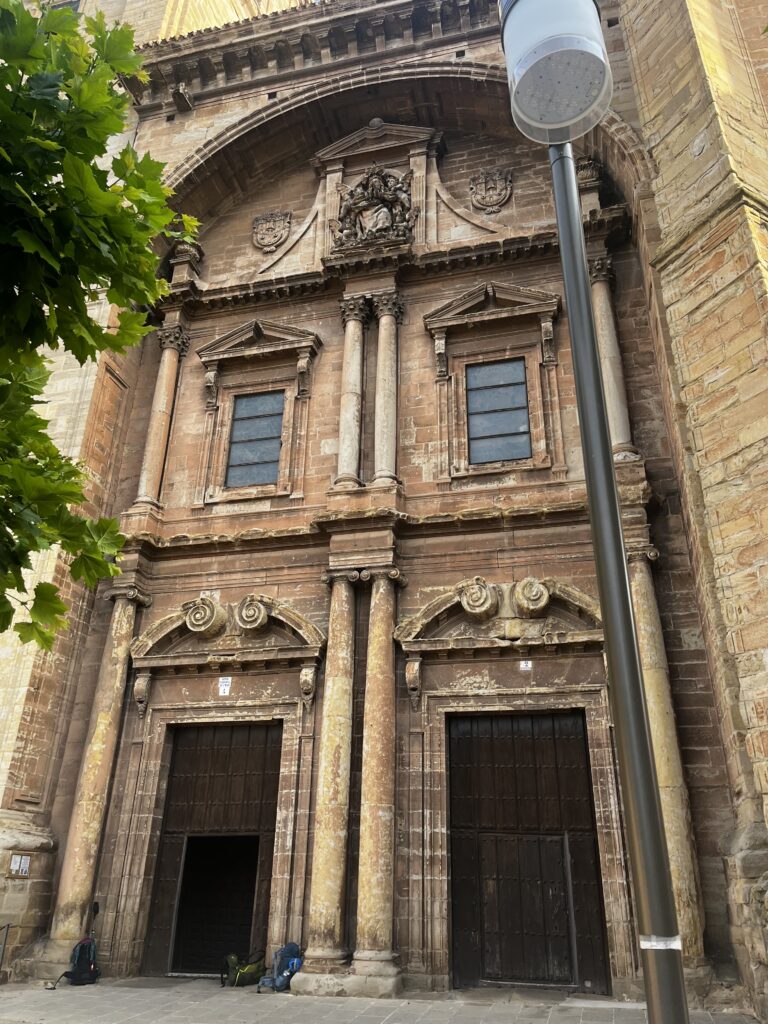
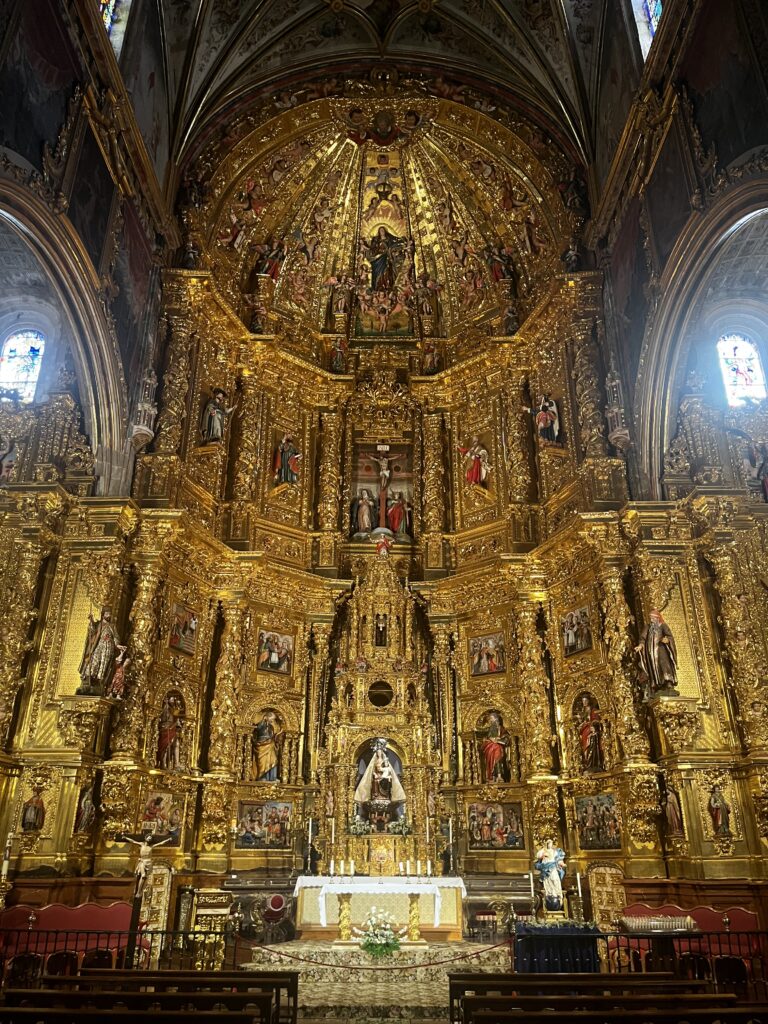
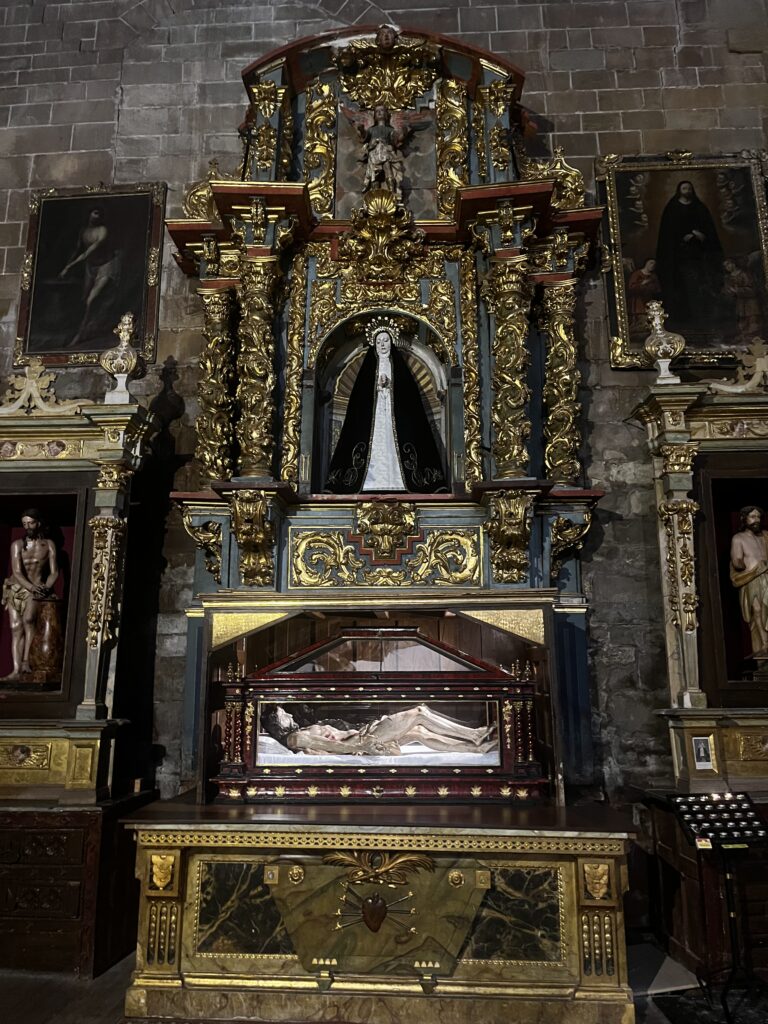
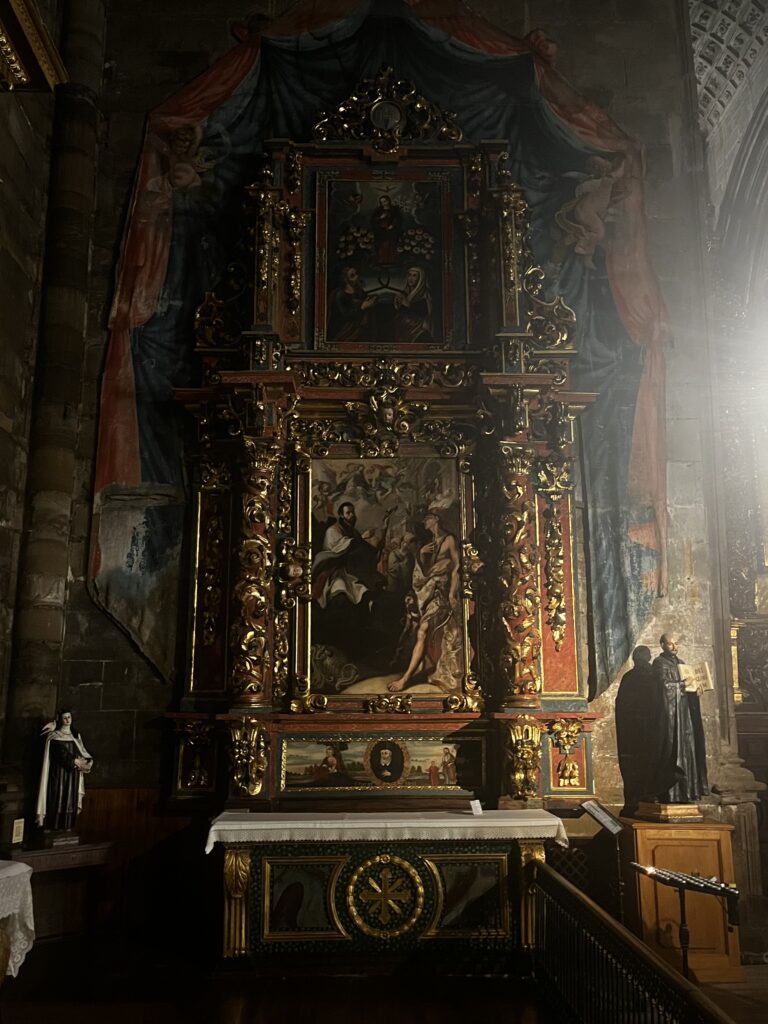
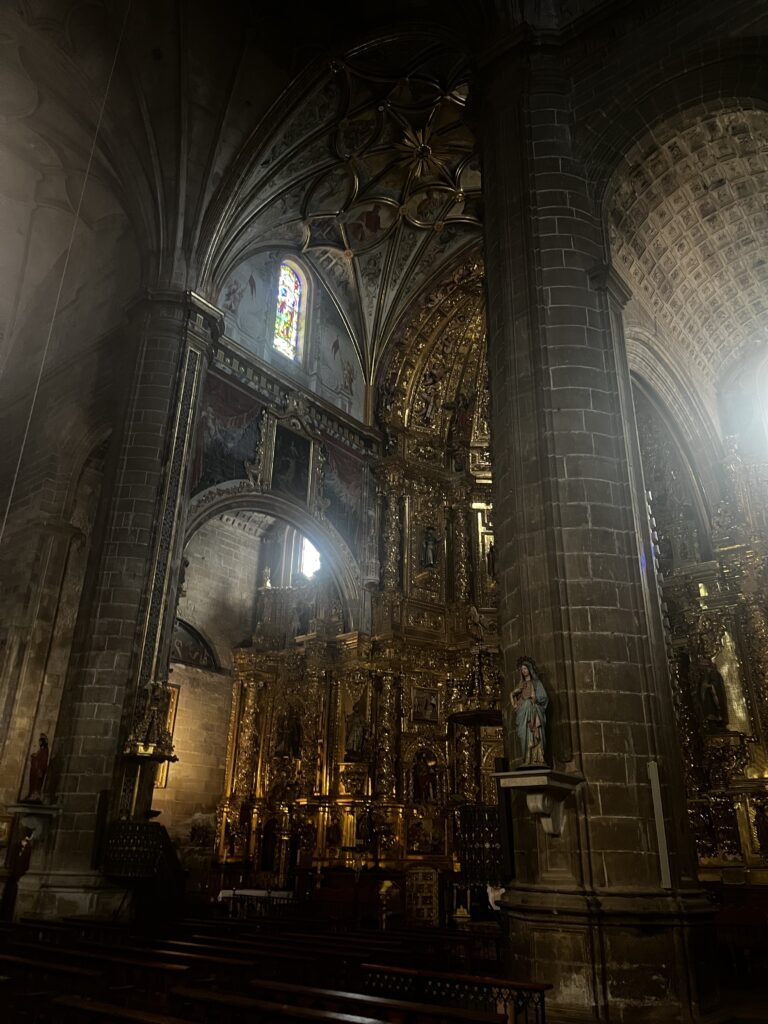
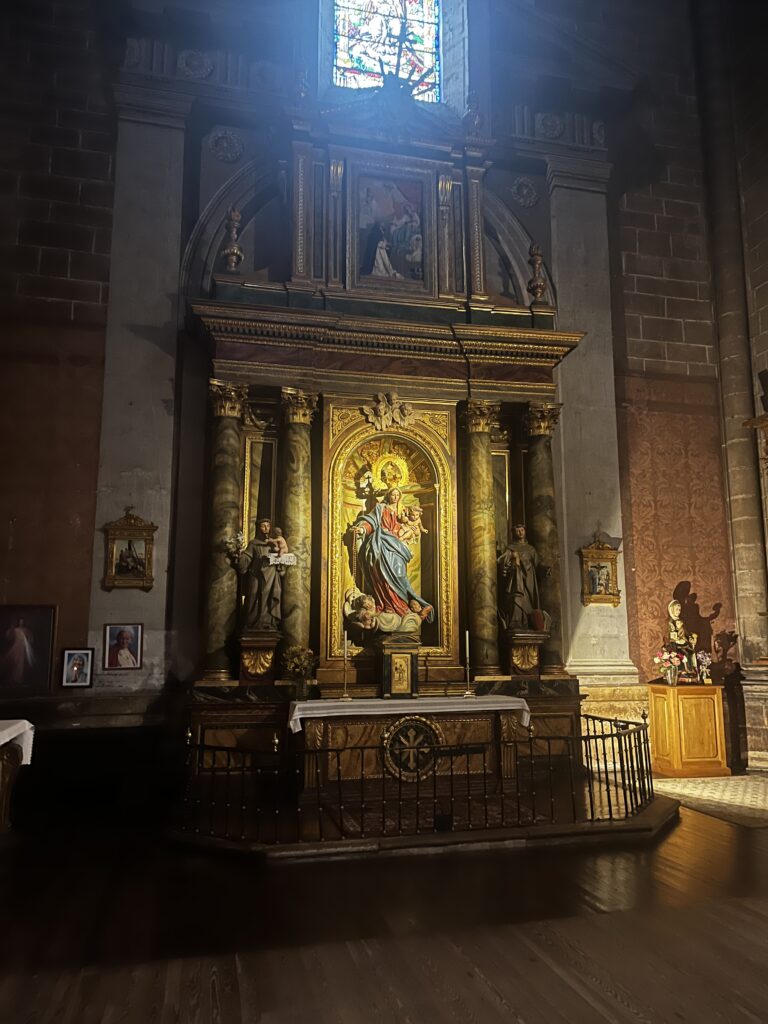
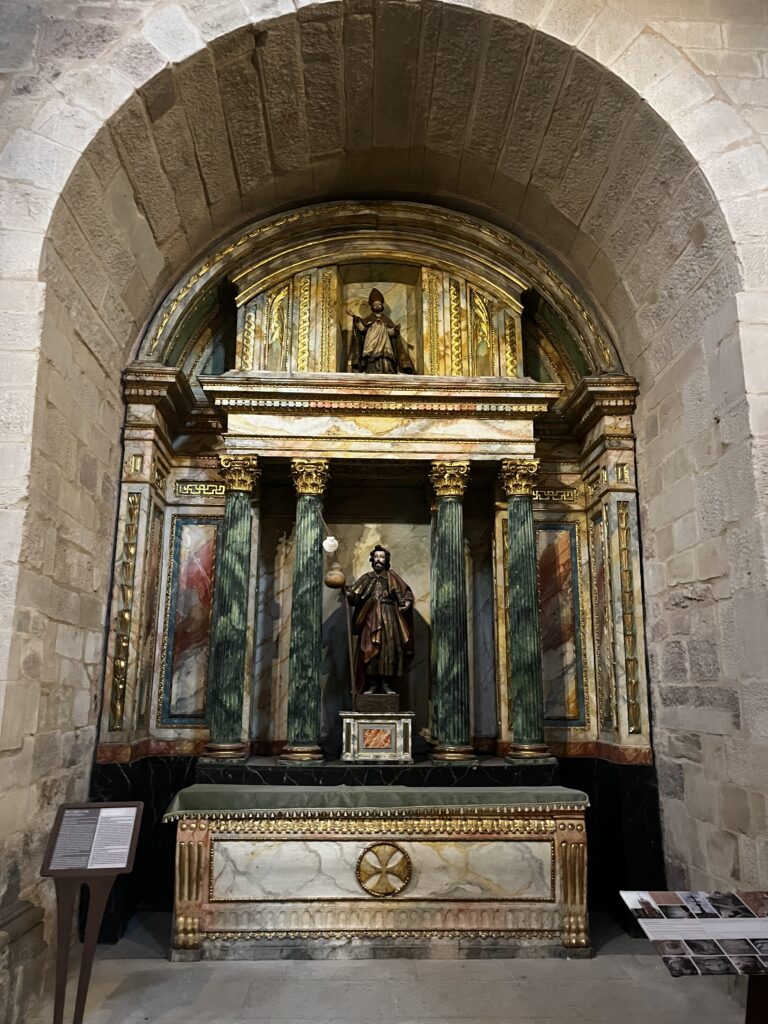
The reredos and high altar of the little parish church in Navarrete is one of the true wonders of the Camino. Almost any of the side altars – and I counted at least eleven of them – could worthily serve as a high altar in almost any parish church in the world. And they are surpassed by the three stories of Baroque gold that shines from the sanctuary.
I remember the first time I walked in here I gasped. Even the confessionals are gilded.
Any description of this church will fail to convey the sense of astonishment and wonder that one feels while standing here. Even the photos can only capture the image, not the sense of place.
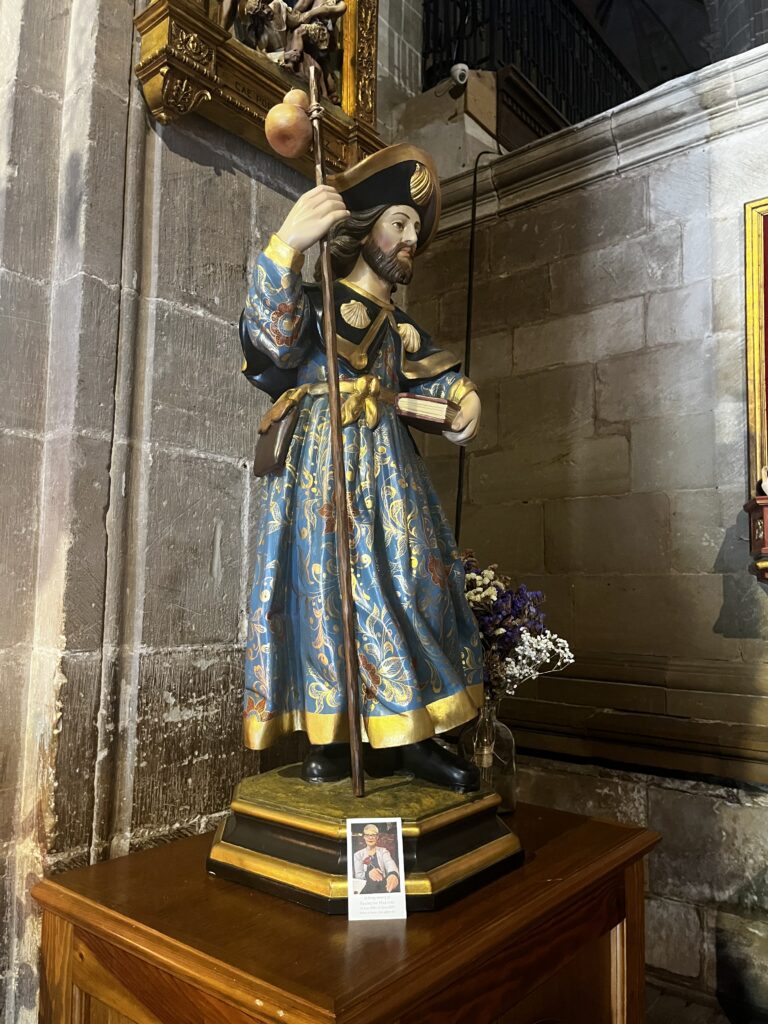
If gape-mouthed wonder is a form of prayer, millions of pilgrims have prayed here. I prayed here, both in that way and in the more traditional way. I lit a candle, and I left Francine’s card leaning up against the little shrine to Santiago.
We didn’t begin walking again until almost 10:25.
We were back on the gravel path before you knew it, up and down through hills, vineyards and meadows. Herve and I fell in with Eric from Colorado and had a great conversation. This is the third Camino.
At some point the gravel road began running next to the highway. Not my favorite, but at least there were vineyards on the other side. I could feel the heat radiating up from the ground. I was constantly wiping the sweat from my eyes.
At about 11:30, Herve and I took the alternate route to the village of Ventosa, and Eric continued forward using the cutoff route. I was looking for an immediate café and a large orange juice. Unfortunately, the road into Ventosa is asphalt.
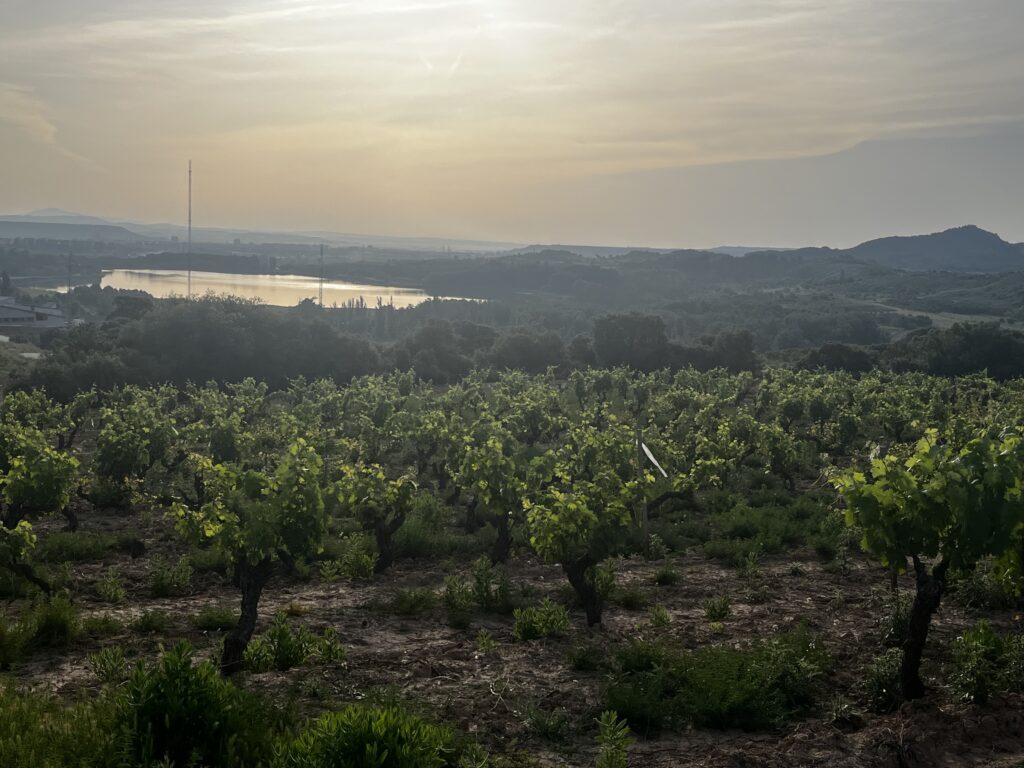
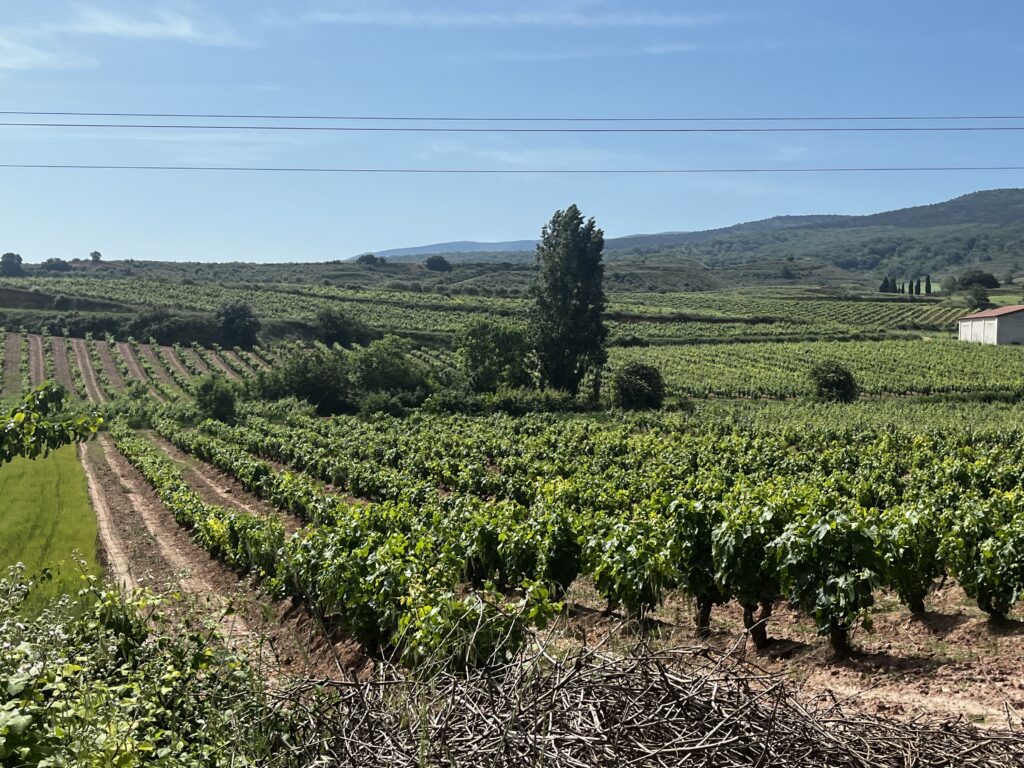
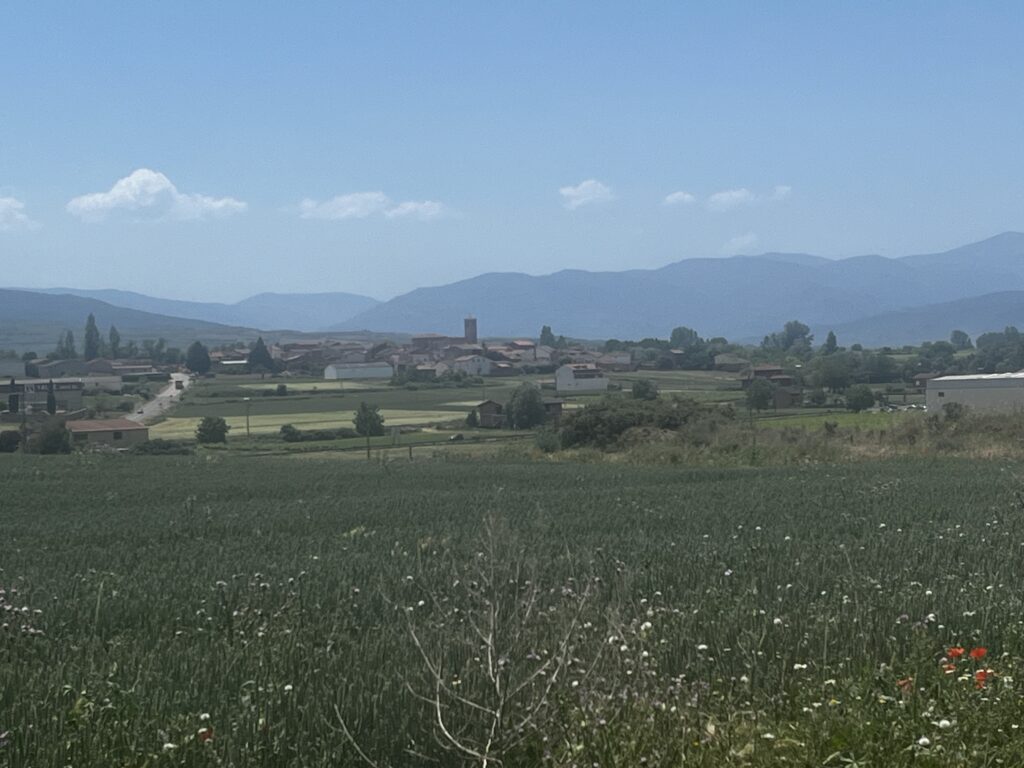
The vineyard valley view into Ventosa was stunning. We arrived at about 11:45, and we had a snack and some drinks. We really needed it.
It was absolutely worth the detour. We met four folks from Bellingham who are walking the Camino, and then Katie showed up as well, so we had a whole table full of people from Washington State. Plus Herve.
We didn’t leave for more than an hour. Probably a mistake.
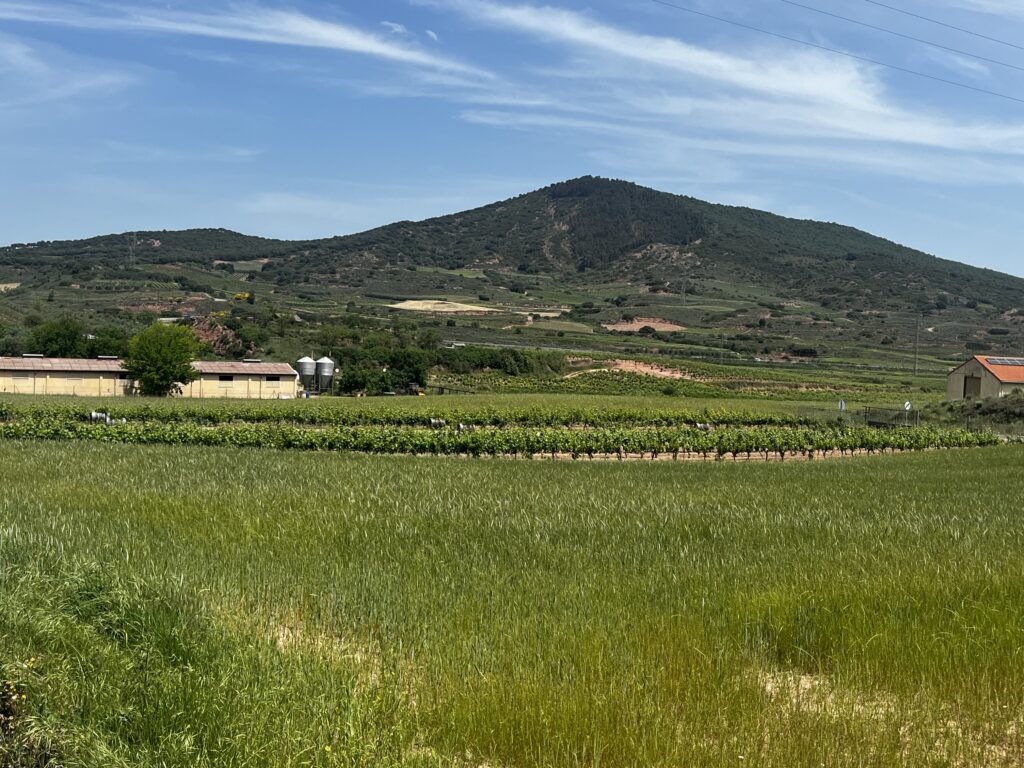
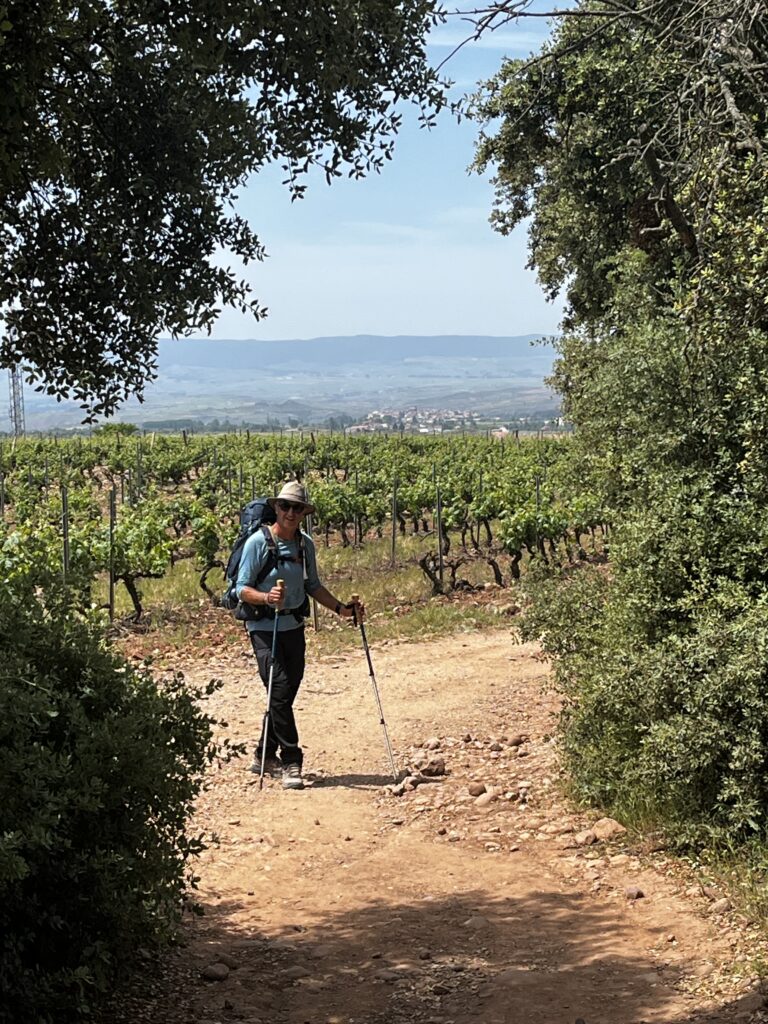
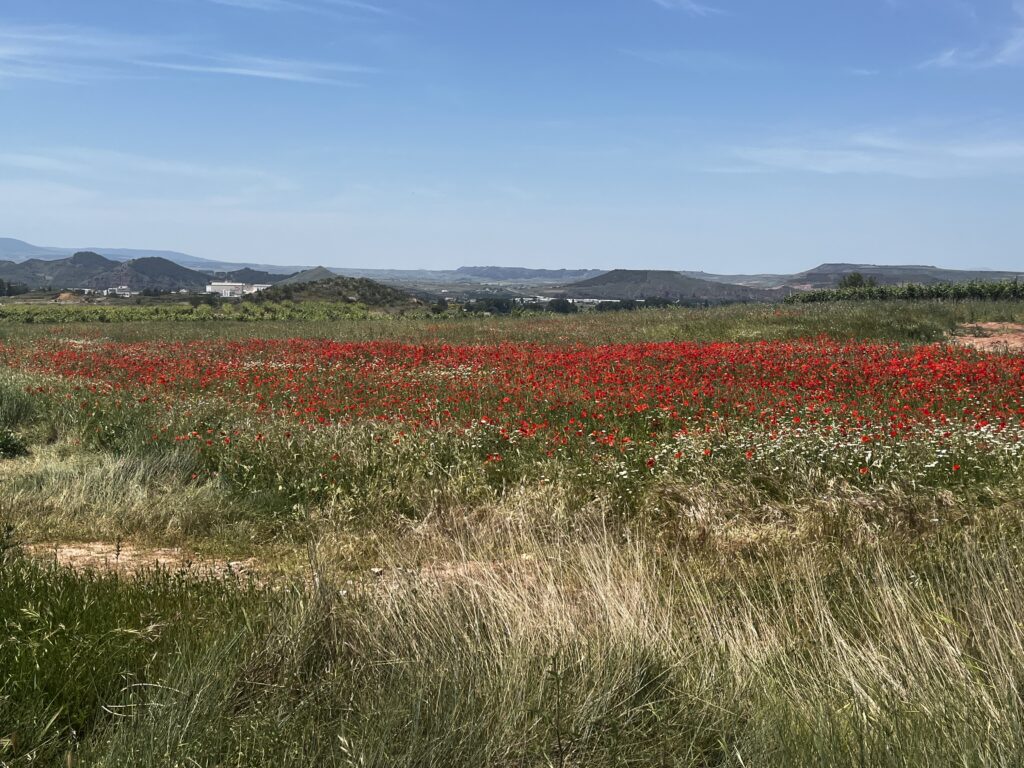
Soon enough, we were back on the gravel road through the rolling vineyards. As we progressed, the gravel receded and soon we were walking a simple dirt path, full of stones. Vineyards rolled on the hillsides away from us, and in the distance we could see the valleys and the mountains to come.
Hervey and I talked as we walked, about love, and loss, and living.
In the last little bit before the town, we occasionally caught snatches of a cool breeze. It was positively heavenly. By now, my shirt was encrusted in salt from my sweat.
Heading into Najera was bewildering. I remember this as a bit of a slog but a relatively pleasant river walk. Now there is earth moving equipment everywhere, and they seem to be rerouting the whole river. It’s a mess.
The final approach into the town of Nájera is not pretty, but it’s a relief when you arrive.
Herve and I arrived in our albergue just before 3 PM. I was so wiped out, I just sat on the floor next to my bed for some minutes.
After the usual pilgrim chores, Herve and I shared a cold drink with a pilgrim from Belize. Then I walked to the Monasterio de Santa María la Real.
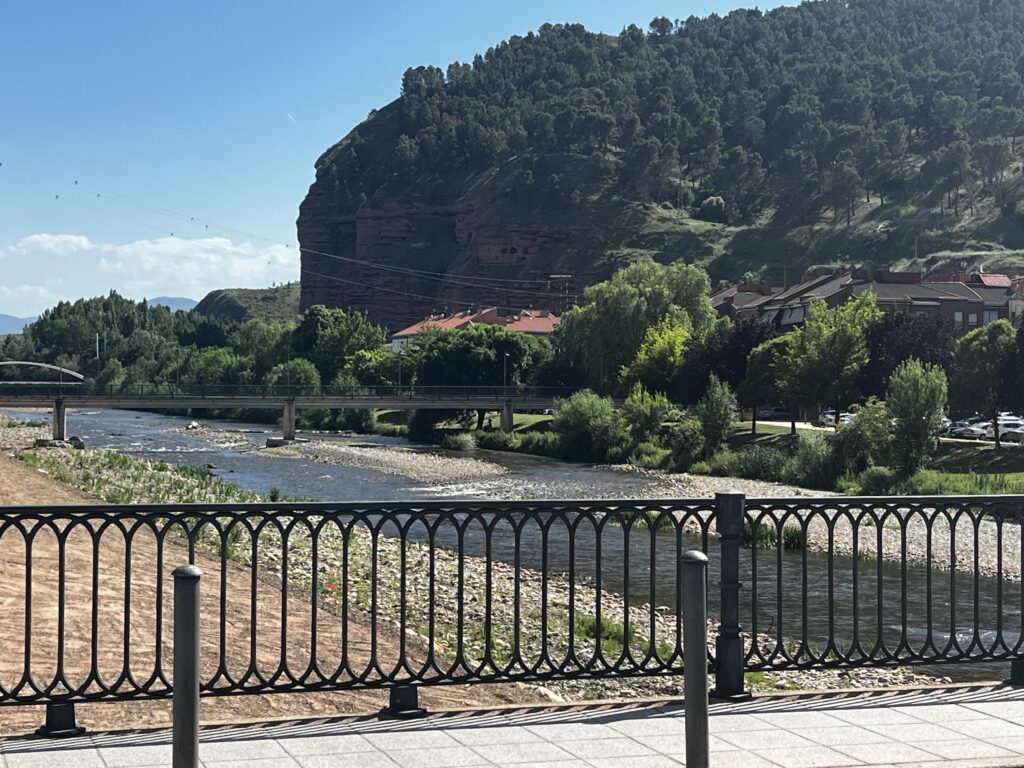
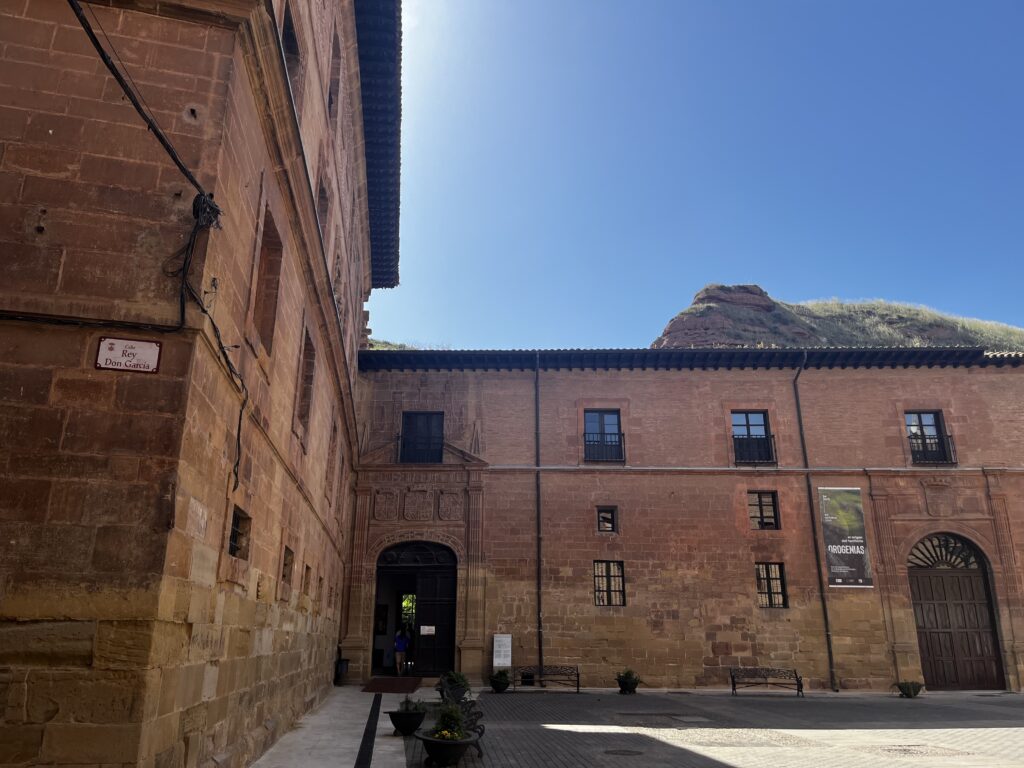
What’s another kilometer or two between friends? I walked into the old section of town, crossing a bridge over the Río Najerilla. The river was very low. I passed two locked churches before arriving at the monastery.
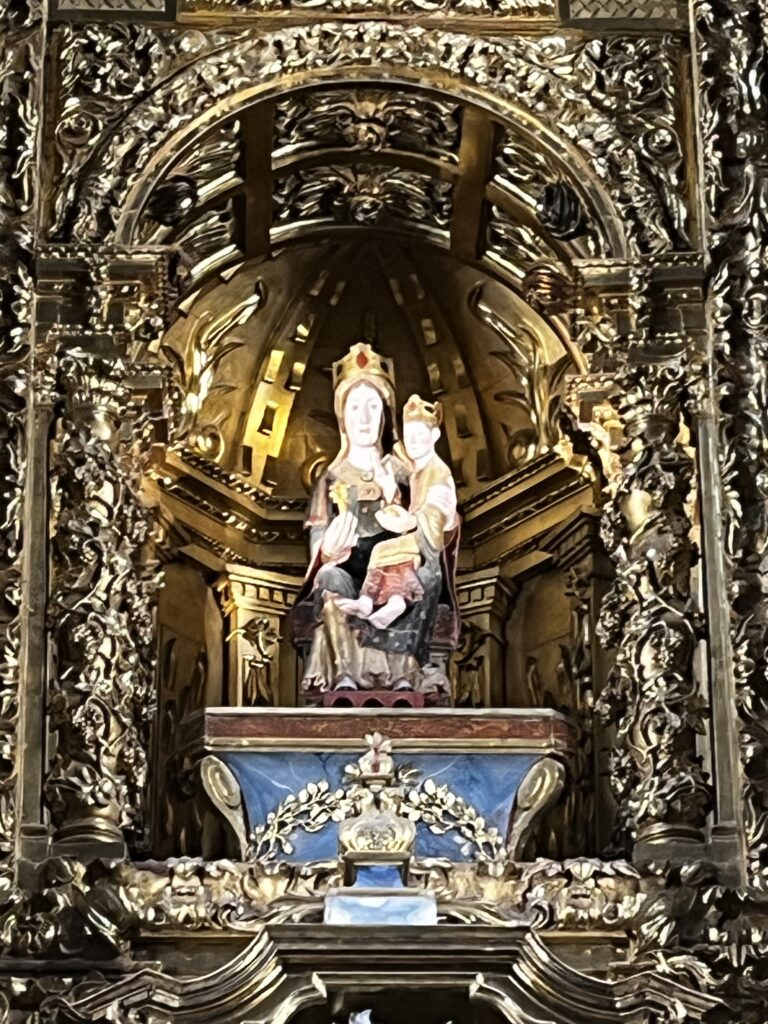
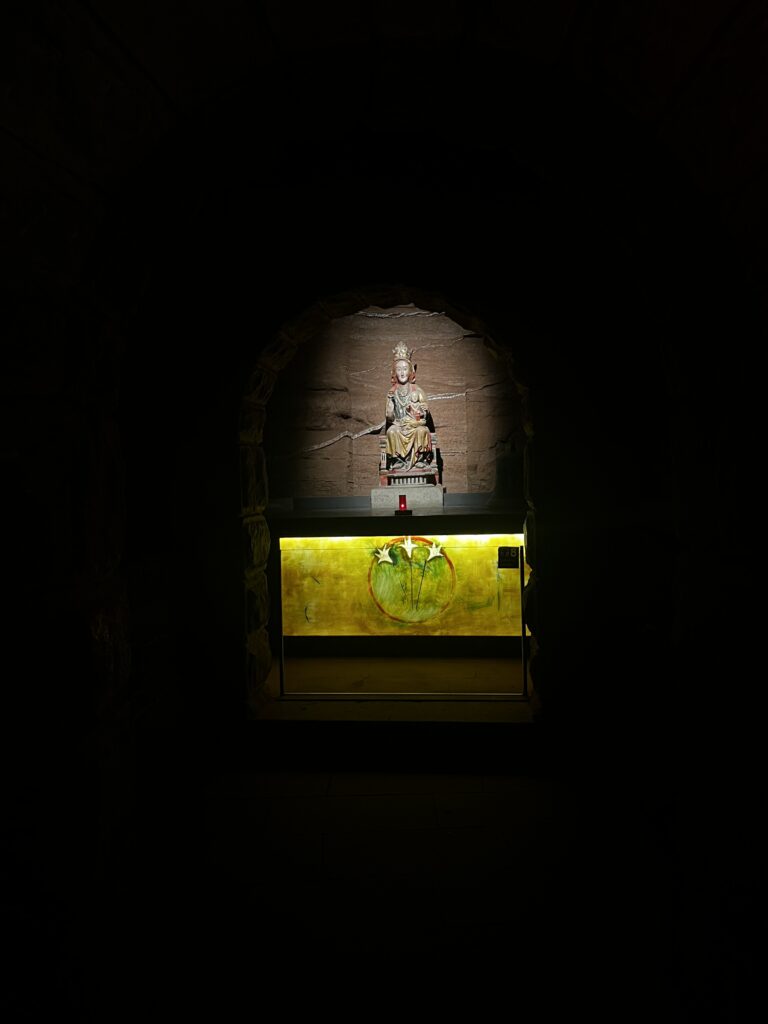
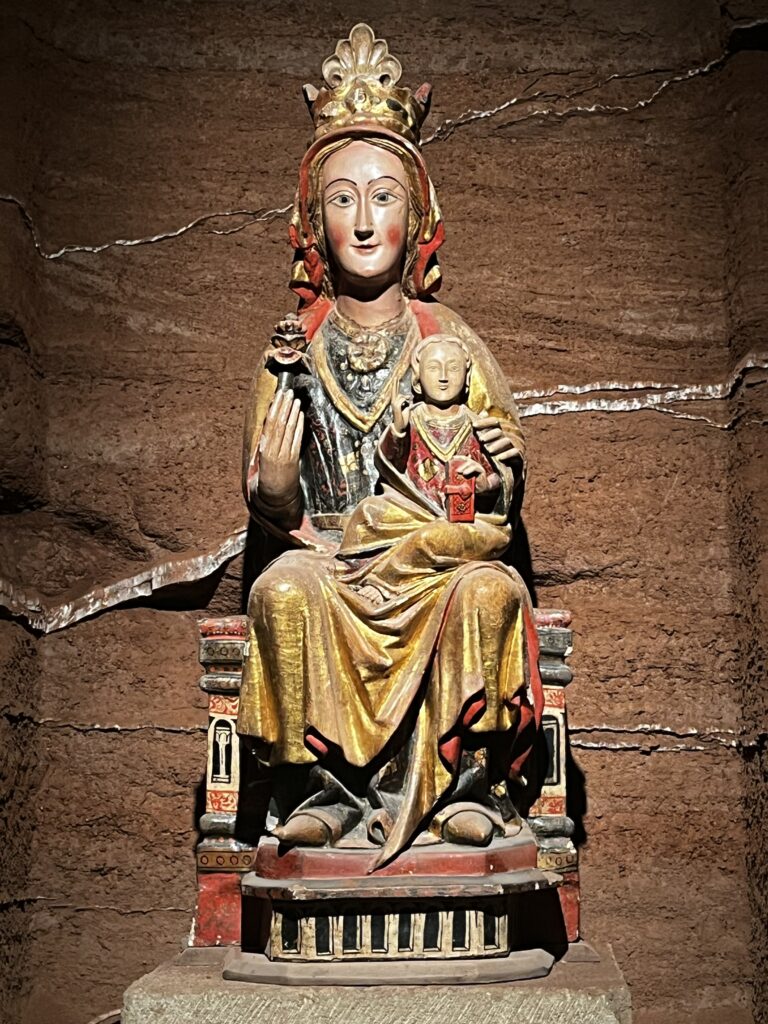
The foundations of this place date to the 11th-century King Garcia III. The story goes that as the king was hunting along the riverbank, his falcon flew into a nearby cave. He followed and discovered a beautiful statue of the Virgin with a vase of fresh lilies, a burning oil lamp, and an old church bell.
Modern theory is that these were hidden by the Christian Visigoths during the Moorish invasions.
Attempts to move the statue proved a failure, as somehow the statue always miraculously returned to her cave by the next morning. Eventually, the king relented and ordered the church (and monastery) built around the cave1.
The tour of the monastery consists of three parts: the cloister, the church, and the Royal Pantheon and cave.
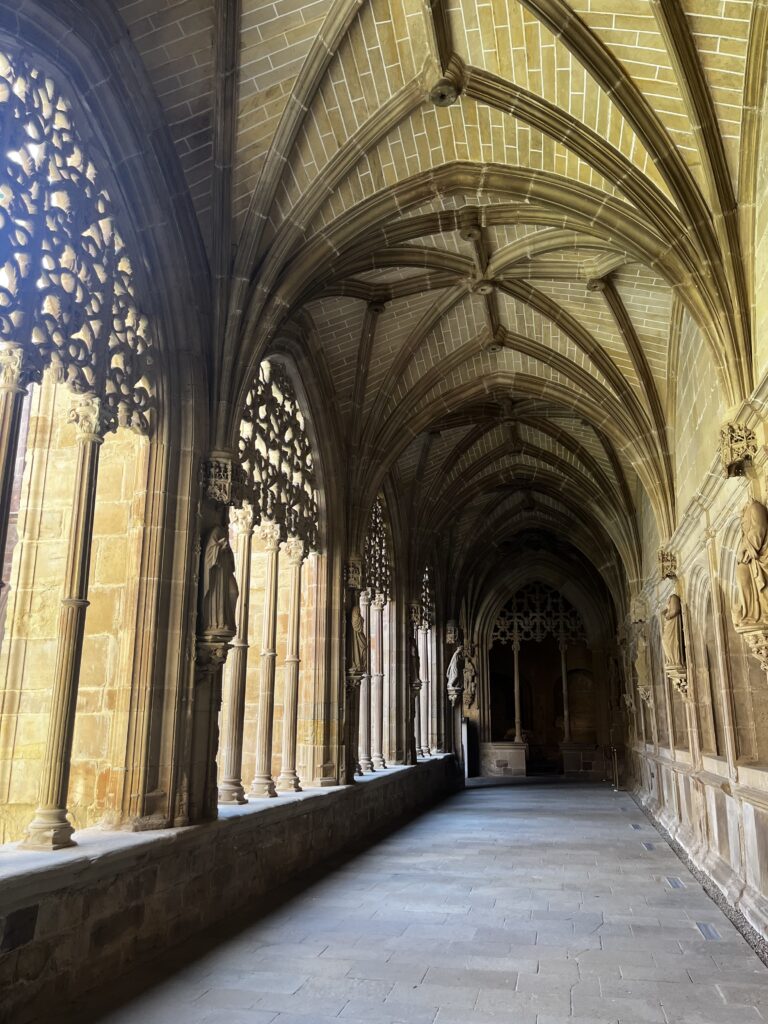
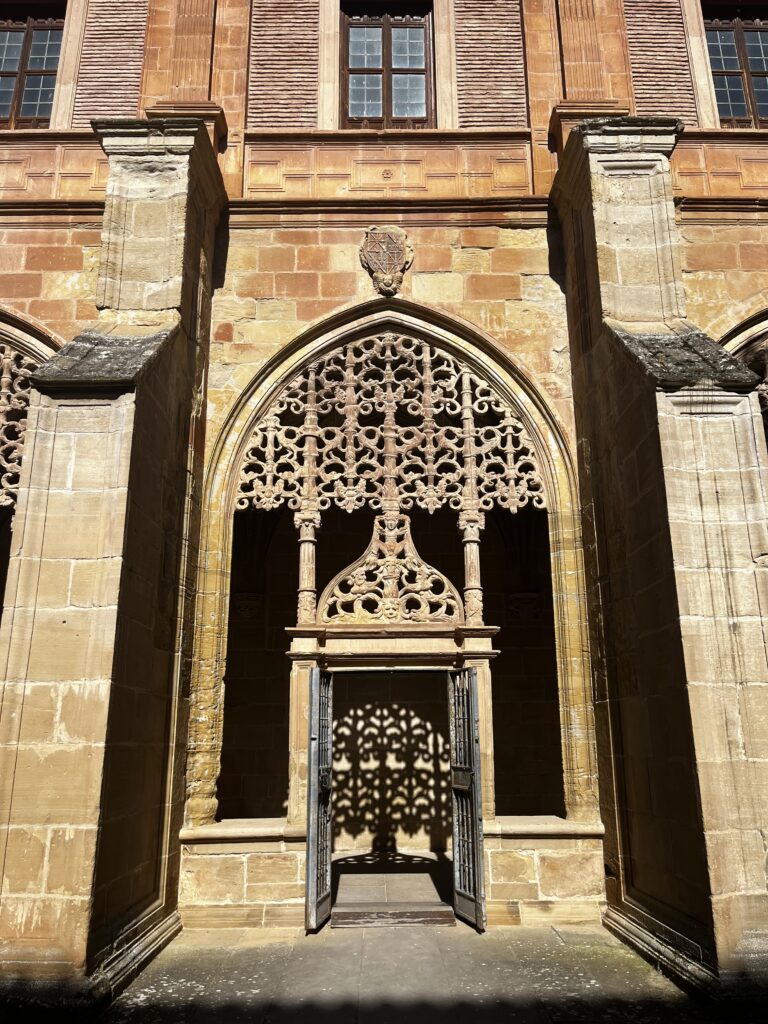
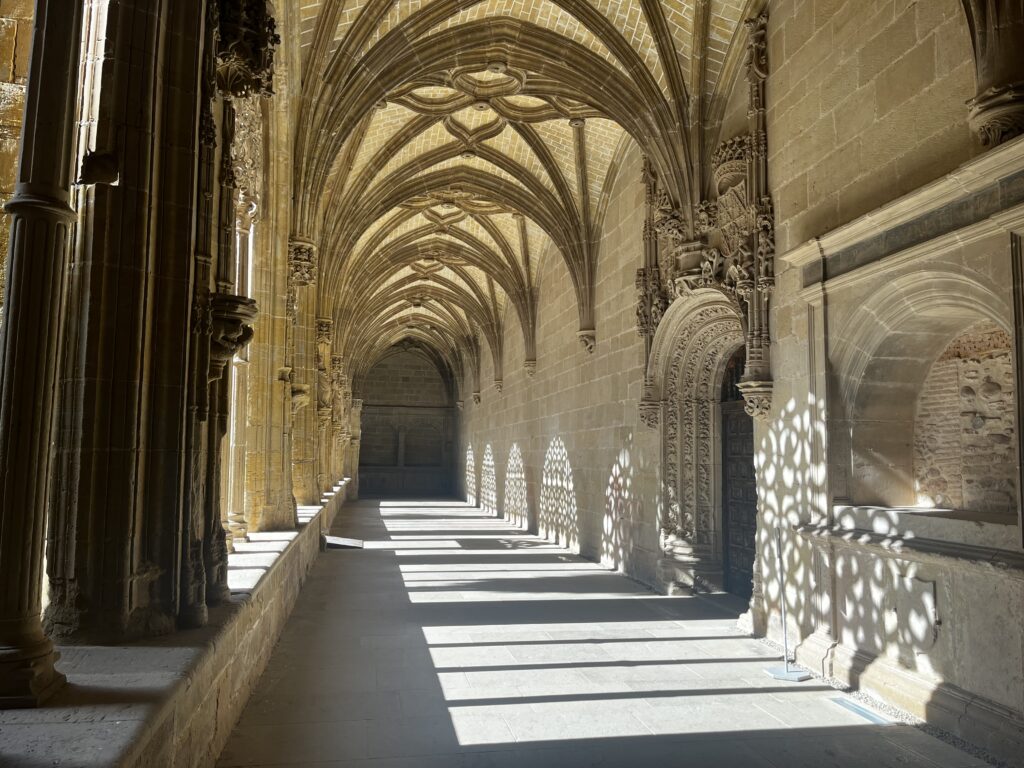
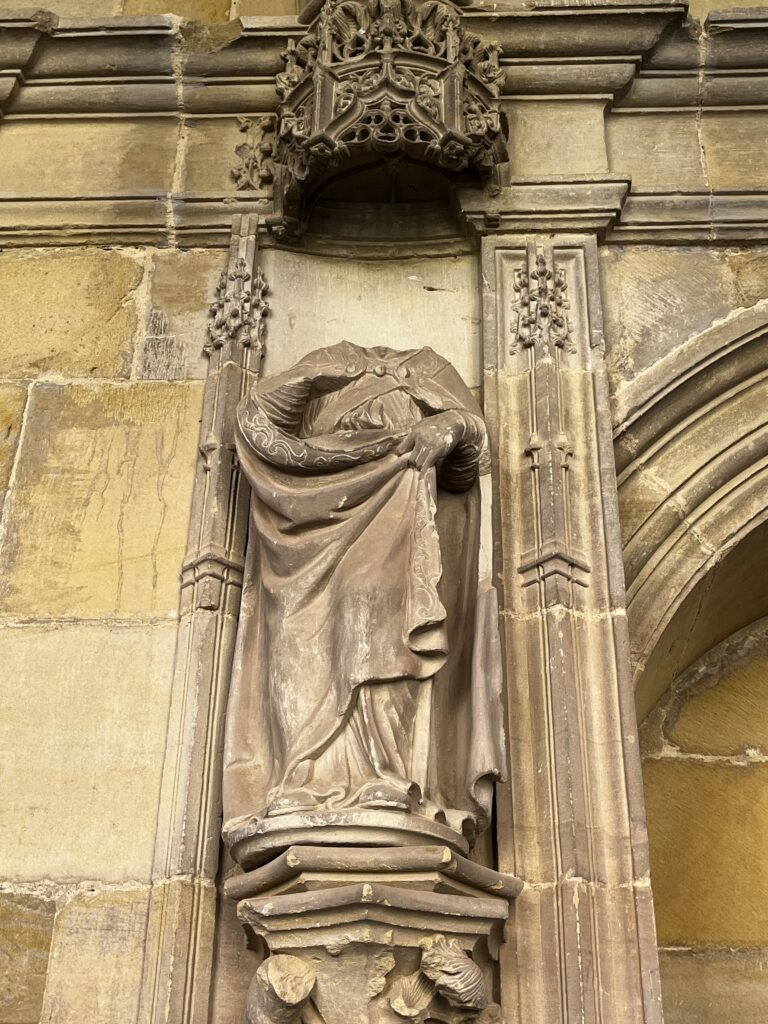
The cloister is elegantly laid out, though the first thing you notice is that most of the statues are missing their heads. This is because when the state seized it in an early 20th-century dissolution of the monasteries, it was briefly a prison. The guards used to amuse themselves by trying to shoot the heads off the statues in the cloister.
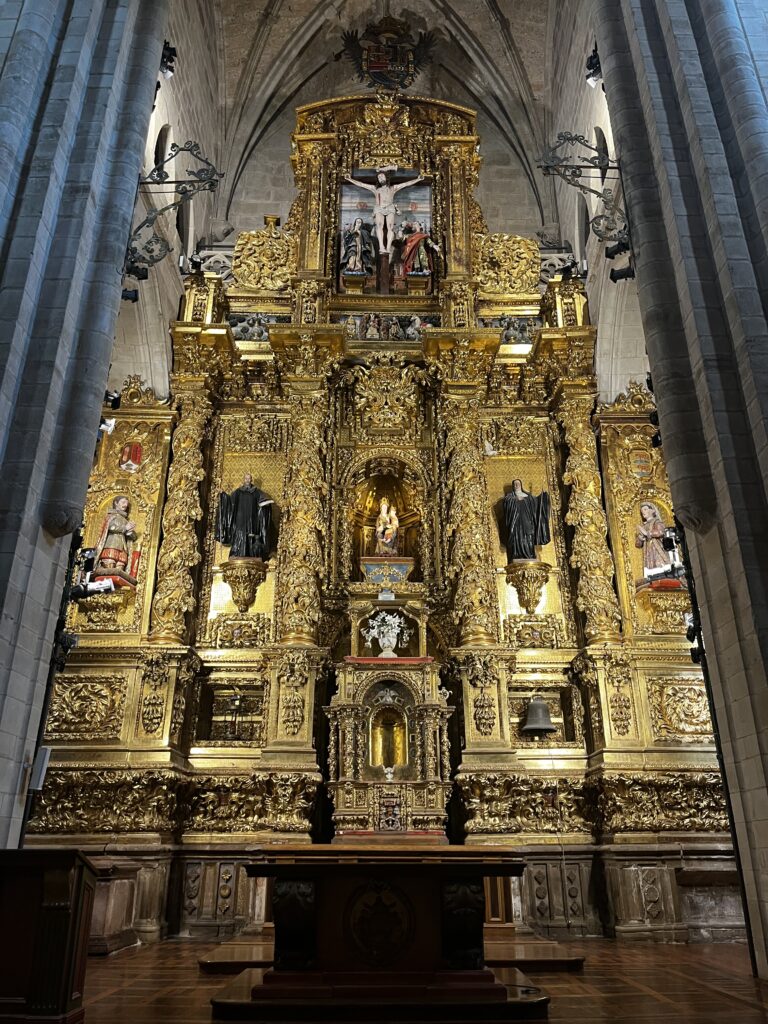
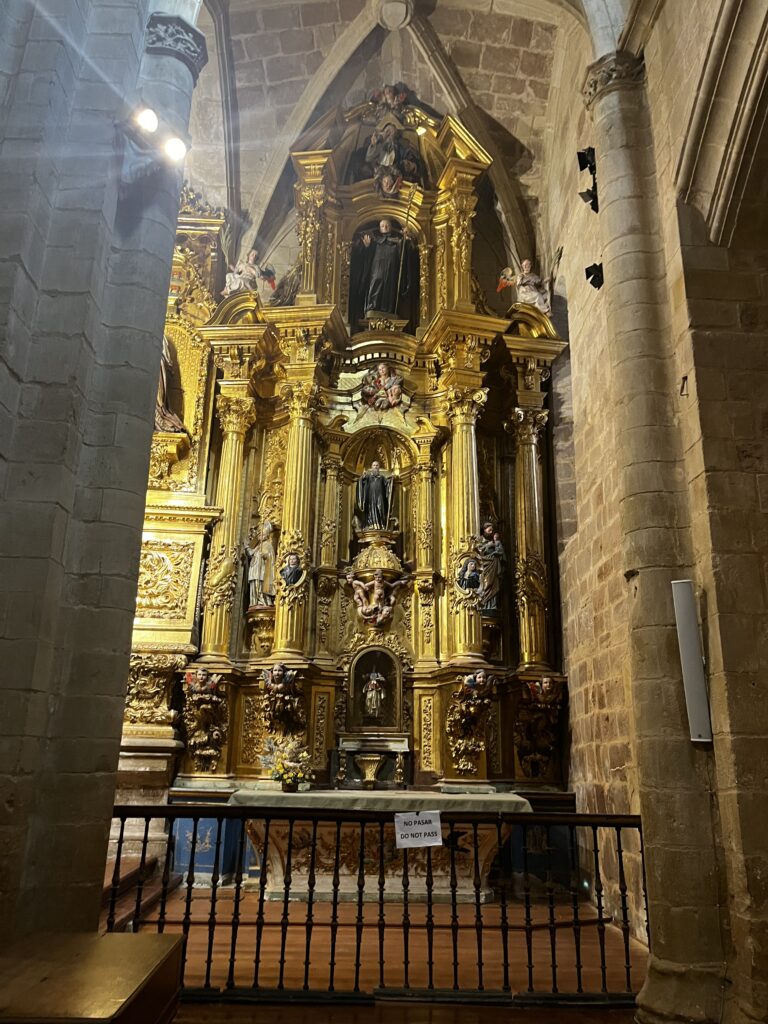
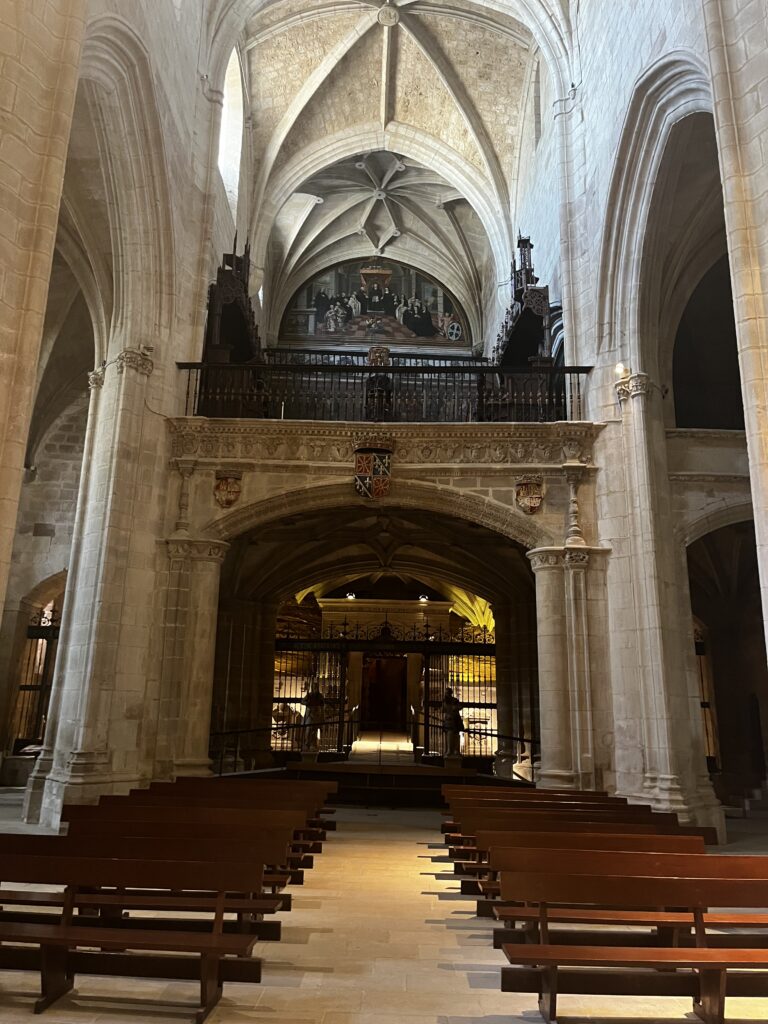
The church is Gothic, though of course this being Spain the altars have all been replaced with giant gold Baroque retablos and altars. The main one features the fabled Virgin and Child in the center, flanked by statues of Saints Benedict and Scholastica. The whole of it is crowned with the arms of Imperial Spain, since this was for centuries a monastery by Royal right.
Despite the ostentation, the church definitely retains a monastic character, even now. The choir stalls are located in the choir loft, which sits directly above the Royal Pantheon.
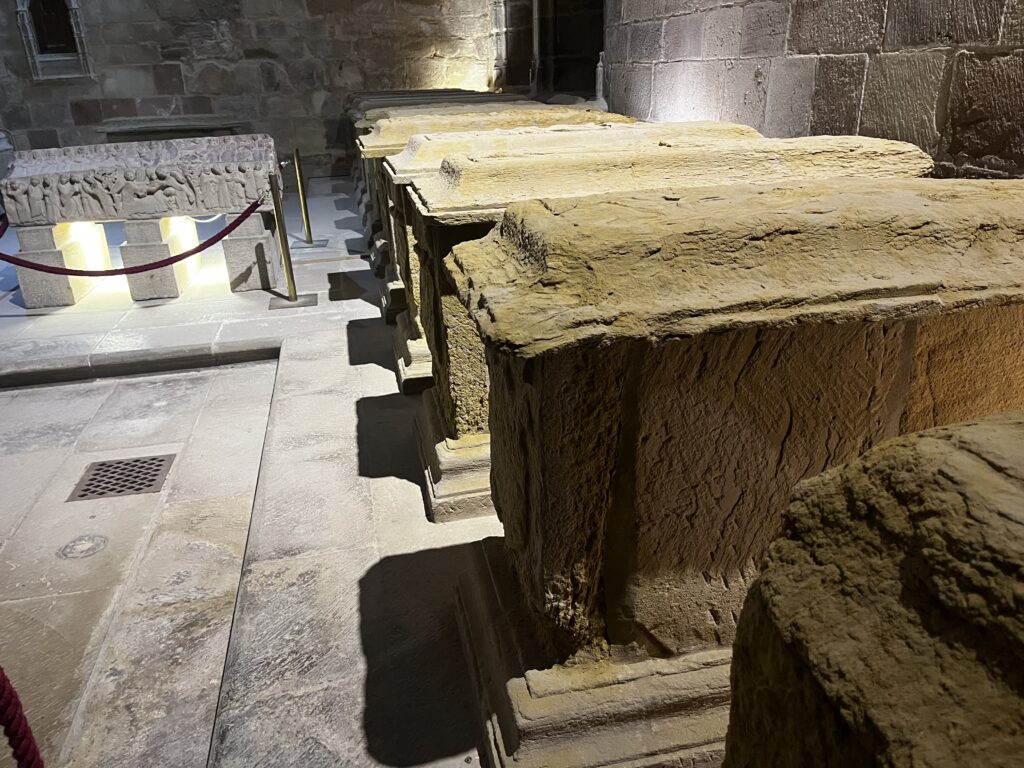
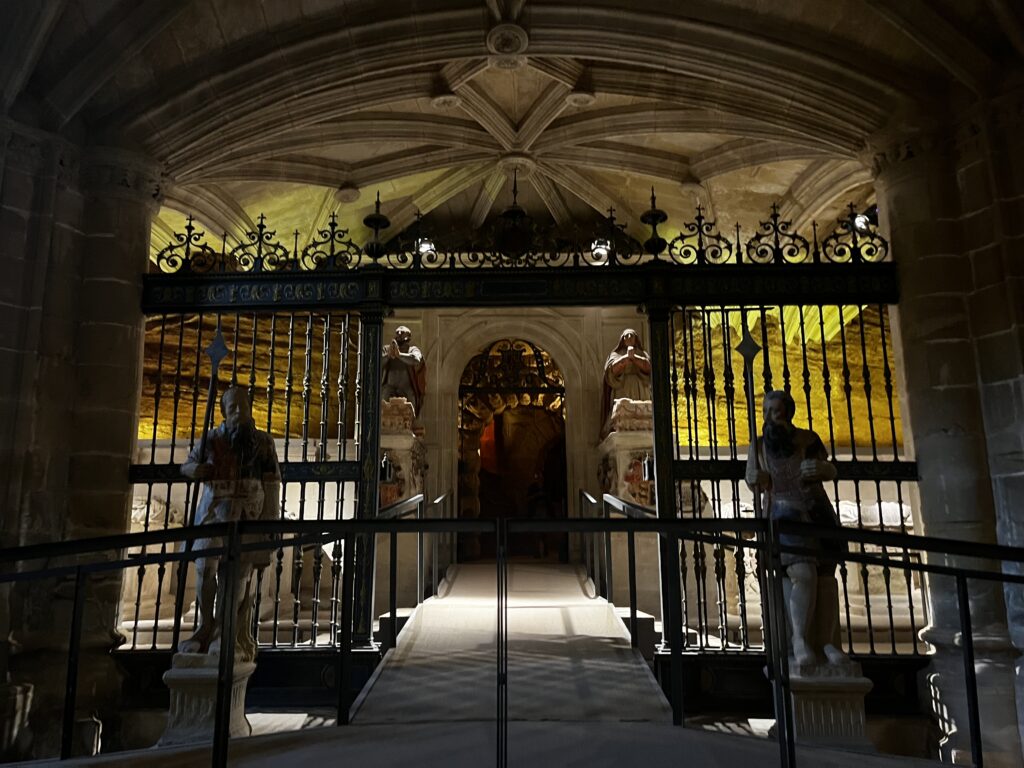
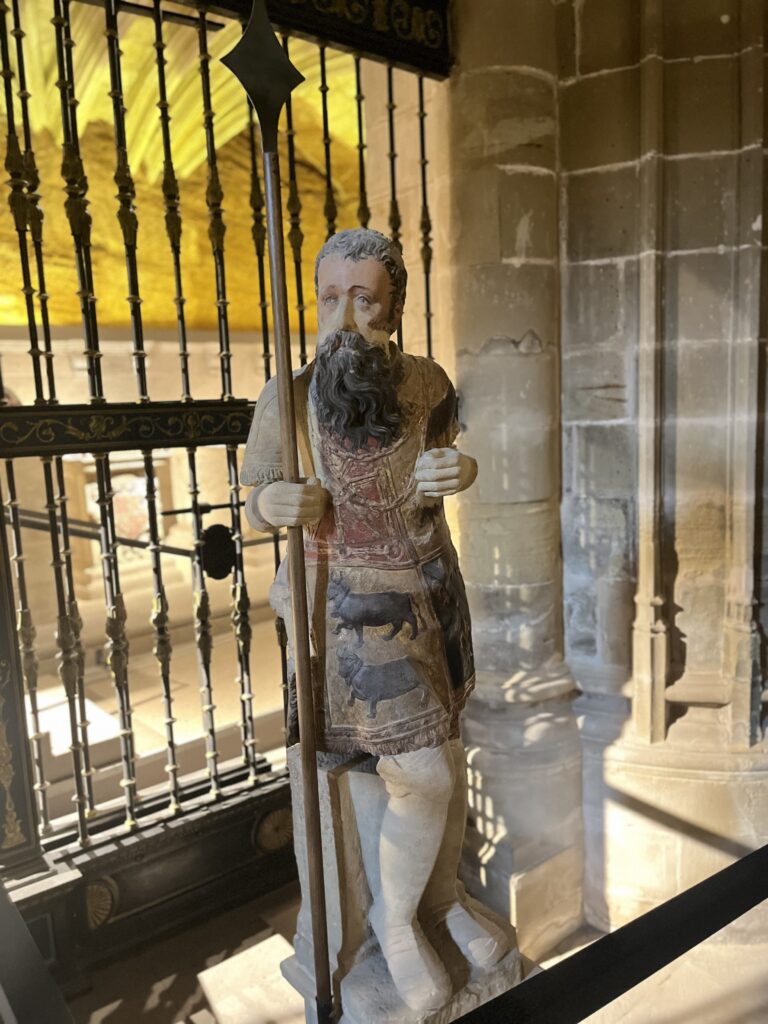
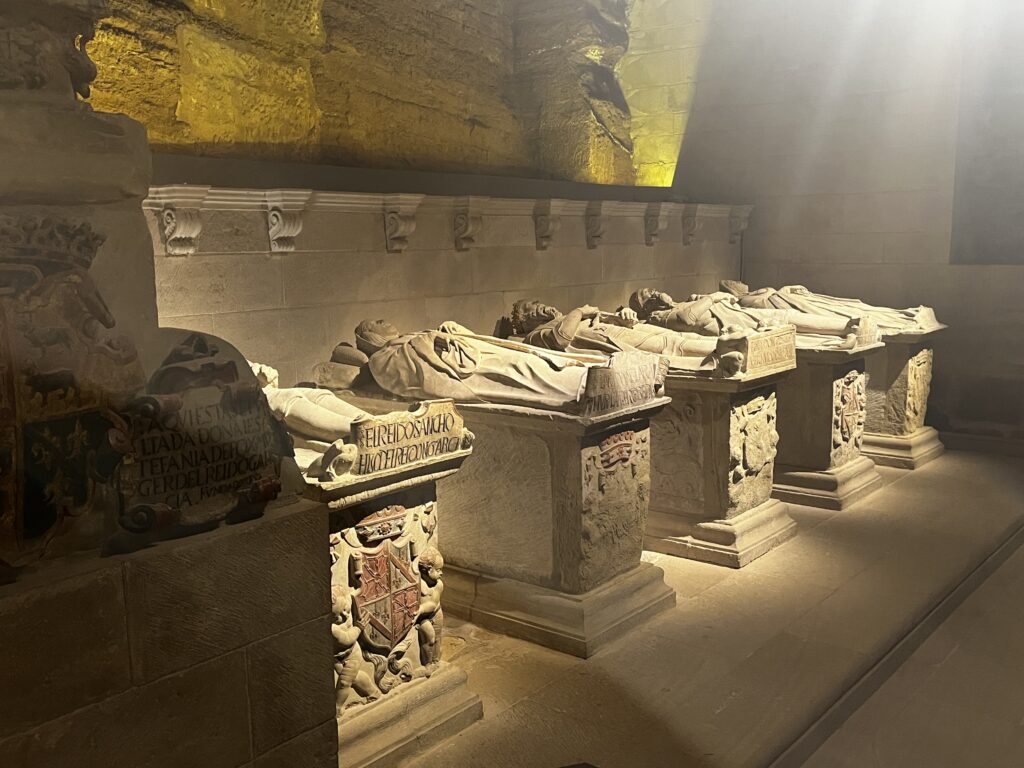
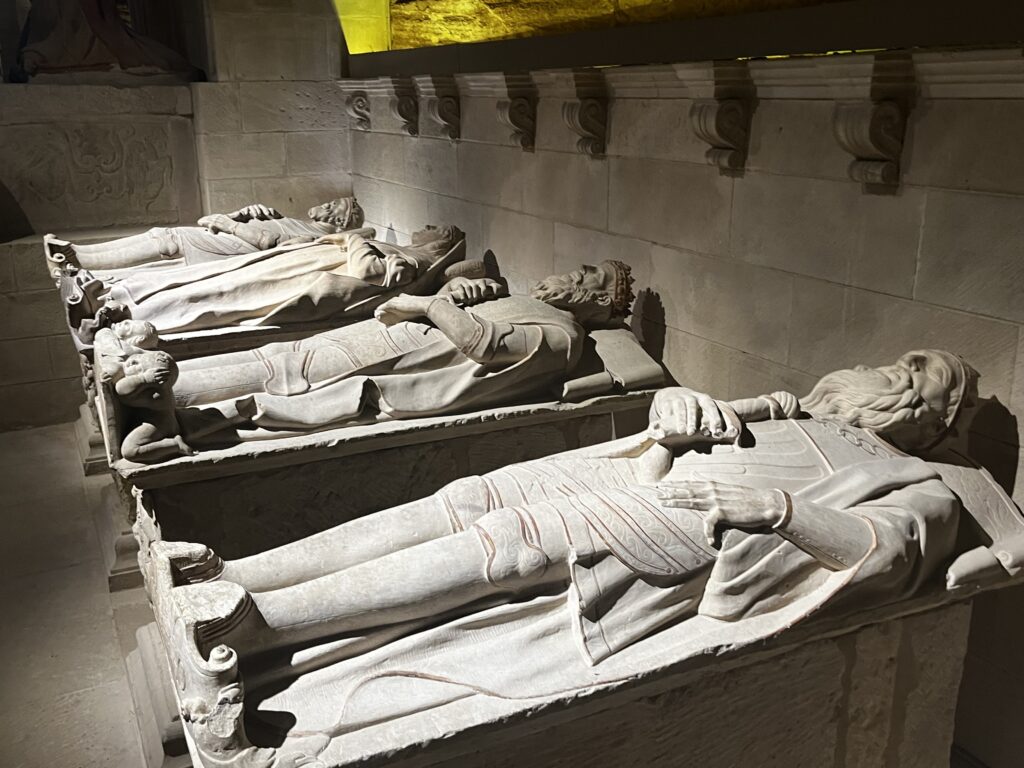
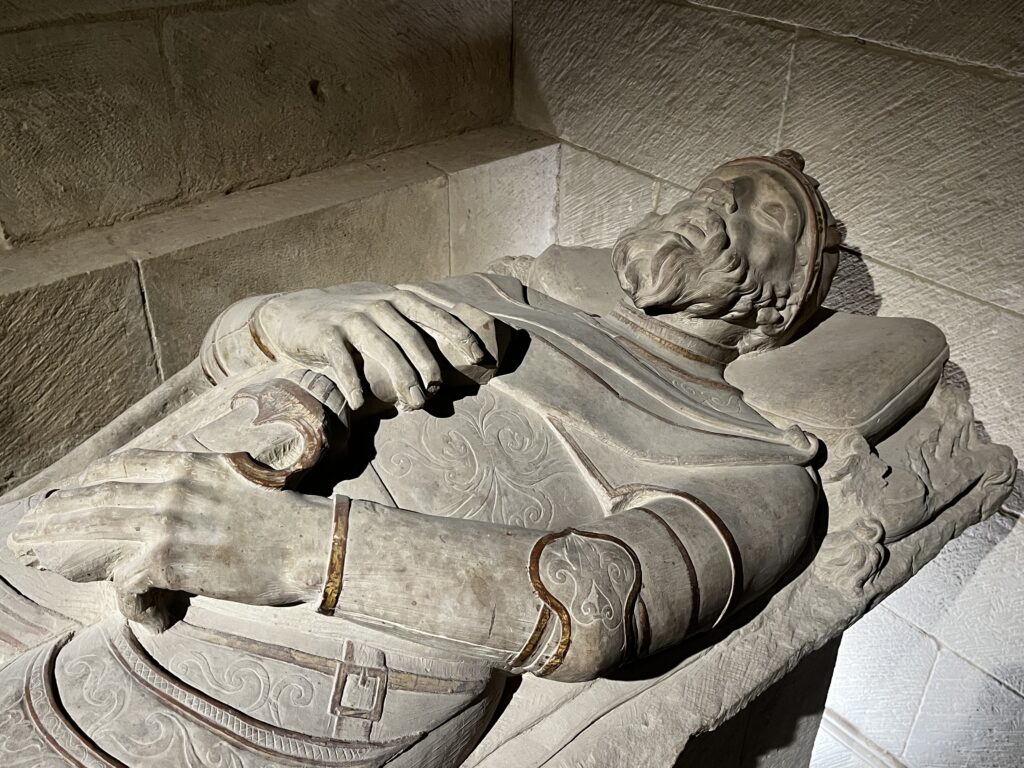
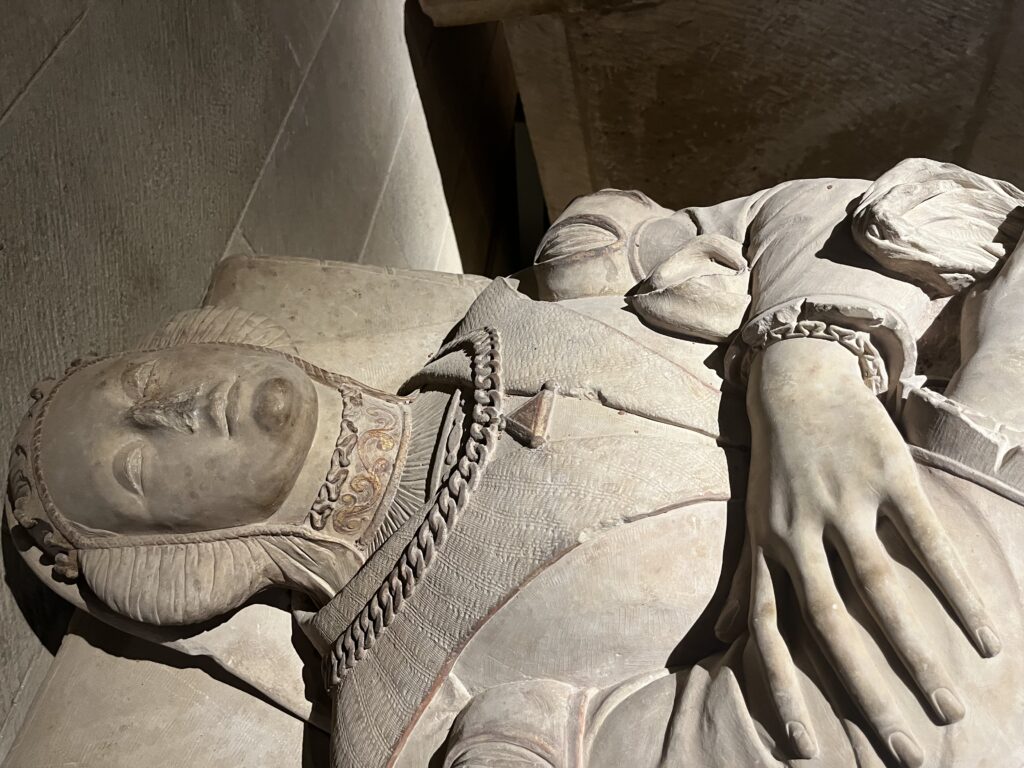
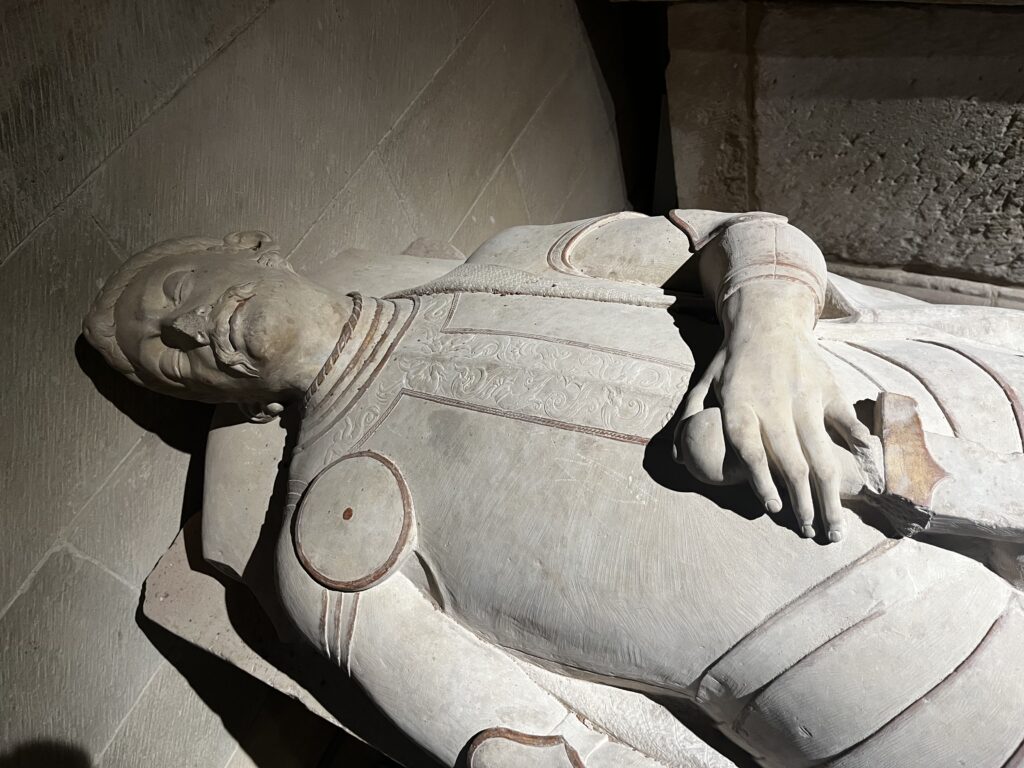
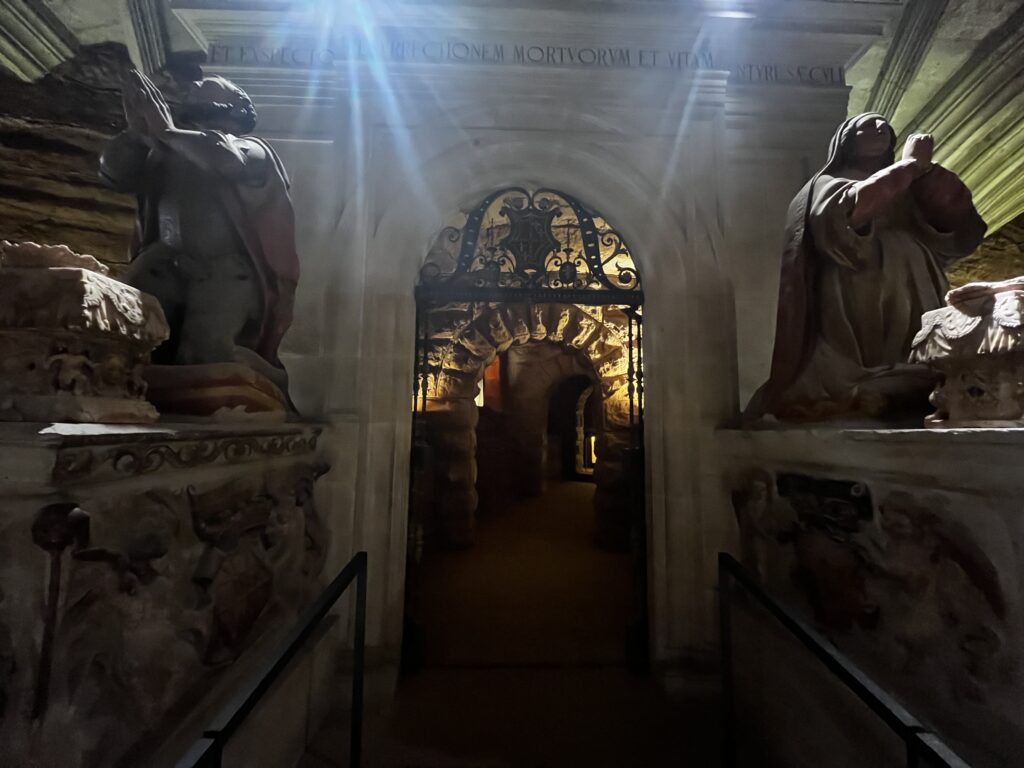
Finally, there’s the Royal Pantheon and the cave. At the back of the church, opposite the high altar, is the entrance to the cave of the Virgin. Flanking this entrance are the statues of two royal guards with spears and tabards. They guard not only the entrance to the cave, but to the Royal Pantheon that spreads out on either side of the cave entrance. These are the sarcophagi of ten of the kings and queens of Navarra. It’s like a vision right out of Tolkien.
An additional fourteen tombs, of very much simpler design, are located within the church.
You might be asking yourself why the kings and queens of Navarra are entombed in La Rioja. The answer is simple: La Rioja was part of Navarra, indeed for a while during the Middle Ages this town was the capital of Navarra. The split only happened during Franco’s reorganization of the provinces.
So today I walked from the current capital of La Rioja to one of the old capitals of Navarra.
Finally we come to the cave itself, flanked by statues, not of guards, but of a king and queen in supplicating prayer.
Within is a (replacement) Romanesque statue of Virgin and Child. Here, I was moved to pray.
For those keeping track, today was day 50. I have so far walked 1320 km since Vézelay.
Date: 28 May 2026
Place: Nájera
Today started: Logroño
Today’s Photos!
The monastery and the Blessed Virgin are very interesting! I hope you are doing ok in all that heat.
I probably came pretty close to heat exhaustion. Taking the (slight) detour to Ventosa was a very good idea.