
Via Lemovicensis: Plan C
Throughout this pilgrimage, I have several times had to adjust my schedule to Plan B for various stages. Today is the first time I’m going to Plan C.
My original plan for today was to take a variant to visit San Millán de la Cogolla. Unfortunately, this would require a 30 km day tomorrow, almost entirely on an asphalt road and with no support. With the continuing heat wave, this would not be prudent.
Plan B was to stick to the standard Camino route and go to Gráñon, which has one of my favorite albergues. This would be about 28 km. Given the length of the past two days in the heat, I need a short day.
So instead, the plan was to go to Santo Domingo de la Calzada on the standard Camino route, which should be about 21 km.
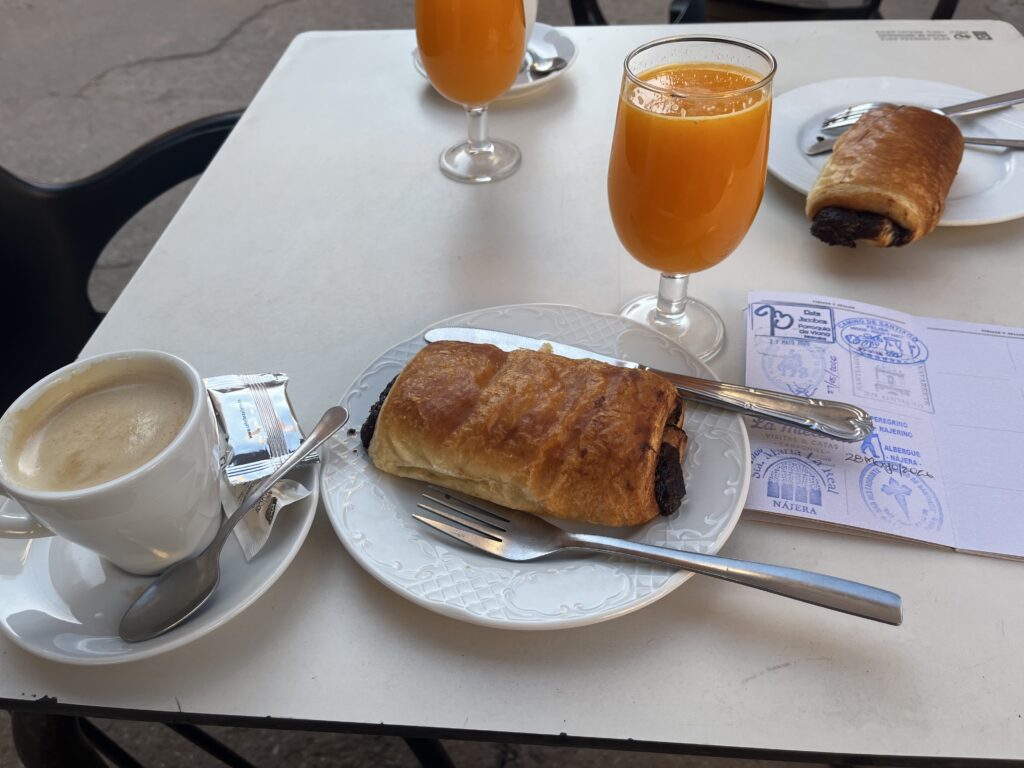
After hearty breakfast at the albergue, Tom and Richard left a few minutes before Herve and I, right around 6:30.
The air was cool and muggy, and the sky had that same metallic blue-grey look it’s had for the last week. Not a cloud was to be seen. We walked the length of Nájera, which I had done yesterday evening to visit the monastery.
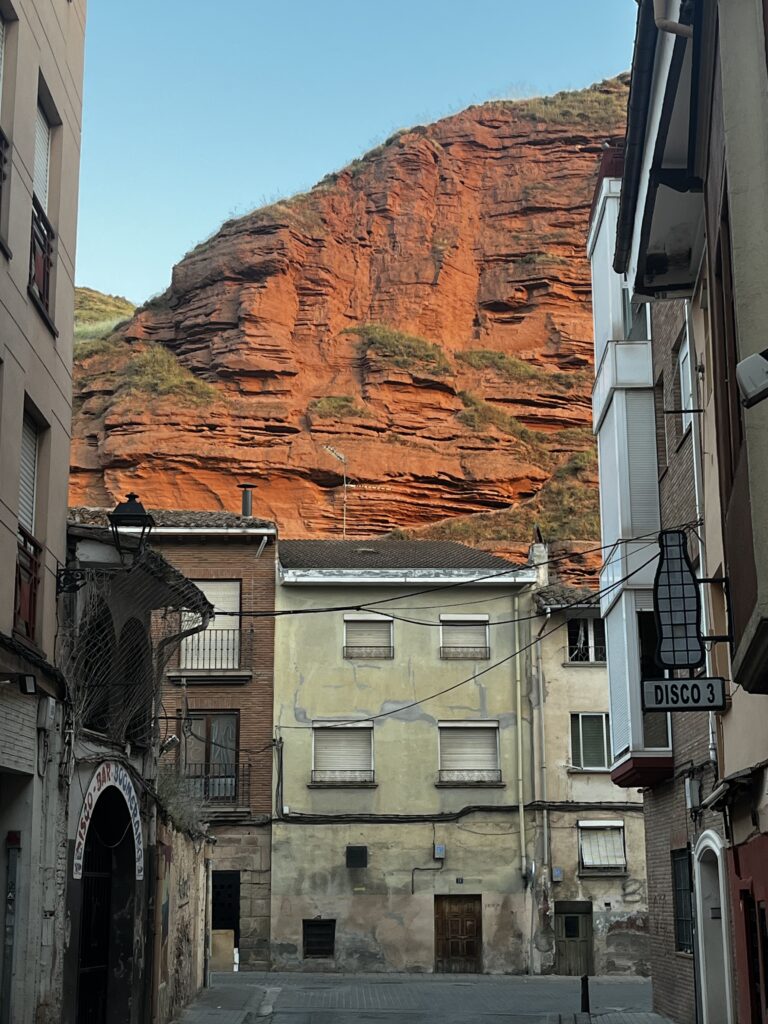
On the way out of town, we passed the great red cliffs that loom over the old part of the city. They are honeycombed with caves and tunnels, sometimes the home of hermits, sometimes the home of wine barrels.
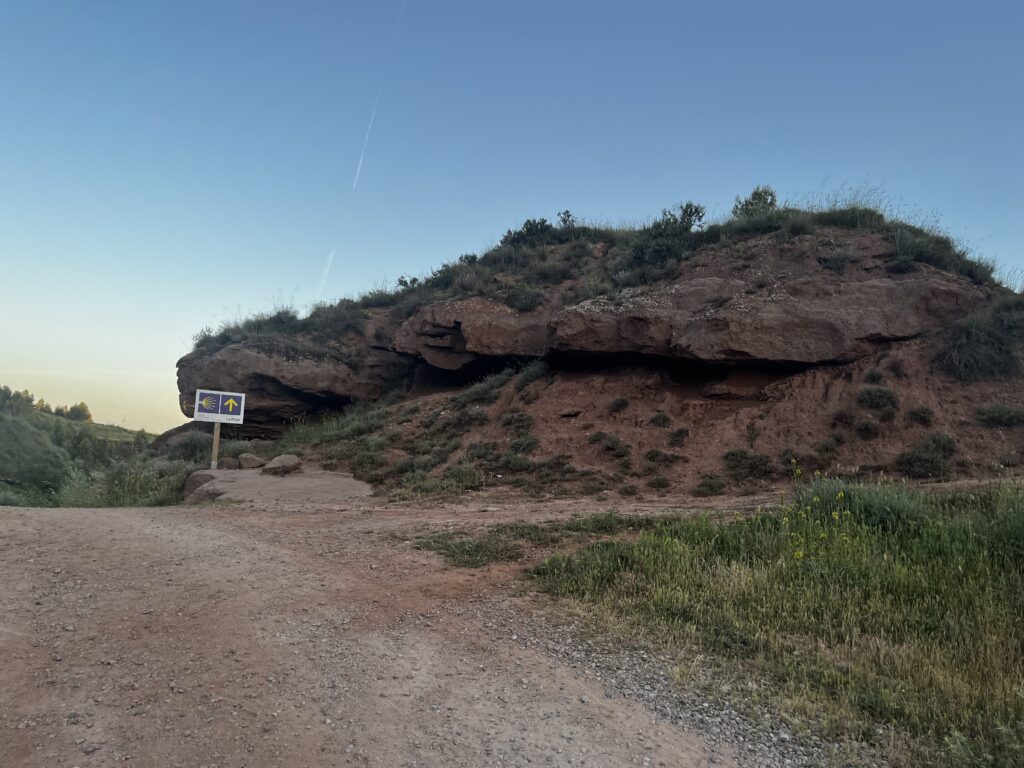
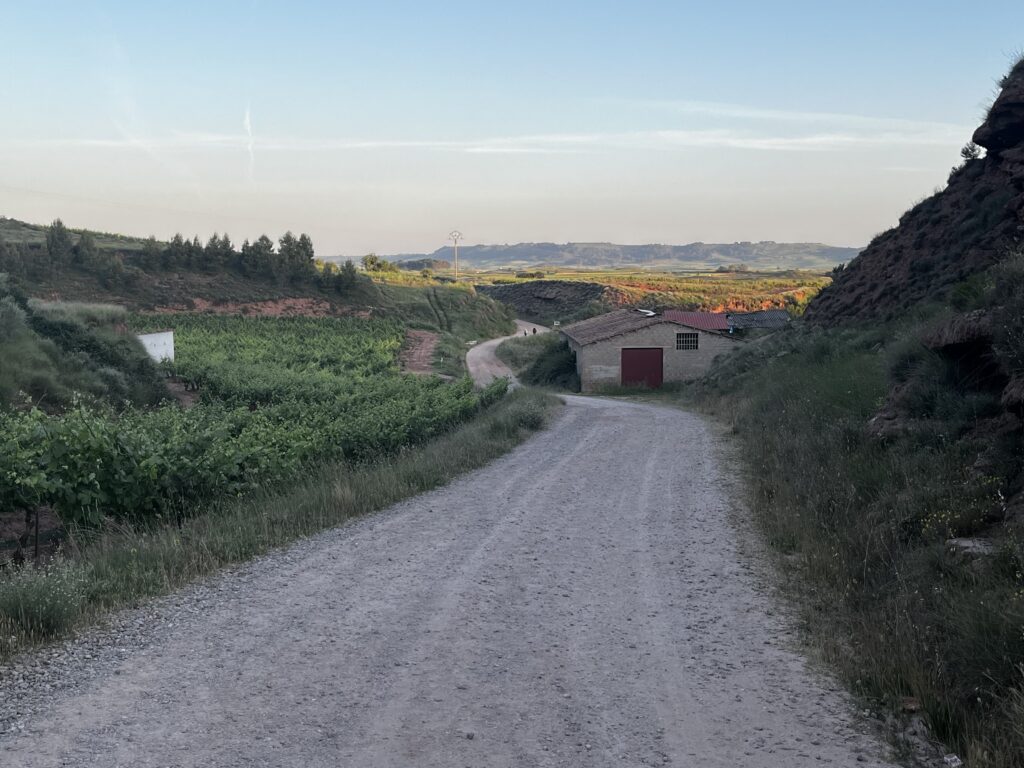
We finally left the town at about 7 AM on an uphill gravel road into the woods. Soon we were walking in the red hills, with bluffs sometimes on one side, sometimes on both.
Twenty minutes later, we passed the last of the bluffs and found ourselves in the rolling hills of the wine country. Gravel soon became an asphalt road, covered with heaps of red dust.
Eventually, the asphalt began disintegrating, and it was pretty tough after a while to tell whether we were walking on a dirt road or an asphalt road covered in dirt.
At some point as Herve and I were talking, the Camino turned back onto a proper road.
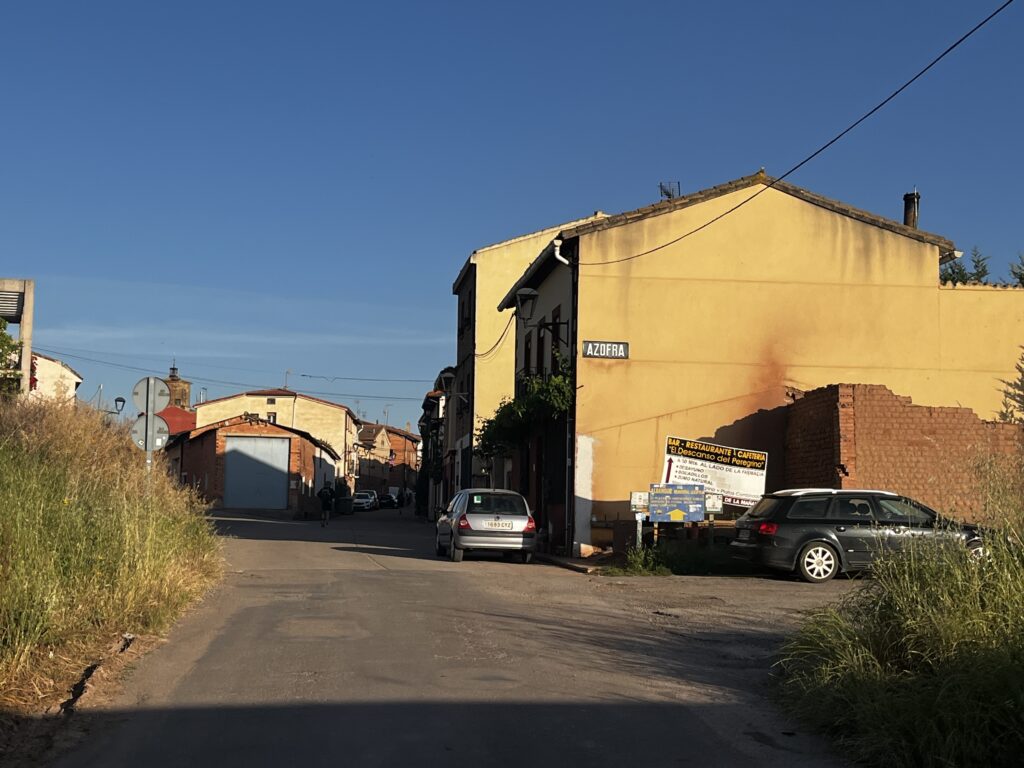
At 7:50, we came over the hill and spotted the village of Azofra, which appeared to be a medieval church surrounded by modern housing.
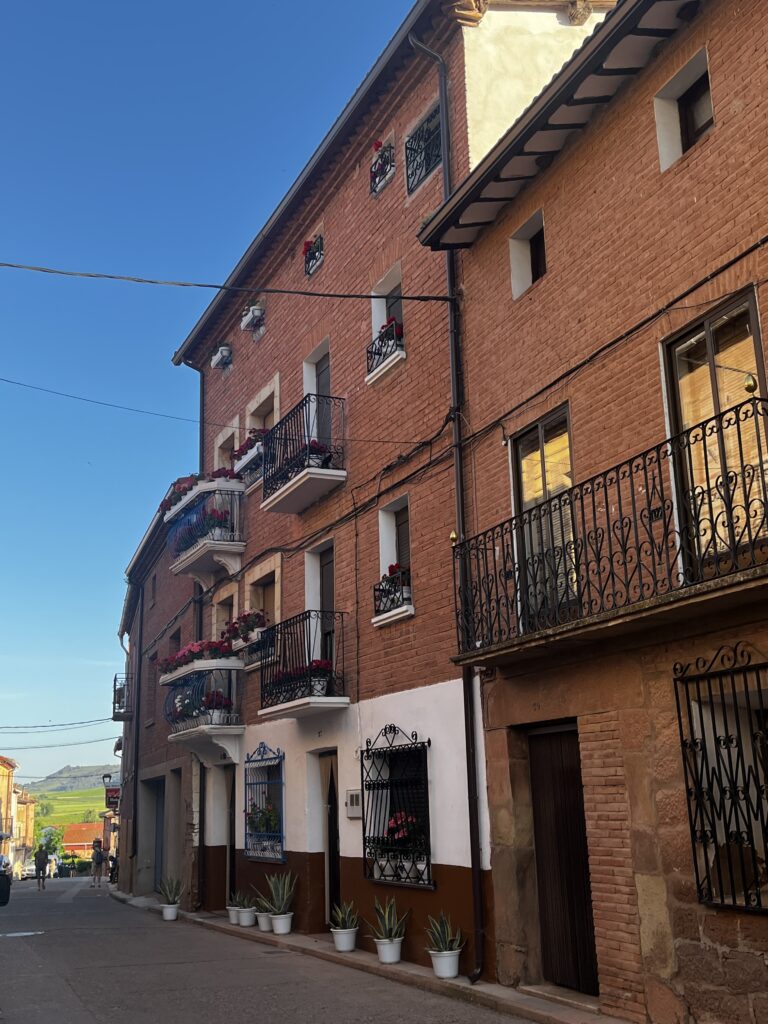
We walked into the village ten minutes later looking for second breakfast. Most of the modern housing is on the outer edges of the town, and smaller, older buildings line the Camino. We ended up staying about 30 minutes. Despite best efforts, we couldn’t figure out how to get to the church.
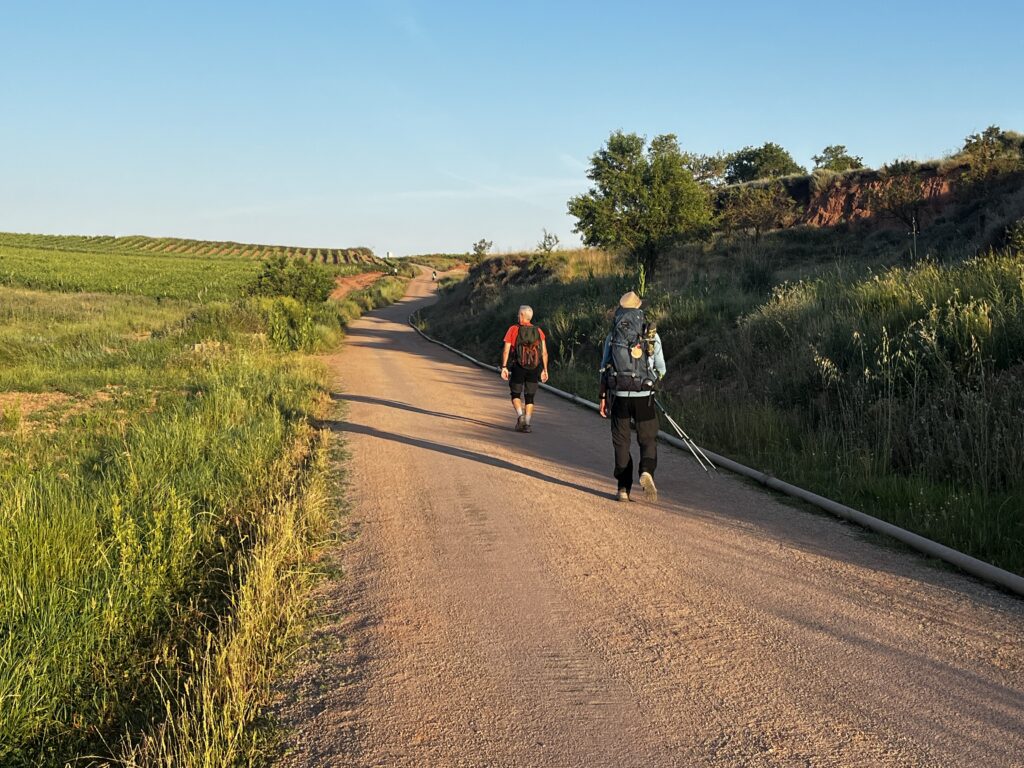
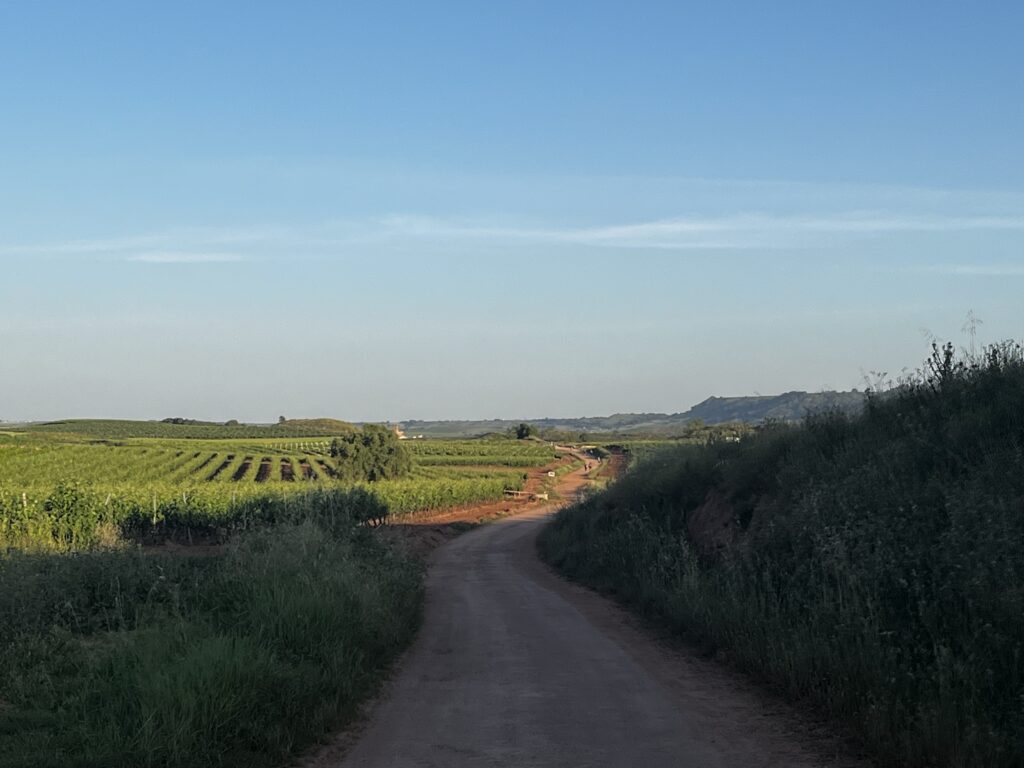
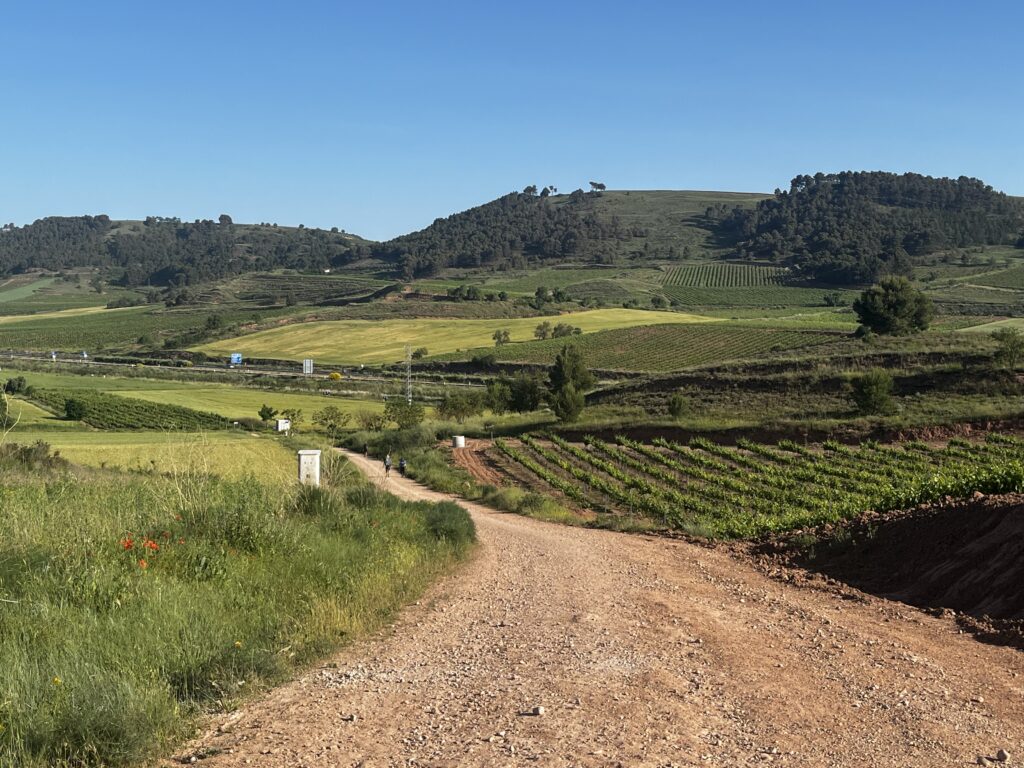
We walked the sidewalk for a while next to a two-lane road before the Camino turned onto a little asphalt road dusty with the omnipresent red dirt. By 8:55, it was a full-blown dirt road with tracks of gravel and stones. We were again among the vineyards and occasional wheatfields. I put up my umbrella.
A little after 9:10, our dirt and gravel road began to parallel a highway. Lost in thought, I didn’t realize that I left Herve behind. At some point, I passed Tom and Richard.
At about 9:30, the Camino, which had been pulling gradually away from the highway, struck out into the open countryside. The land was bare hills, with waist-high grain. For now, I had left the vineyards behind.
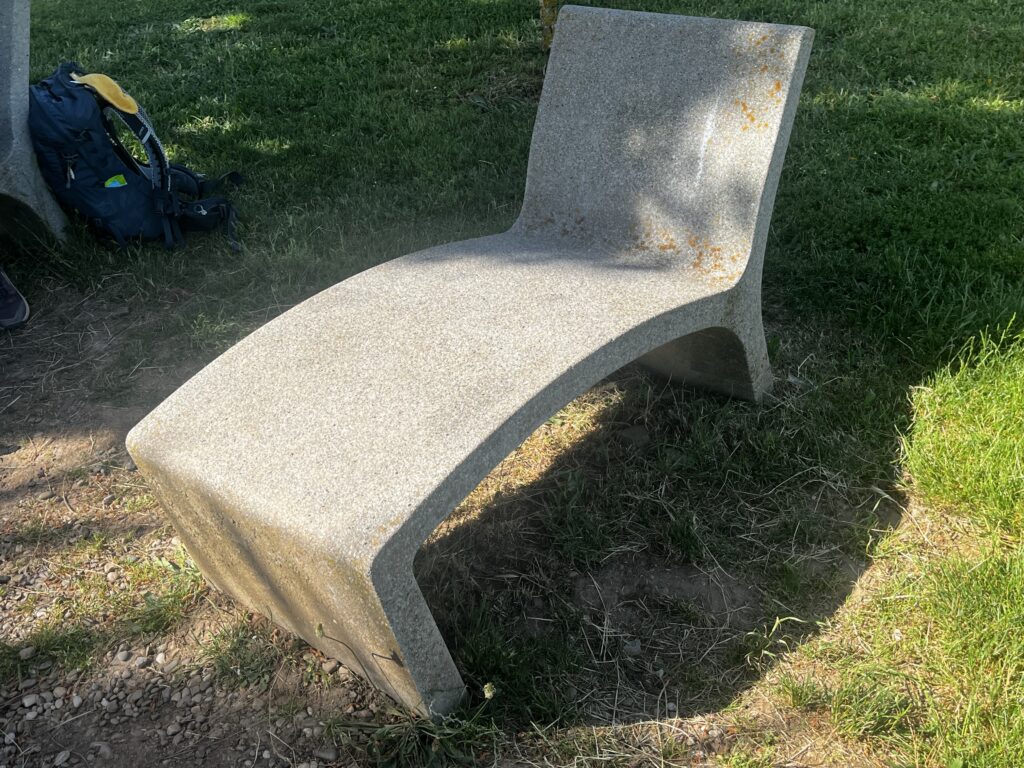
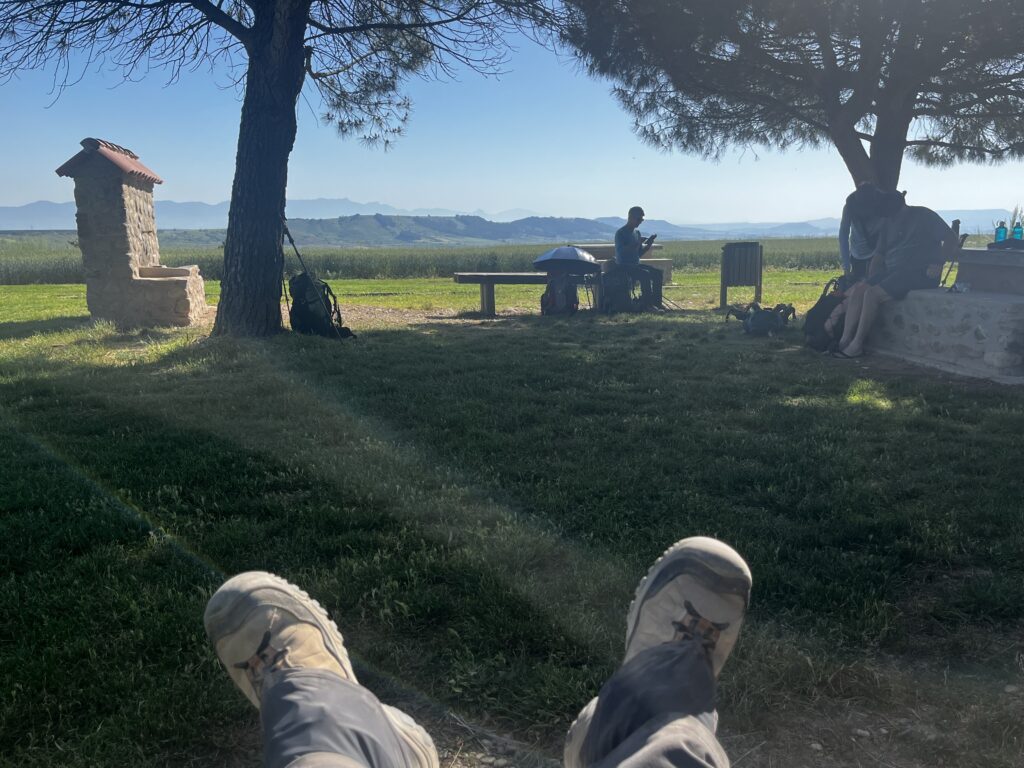
Herve caught up with me on a long hill climb at about 10:15. We rested at a little clearing at the top of the hill that has benches and tables. The benches have been here since before 2013 – and they are dangerous. They are so comfortable that you’re very much in danger of falling asleep in them.
While I didn’t fall asleep, I did get to talking to a couple from California who were pushing a toddler along the Camino. They’ve budgeted 45 days to get from Saint-Jean to Santiago, and they are already behind schedule.
Herve left before I did, and I didn’t get out of there until 10:35.
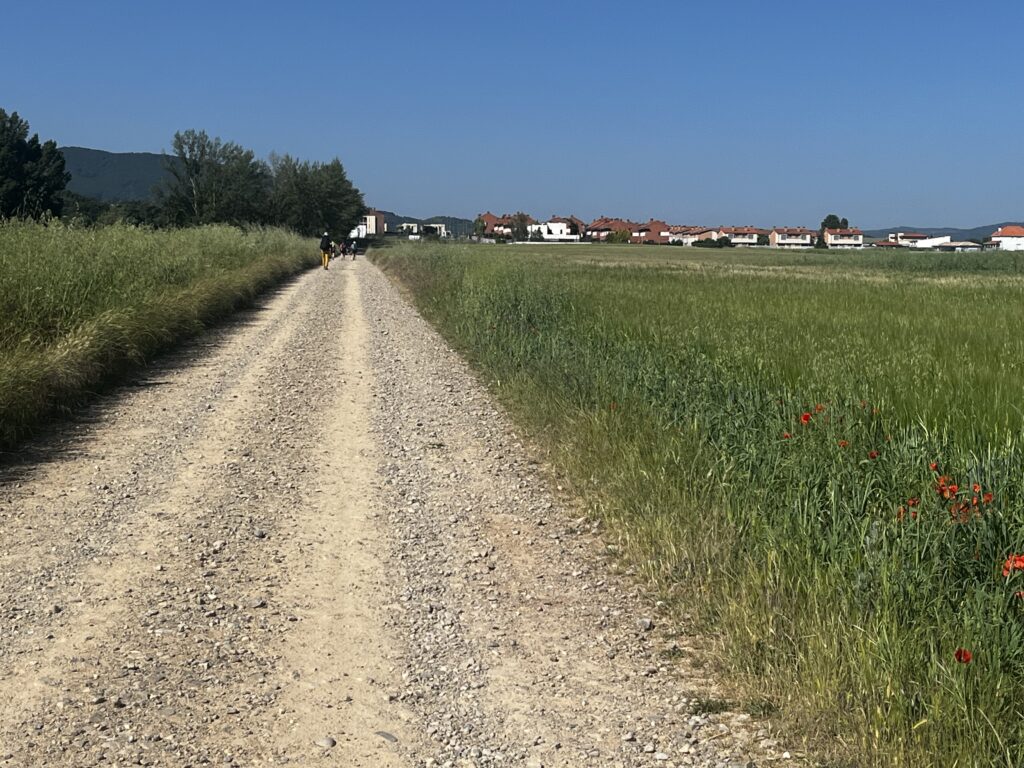
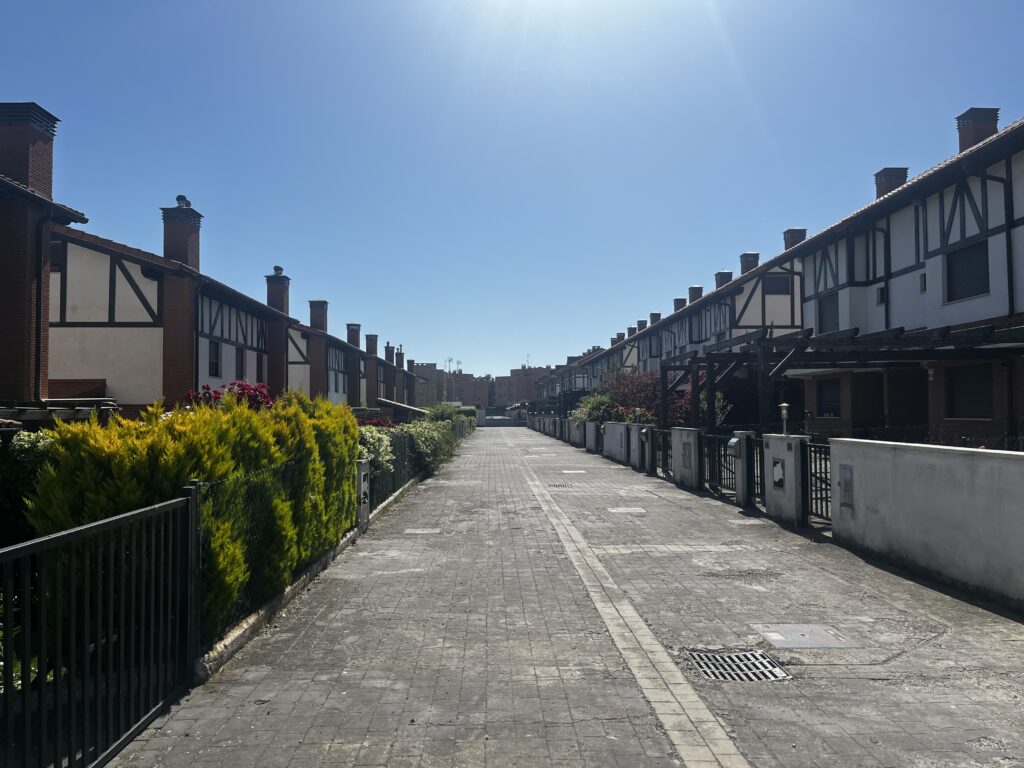
From here, it was a straight shot to the town of Cirueña. This is largely a housing development (and golf course) built during the Franco years. Few of these houses were ever actually inhabited, and the place has the weird aura of a prefab ghost town.
Three years ago when I walked by, even half of the golf course had been closed down and abandoned. Today, it appeared that the entire course was again in use.
I half expected to see Herve at the golf course bar, but I did not.
As in previous years, most of these apartments appear uninhabited, but there are surprising number now that seemed to have people living there. Or at least furniture on the patio. There were also a large number that had “for sale” signs, which seems unduly optimistic to me.
There were no cars in the street, though there were a few parked here and there, and grass and weeds grew through the curbs and sidewalks.
I passed one house with two dogs laying in the yard. Other than pilgrims and a couple of maintenance guys, they were the only signs of life.
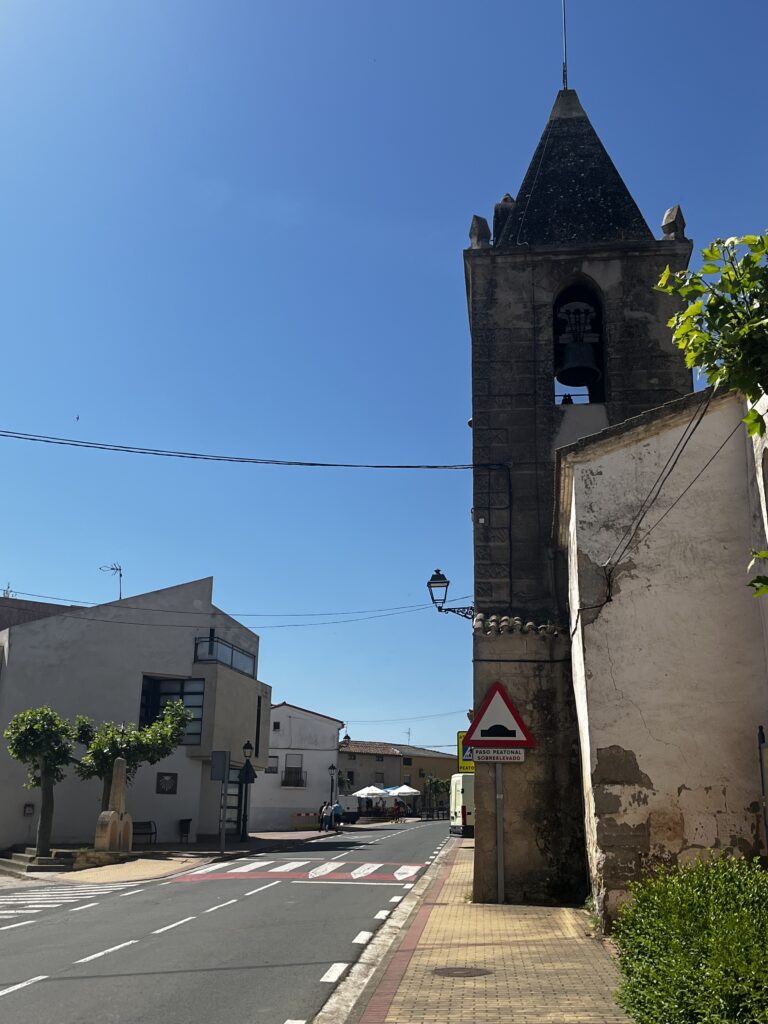
After walking through some empty fields, the Camino took us to the original village that the housing development was meant to supplement. It seemed a lot more alive; I even saw a mother walking with her children down the road.
I stopped by the village bar (right across from the church) for a Coca-Cola and a rest, and I met up with Herve, Richard, and Tom. Tom was suffering today from shin splints, and he had decided to take a taxi the rest of the way to Santo Domingo to get some medical attention.
The three of us left Tom at the bar, waiting for his taxi, about 11:35. For the record, the church was locked.
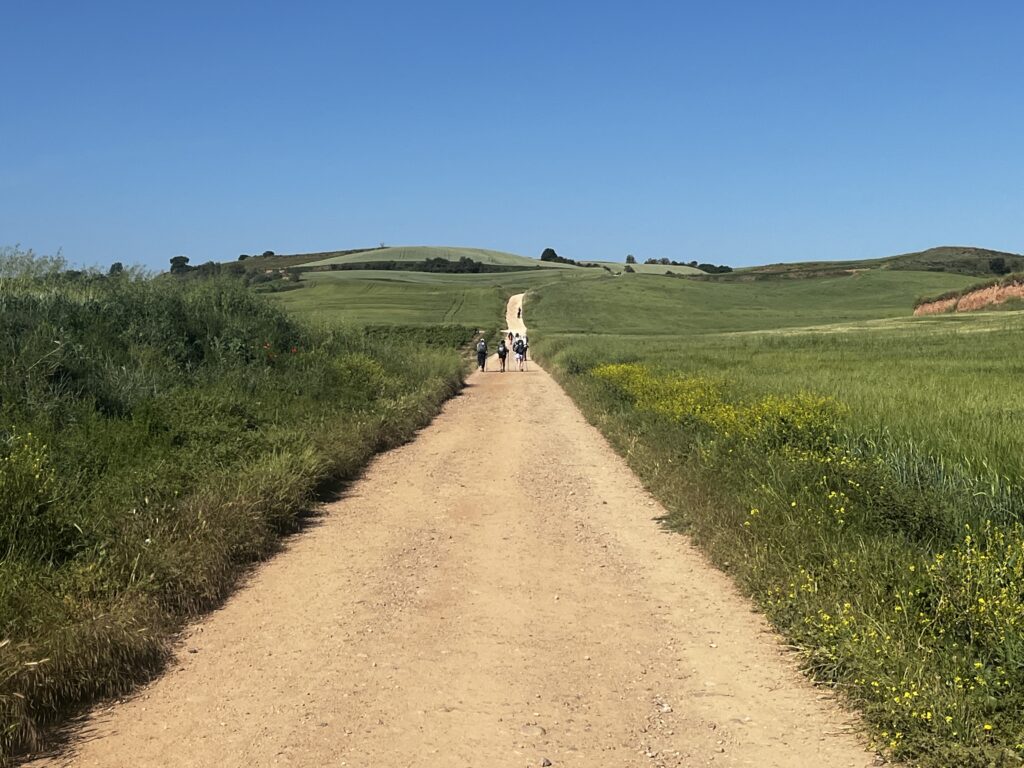
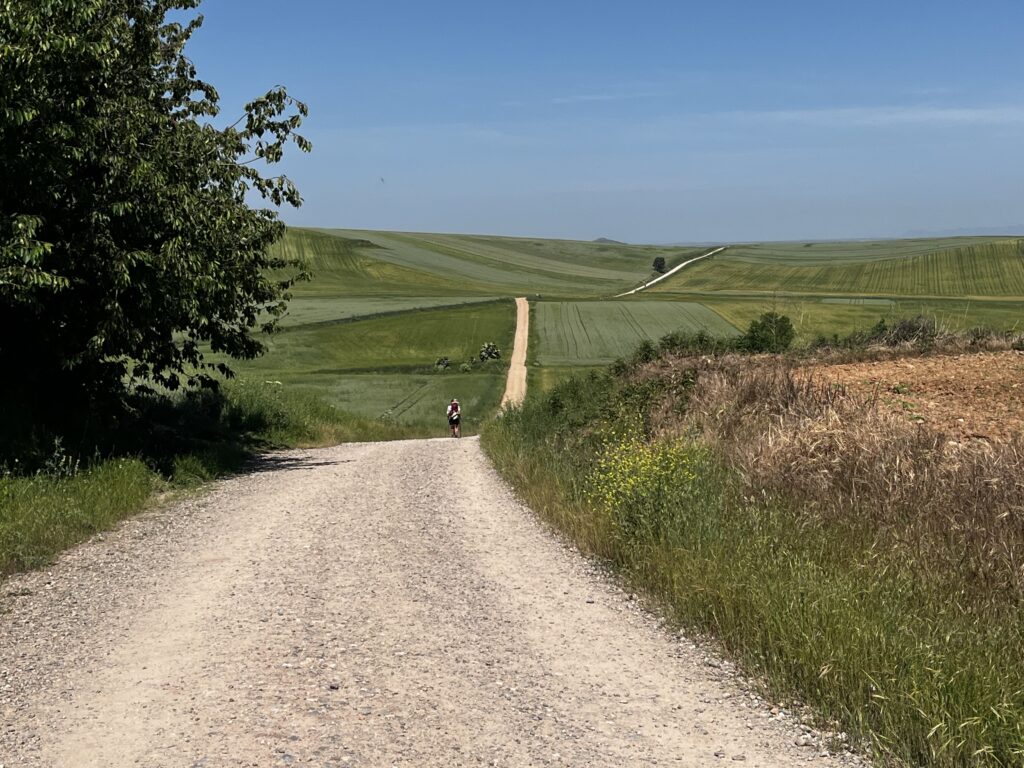
Soon the three of us were strung out along a rough gravel and stone path. This joined a dirt road that wound its way up through the hills to the horizon.
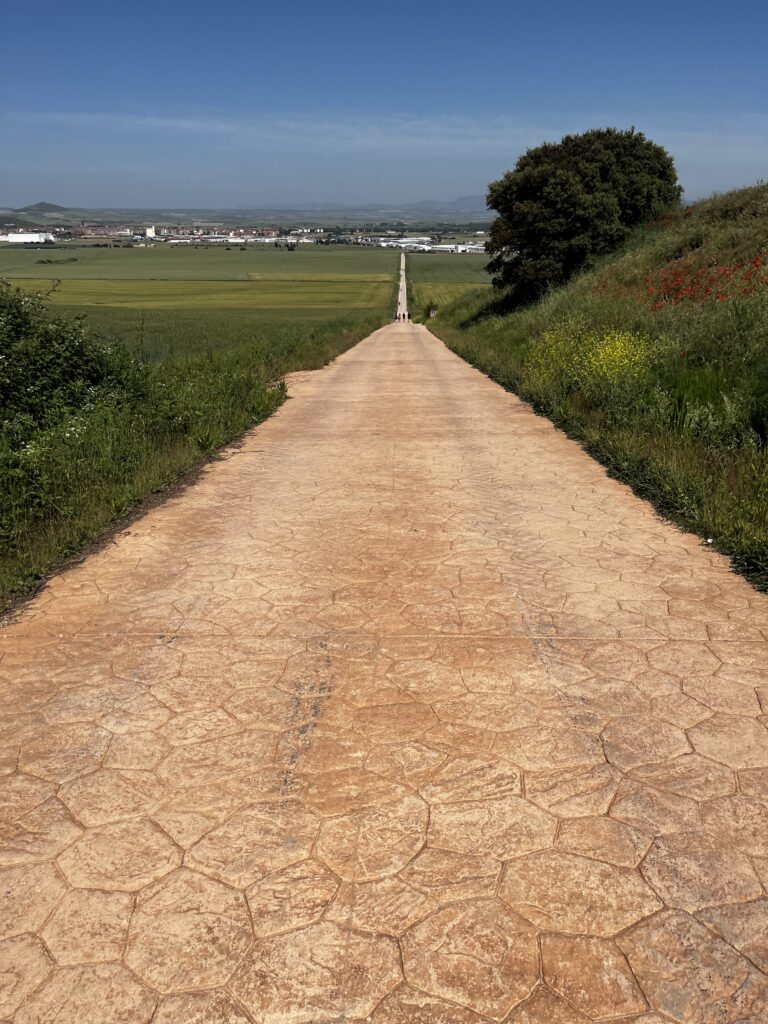
At about 12:10, we crested a hill and saw the town of Santo Domingo laid out below us in the valley. There was still a way to go, but today’s end was in sight. The Camino now switched from gravel to concrete impressed into flagstone shapes. It lasted about a kilometer before it was back to gravel and stones.
After another swap to concrete and back to gravel, the Camino entered into the industrial part of the town. We arrived here at about 12:40.
There was a long walk through the city. We arrived in the medieval center – and the municipal albergue – right about 12:55.
After the usual pilgrim chores and a bit of a nap, it was 2:30 when I finally went out for lunch. Ended up with a group of pilgrims, and the late lunch/early dinner went on until almost 4:30.
Then, to the cathedral.
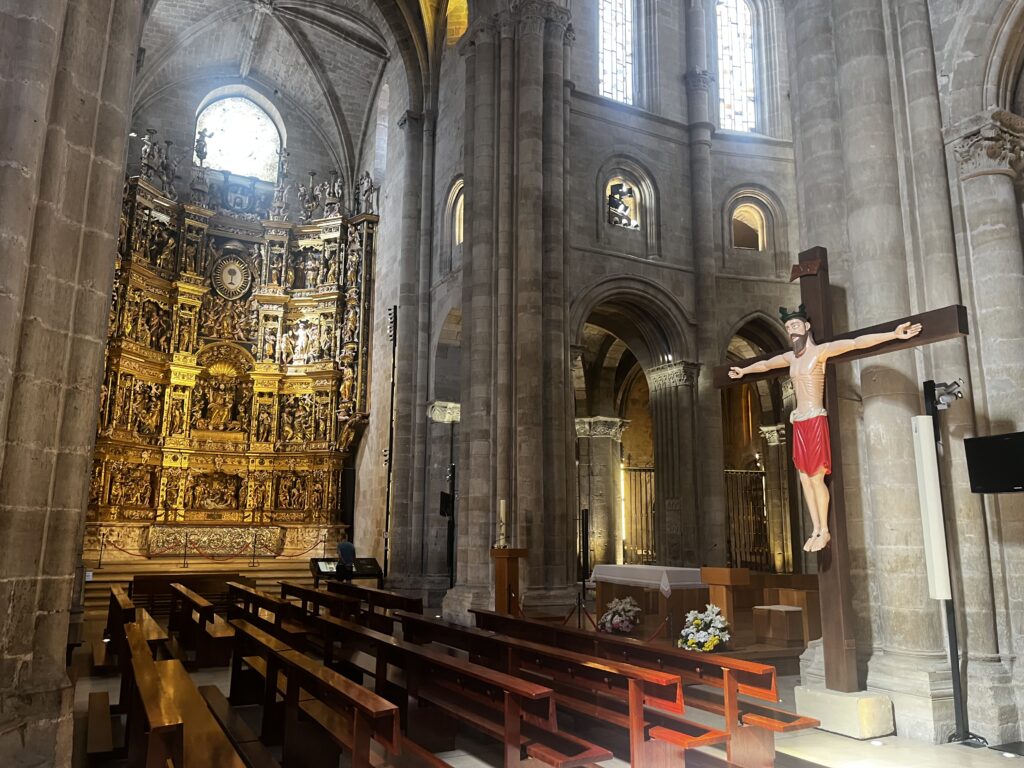
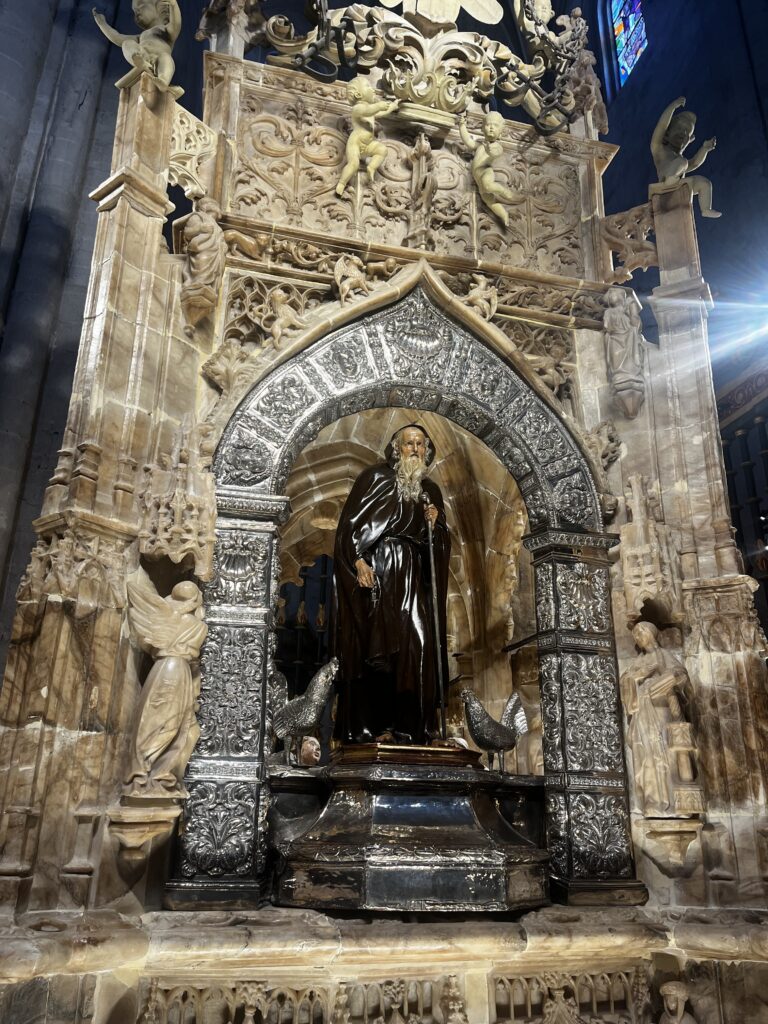
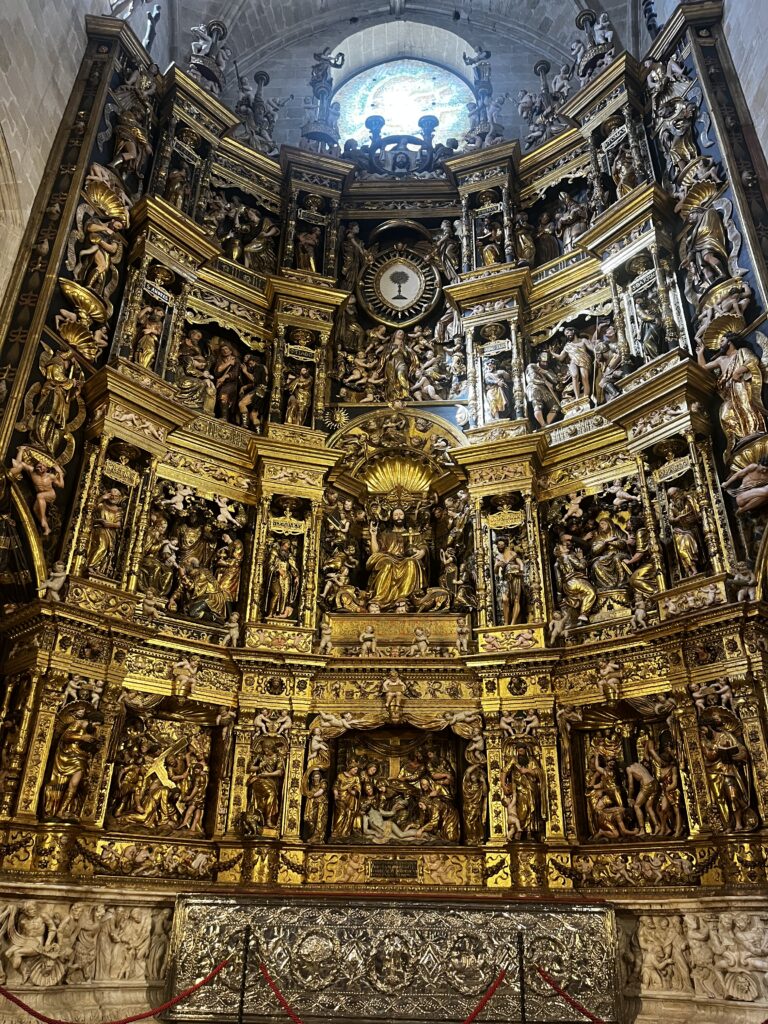
I want to be very clear that I have a devotion to the Saint entombed here, Santo Domingo de la Calzada, and that the bones of the cathedral, a magnificent Gothic structure, are beautiful, well proportioned, almost sublime.
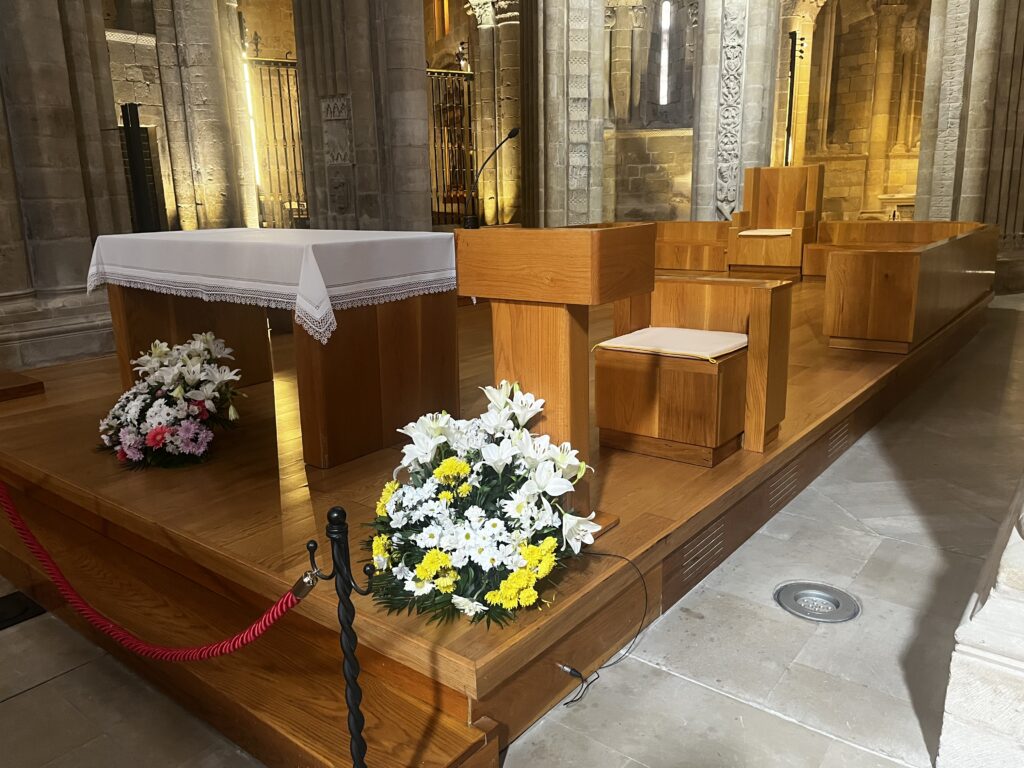
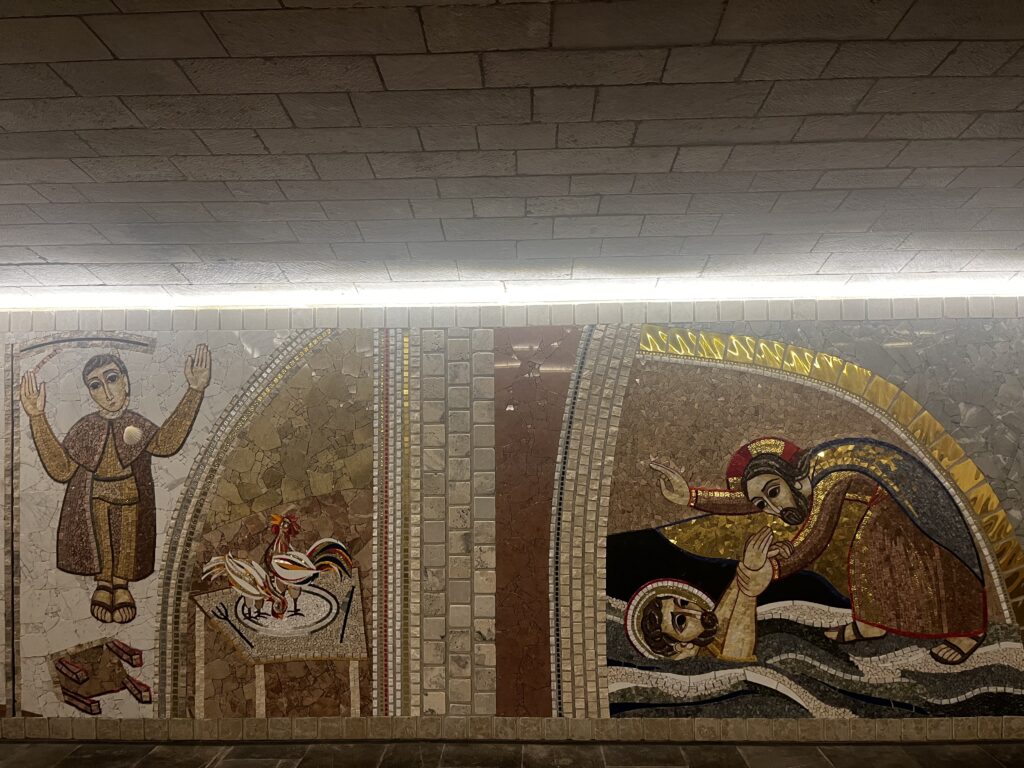
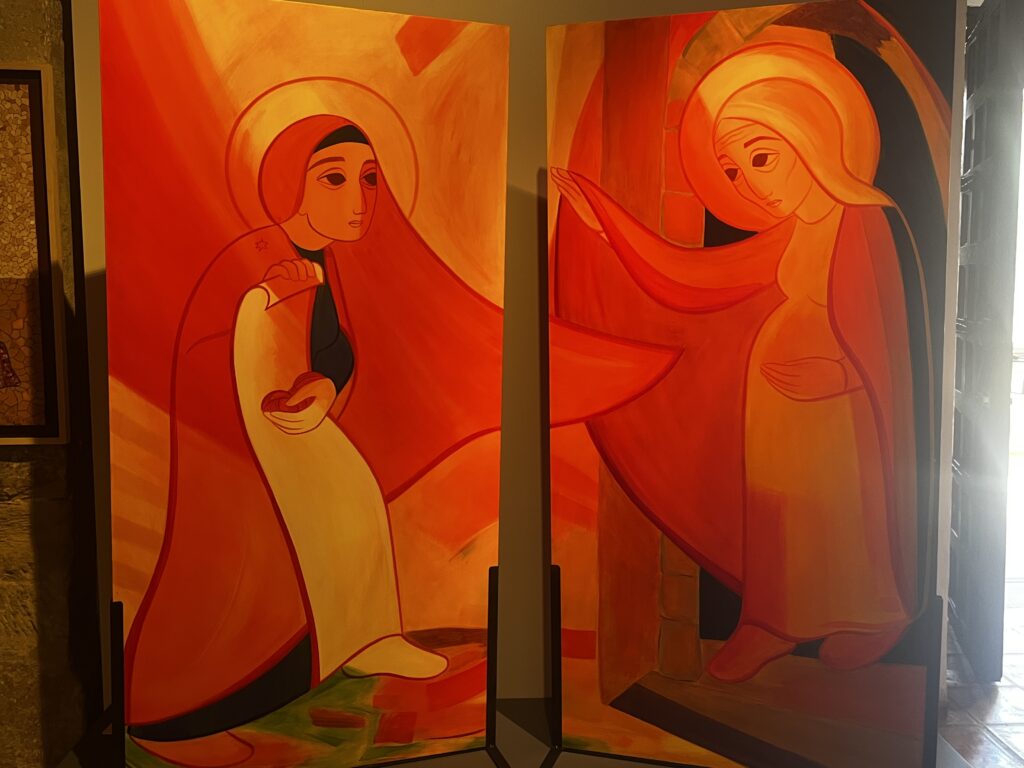
And also. There have been so many boneheaded decisions about “restoration” here that it beggars the imagination. These range from the replacement of the Baroque high altar and reredos of the apostles and Saint John the Baptist with a sanctuary that looks like it was purchased from IKEA, to the gutting of the medieval crypt and the near blasphemy of the new mosaics designed and installed by (defrocked priest and credibly accused serial abuser) Marko Rupnik. And don’t get me started Rupnik’s stained glass windows.
A place where a decade to go I was enraptured in prayer is now just… icky.
Even setting aside my personal preferences, none of these changes in any way complement the fabric of the building or any of the other art here.
It is discordant.
Maybe it’s to complement the crowing rooster and clucking hen also installed here.
They, at least, have the distinction of 700 years of history and a papal mandate to back them up.
There are a number of versions of the story, but in its simplest form, a German family (mother, father, and son) sometime in the 13th century was on pilgrimage to Santiago. They rested the night in this town.
The innkeeper’s daughter fell in love with the son, and when he rejected her advances she framed him for the theft of the inn’s silver.
The boy was found guilty and hanged.
The sad parents continued on towards Santiago. When they were just a couple of days away, thanks to their entreaties and prayers, Santo Domingo appeared to them in a dream and told them to return, for their son was still alive.
They rushed back to the magistrate, who was eating a lovely chicken dinner, and told him that their son was alive.
The magistrate (probably irritated at being interrupted at dinner time) told them that their son was dead. “He’s as dead as these chickens on my plate.” Whereupon the chickens – a hen and a rooster – leapt up and started running around.
The startled magistrate ordered the boy to be cut down, and lo! He was still alive. Since the boy had already been punished for his crime, the family was let go to continue their pilgrimage.
Ever since that day, descendants of that hen and rooster (raised and cared for by a local family for centuries and rotated out frequently) are in a roost in the cathedral.
You can often hear the rooster’s crows echoing through the Gothic cathedral.
At some point later in the middle ages, the hen and rooster being there was approved by the pope in perpetuity.
And now, the coop faces the monument over the crypt, and almost every popular depiction of the Saint features chickens.
The cathedral cloister has been turned into a museum for religious art, and it is truly worth visiting. Some of the pieces, particularly the silver, is stunning.
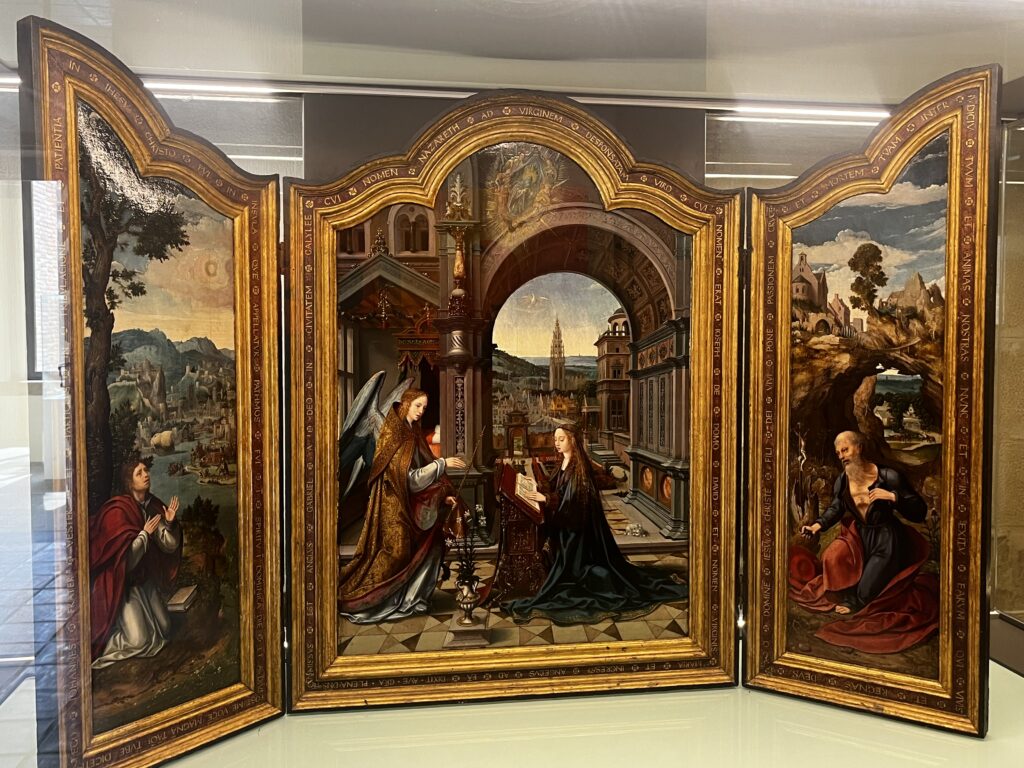
Amongst the cathedral’s many treasures is a sublime 16th-century triptych of the Annunciation by Van Cleve. It stands opposite a diptych of the Visitation by Runik. The dichotomy could not be more stark.
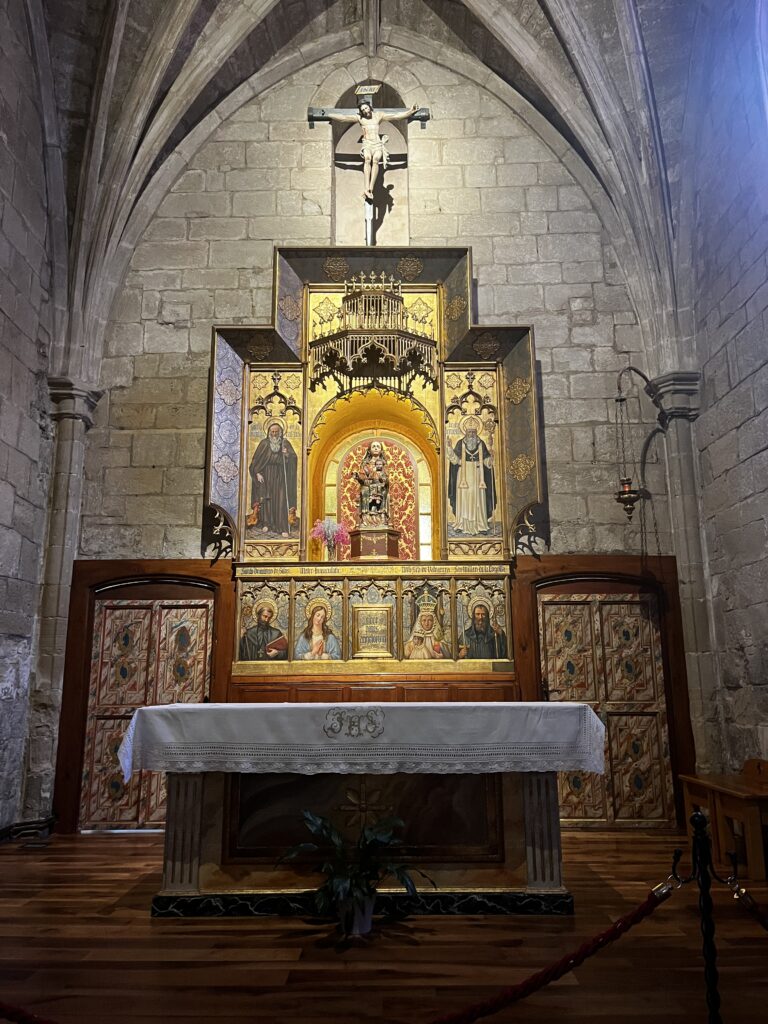
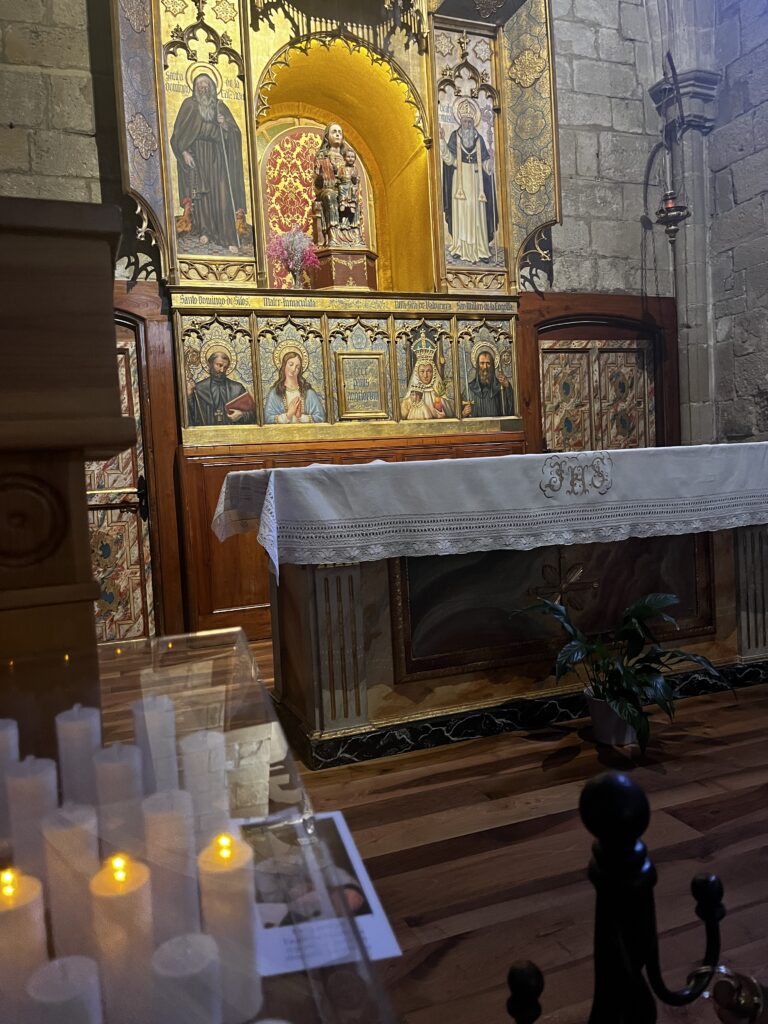
Across the plaza to the chapel Basilica of Santa Maria El Mayor. There is a plenary indulgence attached to praying here. It is a small space, but its Gothic reredos are beautiful. After the chaos of the cathedral, this place is a welcome and serene respite.
I prayed here for Francine.
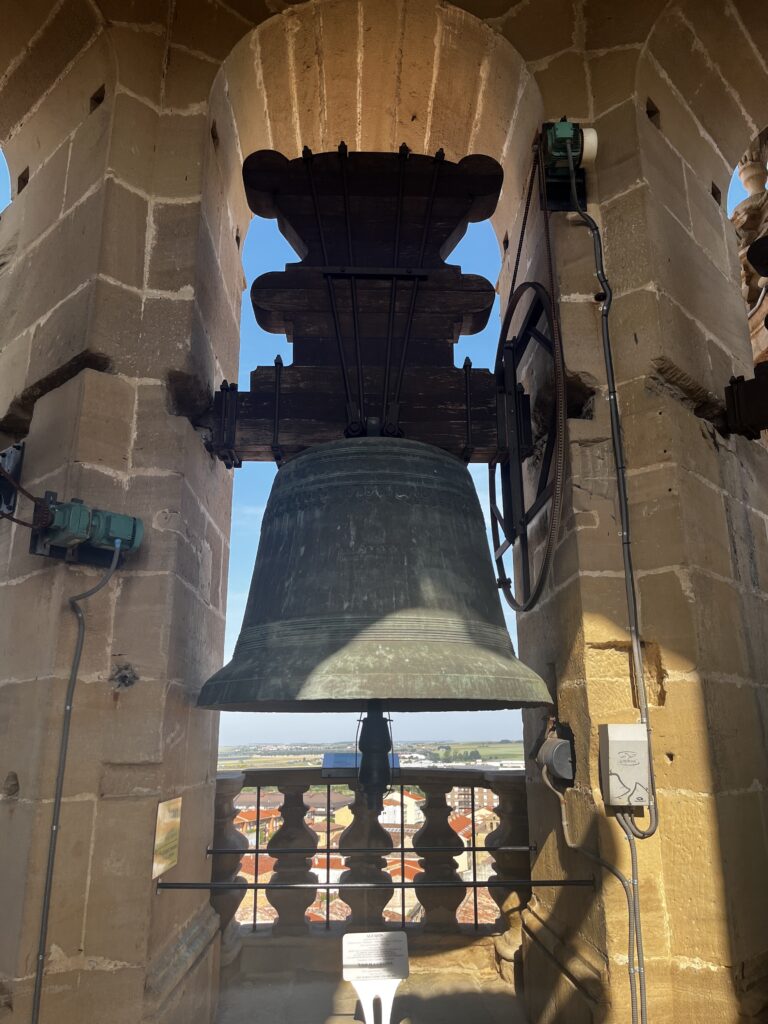
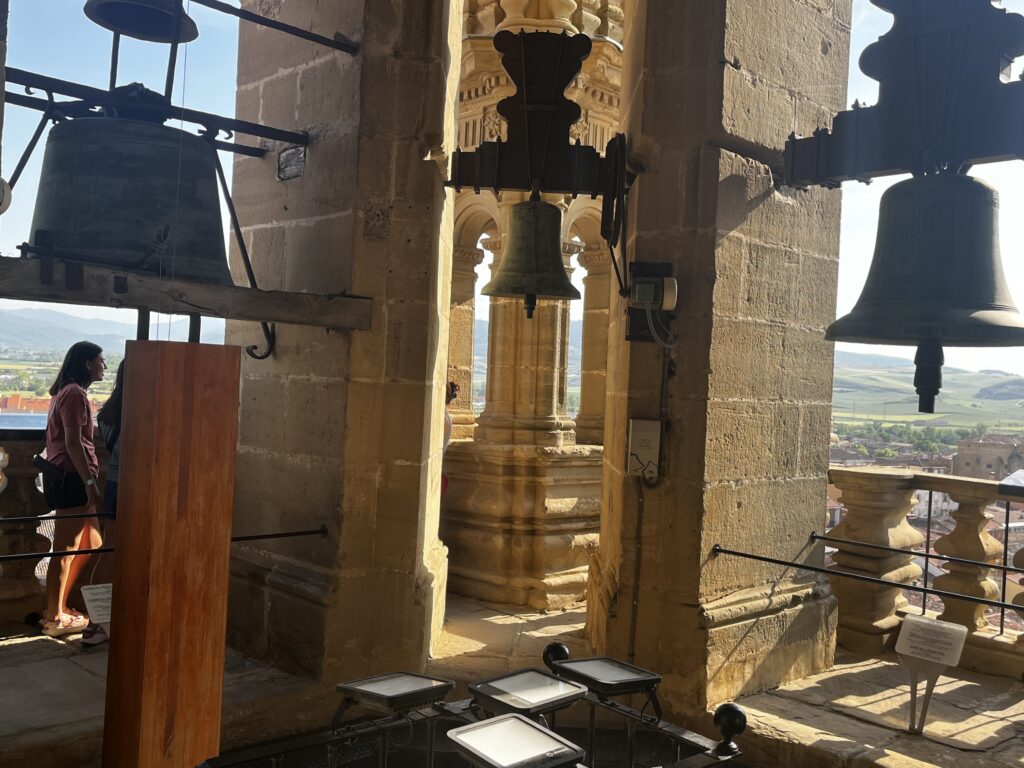
Then to the cathedral’s bell tower. Much of the interior is a museum for clocks of various types, both mechanical and electric. There’s also pretty healthy section on bells. This is a bell tower after all!
You can climb all the way to the top of the tower to be among the bells. I imagine it can be quite loud if you happen to be there when they toll.
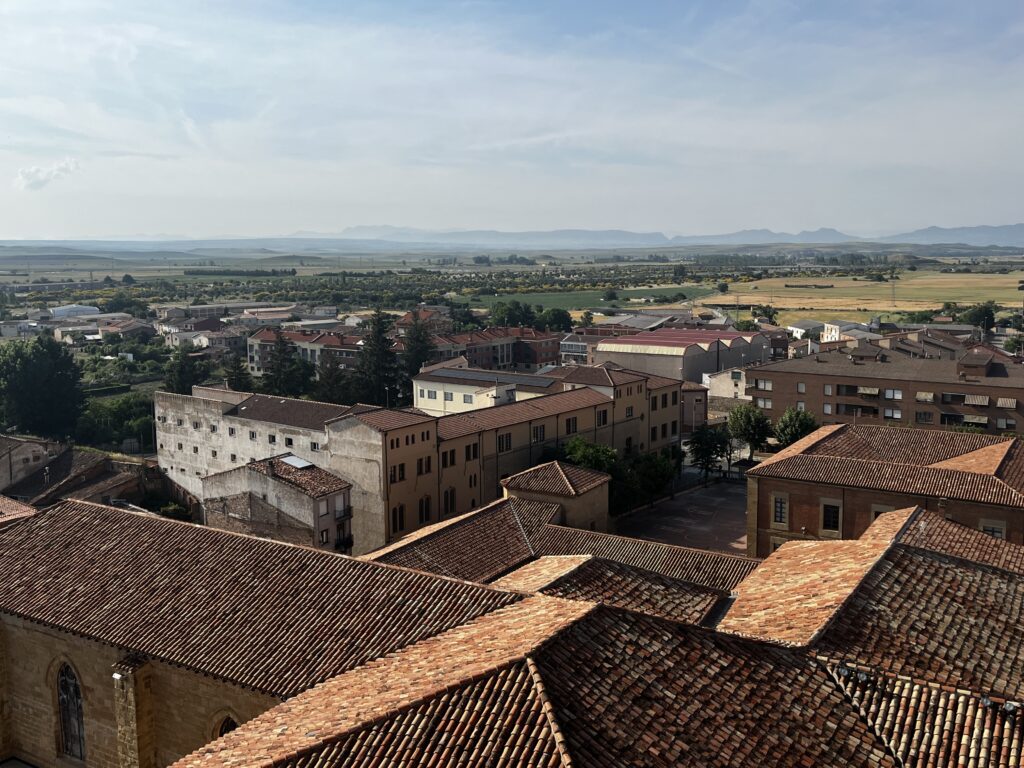
The view from the top of the tower is unparalleled. I was up there at 7 PM. The bells did not ring.
Date: 29 May 2026
Place: Santo Domingo de la Calzada
Today started: Nájera
Today’s Photos!
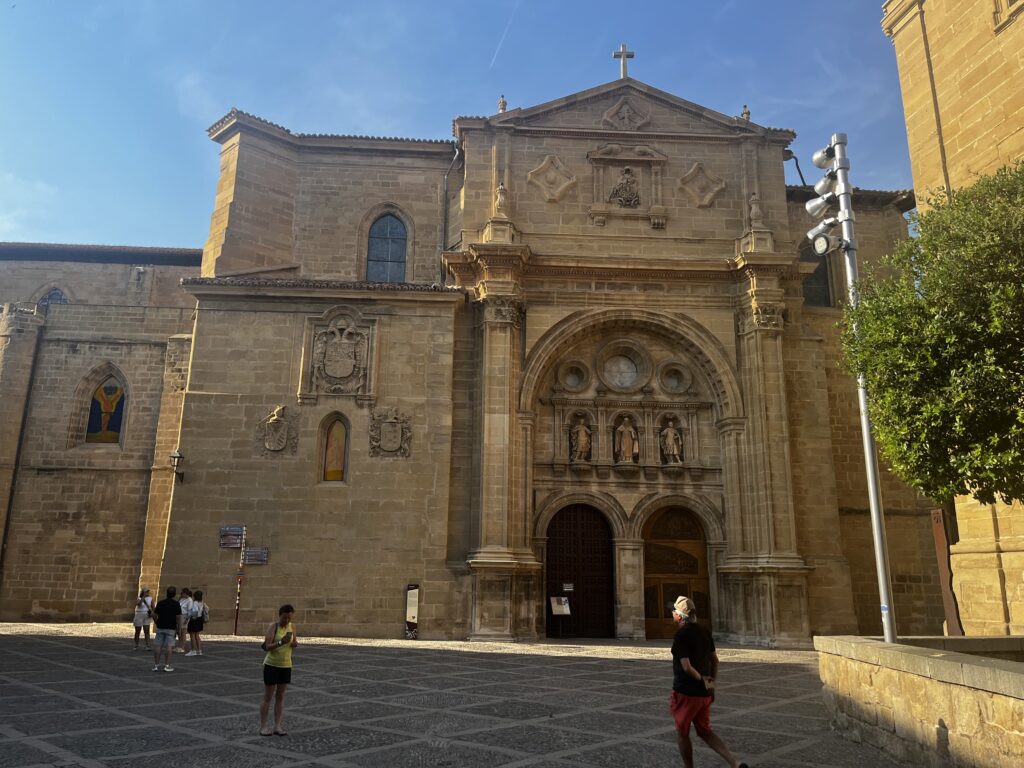
Santo Domingo was very interesting, and the cathedral was awesome