
Via Lemovicensis: Scattered Like Mist
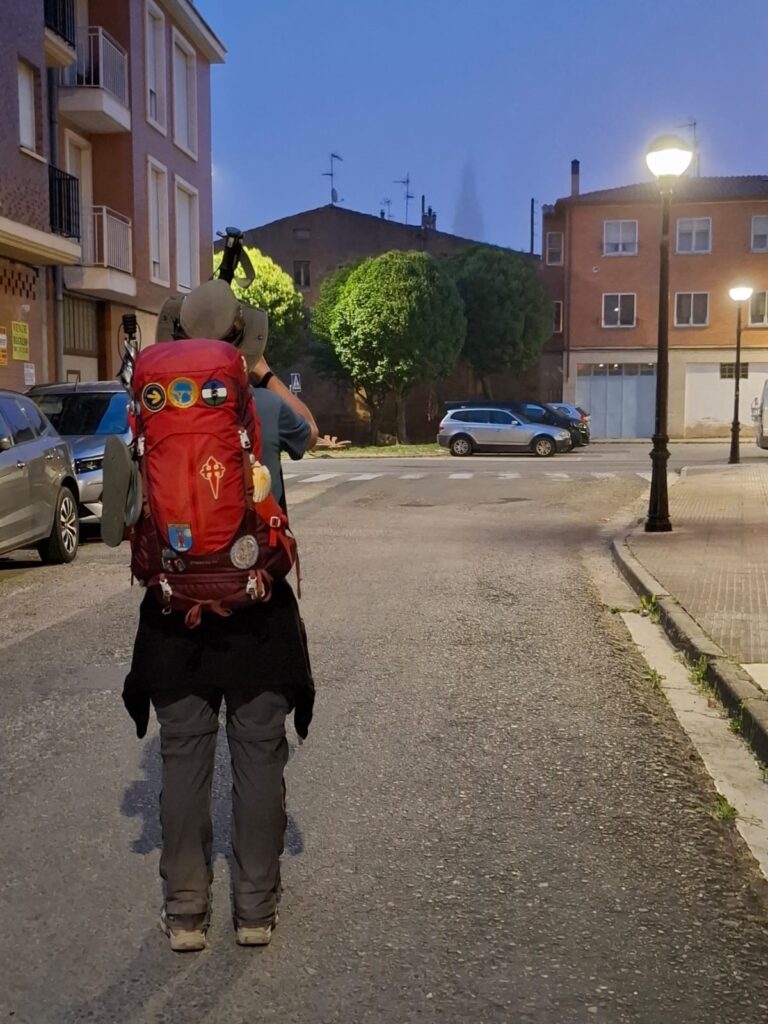
Somehow, Herve and I left right about 6 AM. The air was cool, and the sun had not yet risen. Herve and I walked together and talked together for most of the day.
Behind us as we left the city, the cathedral bell tower was clothed in mist.
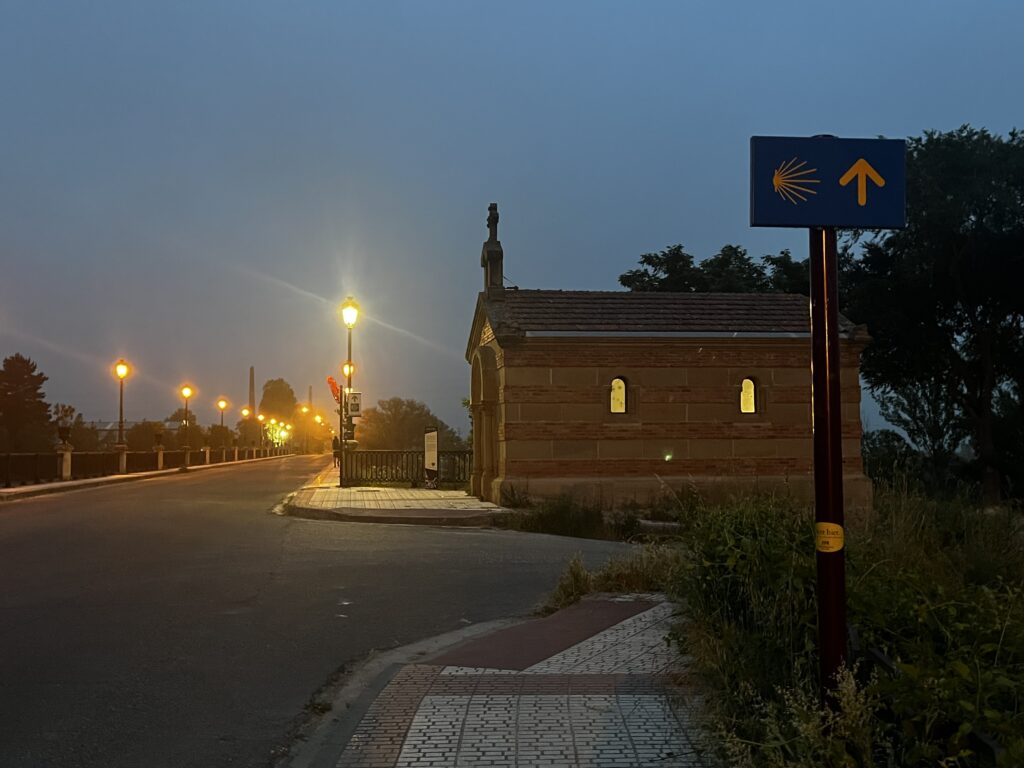
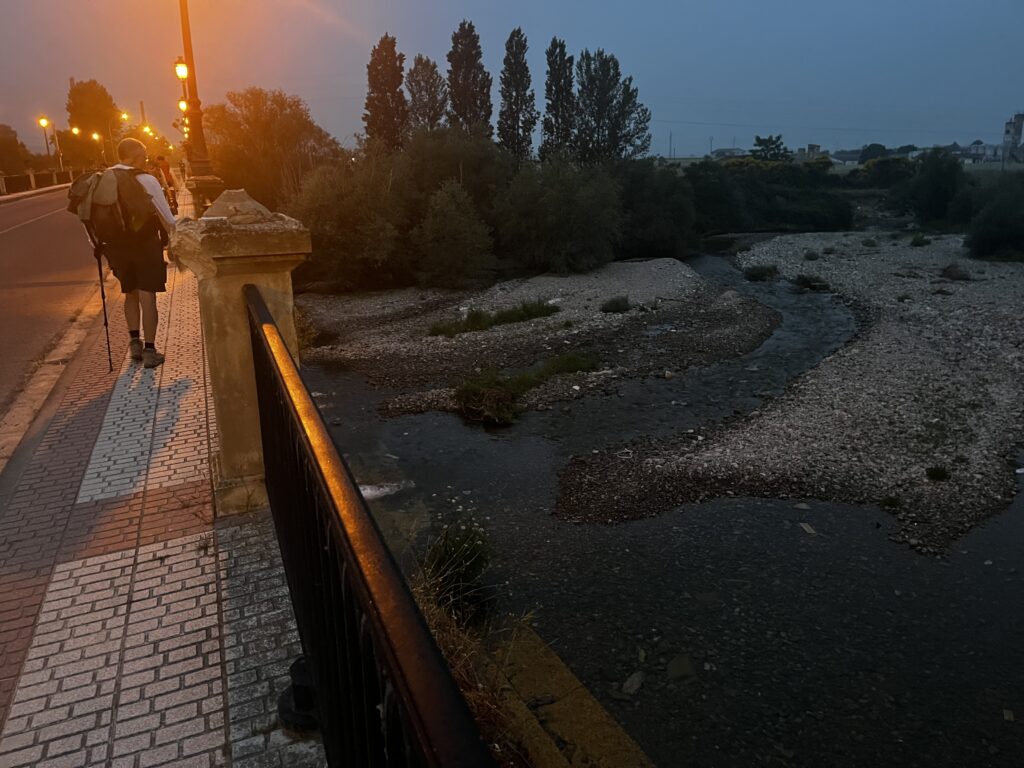
About 6:15 we crossed the bridge over the Río Oro. The original bridge here was built by Santo Domingo as an aid to pilgrims in the 11th century. The current bridge is a little more modern.
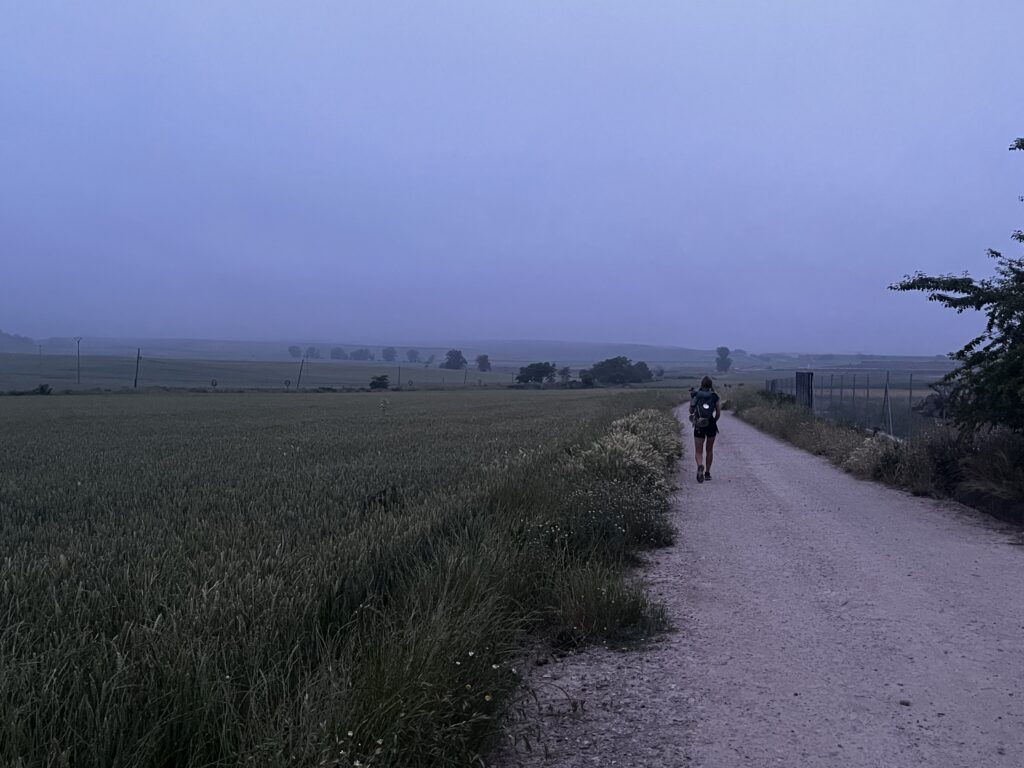
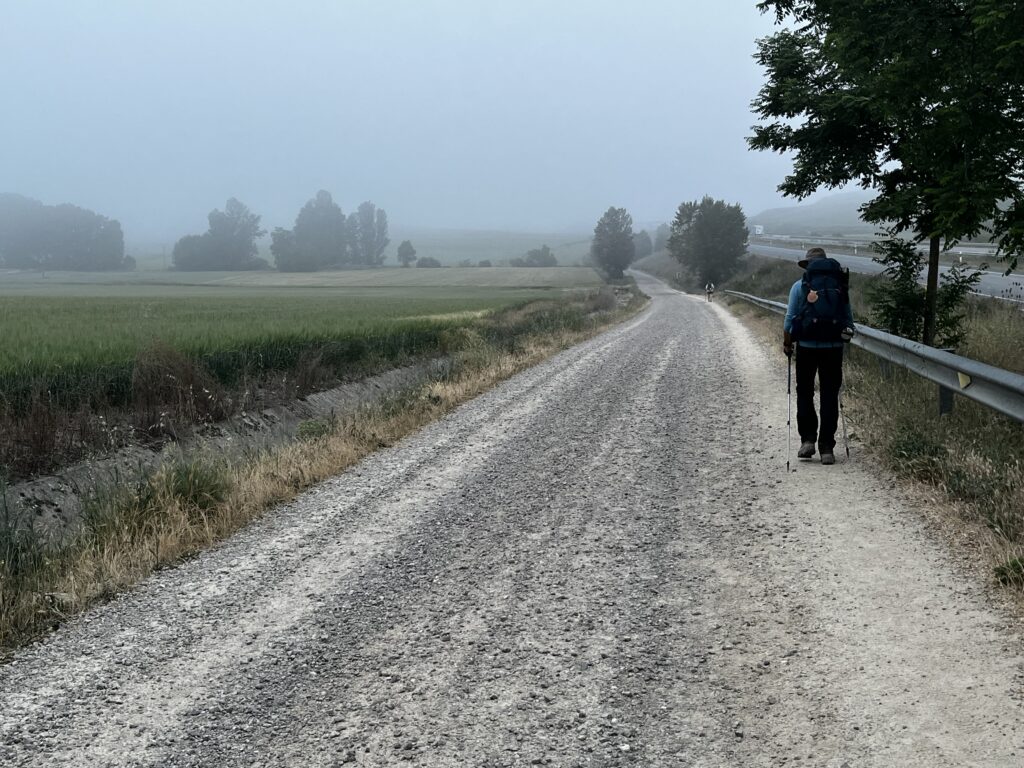
After this, it was quickly back to the gravel road of days passed. within just a few minutes, we were walking in the misty countryside. In contrast to the past few days, most of the landscape we could see was relatively flat.
About 6:45 the Camino turned down an asphalt frontage route near a highway. At a roadside cross, the frontage road became gravel.
At 7:10, we turned off the frontage road and onto an asphalt road past what appeared to be a dairy farm. Or, at least, it smelled like one.
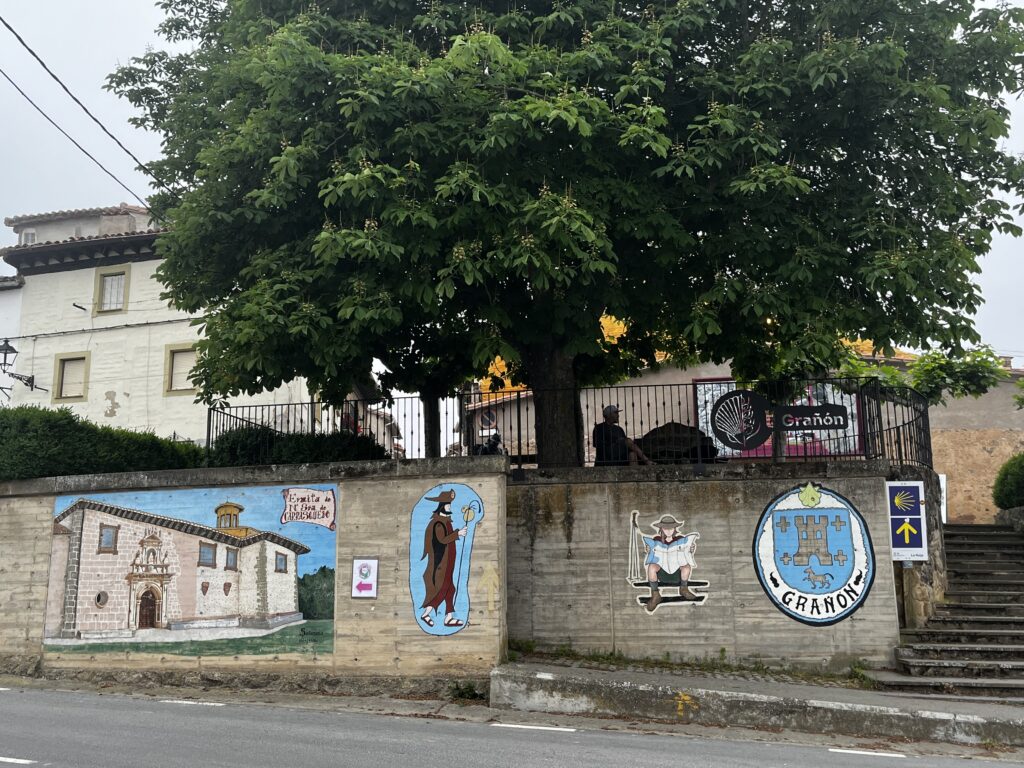
Just a few minutes later we arrived in the village of Grañón for breakfast. In both my Plan A and Plan B for this section, I would have stayed the night here.
Today is the memorial of Saint Joan of Arc, one of Francine’s favorite saints. It’s also the anniversary of a day where she greeted me with a shower of little kisses. It is one of my happiest memories from her time in hospice.
We left about 7:55. The place was filling up fast.
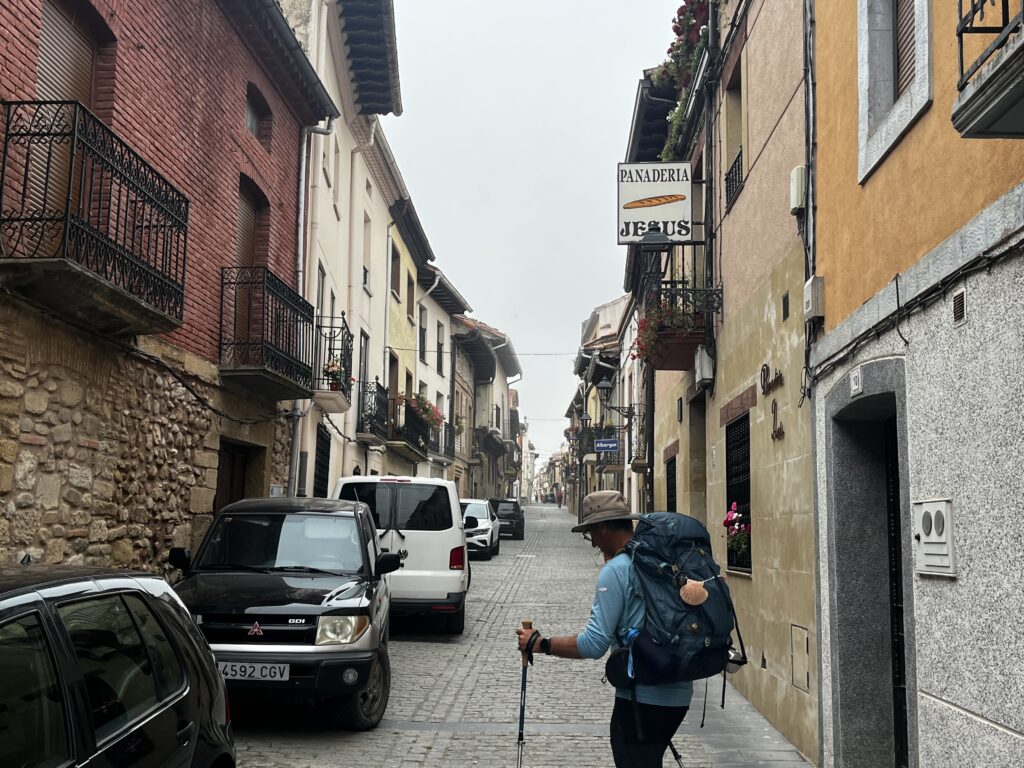
The village church was locked. The main street of the village follows the Camino, and it seems to go on forever.
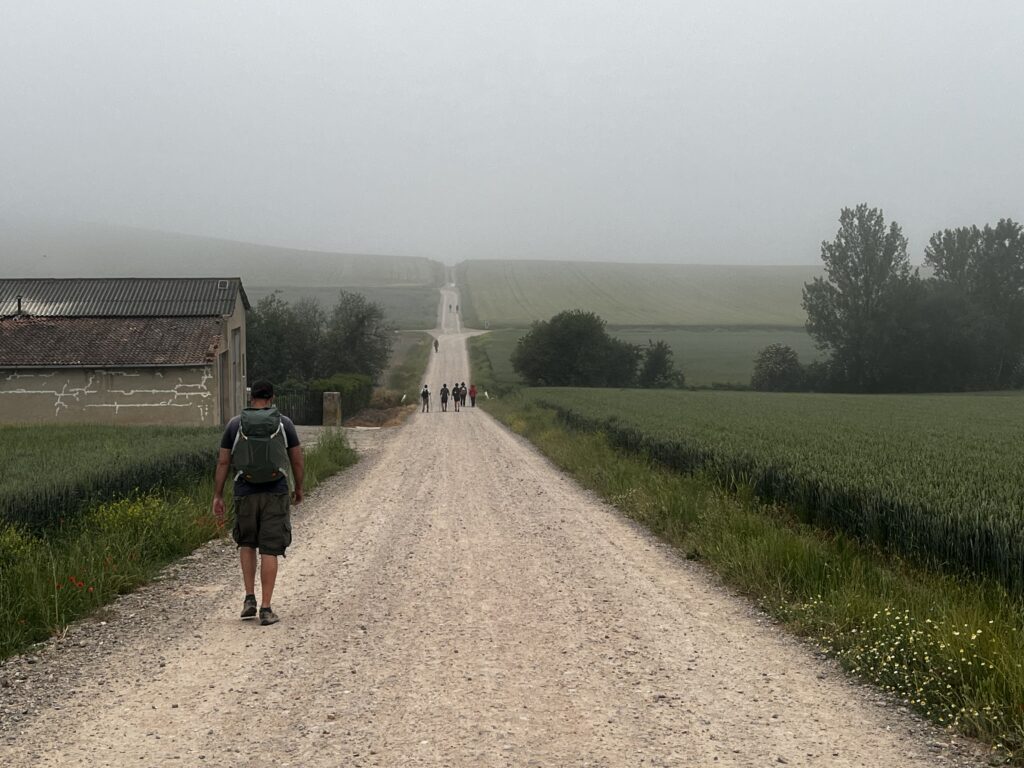
We weren’t at the end of it until 8:05 AM. The mist was so thick, it looked like the world stopped at the end of the village.
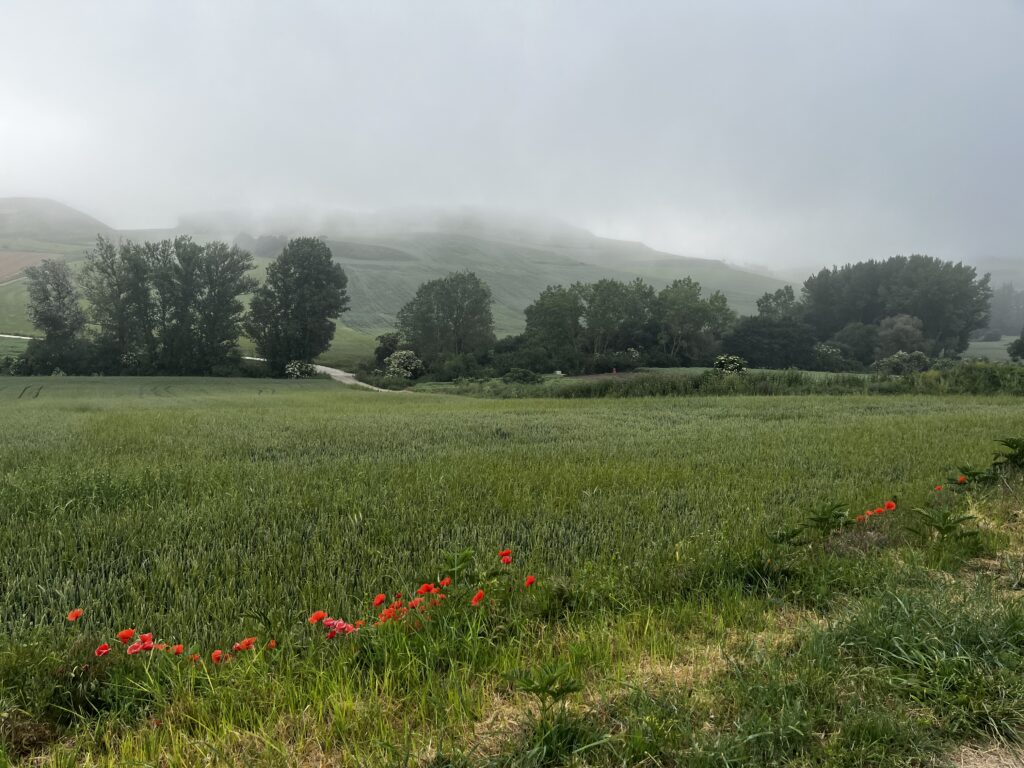
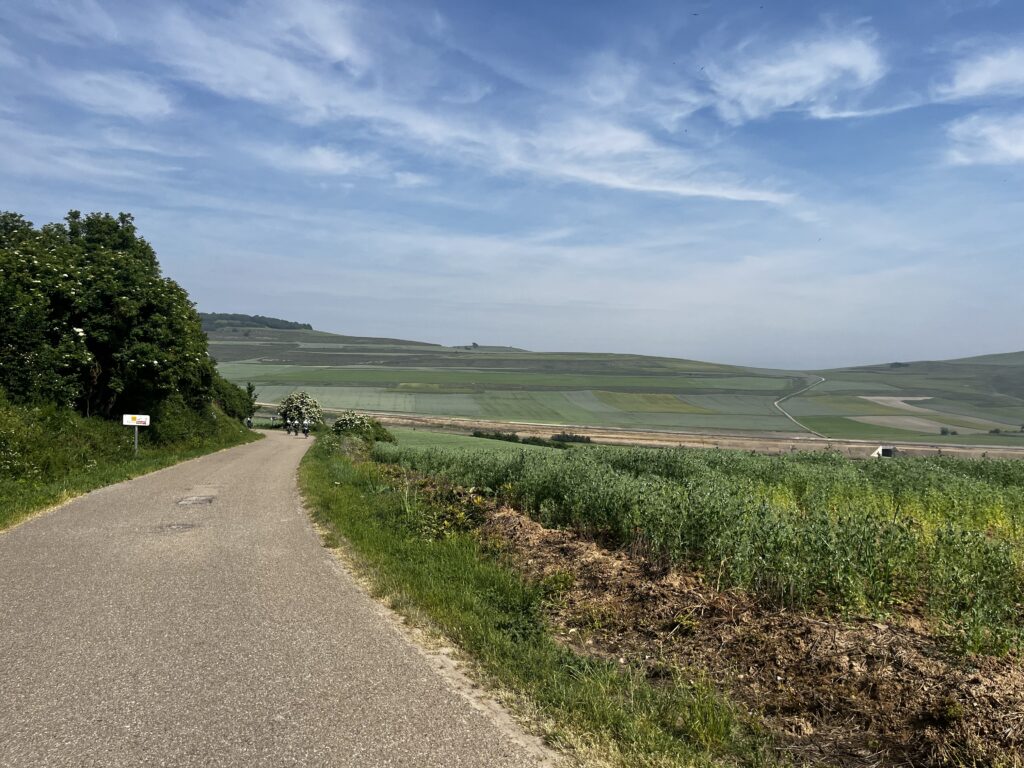
A concrete road let out of the village and into the mist. The air was sticky with humidity as we maid the transition to the gravel road and started wending our way up the shallow hills.
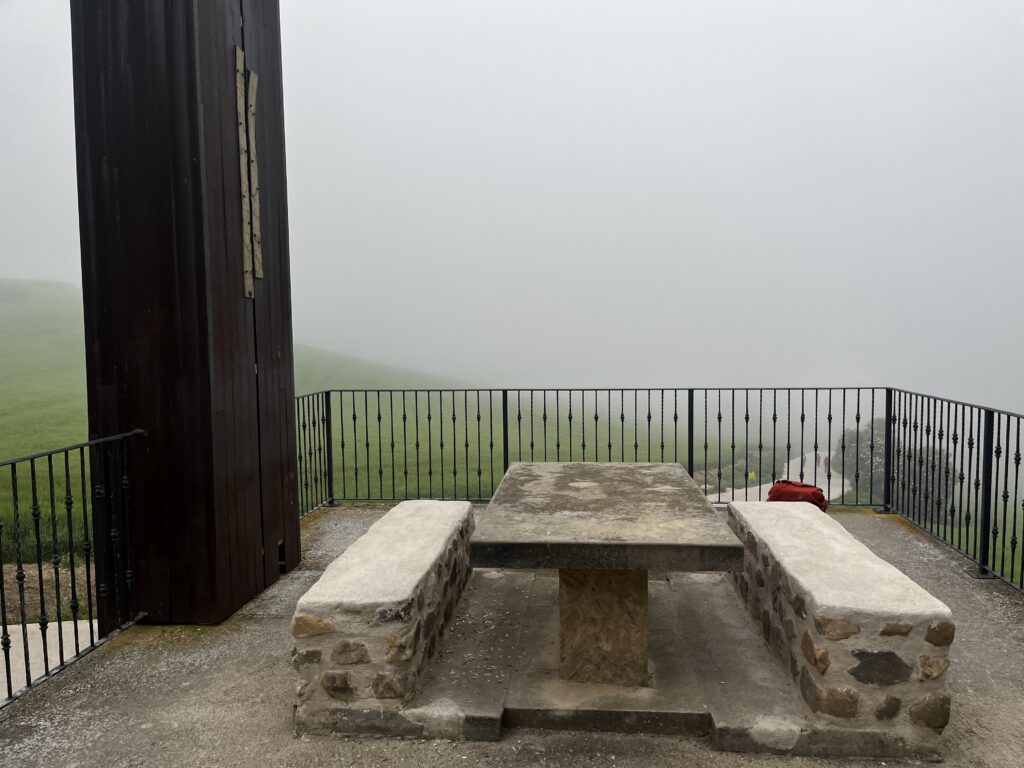
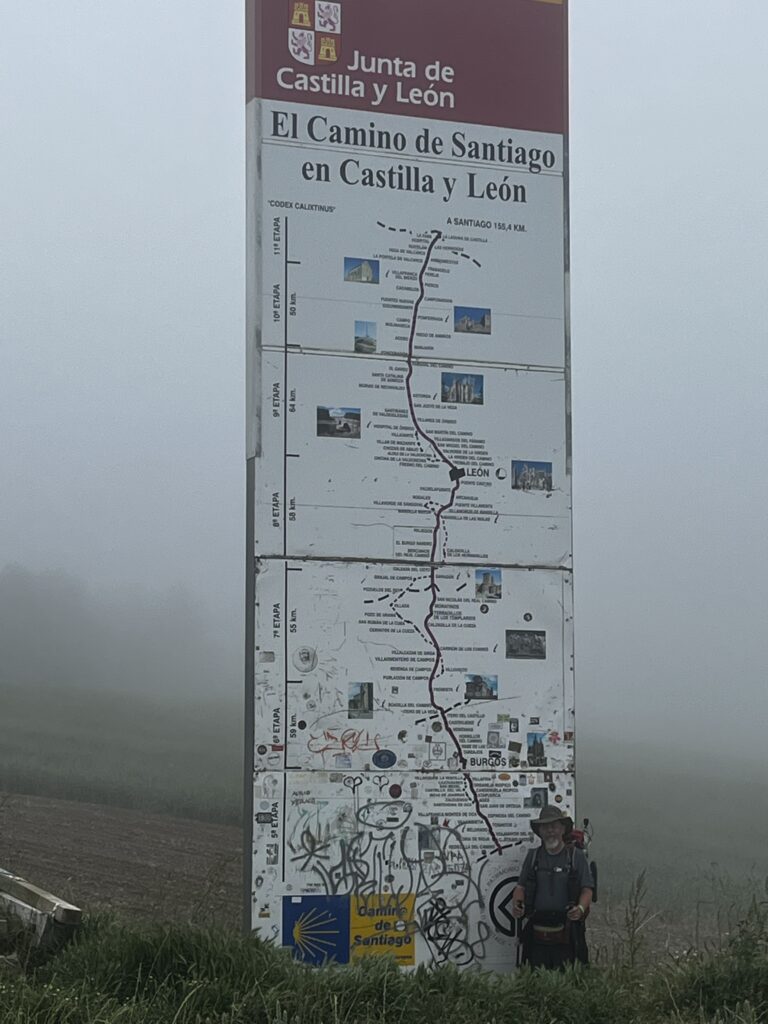
Sometime before 8:30, we crossed the border into Castilla y León, leaving La Rioja behind. The enormous sign at the border has always been a source of amusement to me. Most times I have passed it, it looks like some sort of alien monument in the middle of a field. Today, it was shrouded in the mist, which if anything made it look even stranger.
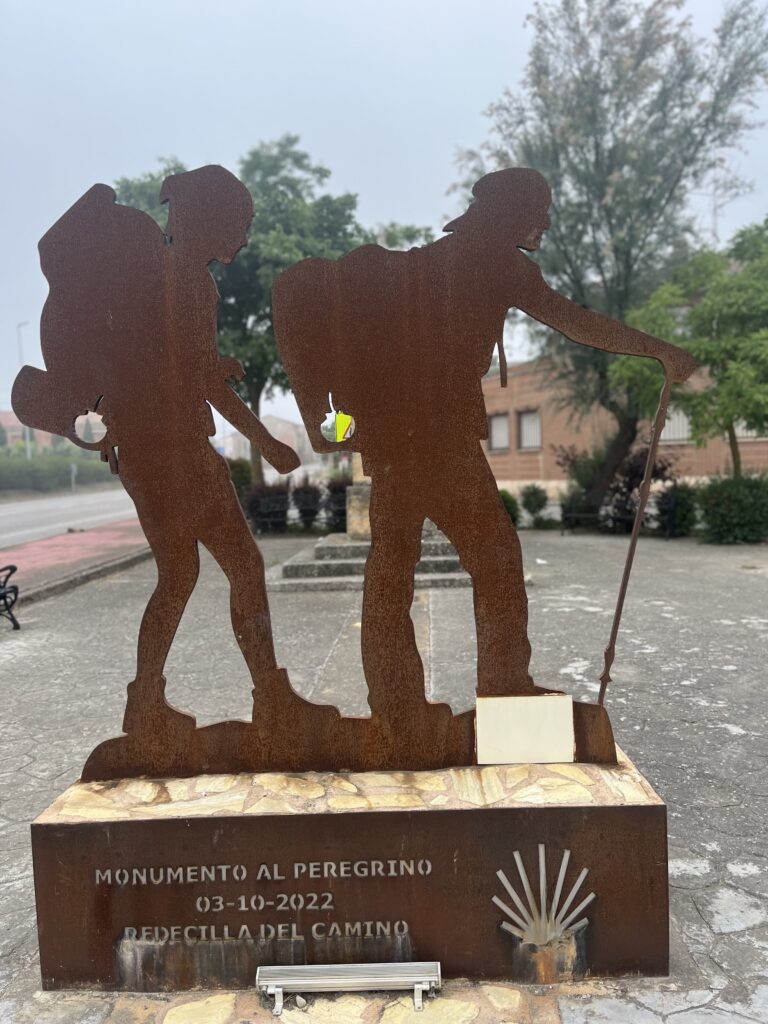
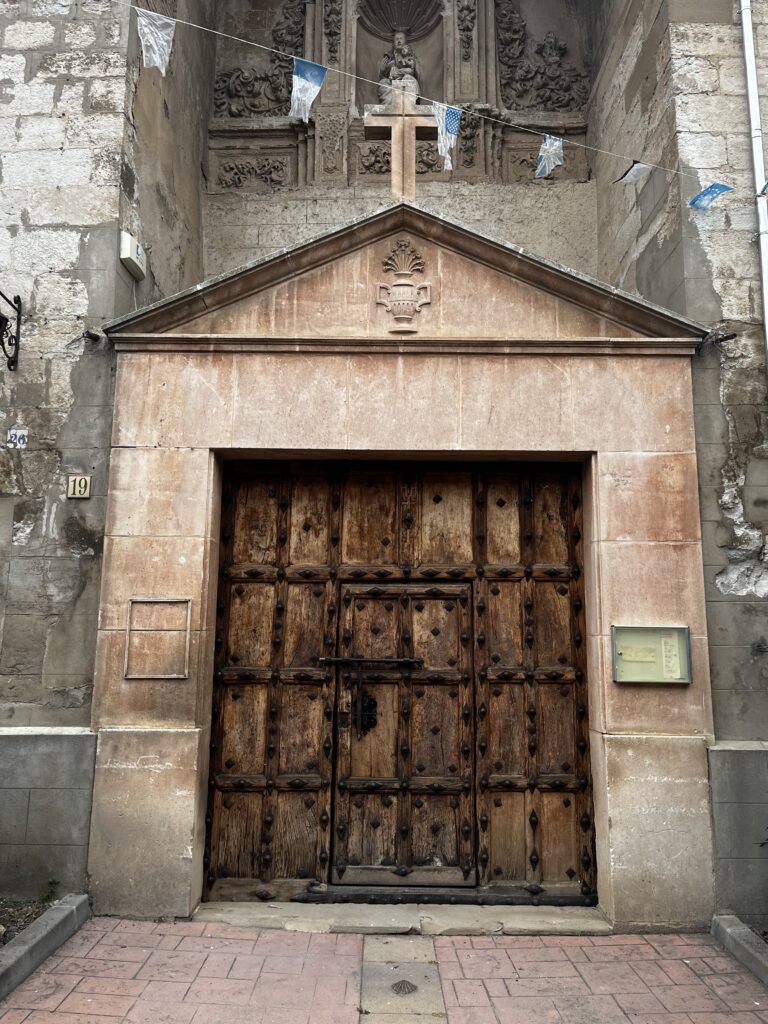
At 8:50, we arrived at the little village of Redecilla del Camino. We celebrated our first village in Castilla with café con leche. My attempt to visit the church failed in the usual way: locked doors.
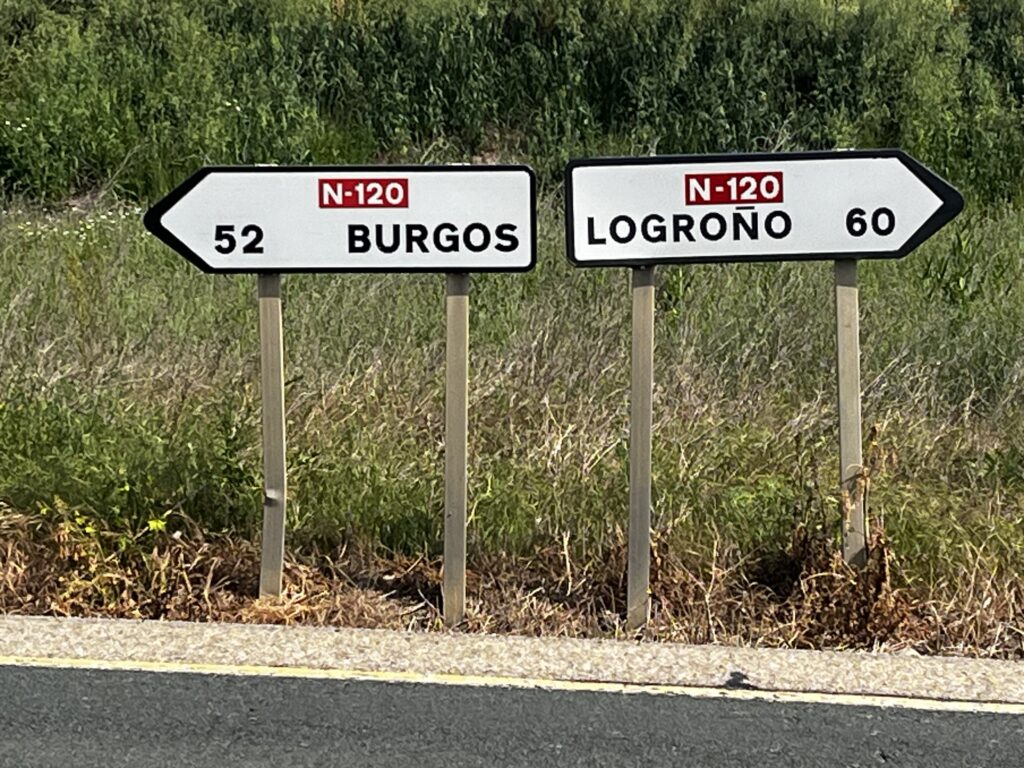
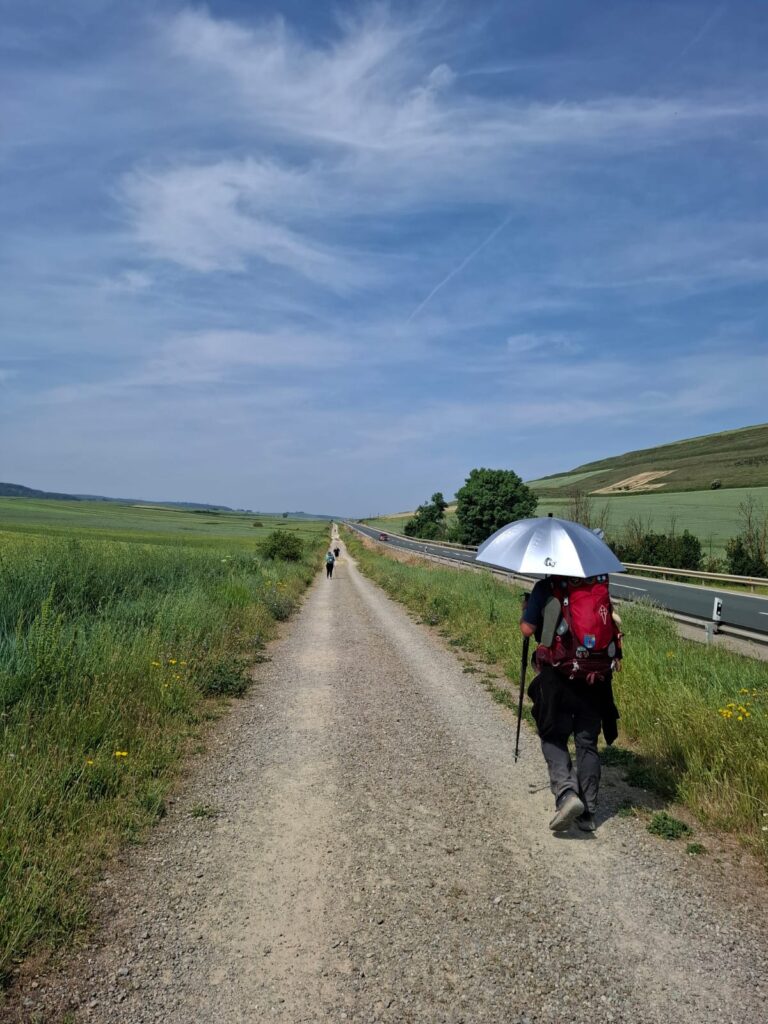
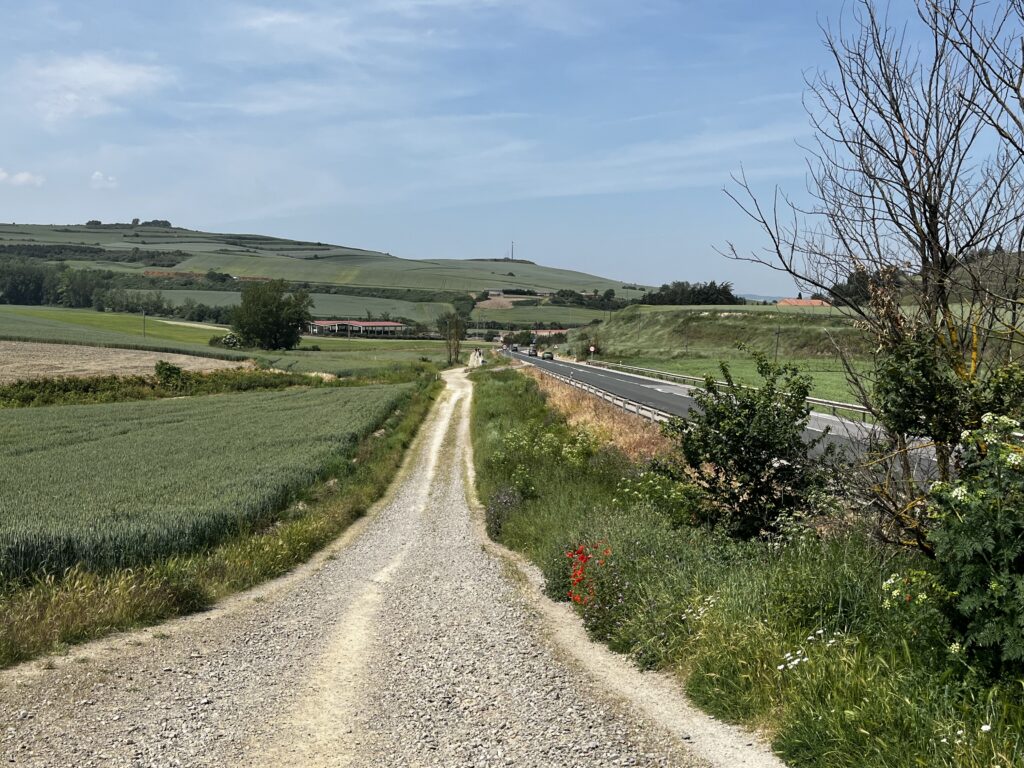
By 9:30, the Camino was now a gravel trail running directly next to the N 120 highway. This would continue for much of the day.
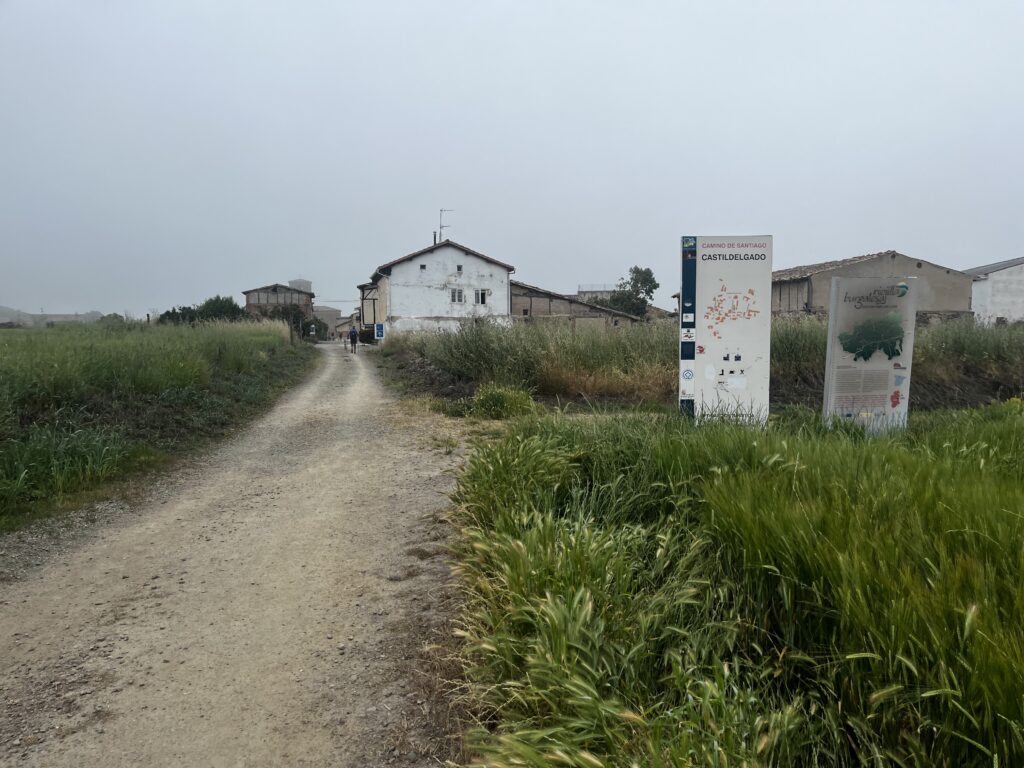
At about 9:40 AM, we passed through the little farming village of Castildelgado. Both the church and the old hermitage were locked. Then it was back to the gravel path next to the highway.
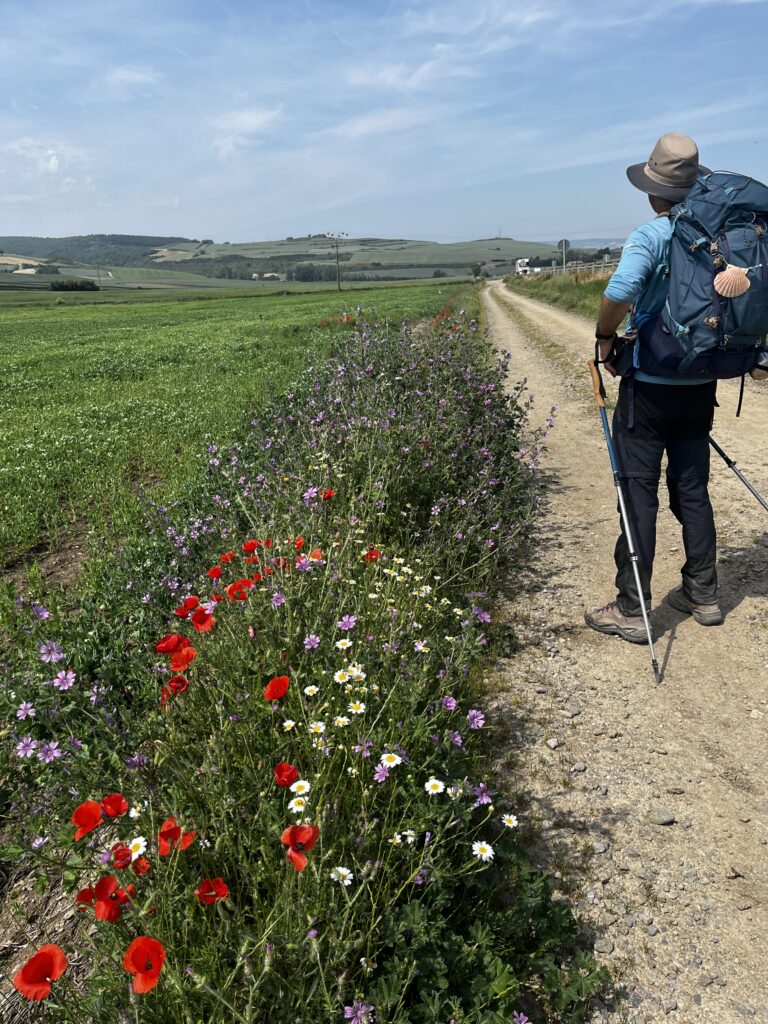
Sometime before 10 AM, the path pulled away from the highway and joined a gravel road under and past a number of highway bridges. The road wound up into the hills, surrounded by fields. By 10:05, the road had become concrete, and it was lined on one side with poppies as it approached the village of Viloria del Rioja. You can see the fluid nature of the medieval boundaries by the fact that we haven’t been in La Rioja for hours.
The village is most famous for being the birthplace of Santo Domingo de la Calzada. The font in which he was baptized is still in the village church. Sadly, the church was locked.
Next to the church, we found an amazing donativo café called “The Inner Camino”, run by a pair of Dutch pilgrims. It’s designed to be a little home away from home for pilgrims, and it succeeds in every possible way. They only opened in April of this year, and I wish them every possible success.
By the time we left the beautiful little village, the mist had all but lifted. It was already warming up fast.
The Camino took us on an asphalt road back to the highway. Here, we rejoined the gravel road next to the highway. I put up my umbrella at about 11:15, which is probably the latest I’ve put it up in a week.
Somewhere around 11:30, we entered a tiny village with a big name: Villamayor del Río. This is sometimes called the “town of three lies”. It’s not really a Villamayor – it’s a tiny village, a hamlet really. And there’s no Río, just a little stream. I’ve never been able to figure out what the third lie was. Perhaps it is a self-referential paradox.
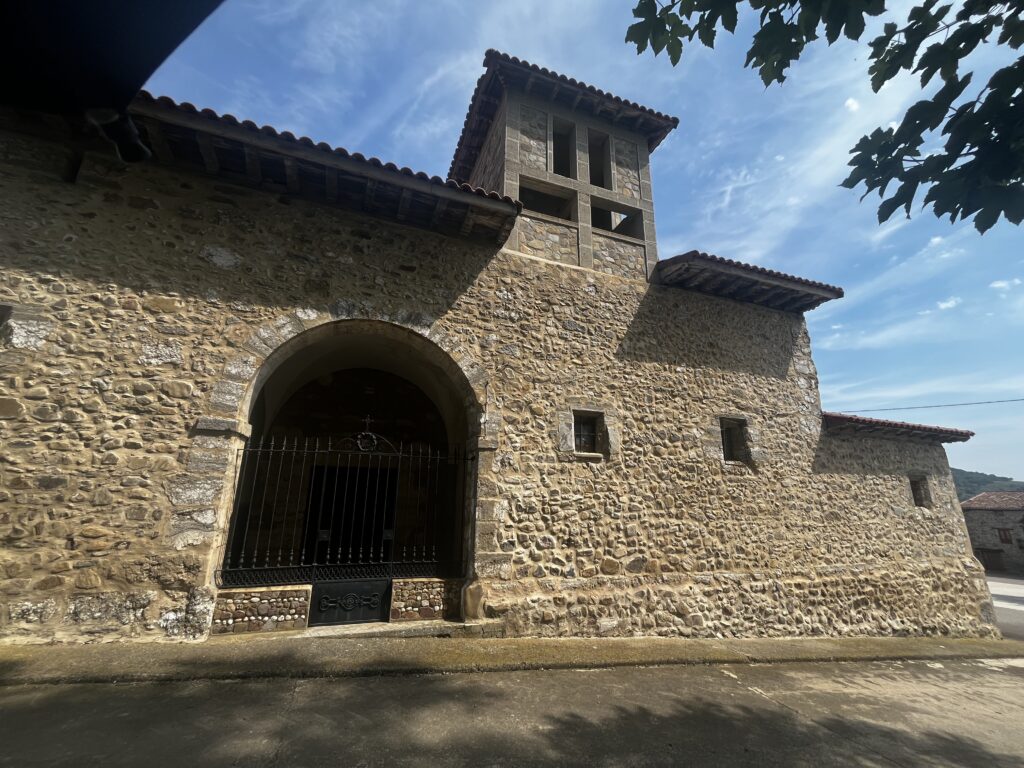
On the way through, I made sure that the church was safely locked. It was.
After the village, it was back to the gravel frontage road. I could almost feel the temperature rising as we walked. Every now and then, there would be a brief breeze and every time it was a blessed relief. I was going through the water in my bottles pretty quickly now.
We sighted the first buildings of the village about 12:15. Within just five minutes, we passed the sign announcing the village of Belorado.
As we got to the sidewalks, I went to put the tips back on my hiking poles and discovered that I had lost one today. I will have to dig through my pack to find one of my spares.
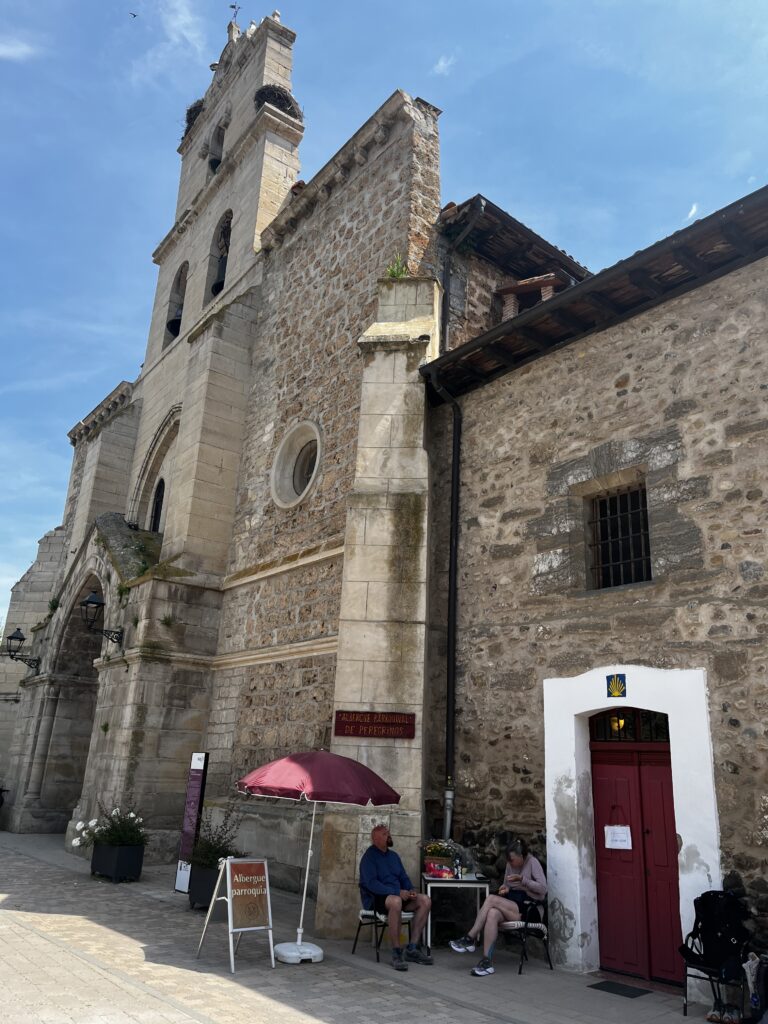
By 12:30, our bags were in line for spots in the albergue parroquial and we were parked in chairs in the shade nearby. The albergue parroquial directly adjoins the church. I’m pretty sure it used to be the rectory.
After a hearty lunch with Herve, I headed over to the church.
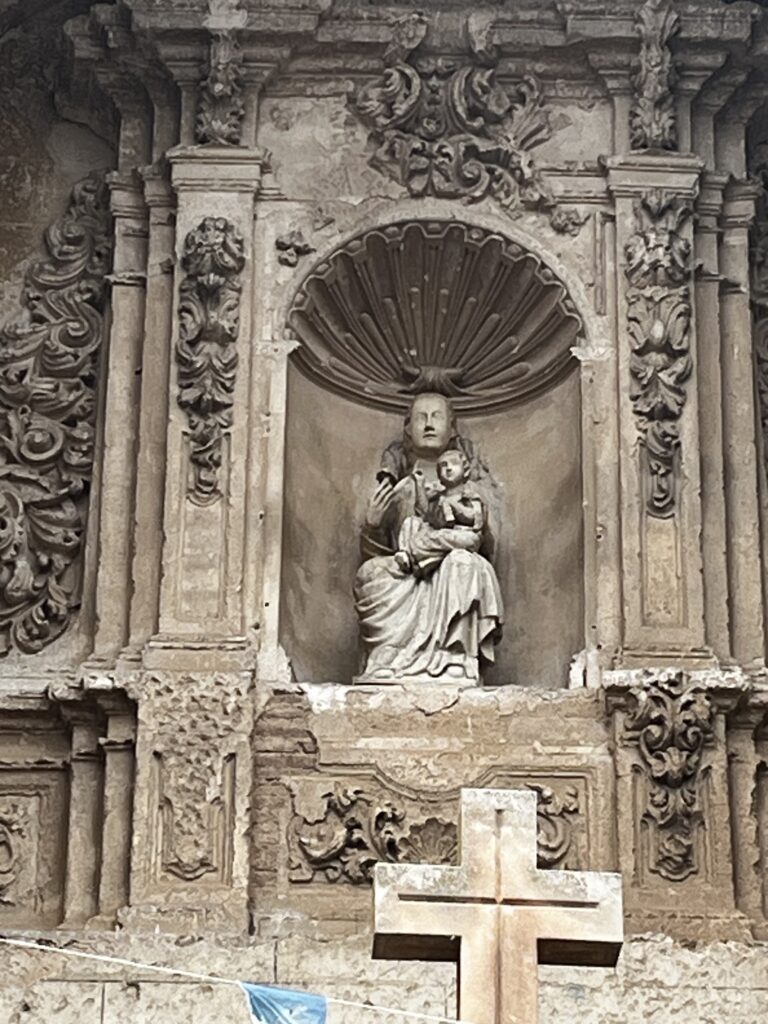
The Church of Santa María la Mayor was once a castle chapel, and many of its peculiarities can be explained by this. The castle of course is long gone.
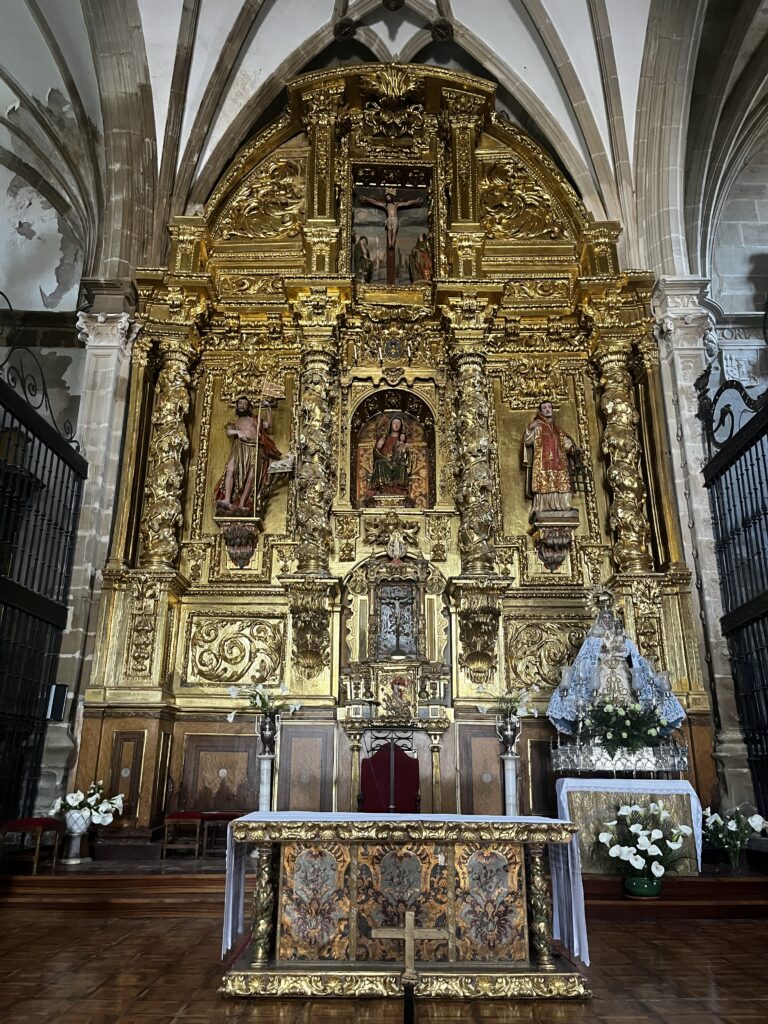
The reredos in the sanctuary feature a seated Virgin and Child flanked by Saints John the Baptist and Lawrence, an unusual combination. While the gilding seems a trifle haphazard, the actual carving of the altar piece seems quite good.
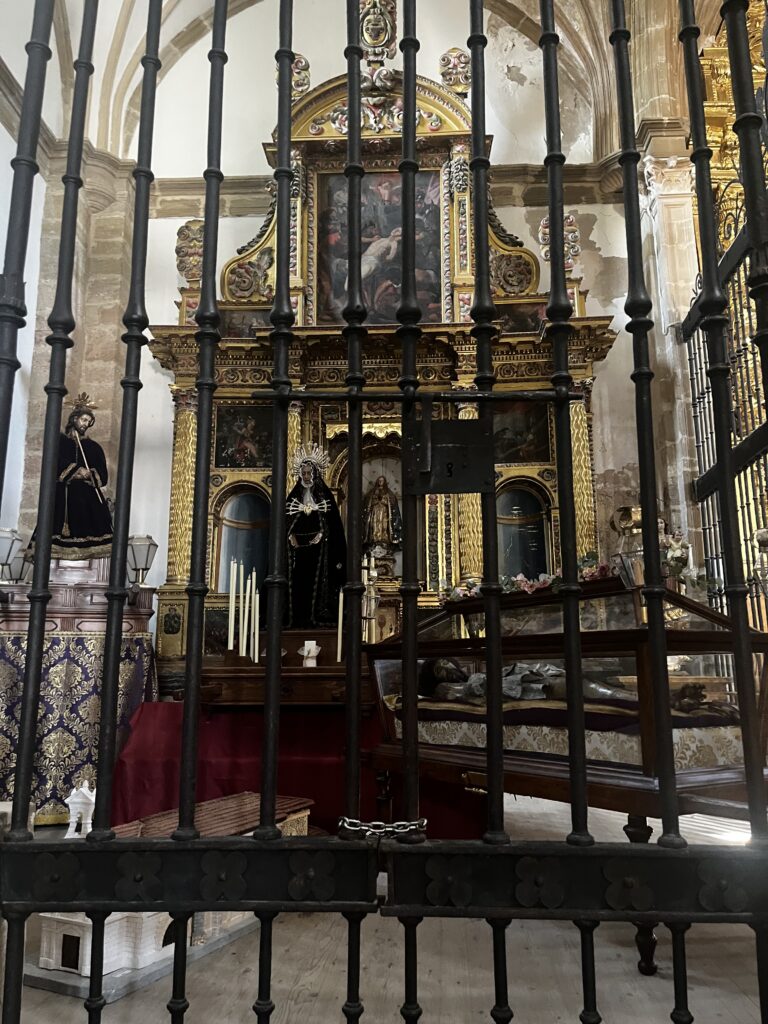
The whole of the church, and especially two of the four gated side chapels, are full of statues to be carried through the streets in the Holy Week processions. I can only imagine what that must look like here.
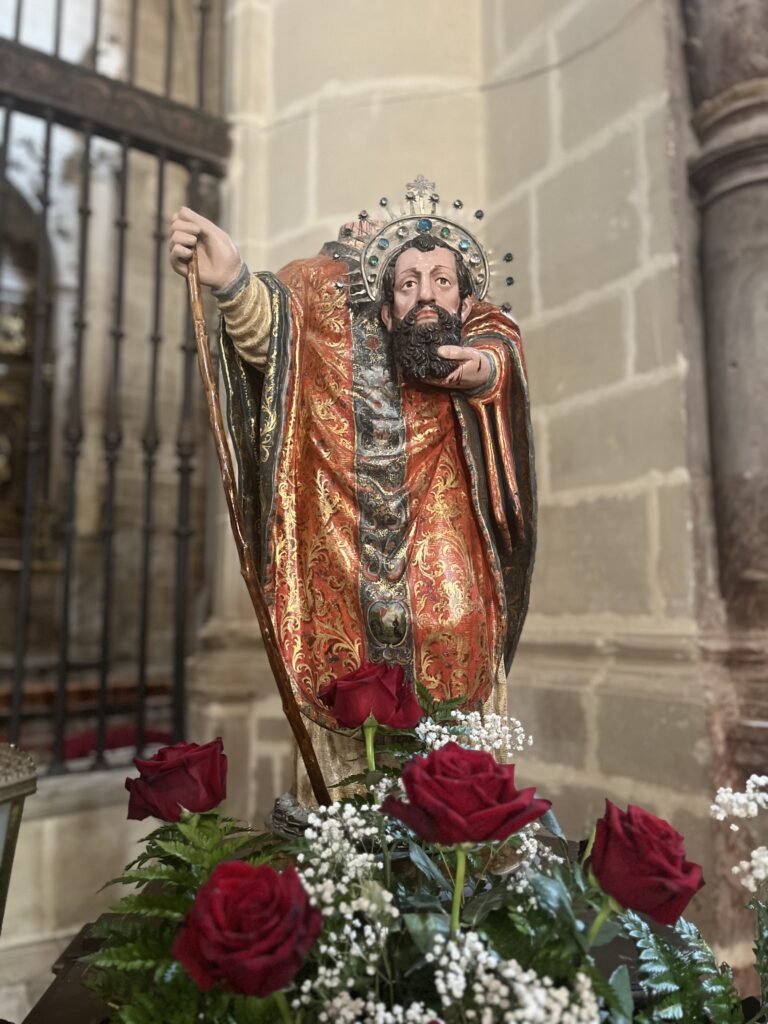
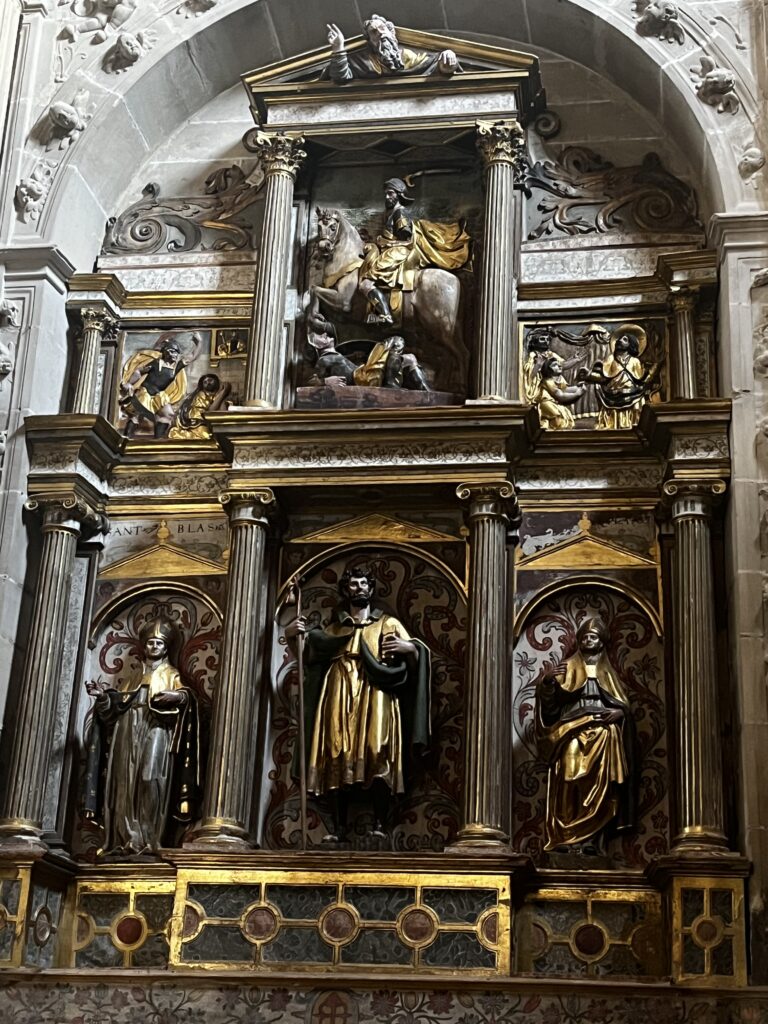
I was most drawn to the one open side chapel, dedicated to Santiago, which features two different statues of the Saint, one as a pilgrim, and one as a warrior on horseback.
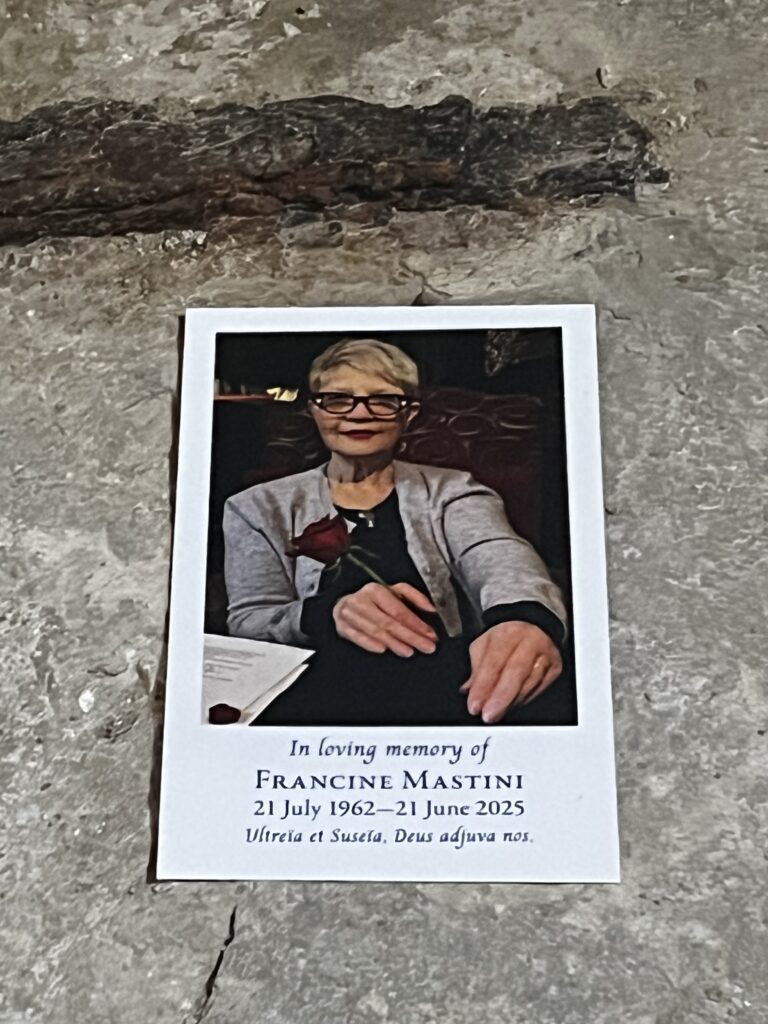
I prayed for Francine in the chapel, and I left one of her cards on what was left of the altar. A pedestal remains, but the mensa and gradines appeared to have been chiseled away.
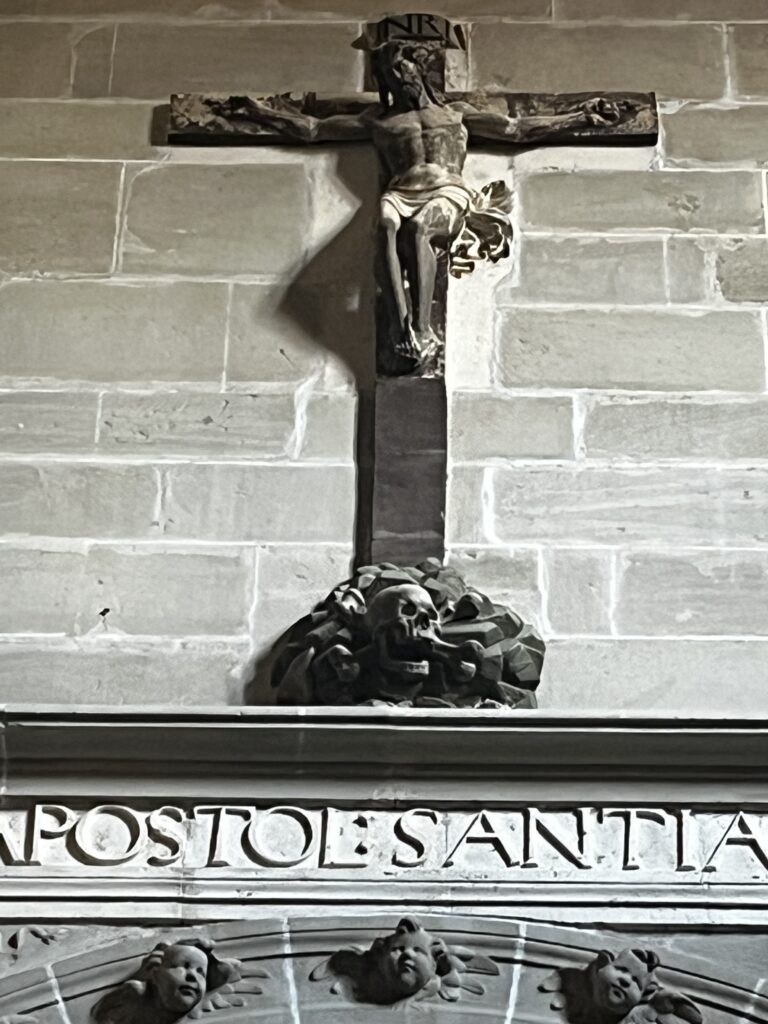
The skull at the base of the crucifix here is truly horrifying in a momento mori kind of way.
Although it was only about half past four at this point, I headed back to the albergue for a little bit of rest. Today was a relatively short day, but the cumulative fatigue is beginning to get to me.
I have decided to take a rest day in Burgos. I had not originally planned on this, but I am running slightly ahead of schedule, and I definitely need a full day without carrying my pack.
Besides, I have always spent an extra day in Burgos, because just to visit the cathedral takes all morning.
Tomorrow we will go to San Juan de Ortega, and then the following day to Burgos. So Tuesday will be my day of rest. Herve is also planning on a rest day there.
Herve persuaded me to go out and explore the town. The other church in town, the 13th-century Iglesia de San Pedro, was of course locked. It’s way too much to expect two open churches in a town.
We went to the Plaza Mayor, and for some reason there were loudspeakers blaring the Rolling Stones. The plaza itself is lovely, surrounded by arcade shops, cafés, and bars with a ring of trees and a performance stage in the middle.
We ran into Katie and Amy. It turns out they are both also taking a rest day in Burgos. It seems to be a common theme, a day of rest before the Meseta.
I attended Mass in the church next door in the evening. It was nice to fulfill my Sunday obligation on Camino. The Mass was all of 25 minutes long.
Date: 30 May 2026
Place: Belorado
Today started: Santo Domingo de la Calzada
Today’s Photos!
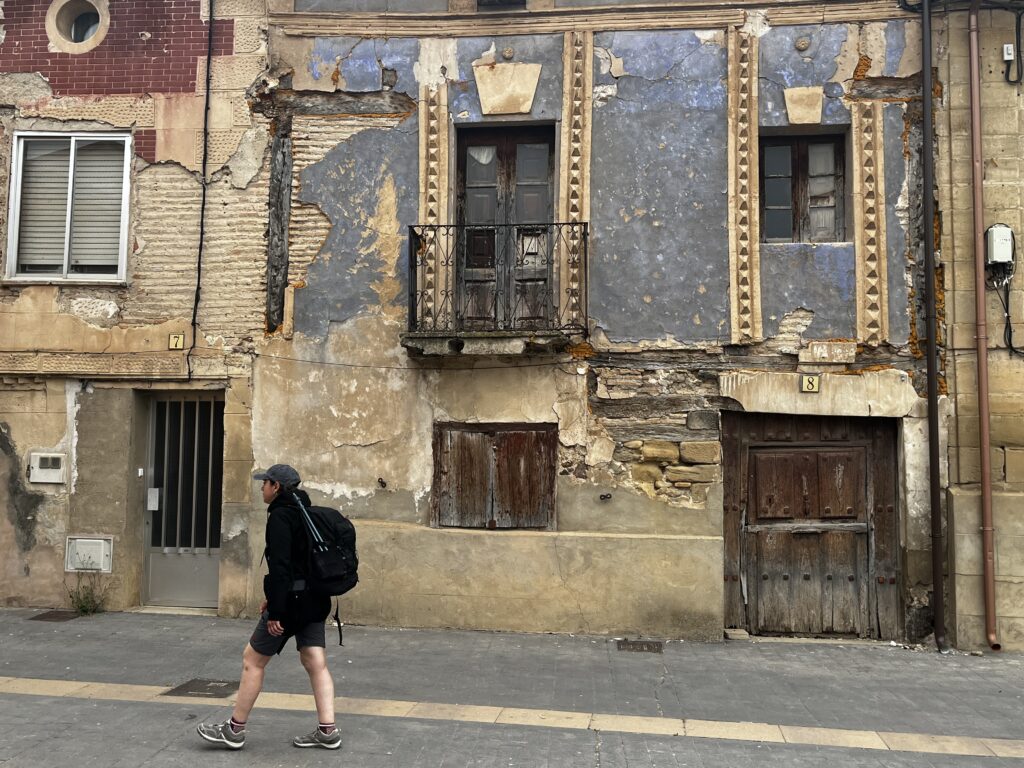
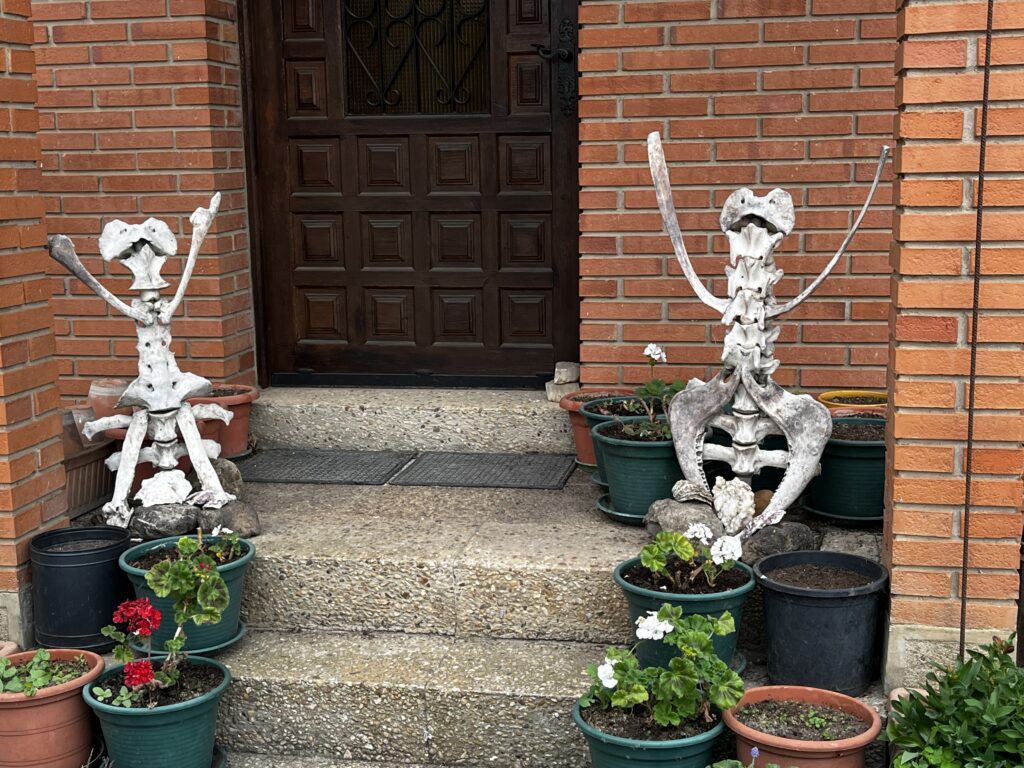
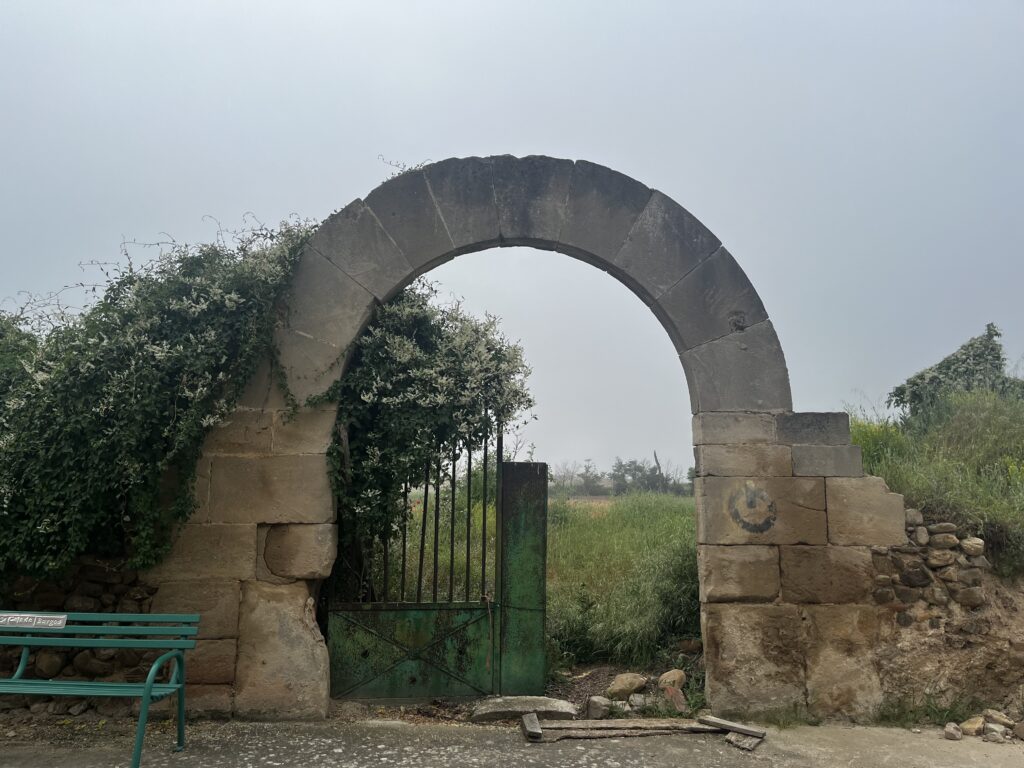
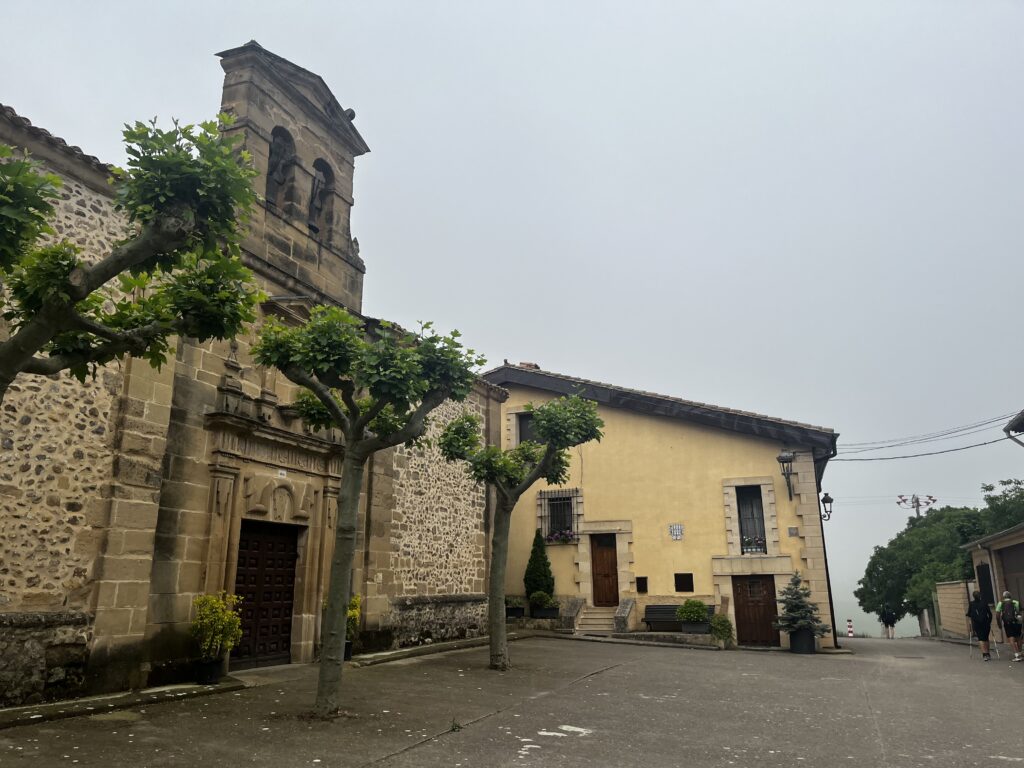
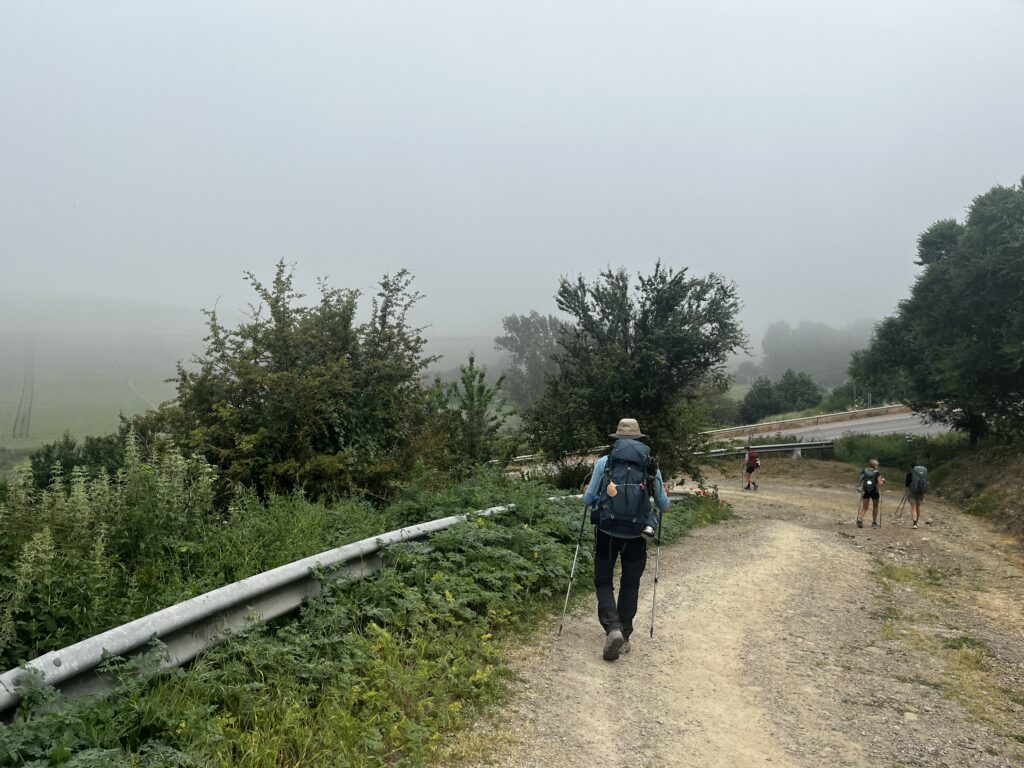
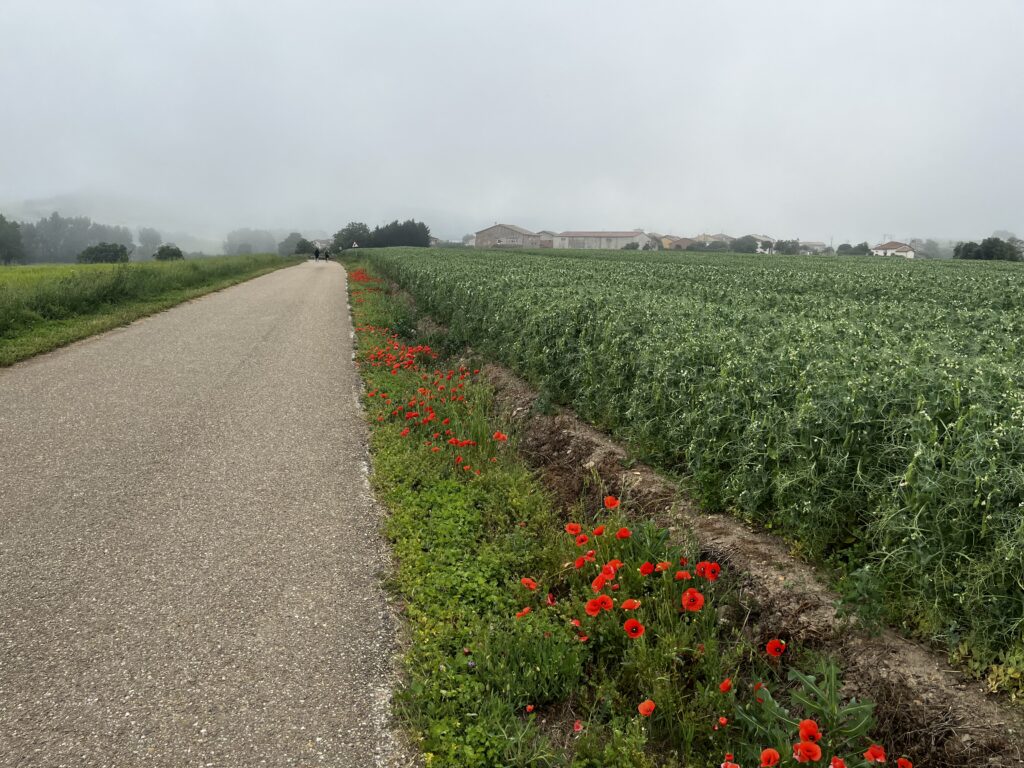
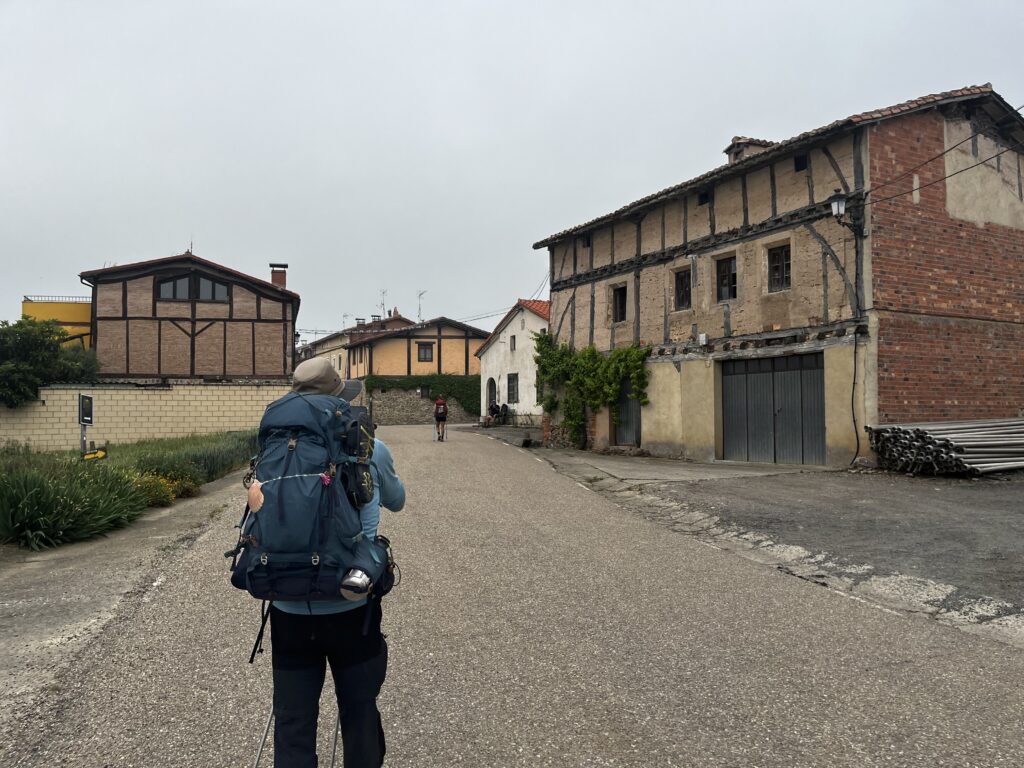
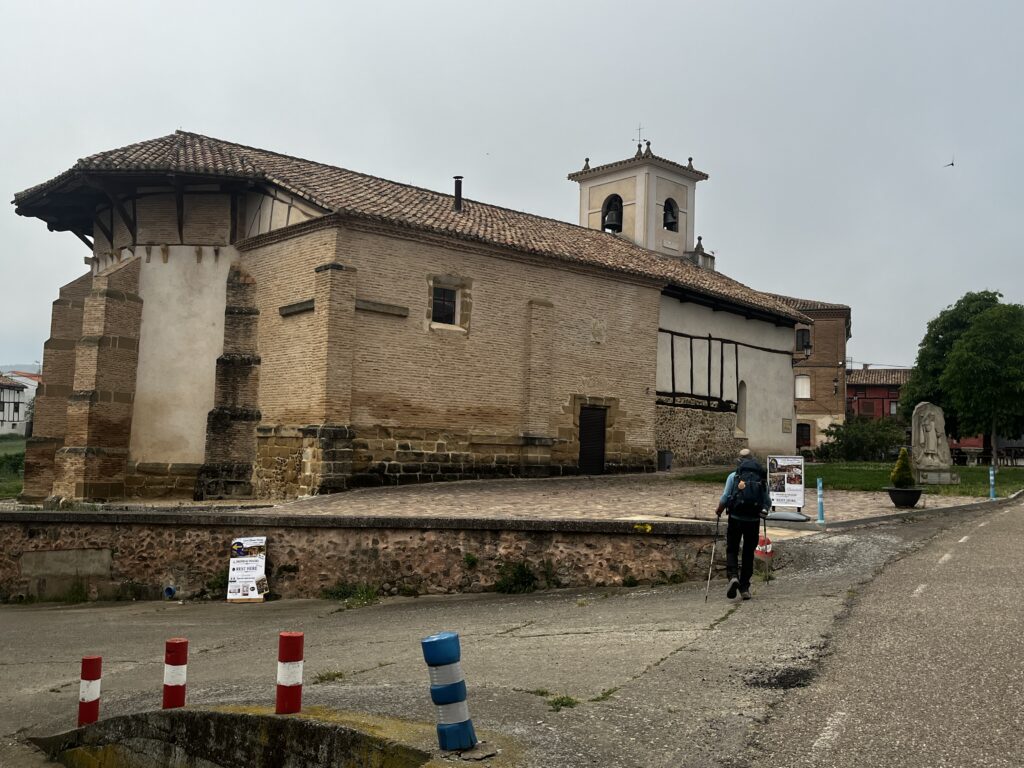
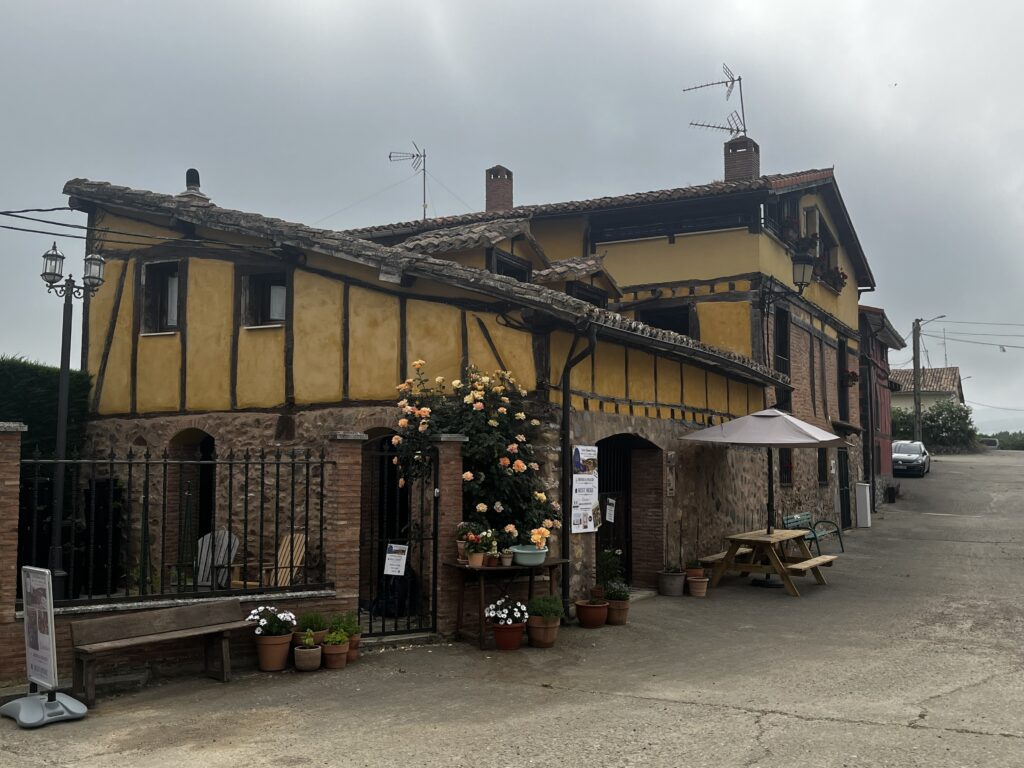
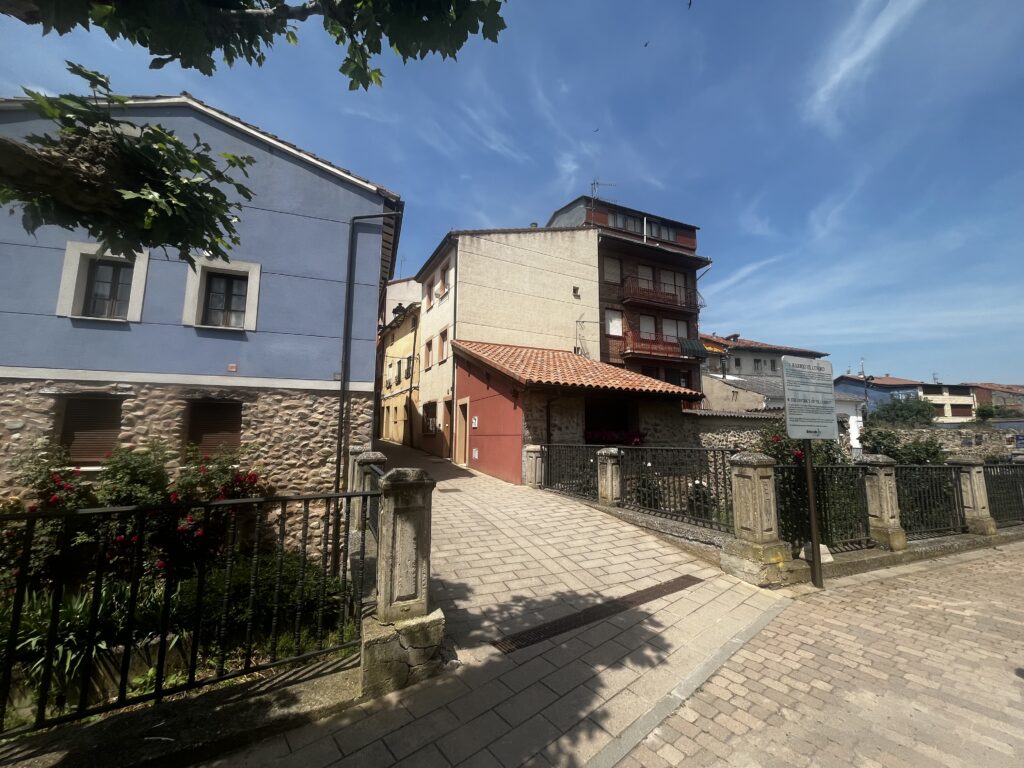
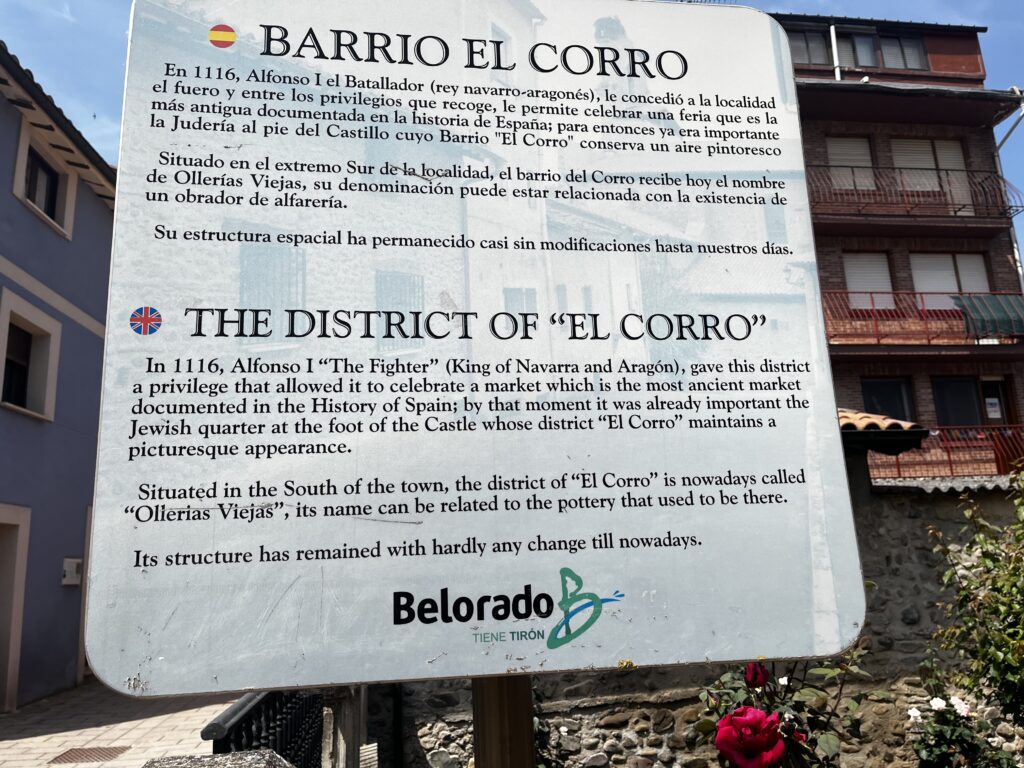
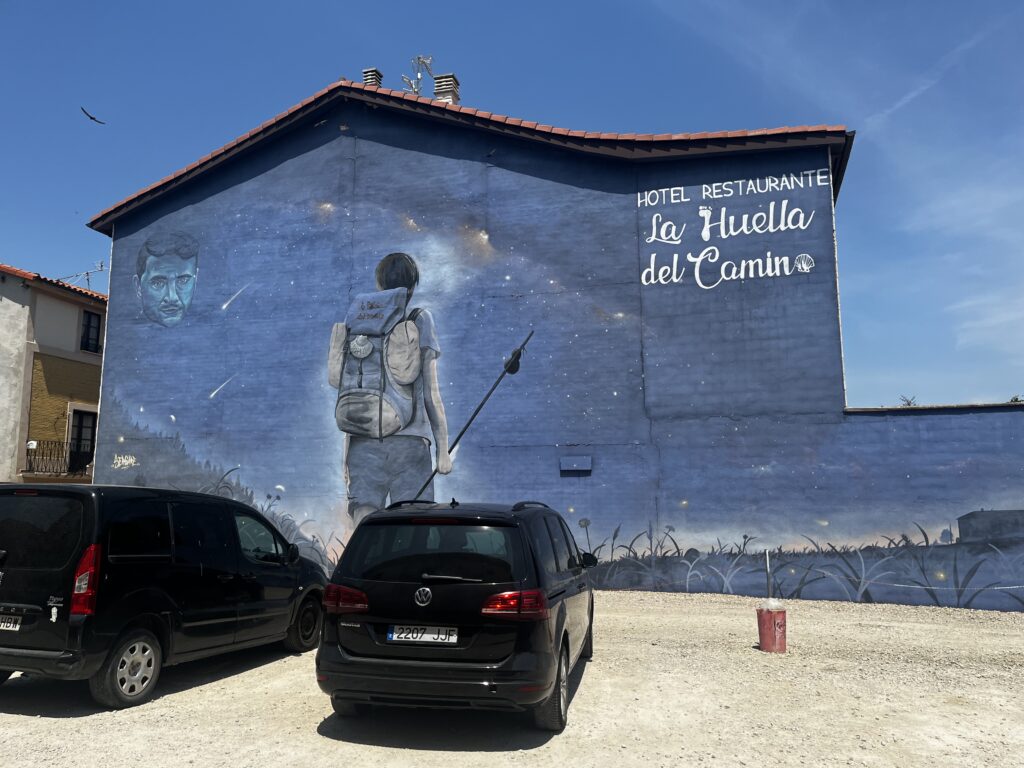
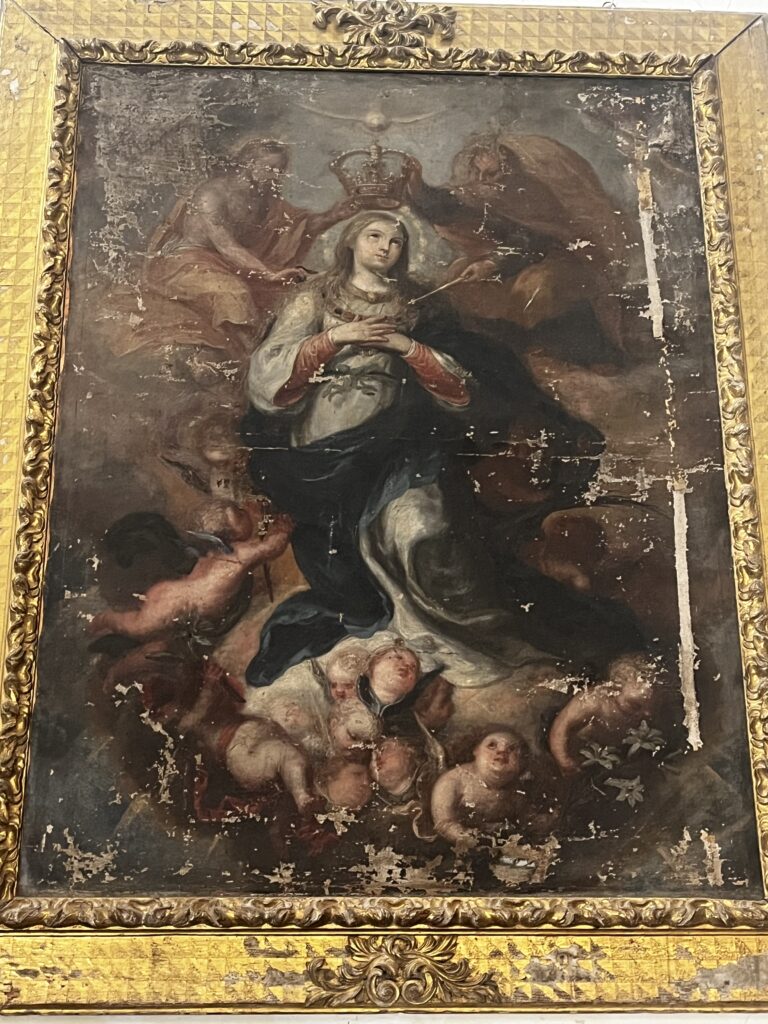
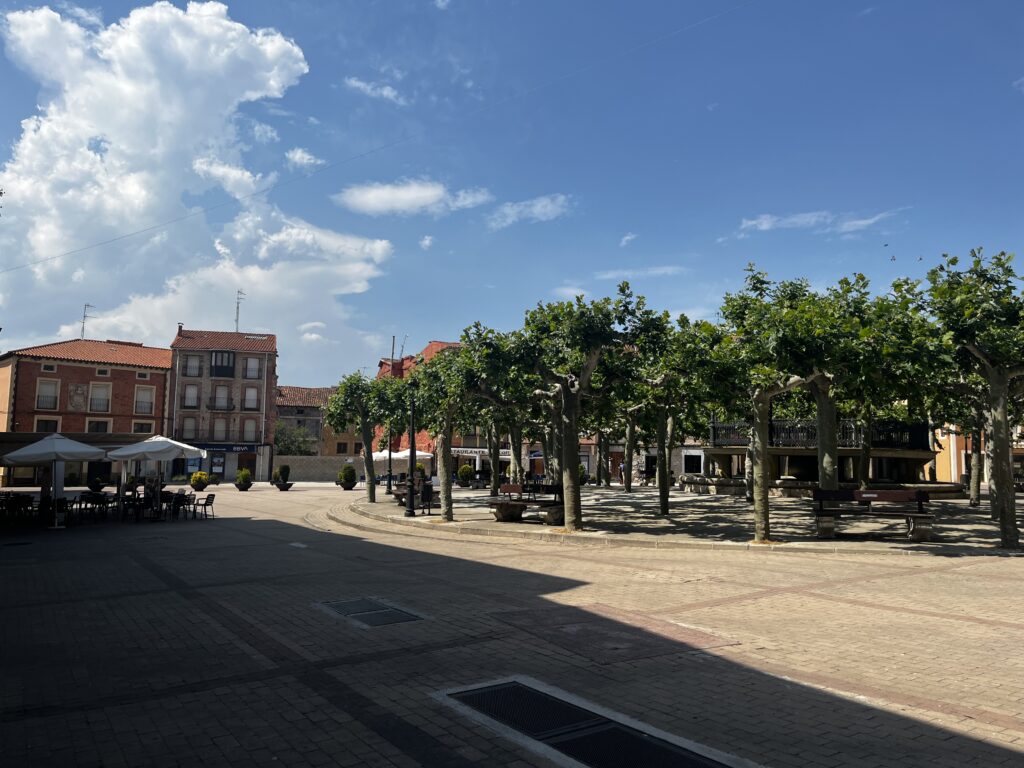
Belorado was another neat Spanish village.
“I made sure that the church was safely locked”
THIS is the hermeneutic key to understanding why all the churches on the Camino are locked – that American Inspector Thom is coming and they want to be sure to live up to expectations (which, sadly, they are )!
😀