
Via Lemovicensis: an Overture of Artillery and Medieval Marvels
Missing so many people and things this morning, Francine most of all. It was already after seven by the time I left my room, and I was keenly on the hunt for breakfast – not to mention the Camino route.
Breakfast was café crème and a banana at the little Tabac across the street. The owner seemed genuinely pleased to see me, and kept calling me “le Américain”. I could hear him talking with the regulars about the American walking to Compstelle.
He really was very kind. At one point, he offered to take me to the grocery for supplies, but of course I had done my shopping last night. I’m pretty sure he didn’t charge me for the banana.
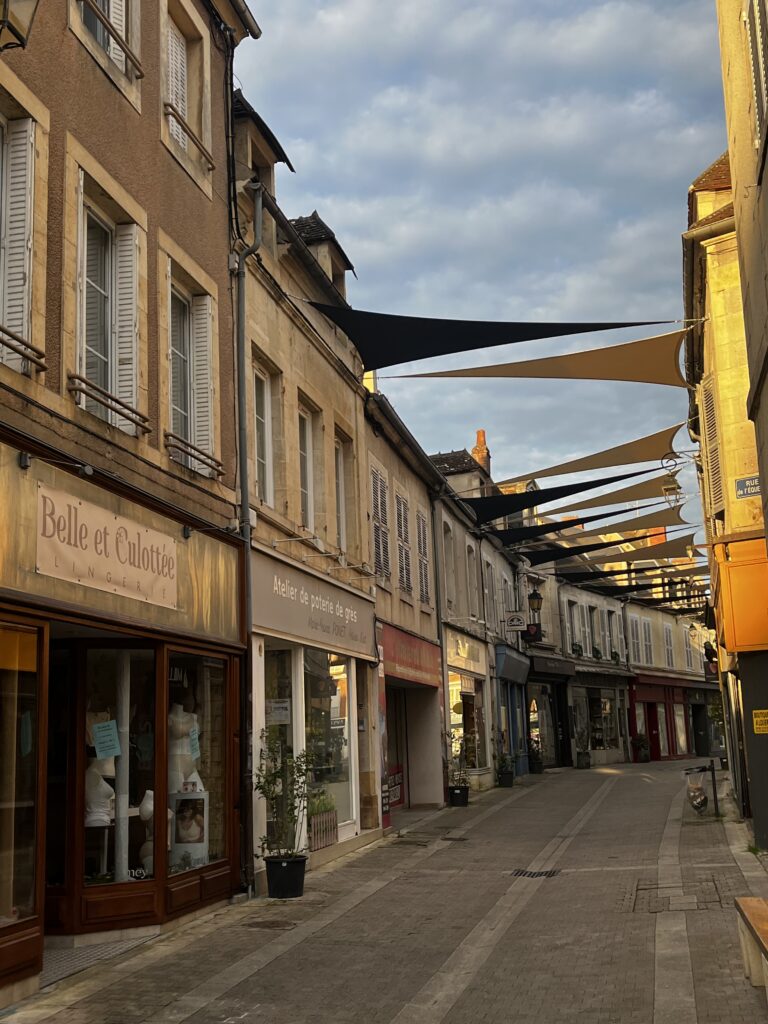
As for finding the Camino, that required the GPS. To get there, I cut through a part of the medieval city I hadn’t yet seen, and it was lined with charming little shops. This really is a bustling and delightful town.
It was cool, but not as chilly as it had been in days past, and although not overcast the sky was full of rippling white clouds.
Eventually, I found a broad avenue to take me out of town. I spotted my first GR blaze at about 7:50, and a few minutes later passed my first church of the day. It was originally the chapel of a 17th-century Capuchin convent. After the Revolution, the convent spent some time as a foundry. The chapel is now a parish church dedicated to Saint Roch. At this time of the morning, it was of course locked.
By about 8 o’clock, I approached the long bridge over the River Cher, and I finally saw my first Camino marker. The river itself is broad, and in addition there were raised embankments and a wide flood plain around it upon which no building stood.
On the other side of the bridge, I entered the once-village now-suburb of Orval. The Camino turned to follow a major road that paralleled the river. Eventually, it turned off onto a little side street that quickly led me out into the countryside once more.
It wasn’t even 8:20 AM, and I was starting to sweat. That did not bode well for the rest of the day. I took off my fleece at a convenient spot and pressed on into the fields on a dirt and gravel road.
At some point I became aware of a distant thumping sound that reminded me very much of the sounds you hear when they’re practicing on the artillery range at JBLM near Tacoma.
I seemed to be walking towards it.
Having walked every imaginable road surface on this one little path, I arrived in the village of Bouzais at about 8:40. I learned yesterday that this village is the more usual stage stopping point, rather than the big town where I stayed.
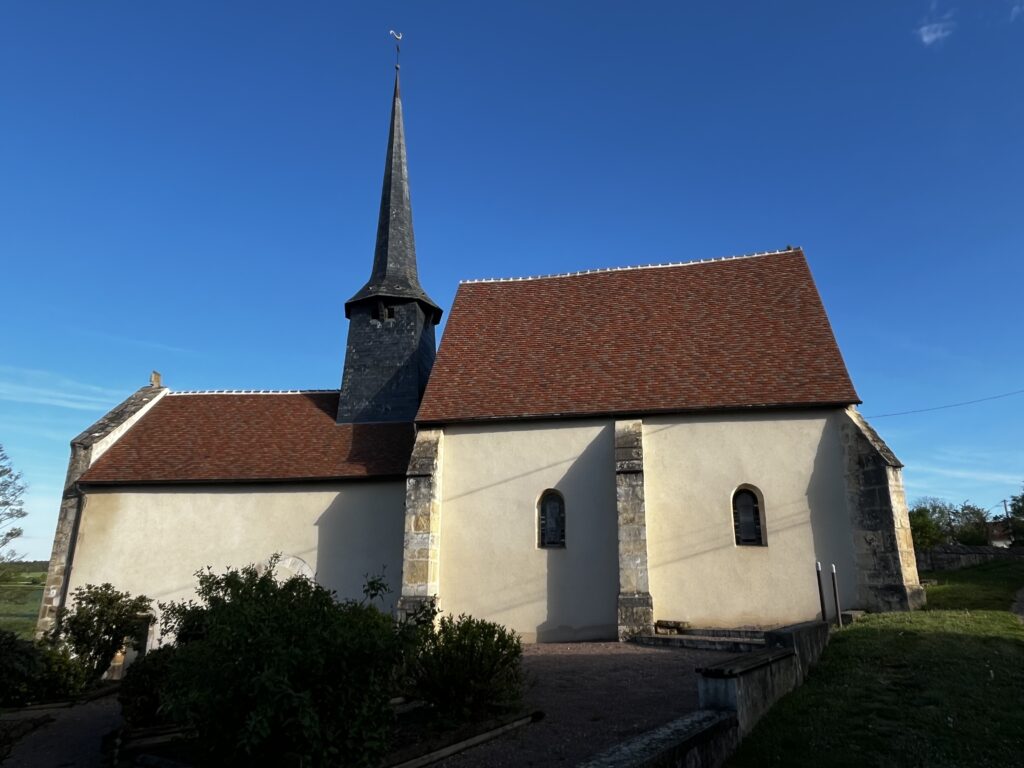
The charming little 15th-century country church of Saint Roch has a bell tower made entirely of wood, while the rest of the building is stone. It was surrounded by floodlights, so it seems as though the inhabitants here are very proud of it. It was of course locked.
I returned to the countryside on a narrow asphalt road. The sound of artillery fire was now a slow, constant drumbeat.
By 9 o’clock, the clouds were mostly gone and I was wearing sunglasses and sunscreen. Shortly thereafter, I crossed a bridge over a major highway, the A 71, and then through the three-house four-barn hamlet of Les Vernes.
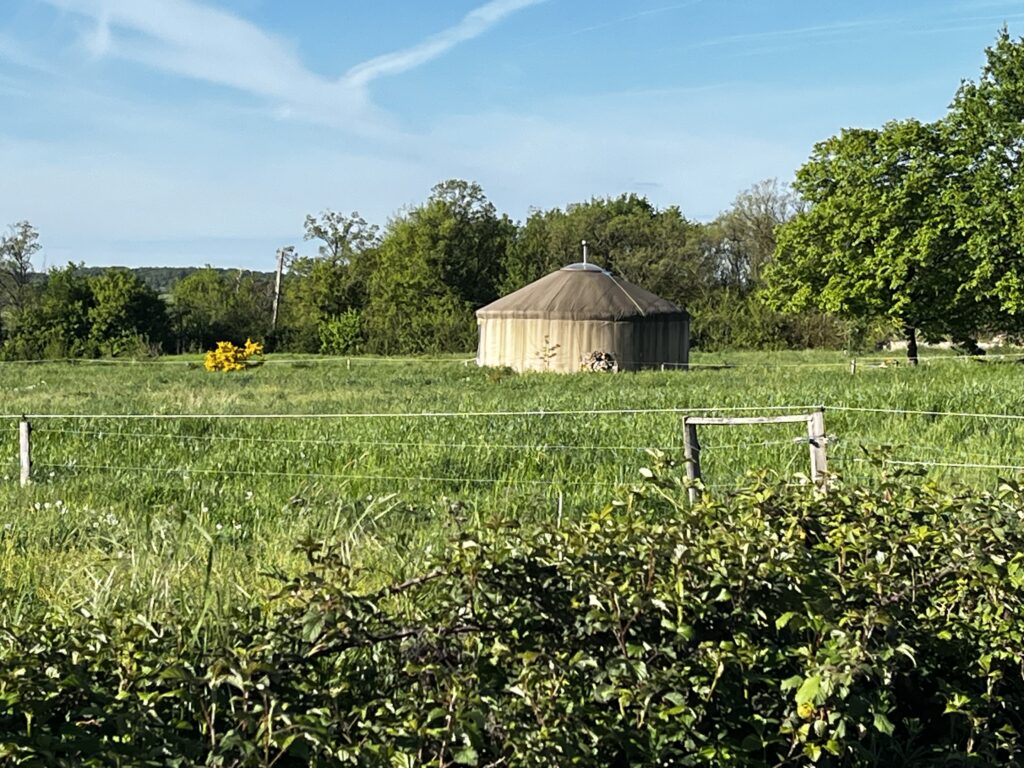
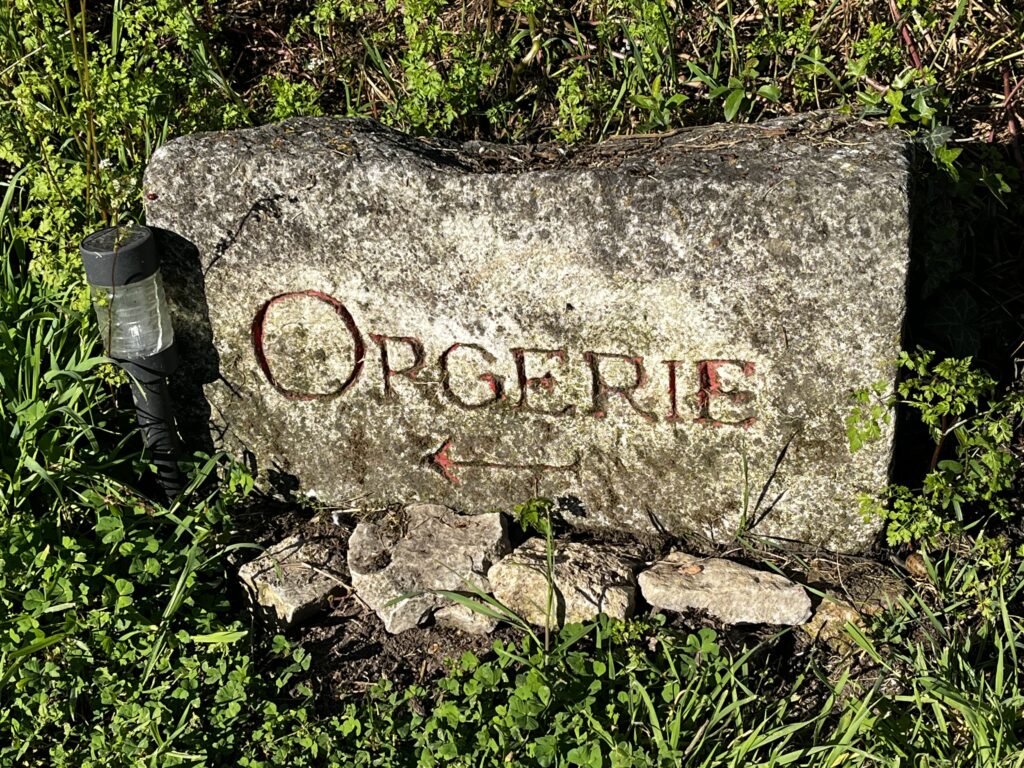
I passed through the hamlet of Bord at about 9:30 AM. The vast majority of the inhabitants appear to be of the bovine variety. I did however see a yurt there, which was kind of fun. I was definitely getting closer to the artillery. I could now hear the booms echoing in the valley.
I saw two young kids on a scooter just as I was entering the hamlet of Les Boutillats at about 9:45. They shouted a jovial “bonjour!” before speeding past me. They were quite a few old stone houses here in various states of repair and restoration.
The name of the hamlet didn’t sound familiar to me, so I checked my GPS. Sure enough, I had taken a wrong turn over a kilometer back. I turned around and retraced my steps. It turns out that I had absentmindedly followed the Camino bike route instead of the walking route. Well, there’s another couple of kilometers added to my day.
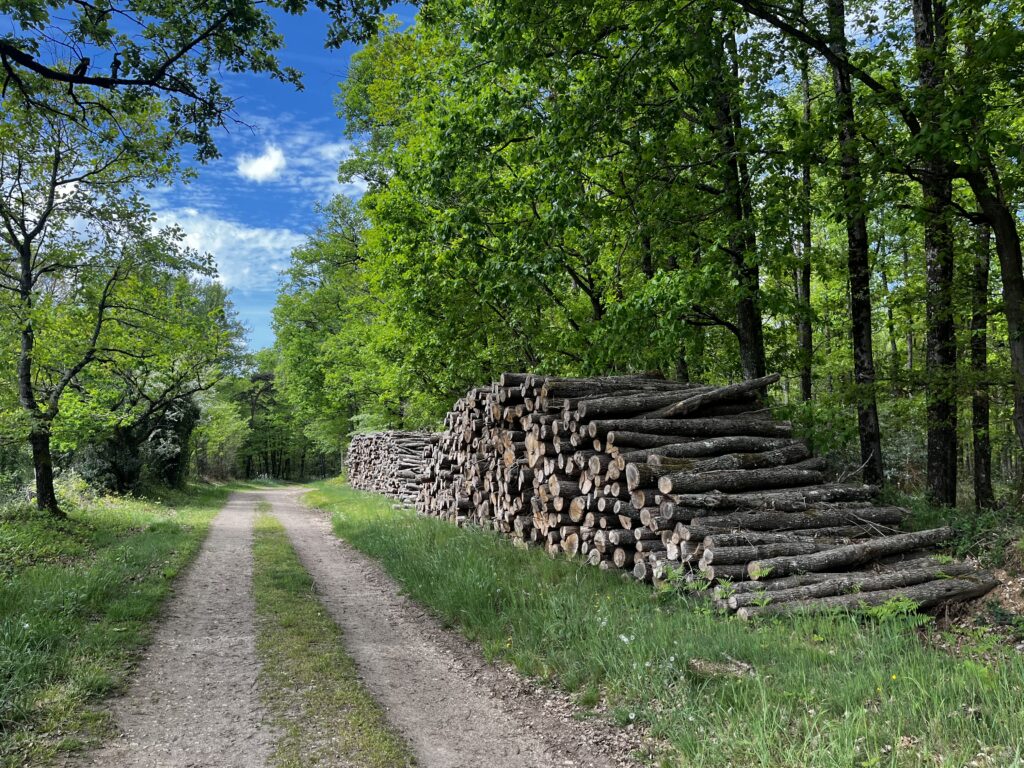
At about 10:05, the Camino struck out into the forest on a smooth dirt road. It was nice to get out of the sun, and the bird song did its very best to distract me from the constant drumbeat of artillery fire.
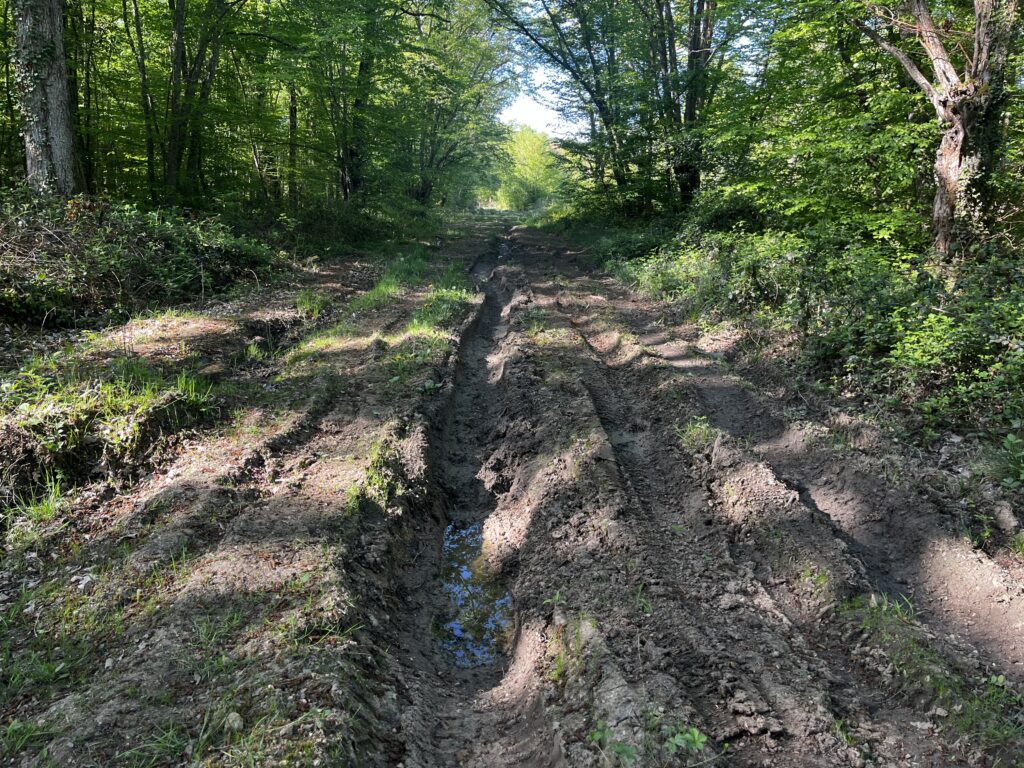
Then I came to a long section of road that was absolutely rutted and torn up, with wide areas of mud everywhere. This slowed progress considerably, and I wondered at the weight of the vehicles that could produce such deep ruts.
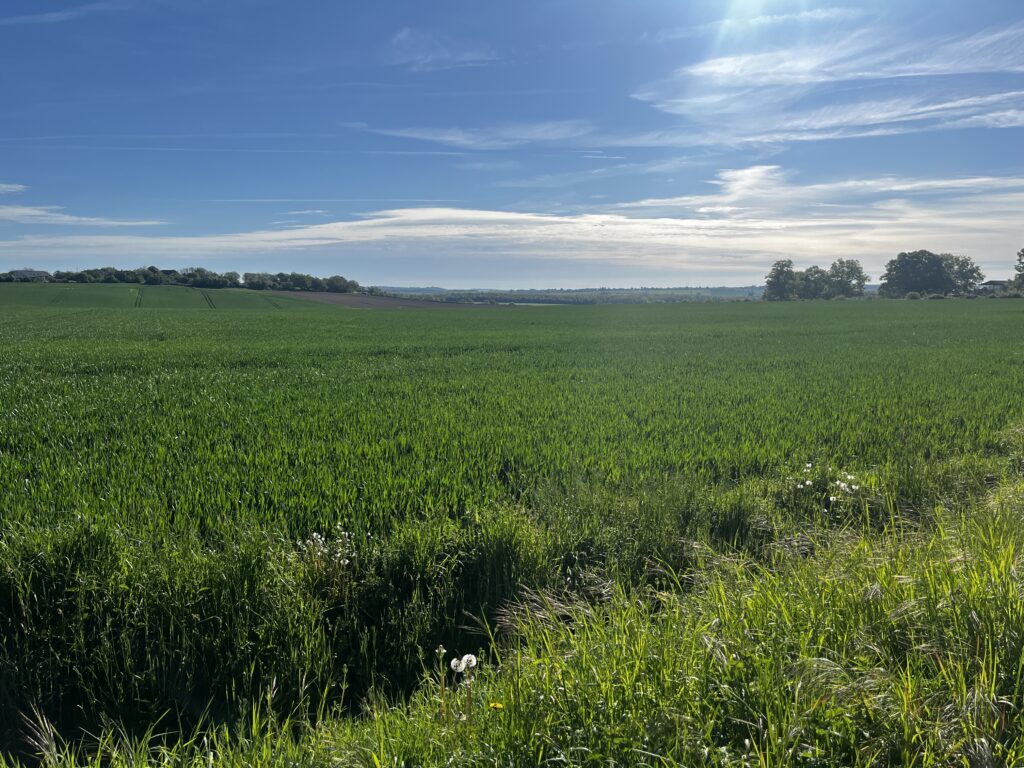
At about 10:30, the Camino left the forest for an asphalt road through the fields and meadows. I’ve never been so happy to see asphalt.
Just a few minutes later, I put up my umbrella, probably for the first time in a week. For a little while, the Camino turned down a dirt and gravel road, and there was a strong cross breeze which cooled me off considerably under the shade of the umbrella.
The sound of the artillery had finally stopped.
In about 11:05, I reached the hamlet of Planche, which was filled with the sound of arguing ducks. They made quite a racket – they were louder than the artillery had been, though they didn’t have the range, and I soon left the cacophony behind. It was back to asphalt.
The hamlet of Le Petites Maisons was indeed petite; I counted four houses.
At about 11:25 I entered the village of Loye-sur-Arnon, anxious for an Orangina and a sandwich. At the church I ran into Judith – and Wim and Tineke! They had all stayed in the same place last night in Bouzais
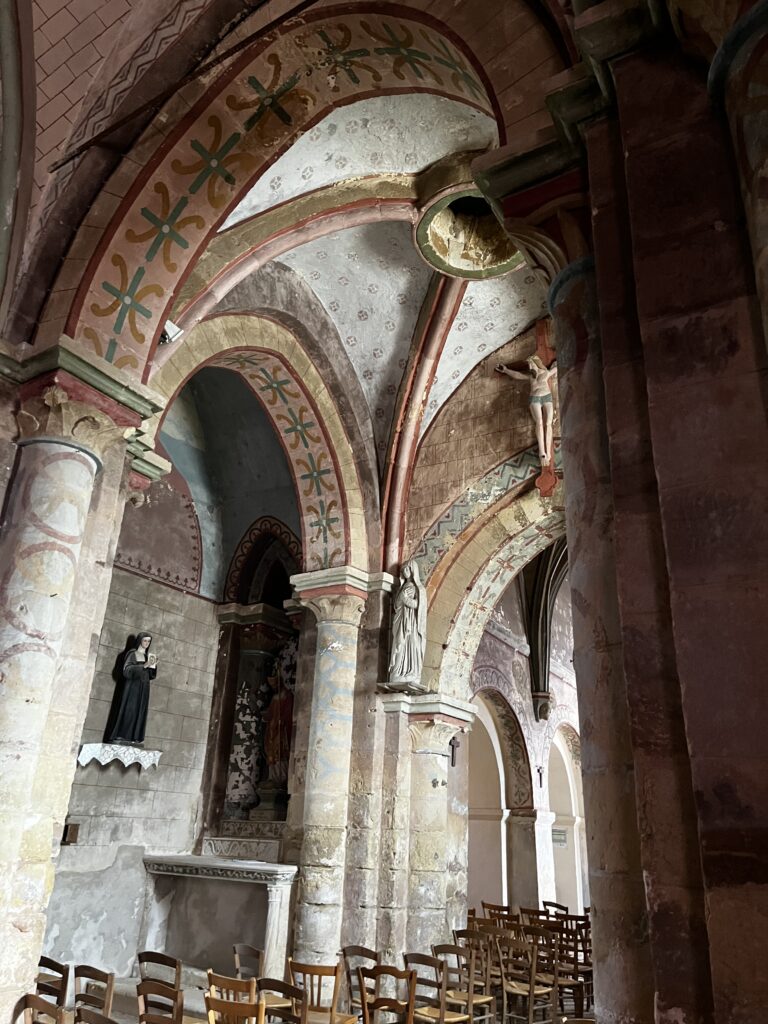
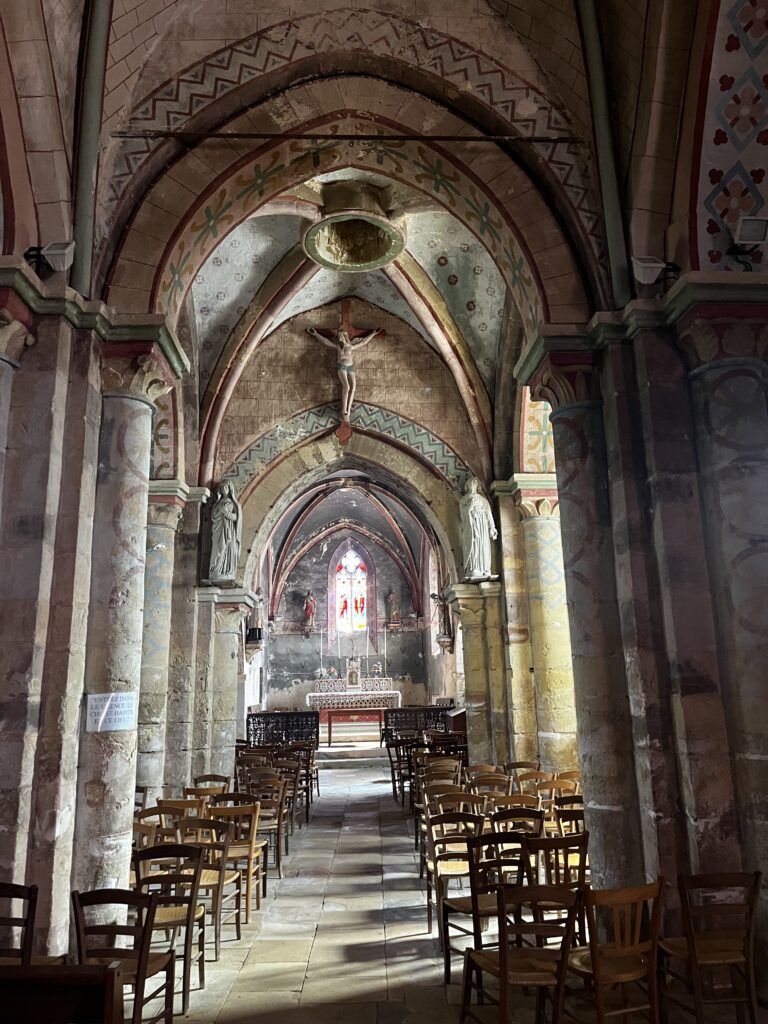
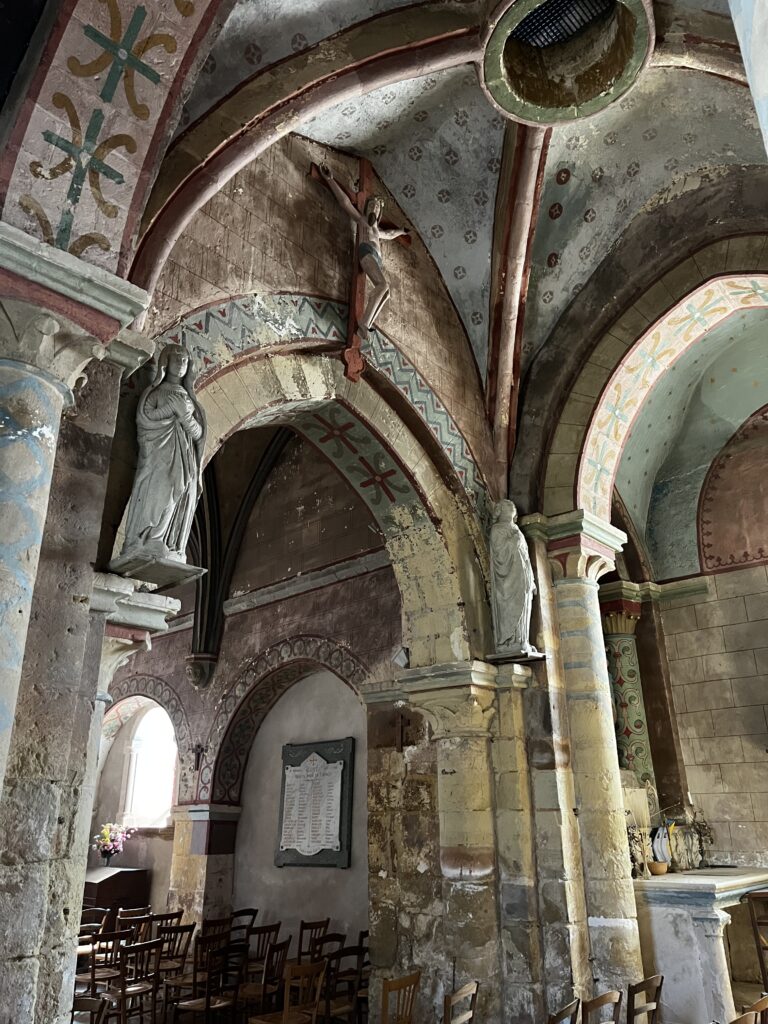
The little 11th-century church of Saint Martin is an absolute wonder. The stone surfaces are painted like a jewelry box in the medieval style, though apparently the paint only dates to the 15th century. It could definitely do with a sympathetic restoration, but despite it small size, it is overwhelming.
I was less impressed with the IKEA table that they seem to be using as a main altar.
The one café in town is not open on Saturdays, so I ate a little bit out of my stash as I chatted with Judith and Tineke. Wim, of course, pushed on walking. He is slow, but he is very consistent.
It was almost 12:30 PM by the time I left the village. Judith left a little ahead of me, and at the speed I was going I didn’t expect to catch her.
At a little place called La Croix des Bourses – I don’t even think it qualifies as a hamlet, as I only saw one house and a barn – the Camino turned down a dirt and gravel road.
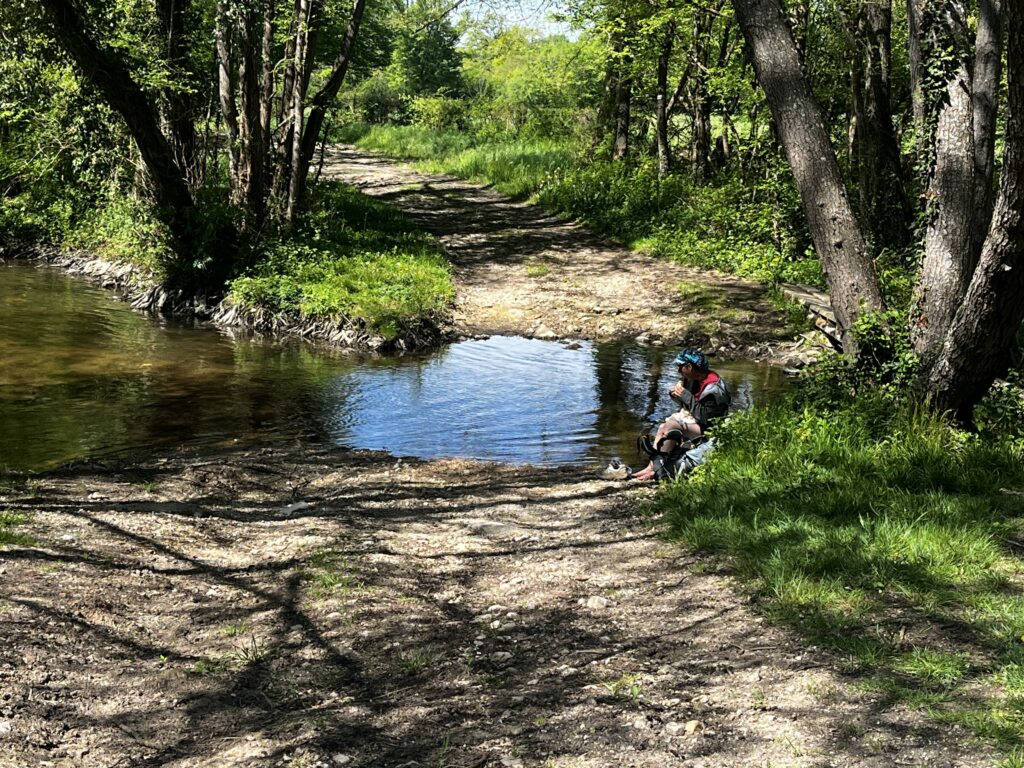
It was in and out of tree cover much of the next hour or more. It was easier just to keep the umbrella up. At about 12:50 PM at a lovely stream by a mill, I found Judith dipping her feet and having a snack.
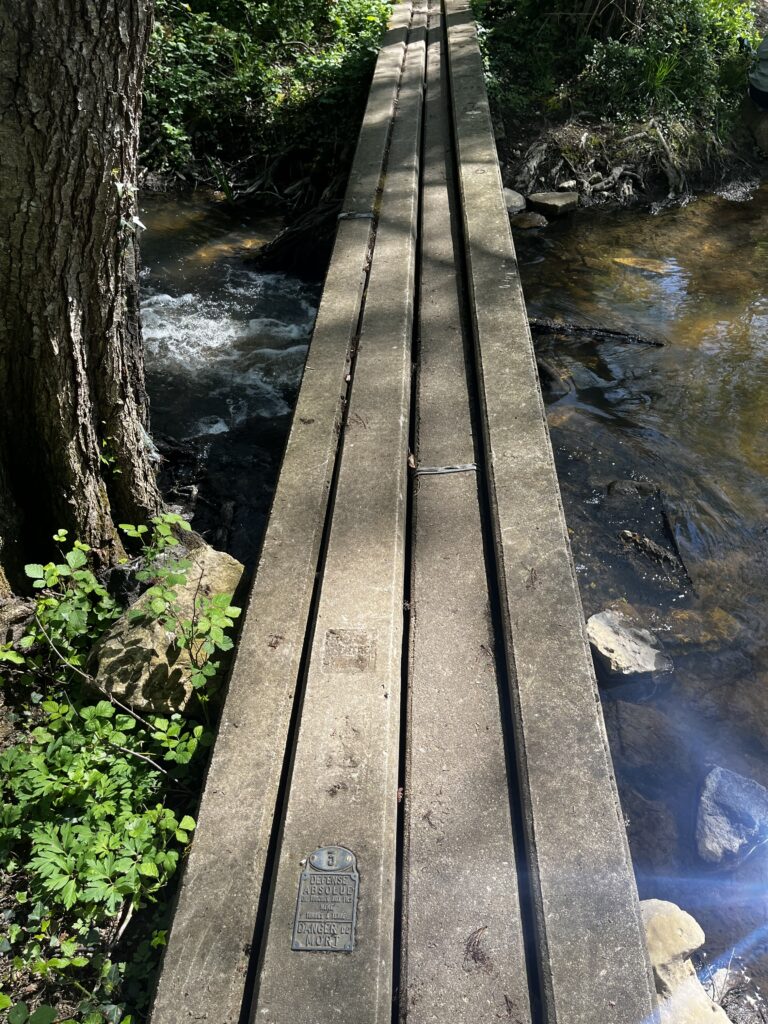
I crossed over the stream on a dodgy looking bridge made of concrete electrical poles, and continued down a path through long grass.
The soon brought me to a proper foot bridge over a rather larger stream and then across a meadow, complete with picnic tables. The Camino emerged out the other side in the form of a dirt road.
I passed by a little farmstead at about 1:40 PM, and just like that the tree cover was gone and I was walking on asphalt again. Even with the umbrella, the asphalt in the sun was no fun.
At just past 2 o’clock, I went through a little hamlet called La Bourgeoisie. It wasn’t. About 10 minutes later, I went through another little hamlet that appeared to be mostly vacation homes. This one had no name that I could see. I did have a brief conversation with an elderly sunscreen-smeared gentleman here, half in English half in French. He asked if I was from England, and when I told him I was American he laughed and made a joke about me swimming here. Then he wished me “bon chemin”and I went on my way.
Just past there, the Camino returned to a blessed dirt road with intermittent tree cover. The clouds were also starting to come back.
Gradually the Camino moved from the eaves of the forest directly into it. I could feel the ambient temperature drop. At about 2:30 PM, I stowed my umbrella, and I noticed that I had lost one of the pins from my hat.
About 15 minutes later, the Camino forsook the road entirely and went down an uneven dirt path through the woods. More of this, please! I crossed over a burbling stream on a little foot bridge, and then it was back to a grassy farm road.
I remember with fondness some of the southern parts of the Via Podiensis where the roadwalking was just to get you from one path to another instead of here, where the paths get you from one road to another.
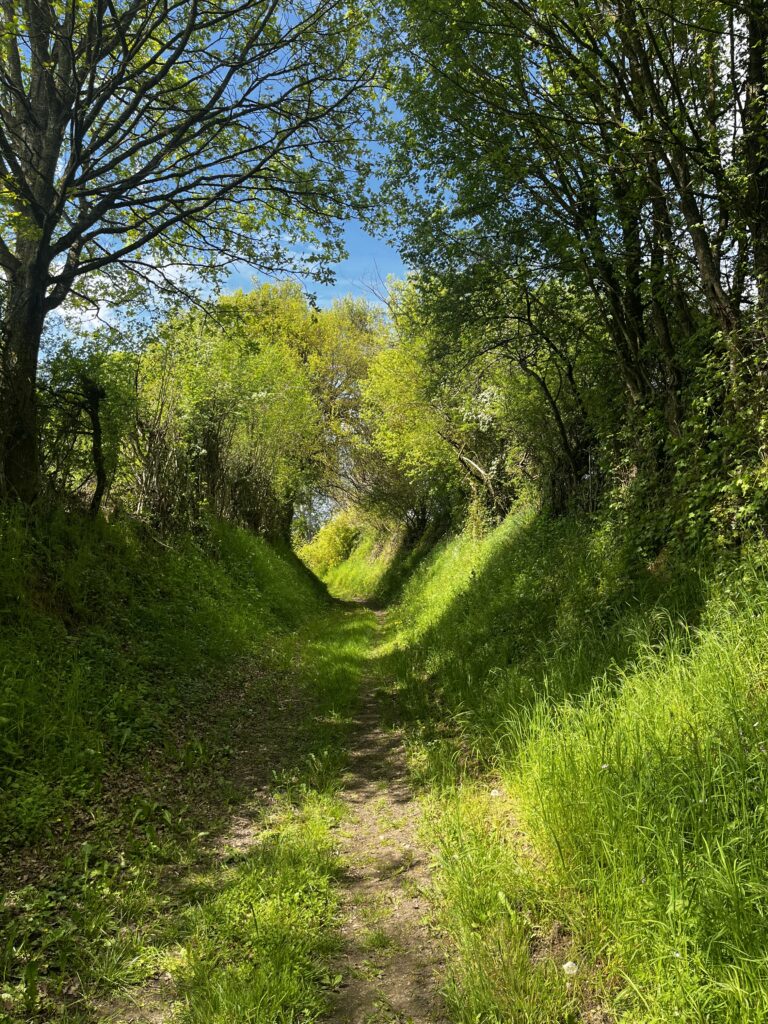
The road itself had high embankments on either side, as though perhaps it were worn into the earth over millennia of use. I don’t know if that’s actually the case here, of course, but there are roads in Galicia, Spain where this is true.
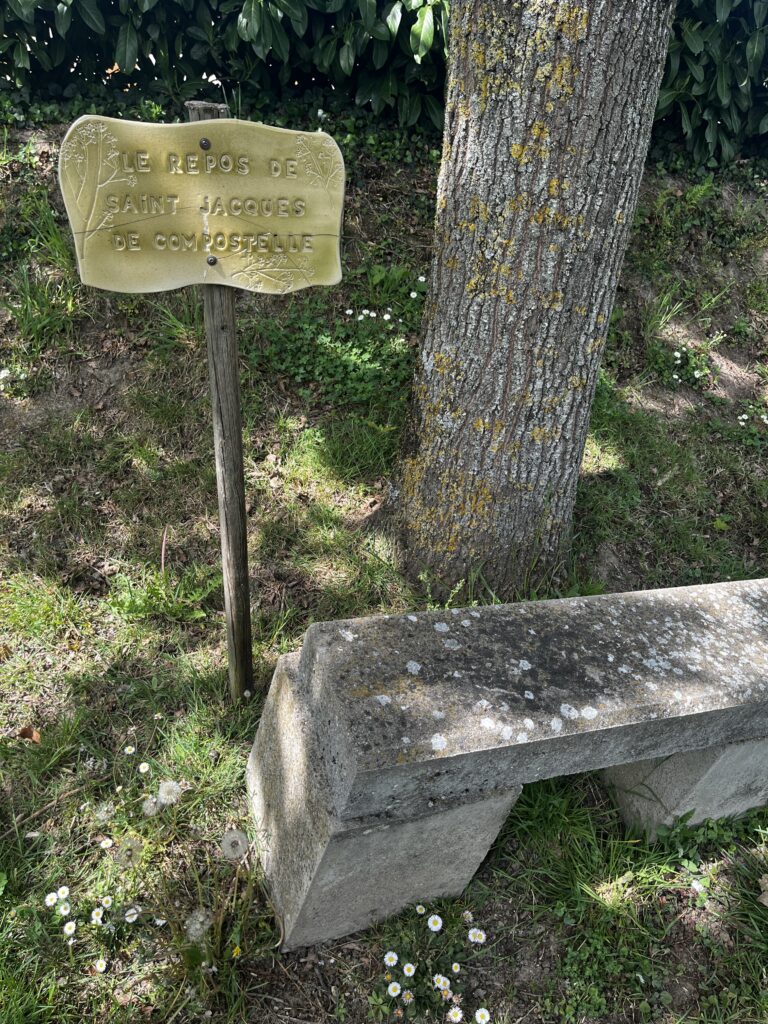
At 3 o’clock I found myself sitting on a concrete bench in the village of Puyfférand. The sign next to the bench said it was specifically for the rest of pilgrims. You didn’t have to tell me twice. I had somehow already walked more than 31 km on what on paper was a 26 km day.
After a 15 minute break, I continued on my way down the grass road. Here it was mowed and short and festooned with daisies. Sadly, it was just there to lead me back to the road. In this case, asphalt.
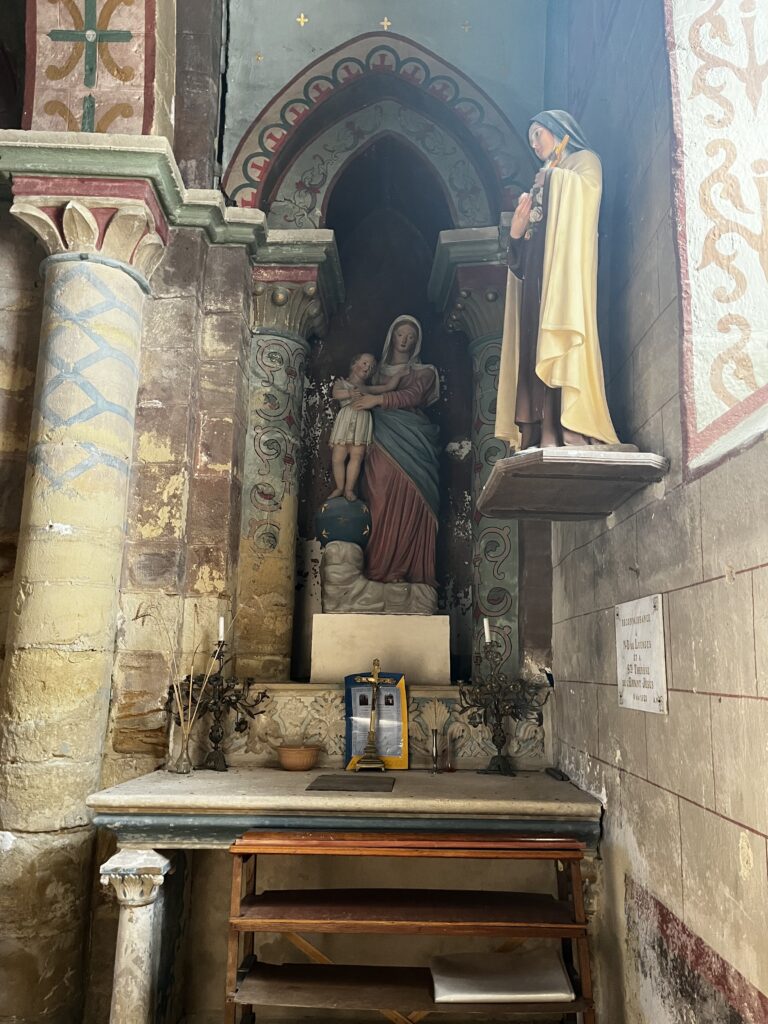
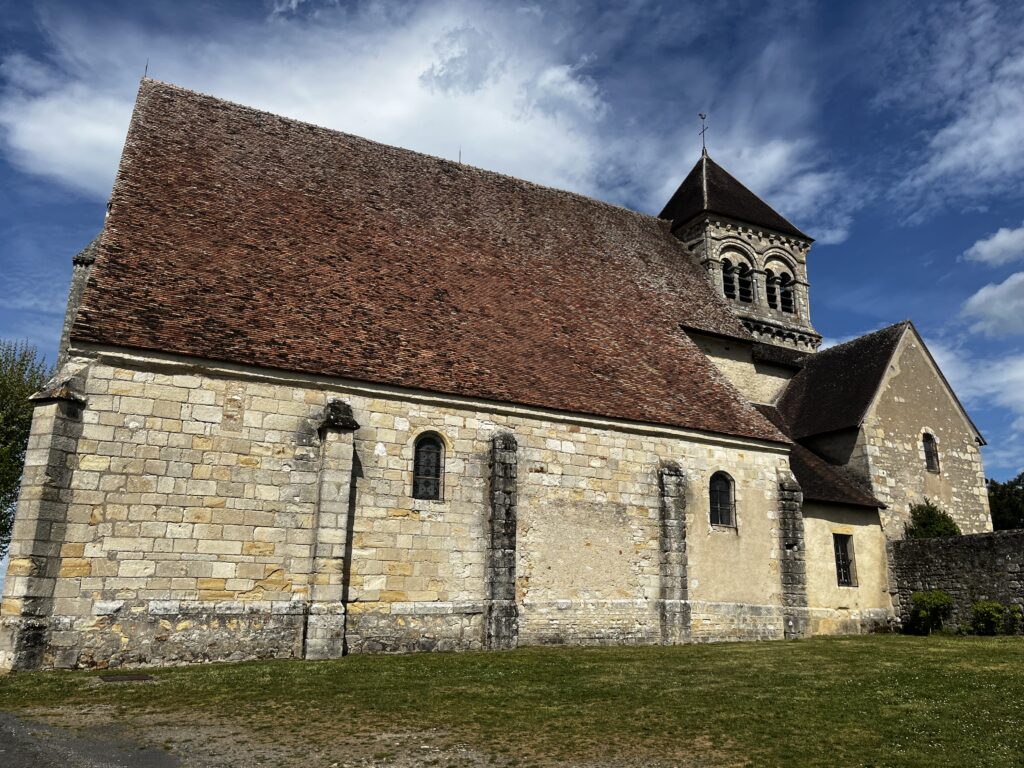
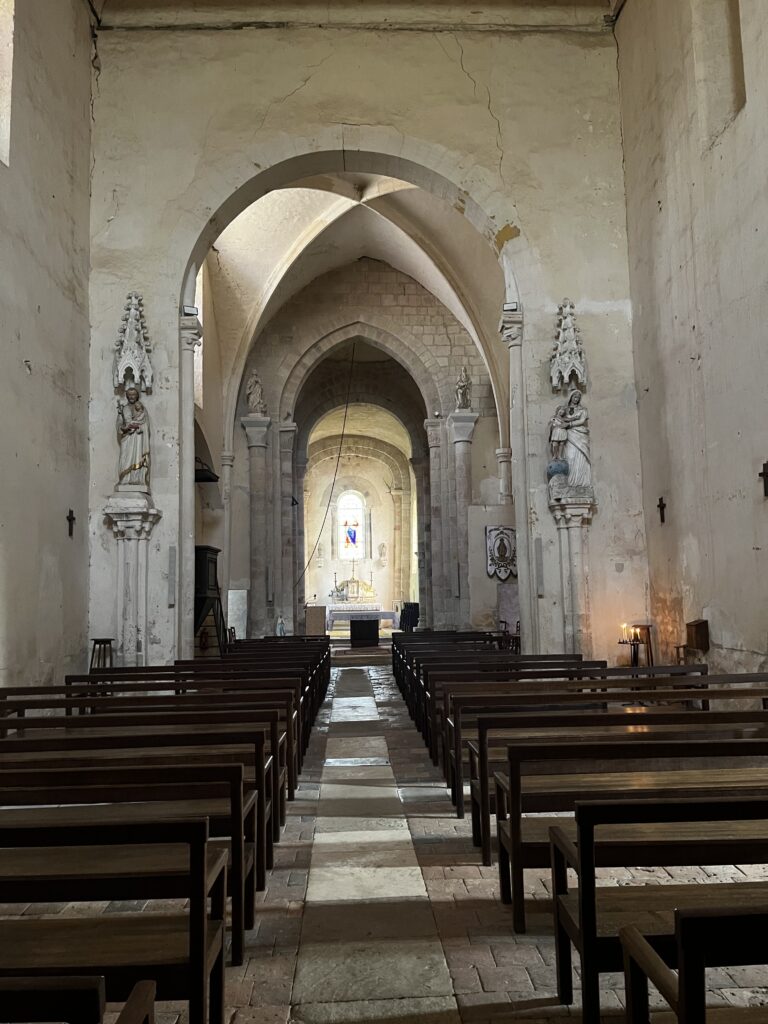
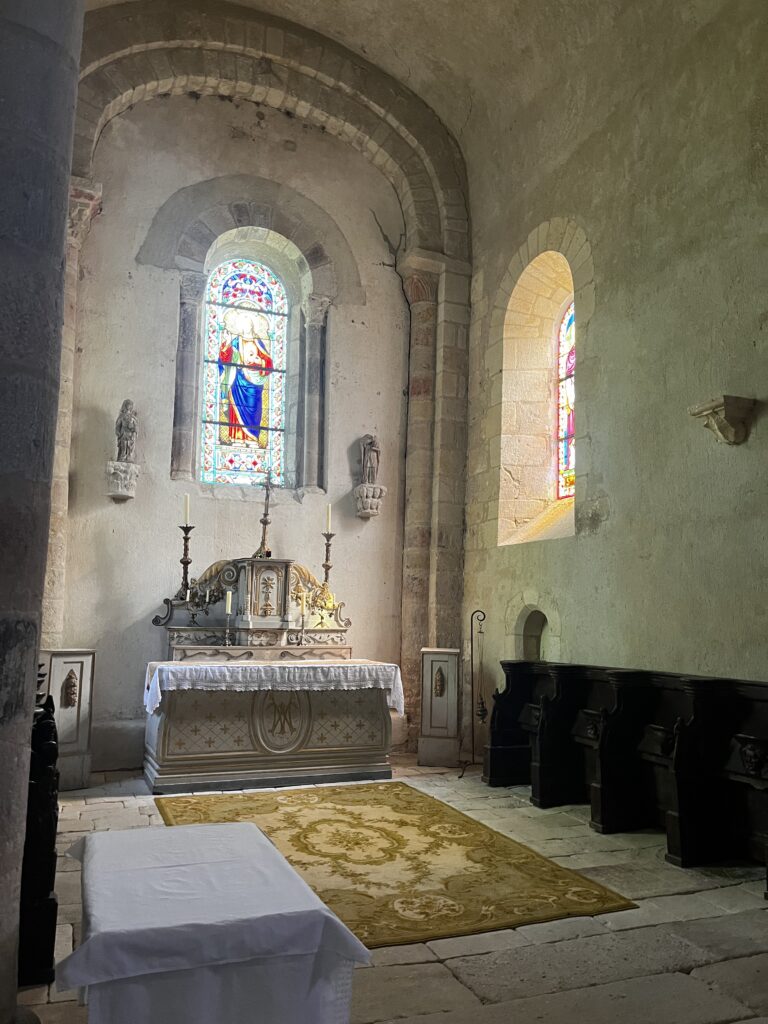
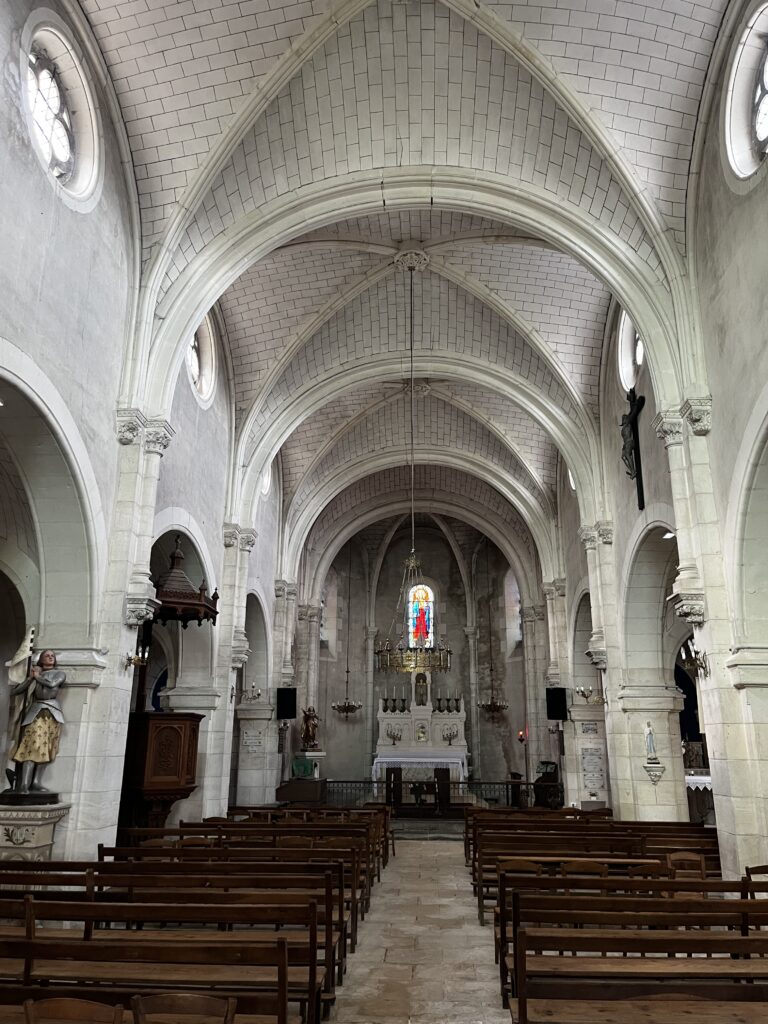
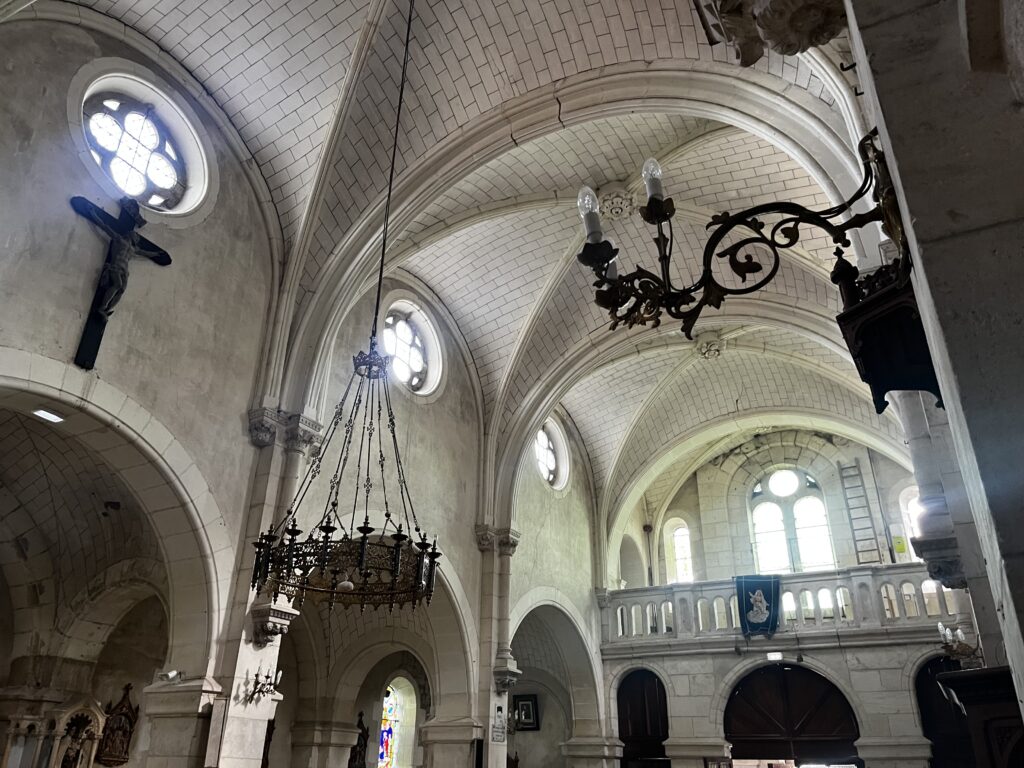
The road led me to the rather grand 11th-century village church. Notre-Dame de Puyfférand is the former church of Puy-Ferrand Abbey. The whole place has a harmony of proportion that just soothes the soul. The one part that is a little discordant is the sanctuary itself. This portion of the church was apparently damaged by a fire and replaced in the 16th century.
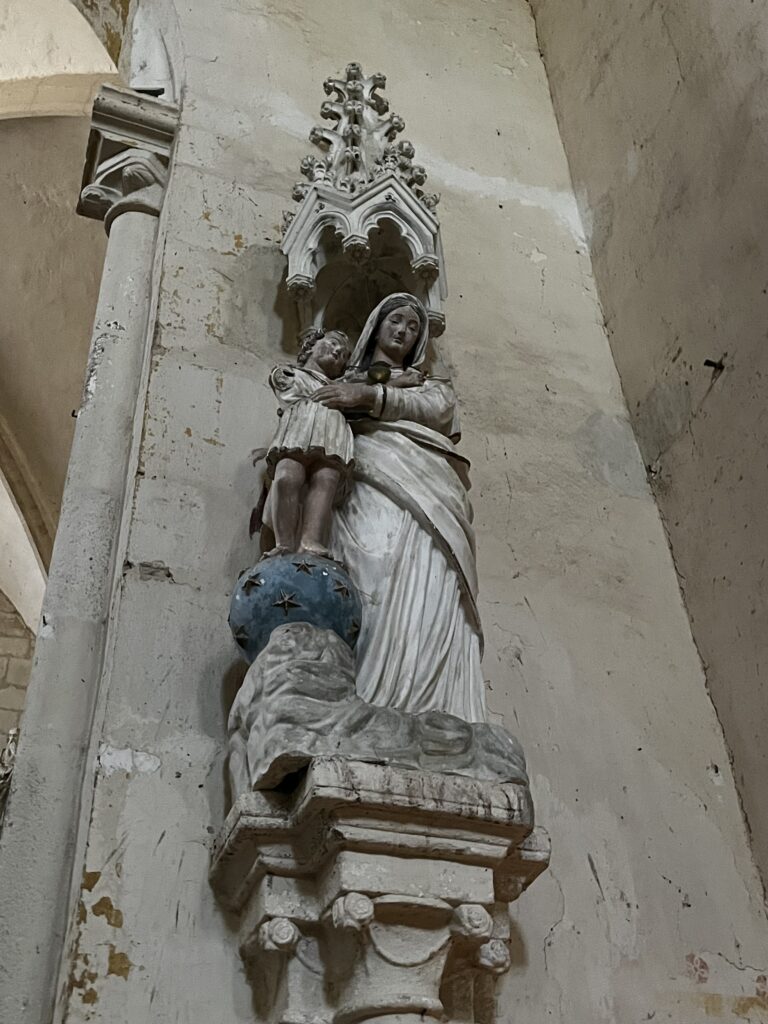
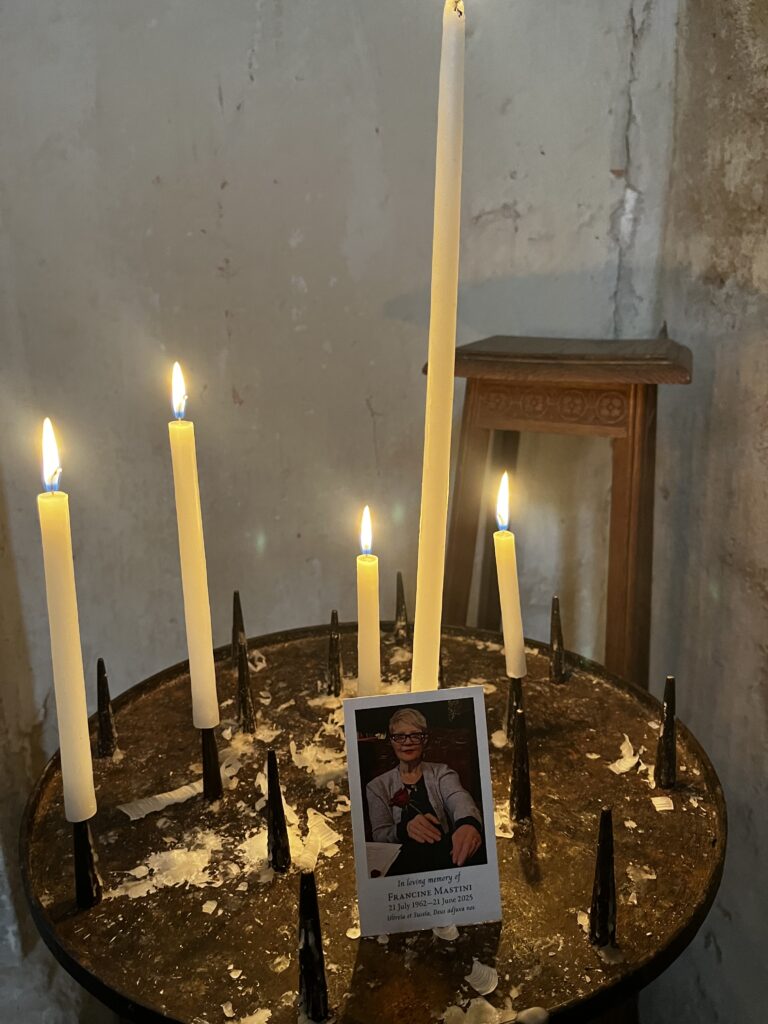
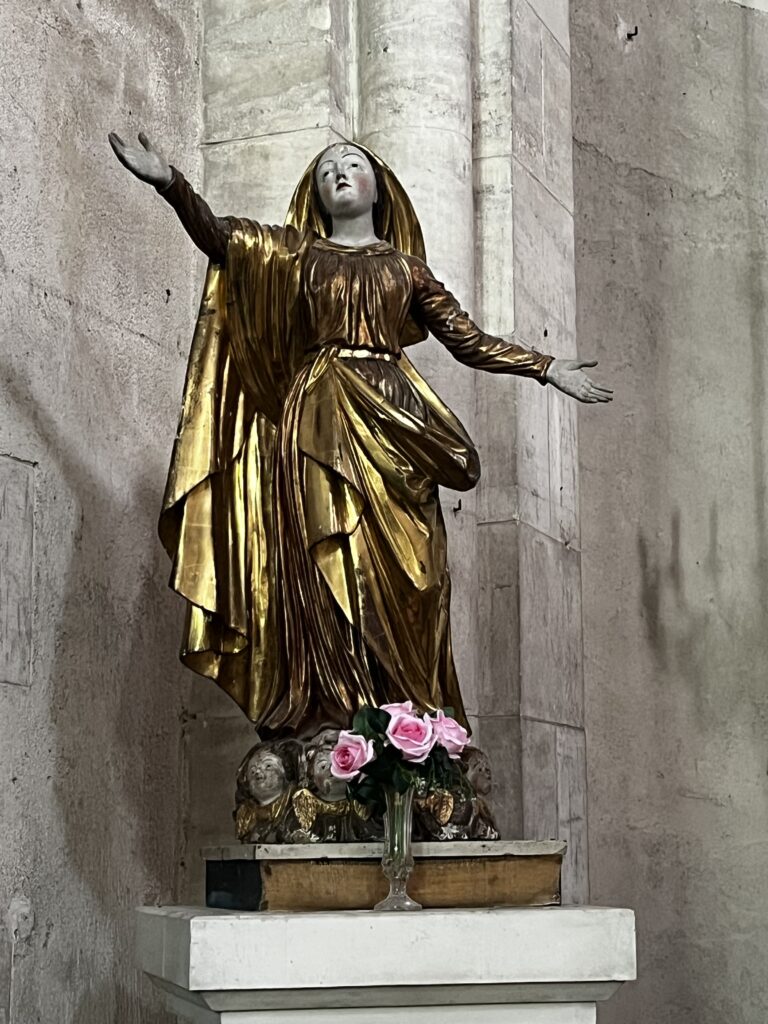
I prayed in the church for a while, and I lit a candle for Francine at the statue of our Lady of Puy-Ferrand. As I was leaving, I noticed that Judith had come into the church at some point. She left before I did. I wonder what she made of my chanting.
After leaving the church, I was in the town of Le Châtelet in minutes. I caught up with Judith, but she headed off to the supermarket while I headed off to the center of town.
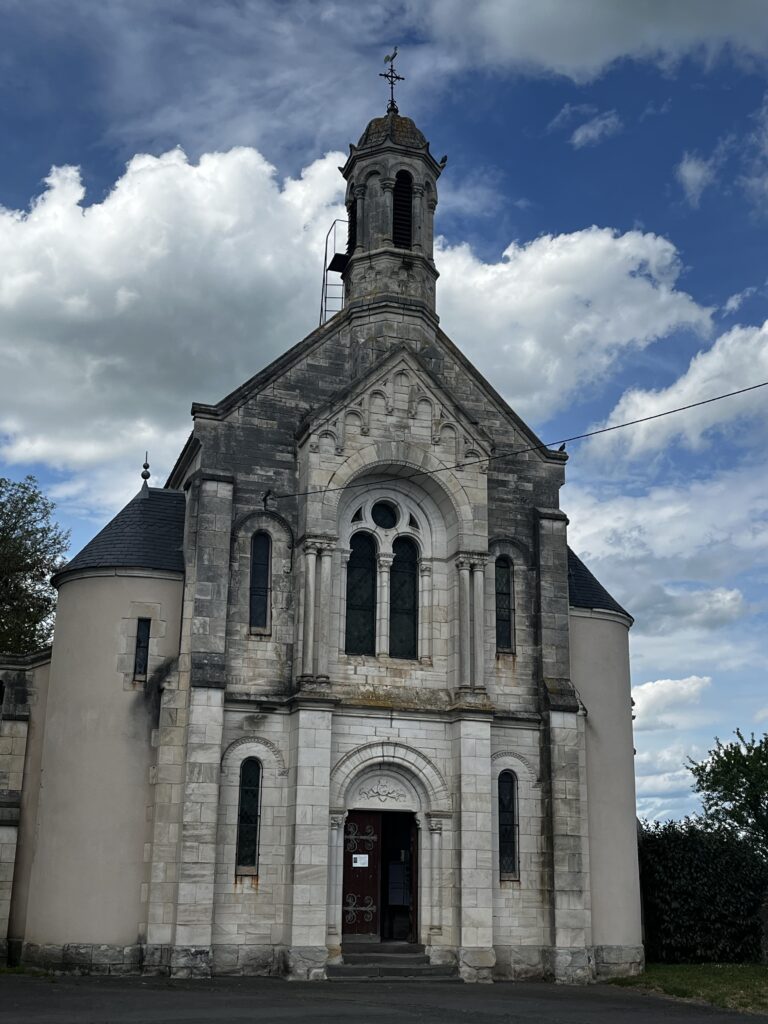
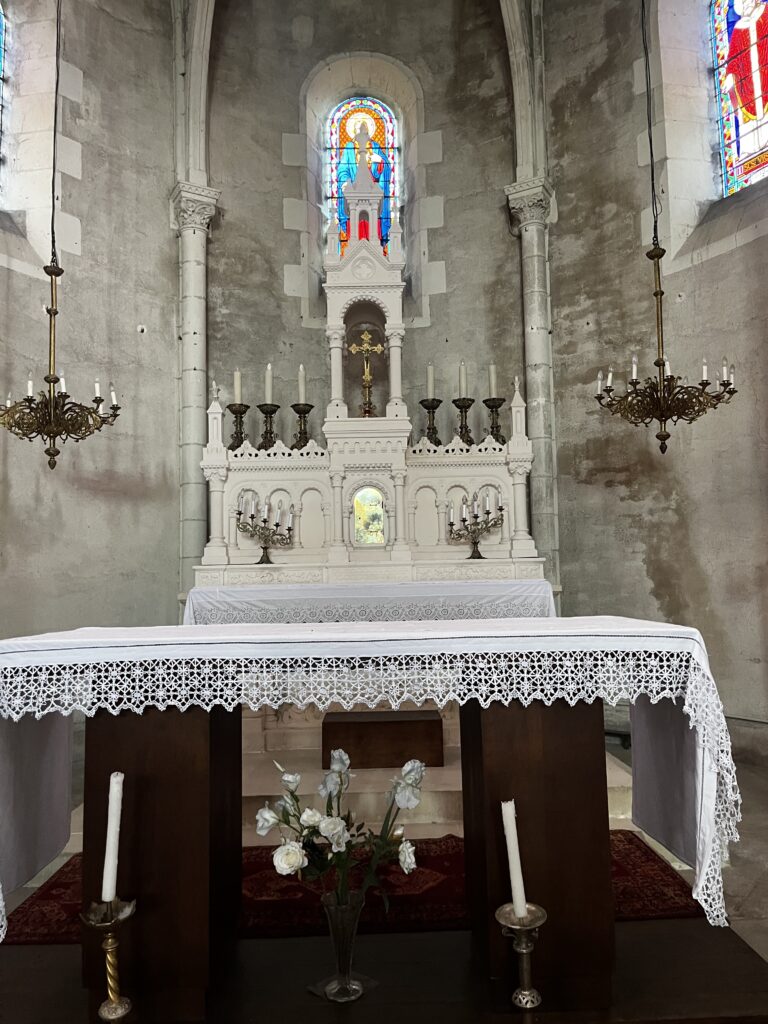
The church is at the top of the hill overlooking the town. it appears to be of 19th century construction – indeed the date above the entrance says 1887. It’s in a sort of Romanesque revival style, decorated in industrial kitsch – there are electric lights on the altars and the sanctuary lamp is a glowing red orb.
I suspect that at least some of the statues and appointments were taken from other, older churches.
Even though the old medieval stone churches are generally cold inside, they somehow felt warmer than this place. I prayed there for the Lord’s continued assistance on my pilgrimage.
The gîte was clear on the opposite side of town from the Camino roots. Staying here tonight with me are Judith, Wim, and Tineke.
One additional note about today’s stage: the way-marking was terrible. I would consistently come to intersections or forks, and there would be no indication of which way to go. Or worse, an ambiguous marker in the middle of two possible options. Had I not had the GPS way-markings, I don’t think I could have completed the stage successfully.
Date: 18 April 2026
Place: Le Châtelet
Today started: Saint-Armand-Montrond
Today’s Photos!
Another beautiful day for you! We prayed for you at Men’s Prayer this morning.
Thank you!