
Via Lemovicensis: Endless Vineyards
The rain predicted for the next week suddenly vanished from the forecast this morning. Despite my best efforts, however, my shoes were still not fully dry. Also, weirdly, the straps of my hiking poles were still damp. That’s a new one.
When I left at 8 AM, the air was cold and a clammy mist clung to the ground. I left a little before Herve. We hugged our goodbyes, as he is walking a little further than me today, and a lot further than me tomorrow.
We might catch up at or near Saint-Jean. We’ll see.
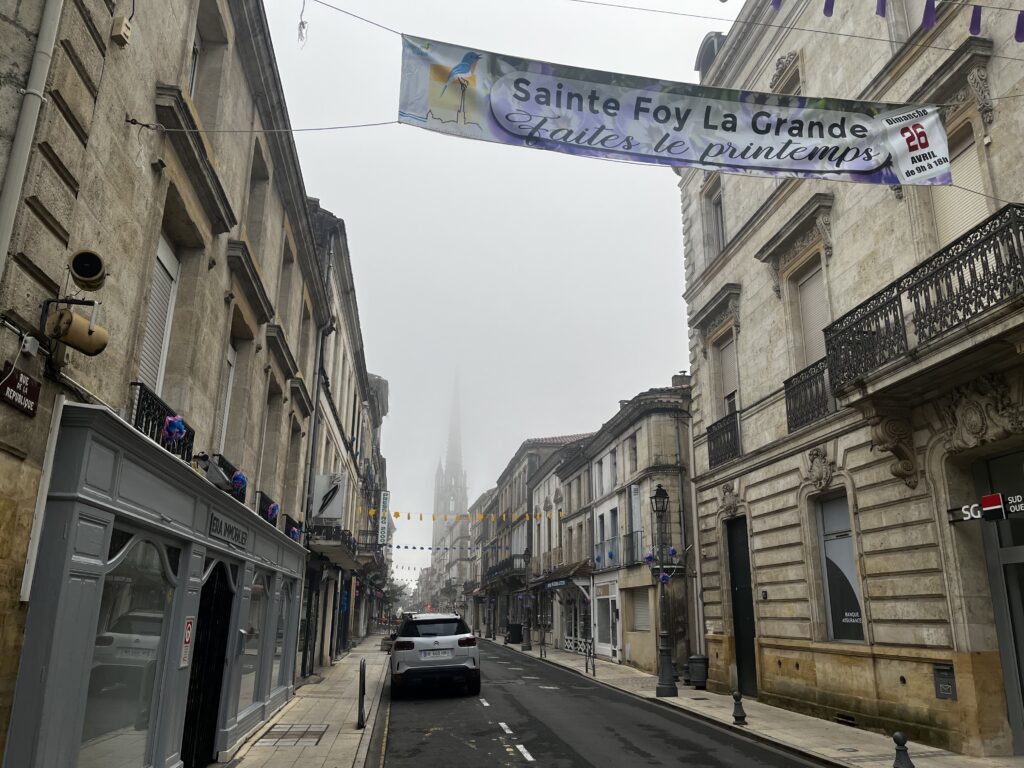
Just a few blocks from where I stayed, I passed through the city limits and entered the suburb of Pineuilh. I double checked a couple of times that I was going in the right direction, because there are several routes in and out of the city.
This is where the main route and the Bergerac variant reconverge. The last thing I needed to do was to accidentally walk to Bergerac!
As I walked through the urban and suburban landscape, I would occasionally catch glimpses of the river off to my right. By 8:20 AM, the sidewalk had grown intermittent and then ended. I was now roadwalking on a busy two-lane highway.
A few minutes later I left Pineuilh, but the suburban sprawl continued. The maps told me that I was walking through a succession of small hamlets – Cazenat, Le Chantier – but there was no signage, and the buildings, at least on my right side, were more or less continuous
There was a lot of traffic, so it was slow going.
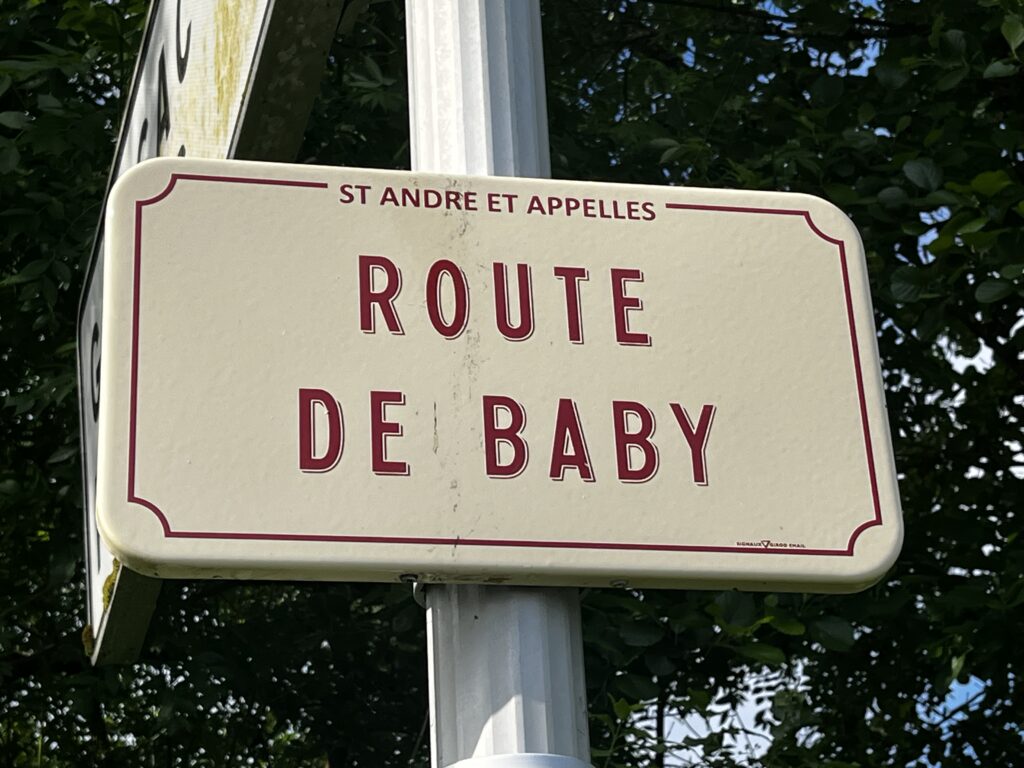
At about 8:35, there was a break in the buildings on both sides. Just a few moments later a sign informed me that I had entered the village of Saint André et Appelles. Strangely, this name was not on any of my maps. On the maps, this place was called Pont de la Beauze, and there was indeed a bridge as you entered the village.
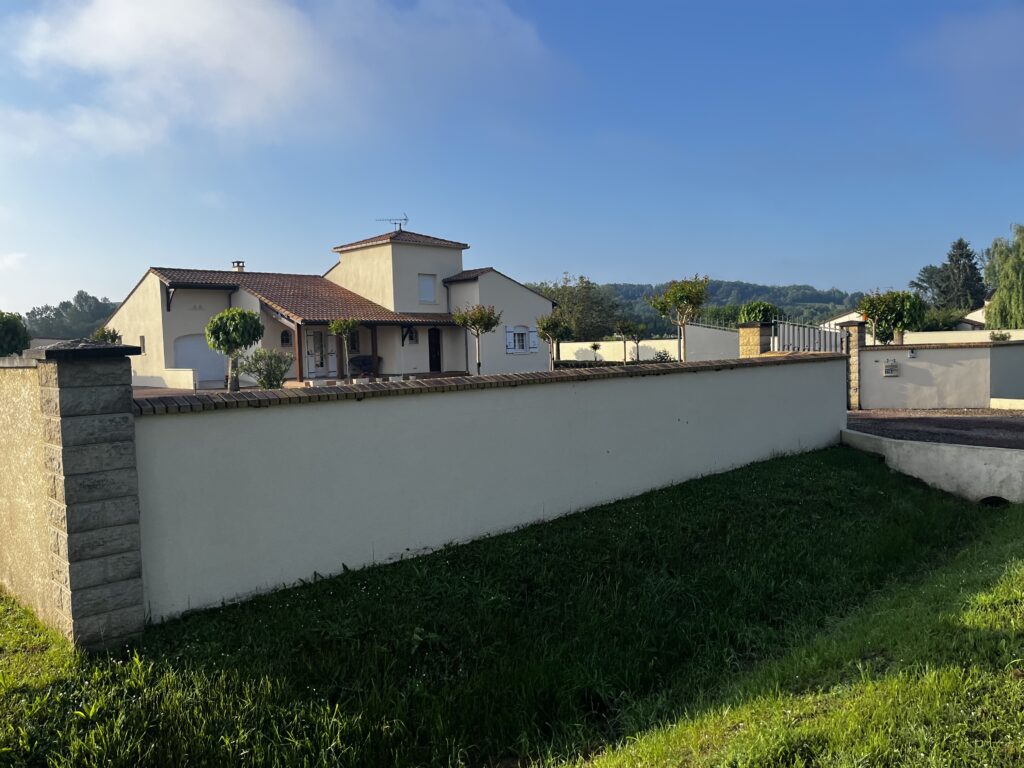
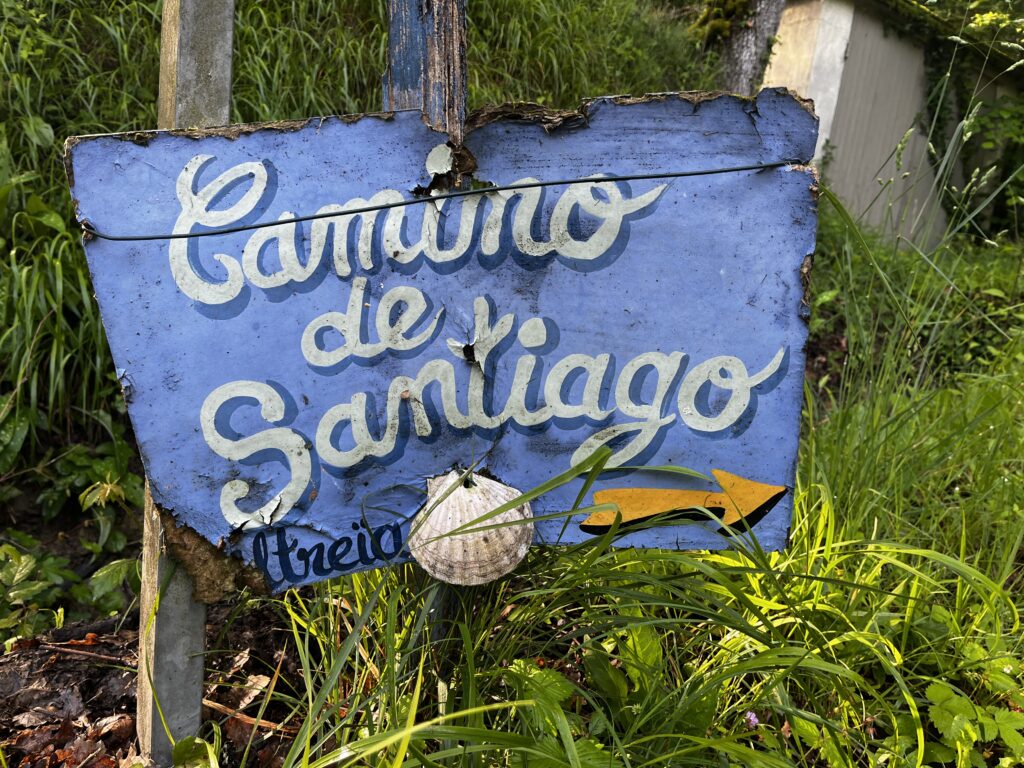
It was after this, at about 8:45, that the Camino finally left the highway and headed up the road through a suburban neighborhood. There was a lovely handpainted sign indicating the route, which was good since the official markers were nowhere to be found.
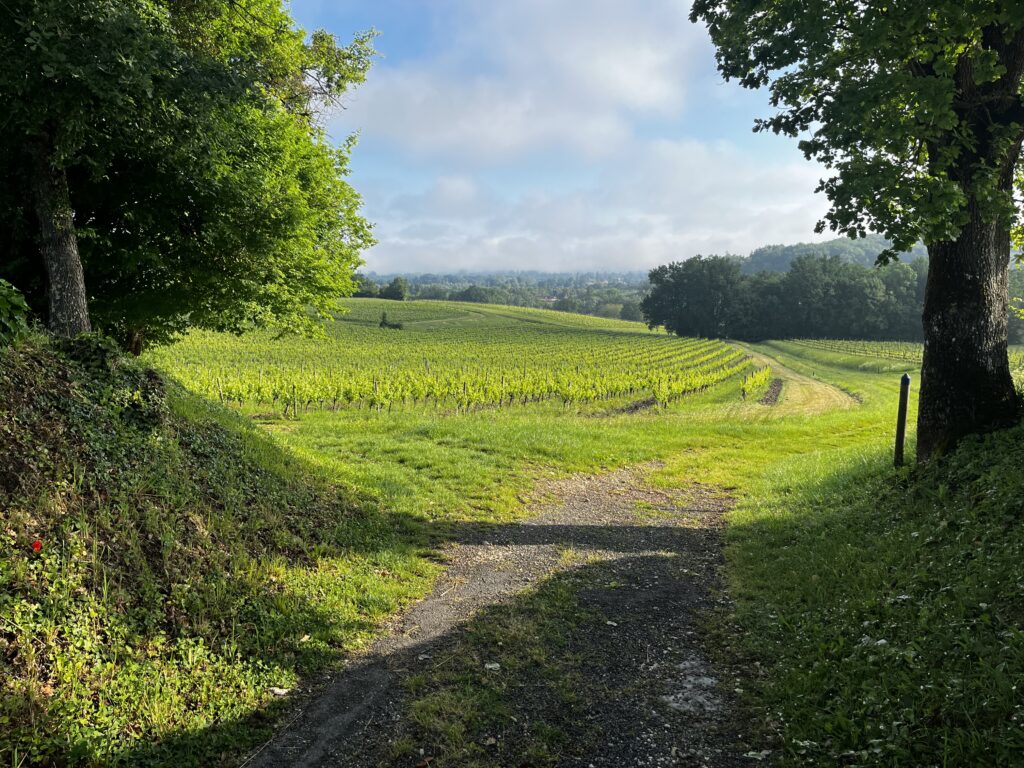
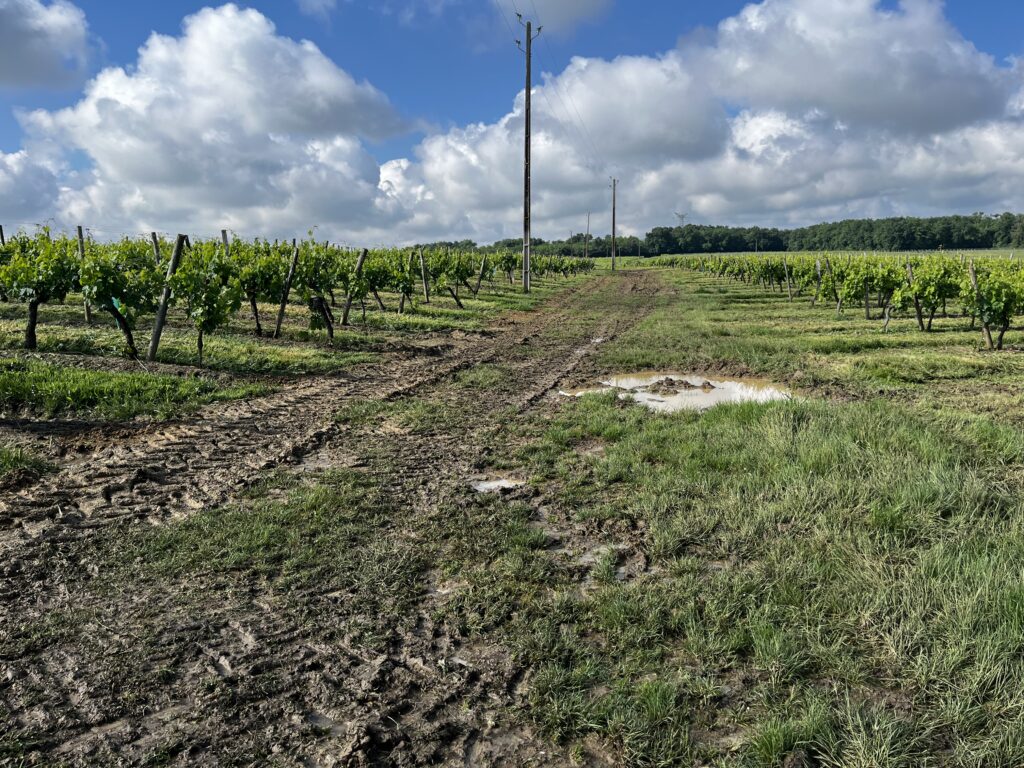
At the top of the hill, I was already warm enough that I had to take off my fleece. Here, the official markers returned and they led me off the asphalt and through the long grass beside a vineyard. If my shoes had been dry, they wouldn’t have been for long.
The places without grass featured the same slippery, sticky clay-like mud that I encountered yesterday.
The trail markings were in frequent and inconsistent. I was constantly referring to the GPS to navigate the maze of muddy little tracks through the vineyards. By 9 AM, I had already used a quarter of my battery power.
Eventually, I made it through the vineyards up to the little hamlet of Le Petit Montet, where the Camino turned to follow an asphalt road through the vineyards. Much better than wet grass and mud!
In the midst of the endless vineyards, I passed through the hamlet of Appelles, which featured orchards and an impressive cemetery for so small a place.
Sometime past 9:30 AM, I walked through a tiny unnamed hamlet with several old, grand stone houses. And dogs. Lots of barking dogs.
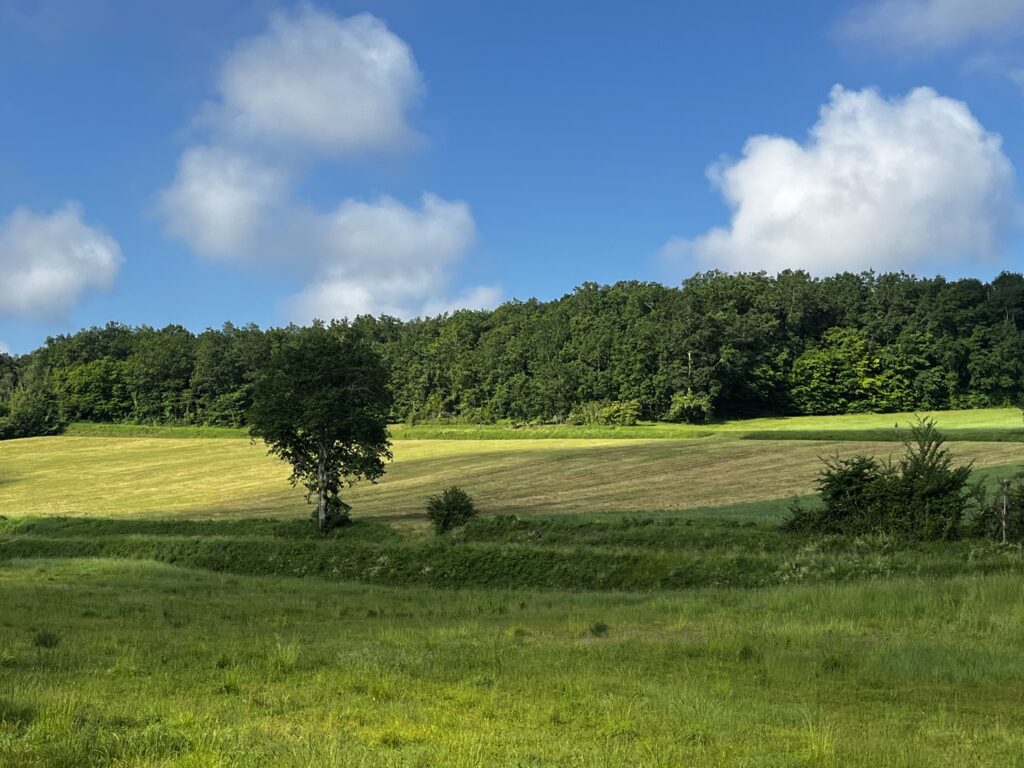
I had now left the vineyards behind for the more usual sort of woods and meadows mix of the past week or so. As I walked on, I noticed more and more of the older style of Camino blaze marking the Way.
It’s funny. A year ago, I was in a desperate scramble with the rest of the family to figure out arrangements for Francine’s hospice care. Today, I am walking through the beautiful French countryside under a blue sky in perfect walking weather. And somehow, I think I carry more sorrow with me now than I did then.
Of course I mean during the day, when I needed to be at least vaguely coherent and functional. At night, I would often find myself curled up in a wailing ball of anguish. I was surprised to realize that I had not done this in months.
At about 10 AM, the road started passing through the vineyards again. Perhaps a kilometer later, I passed what appeared to be the ruins of a château, and the road suddenly became dirt and churned-up mud and clay.
This was slow going.
It was 10:30 before I was to the end of it, as the Camino crossed over onto a much more pleasant sort of dirt road through the woods. I stopped here a moment and had an apple out of my food stash for second breakfast.
The dirt road eventually became grass, and it took me through more vineyards. Within ten minutes, I was walking on asphalt again. My freshly washed pants were now spattered with mud up past my knees.
At about 10:50 AM, I passed through a place called La Chapelle. It’s hard to tell if it was a genuine hamlet or just the grand house of a Vitner with its out buildings.
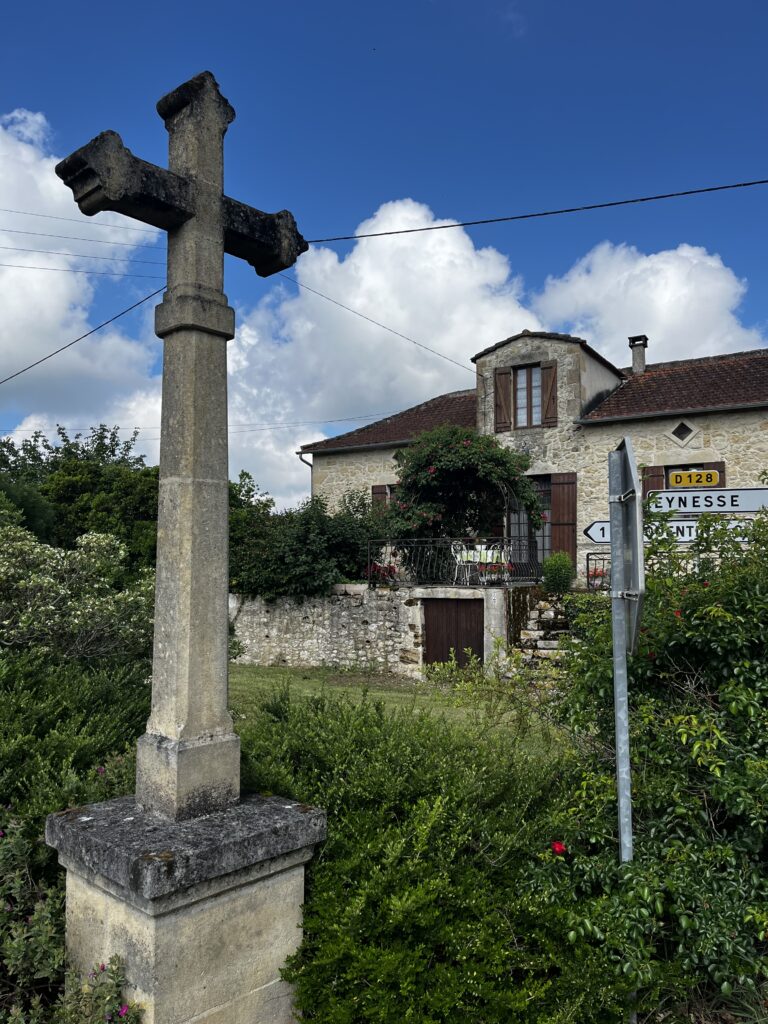
Soon after, I did pass through an actual hamlet, Champs de Taillade. There was a roadside cross here and quite a number of well kept old stone homes with lovely flower gardens.
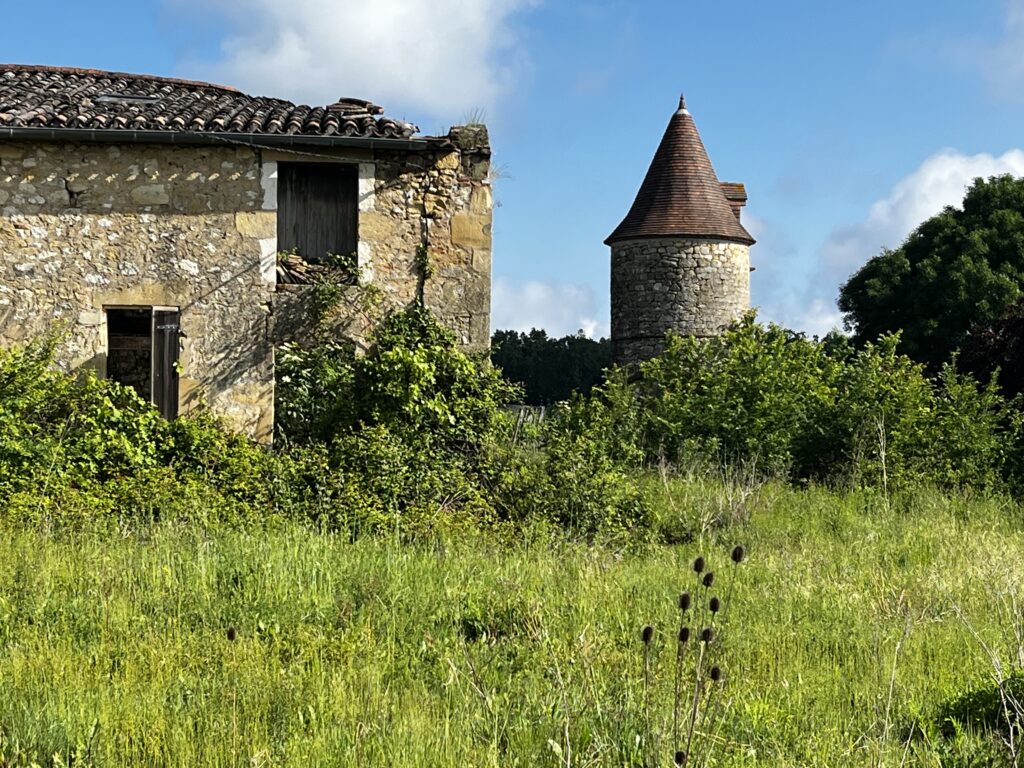
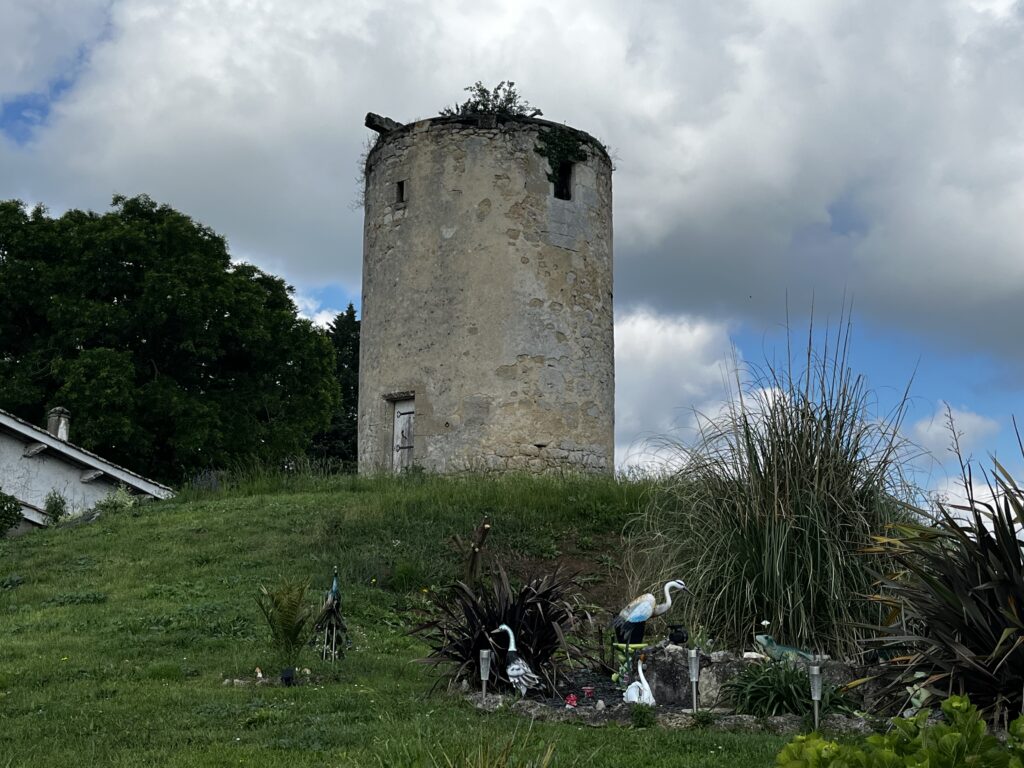
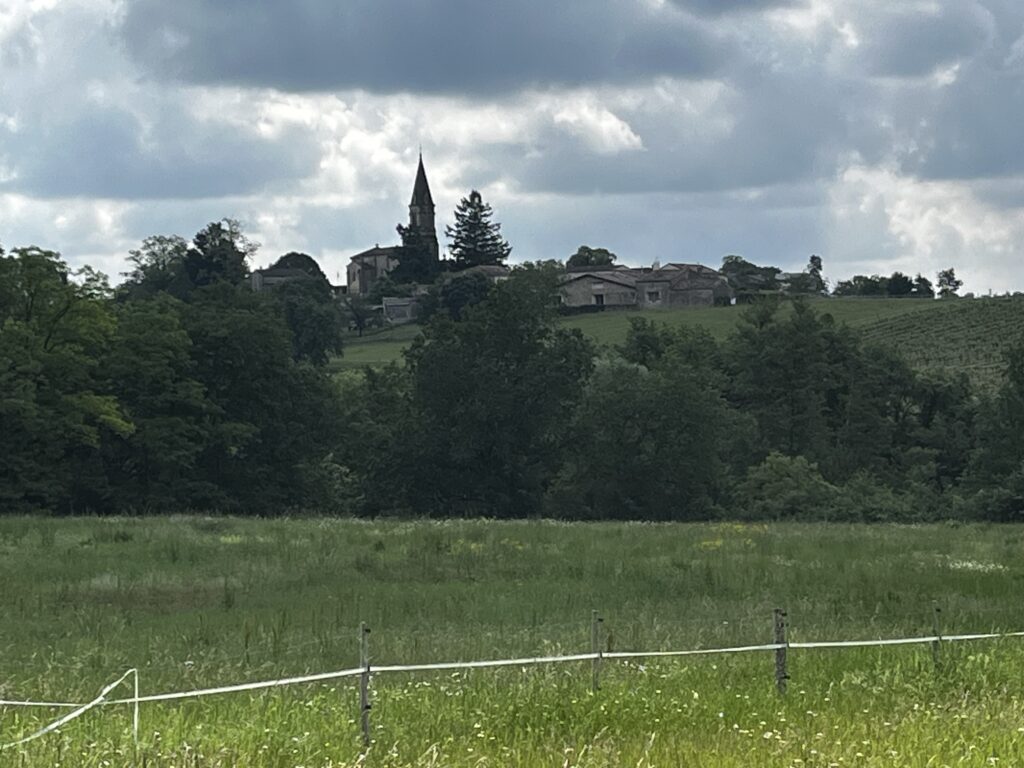
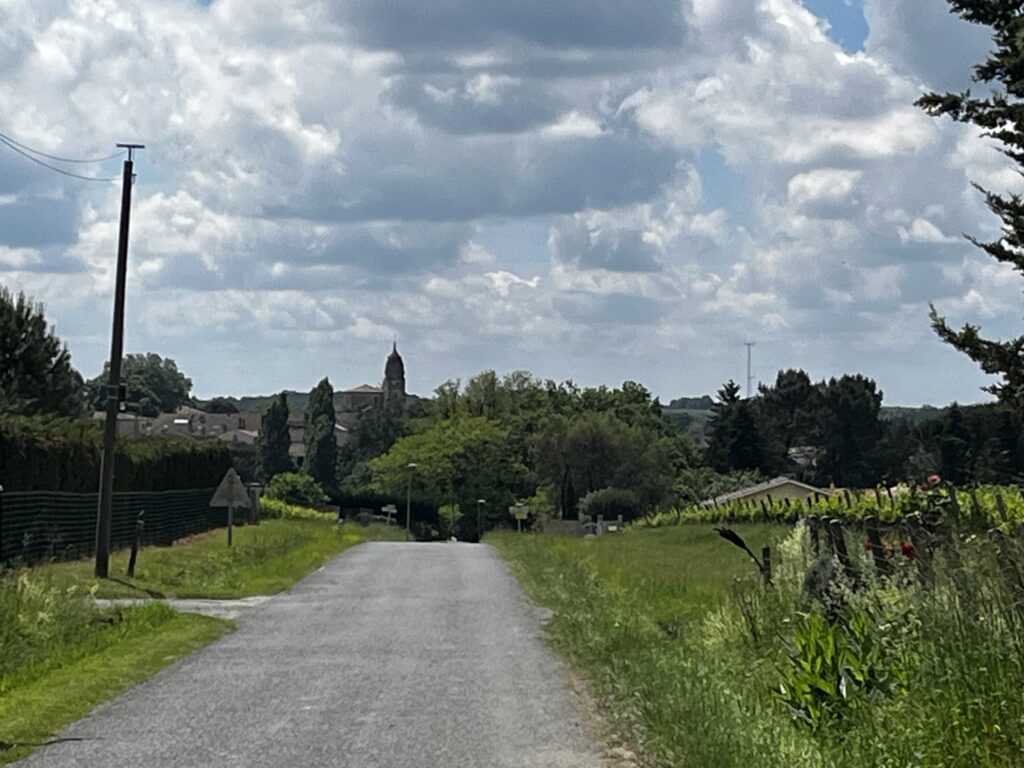
I soon passed into the neighboring hamlet of Taillade, which featured a big round tower that was probably once a windmill. In the distance, I could see a church steeple. I was approaching the village of Saint-Quentin-de-Caplong. While the Camino for whatever reason avoids this village, I went in anyway.
From a distance, it appears that the village has a wall around it, but I think it was just some sort of enclosure that happened to be facing the road I was walking in on.
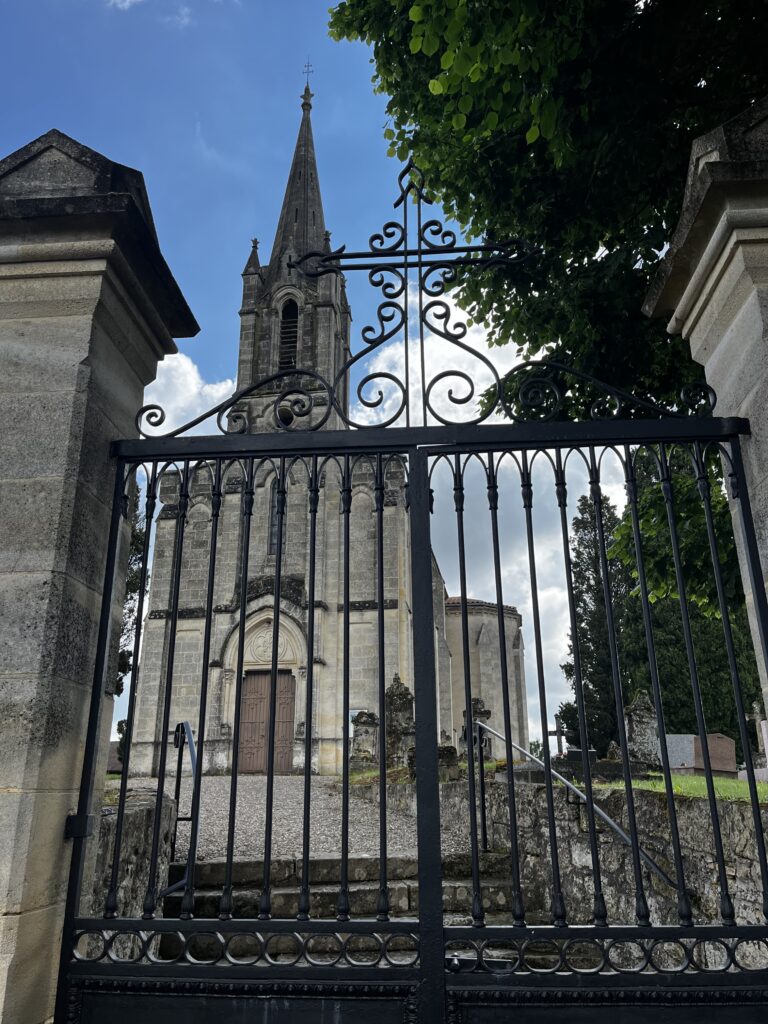
I entered the village at about 11 AM. I was hoping to visit the church, and this was the only reasonable chance of getting coffee and a pastry before the end of the day.
No such luck at the church. The yard was locked.
The epicerie was open, though, and I soon procured coffee. No real pastries, so I had to settle for a chocolate bar. Had a lovely conversation with a French local named Patrick and briefly with an Irish pilgrim named Michael.
I left before 11:30 on my way to the village of Caplong back on the Camino. Caplong, it turned out, sits on the top of the hill.
It was getting quite warm in the sun. With all the rain we’ve been having, my sunscreen was no longer handy, but stowed in my pack. If the weather continued like this, I would have to dig it out before afternoon.
As the road rejoined the Camino, I passed through a collection of mostly empty houses, one of them a grand mansion, that on my map at least was the hamlet of Les Faures.
Soon enough, I passed the sign for the village of Caplong, and the climb into the village center began.
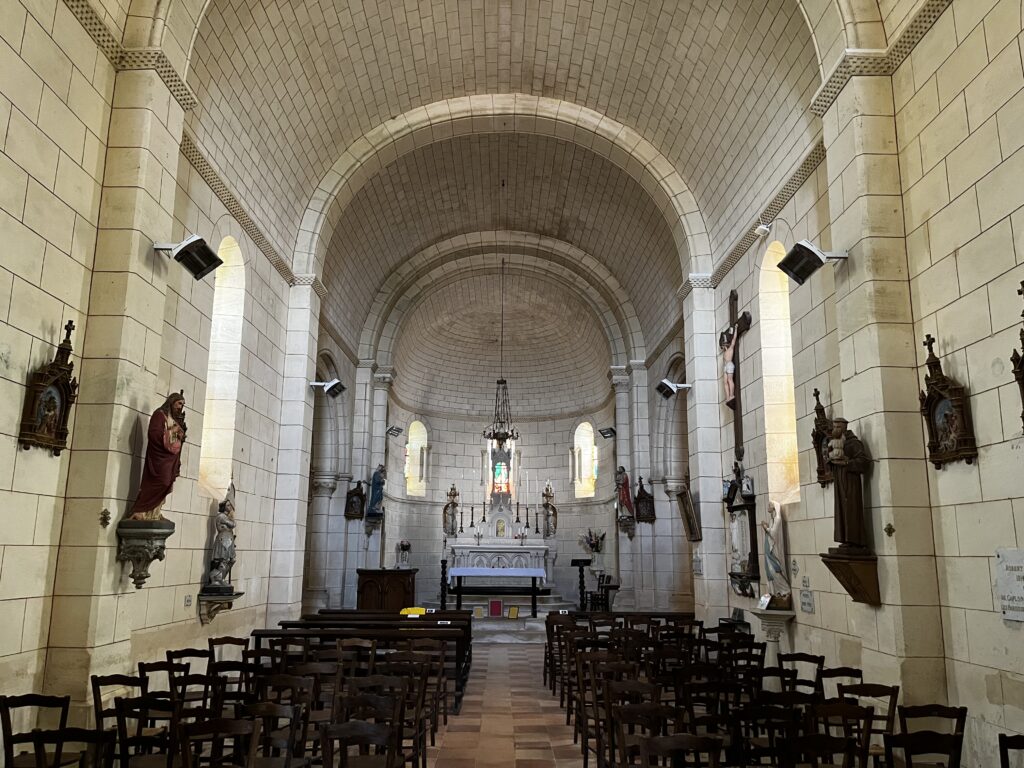
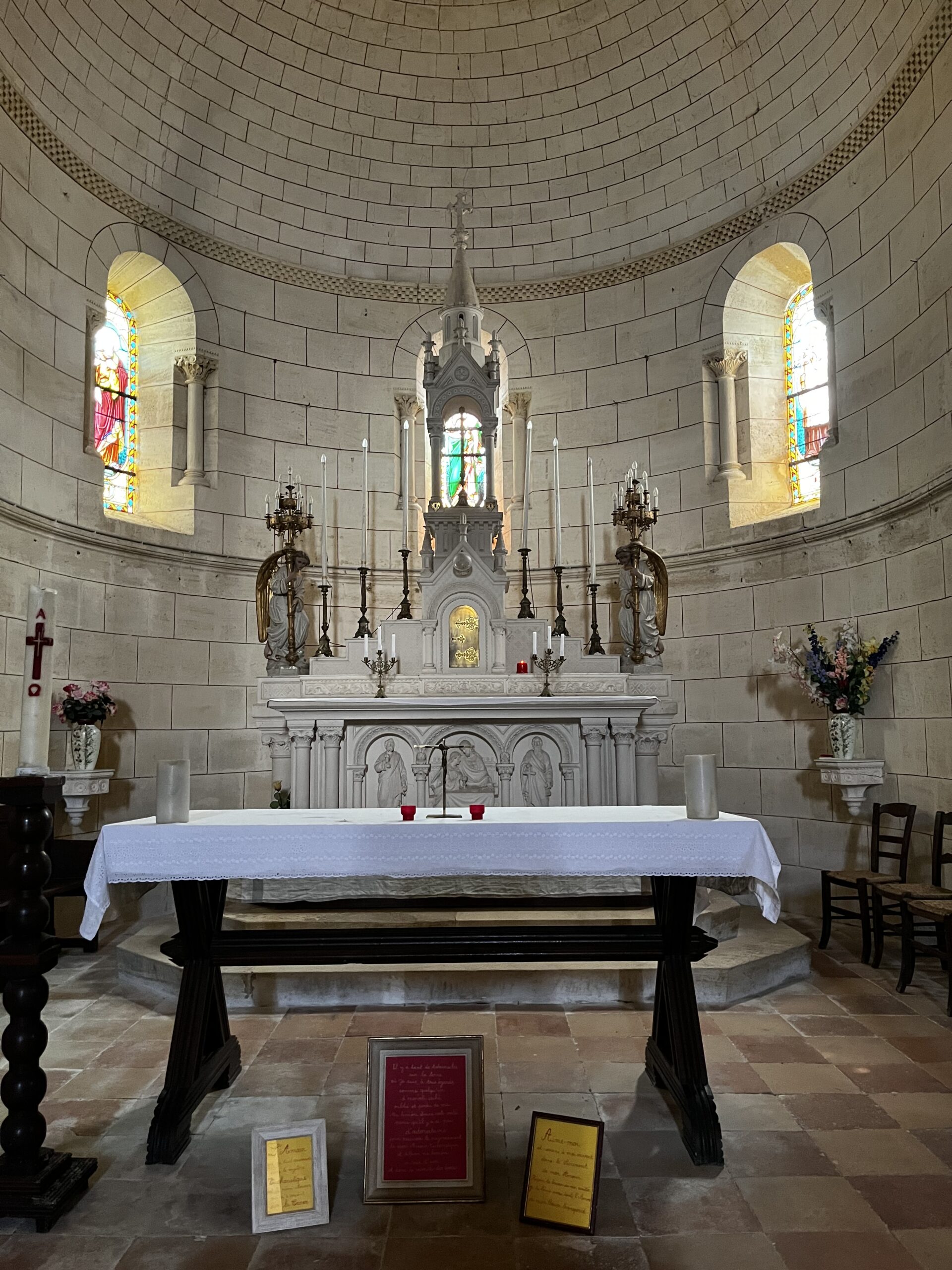
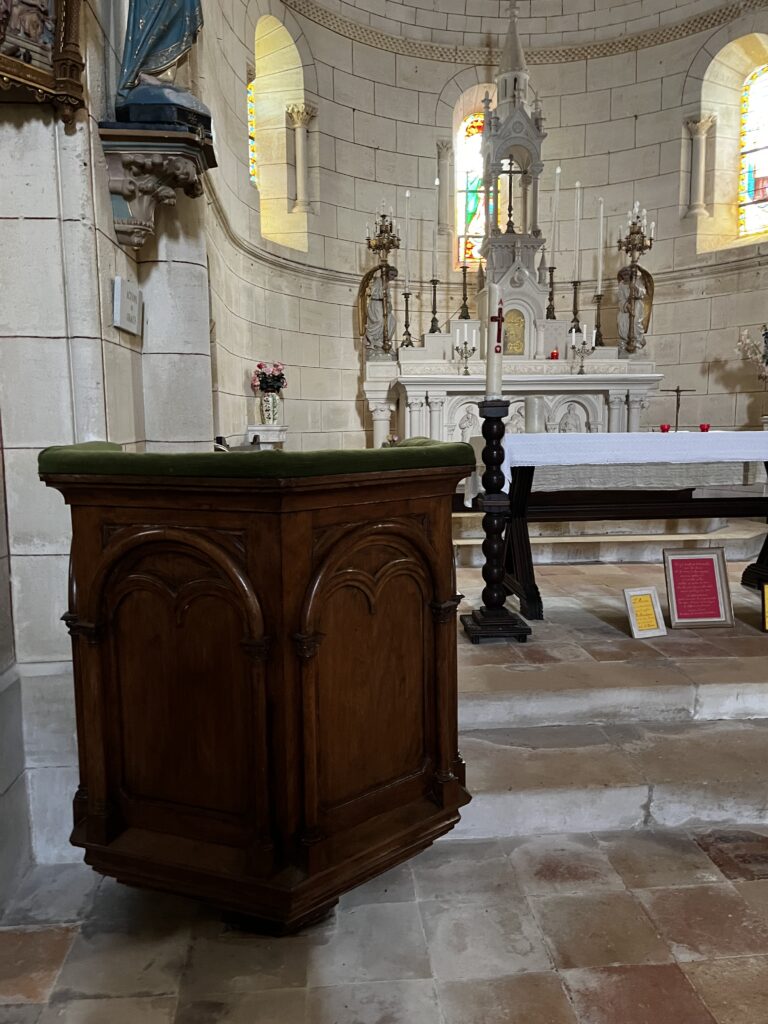
The climb was exactly as bad as it looked, but the 16th-century church of Saint-Pierre was open. The interior walls gave every indication of having been scraped clean at one point, but somebody had meticulously gone through and painted lines on every wall and ceiling to indicate the shapes of stones.
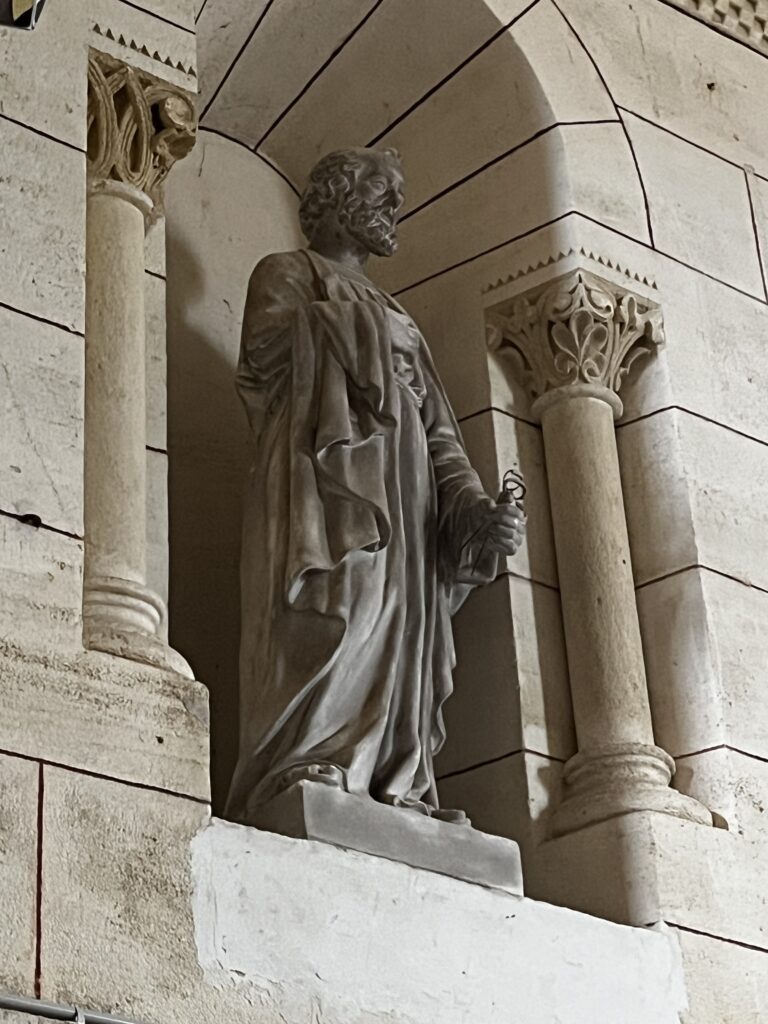
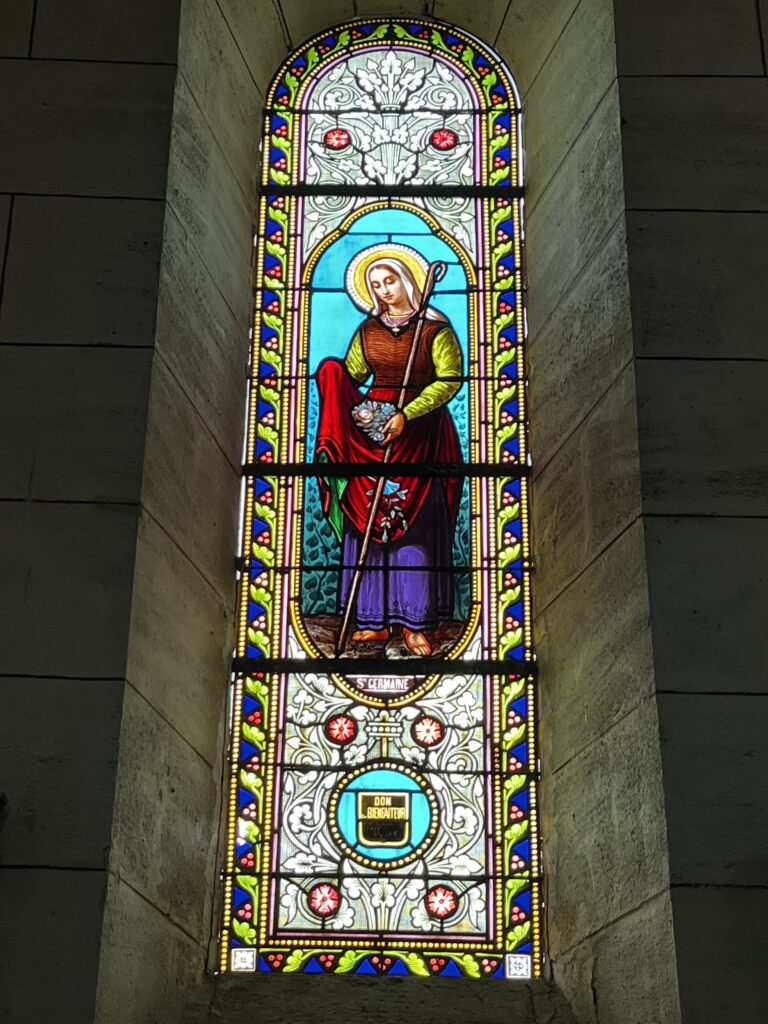
They had also fashioned the ambo out of what was clearly the original pulpit. Most of the statues were the mass-produced plaster variety, but there were a handful of old stone masterpieces.
I sat in the cool church for a moment and prayed before continuing on. Outside, the sun was hiding behind the clouds again, and the air temperature had dropped.
Just after noon, I passed by what was once the farming hamlet of Le Tertre. It appeared entirely abandoned.
Soon it was back to the usual mixture of woods and meadows, walking on an old narrow asphalt road.
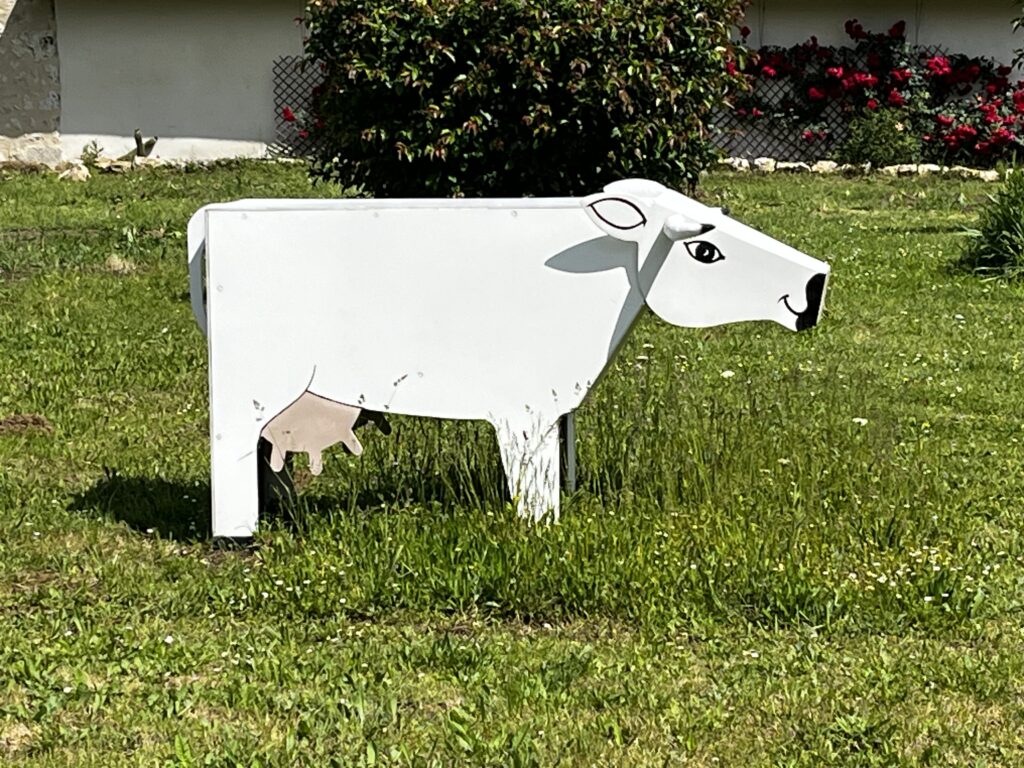
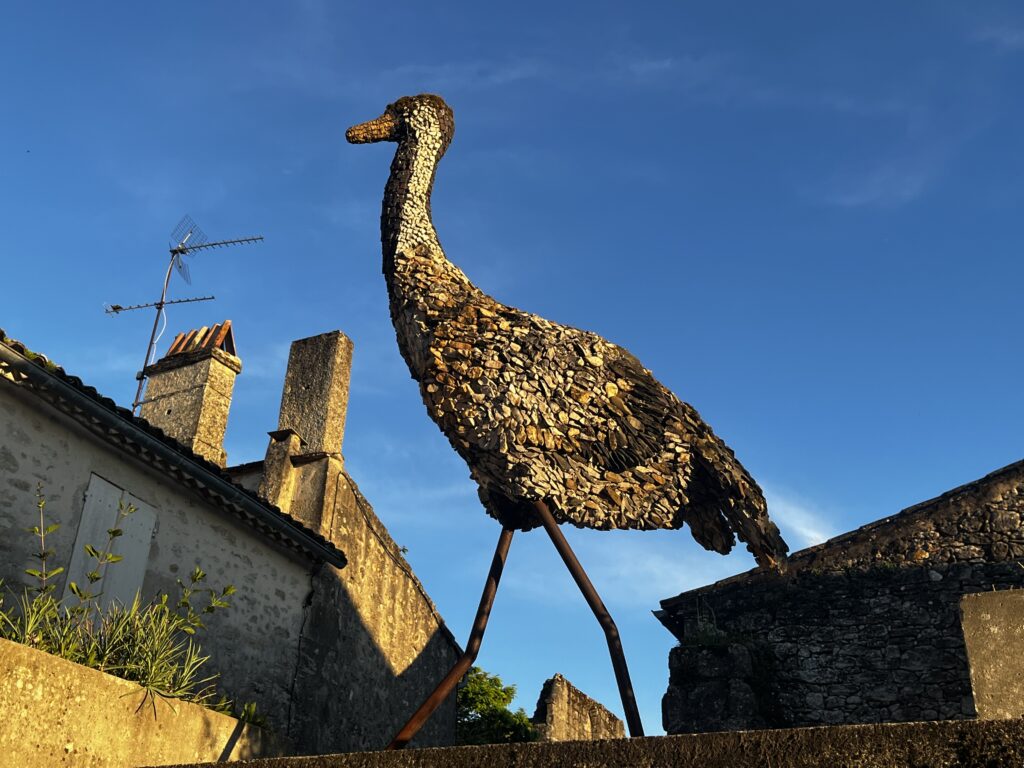
At one point I saw (and heard) sheep in the distance, but no cows. Well, there was that one cow statue.
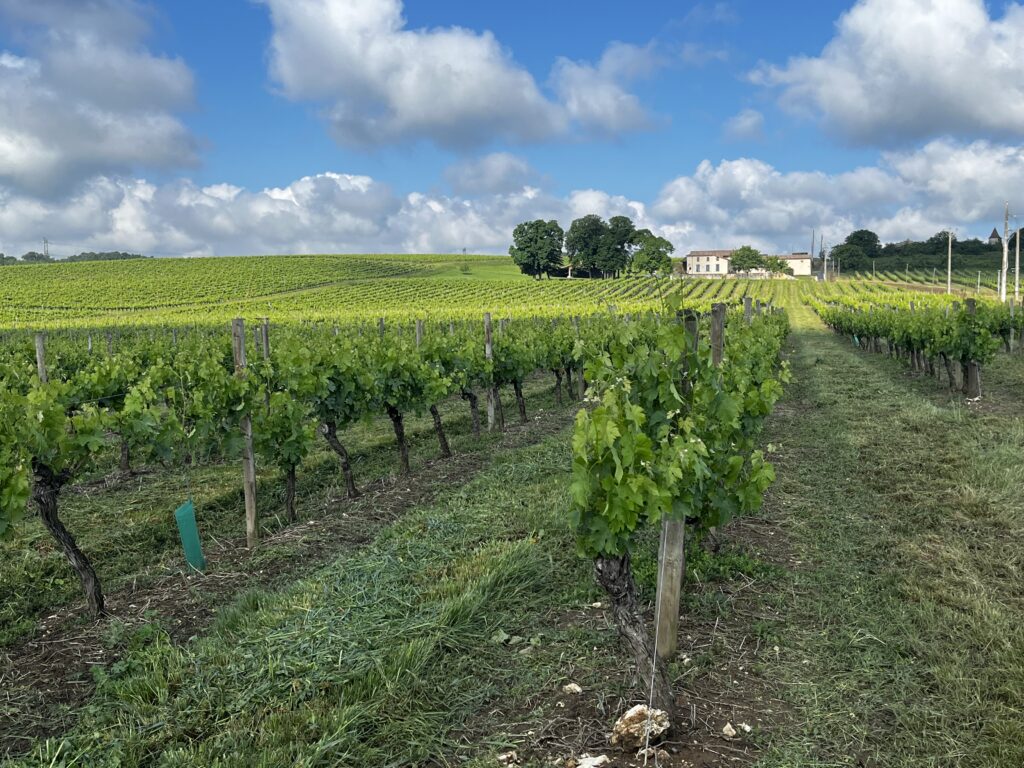
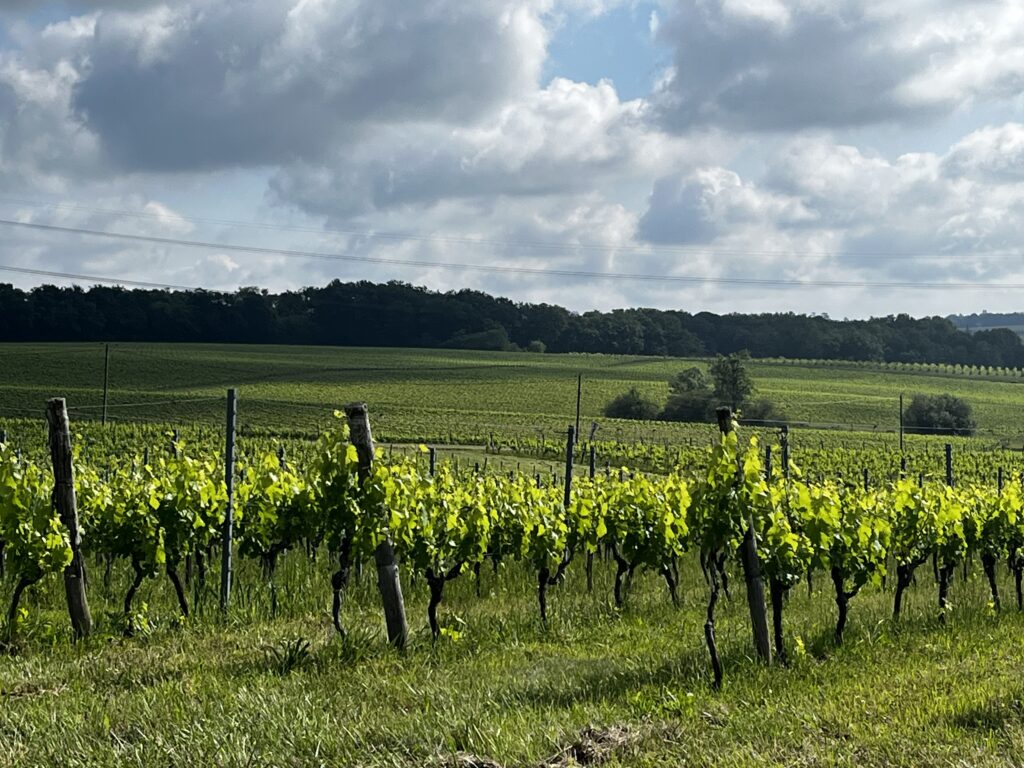
A little later, vineyards were added to the mix. By the time I passed Le Grand Plantier at about 12:25, it was all vineyards.
In the midst of the vineyards, at about 12:40, I passed by the compact little hamlet of Liaumenan. As I approached, it seemed as though every building were connected to the others.
Off to my left, meanwhile, there was what appeared to be an industrial plant. I’m sure it has something to do with winemaking.
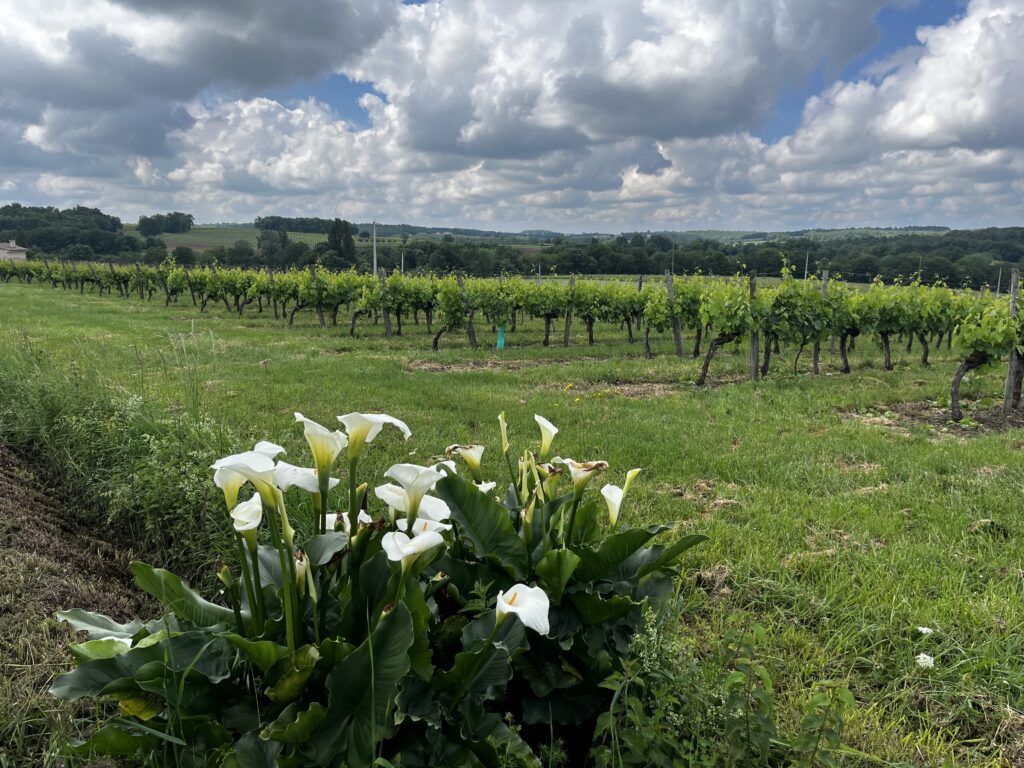
But mostly, the afternoon of walking was seemingly endless vineyards.
Sometime after 1 PM, I passed the hamlet of Chazelle, observed population: one horse.
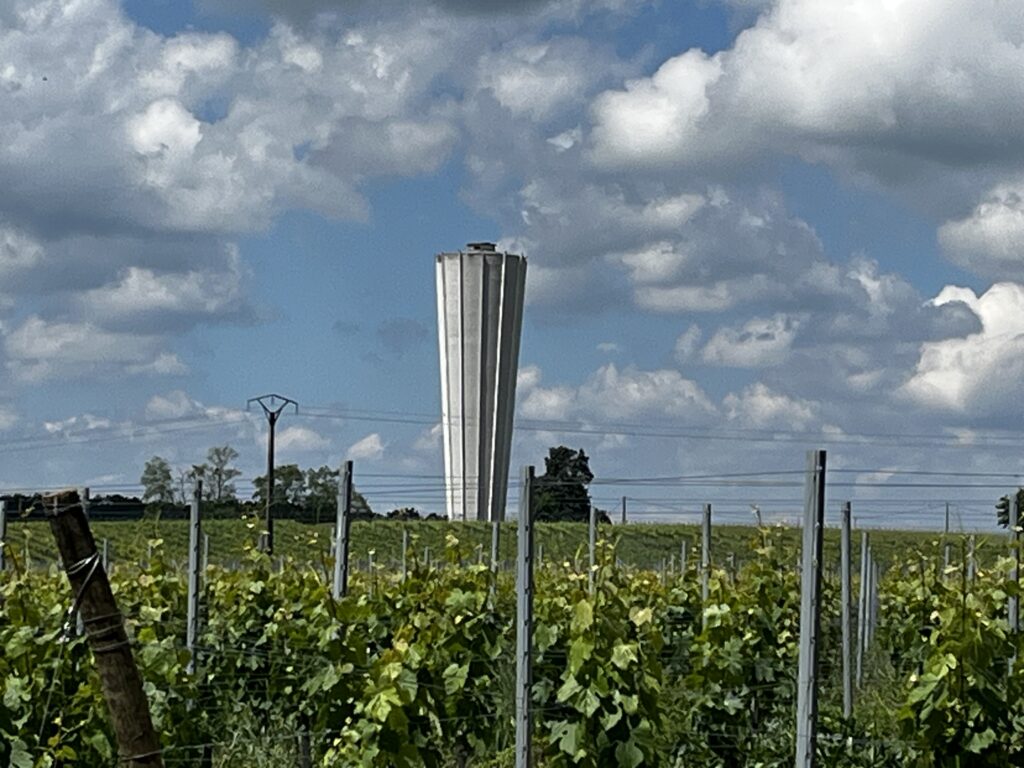
In the distance, I noticed an odd sort of tower, sort of a trapezoid with a narrow base than top. It looked enormously tall, and I wondered if it could be a water tower of some sort.
At about 1:10, I passed through the hamlet of Bertrud. This seems to be a scattered collection of very large, very posh houses set amongst the vineyards.
Here, the Camino took a sharp turn, and I was now heading directly for whatever that tower was up on the hill. I did not look forward to climbing that hill, especially since I was walking downhill towards it.
I soon left the vineyards behind, and the Camino now ran through an area of trees surrounding open fields. Almost imperceptibly at first, the Camino began to climb.
I passed small farm plots, small vineyards, even a duck pond. The climb was not so easy now. I panted through my rosary.
Sometime past 1:30, I walked by a cluster of houses that might have been the hamlet of Les Bailloux. His ear as I could tell, I was at the top of the hill. The strange tower was now fairly close to my right, and I still have no idea what it is.
Just a few minutes later, I finally saw the village ahead of me. It appeared to be on a hill across a shallow valley.
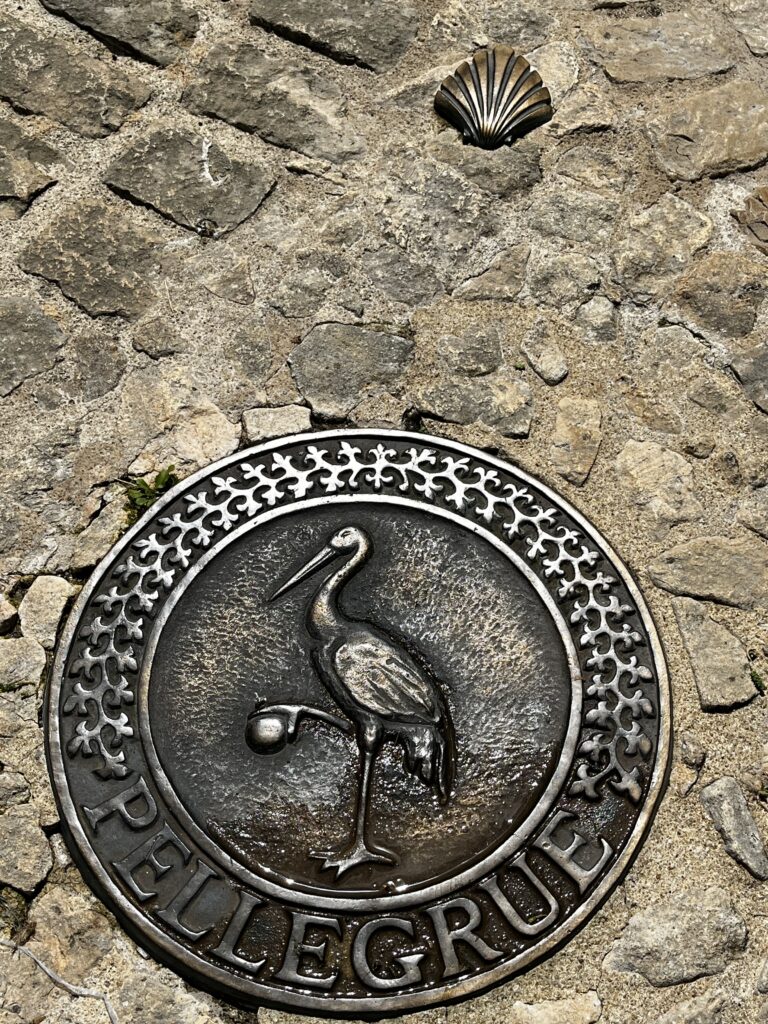
I entered the outskirts of the village of Pellegrue walking downhill. Once I got past the suburban-style housing, there was a pretty challenging uphill climb into the center of the village.
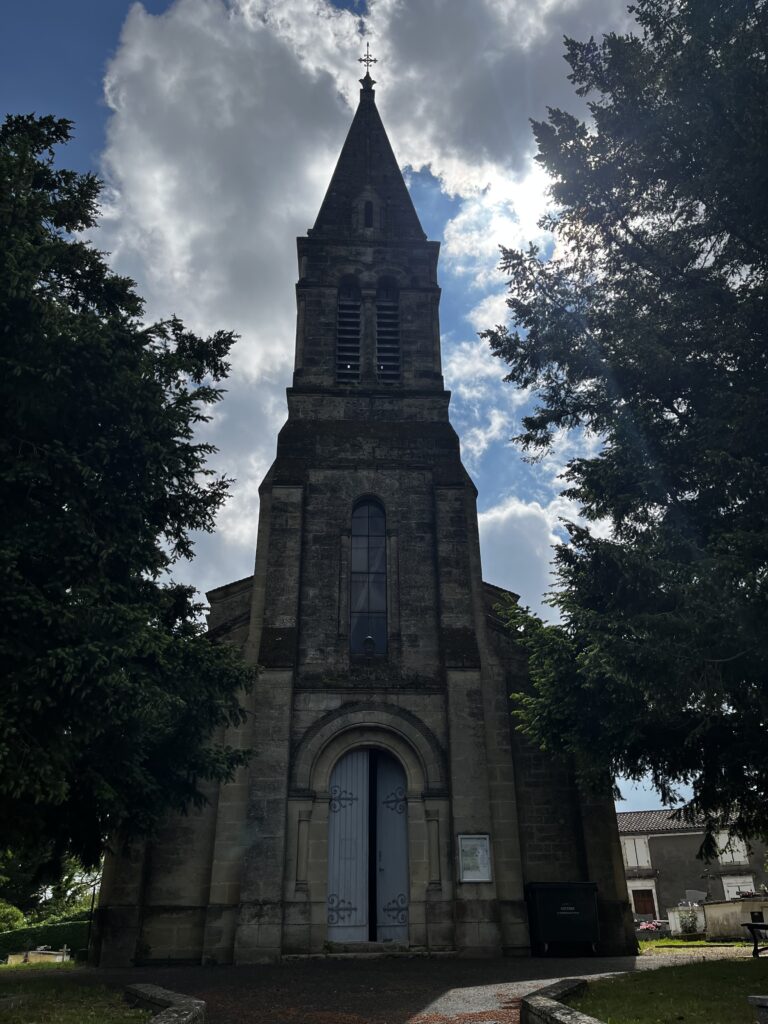
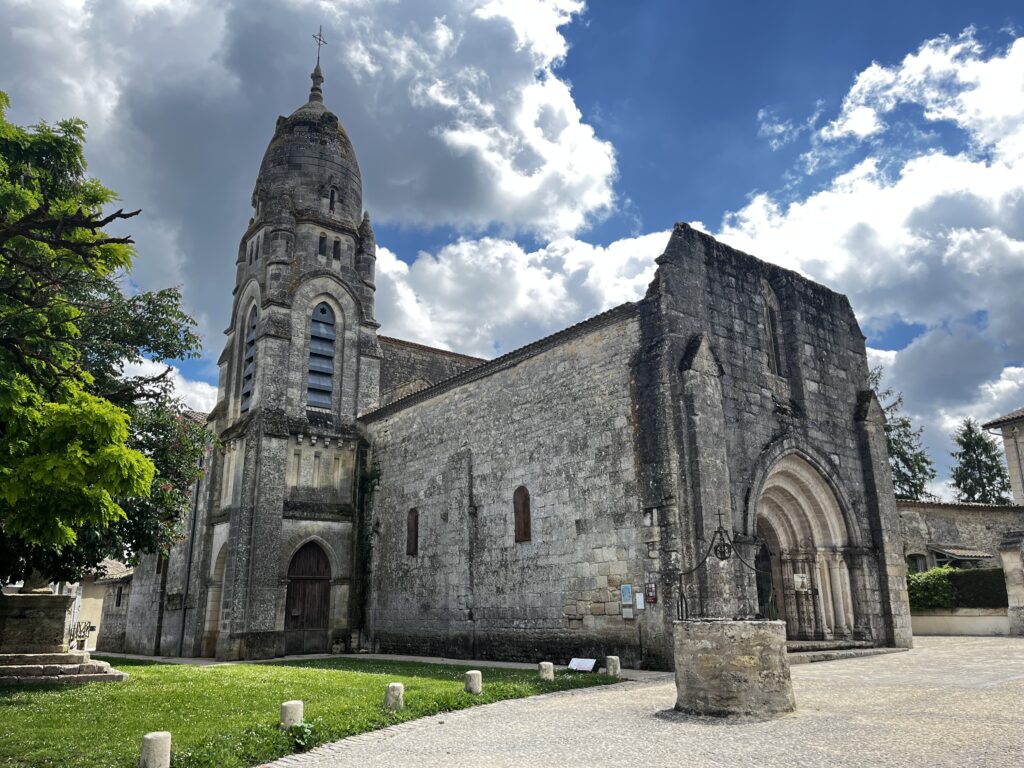
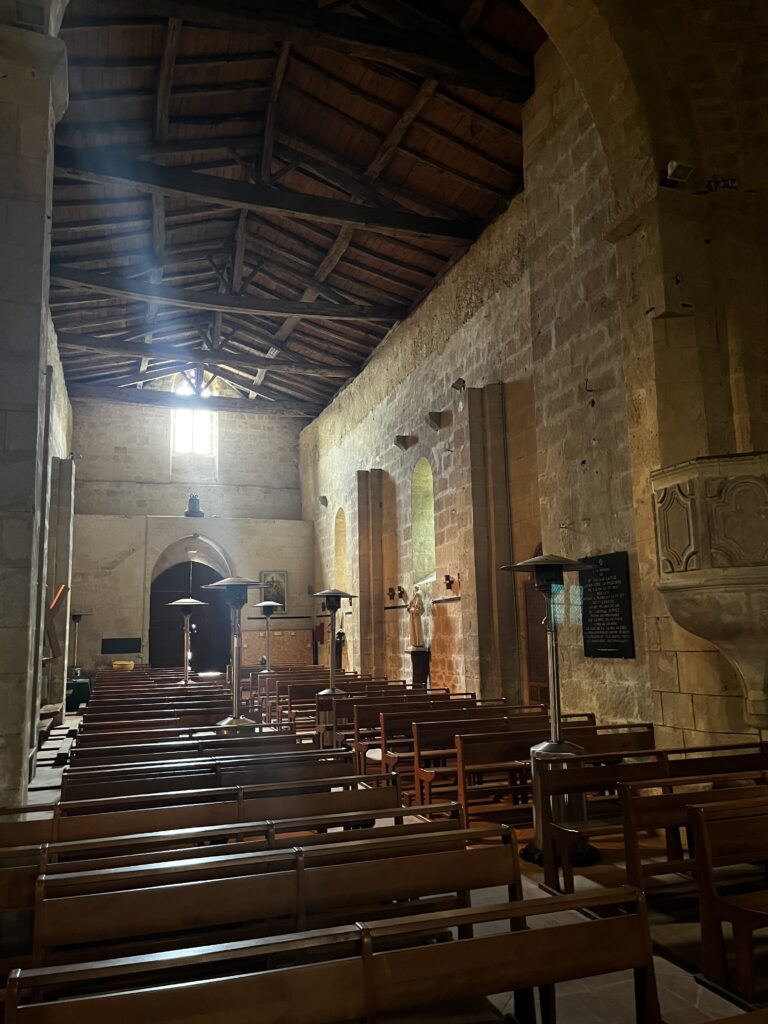
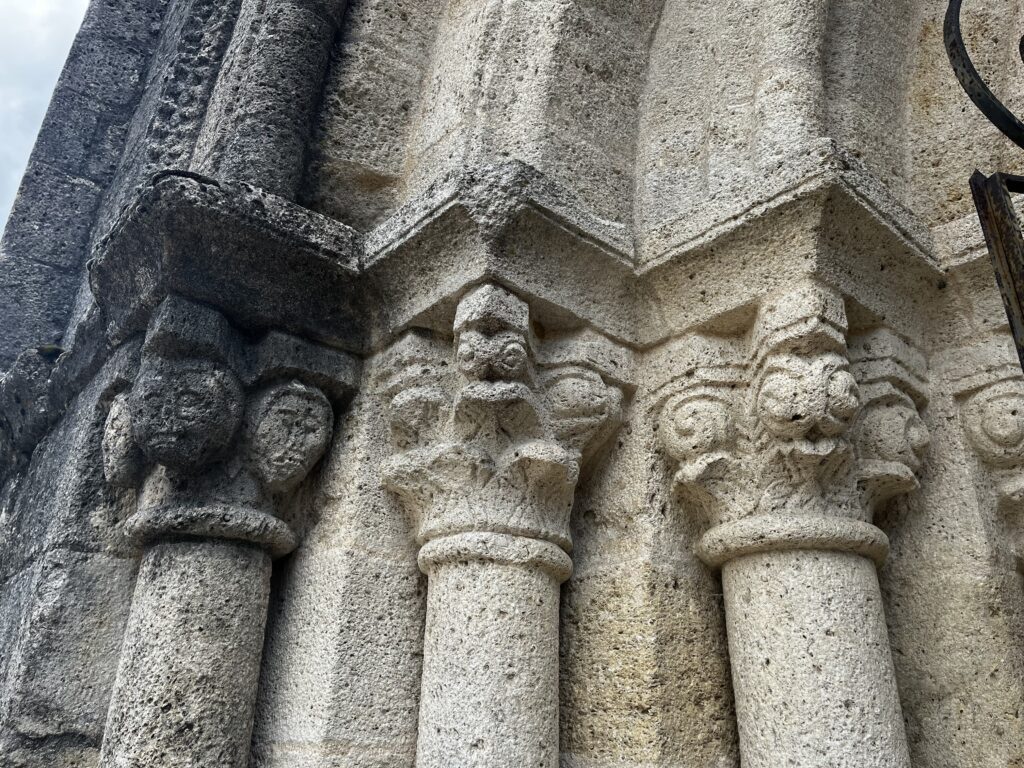
At 1:50 PM, I was standing in front of the 13th century Church of Saint-André, with its very peculiar 19th-century Neo-Byzantine bell tower.
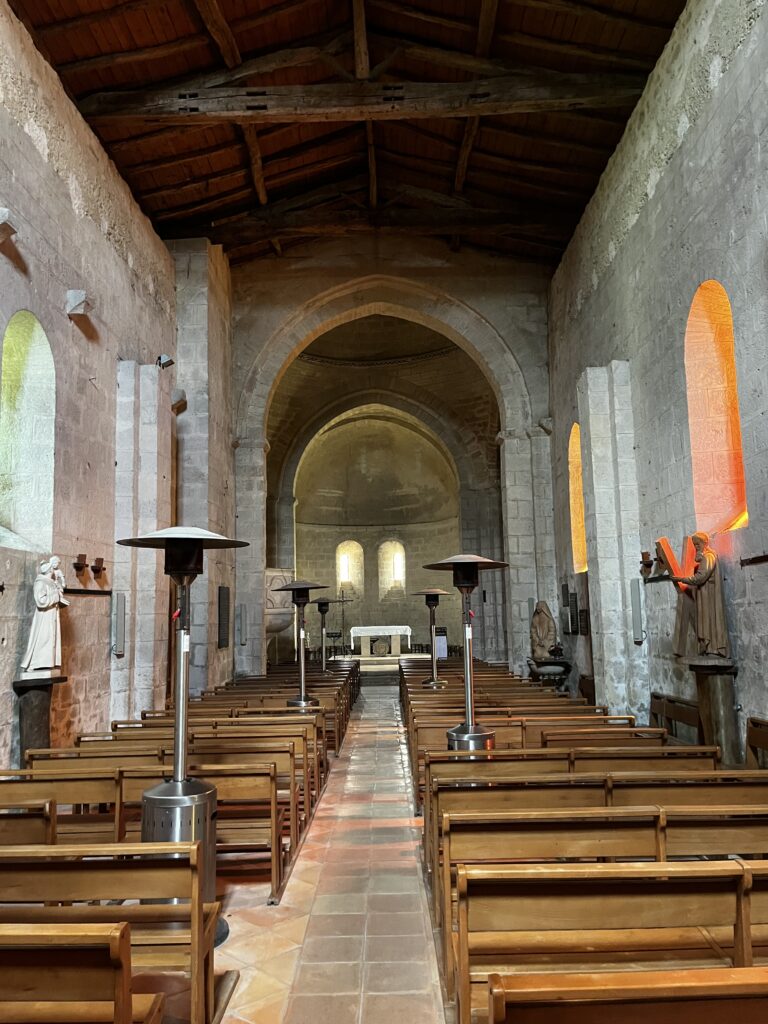
This is a plain, almost Cistercian, Romanesque building. It did have however one thing I had never seen before in a church: outdoor gas heaters. That can’t possibly be safe.
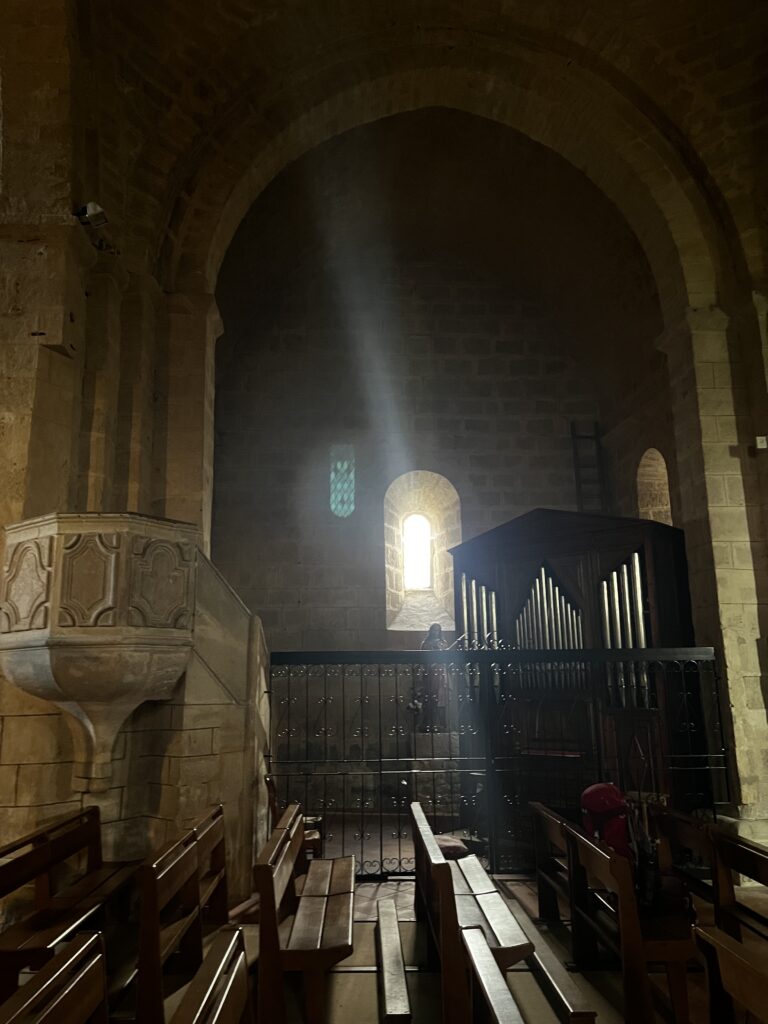
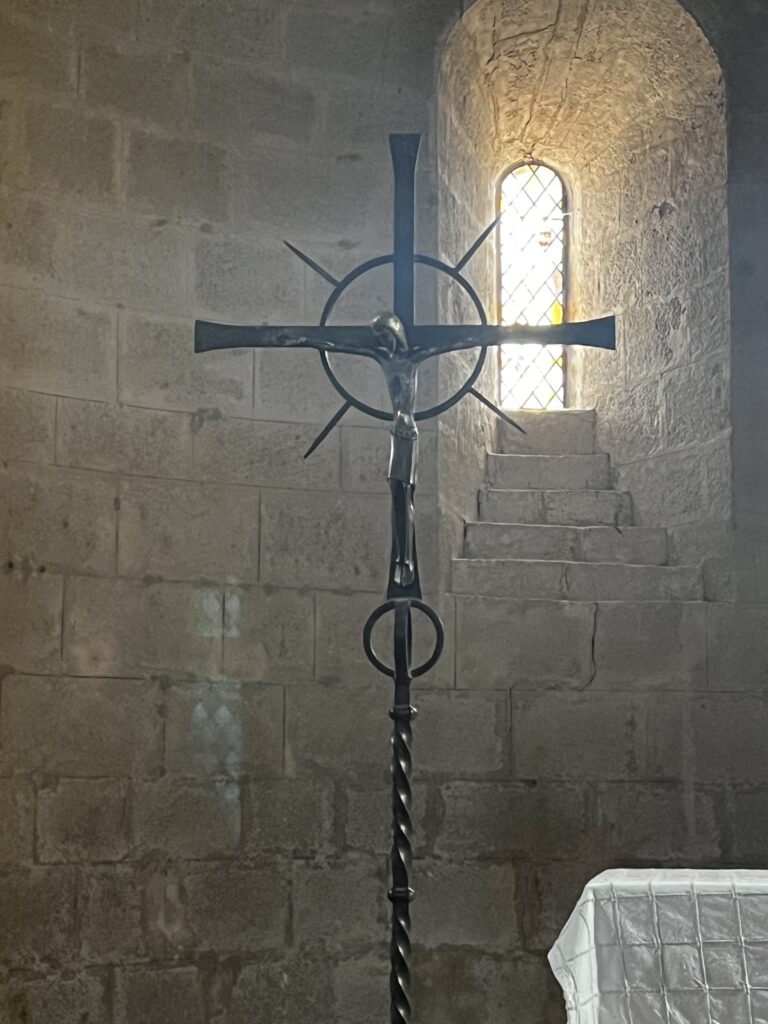
The pulpit was stone, built into the very architecture of the place. The more modern furnishings were of a very interesting metal scroll work.
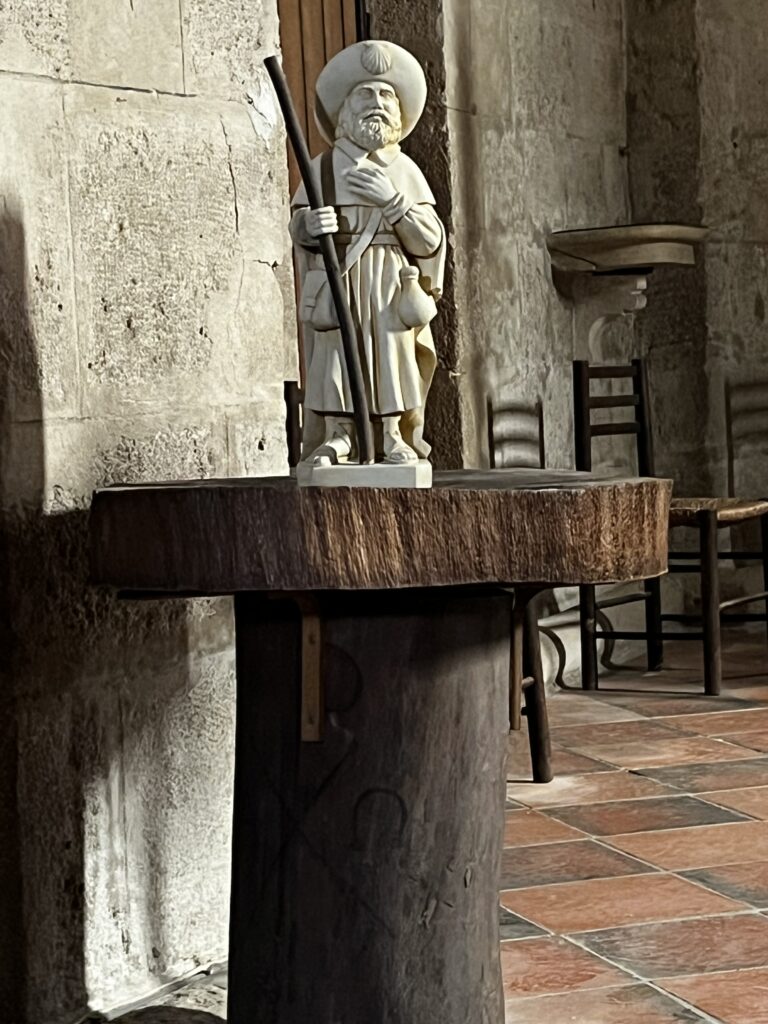
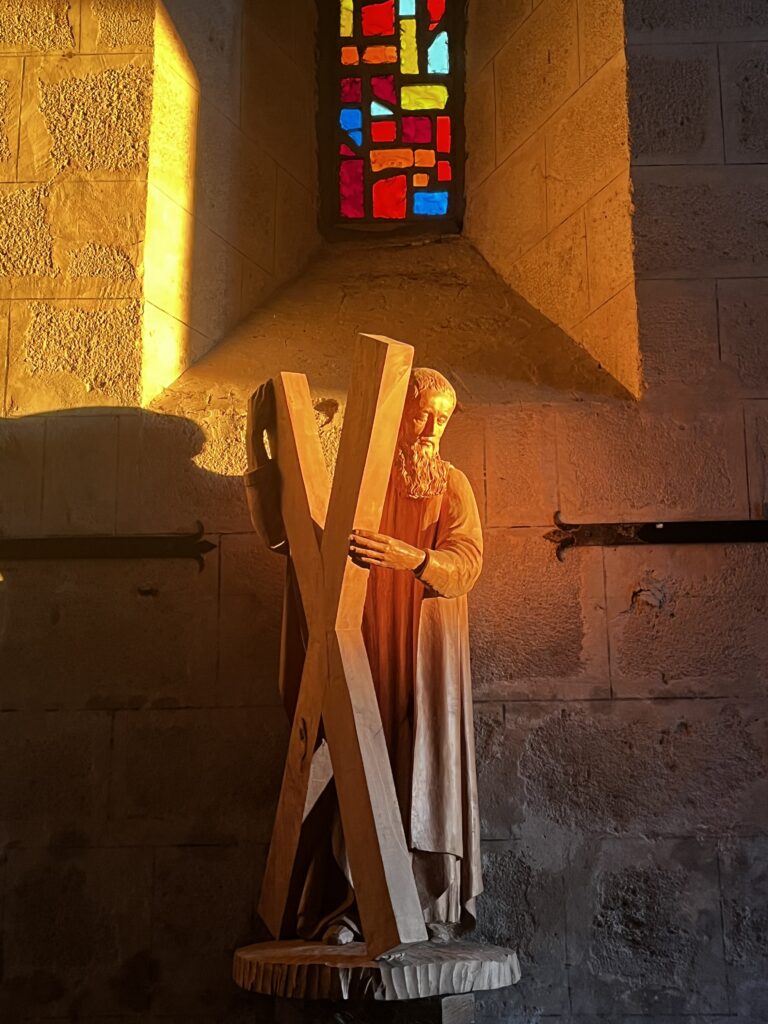
A small stone statue of Saint James as a pilgrim stood in the sanctuary, on a rough pedestal made of raw timber. Most of the other statues in the church had a similar base. I’m sure there’s a story there.
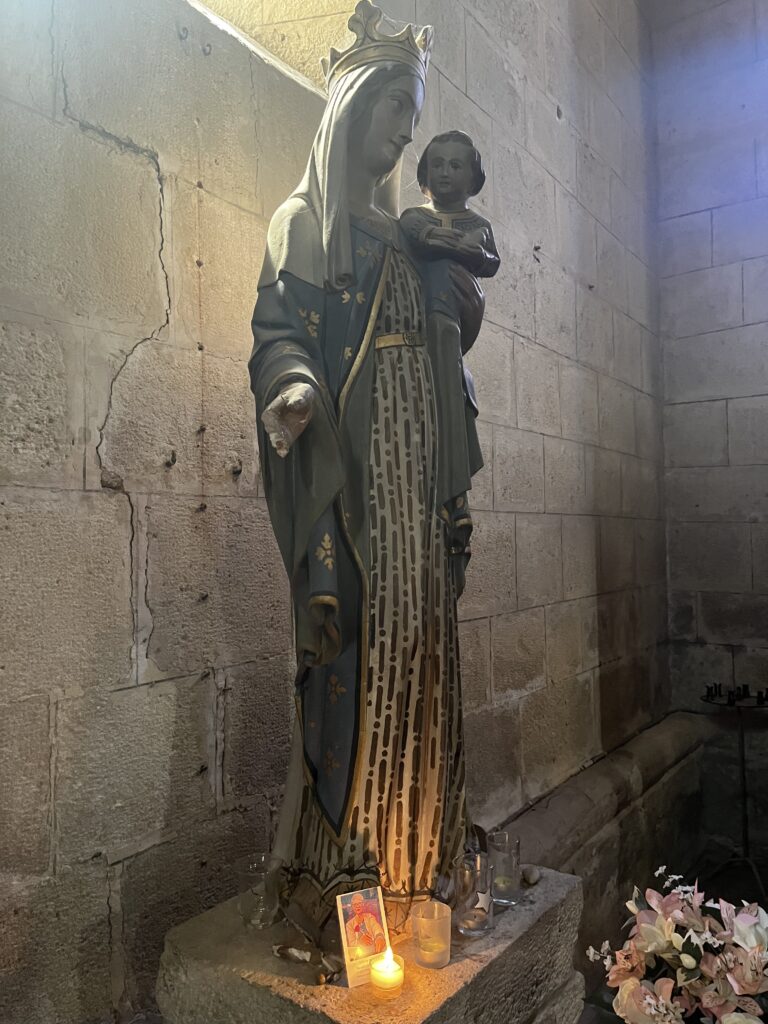
I sat for a while in front of the tabernacle, in a side chapel featuring a glorious statue of Virgin and Child in desperate need of repair.
Somewhere in the church, a pigeon flapped and occasionally flew the length of the nave. I don’t know whether it was roosting here or trapped.
Before I left, I lit a candle for Francine.
It was nearly 2:30, and it was time to explore the little village – I was about an hour too late for lunch, but I was hoping to find a snack someplace, or at least someplace I could get a drink and make a sandwich out of supplies in my food stash.
First, though, I would have to find the town hall for access to my gîte. I went to the town hall, paid, and they gave me all the information. I was the first one here, and I was showered and already had my laundry done by the time Luc and Louis-Marie arrived. Reunion! They told me that there was a place in town where it was possible to get beer and pizza after 5 PM.
As it was only about 3:30, I decided to take a rest and deal with my blister. Because of course – my shoes were soaked through. I got a blister. I’m thankful I only got the one.
Eventually we were joined by Yves, who I hadn’t seen since Périgueux. He had apparently made a friend last night – a fellow musician who gave a very exclusive organ concert to us four pilgrims in the church. It was a privilege to be there.
And a grace.
Date: 07 May 2026
Place: Pellegrue
Today started: Sainte-Foy-La-Grande
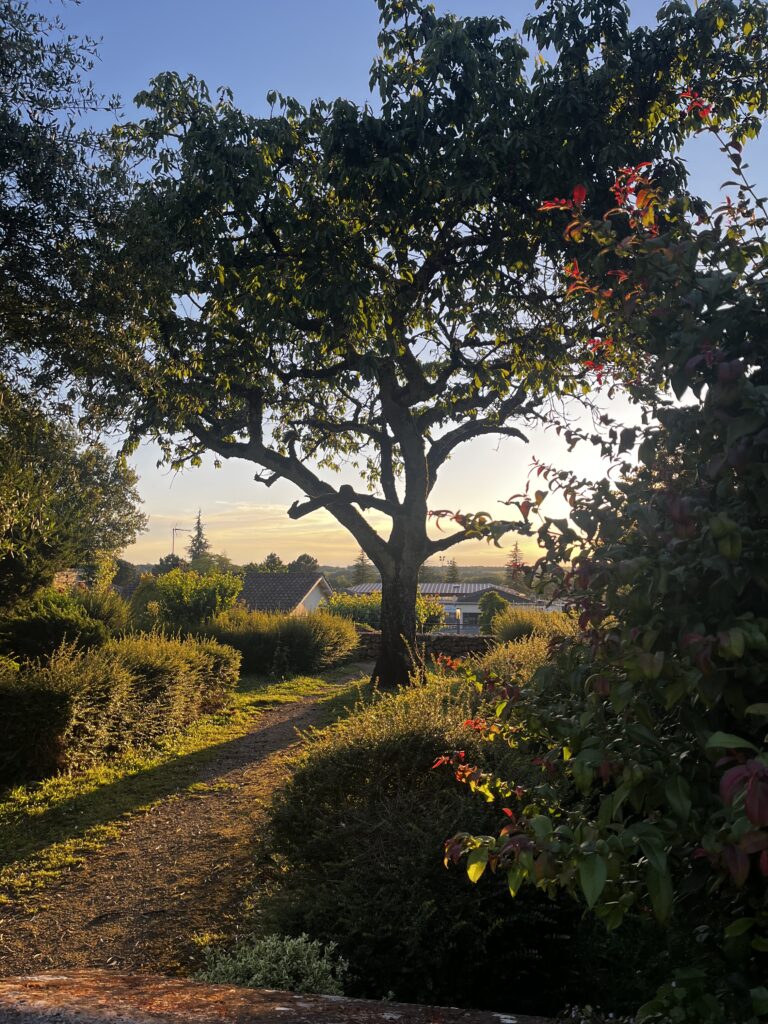
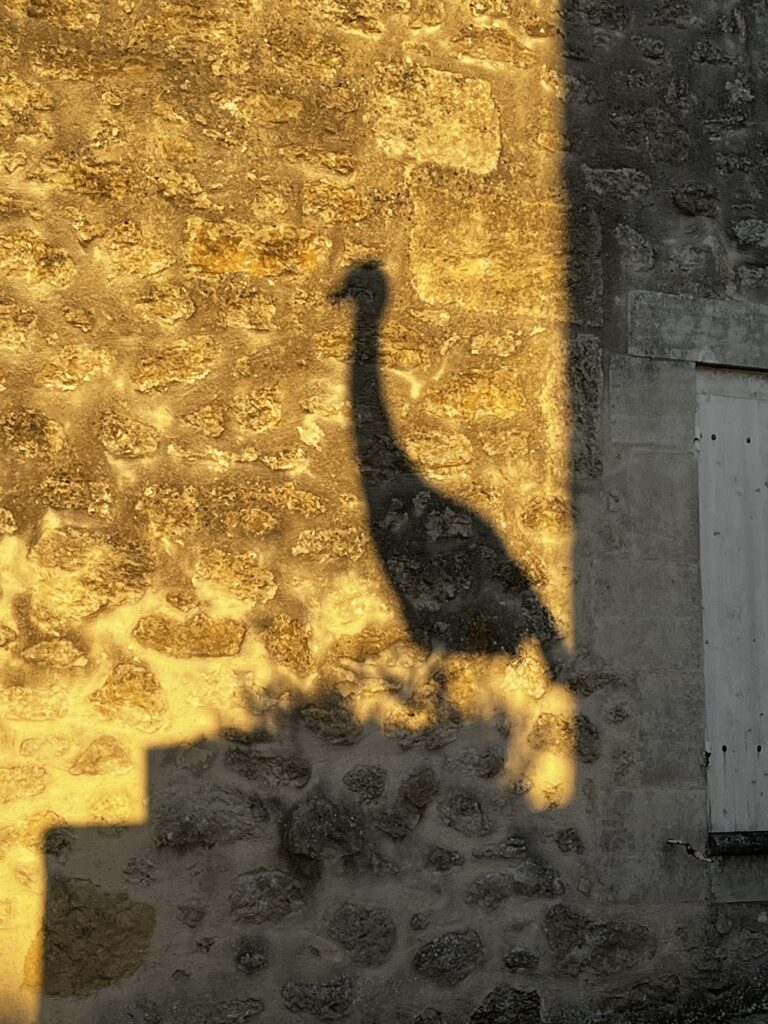
Today’s Photos!
Another interesting day. Hope
that blister is better today!
Marginally better. If I could just stay in dry shoes for a couple of days, I think it would be fine.