
Via Lemovicensis: Going to the West
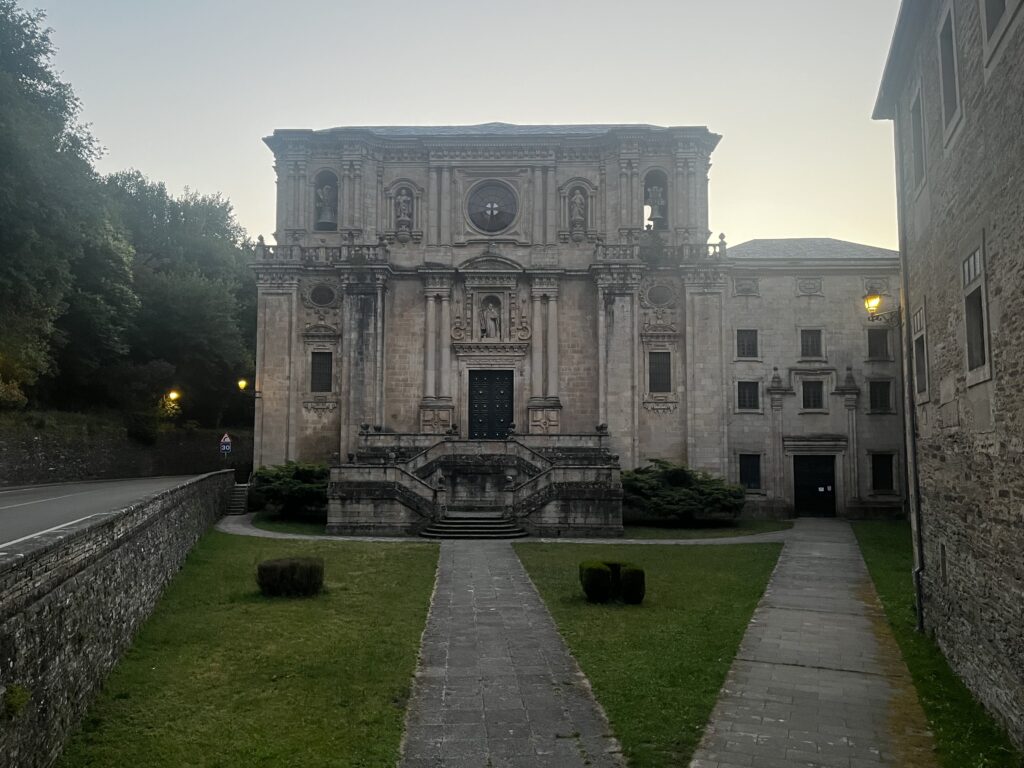
I left my little monastery hostel room this morning at about 6:30. Nothing in the immediate neighborhood was open for breakfast, so I took one final tour around the monastery building to get to the Camino.
I was definitely slow in getting out of town – today is meant to be a short day in preparation of the big days of the final push. I passed four more cafés or bars on my way out of town. None of them were open.
The way out of Samos was very similar to the way in: a gravel path next to the road. I fell in with Owen, who I had met a week or so ago, and we talked as we walked. He had walked from Le Puy to Pamplona several years ago and said he was now “finishing my Camino”.
By the time we got to the little hamlet of Teiguin at about 7:05, I found myself walking on the highway. We soon returned to walking on the gravel between the highway and the river.
At about 7:15, the Camino crossed over the highway and set out down a narrow dirt path through the outer edges of the village of Pascais.
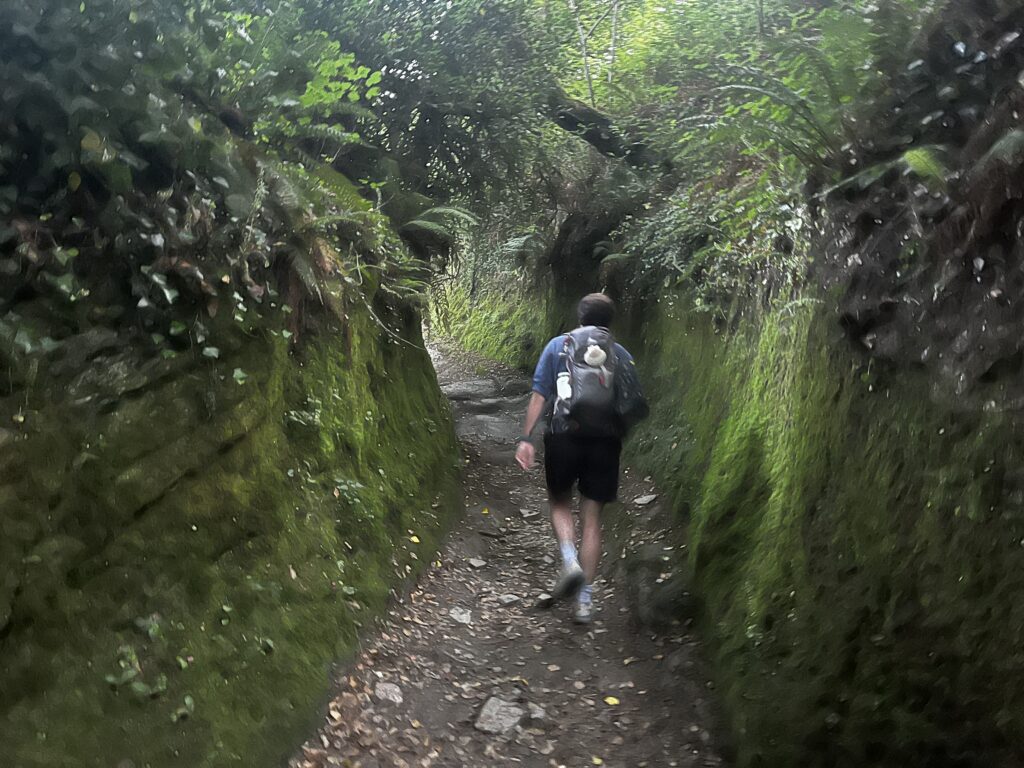
The path took us through meadows and forest. At about 7:20, it took us someplace entirely different: basically a stone chute with tall mossy bluffs on either side.
I suppose it was carved out by a stream at some point, but it very much looks like an artificial construction, possibly a holloway. It was dark and cool and quiet as we ascended through this sort of tunnel, like a passage to another world.
We finally reached the top at about 7:30, and found ourselves on an asphalt road. The parish church of Pascais stood here, along with a lovely donativo place called Casa Xaymaca.
I stopped for coffee and a small slice of almond cake, and Owen walked on. Here I met a Latvian pilgrim named Inta. I think I actually saw her briefly yesterday at the last bar I stopped in before Samos, walking with a group of three Americans.
We had a lovely discussion over coffee. One of the first things she asked me was what I did in my real life at home. Before I could answer, she said “because you look like a writer”. Just so.
She produces children’s television programs (as well as corporate videos), and she teaches children how to deal with their feelings in a sort of Latvian Mister Rogers way.
She had a little ribbon on her backpack representing the Latvian flag. I have an identical ribbon, given to me by another Latvian pilgrim I met in 2023.
A most curious encounter.
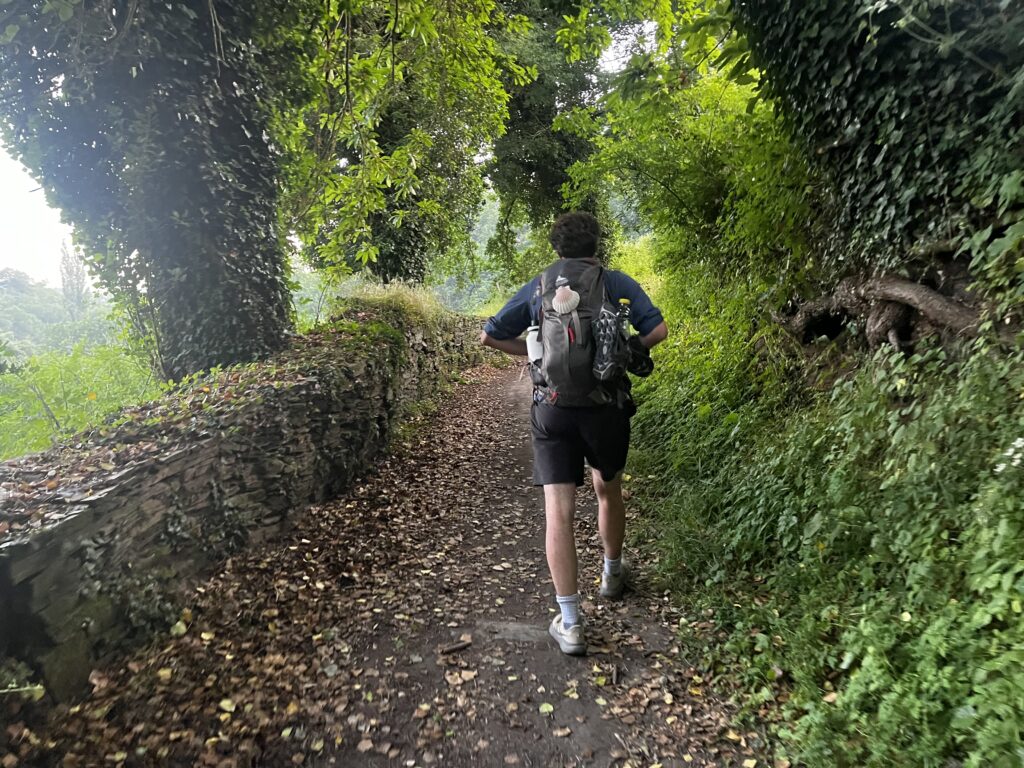
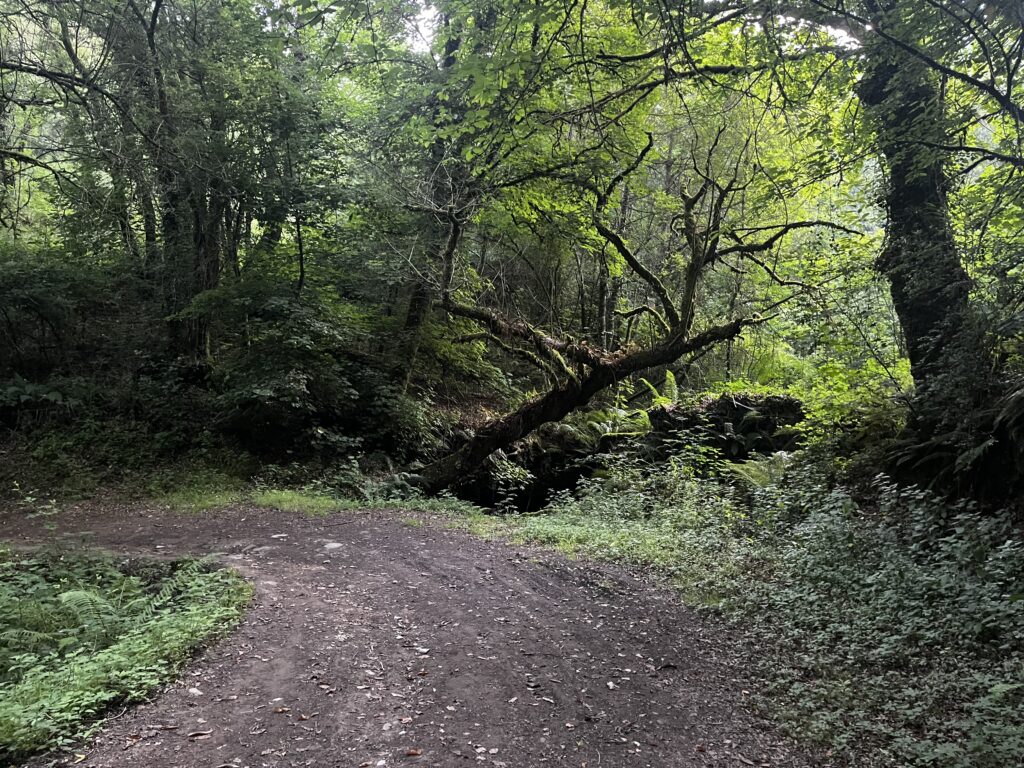
The Camino didn’t stay on the road, but instead moved past the (locked) church onto a dirt and gravel road that plunged down the hillside to landscape of meadows and thick, tangled trees.
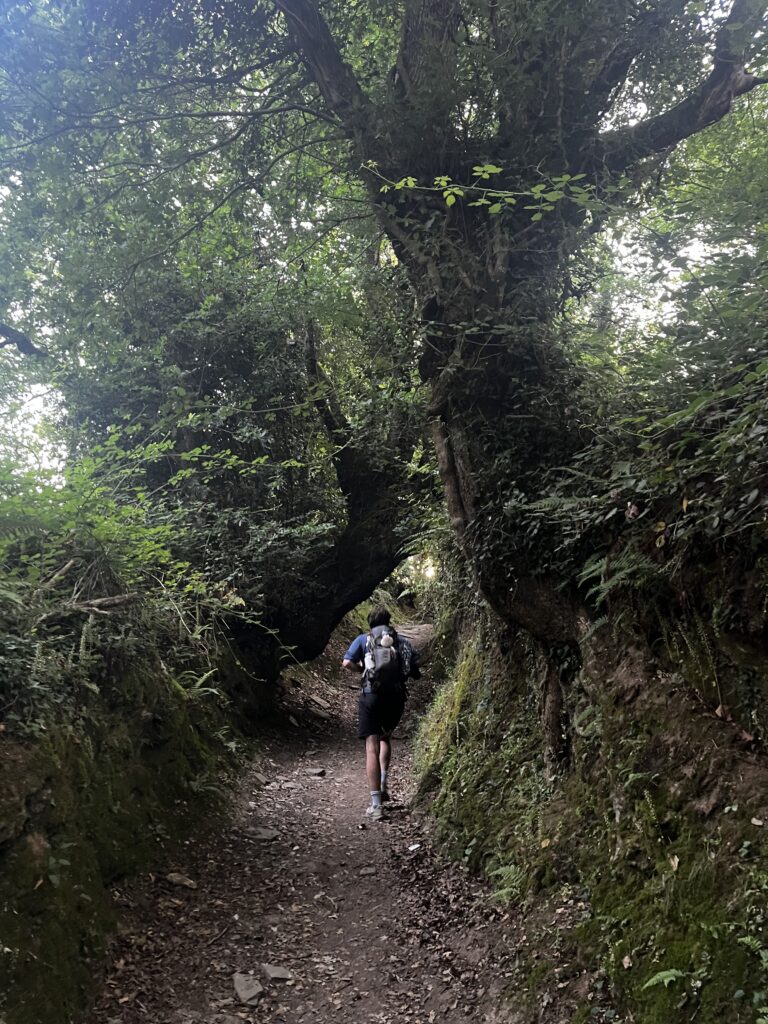
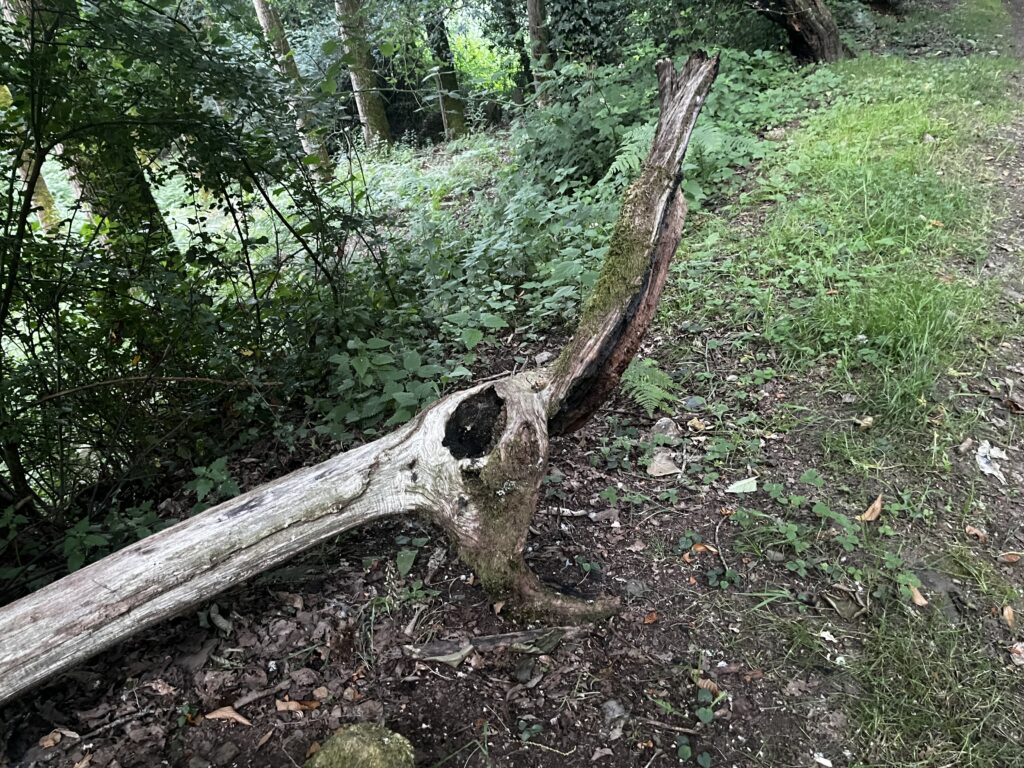
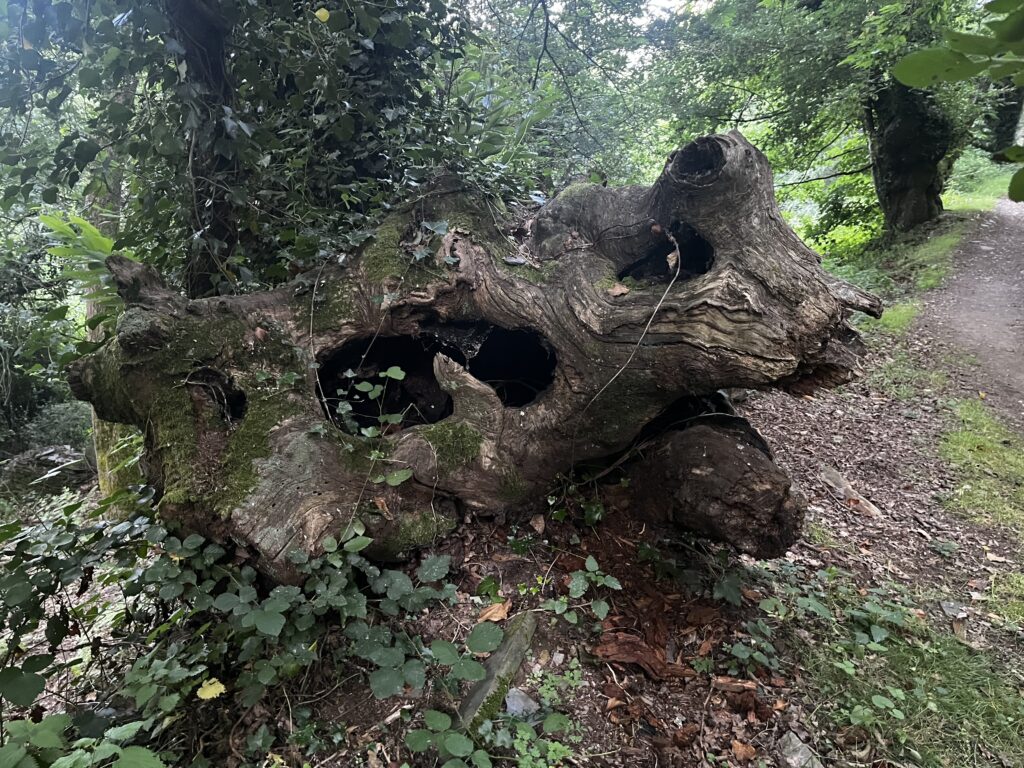
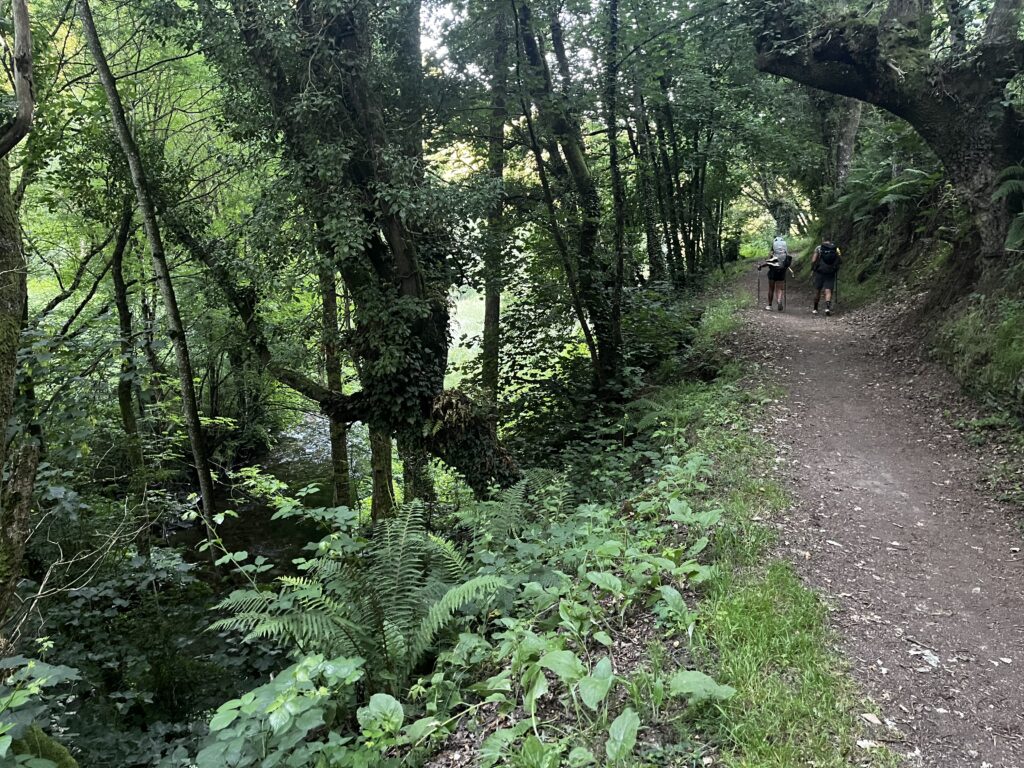
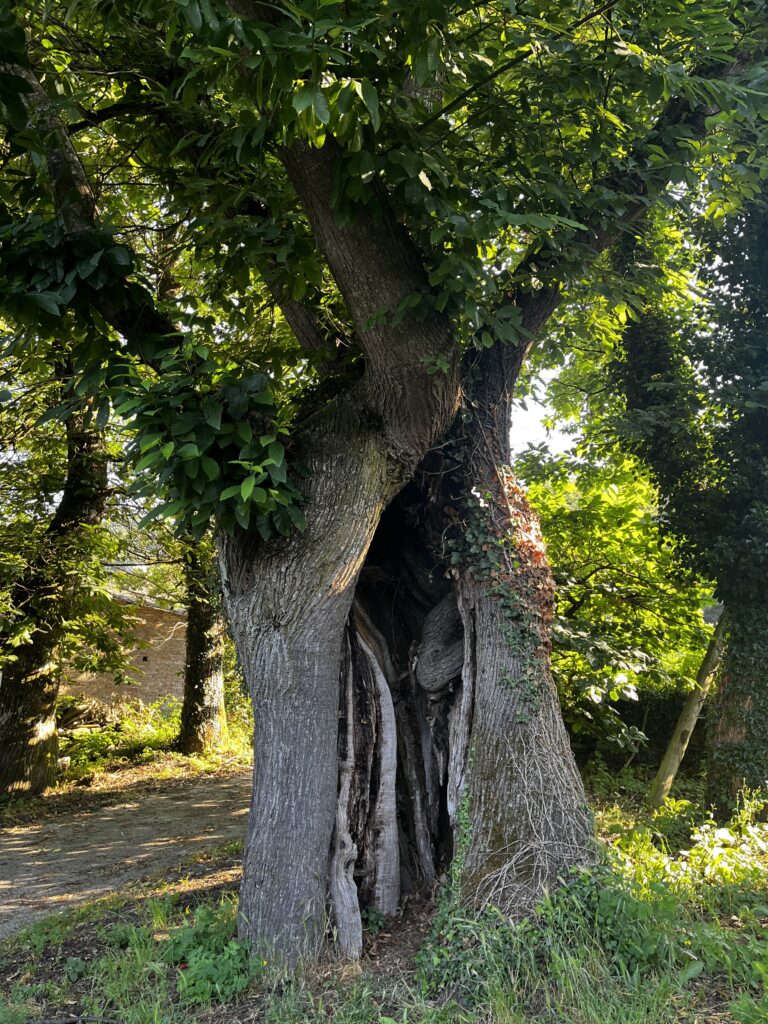
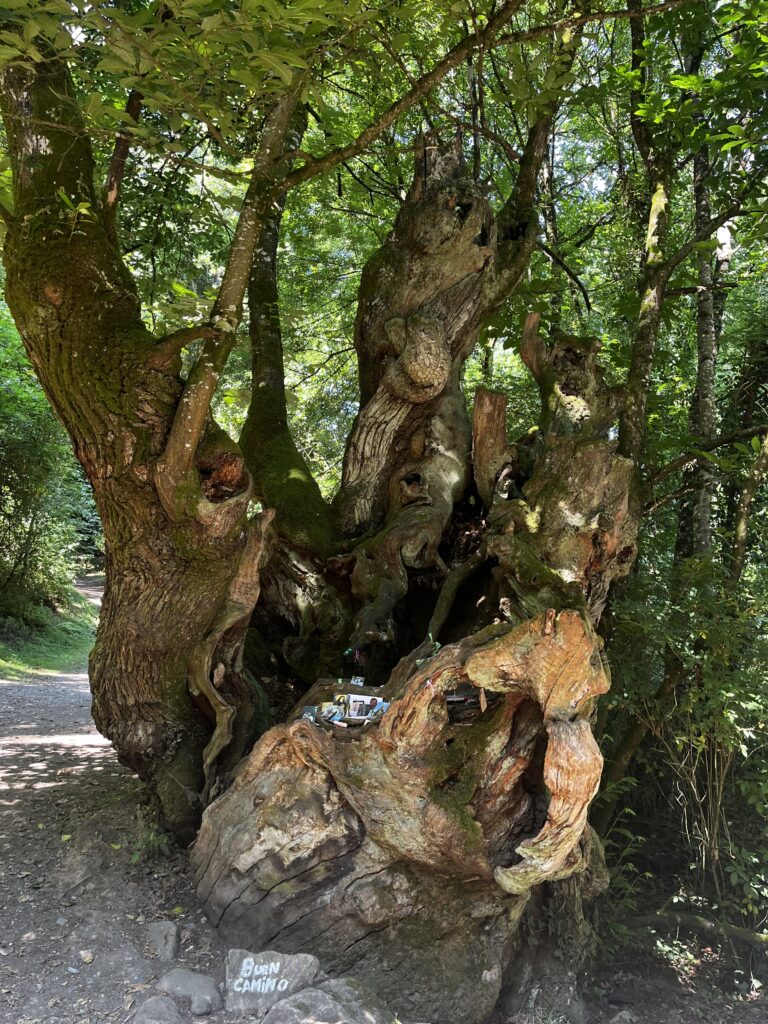
The forest here had a Tolkienian feel to it, a place of dark and wild faerie stories. There were little clearings ringed with the remains of ancient stone walls, trees twisted into fantastic shapes, fallen branches that looked like the bones and skull of some forgotten and fell beast, and even the hint of dark caves in the side of the bluff.
As I walked forward, the land fell away on my left and I could now hear a waterfall somewhere on the river below.
This is a part of the Camino Francés in Spain that I have never walked before. In 2013, the route from Samos followed the highway all the way to Sarria. In 2023, I somehow missed the turn in the driving rain and ended up on the highway again.
Today, I walked through a faerie world. And then, somehow, something changed, and I was just walking walking through an ordinary Spanish forest. Still beautiful, but some mystical aspect of it had drained away, faded as the splendour of the elves going to the west.
At about 8:10, I came to the tiny little hamlet of Gorolfe. As far as I can tell, this consists of a little church, three houses, and a barn. After crossing an asphalt road here, the Camino resumed its downward trek through the ordinary, beautiful Spanish woods.
I let two pilgrims pass me as I stopped to take a photo of the river below the path. They were in an animated discussion, quite loud, and I wanted to walk on in peace. As they passed me, one of them said, “I’m just looking for something different, you know?”
All I could think of was look around you – it’s right here.
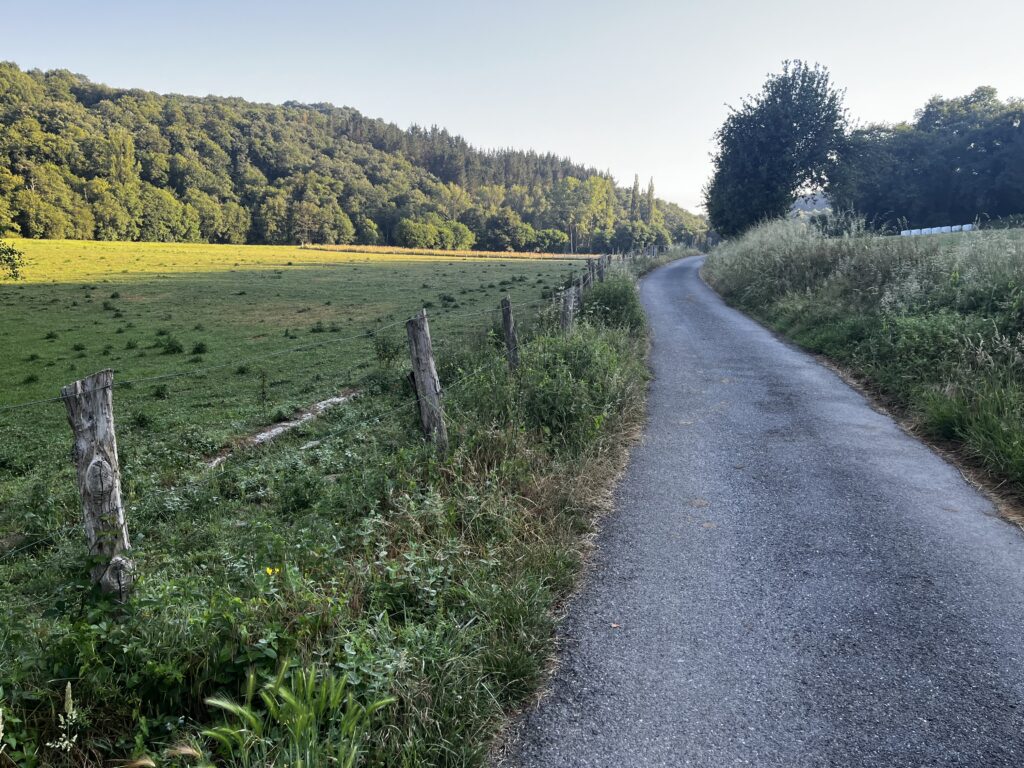
Shortly after this, the Camino joined a narrow asphalt farm road, apparently used by pilgrims and cows in equal measure. There were small meadows by the side of the road in between the sections of the woods, and even plots of furrowed fields. I could see a scattering of houses on the hill ahead.
The last stanza of Poe’s “Eldorado” jumped into my mind again.
At about 8:25, I crossed an old concrete bridge over the river. The road wound around and over the hills, gently following the rolling contours of the land.
Just ten minutes later, I passed through the little three-house hamlet of A Veiga. Somehow the river (or, perhaps, a river) was now on my right.
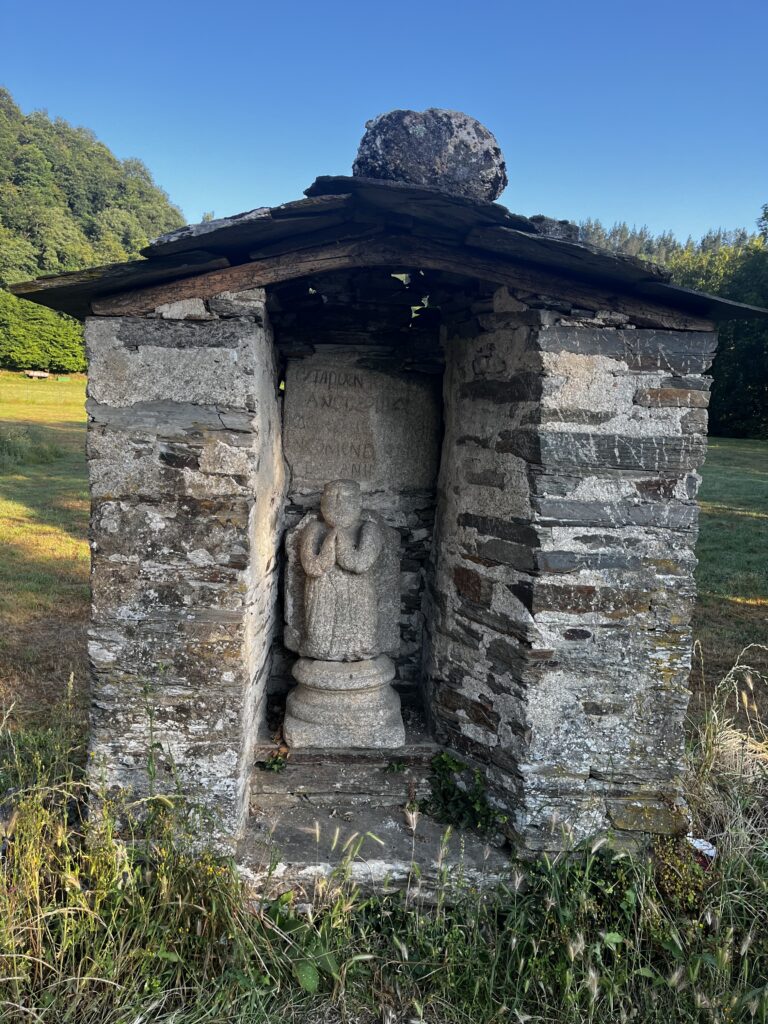
I came up upon a little stone roadside shrine. I’m sure I’m mistaken, but the figure in it looks like a praying monk from a Romanesque structure. The caption in the stone above was far too faded for me to read.
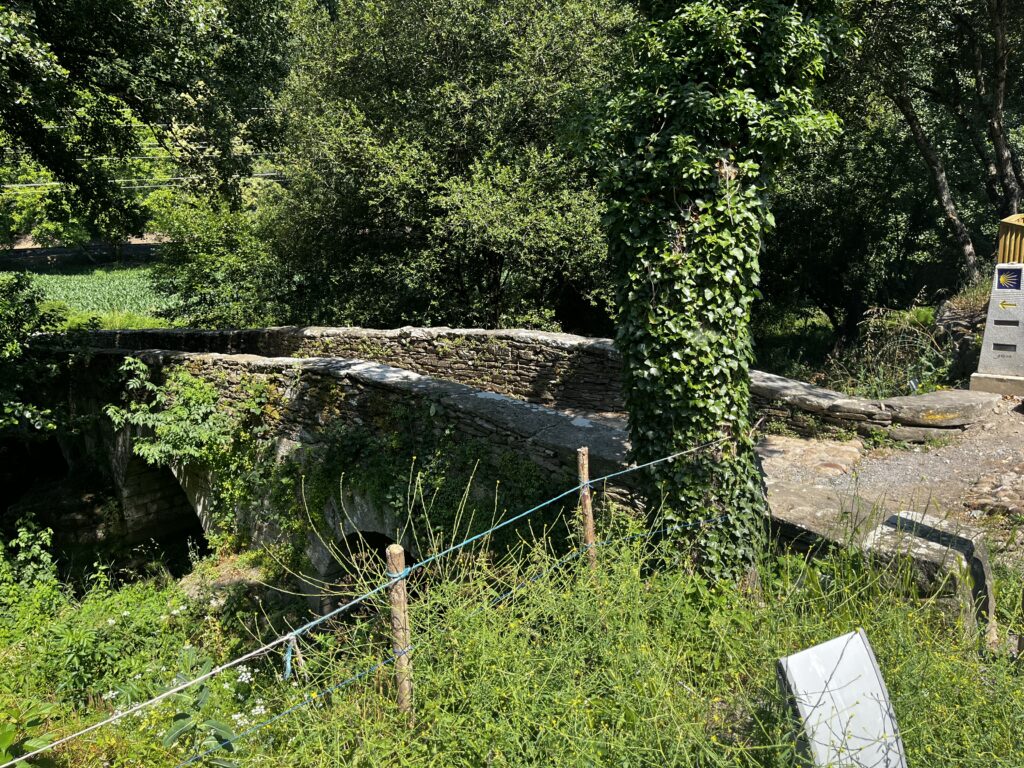
Here the Camino crossed over the river on a stone bridge. Now the road passed through more open meadowland as the trees retreated to the hills.
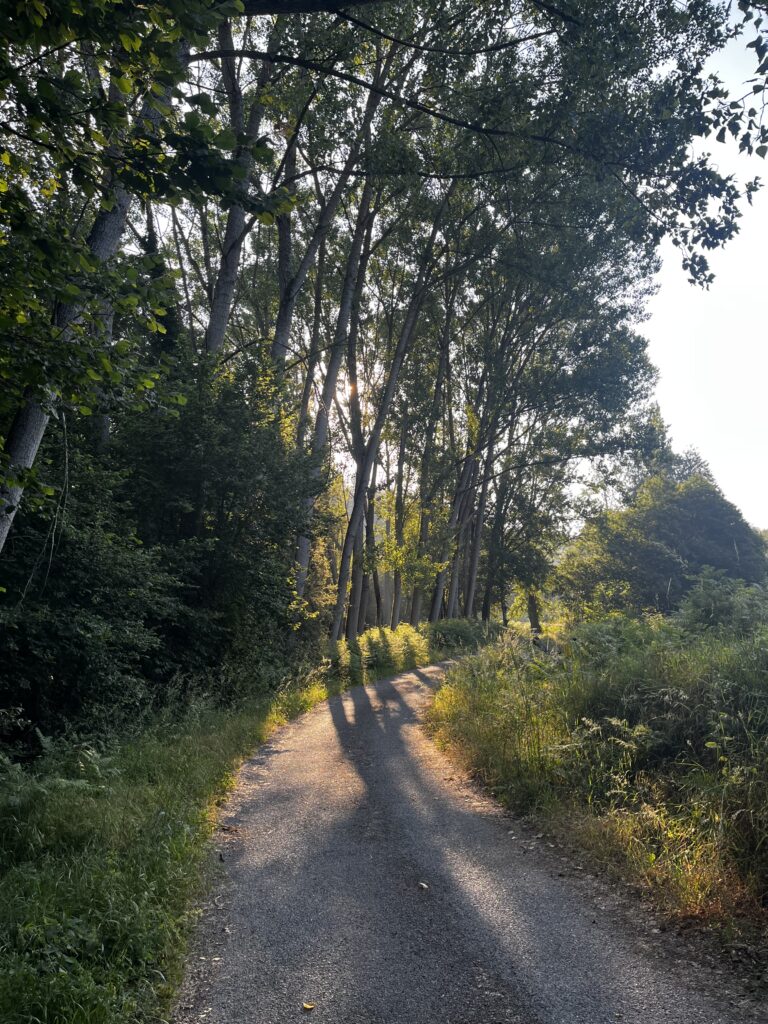
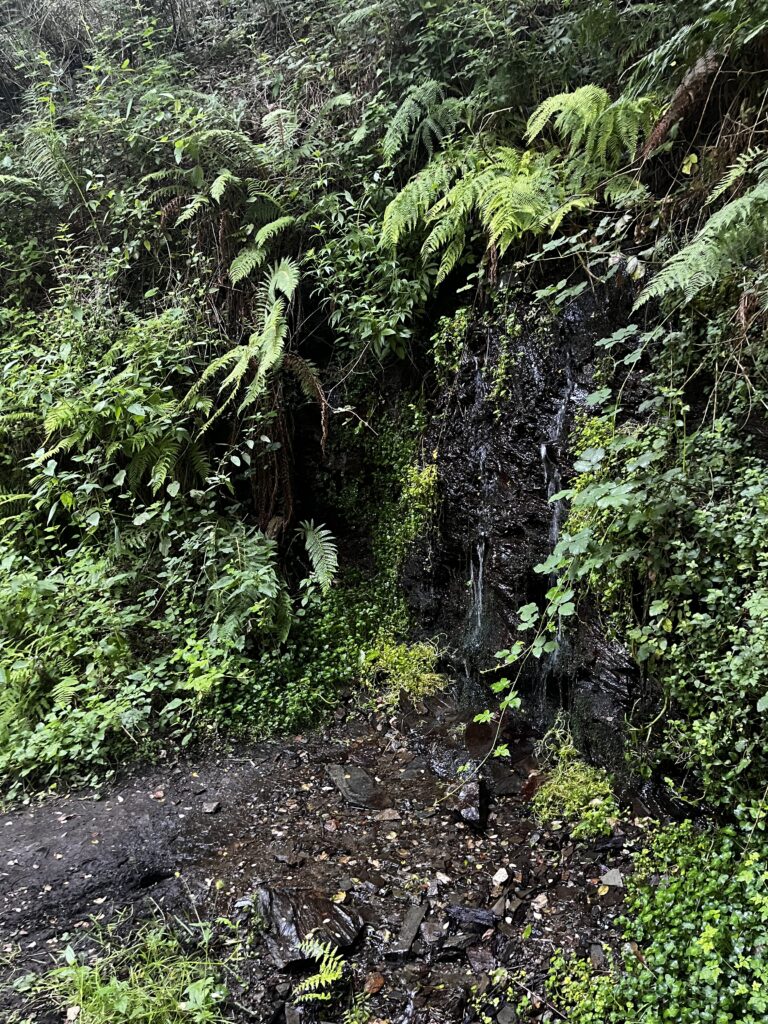
Soon enough, the road turned back into the dark woods with a bluff to my right, and the river in the valley below to my left. I knew I was truly in Galicia when I passed the first spring flowing out of the bluff by the road. I don’t know when I’ve taken so many photos of trees.
At about 8:55, I passed out of the woods and through the little farming hamlet of Sivil. From here, the road wandered on as it had, bounded by river and bluff, through open meadows and close woodland.
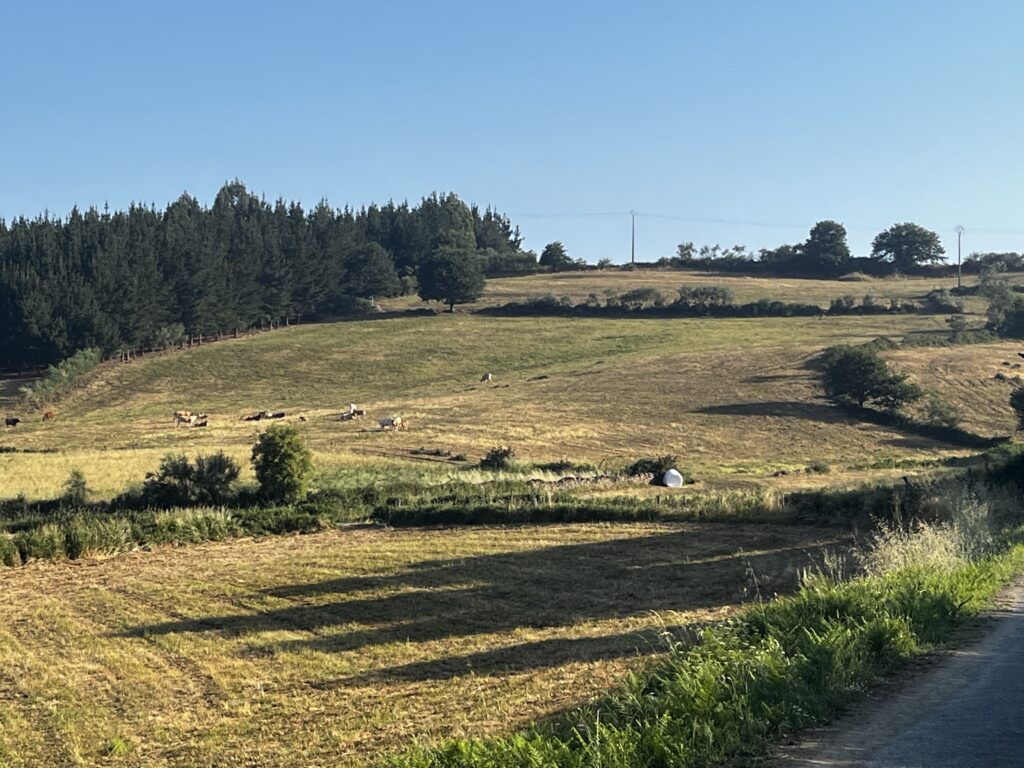
Eventually the Camino road climbed up out of the valley and into more open landscape. I saw cows grazing on the hillside.
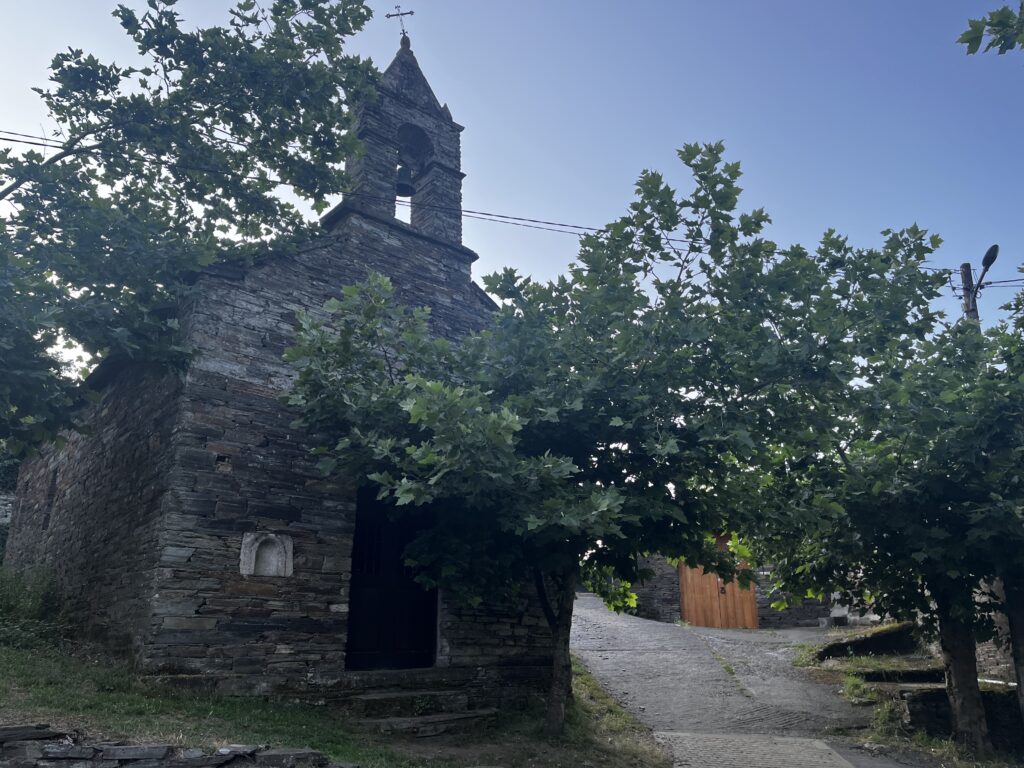
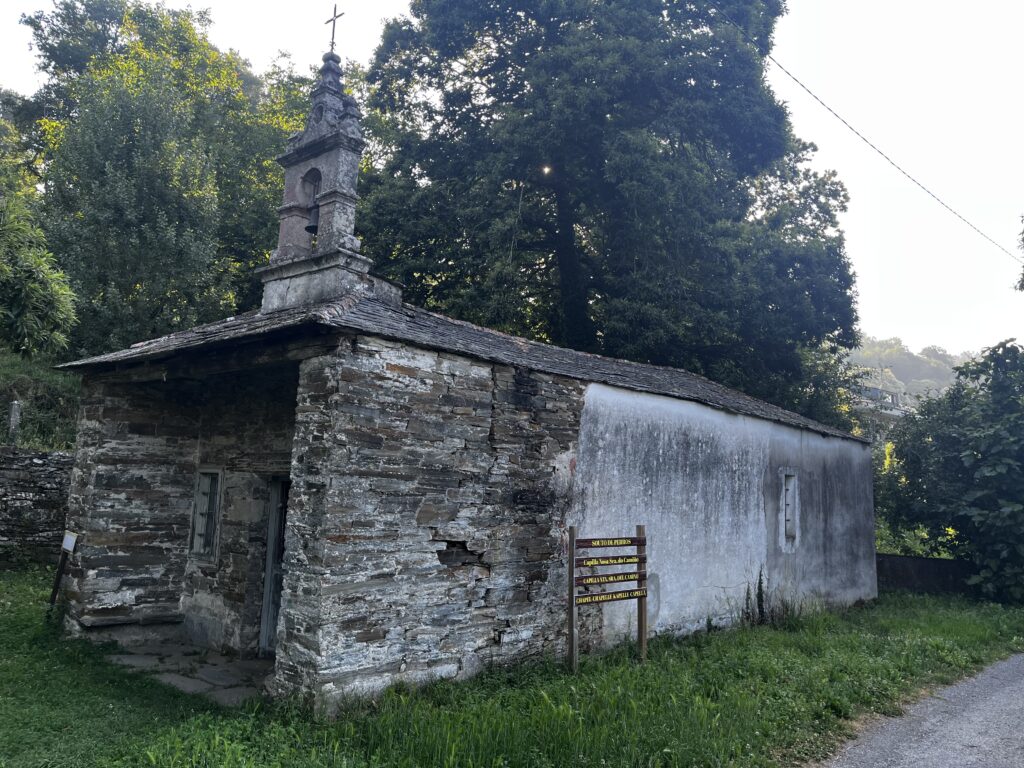
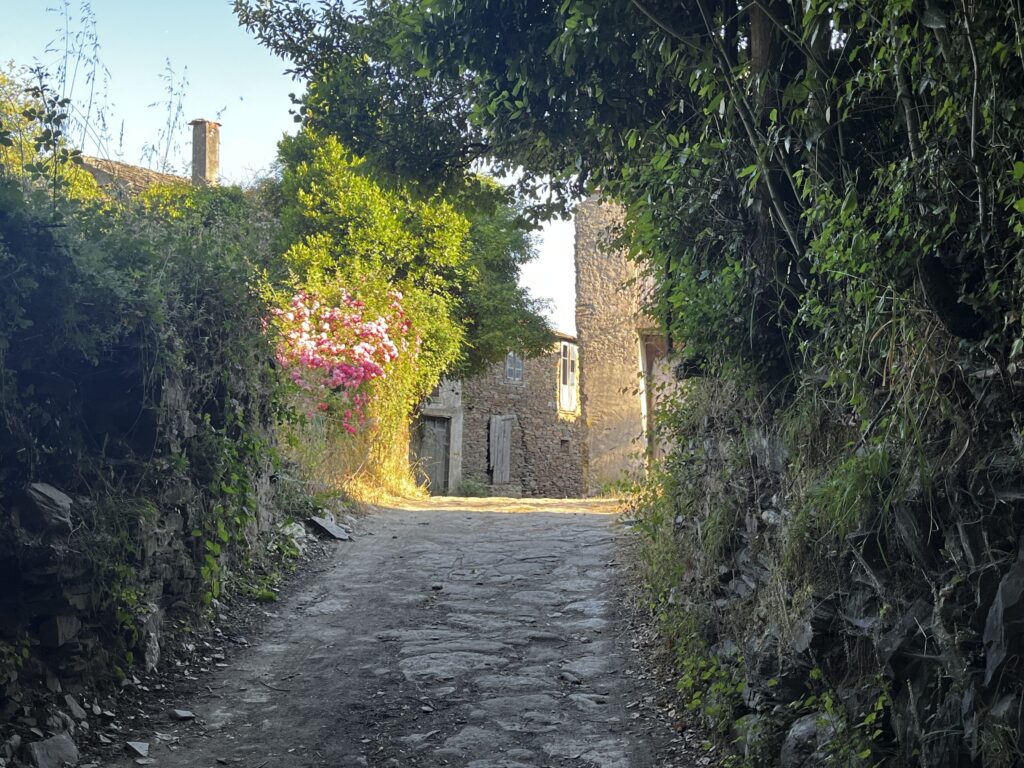
At about 9:15, the Camino wound its way downhill through the quaint stone village of Perros. Some of the buildings here were crumbling into ruin, but others looked well-kept or even newly restored. Likewise, the street was a weird mishmash of beautiful new stone paving and uneven, rutted dirt.
The little locked chapel is badly in need of repair and restoration.
I had hoped for a proper breakfast here, but alas – no café in the village.
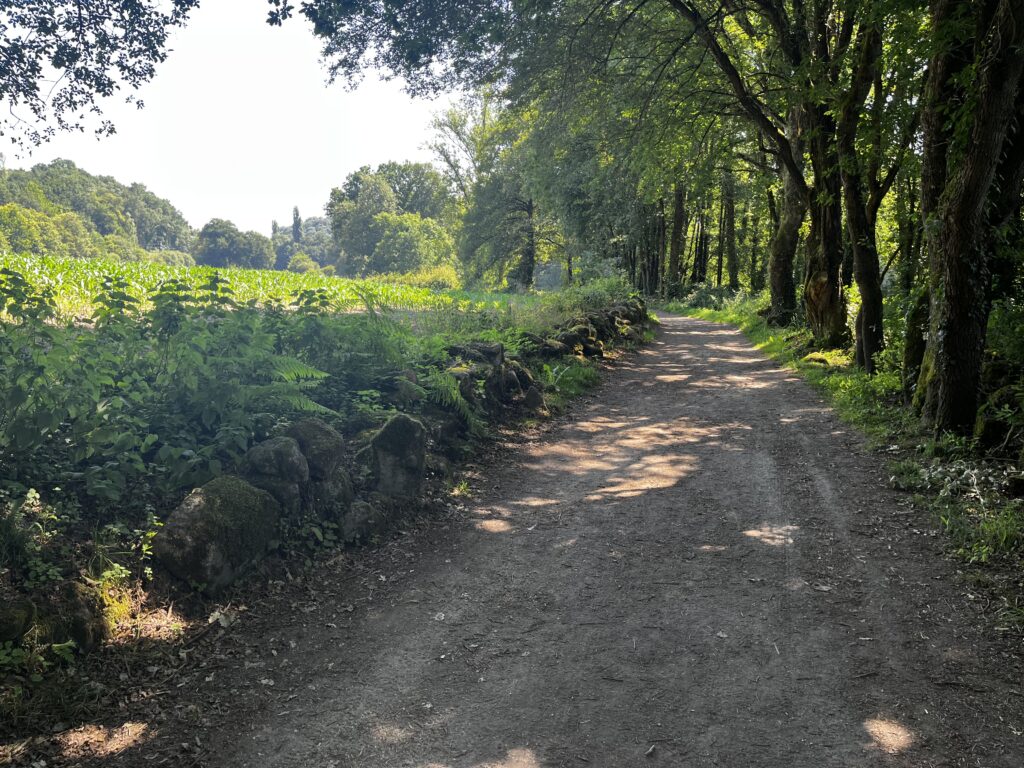
The Camino climbed out of the village into the woods on a dirt and gravel road between a hillside bluff and a crumbling stone wall.
I passed under a highway and suddenly found myself in the village of Aguiada. The only bar in town had a closed sign under which was taped a piece of paper that said “Sarria 4 km”.
The Camino out of the village was a dirt path next to a two-lane road. As I walked, the dirt was in sections replaced by stone, gravel, or even asphalt on seemingly random basis.
The landscape was mostly small farm plots separated by clumps of trees.
I passed a sign for the hamlet of San Mamede, but this seemed to be a single, albeit large, building.
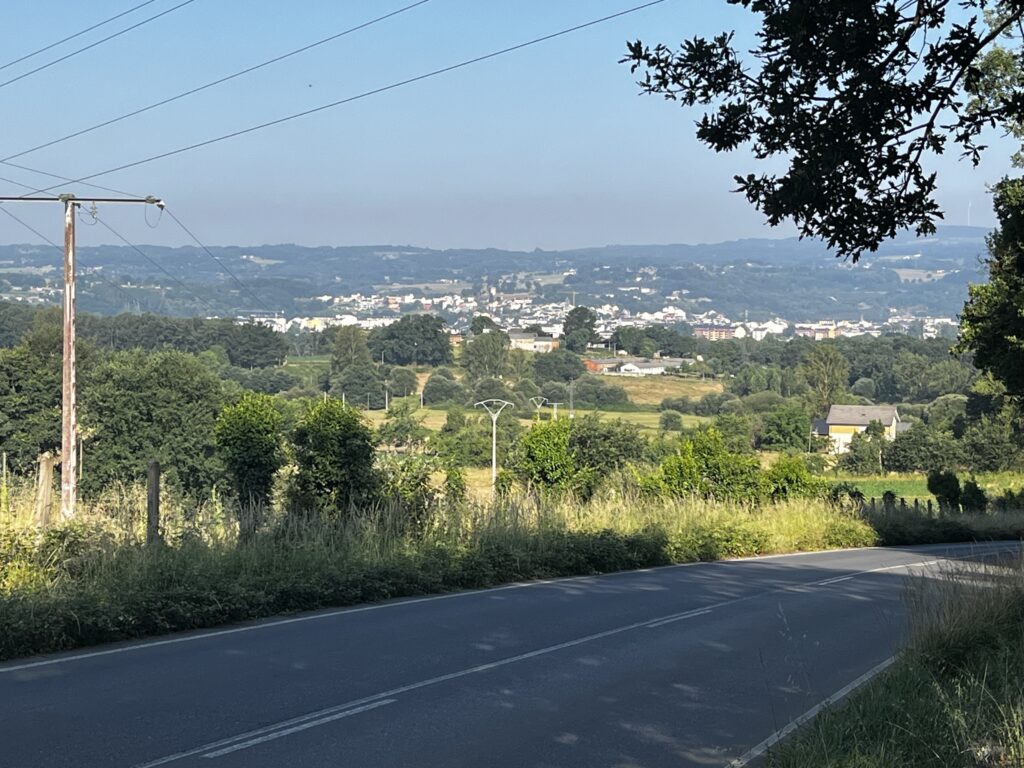
At about 9:40, I crested one of the many rolling hills, and I saw the city of Sarria laid out in the valley before me.
Shortly thereafter, I had to stop for a few minutes to let two noisy pilgrims past me. Strangely, they were the same two I let past earlier. I am not entirely certain how they got behind me.
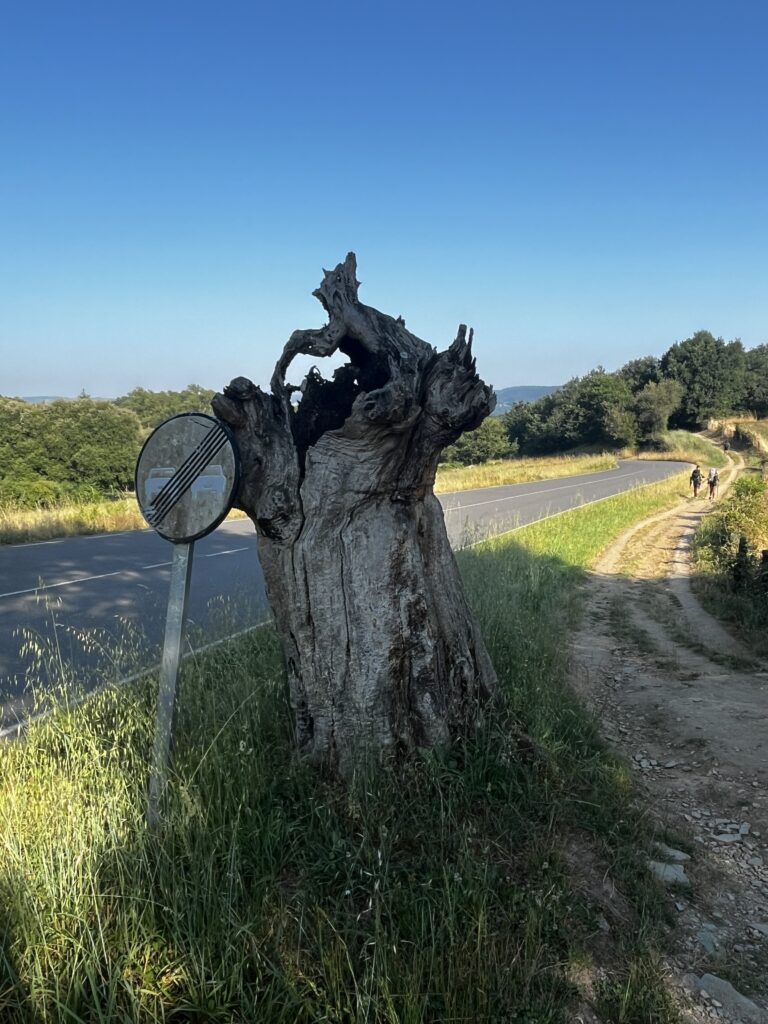
The Camino had increasing tree cover as it paralleled the road.
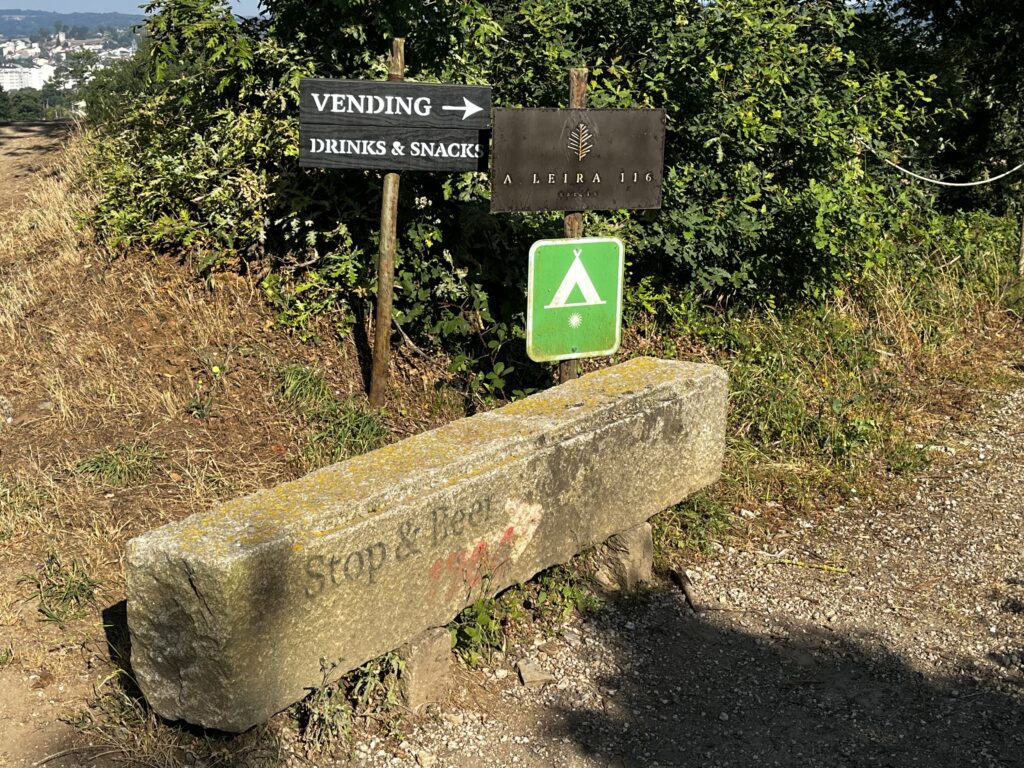
I passed a sign for a nearby vending machine that said “stop and beer”. Given that it was ten in the morning, I didn’t think that this was a particularly good plan. There were intermittent houses now on either side of the road, and I passed my first horreo.
Just a few minutes later, the houses became constant, and the path was now a sidewalk of sorts. This was the suburb of O Cimo da Agra, and it had an albergue.
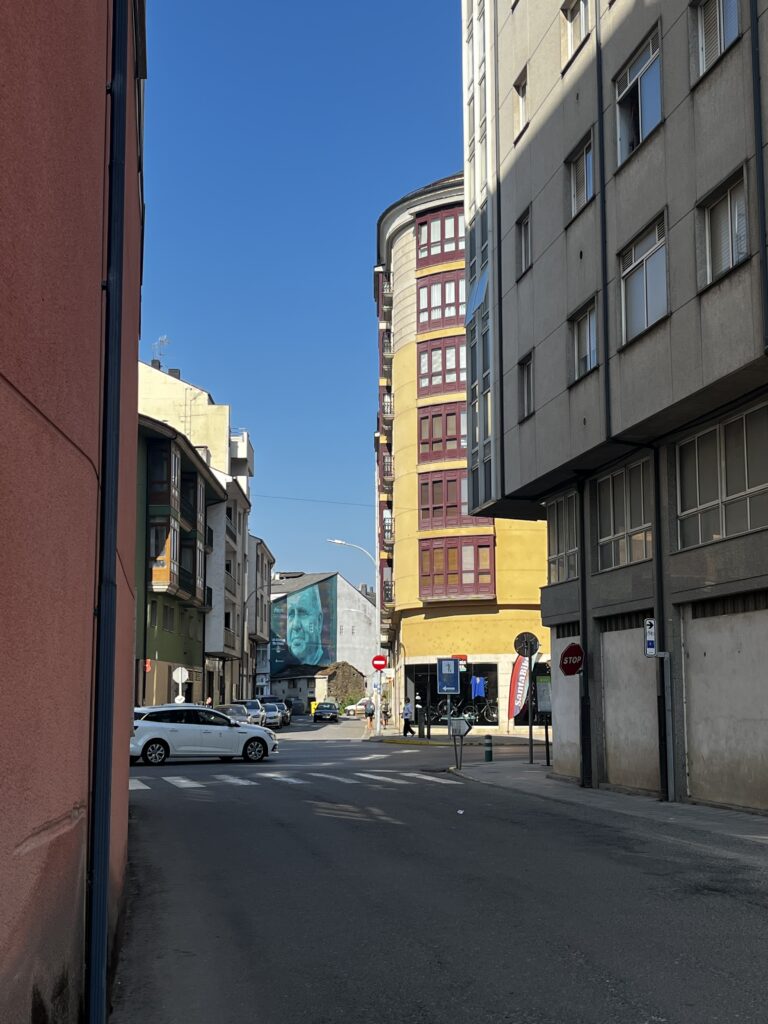
The true urban fabric began with the suburb of Vigo de Sarria, which I entered at about 10:15 This blended seamlessly into the city of Sarria itself.
Within minutes, I had passed throngs of pilgrims taking up every available seat in cafés, as well as wandering bands of pilgrims both on and off the route. It seems like there’s an albergue, a hostel, or a pensión on every corner.
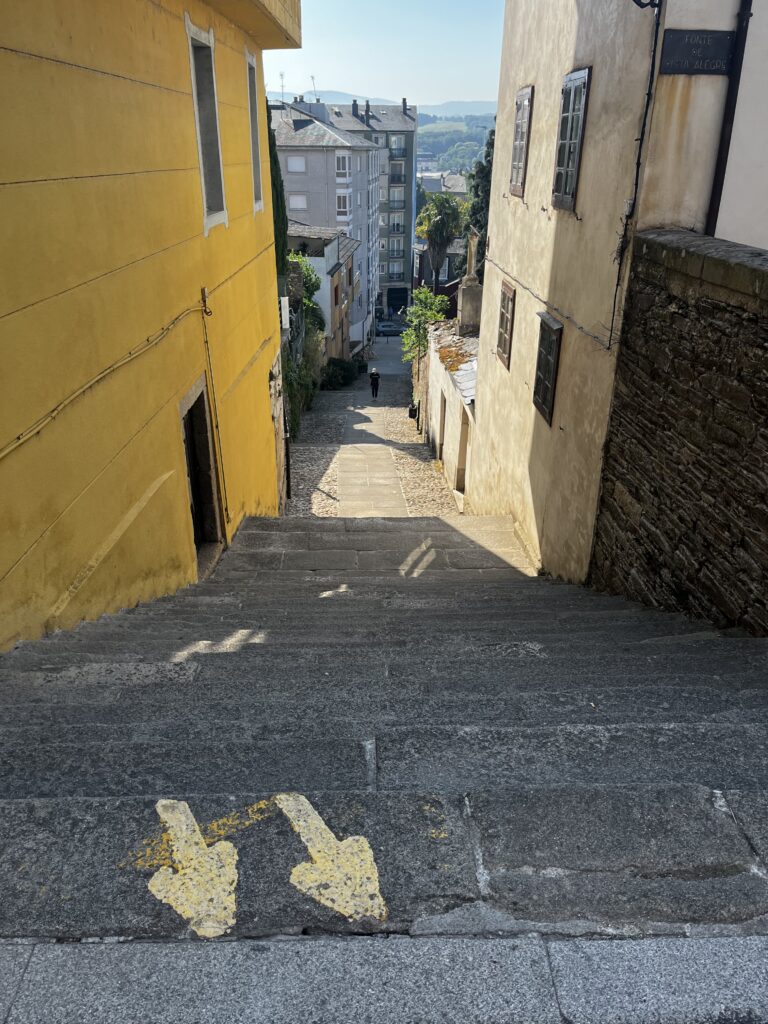
I made my way to the old city center. Out of a perhaps misplaced sense of tradition, I took the stairs up to the hill, even though I knew very well that there was an easier way that bypassed them.
There was a café at the top of the steps where Francine and I had once rented a room to stay in the city. Unlike much of the Camino, this place has changed little. The proprietors are definitely older, but aren’t we all?
I took a large breakfast here at about 10:30. I was enjoying the morning so much that I got a second café con leche after I finished my breakfast. To my surprise Moses from Atlanta popped by briefly before heading off.
I left right at about 11:20.
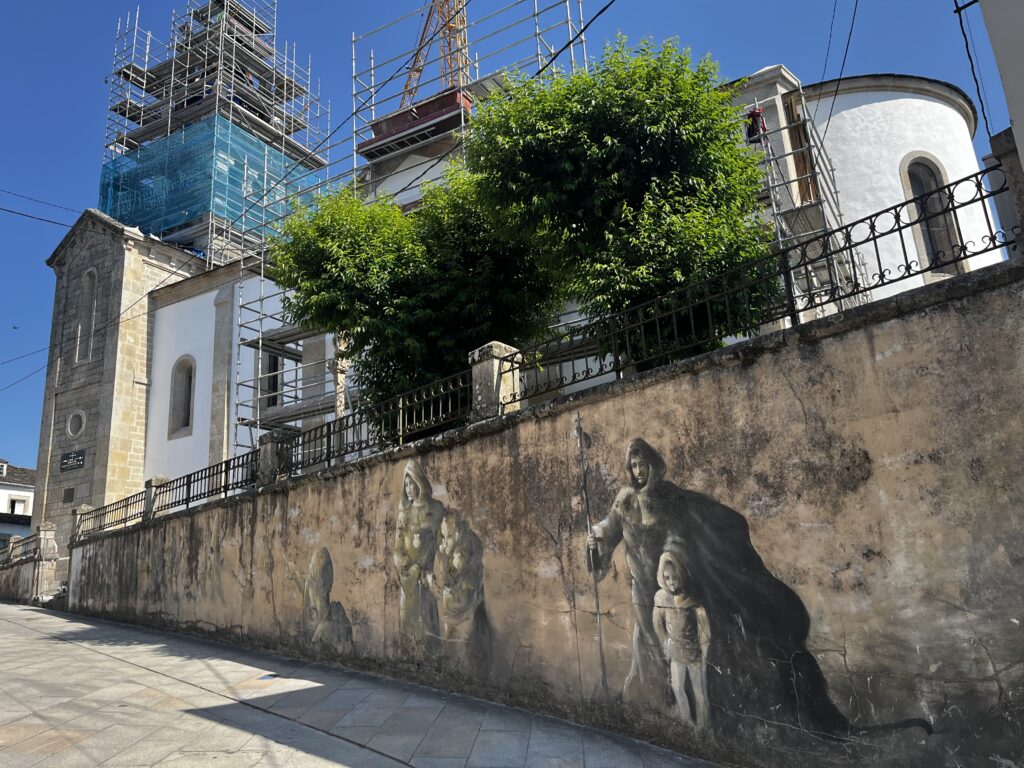
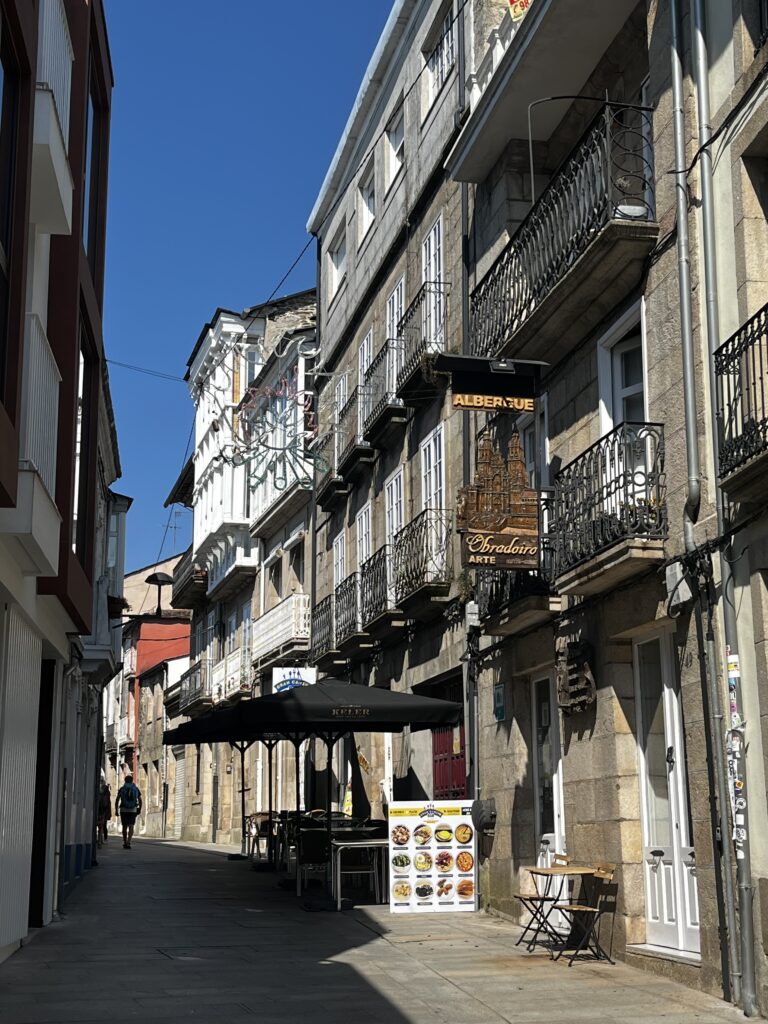
The beautiful church of Santa Mariña de Sarria was fenced off and covered in scaffolding, so a visit was out of the question. Instead, I window shopped as I walked up the main Camino Street through the old town.
It seems like every other building is an albergue, a bar, or a trinket shop. If there was one other town on the Camino I could compare it with, it would certainly be Saint-Jean-Pied-de-Port. It’s a jumping off point for so many pilgrims, and the level of kitsch runs high.
Towards the end of the high street, the church of San Salvador was open. It dates from the 13th century, though it got a major facelift in the 19th century. The interior is simple but inviting.
I prayed here and lit a candle for Francine. As I was leaving, a praying pilgrim asked me if I was a priest. I shook my head no and left the church for the Camino route.
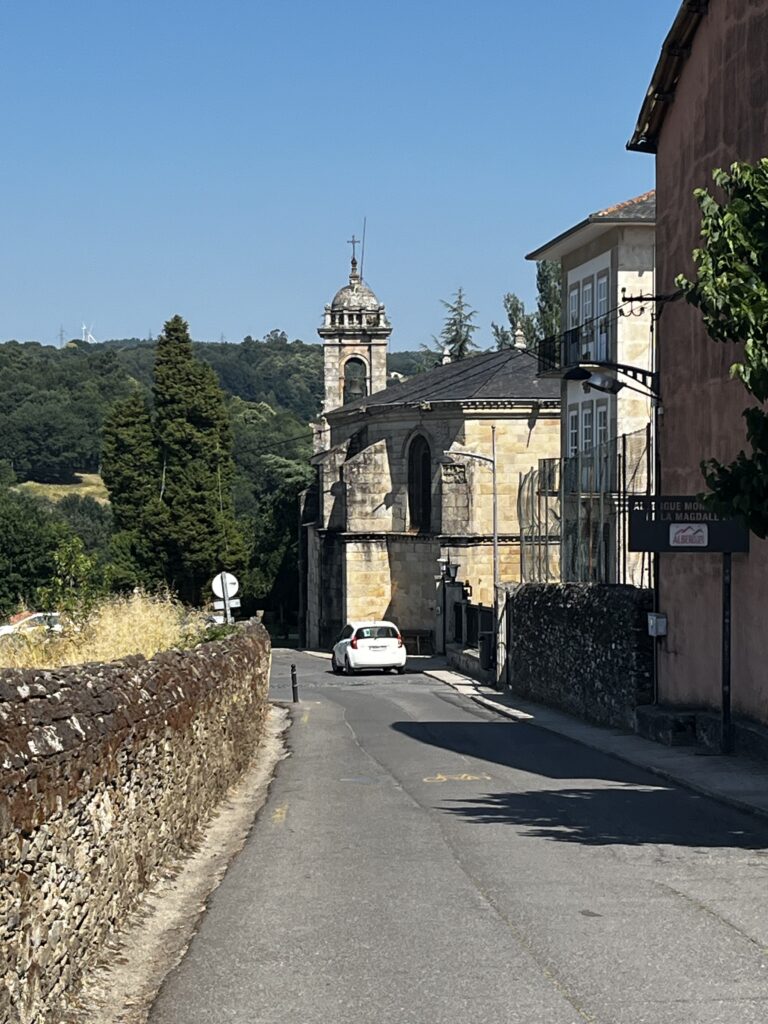
I followed the sidewalk up the hill above the old town to the monastery of Santa María Madelena. The complex here includes an albergue and a school. The school was having some sort of outdoor field day, complete with announcements over a loudspeaker and music.
The Camino went down a steep asphalt road past a cemetery. It was hot in the sun, and the sky, though cloudless, was the colour of dull lead. The last time I walked here, it was pouring rain.
At the bottom of the hill I continued roadwalking, though now it was level ground and in the shade of trees growing on the hillside above me.
I continued walking at a leisurely pace. The Camino left the road and crossed a stream over an old stone bridge. I continued on a dusty dirt path that followed next to the stream. Again I was in the shade of trees. For a while, there was a railroad track on an embankment above me to the right.
As I walked this section, I reflected that for most pilgrims, this path would be their first experience of walking the Camino. Somewhere behind me, the monastery bell tolled noon.
I passed by cornfields and tumbledown stone walls. I walked under a flying highway bridge and over a railroad crossing, leaving the stream behind.
Every time I walk the Camino it’s different, even if it’s over the same route. This is the fifth time I’ve walked over this particular section, probably one of the most walked sections of the entire Camino, but today it felt different. More serene. Almost magical.
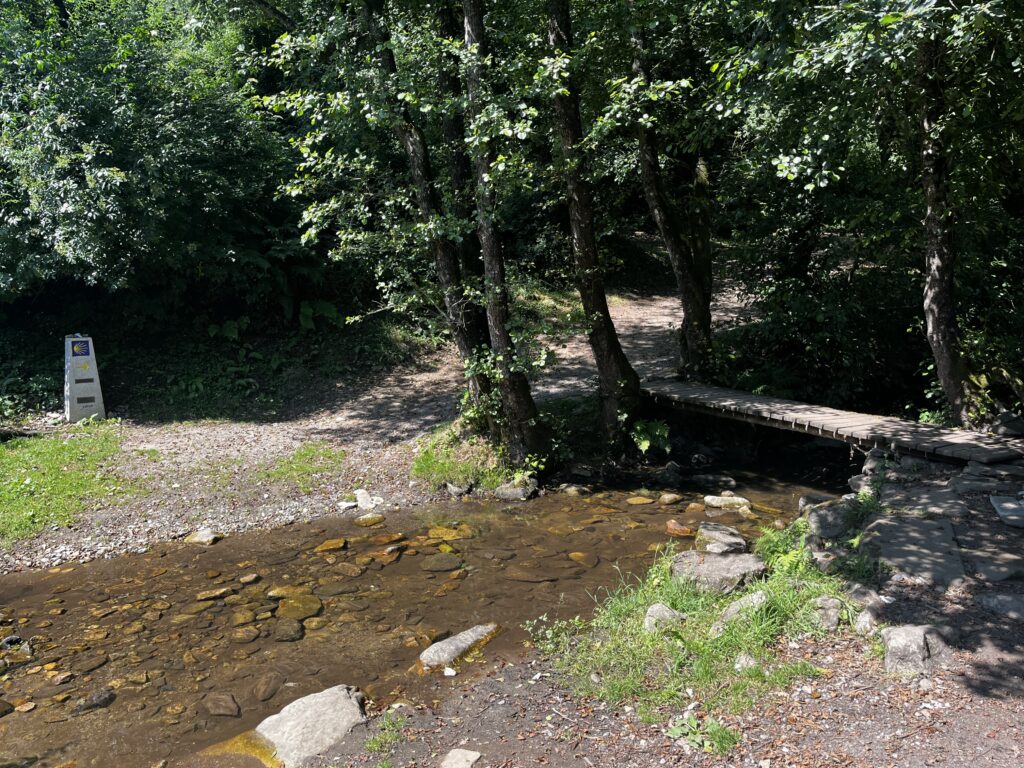
I crossed over a little stream on a wooden bridge, and I thought about the countless bridges I’ve walked over streams and rivers and roads and even valleys since I began this walk more than two months ago.
The Camino moved deeper into the woods, and the sounds of the highway gradually faded away to be replaced by birdsong.
Three years ago, I power-walked through this section, desperate to find someplace warm and dry. Today, I was moving so slowly you would be forgiven for thinking I wasn’t going anywhere.
I am grateful to the other pilgrims who helped to shape this pilgrimage, most especially Philippe and Herve, but also Judith, Daniel, Luc and Louis-Marie, Thomas, Katie, Erik, Julie, Moses, and so many others who I may only have seen for an hour or a day.
My heart was also full of gratitude to those who made this Camino possible, most especially my family and my deepest friends.
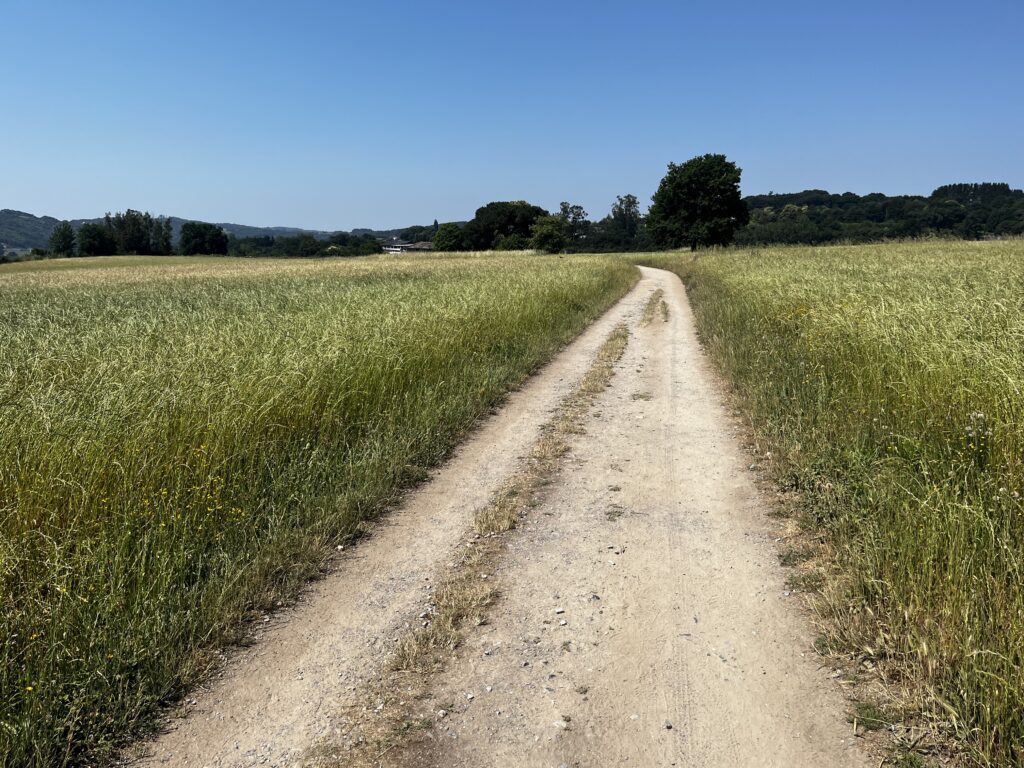
At about 12:20, and kilometer marker 111, I left the forest for what was effectively an open prairie. The heat was sudden and unbearable. I put up my umbrella before I dissolved into sweat.
My path was full of butterflies and honeybees as I walked by the little hamlet of As Paredes.
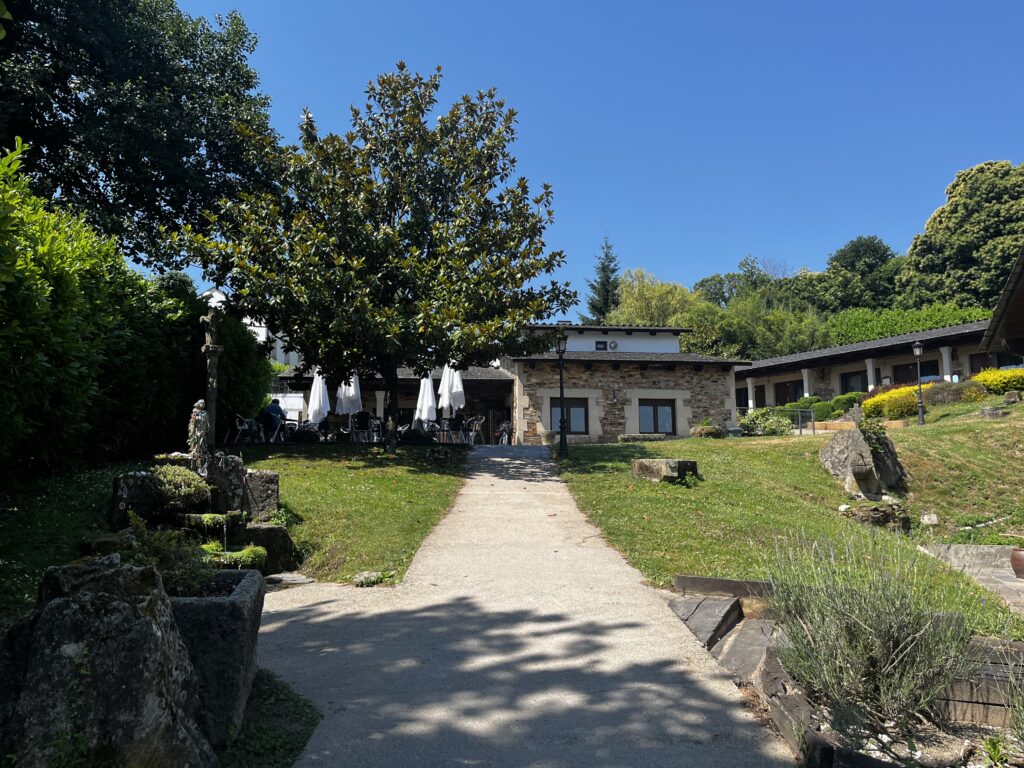
At about 12:35, I came to the hamlet of Vilei. Here may be found the lovely Albergue de Barbadelo. I’ve stayed here twice; in the rains of 2023 it was an absolute godsend. Today, however, it was lunch on the terrace.
Keeping with today’s theme, I had a long, leisurely lunch.
Pilgrims passed me as I roadwalked out of the village. There would be plenty of time for hurrying in the next few days.
There didn’t seem to be much point in putting the umbrella up, since it felt like most of the heat was radiating up from the asphalt road.
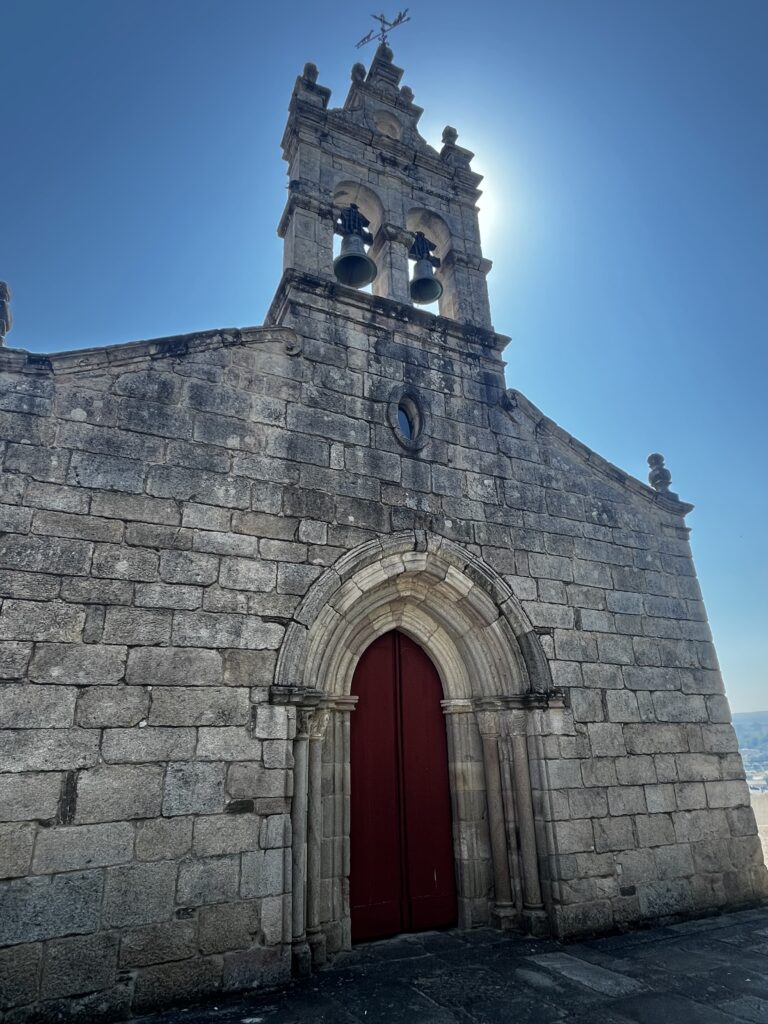
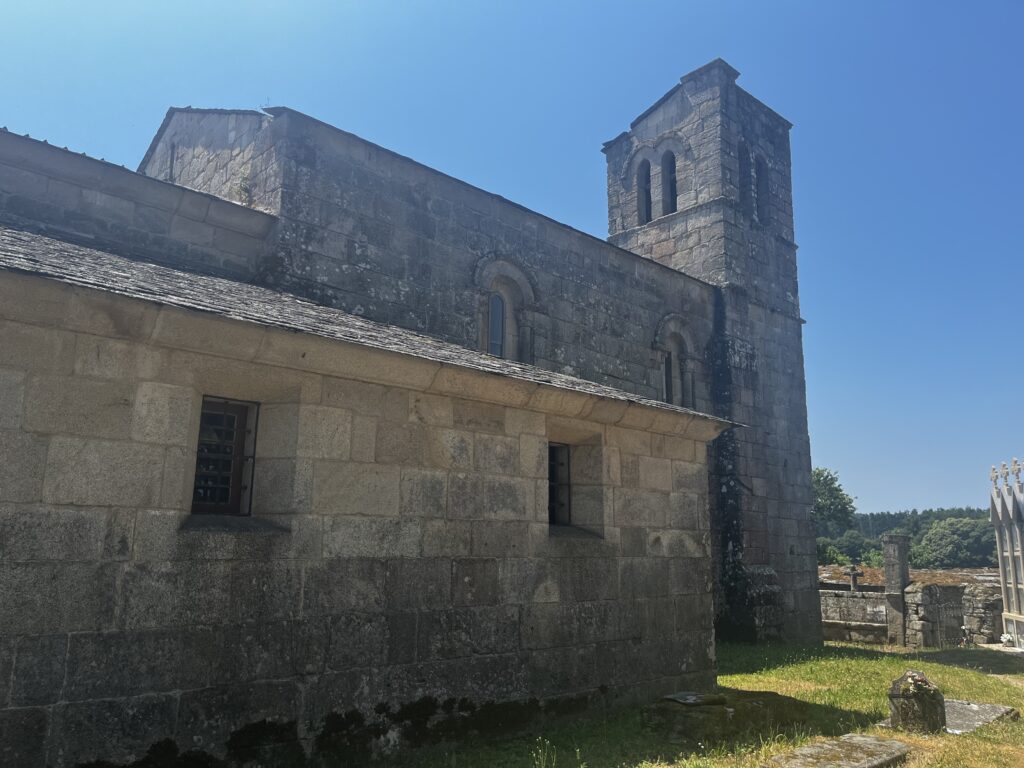
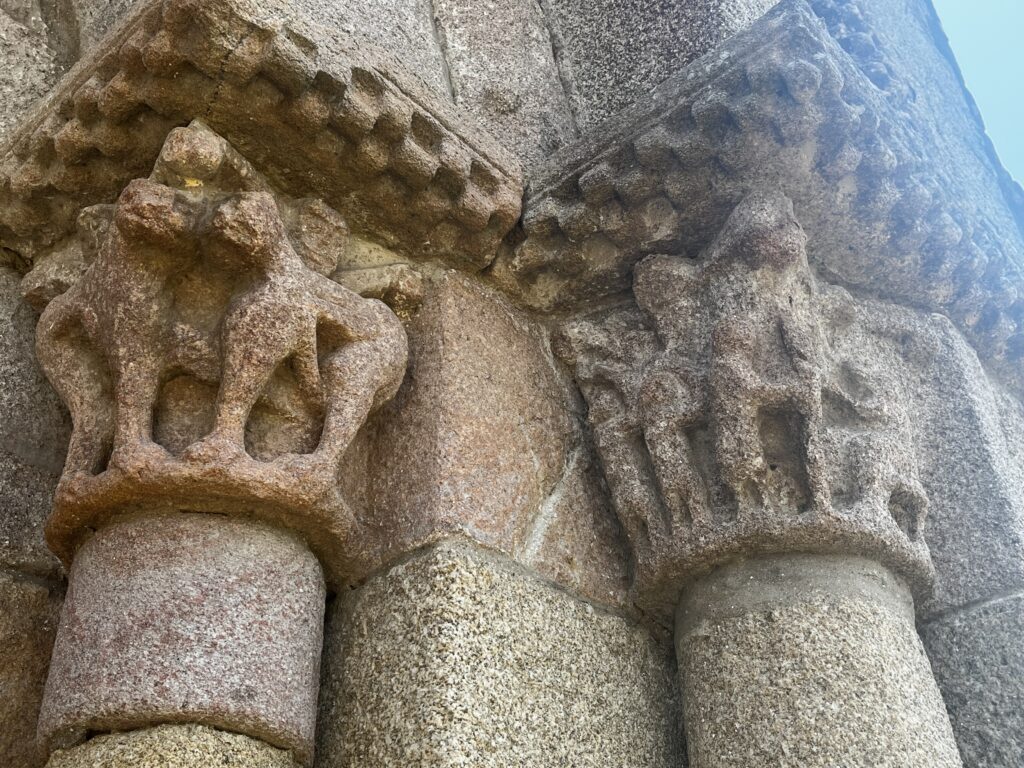
I took a slight detour to O Mosteiro to see if the old Romanesque monastic church there was open. Sadly, it was not. There is documentary evidence of a monastery and a church on this site since the year 874. The monastery is long gone, but the church at least remains.
Despite my dawdling, I still managed to arrive at my albergue ten minutes before opening time at 2 PM. There were already several people in line before me.
I was checked in within 15 minutes.
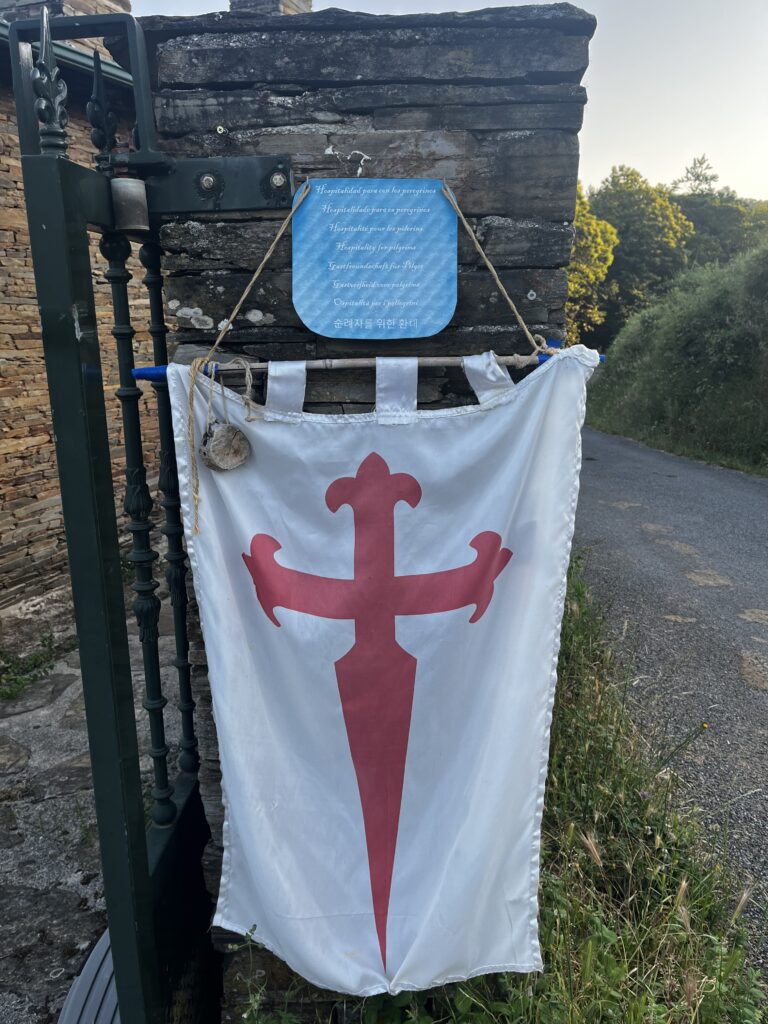
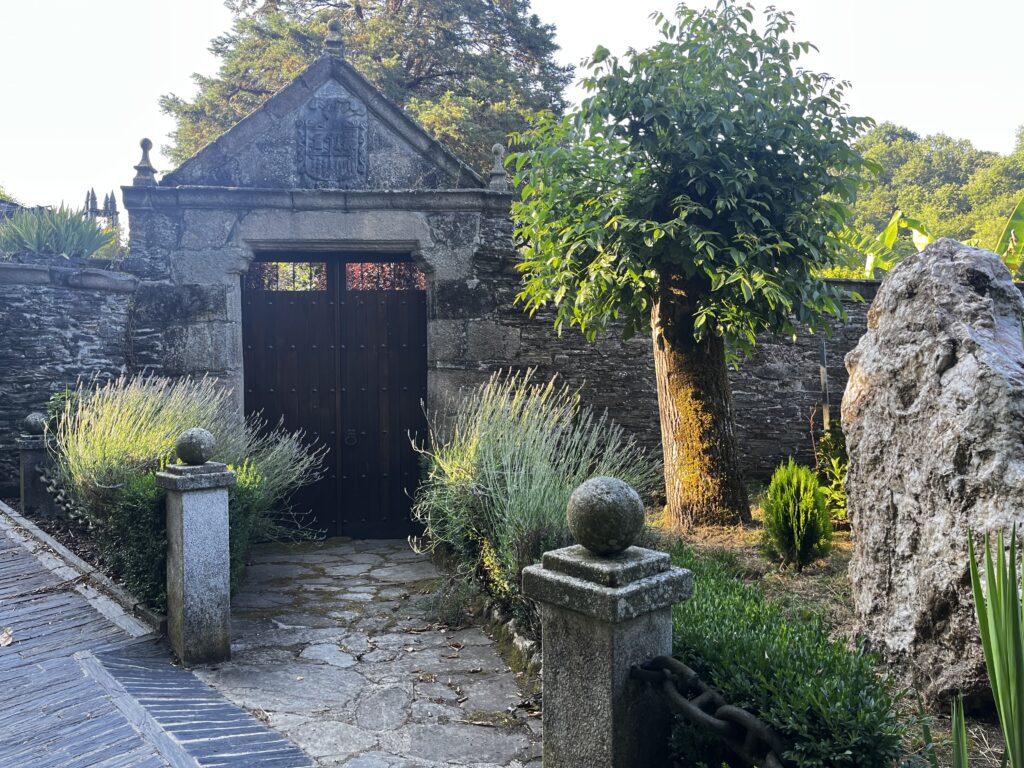
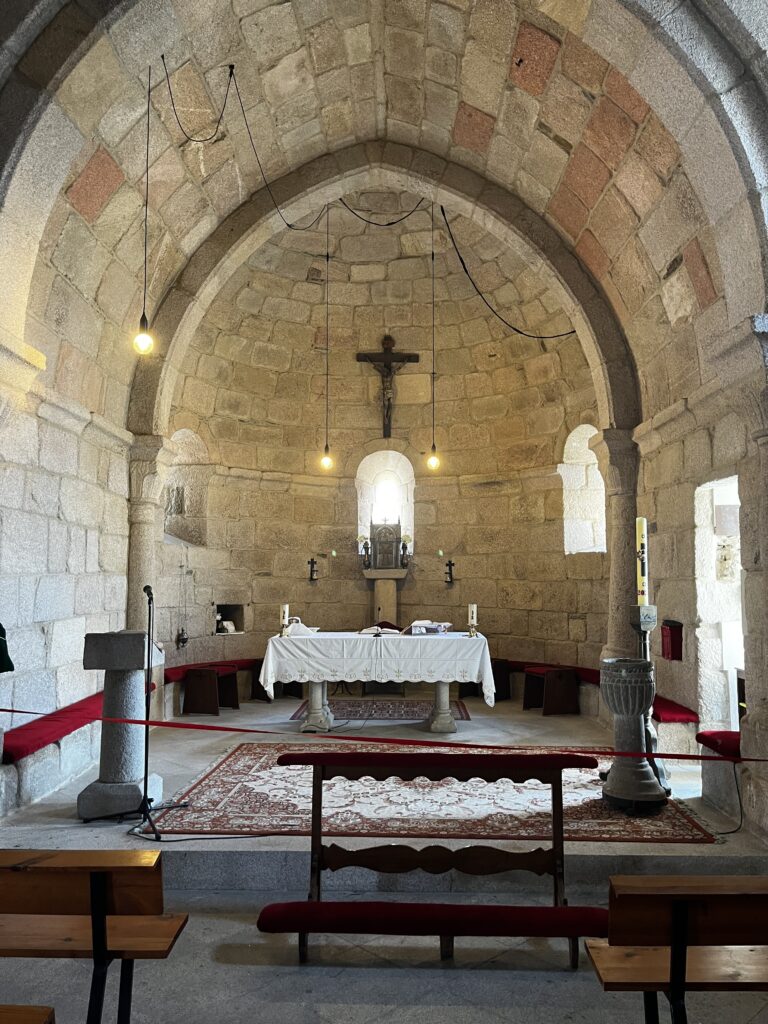
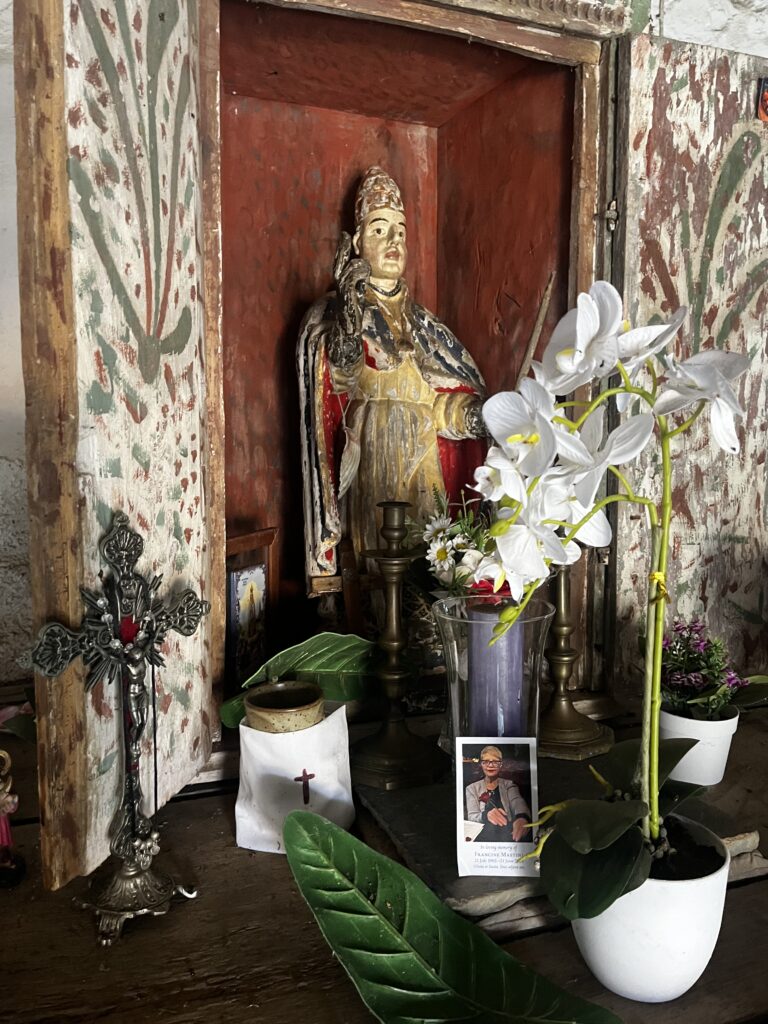
I thought this place looked familiar, but when I saw the little on-site chapel of Saint Sylvester, I knew I’ve been here before. It turns out Francine and I stayed here with our pilgrim friend Rebecca in 2016.
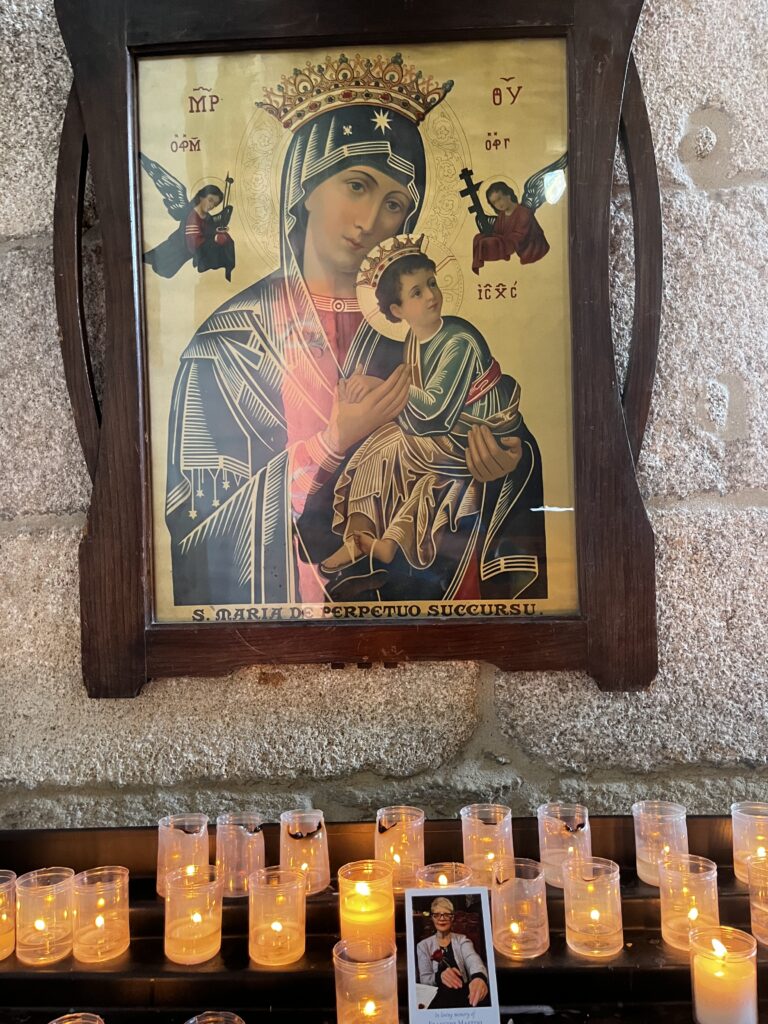
I prayed in the chapel and left one of her cards here in remembrance.
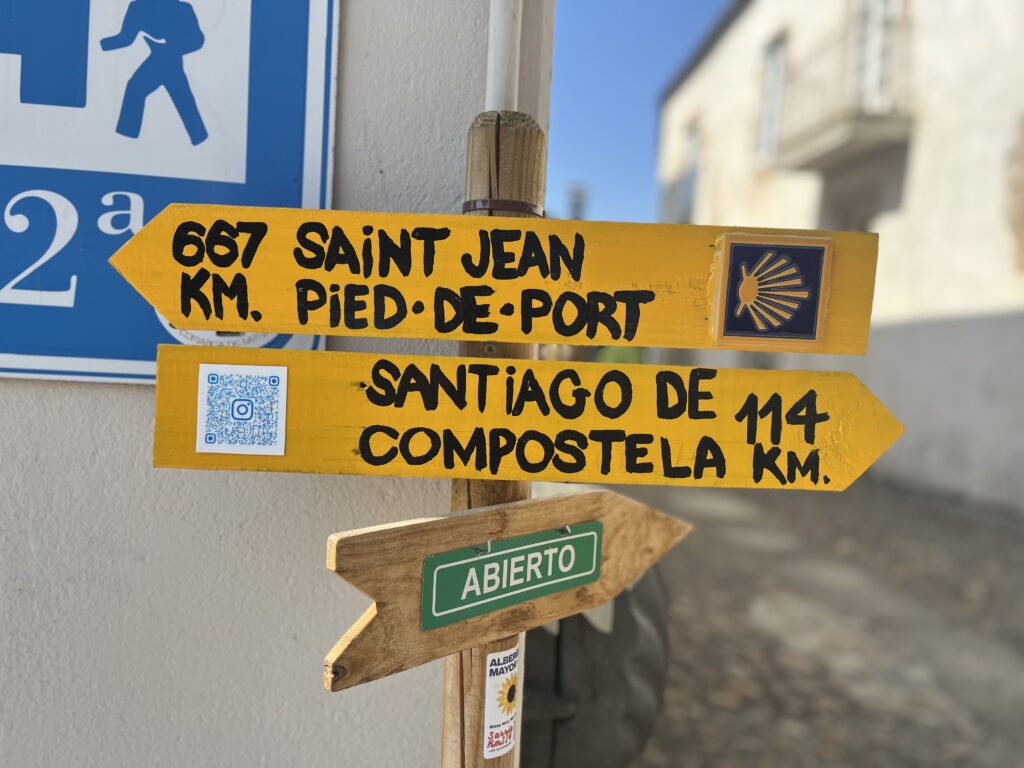
Today is day 70 of my pilgrimage since Vézelay. I have walked 1848.3 km so far. Tomorrow I will cross the 100 km marker.
Date: 17 June 2026
Place: Barbadelo / San Silvestre
Today started: Samos
Today’s Photos!
I love Walton shaded forest and today’s walk would have been a tremendous treat.