
Via Lemovicensis: the First and the Last
Breakfast was at 6 AM, and I was walking by 6:50, which was rather later than I had hoped. The morning was cool, and the forecast called for perfect hiking weather.
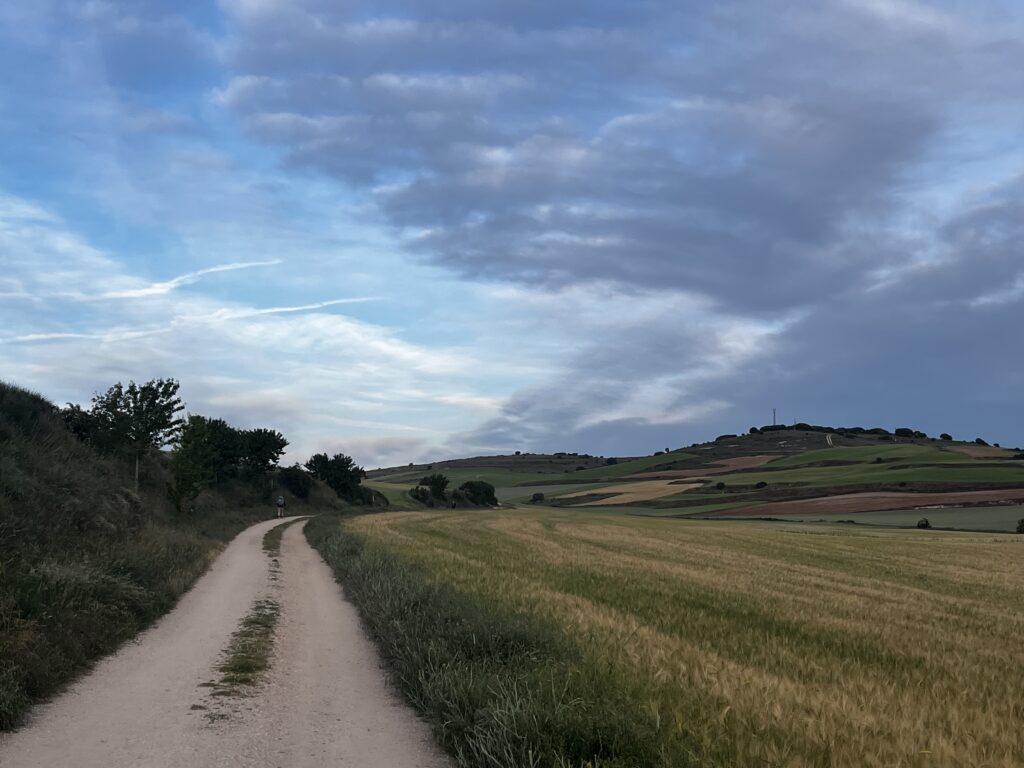
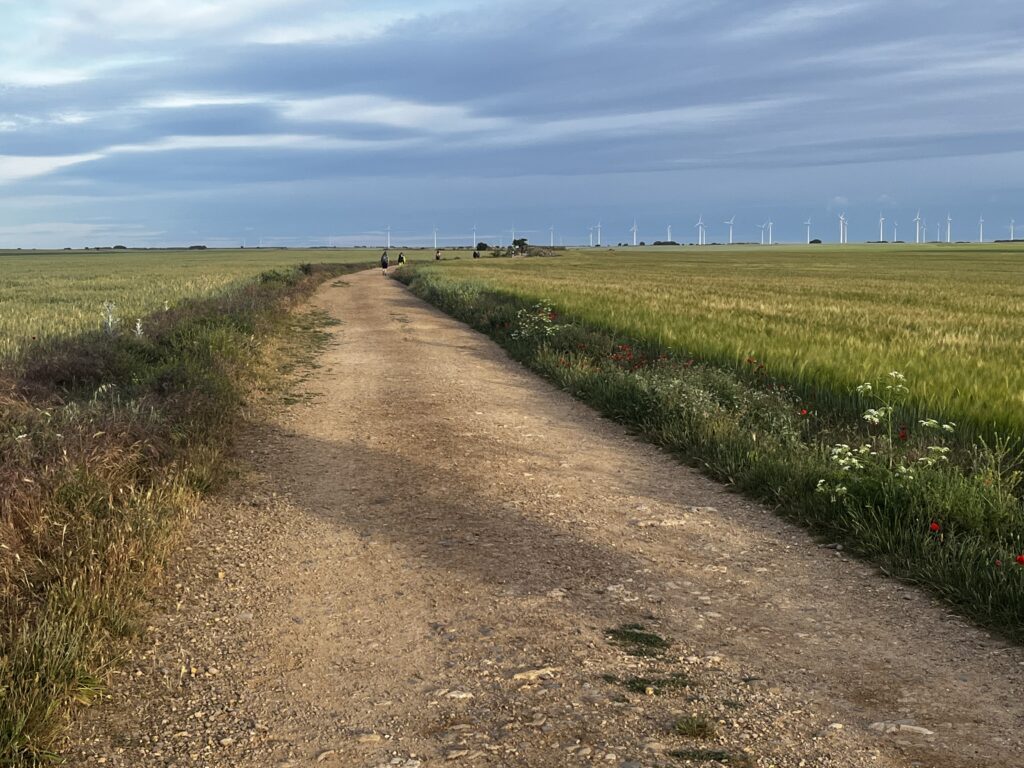
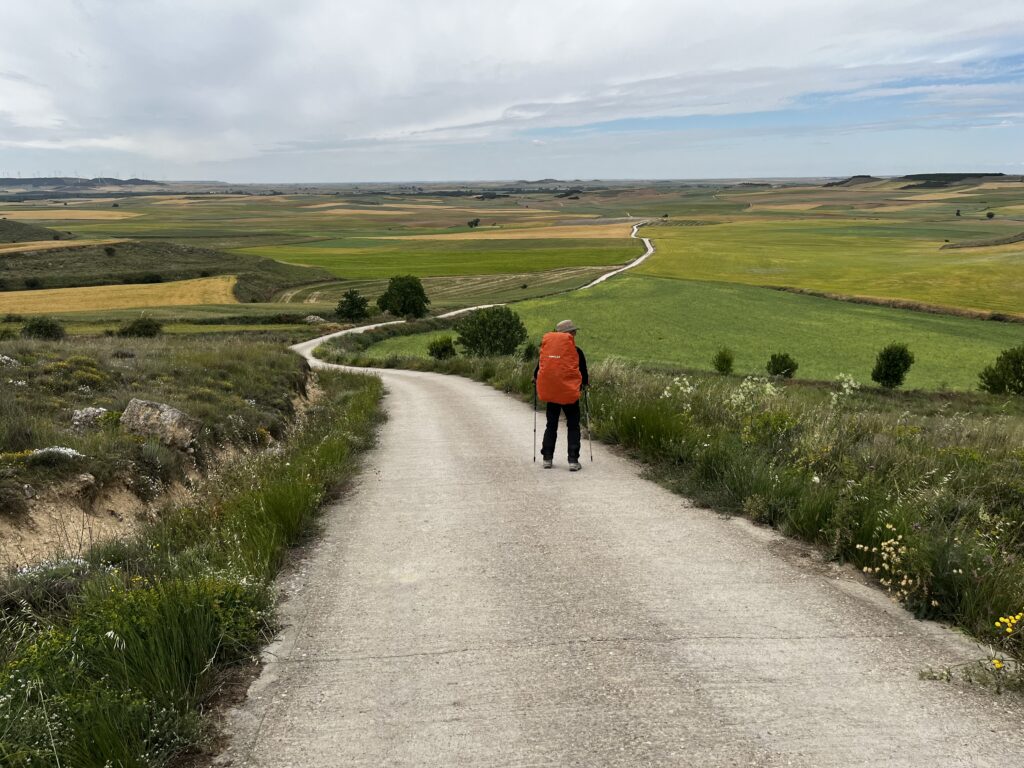
Once I was out of the village, the road was dirt and covered in stones.
Life is full of firsts. And lasts. There was a first time I walked the Camino. There will also be a last time, and the odds are good I won’t know that it’s happening at the time.
There was a first time that Francine and I kissed. I remember it distinctly. There was also a last time, but I don’t know when that was. At some point, I could probably figure it out.
There was a last time we embraced. A last time we argued. A last time we made up. I don’t know when any of those moments were.
There was also a last time she recognized me.
I do remember the last time I kissed her sleeping forehead and told her that I loved her. That was approximately six hours before she passed from this life. By that point, she hadn’t been conscious for a week. And I’m pretty sure I knew it was the last time at the moment I did it.
Walking on the Meseta invites contemplation. I think that might be why so many people don’t like it or even skip walking it entirely.
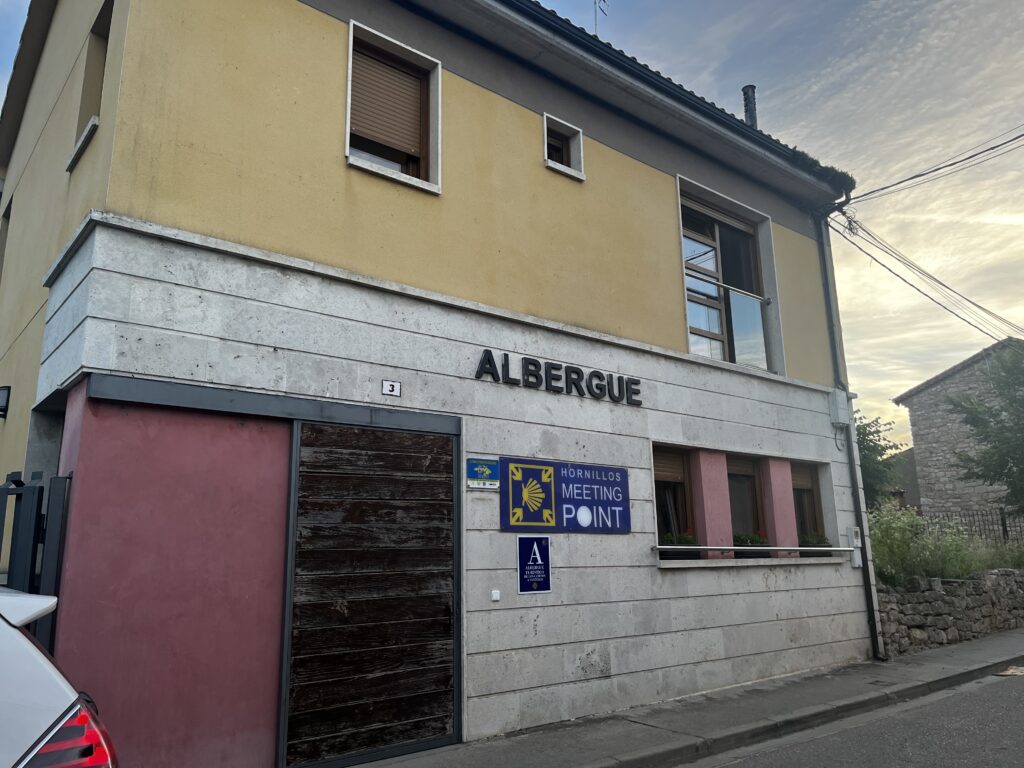
This morning I watched two people I met at breakfast climb into a taxi in front of the albergue.
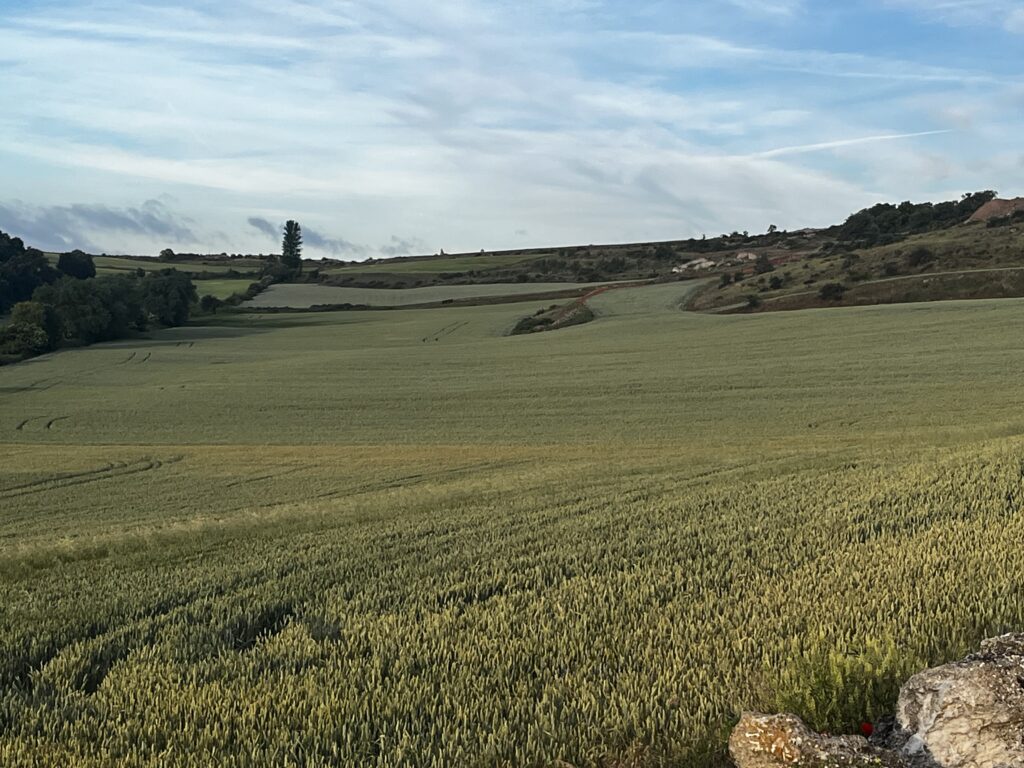
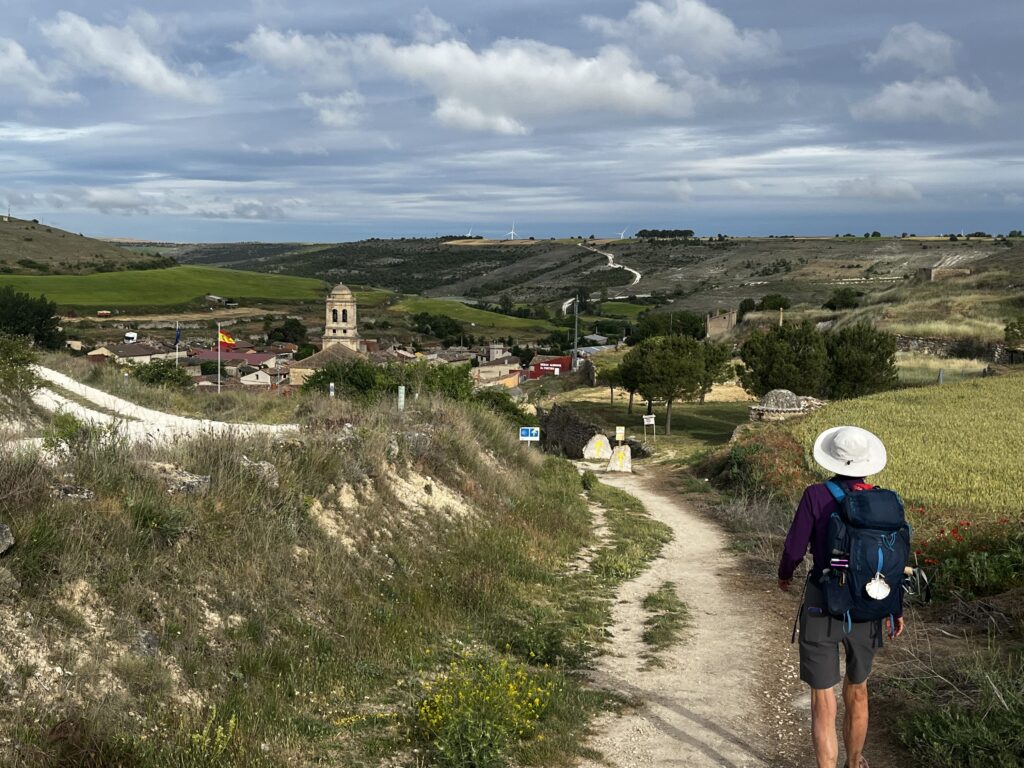
They say the Meseta is flat and featureless, but that’s not strictly true. Especially around the edges, or in the river valleys like where I was walking this morning, there are still plenty of low, rolling hills. There are a million shades of green and brown and amber all patchworked together. There is the endless sky above. And there is a quiet as you walk alone with your own thoughts and the Lord. The Meseta is where the interior work of the Camino is accomplished.
All of these things are beautiful. And this might be the last time I walk the Meseta. Who knows?
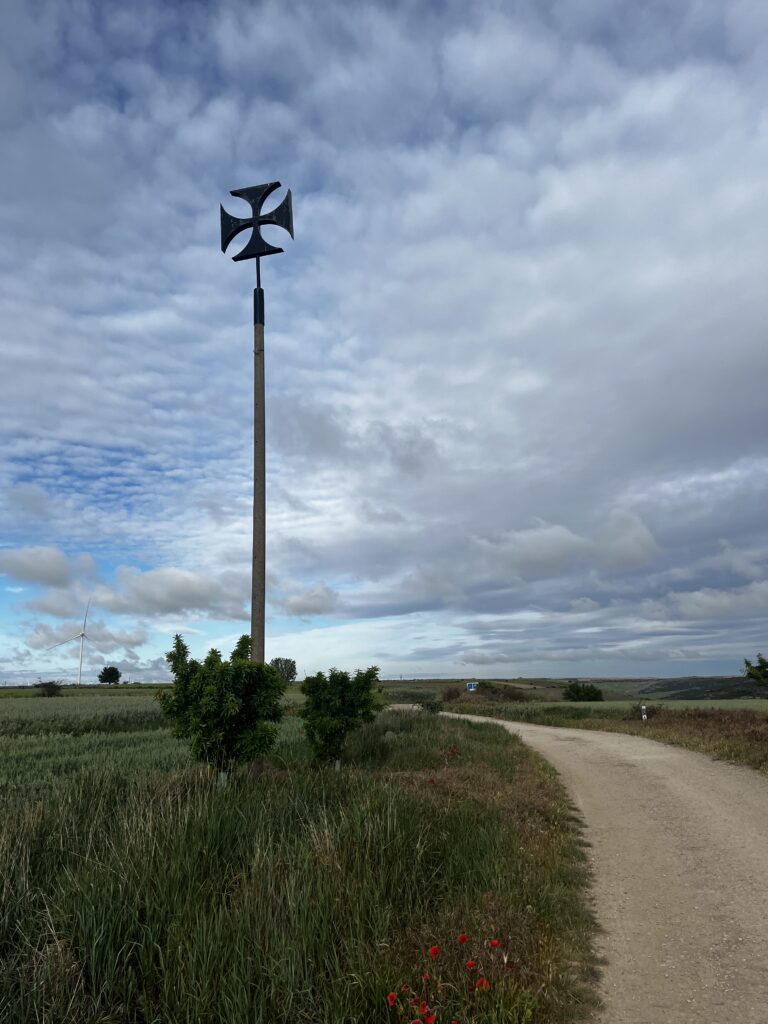
By 7:35, I had climbed out of the river valley and was walking the top of the Meseta. Here it is truly flat. I could see low hills far in the distance, but from where I was standing to there was just an endless sea of grass and grain with rows of windmills.
To this point, I had seen perhaps half a dozen pilgrims in total since I left the village. Now that I was again on the big flat, I could see the road to the horizon and a long string of pilgrims along it like beads on a rosary.
Walking the Meseta is easy: find the spot where the road meets the horizon and walk to it. Repeat.
Even the big flat is not entirely flat, of course. Seasonal rains produce streams that over millions of years of years have etched valleys into the land, both shallow and deep.
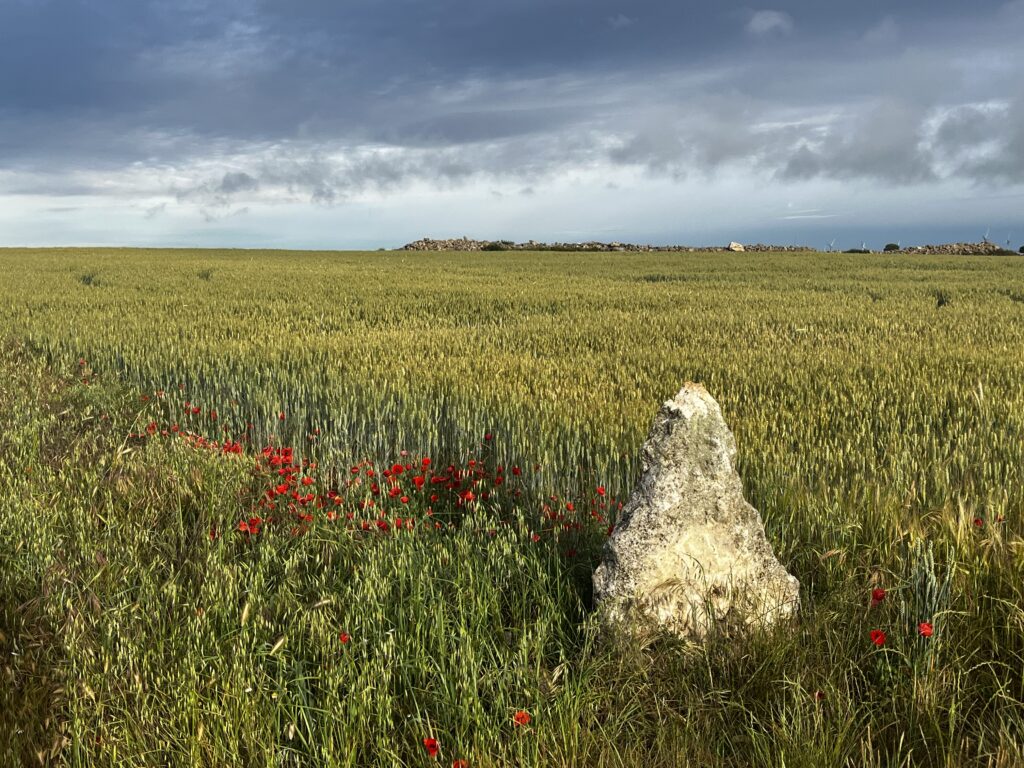
Humans have also shaped this land. You will find giant piles of boulders that over the course of thousands of years farmers have pulled out of their fields and stacked up. The farms produce their own kind of erosion.
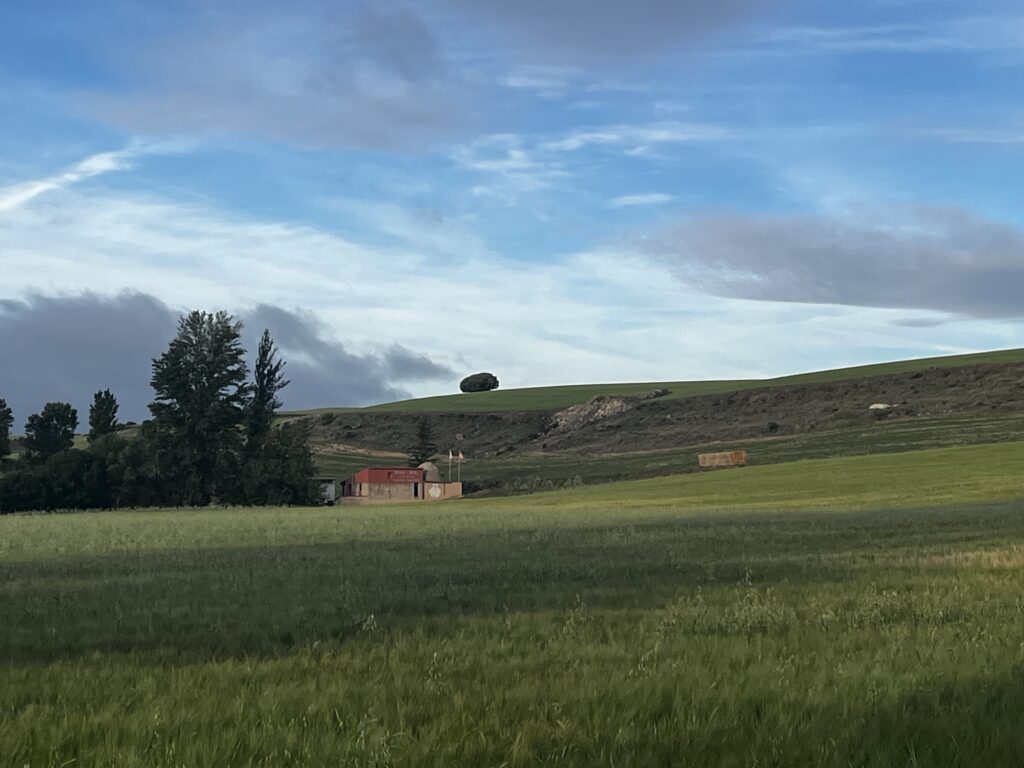
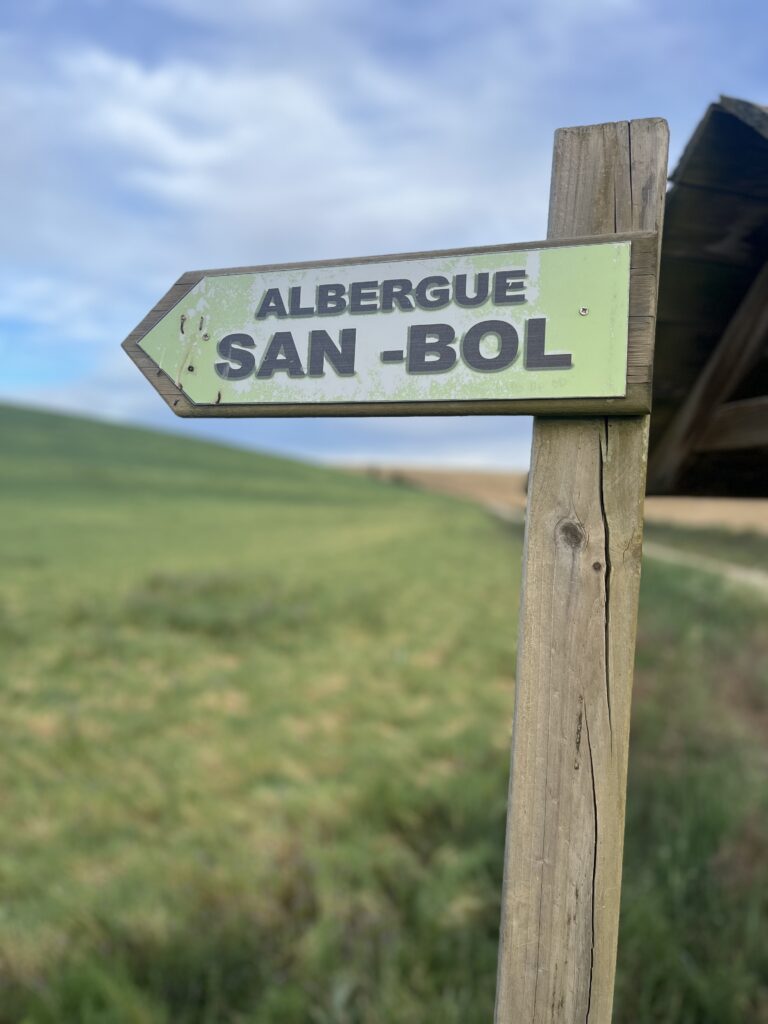
At about 7:55, I passed by San Bol. Eamon and I stayed at this isolated albergue on my first Camino in 2013. Francine and I spent a memorable night there in 2016. This had been my original scheduled stopping point for yesterday, but I changed it to facilitate meeting Jim and Sharon last night.
I was now 6 km into my day, and I imagined that I was just starting. The stage I had planned – San Bol to Itero de la Vega – replicates one I had walked in 2013.
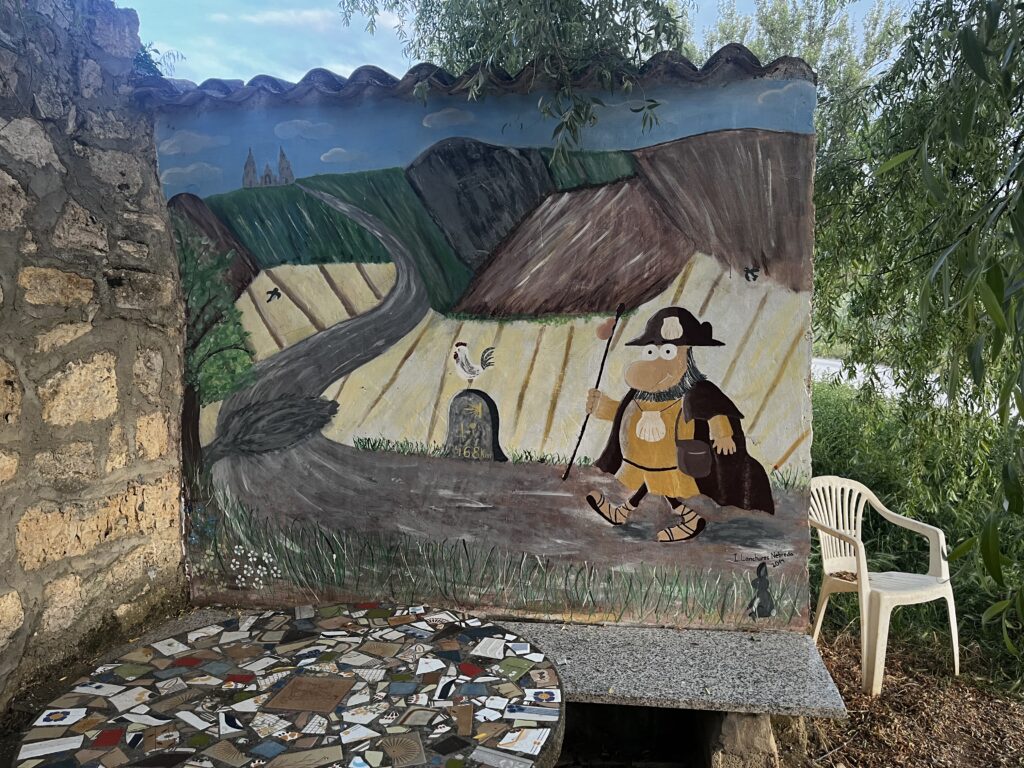
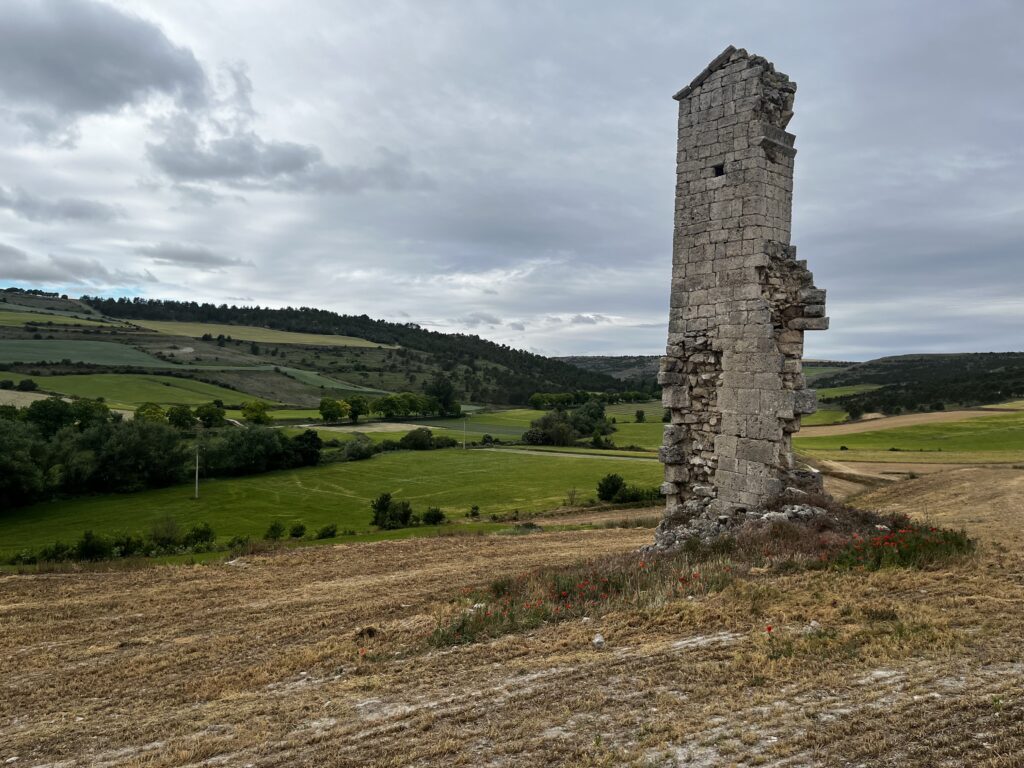
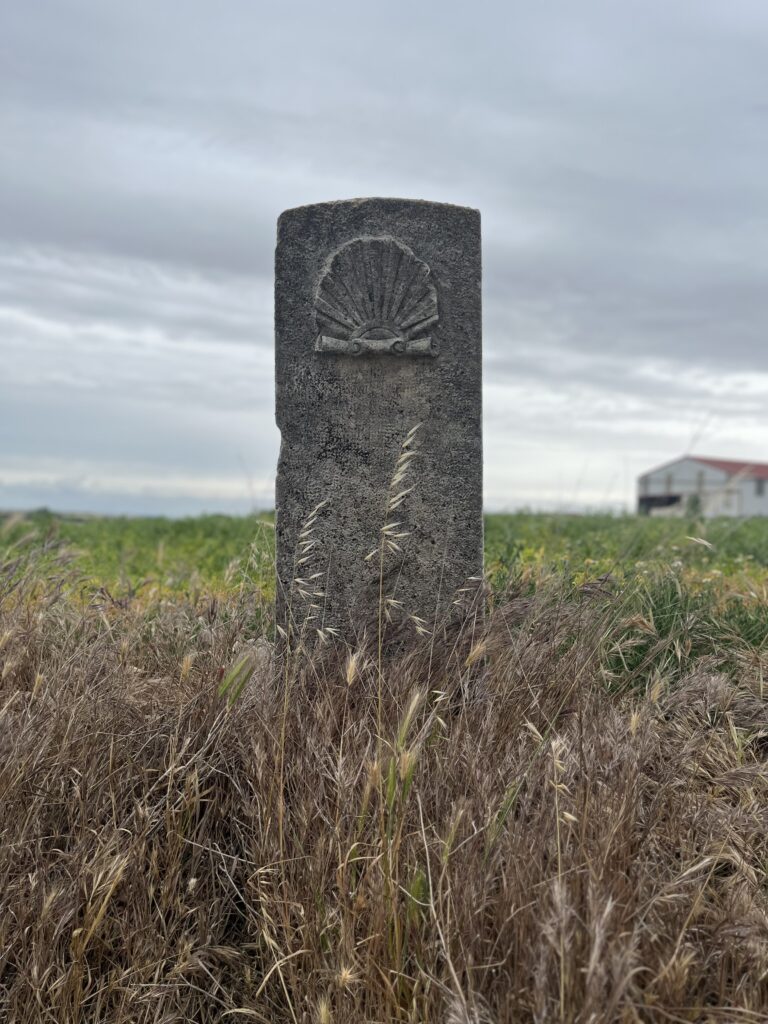
Just after 8:10, I passed a small monument that reminded me that I’m not the first person to walk the Camino in grief. I’m not even the only person doing it now. I’m probably not the only person doing it on today’s stage.
The wind was starting to pick up to the point where I decided to put on my fleece. There were dark clouds and sky now, though most of them were blowing rapidly to the east from which I’d come.
At about 8:40, passed by an isolated albergue. I’m pretty sure that’s where Herve stayed last night, and possibly Katie as well. They had a sign advertising breakfast, but it indicated that it started at 9 AM. I kept walking.
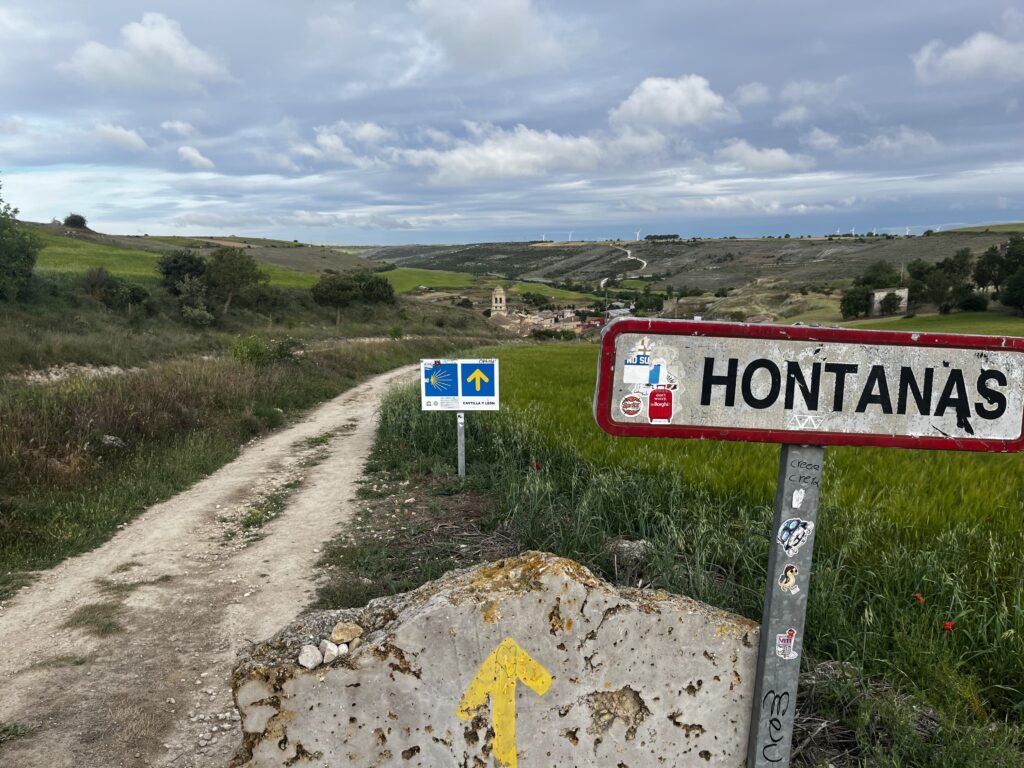
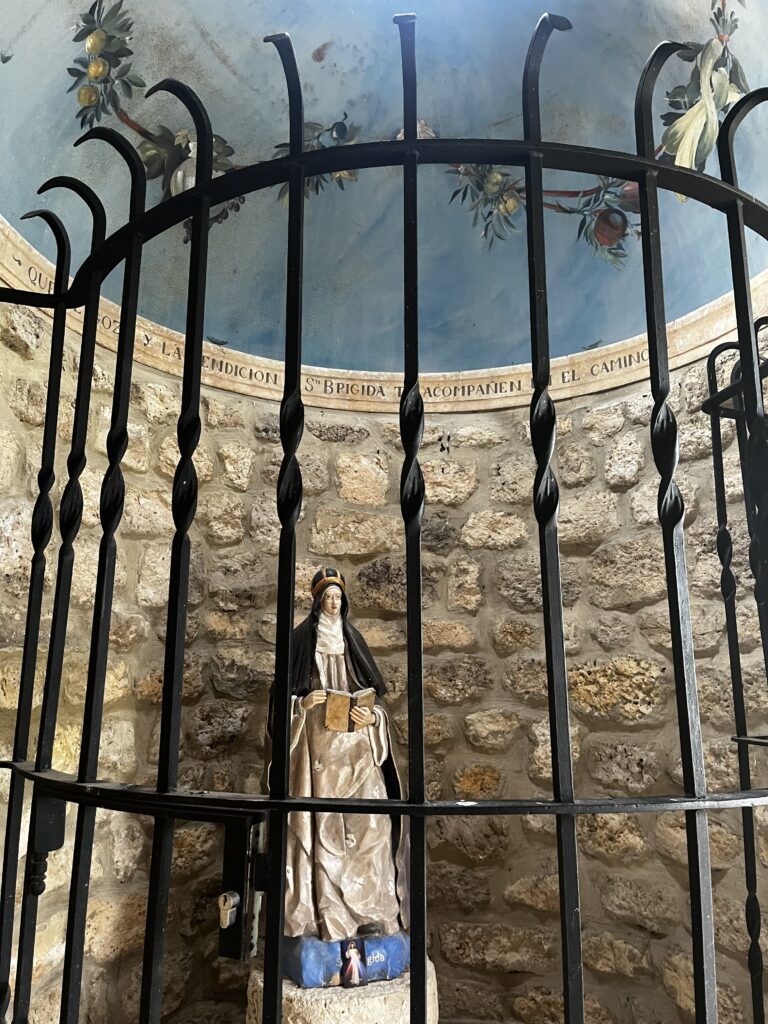
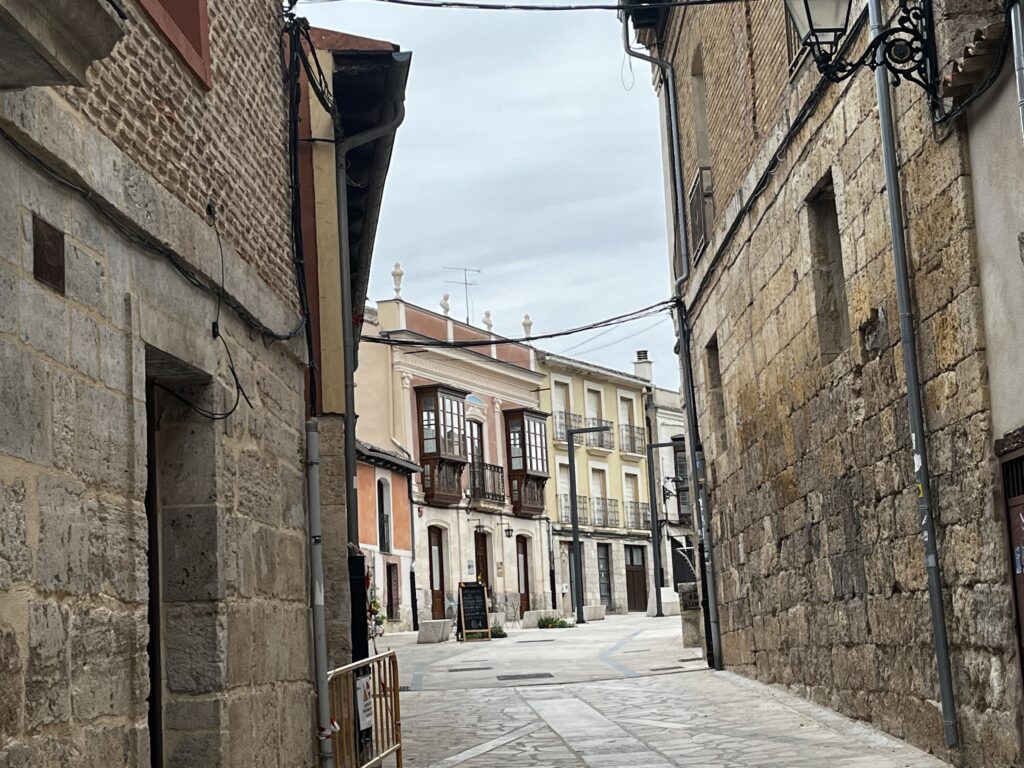
Just after 8:50, I arrived in the little village of Hontanas, nestled into its valley. I stopped for a moment to pray in the little Hermitage of Saint Bridget before walking down into the village.
I stopped in the first bar for café con leche, zumo, and tortilla Español. I ended up having breakfast with Marcel, who I last seen at dinner in Burgos a few nights ago.
I left at about 9:25, and ran into a fellow named Daniel, who hails from the east side of Tacoma. A very small world it is.
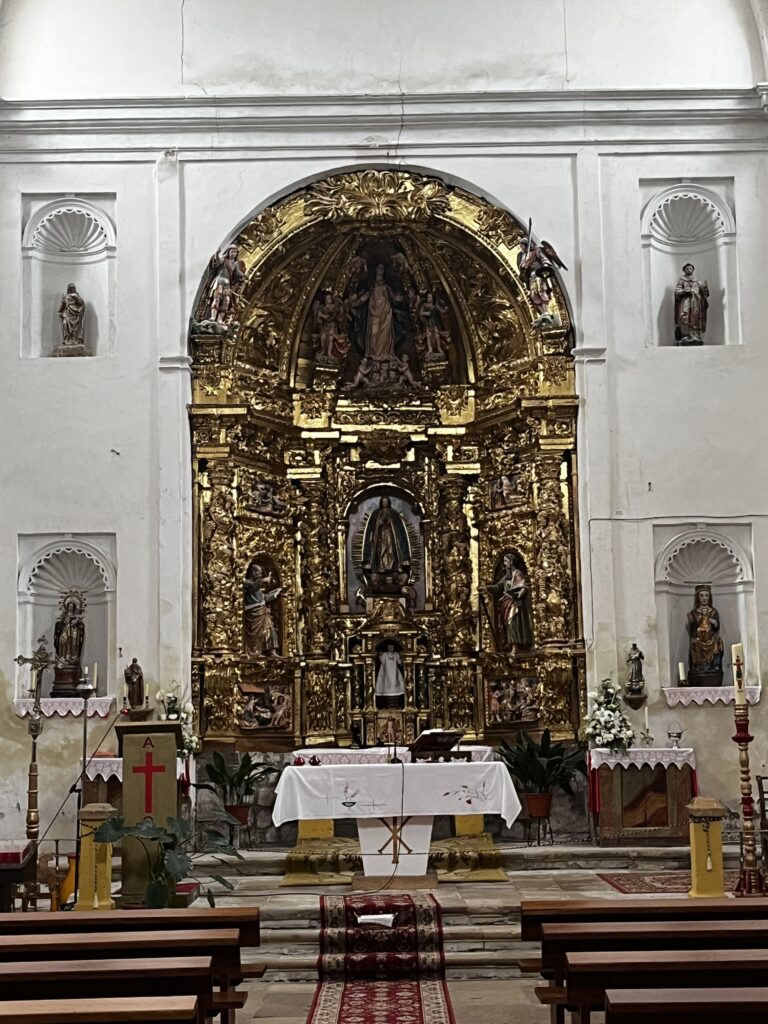
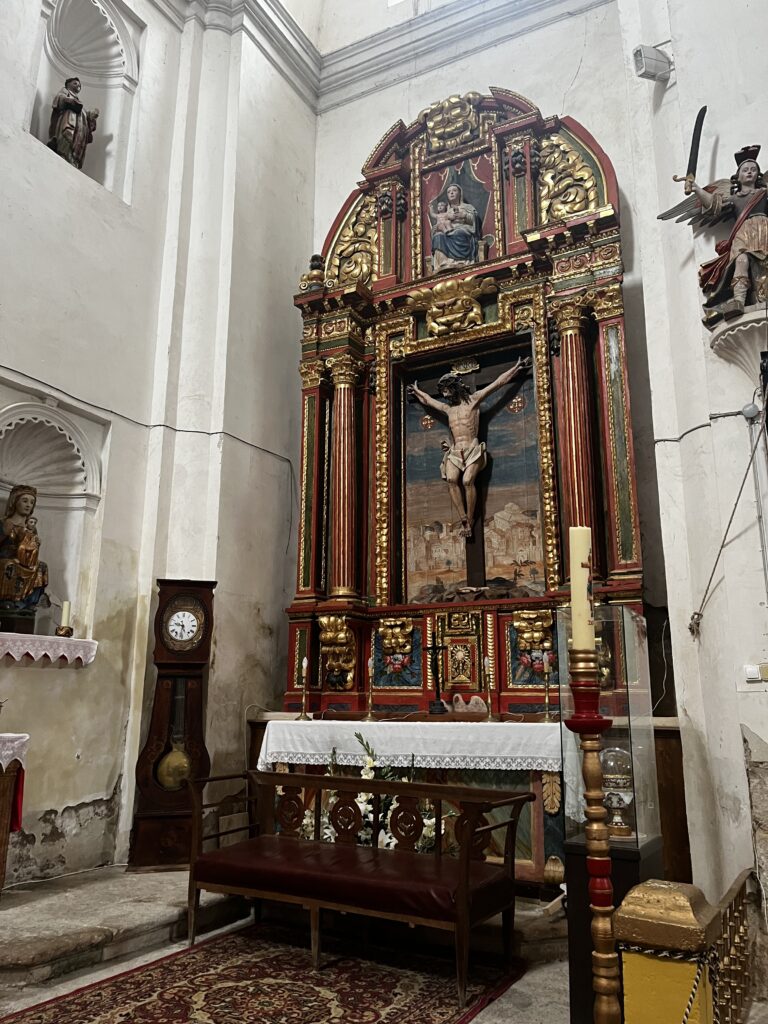
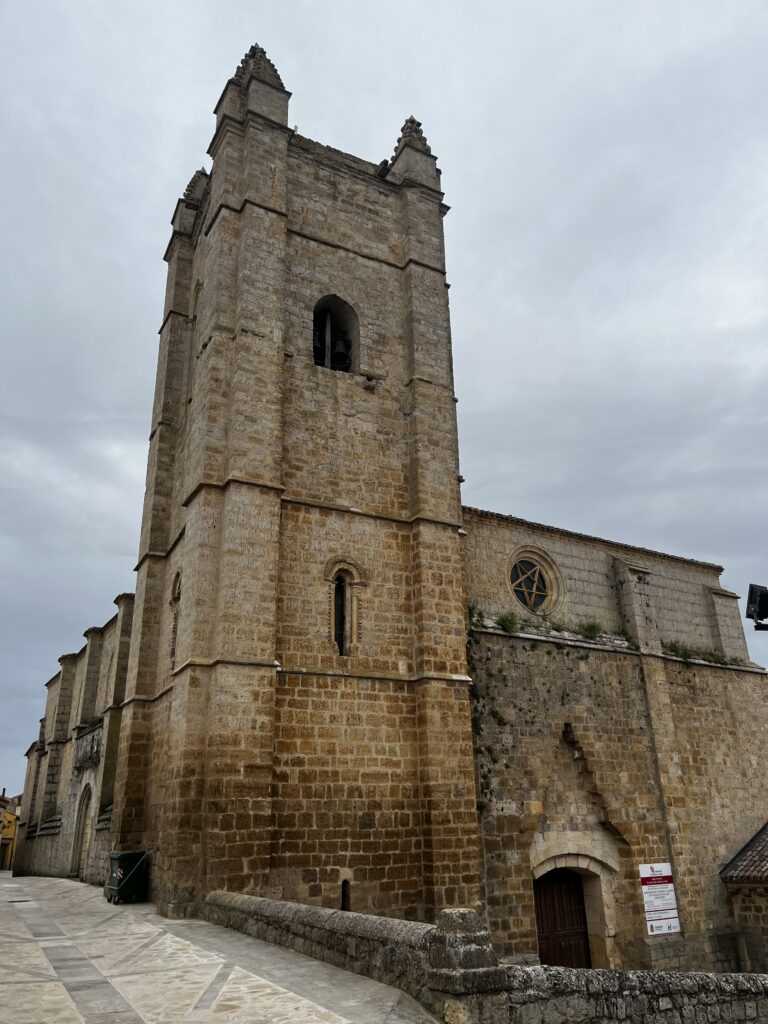
I have fond memories of the village church from when I stayed in the village three years ago. Like many village churches, it’s a weird mishmash of art and architectural styles, and the building could definitely use a bit of restoration work.
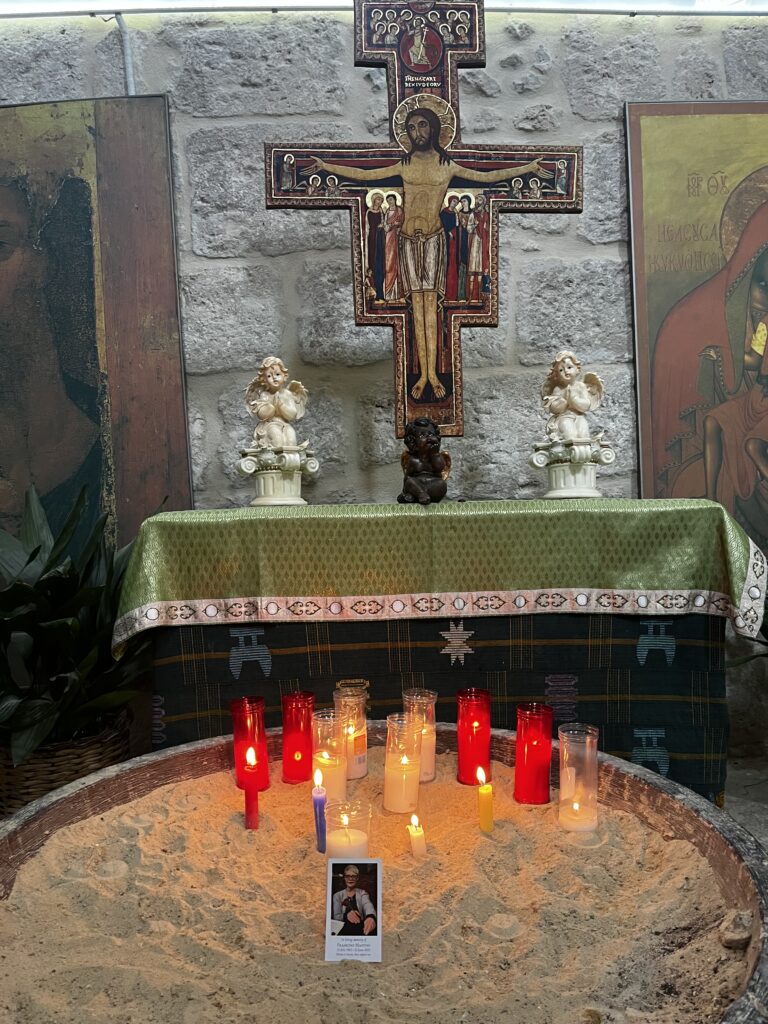
It’s a welcoming place, a place where prayer and gratitude seem to naturally pour out of me. It’s a place that promotes reflection. I prayed here, and I lit a candle for Francine.
I left the village at about 9:30. There was a brief bit of asphalt roadwalking before the Camino returned to the gravel road – really more of a path now, if I’m honest. I was about a third of the way into my walking day.
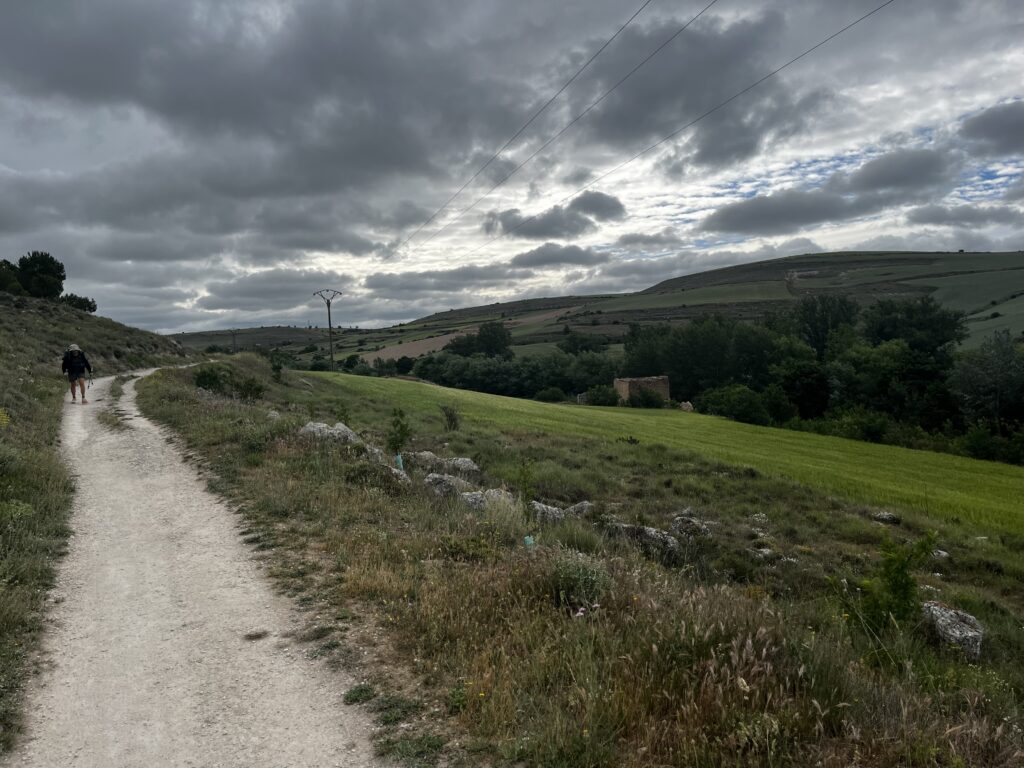
Now the Camino ran a while through the valley, going up and down the valley sides as it went. The dark clouds now directly overhead spit a few drops of rain on me. I reflected that my rain gear was currently at the very bottom of my pack.
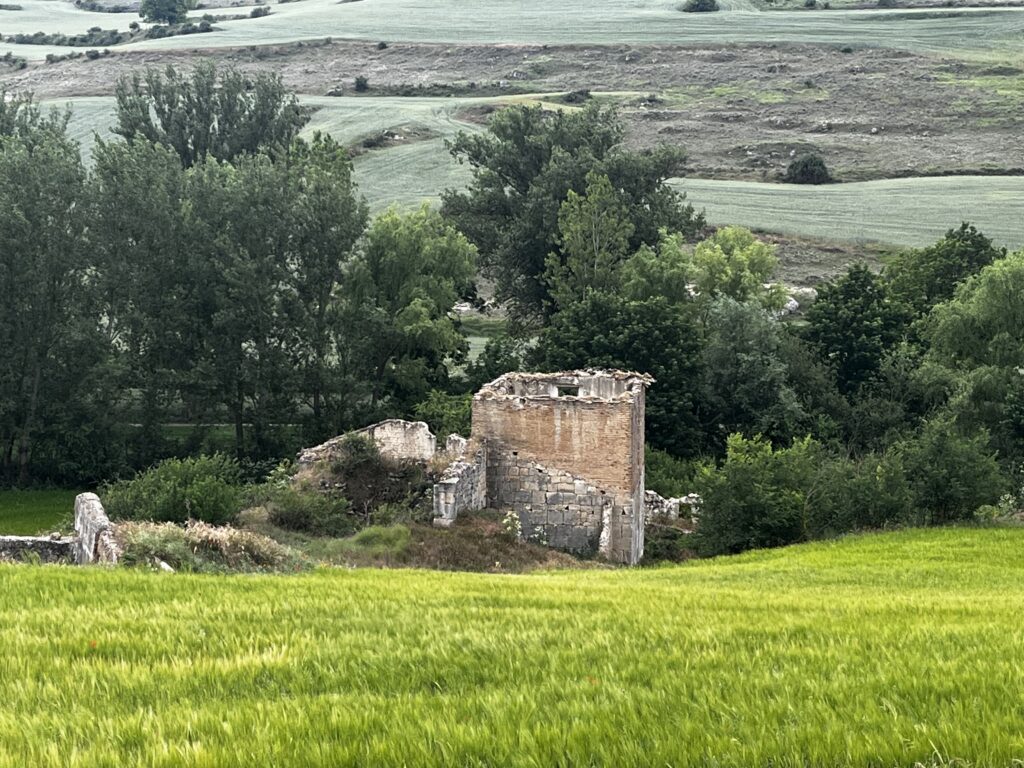
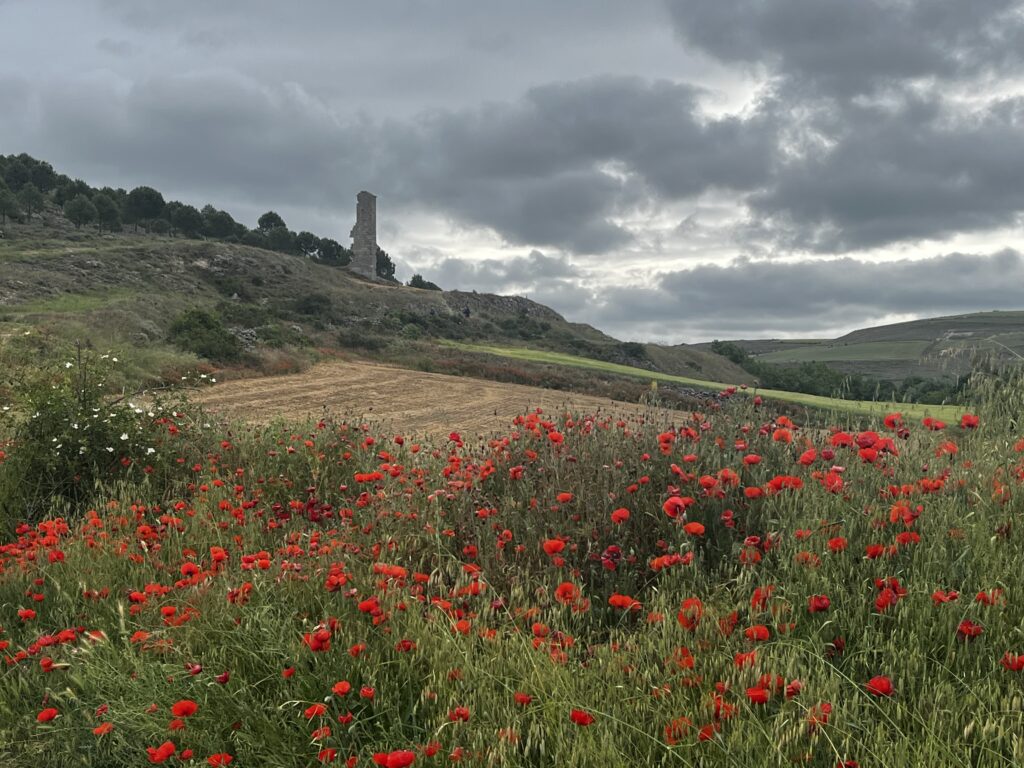
I passed several sets of ruins as the path continued its undulating path through the valley, not to mention some pretty spectacular views of the valley itself.
It’s funny how profoundly your vision changes when you see a thing and consider that it might be the last time you ever see it.
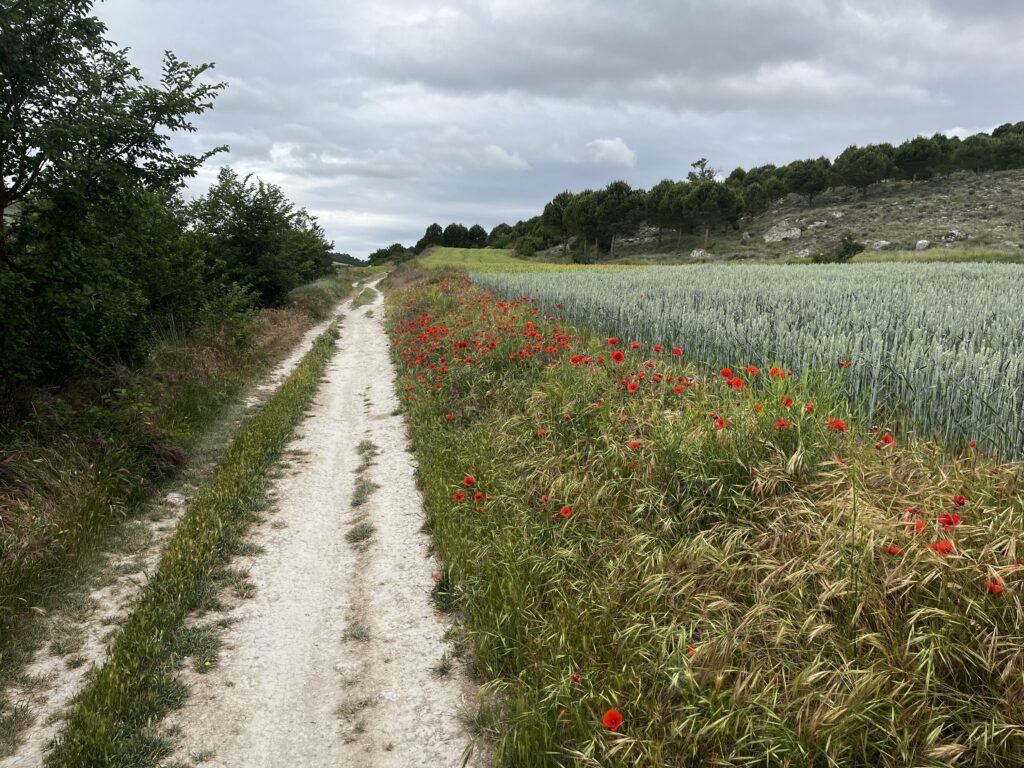
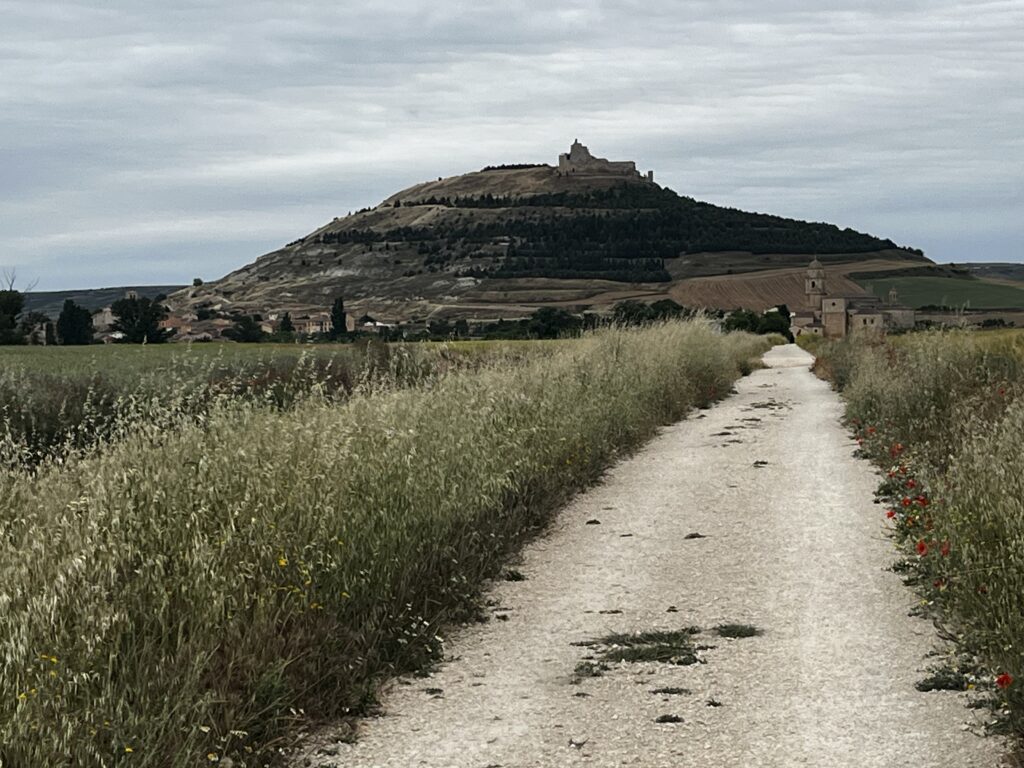
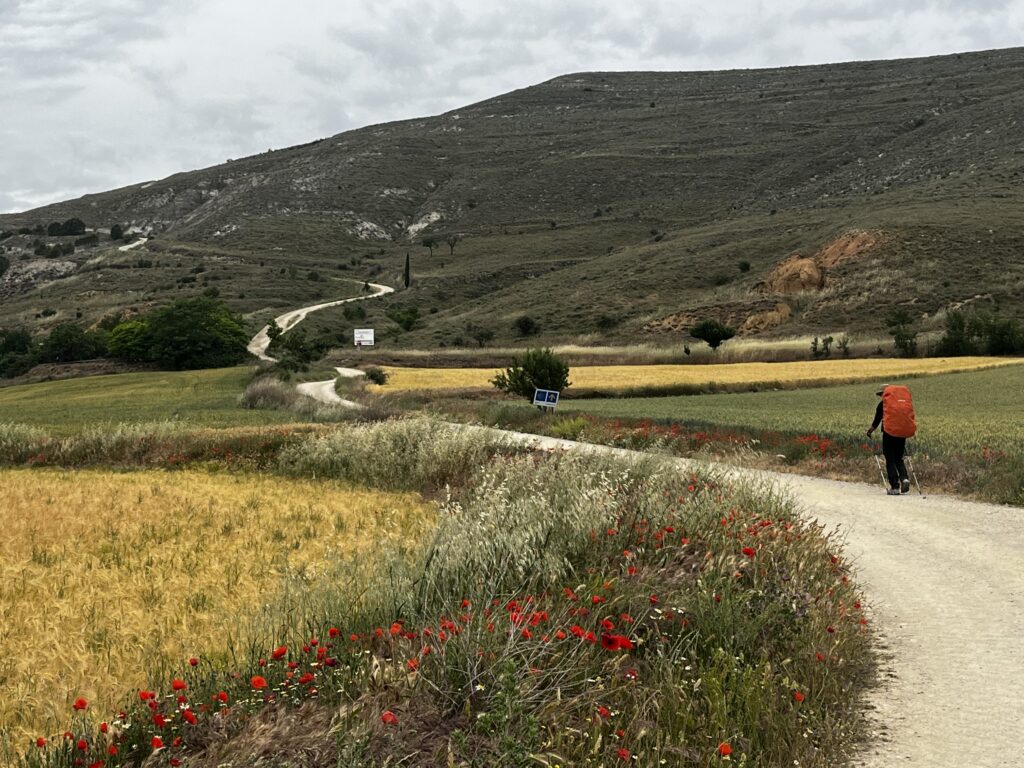
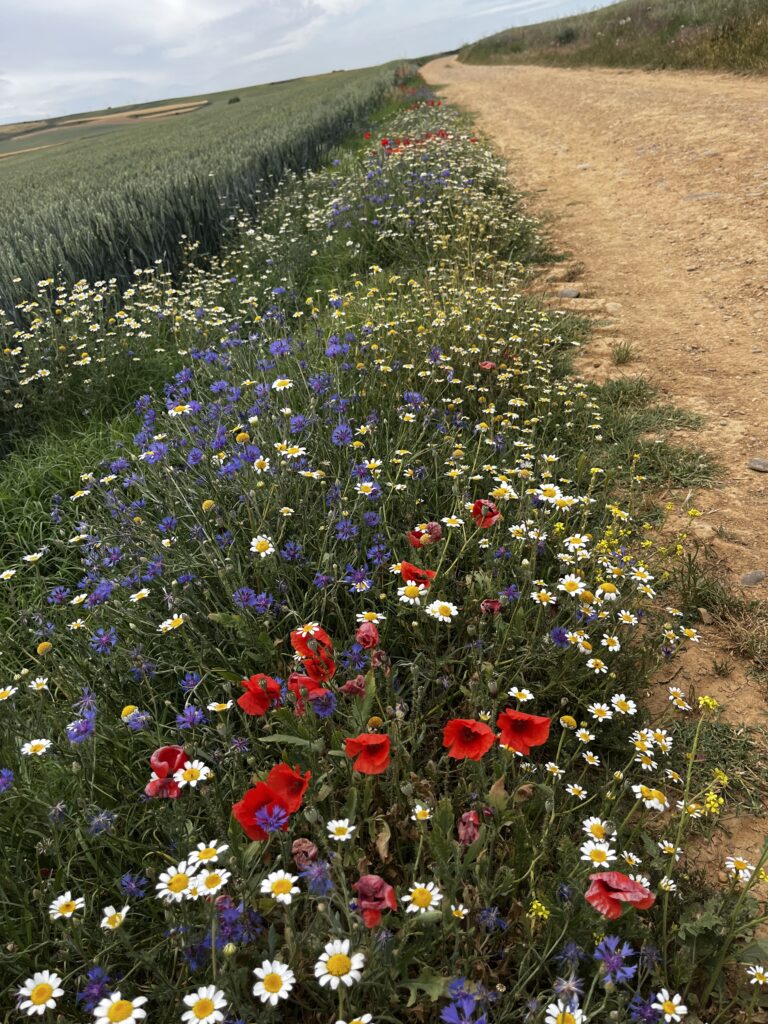
At about 10:20, the path turned to run parallel to an asphalt road. It was lined with flowers and wild grasses. I remember in our early Caminos when this path did not exist and we were road walking at this point.
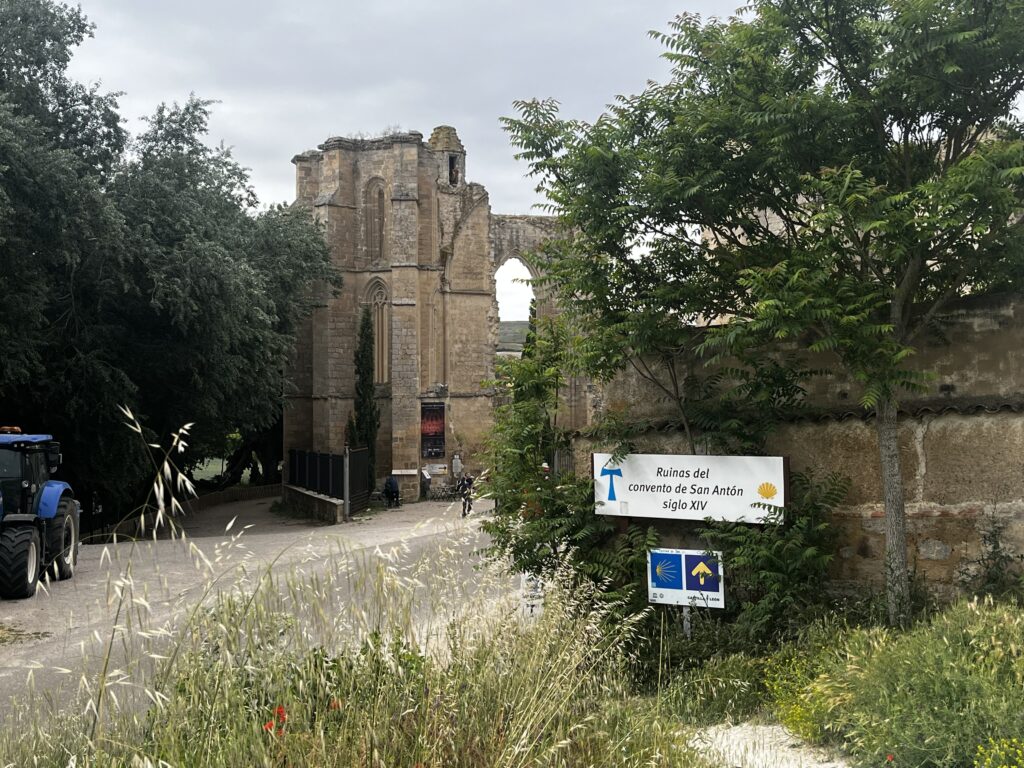
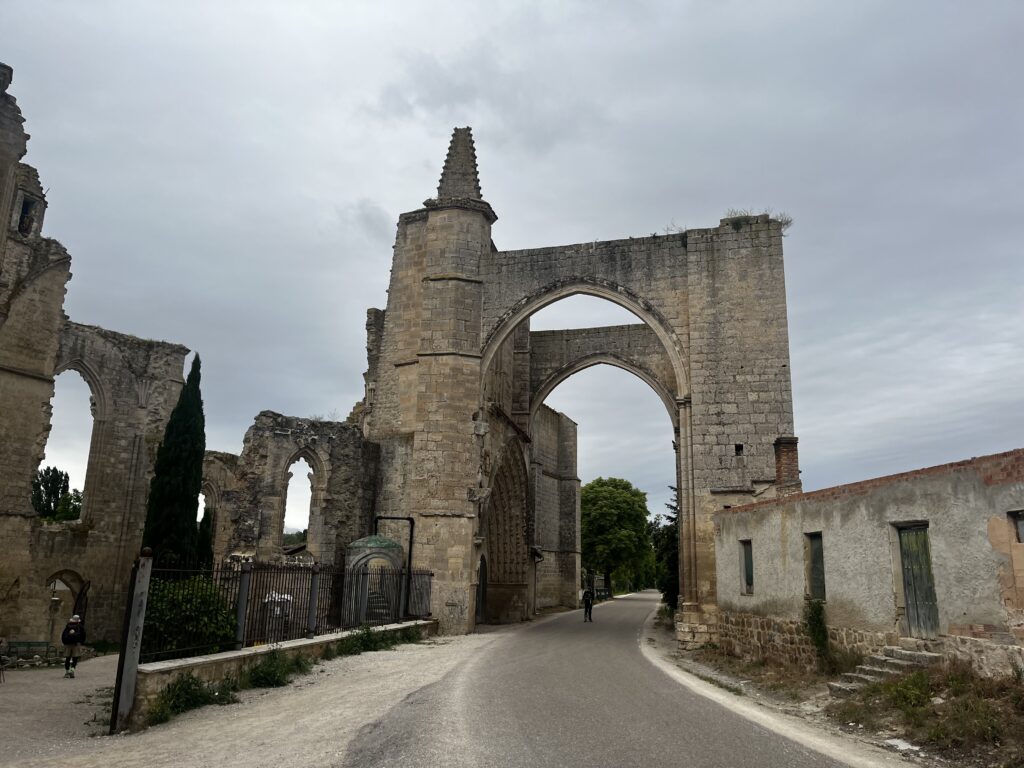
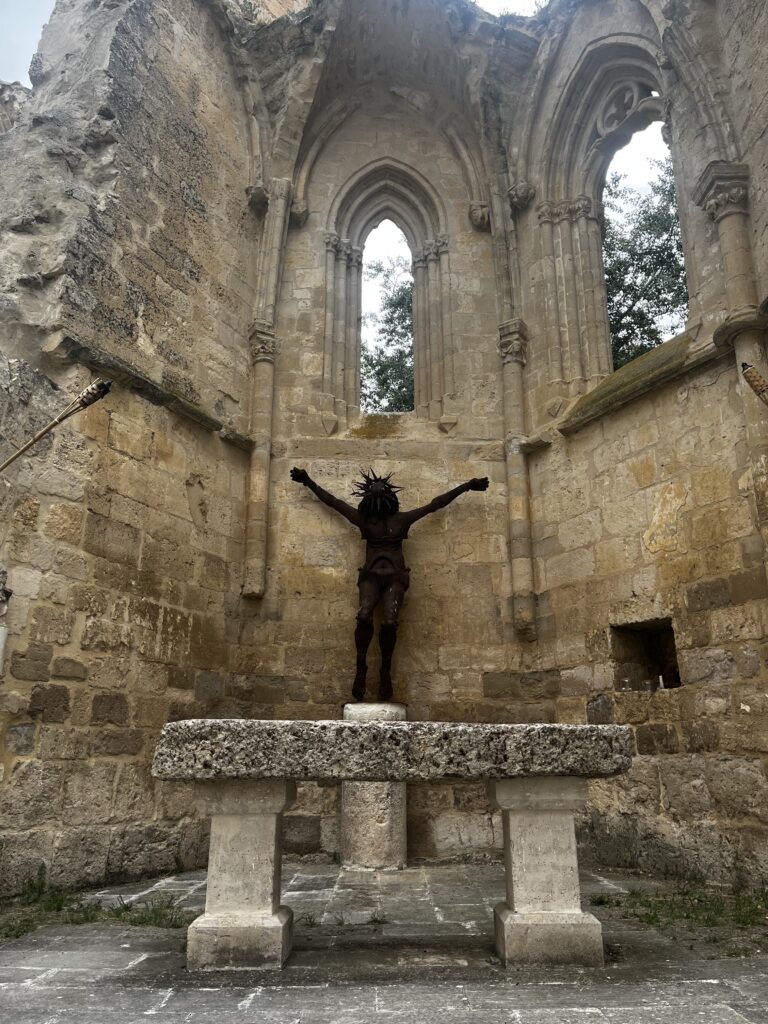
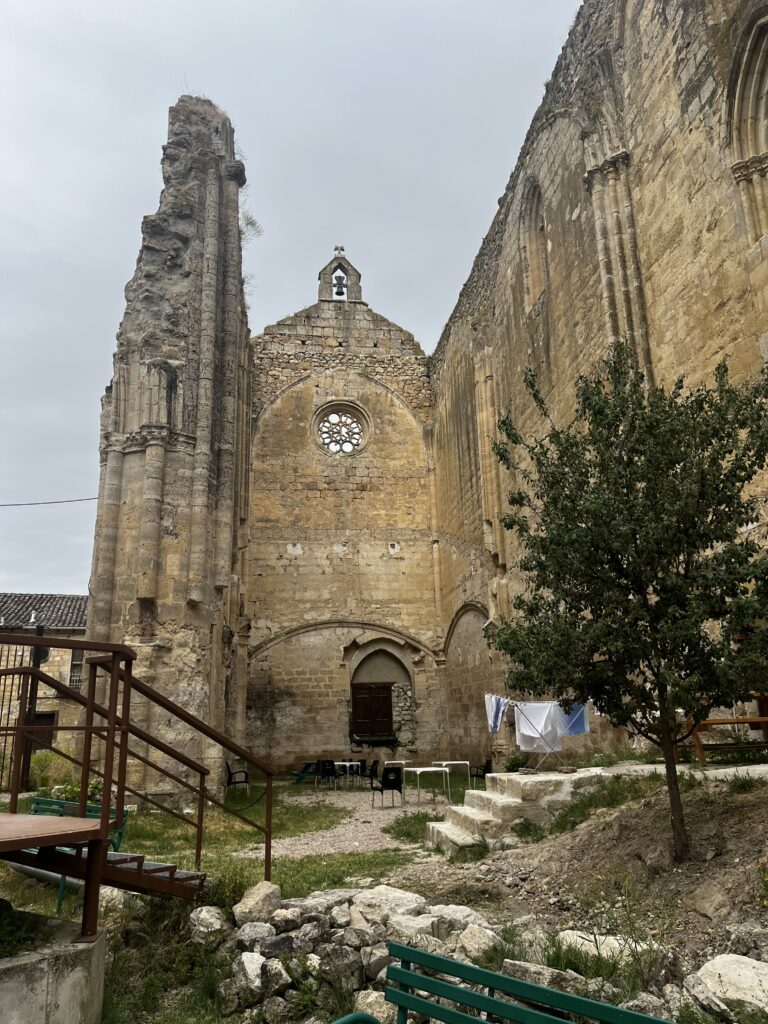
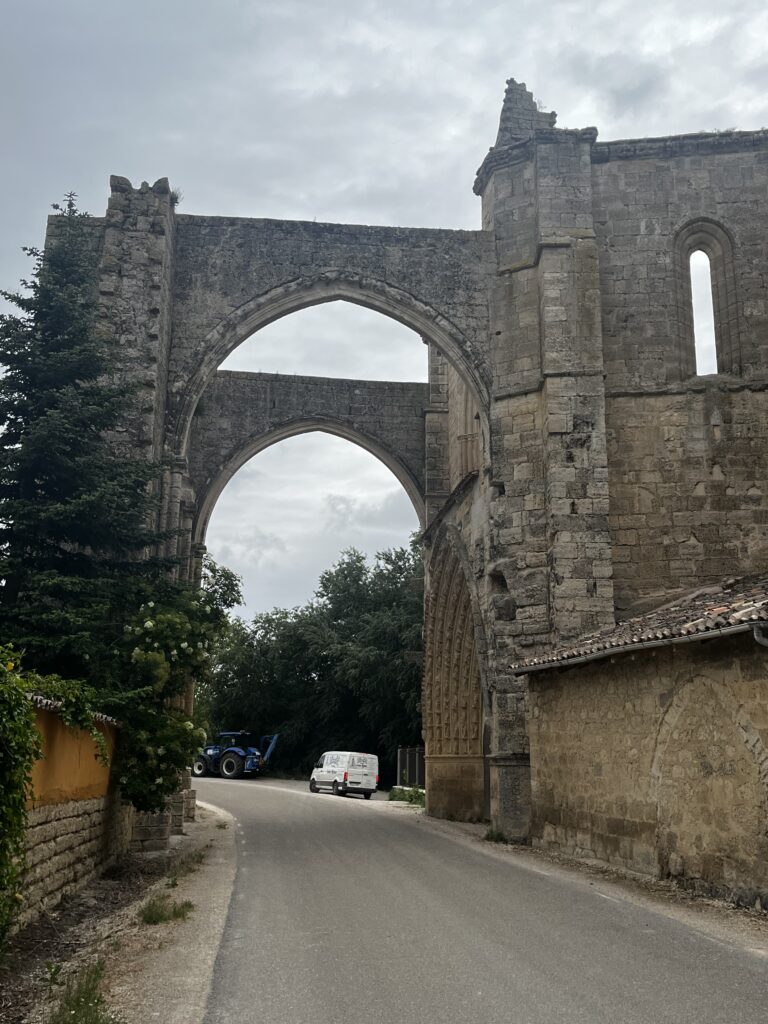
Just before 10:40, I arrived at the road-spanning ruins of San Antón. This was once a great monastery and pilgrim hostel. Although the monastery will probably never be restored, there is now an albergue nestled within the ruins.
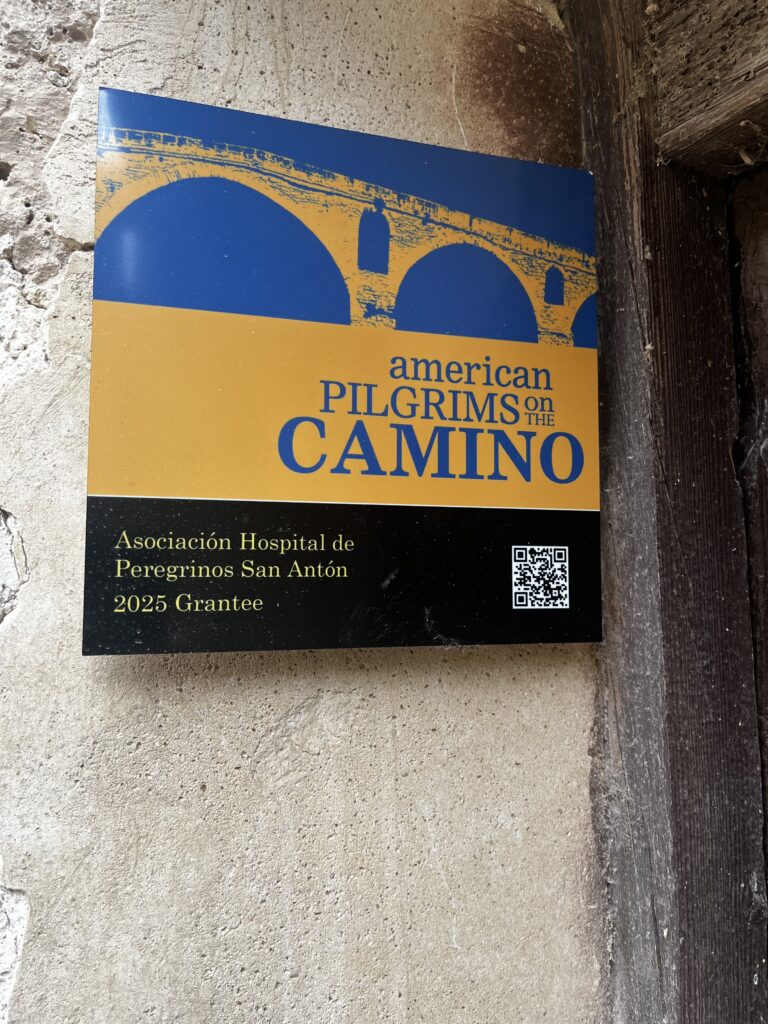
I met with one of the hospitaleros, Lauren, a member of American Pilgrims.
At 11:20 I came into the hillside village of Castrojeriz and met up with Herve at the second bar for an early lunch. Shortly after we finished our food, Marcel arrived and joined us for dessert.
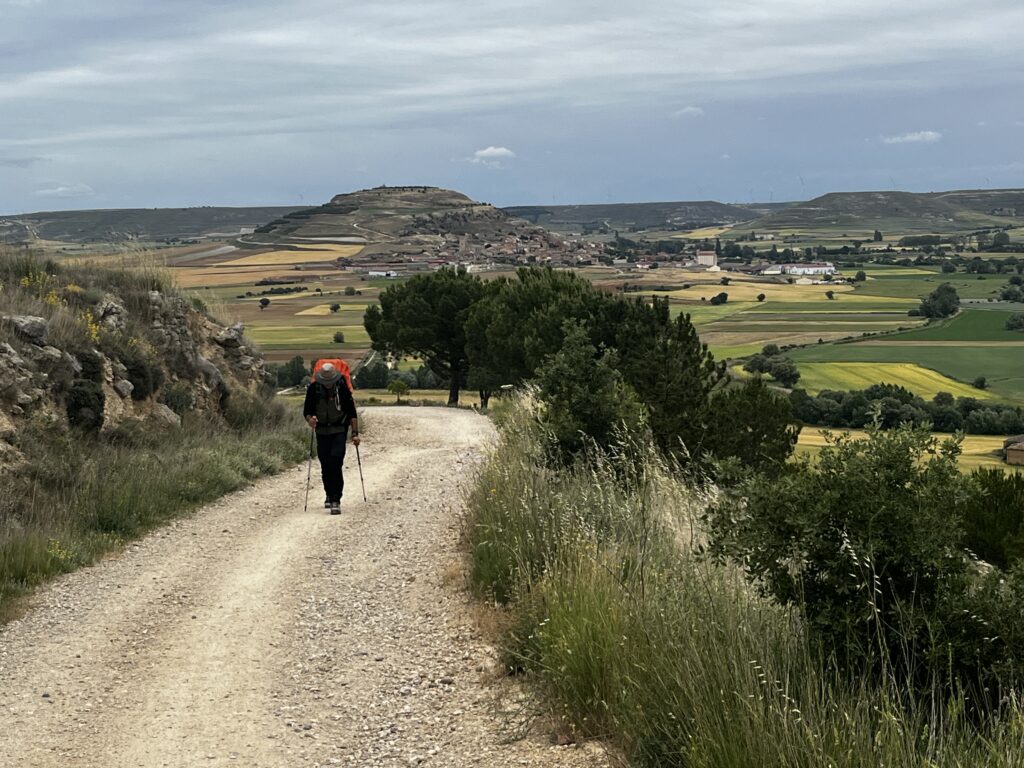
The village rings a large hill, on top of which is the ruins of a castle that absolutely dominates the town.
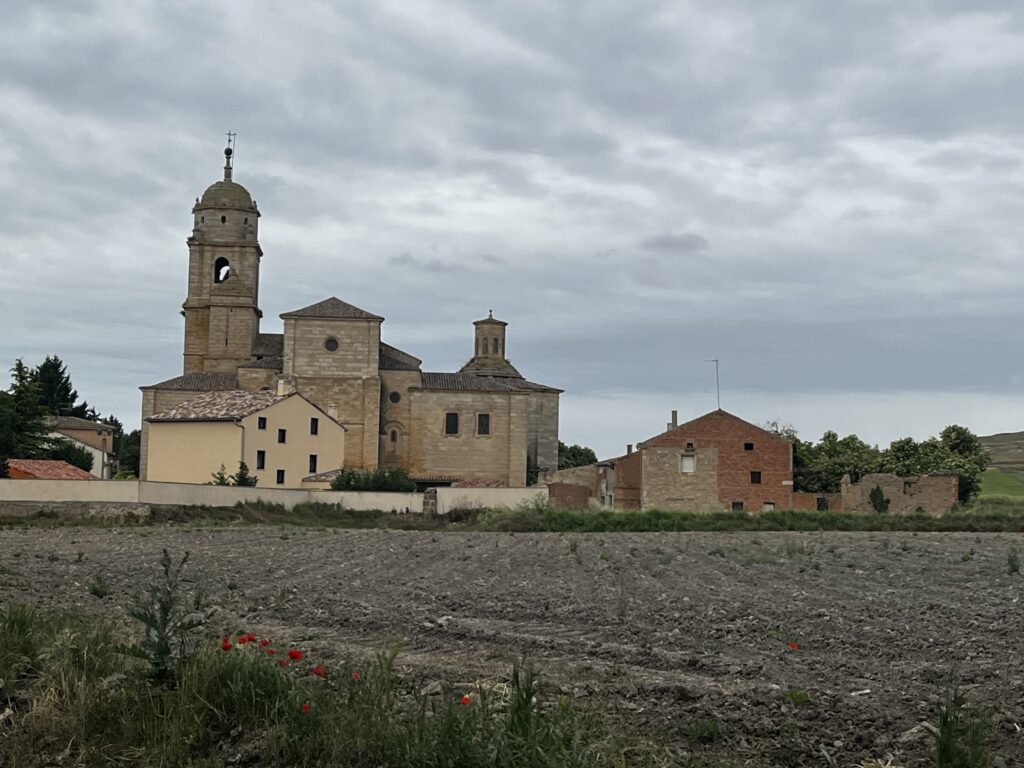
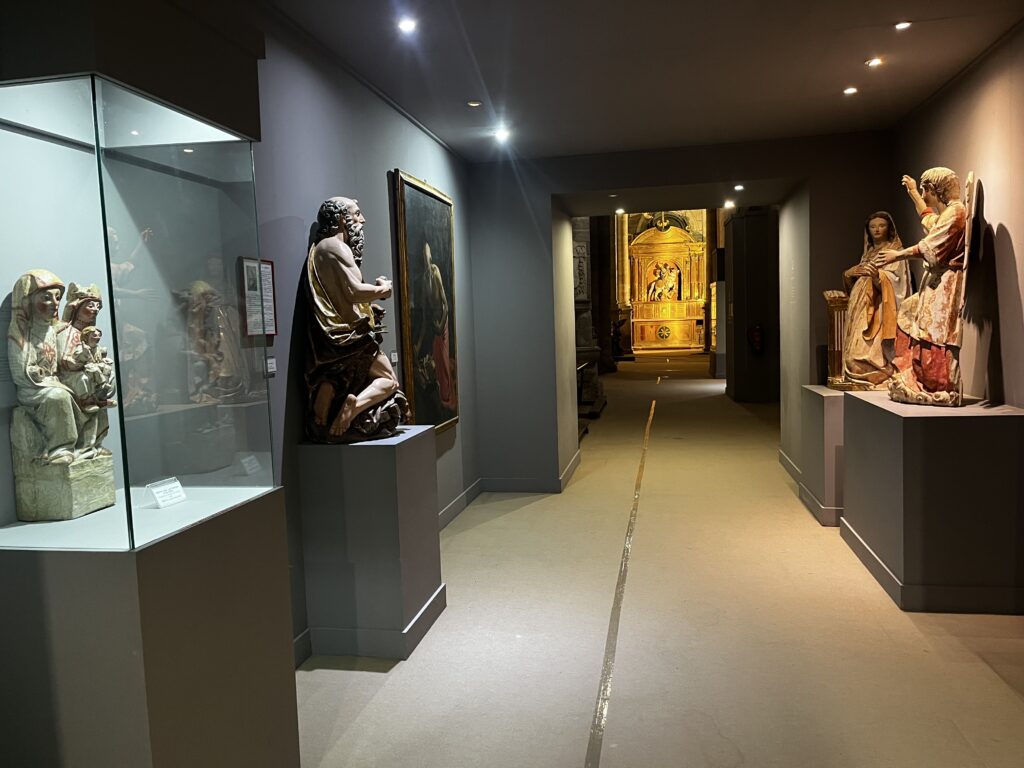
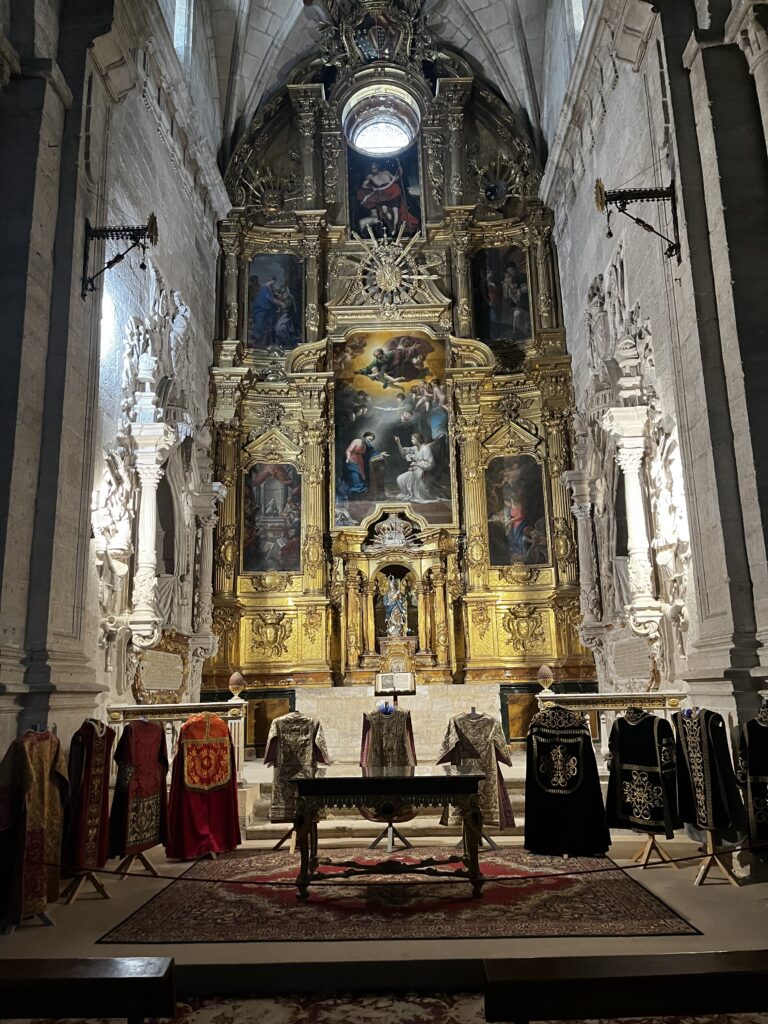
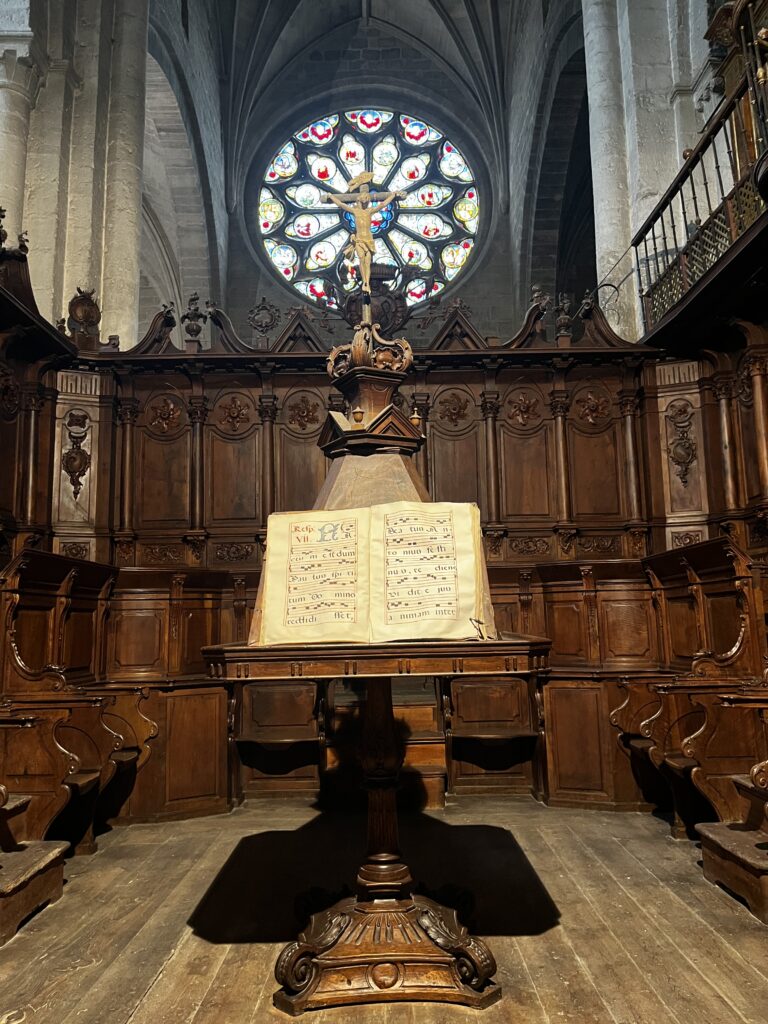
After rearranging my pack so my rain gear was accessible, my next stop was the church of Santa María del Manzano, which was helpfully across the street from our lunch spot. They have largely turned the church into a museum, although the sacristy, apse, choir, and at least a few of the side chapels remain intact.
What’s more, it’s clear that Mass is celebrated regularly in one of those side chapels. It’s a peculiar arrangement, though it’s one I’ve seen in a number of the larger churches in Spain. In this case, the whole building made me very uneasy in a way that the cathedral at Burgos, for example, did not. No, I can’t explain it.
I returned to the bar to pick up Herve, and Mattie walked in. Both she and Marcel are finishing their days here. Herve and I, meanwhile, had another 12 km to go. The dark clouds continued moving in, and I decided to sling my poncho over my pack. Herve just put his on.
It proved a wise precaution, as the rain began before we even made it through the village. Fortunately, it was relatively light and very intermittent.
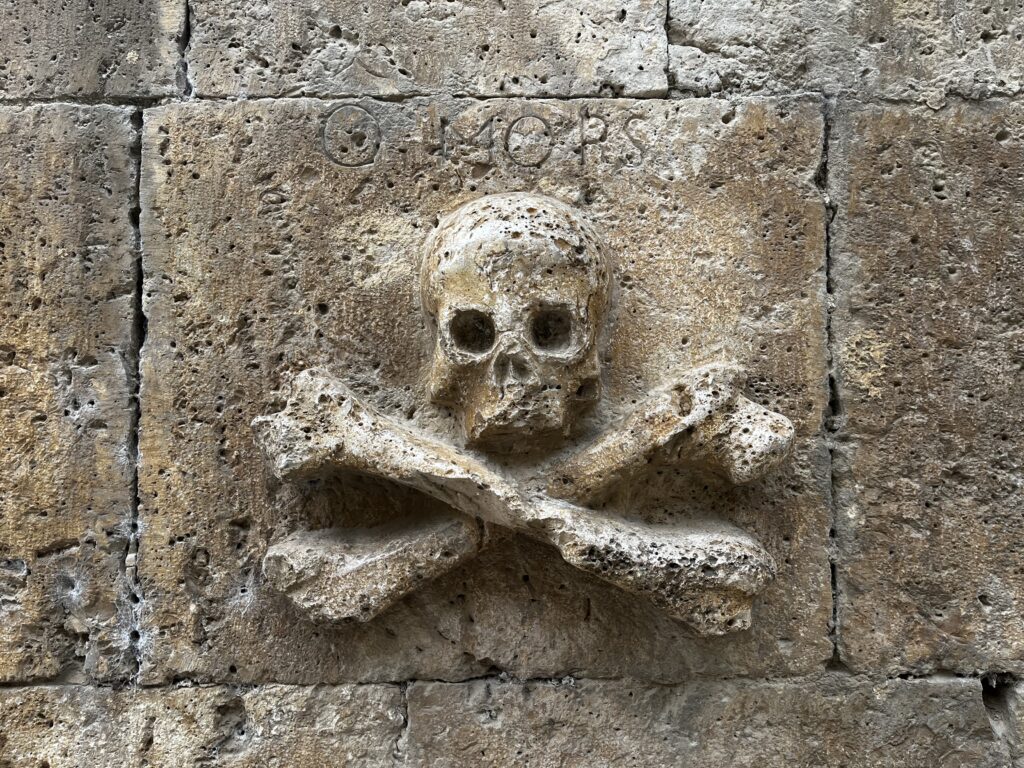
We passed another church, famous for its skull and crossbones outside. It, too, has been turned into a museum.
A third church seems to have been spared from being made into a museum, but it of course was locked up tight.
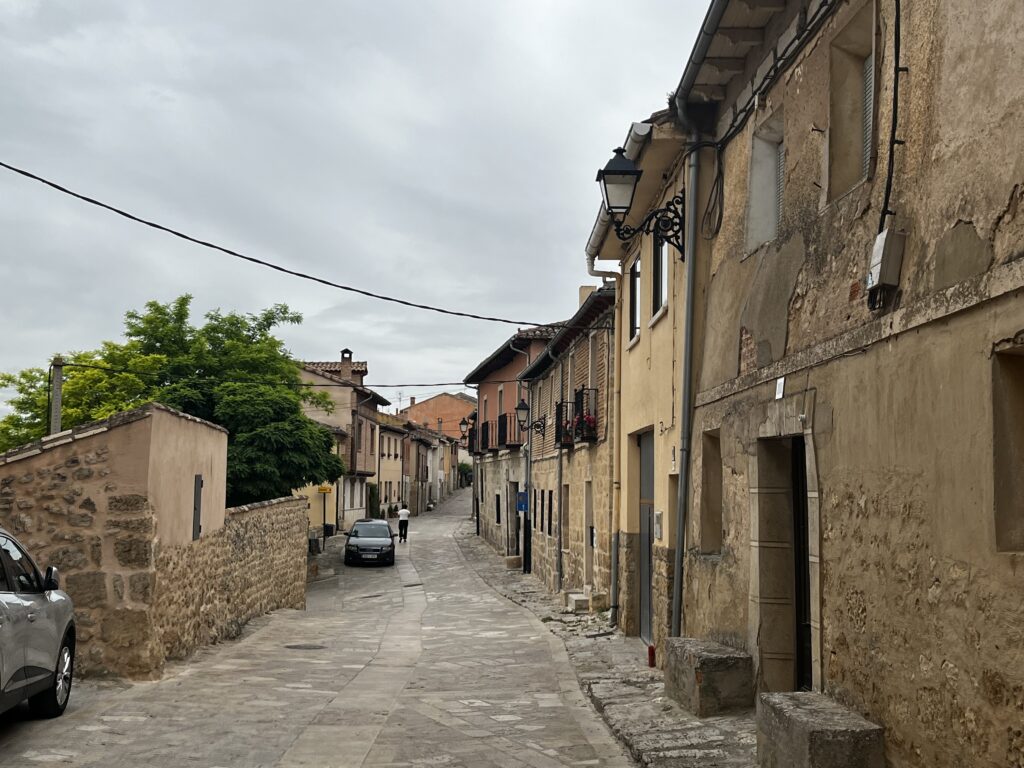
The Camino runs the length of the entire village, so it was after 1 PM before we were getting in the countryside. By now, the rain had stopped again.
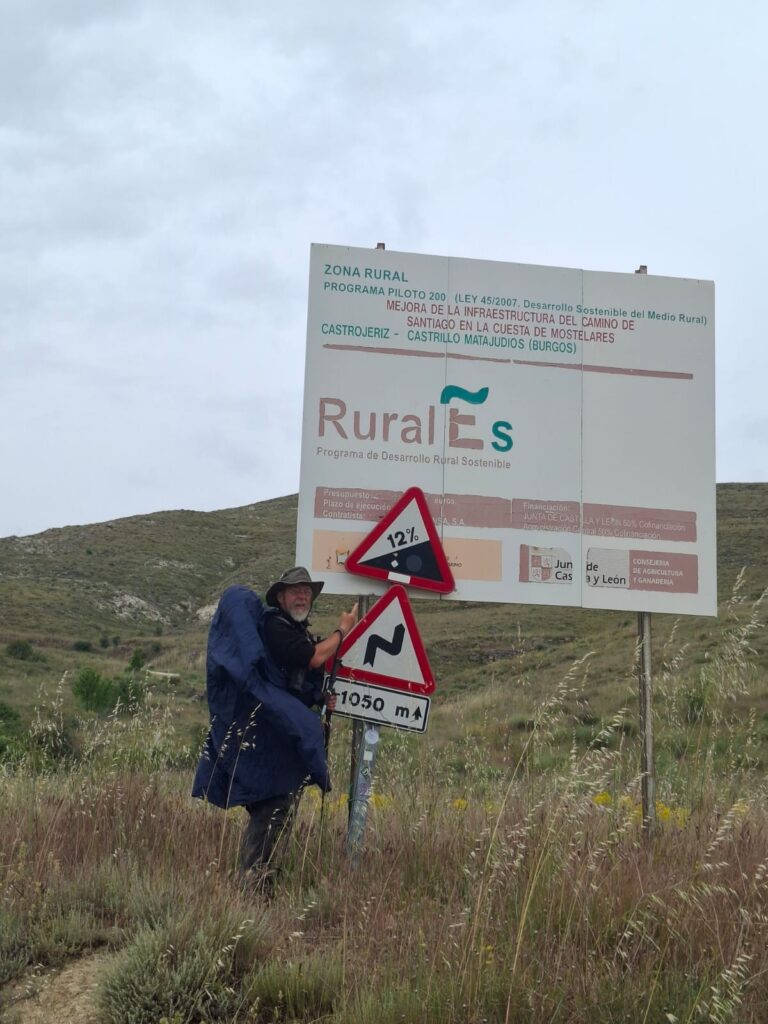
Shortly after this, the long climb out of the valley began. As we approached it, Herve described it as “a trail like a dragon’s tail”.
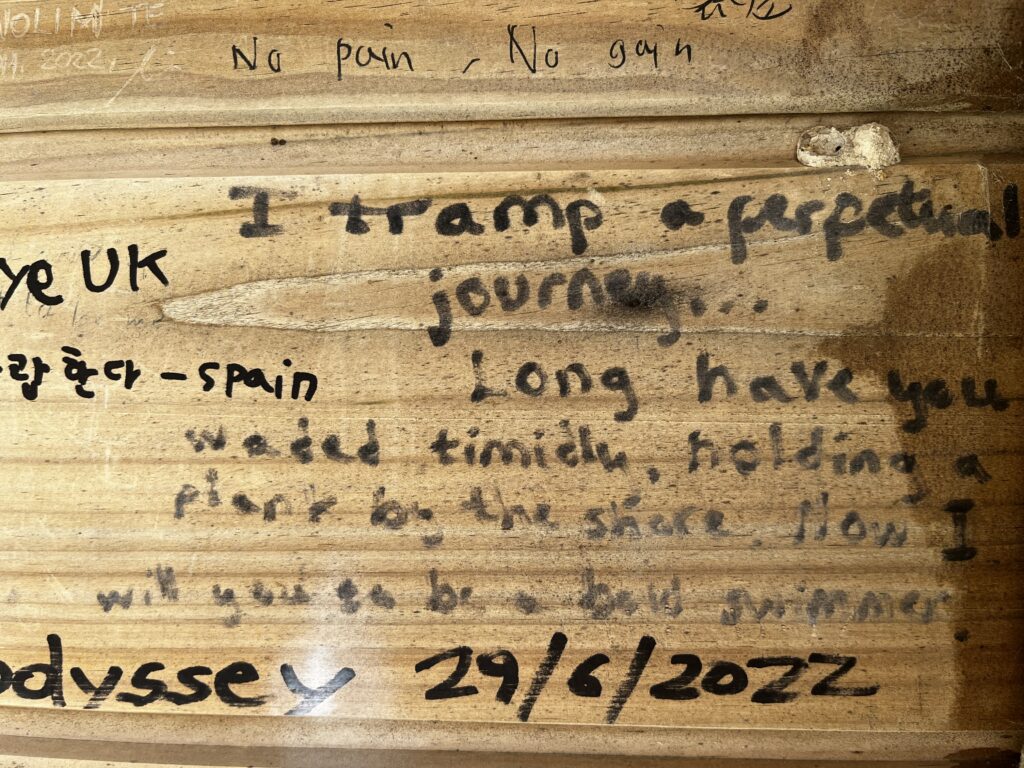
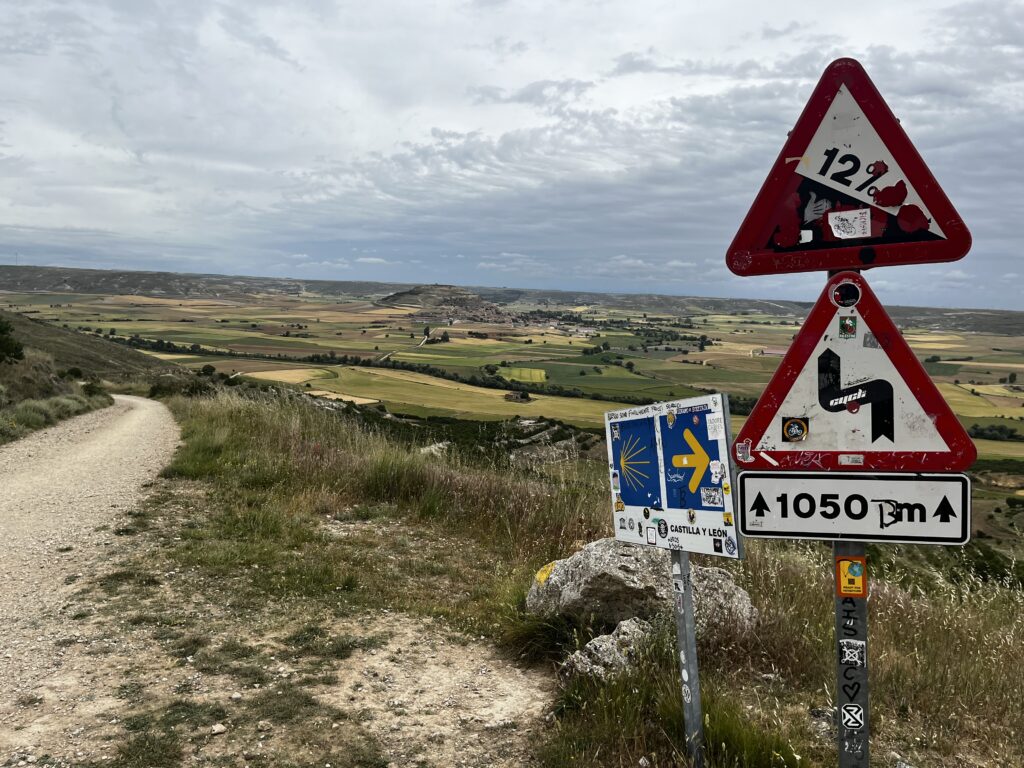
It was an arduous climb back up to the table top of the Meseta. We arrived at the top at about 1:45, took off our packs, sat down on a bench under a wooden awning covered in graffiti going back to at least 2011, and had ourselves a big swig of water.
The view was absolutely tremendous.
By 2 o’clock, we were moving again, albeit a little slower than before the climb. We were back on top of the Meseta, and once the valley behind us was out of sight, it was just us in a sea of grass and grain. The wind was fierce, and we were walking right into it.
And then we got to the other side of the ridge, and it was downhill on a concrete run designed for speeding bicycles. When we got most of the way to the bottom – and through the steepest part – the concrete became our familiar gravel road.
About 2:50, we found ourselves at a picnic area as the gravel road joined an asphalt one. Fifteen minutes later, the Camino turned off onto a dirt road with stones and gravel.
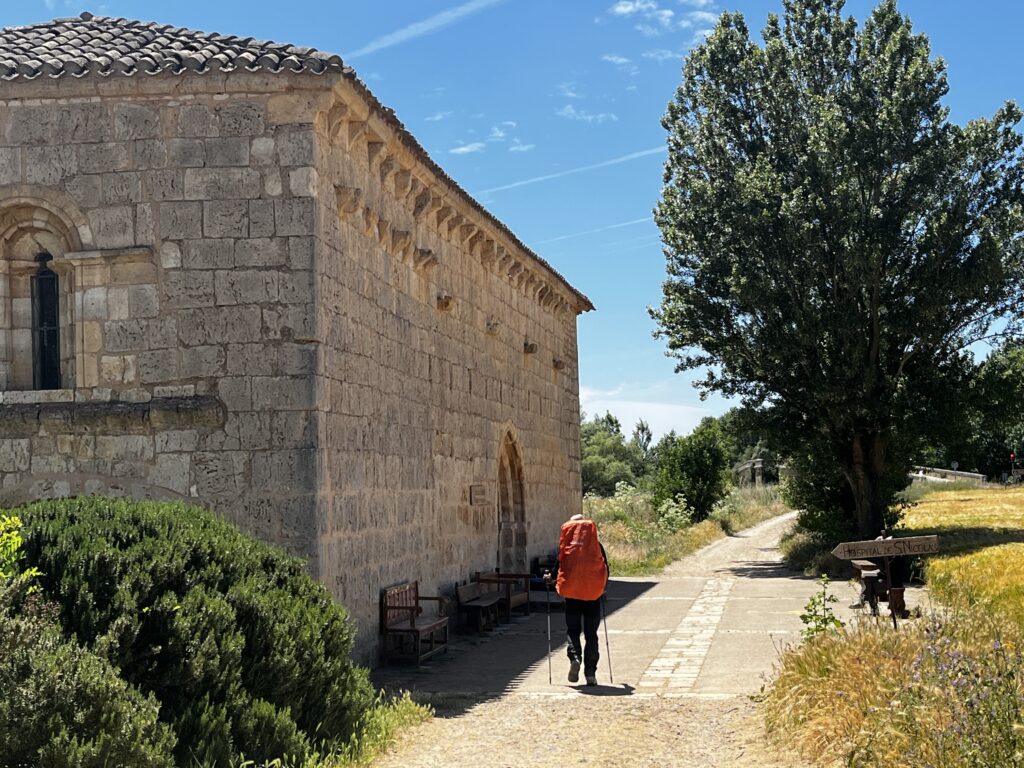
We passed by San Nicholas at about 3:15. This is an old hermitage that has been turned into an albergue by the Italian pilgrim association. Francine and I had hoped to stay there back in 2016, but there was no room at the inn.
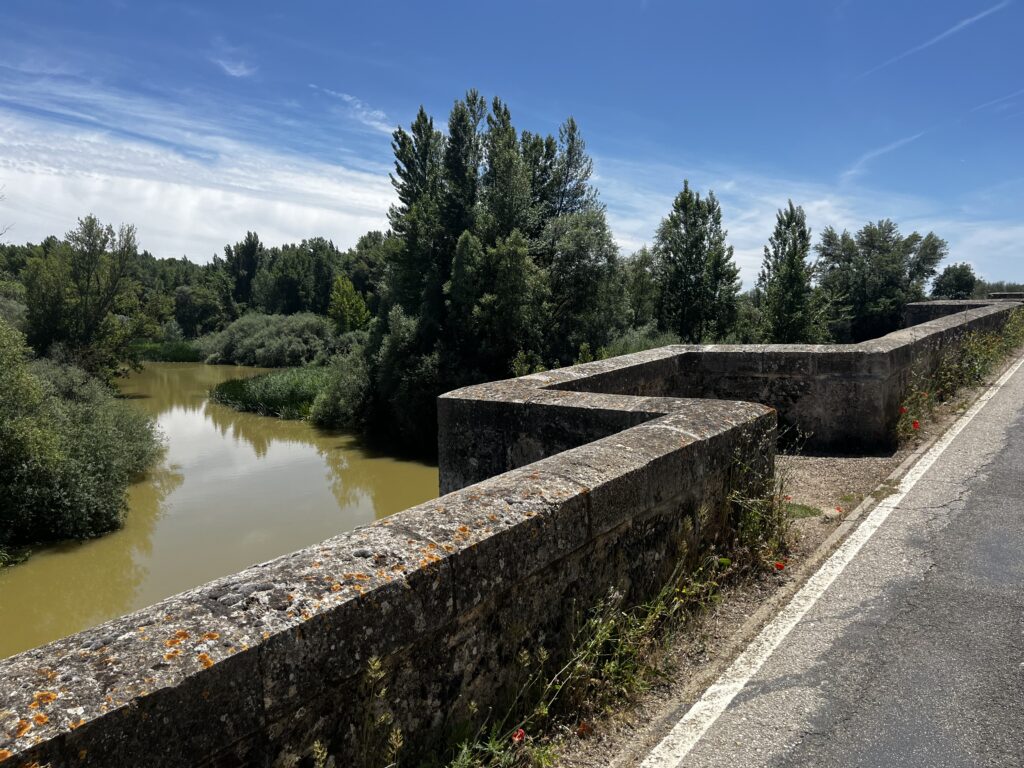
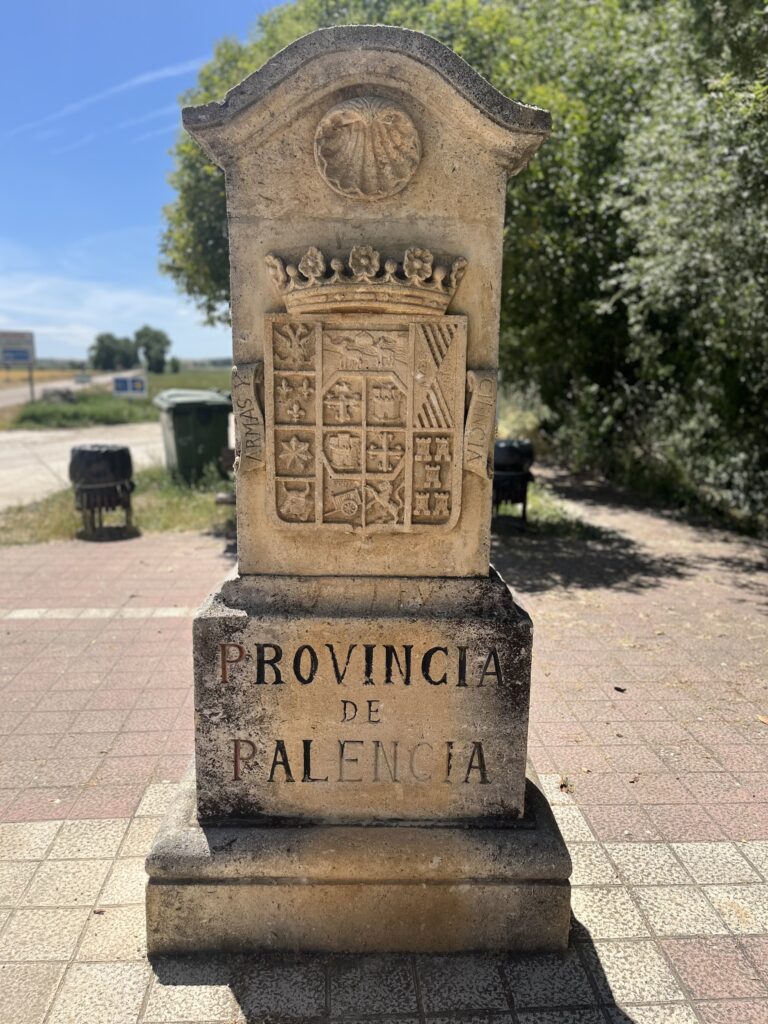
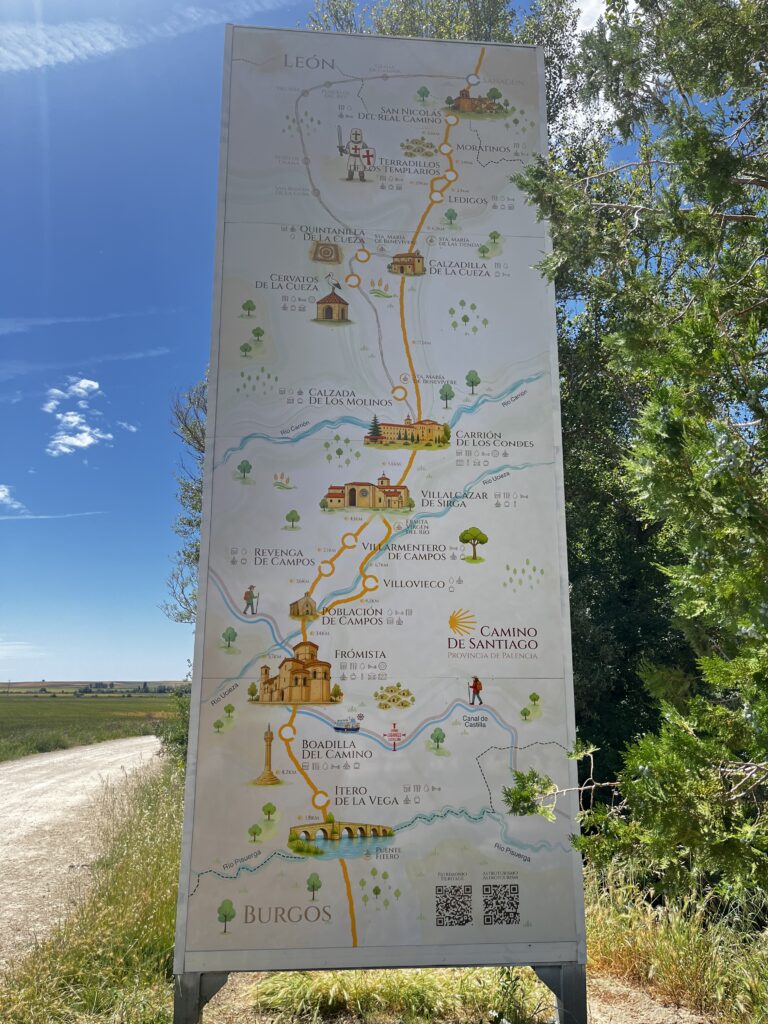
Just after this we crossed the Río Pisuerga on a long bridge mostly built in the 16th century. Here we left the province of Burgos and entered the province of Palencia.
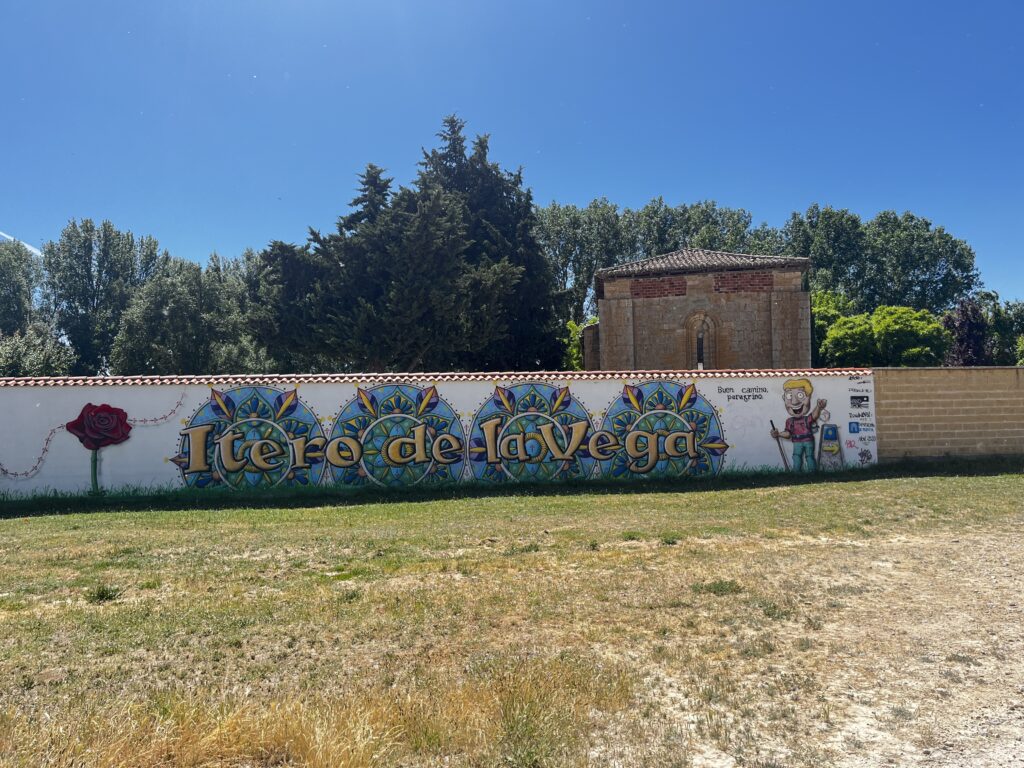
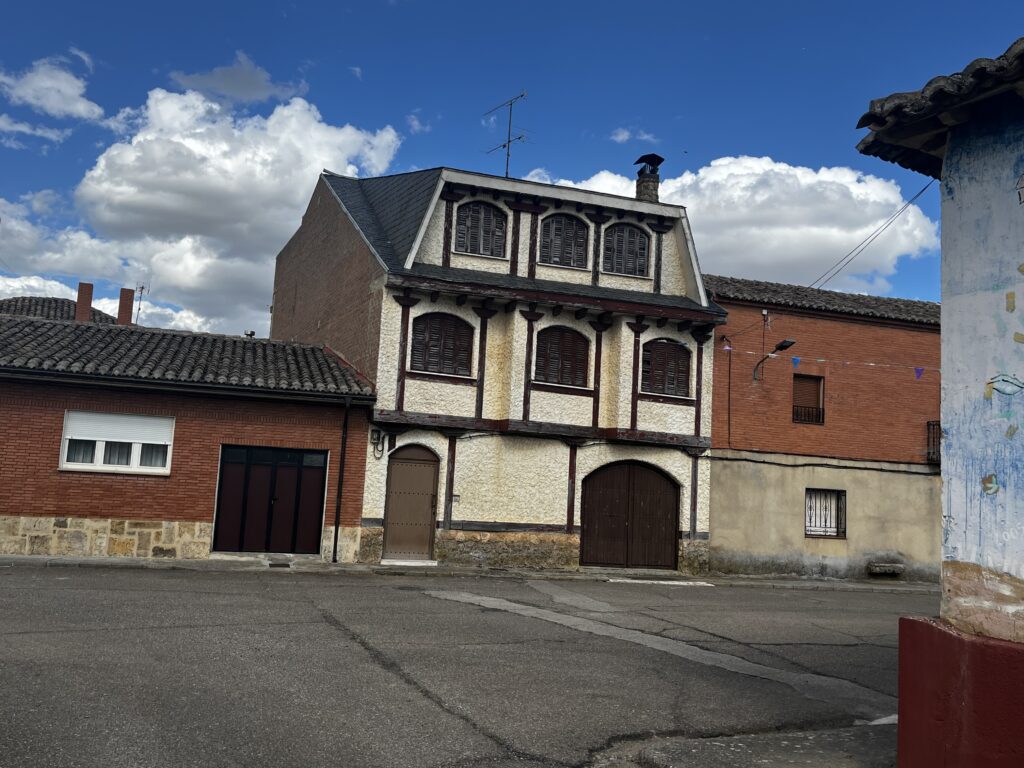
Now the Camino was a broad flat gravel road the last couple of kilometers into Itero de la Vega. We arrived in this farming village just about 3:40. The first order of business was to secure beds for the night. Easily done. There are three albergues in town, and the one we chose was mostly empty. A young Ukrainian woman checked us in.
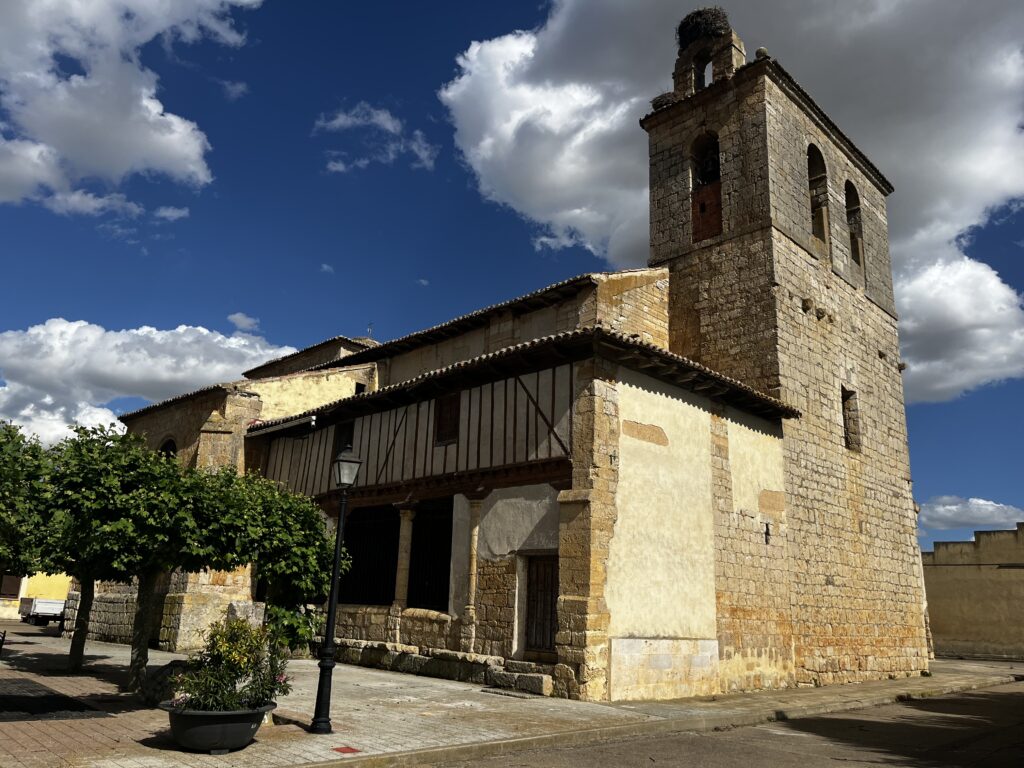
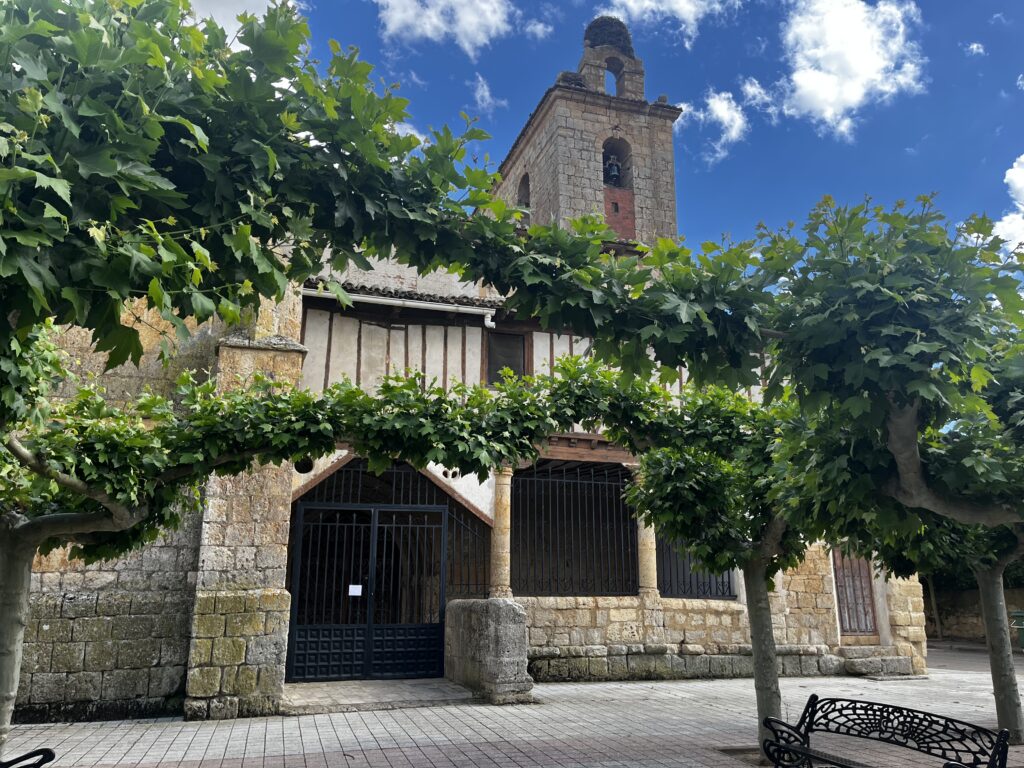
And I suppose I don’t really need to say this, but the village church was locked. It has an extremely unusual exterior. The original stone church appears to be supplemented by a medieval narthex, complete with timbered daub and wattle construction. I can’t recall having seen anything quite like this before.
Communal dinner with some other pilgrims at the albergue. Met two fellows from the Netherlands and a lady from Taiwan.
Date: 04 June 2026
Place: Itero de la Vega
Today started: Hornillos del Camino
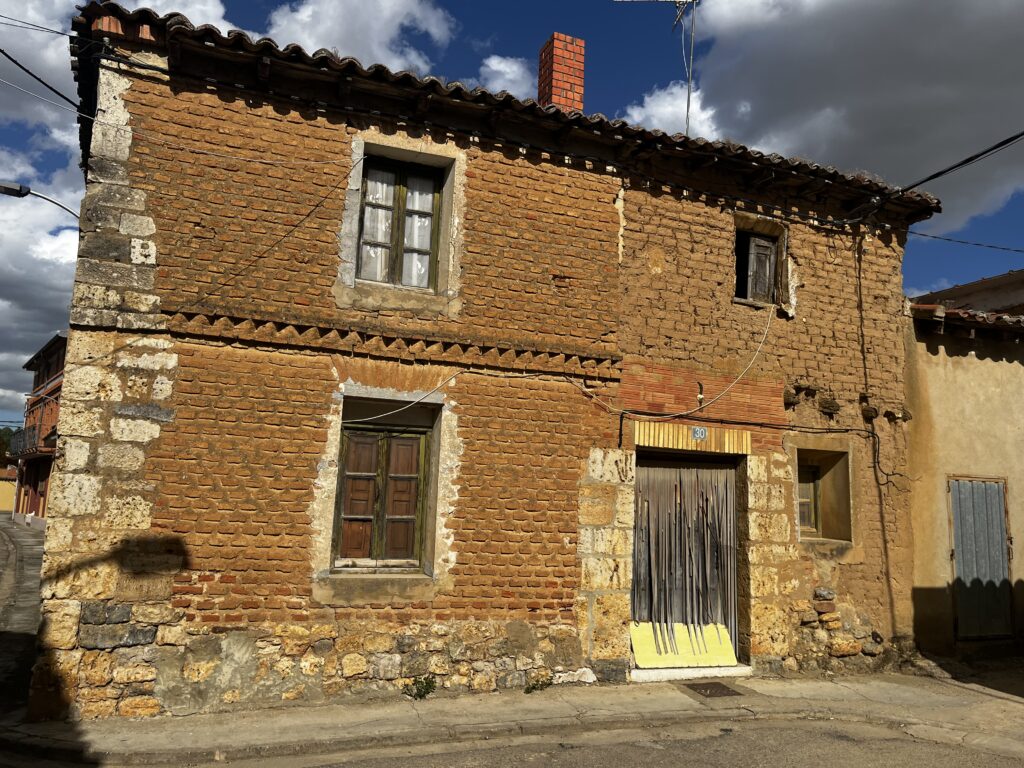
Today’s Photos!
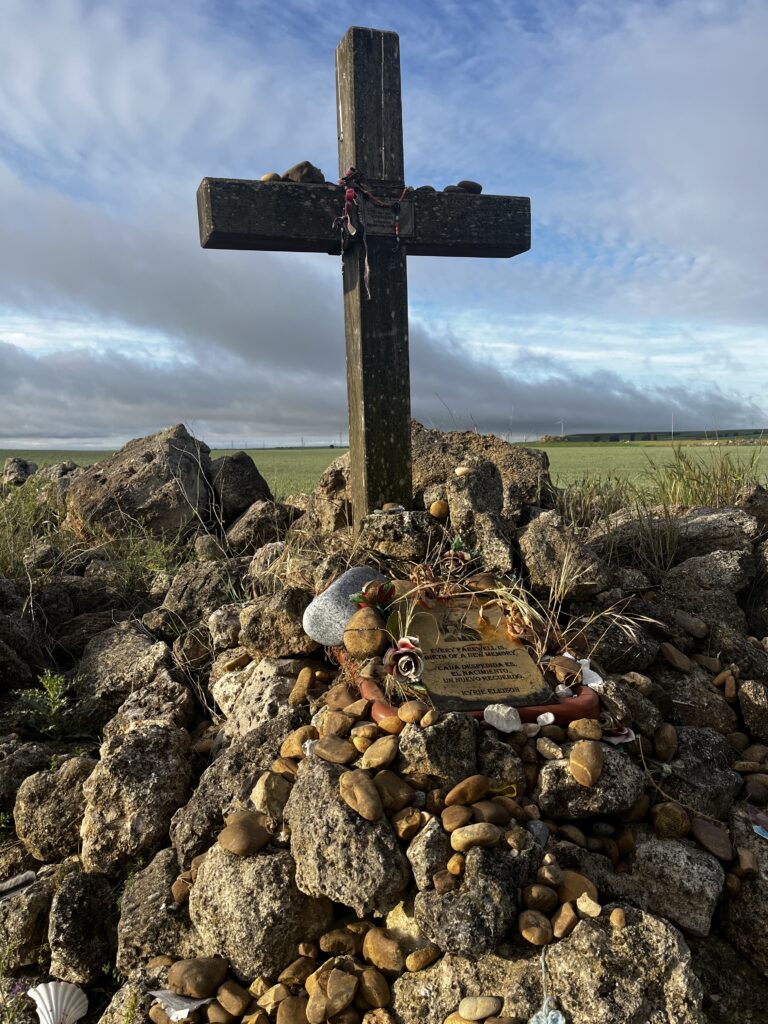
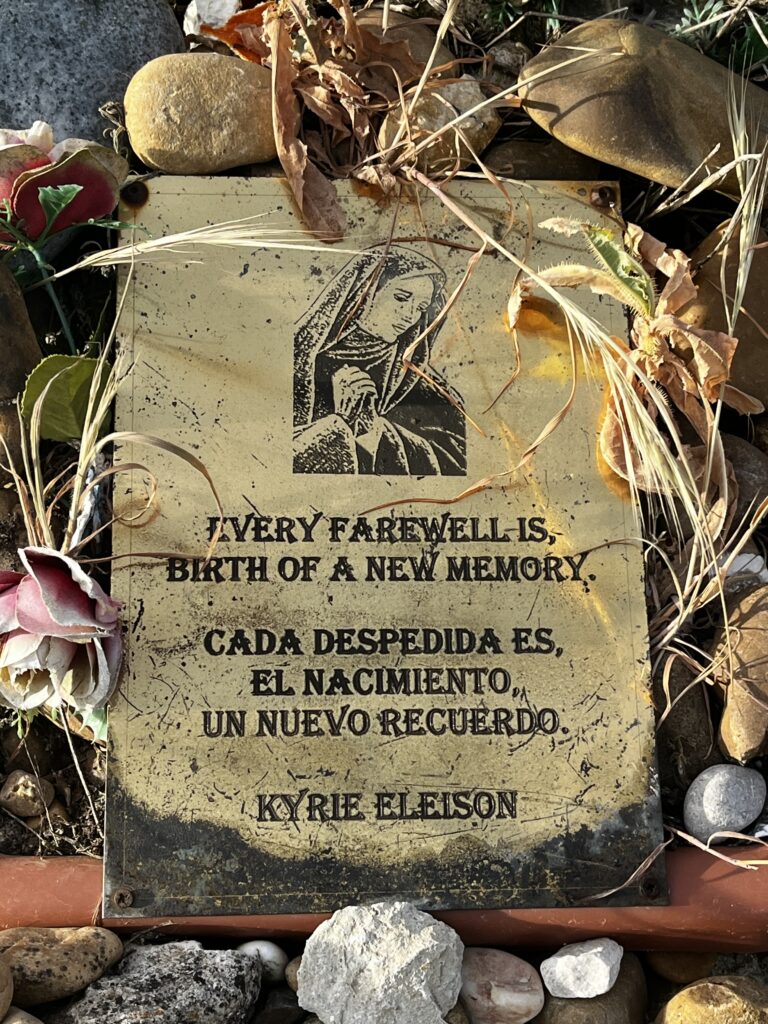
Loved that adage “every farewell is the birth of a new memory!”
How beautiful are your pictures, how amazing is that walk you do. I’m glad you met my brother. Both of you seem to appreciate the time you spend together. This Camino is wonderful.