
Via Lemovicensis: When the Rain Comes
We had five pilgrims in the gîte last night, three French (Christian, Luc, and Louis-Marie), Philippe the Belgian, and me. That’s pretty much been the ratio through most of this Camino: mostly French, with a minority of other Europeans, primarily from Belgium and the Netherlands… and me. I know that there is another American (from Seattle, no less!) walking about a week behind me, and I’ve heard that there’s an Australian walking a few days ahead of me.
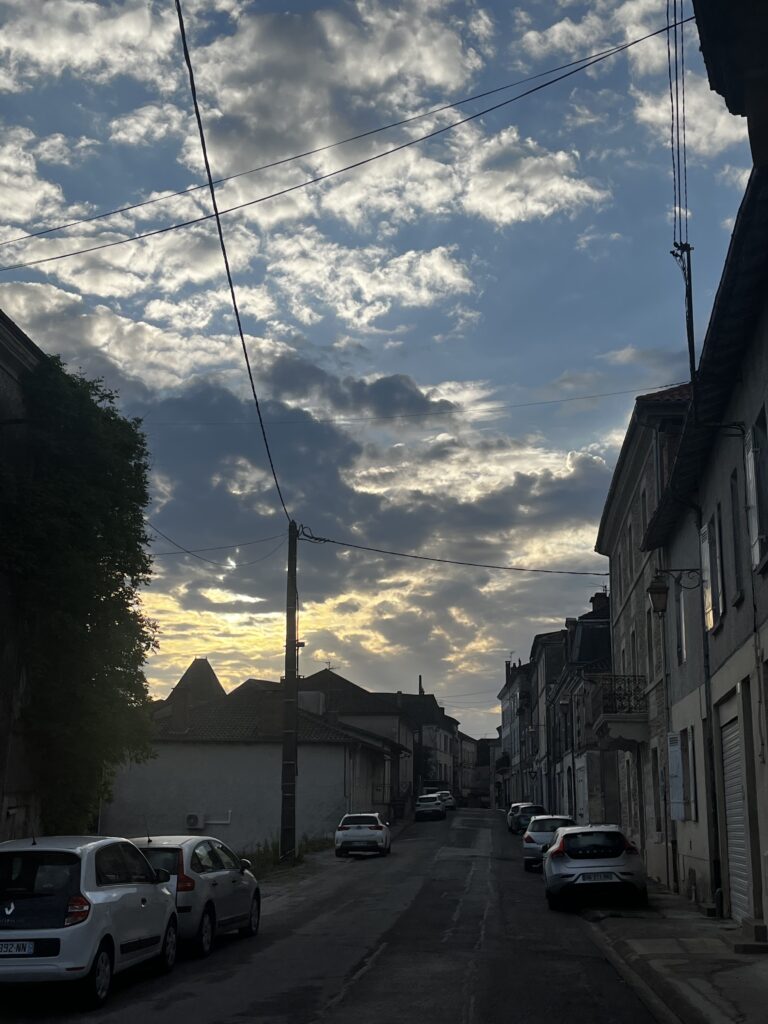
Although I was ready to leave before 7:30, I dawdled and didn’t get out the door until very nearly 8. It was a cool, clear morning, though traces of yesterday’s storm clouds still filled about half the sky.
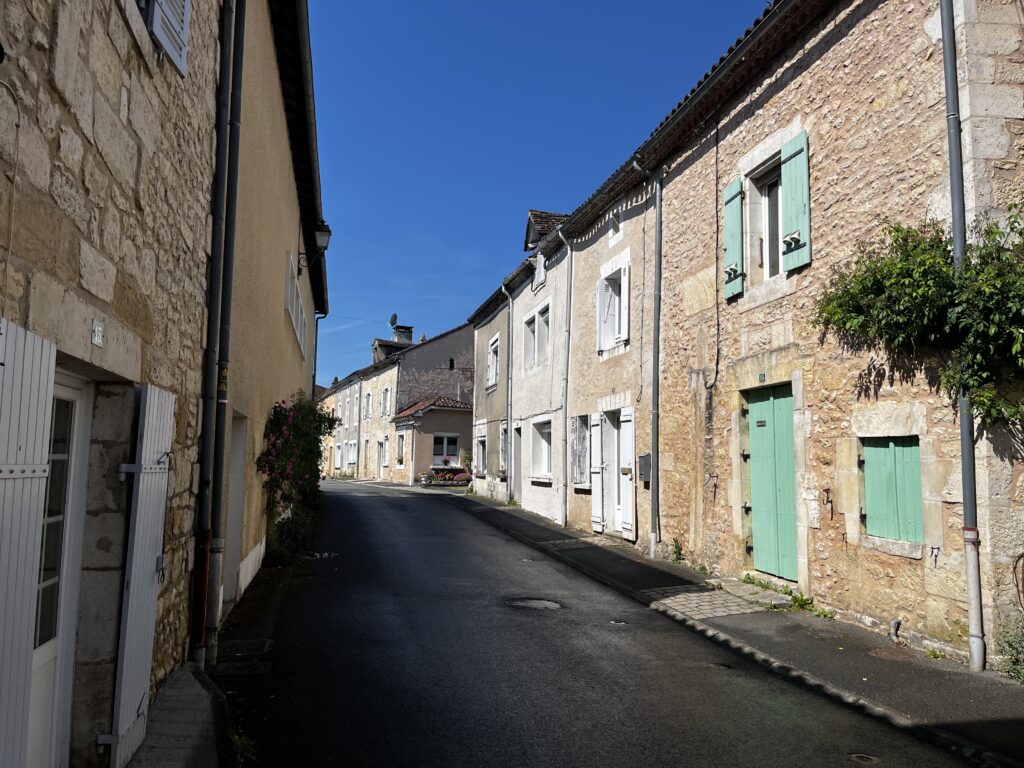
May 1 is a national holiday in France, and as I walked through the town I didn’t see a single open shop – not even the boulangerie. There was very little traffic.
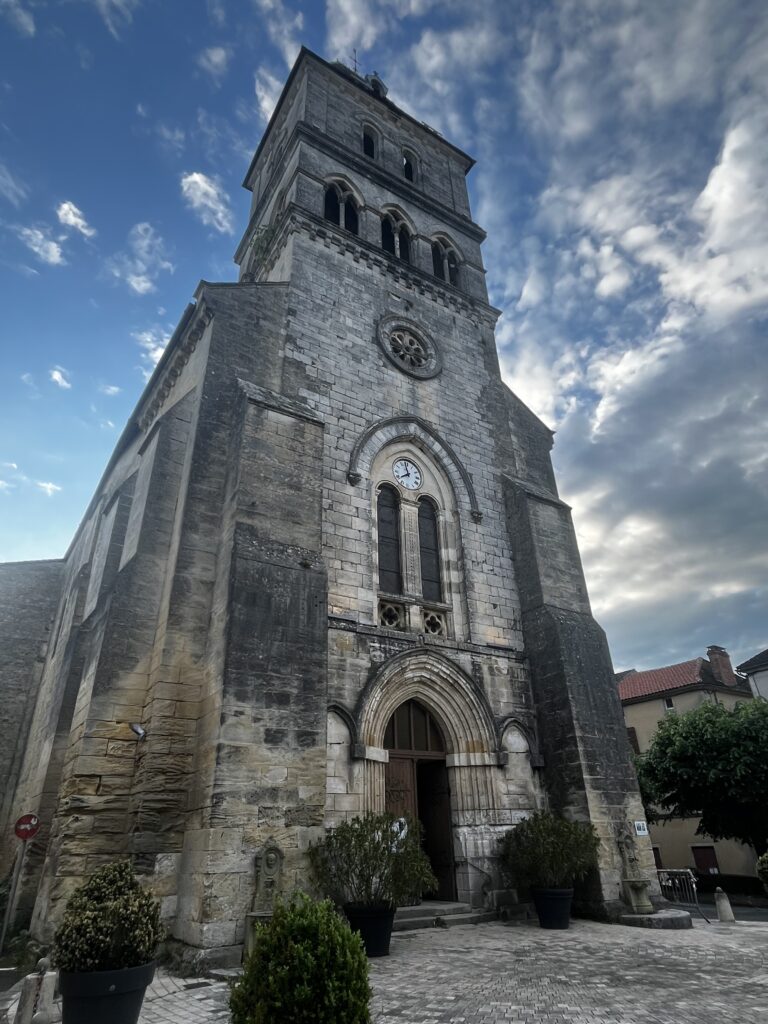
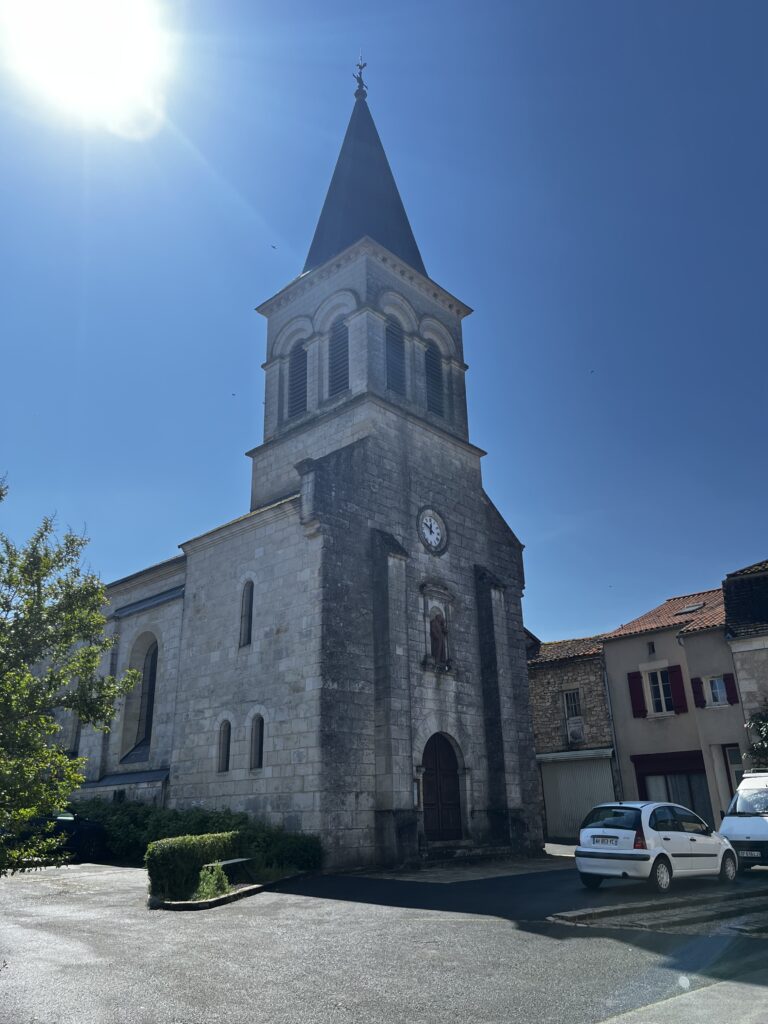
The church, however, was open. Given that today was the feast of Saint Joseph the Worker, I had strongly suspected that this would be the case. So I popped in and prayed Lauds in the church.
Afterwards, the town was a little more alive – I actually saw a couple of people walking in the streets.
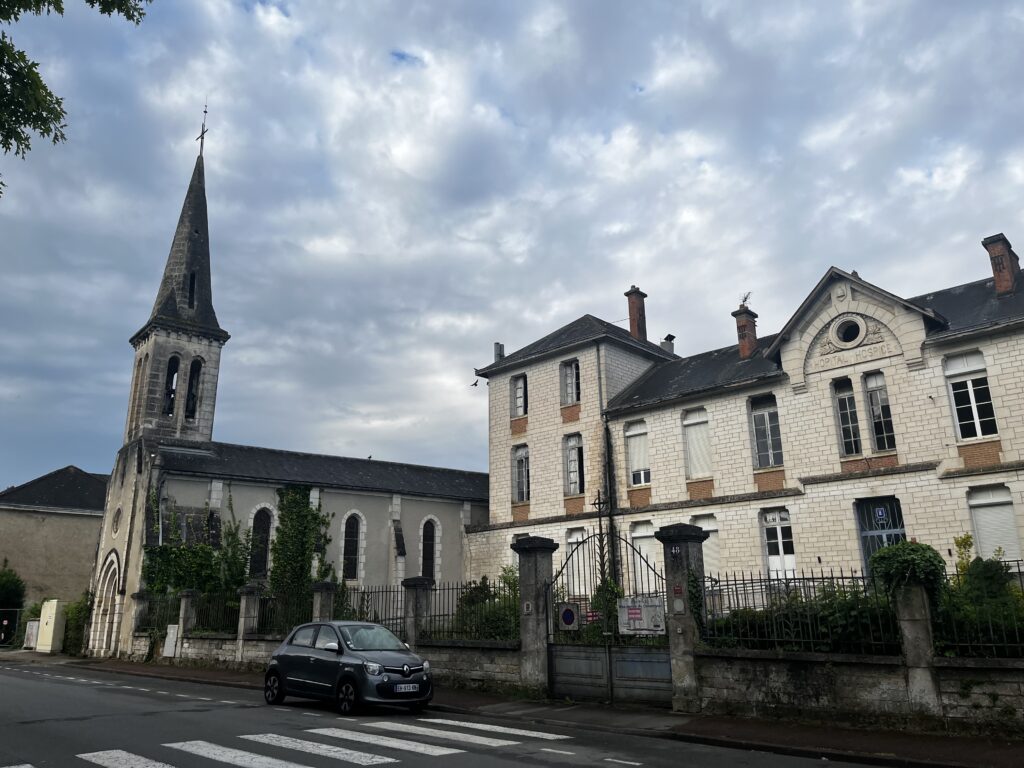
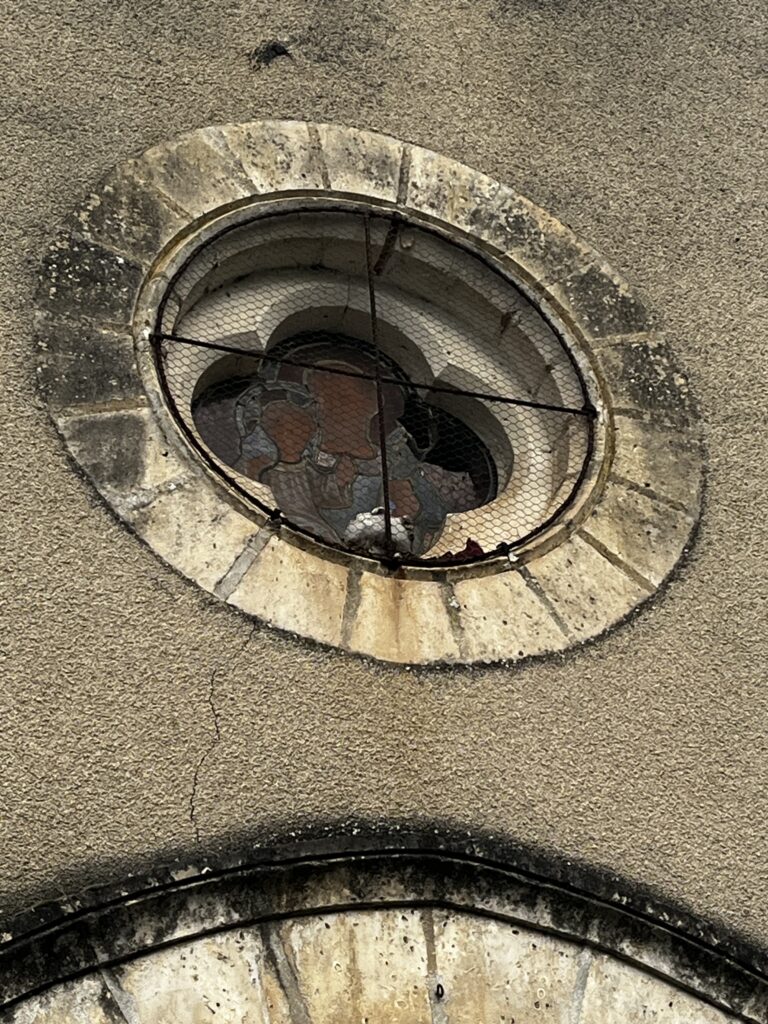
A few moments later I passed another church – actually a private chapel attached to an old hospital/hospice which is now apparently privately owned. Neither building was in very good shape; one of the stained glass windows in the chapel was broken, and a pigeon was nesting in it.
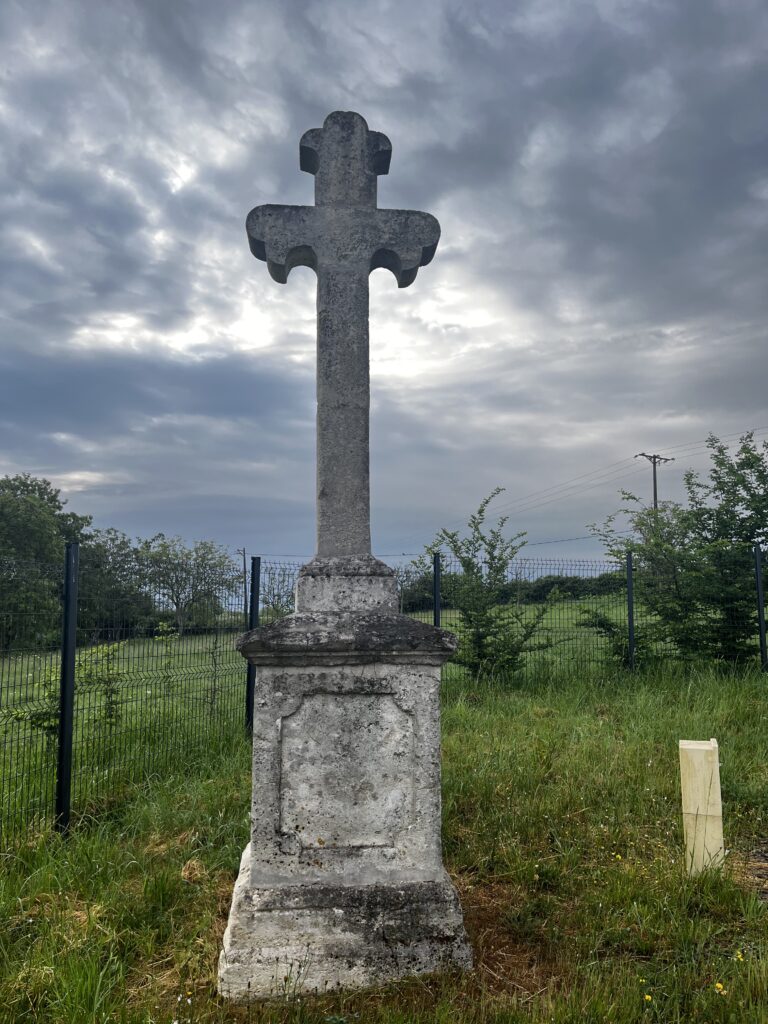
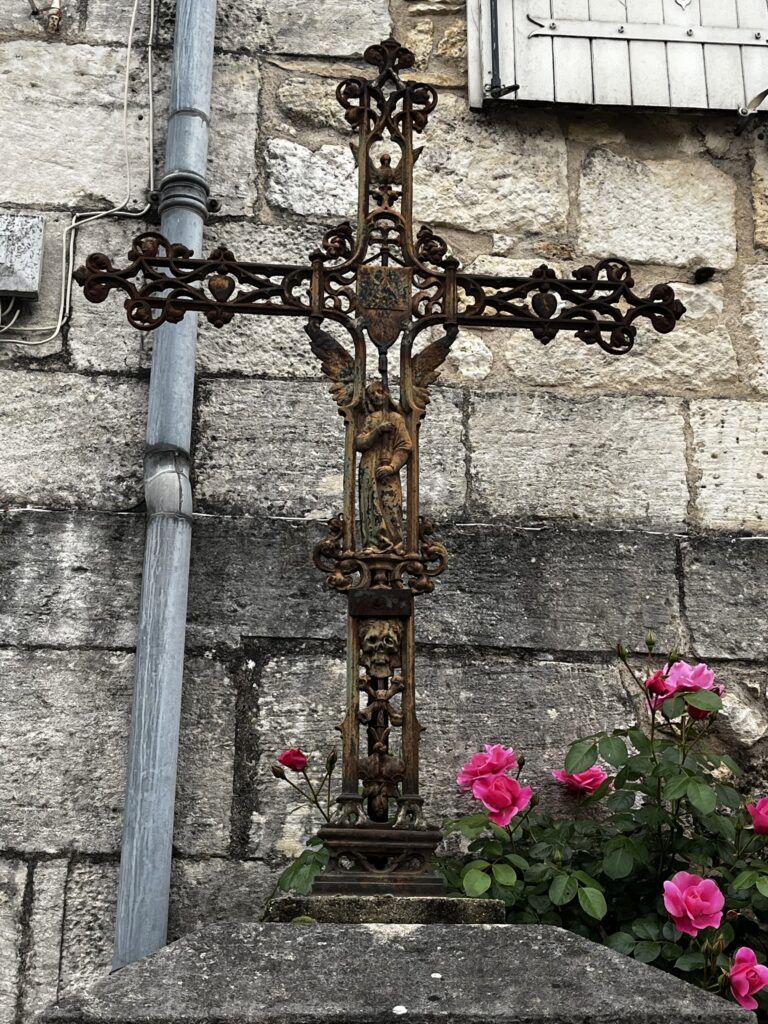
On the way out of town, I passed a stone cross which may or may not have been a cross of Saint James. Certainly the next little suburb I came to was called Croix Saint-Jacques.
The sidewalk soon ran out, and I was roadwalking again. By 8:35, I had already missed a turn and had to backtrack. At least, I thought I had. Once again, the GPS and signage on the ground were at variance. In this case, I decided to stick with the signage and continue walking on the road.
The GPS would have had me go through an overgrown path. Normally, I’d be up for this, but it rained quite heavily last night and I saw no way of emerging from that path with dry feet.
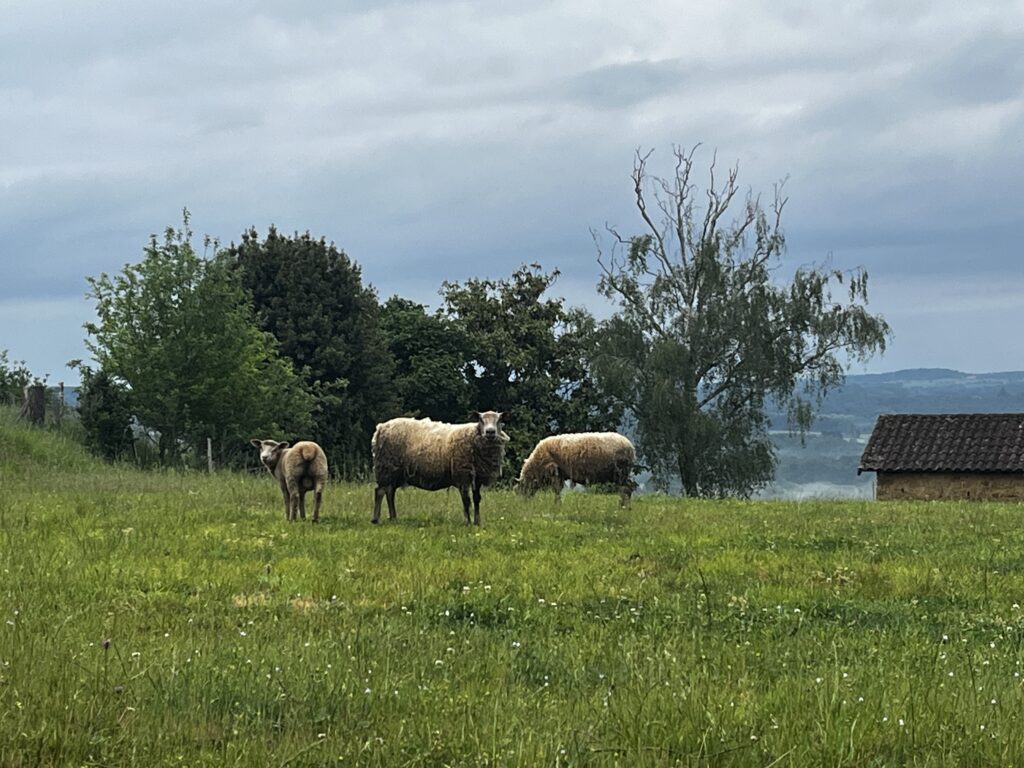
There were still quite a few houses along the road, though the forested valley stretched out just beyond them on my right. It wasn’t all suburbia, though. At one point a large yard on my left contained a handful of grazing sheep.
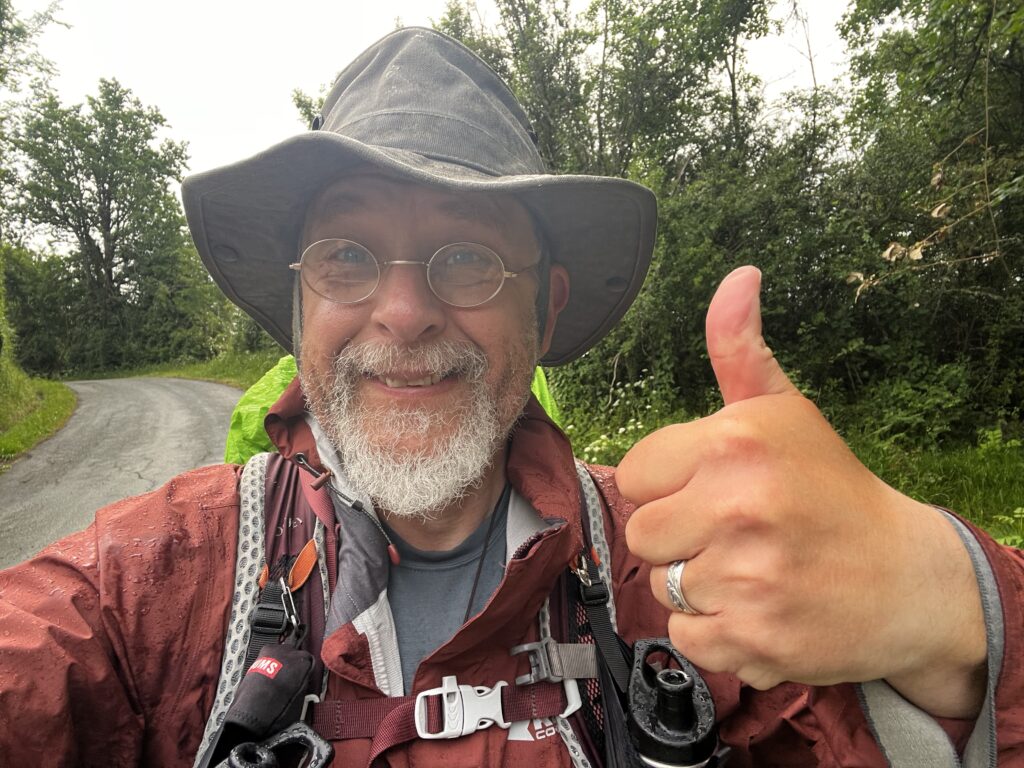
Sometime before 9 AM , as I was making the transition into open countryside, it started sprinkling. The forecast, of course, had said it would not rain. I put on the pack cover and my rain jacket. The sprinkling soon turned into a steady gentle rain.
This was basically the weather I had been expecting for my entire trip, but this was the first time it had rained in any serious way while I walked.
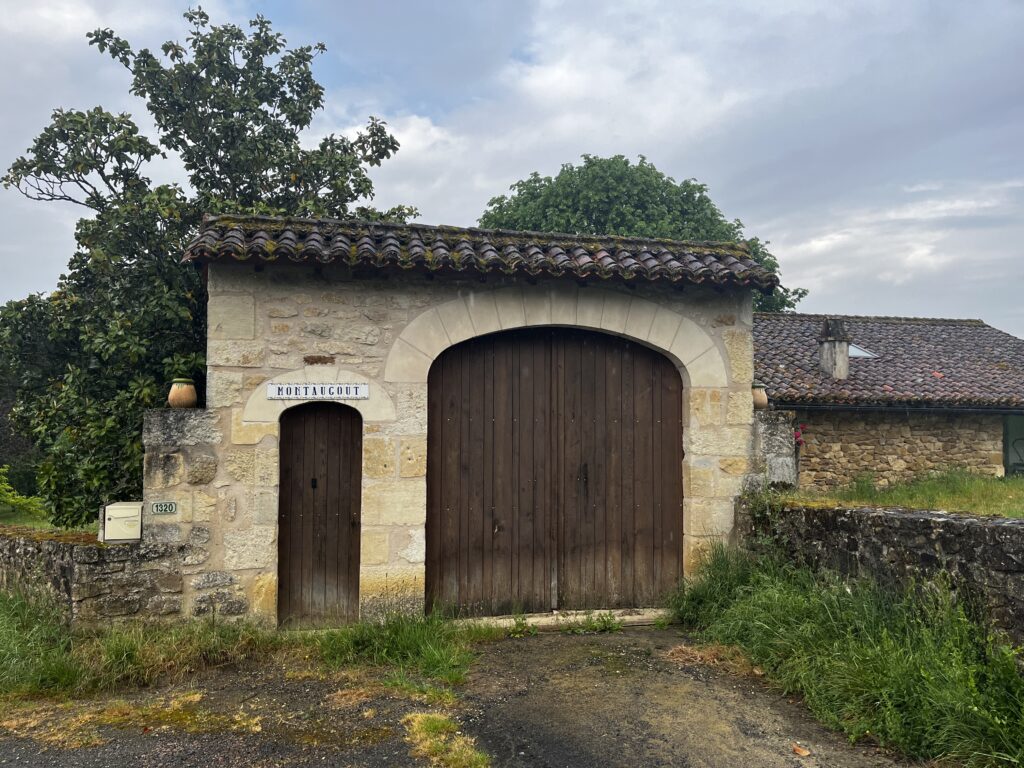
At about 9:15 or so, I passed Montaugout. This is listed as a hamlet on the maps, and indeed there were four or five large houses here, but they were behind a locked gate like some sort of feudal estate. As I walked past, I did see an open access road around the back, and there were a few other houses a little further down the road that seemed to be attached to someplace called Château de Breuilh.
I confess that walking in the rain made me slightly maudlin. We’re coming up on the tenth anniversary of the end of the longest Camino that Francine and I ever walked together. It weighs on me, because the one I’m walking now was supposed to be its sequel.
It’s just too much of a cliché to be crying in the rain.
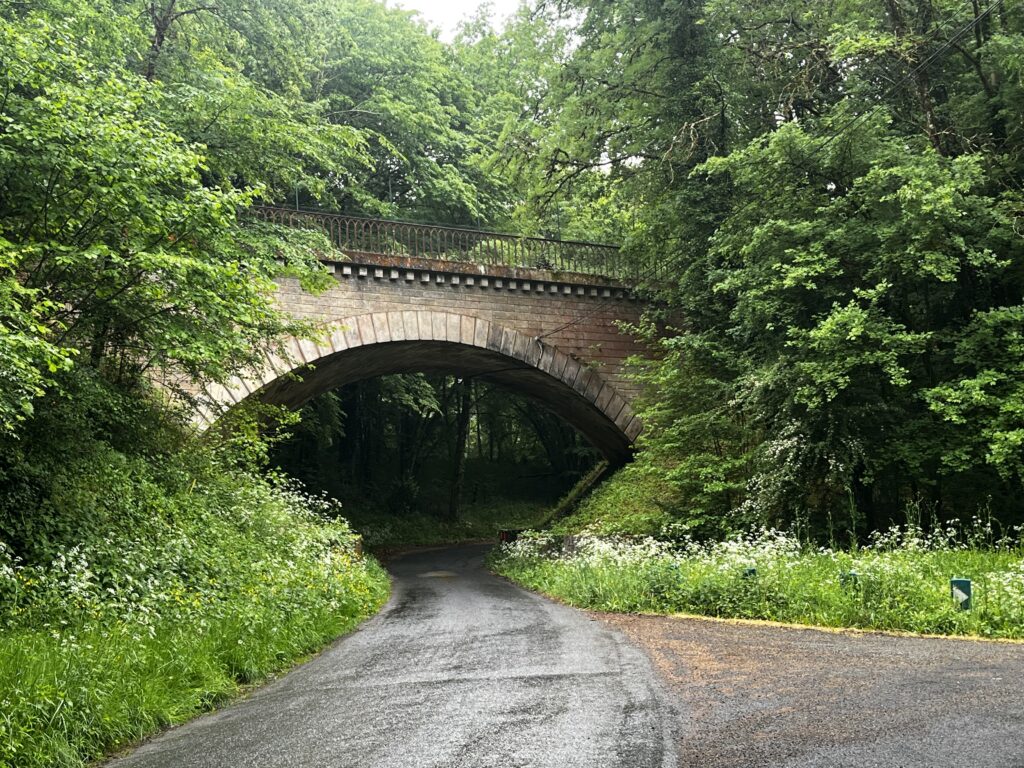
About 9:30, I walked under an arched bridge and almost immediately thereafter into the forest on a rough stone path.
It soon transitioned to grass and dirt, although the stones never really went away. I could see Luc and Louis-Marie behind me, slowly gaining.
Soon enough, it was back to road walking through the prosperous farming hamlet of La Contrarie. I’m not sure I’ll ever get used to the sight of solar panels on old stone farm houses.
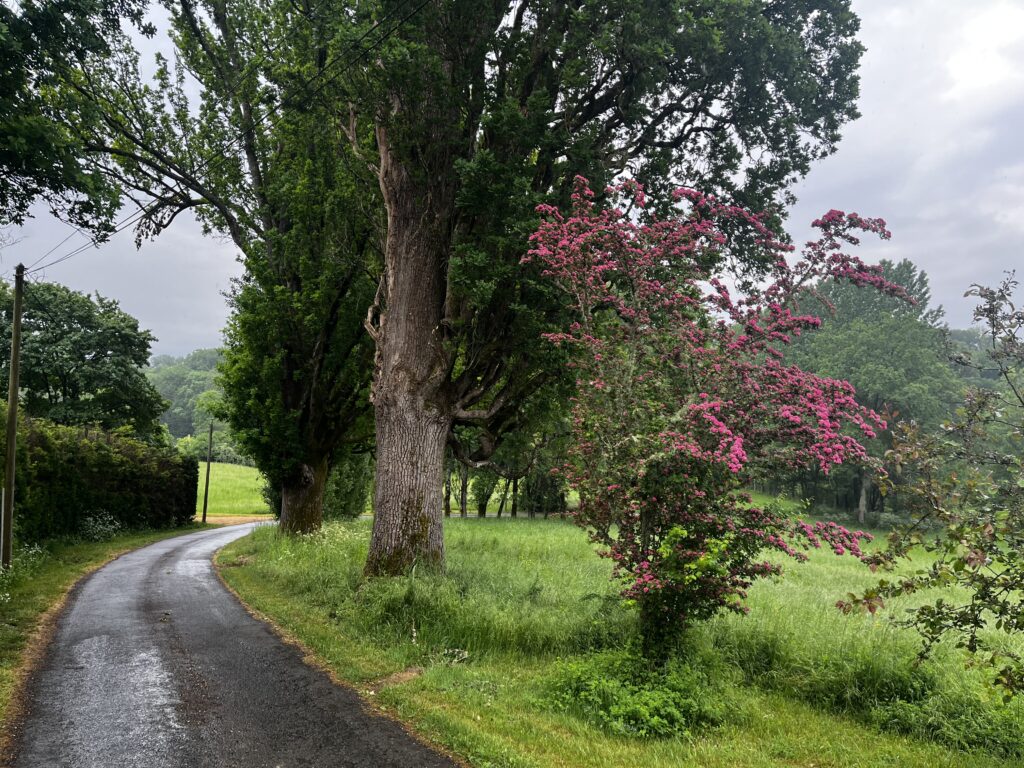
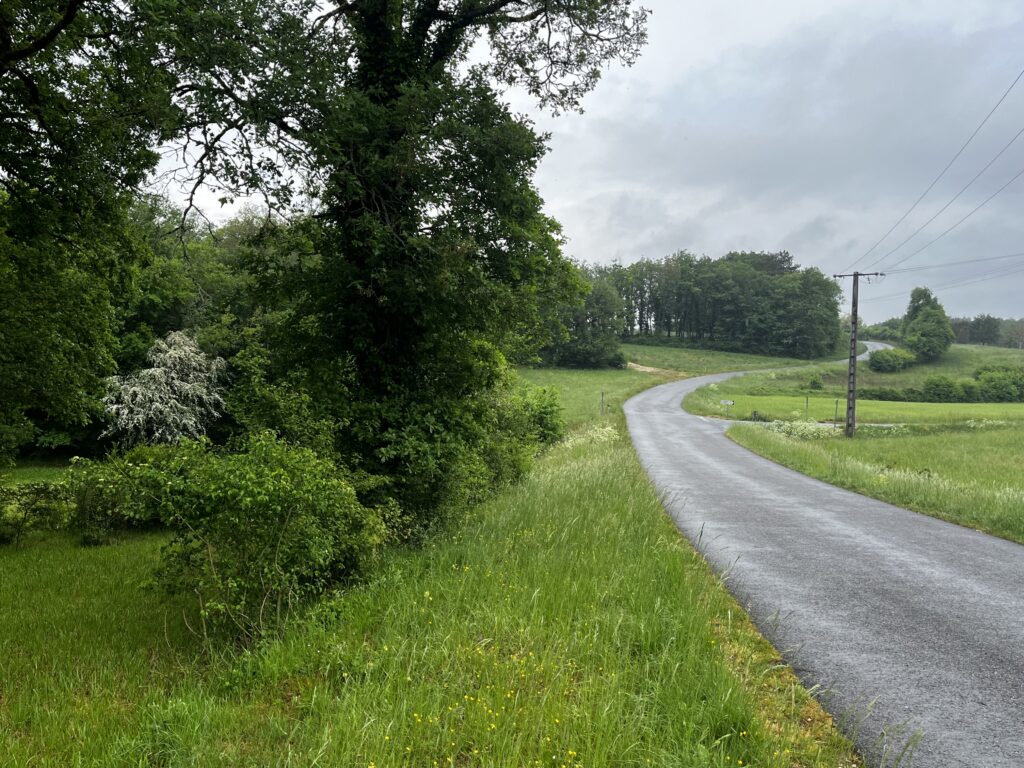
The road began to deteriorate as it snaked off into the countryside. Several long sections were just dirt and gravel. The rain by now was just the occasional sprinkle.
At about 9:50, the Camino turned off the by-now dirt road onto a path through the trees to join up with an asphalt road. Perhaps ten minutes later, the Camino turned onto a smooth dirt road that was a delight to walk.
By 10:10, the rain was back, and harder than it had been all day.
I was now looking for something in the way of a shelter where I might attempt second breakfast. I passed by any number of farmsteads, but I didn’t really fancy ducking into somebody’s barn.
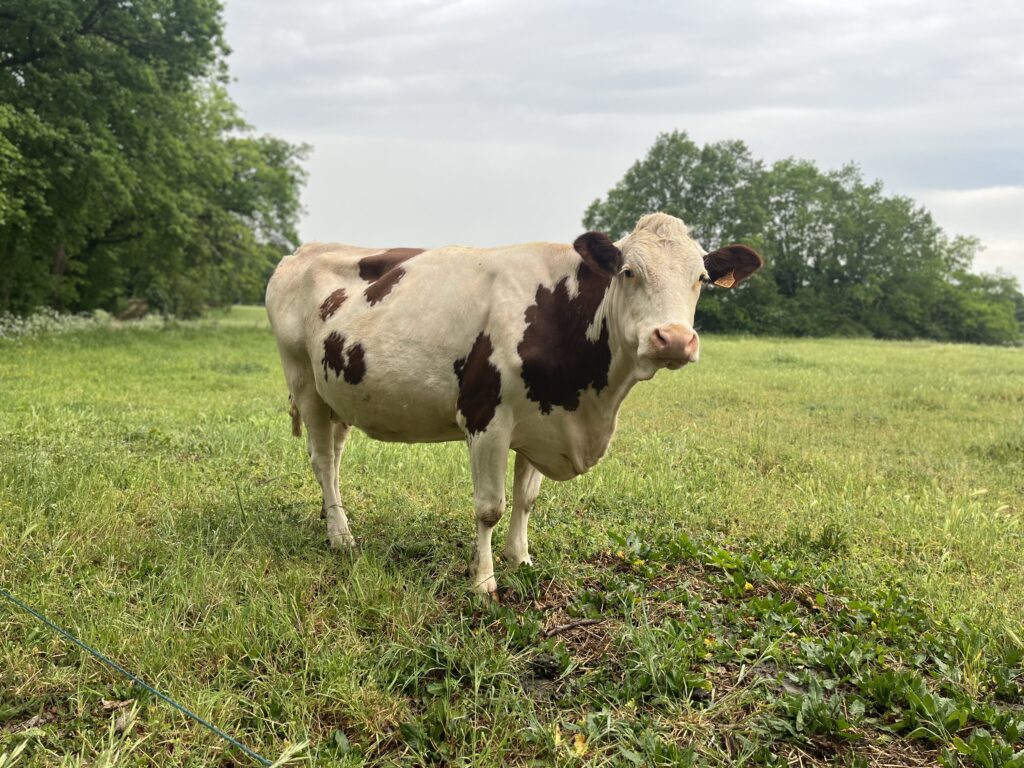
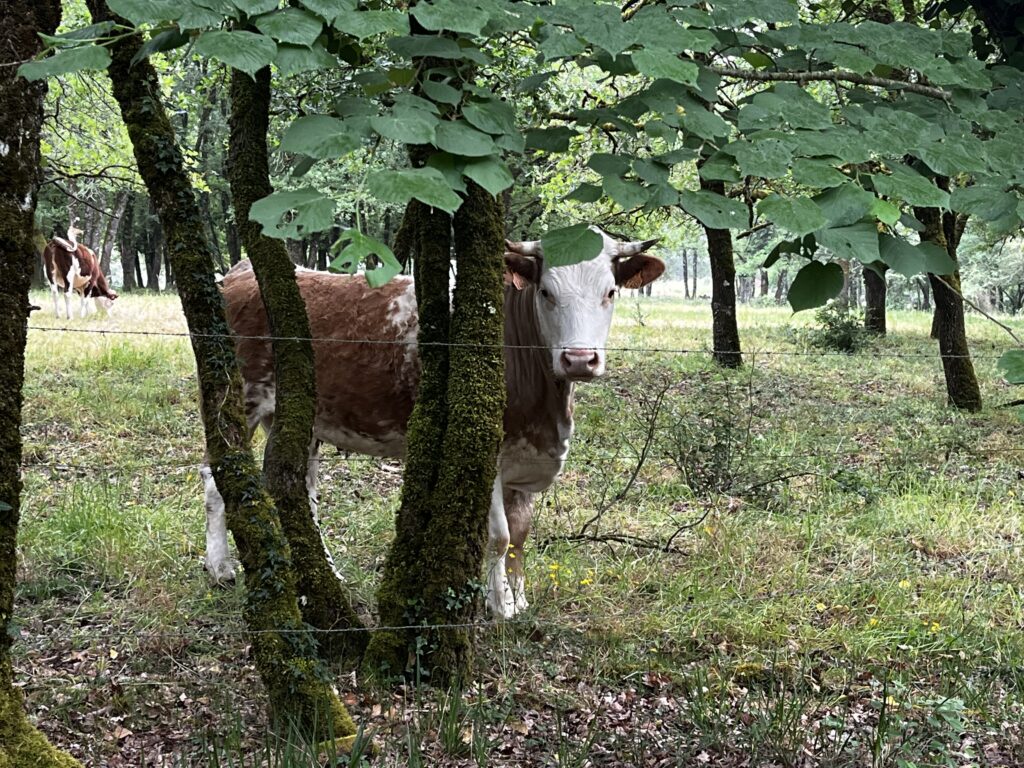
At one point I passed some forest cows, which brought back fond memories of the Via Podiensis.
At about 10:25, the Camino sadly returned to the asphalt. The rain had slacked off a little at this point, but was very steady. There was no blue to be seen in the sky.
I turned around at the top of a long hill expecting to see my French friends a couple of hundred meters behind me, but they were nowhere to be seen.
The rain stopped as I passed through an unnamed hamlet just before 11 AM, and there were suddenly blue skies. I grabbed a quick snack out of my pack.
Just a few minutes later, the Camino finally turned off the asphalt and back onto a dirt road. The road turned to grass at about 11:15 as I passed through a little unnamed hamlet. It was starting to get warm now, so I took the opportunity to take off my rain jacket.
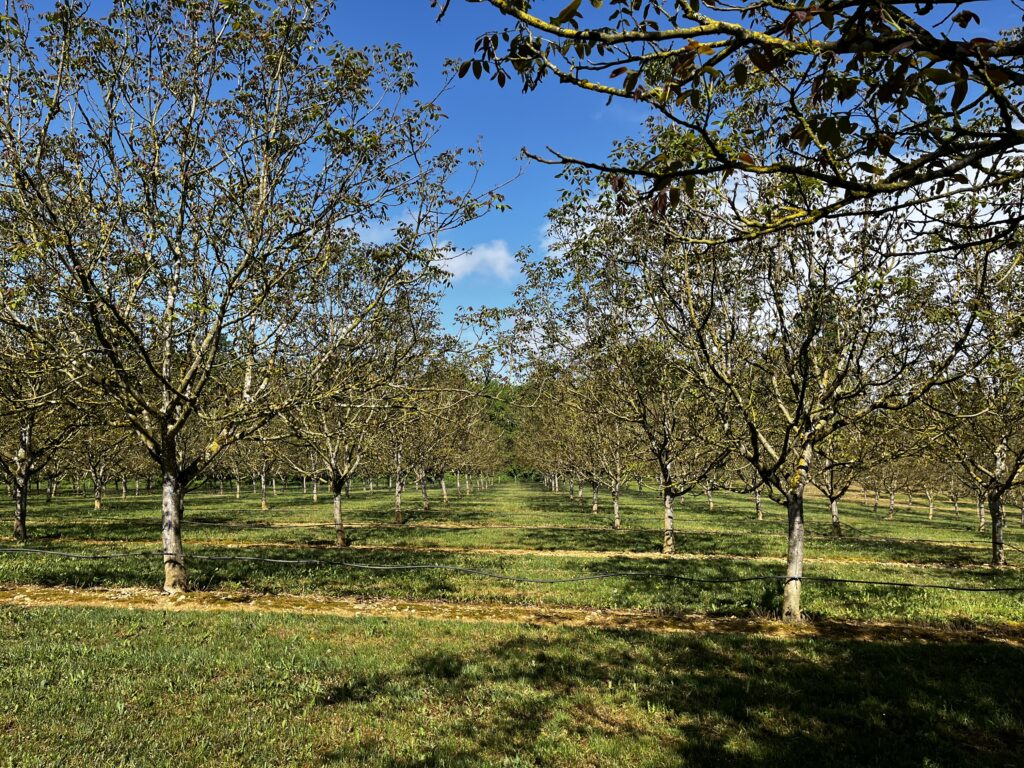
The Camino then led me through an orchard and into the suburban ring around the village of Négrondes.
My two French friends caught up with me in the orchard. I got lost, and walked 100 m or so in the wrong direction and had to backtrack.
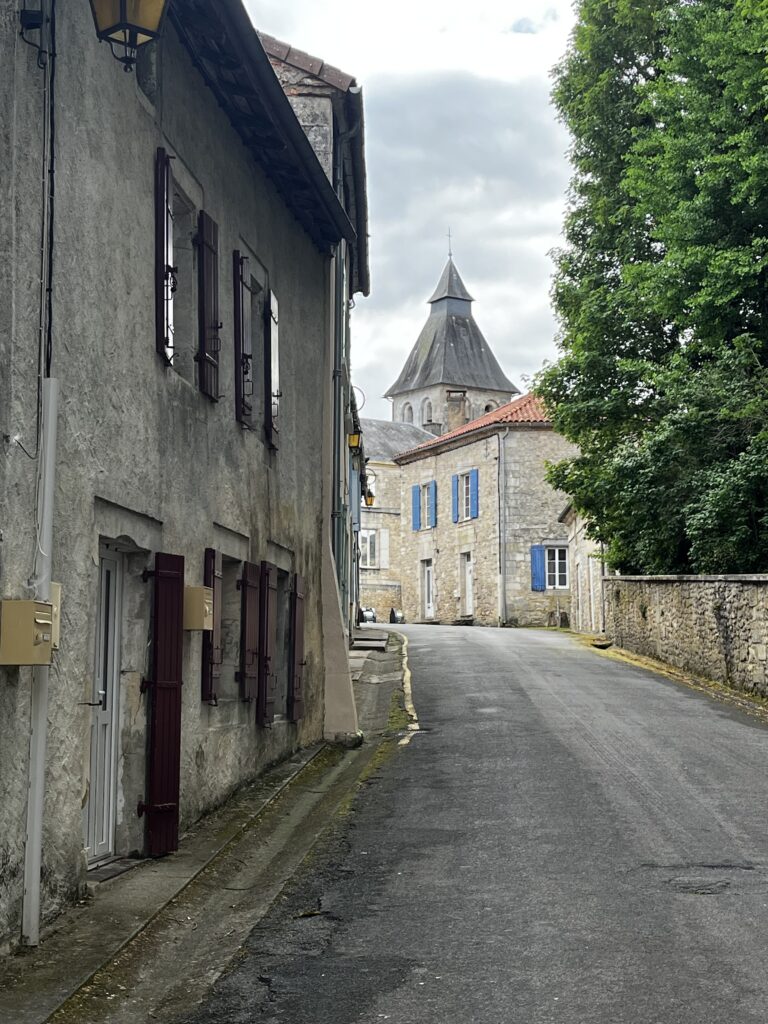
It was like a ghost town: everything closed, nobody on the streets.
We arrived at the locked church at 11:55 and settled down on a nearby bench for lunch: bread, sausage, cheese. There was hardly a cloud in the sky. They left considerably before I did. I stood away my rain gear and was back on the road at 12:20.
I left the village on a road half gravel and half asphalt past some new housing construction. The village is expanding! I however, was soon walking into the hilly countryside on a gravel road.
I passed a lady walking her dog through the fields, and shortly after this the gravel road became dirt.
By 12:50, Camino had once more turned onto an asphalt road as I walked through the farming hamlet of Le Pouyet. Once I was past the houses and barns (and cows), it was back to gravel and stones and dirt.
The wind was picking up a little bit, and there were dark clouds ahead, but they seem to be moving past pretty quickly.
Yes, I’m aware I spend in an ordinate amount of time talking about the road surface and the weather. Those are two of the biggest things that affect the walk.
Eventually, the road just sort of stopped, and the Camino continued on a dirt rut through the grass.
In the distance, I heard the discharge of a firearm.
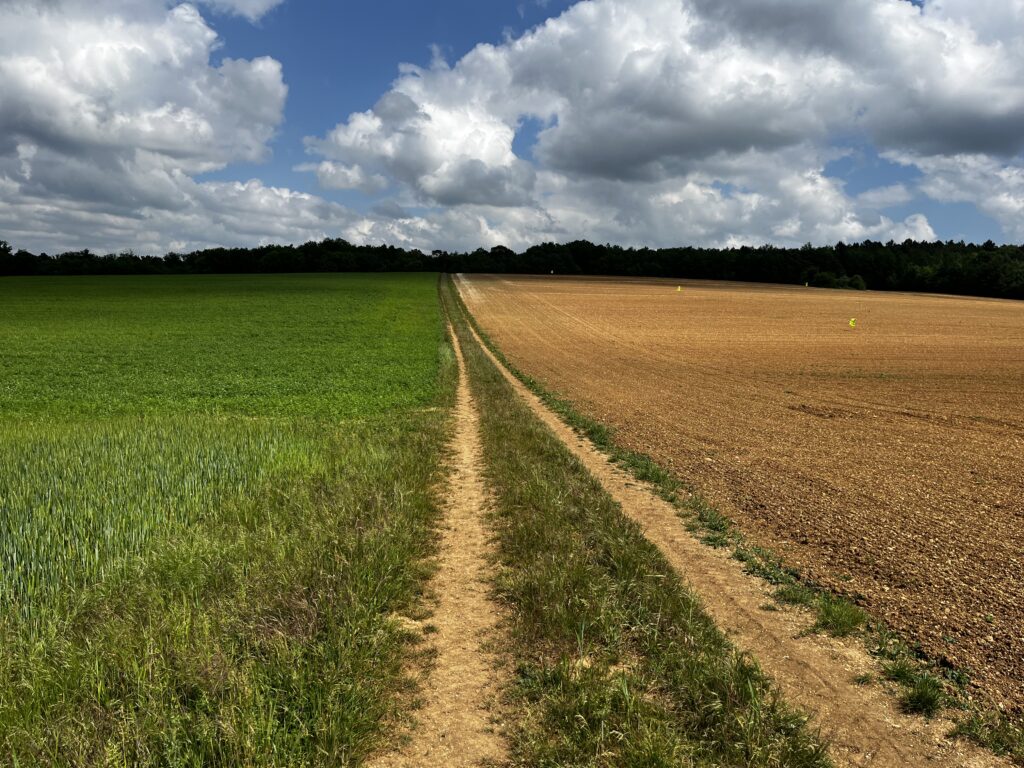
After running along the tree line for a bit, the path took a sharp turn between two fields, becoming two ruts in the process – a rough sort of farm road. The difference between the two fields was stark: one plowed and brown, the other green with plants. I was swarmed by dozens of little lavender butterflies.
Once I passed the massive farm buildings, it was back to asphalt.
Another shot rang out, much closer this time, and I about jumped out of my socks. I think it’s some sort of timed air gun to frighten away the birds from the fields.
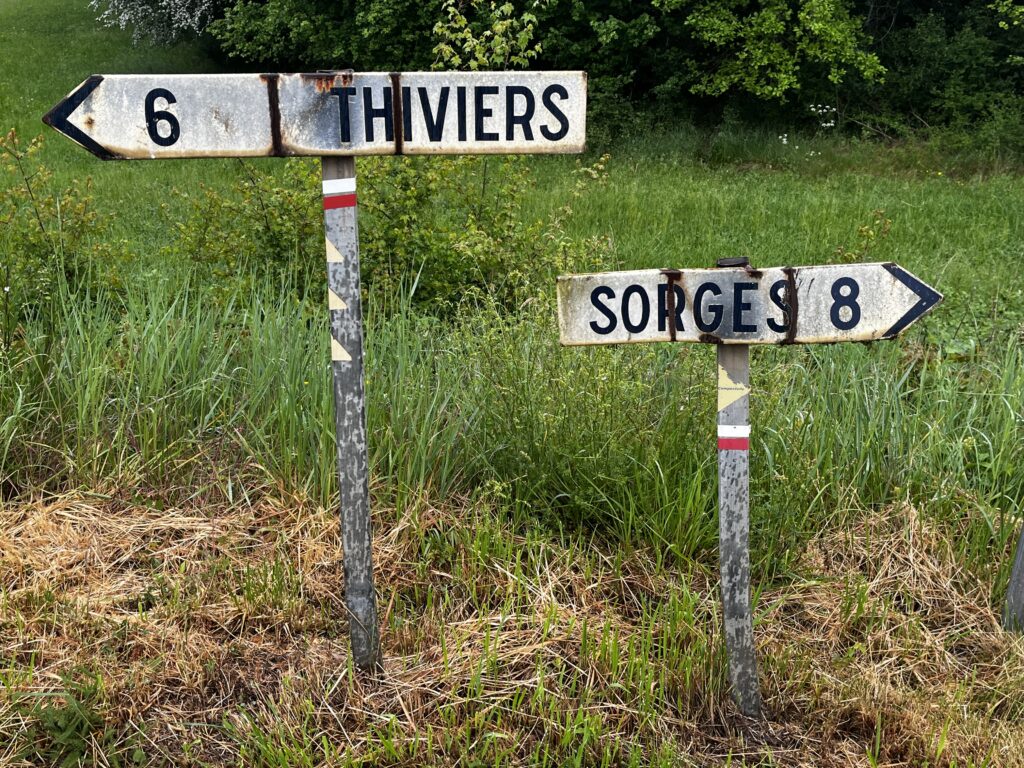
Just after this, the village of Sorges came into view. First, I passed through the suburban hamlet of Les Palissoux.
By 1:30, I had entered the village.
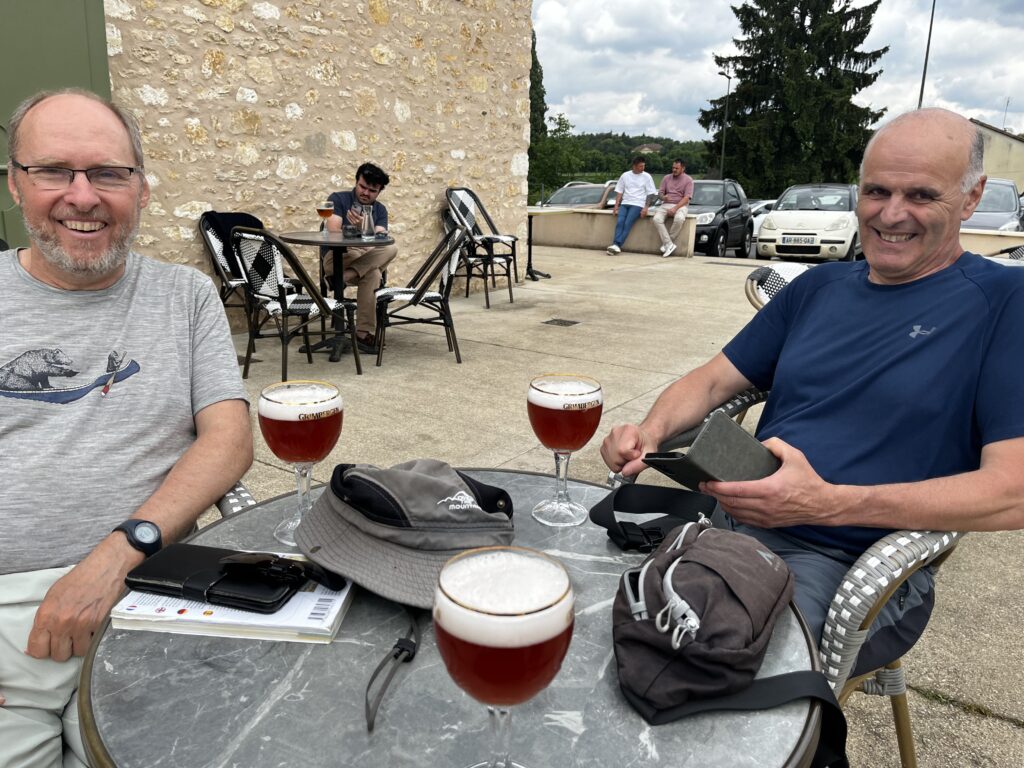
Within ten minutes I had joined Philippe and Christian for a beer at what I can only presume is the only open bar in the county.
We were soon joined by the rest of last night’s pilgrims, and now there were five of us sitting around a little table on the terrace. The gîte apparently did not open until 4 PM. We had a bit of a reprieve when the two hospitaleras joined us, making seven around the table. We were able to get in at 3 PM.
I might have taken a little nap.
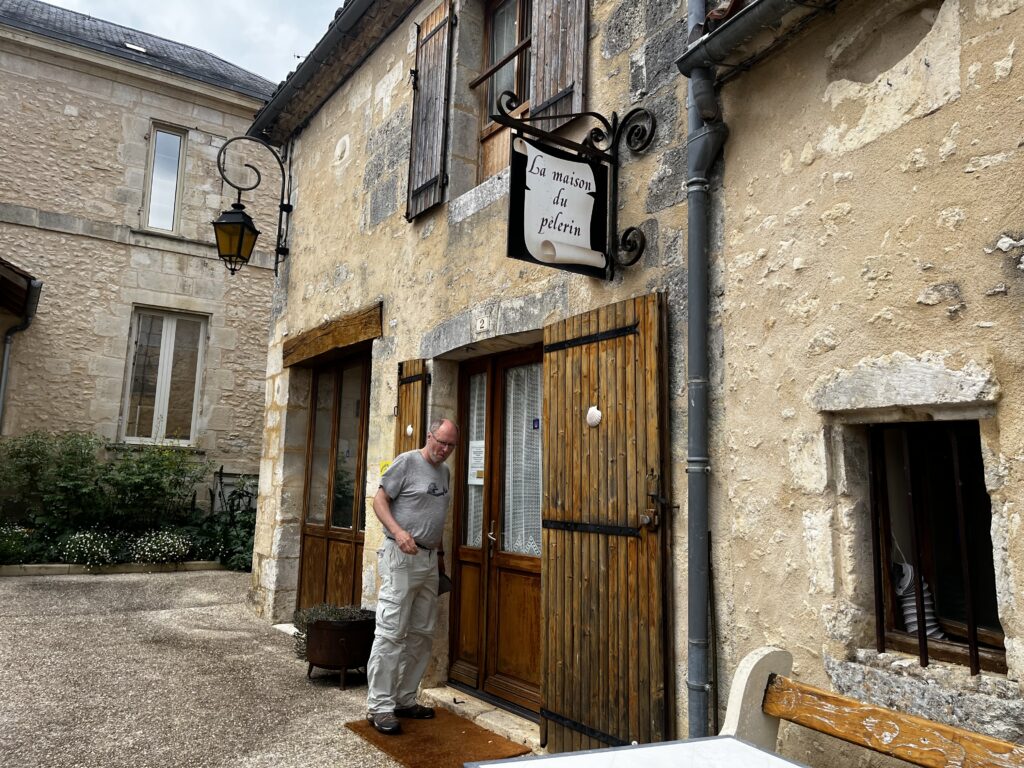
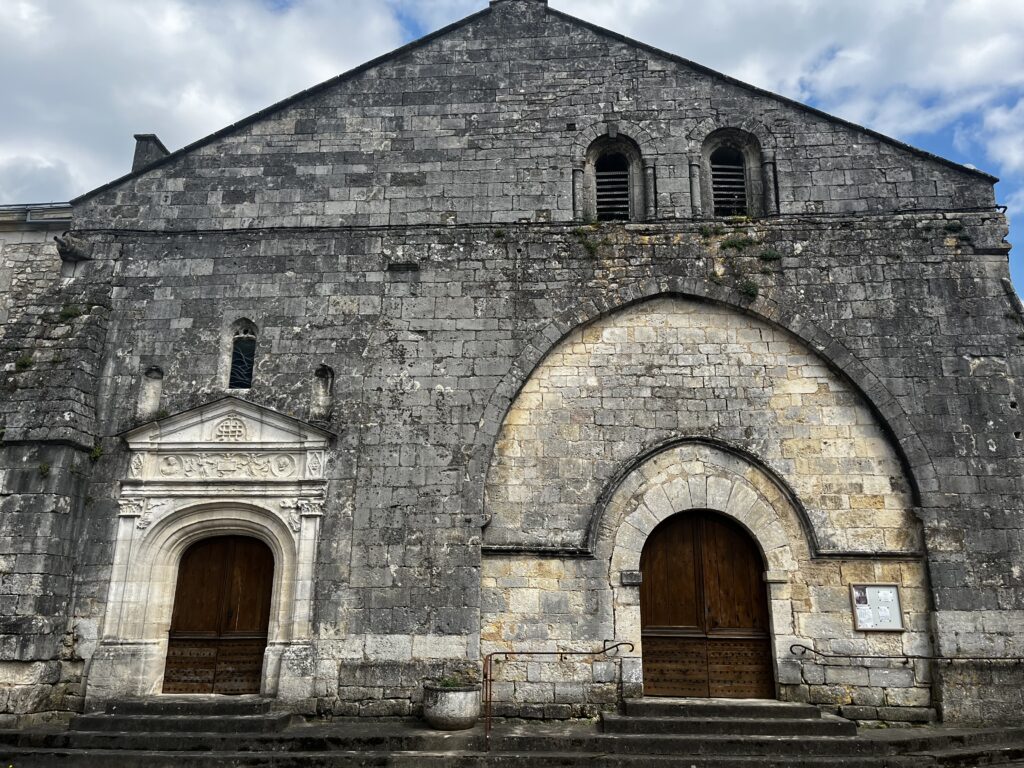
The gîte (and the town hall) directly adjoin the church, but hilariously you have to go all the way around the block to the church doors.
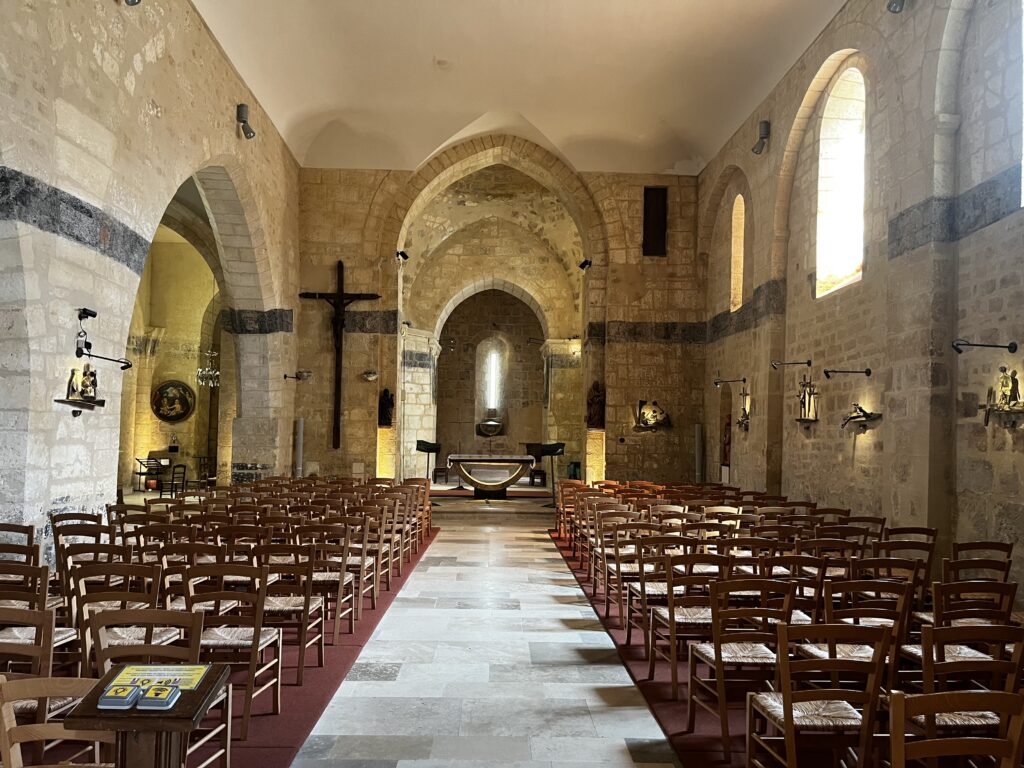
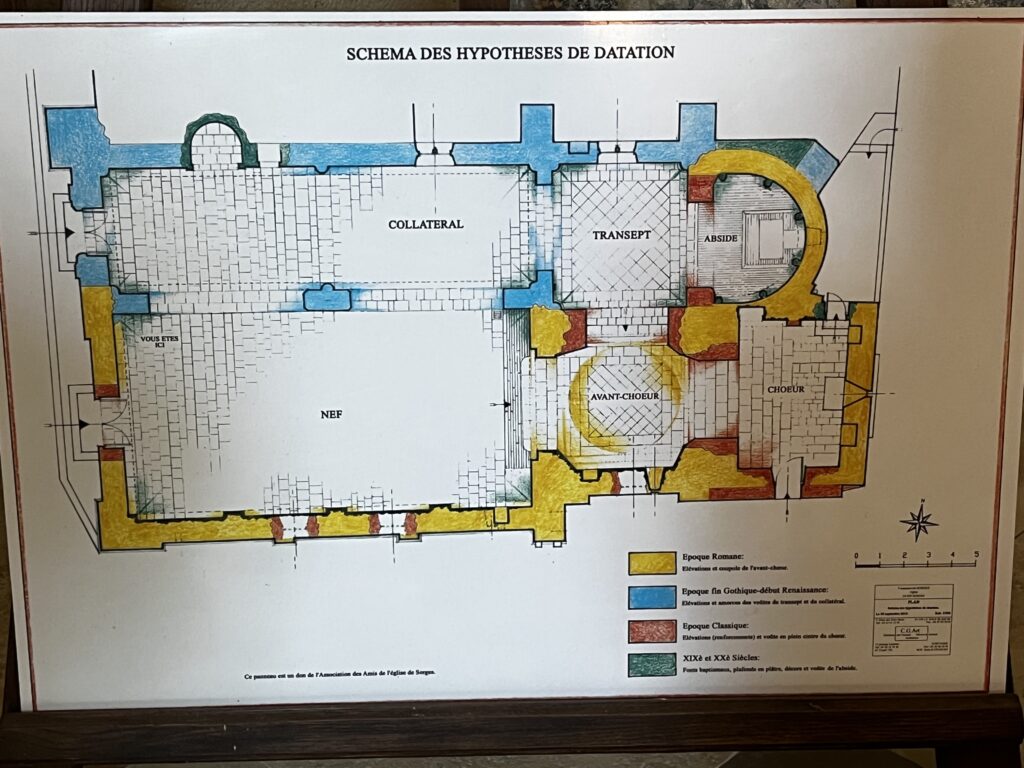
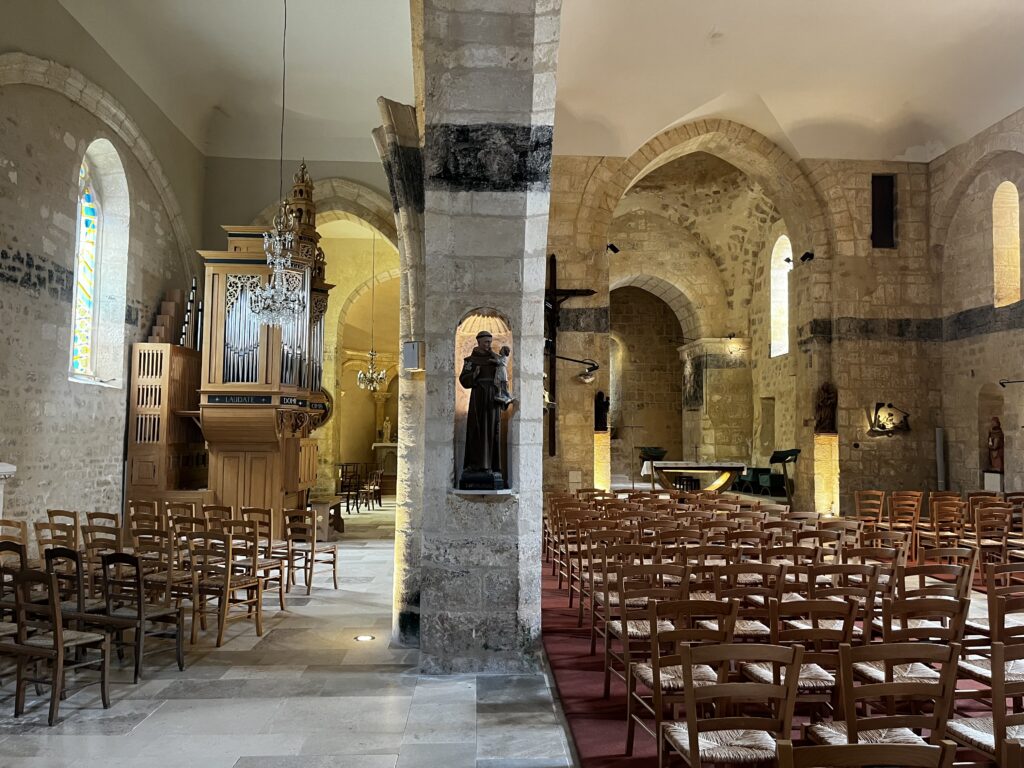
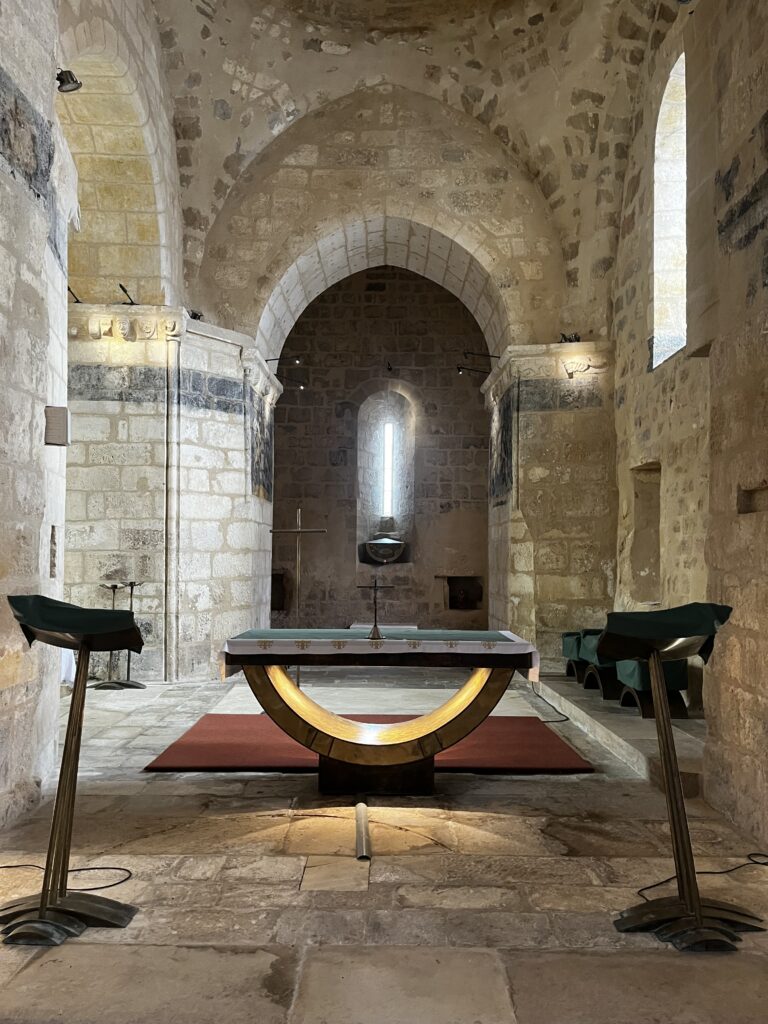
The Church of Saint-Germain is an odd building. The original Romanesque structure is straightforward enough, but a Gothic-era aisle (mostly in the Romanesque style) was added to one side of the church which makes it feel strangely unbalanced. There’s even a separate door to the Gothic-era aisle from the outside. It’s almost like two churches were jammed together and the wall between them taken out.
It is, however, beautiful.
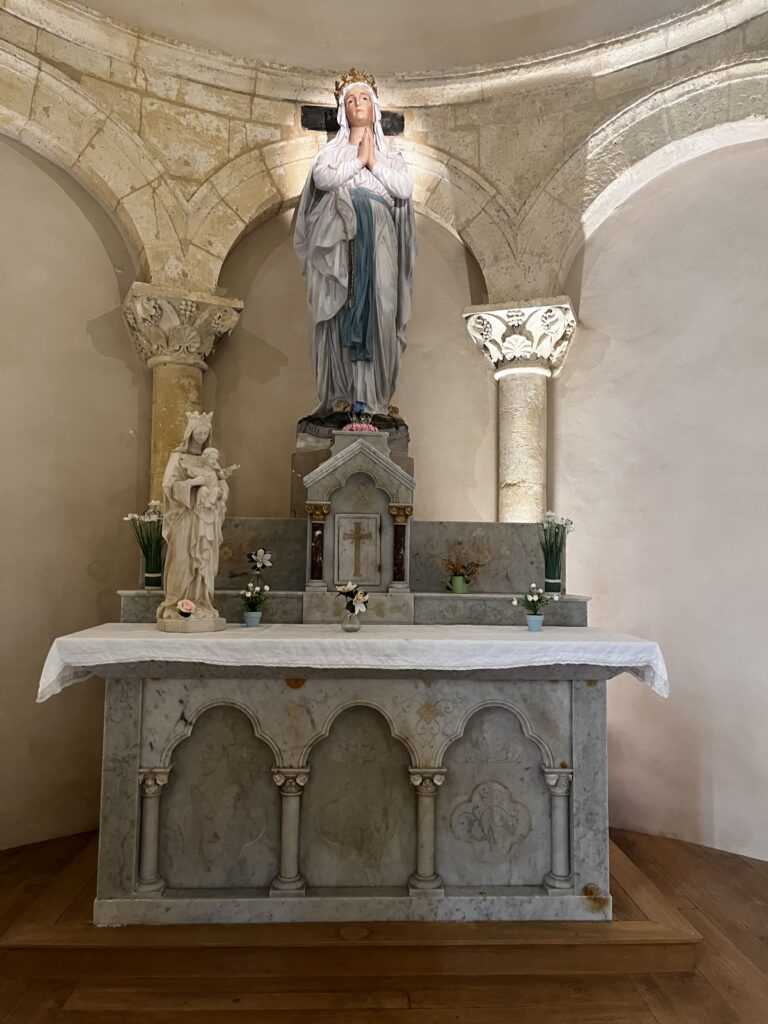
In particular, I found the Marian altar in the apse of the Gothic-era section to be quite delicate and moving.
While I’m not a fan of the liturgical furniture, including the main altar and the tabernacle, at least it is all consistent and in harmony with the architecture.
Also, it all lights up, which is odd.
They are a little shelves built into the wall next to the hanging crucifix which obviously once had statues of the Blessed Mother and Saint John, now sadly missing.
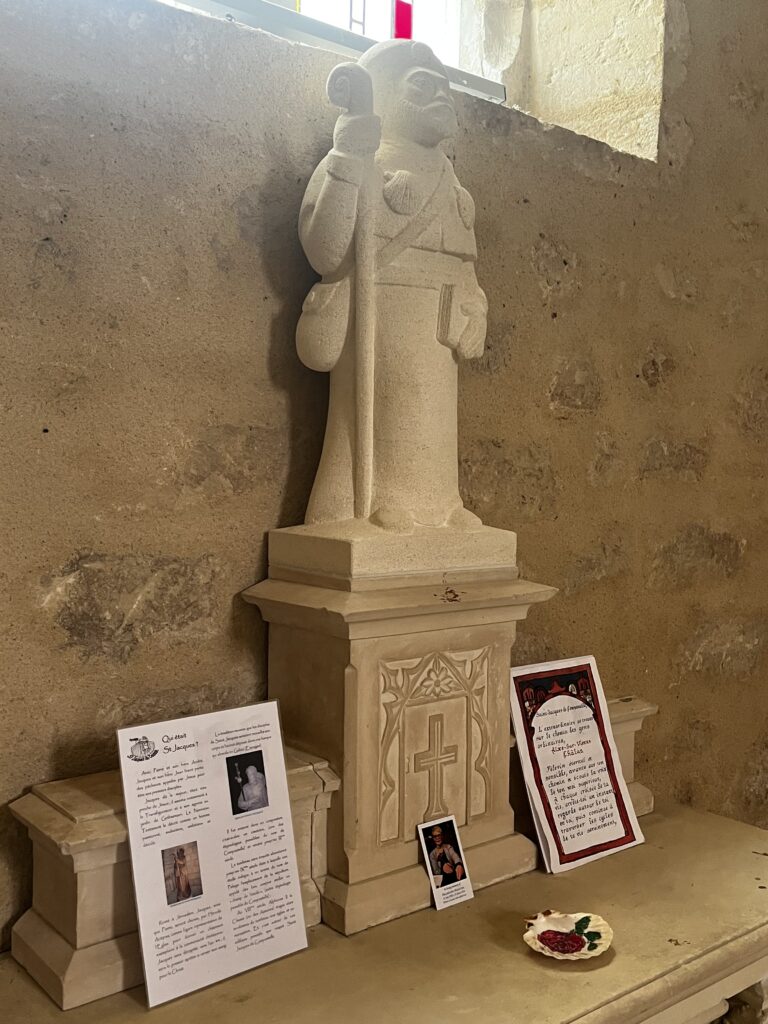
Once again in the Gothic-era section, there is a small altar with a very modern statue of Saint James that I find strangely compelling despite the primitive style.
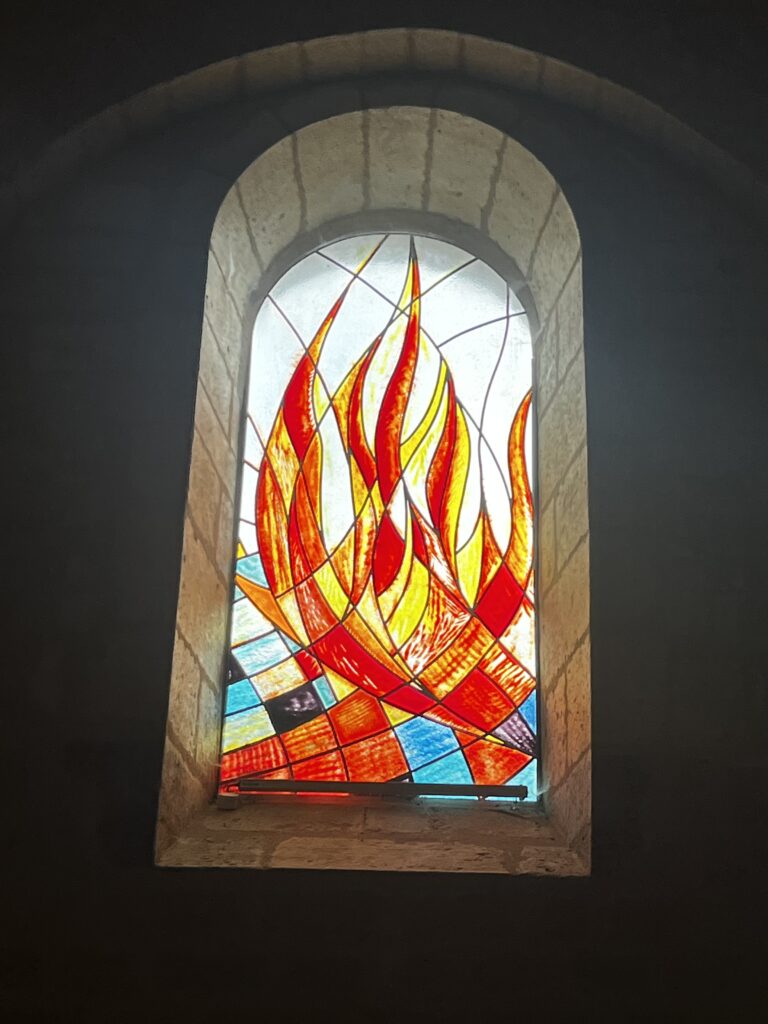
The stained glass windows, obviously replacements, are in a very modern style, but again they are beautiful and appropriate for the space.
I prayed here for Francine. I wanted to light a candle, but they have apparently removed the candles due to acts of vandalism. So I simply left one of her cards on the altar of Saint James.
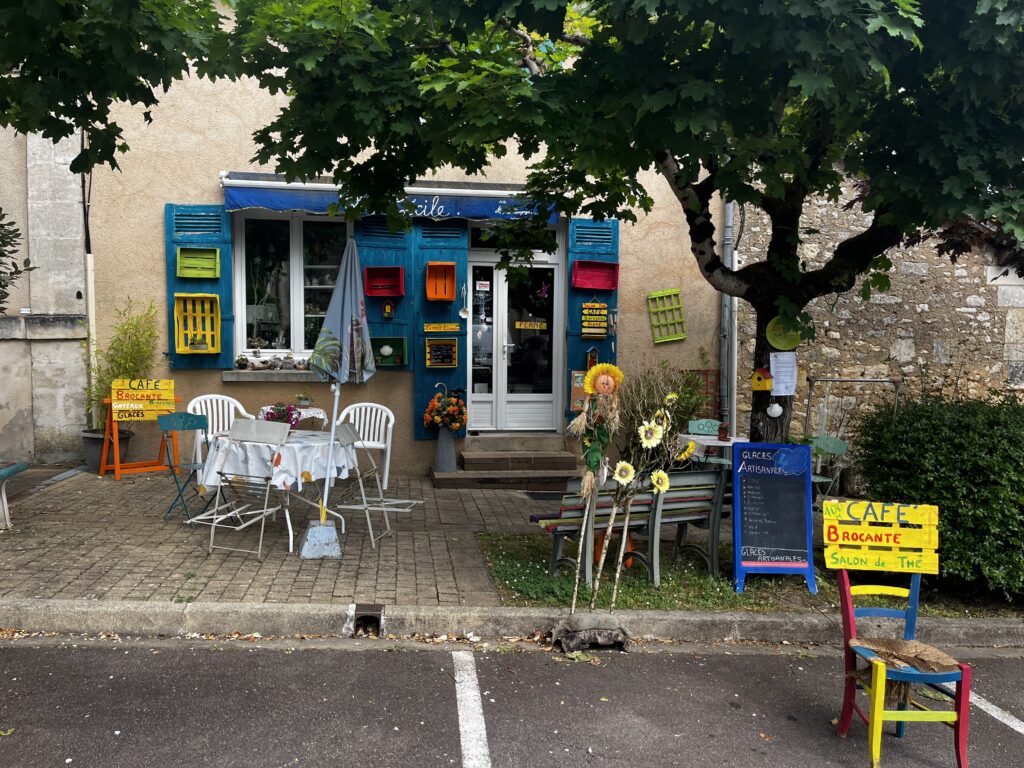
Afterwards, I explored the village a little bit. It looks like a lovely place, though of course everything is closed today. Except that one bar.
And the church. There was Mass for Saint Joseph at 5 PM. Well, by the time the rosary and the litany were done it was more like 5:30. It was definitely a very different experience from the last Mass I attended. There were eight of us, including the priest, and I was probably the youngest person there, excluding the priest.
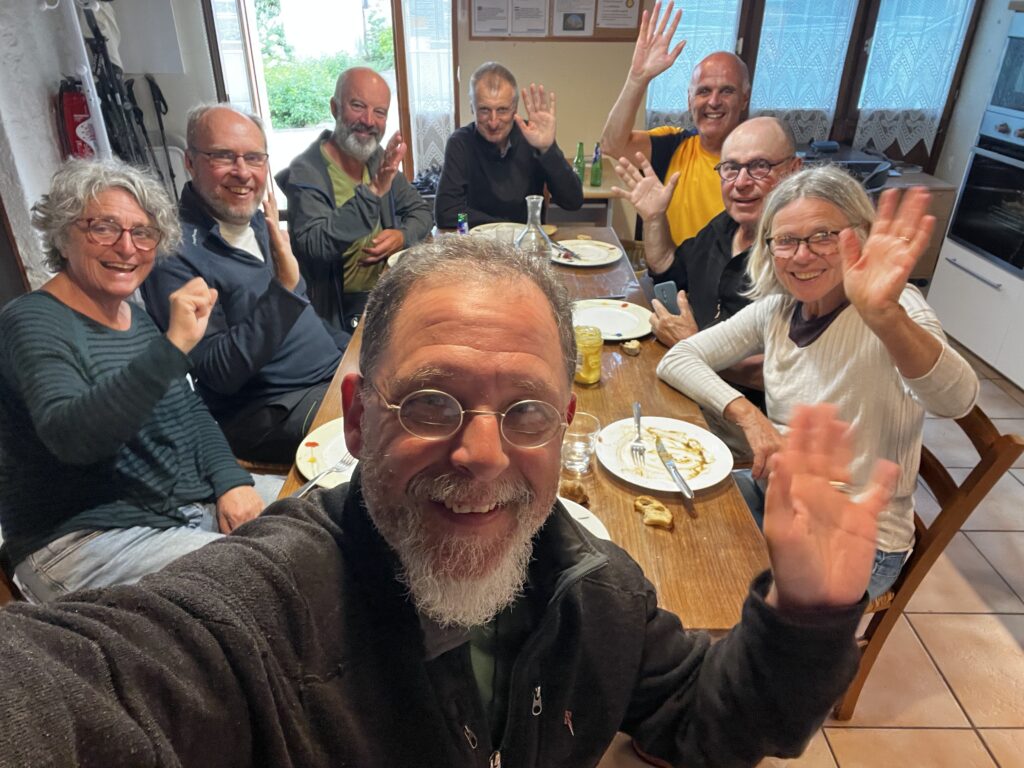
We finished the day with a delicious (and bountiful) communal dinner at the gîte, thanks to our great hospitaleras, Patricia and Brigitte.
Date: 01 May 2026
Place: Sorges
Today started: Thiviers
Today’s Photos!
Beautiful historic churches!