
Via Lemovicensis: the Meaning of Memory
Between yesterday afternoon and this morning, I basically ate through almost my entire food stash. I may need to rethink how I’m doing this.
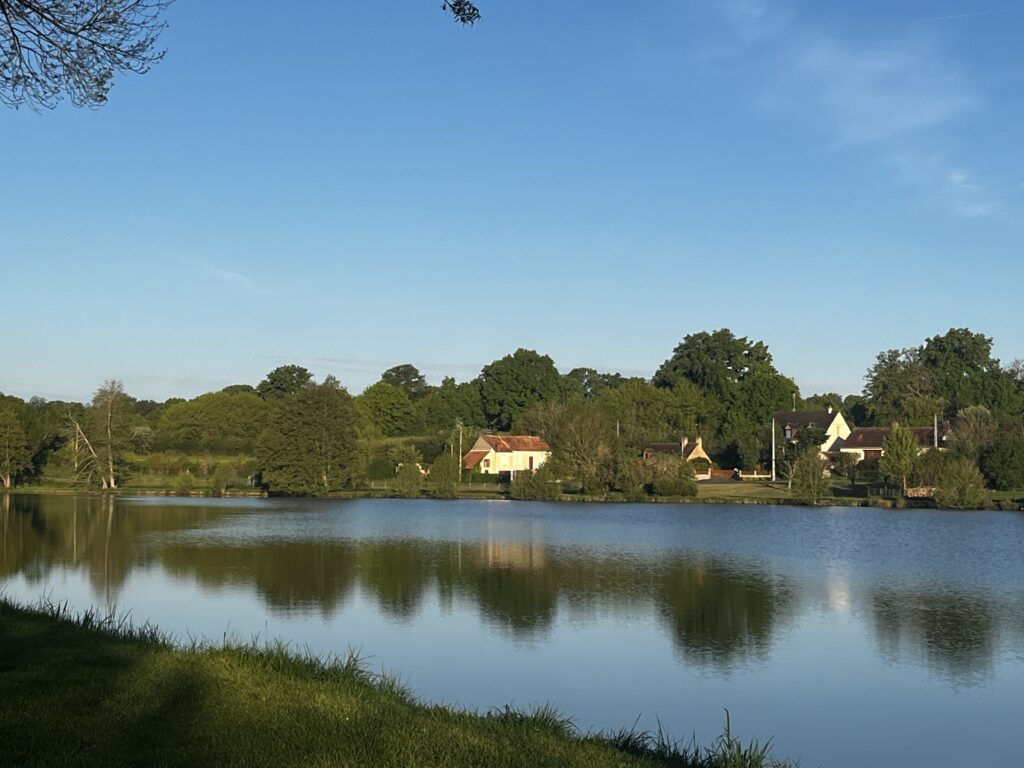
A cool, crisp, cloudless morning. I left the gîte sometime after 7:30 AM in no particular hurry. The little lake looked lovely in the morning light, and I passed several fisherman as I retraced last night’s route. Soon enough, I was past the restaurant and roadwalking on asphalt.
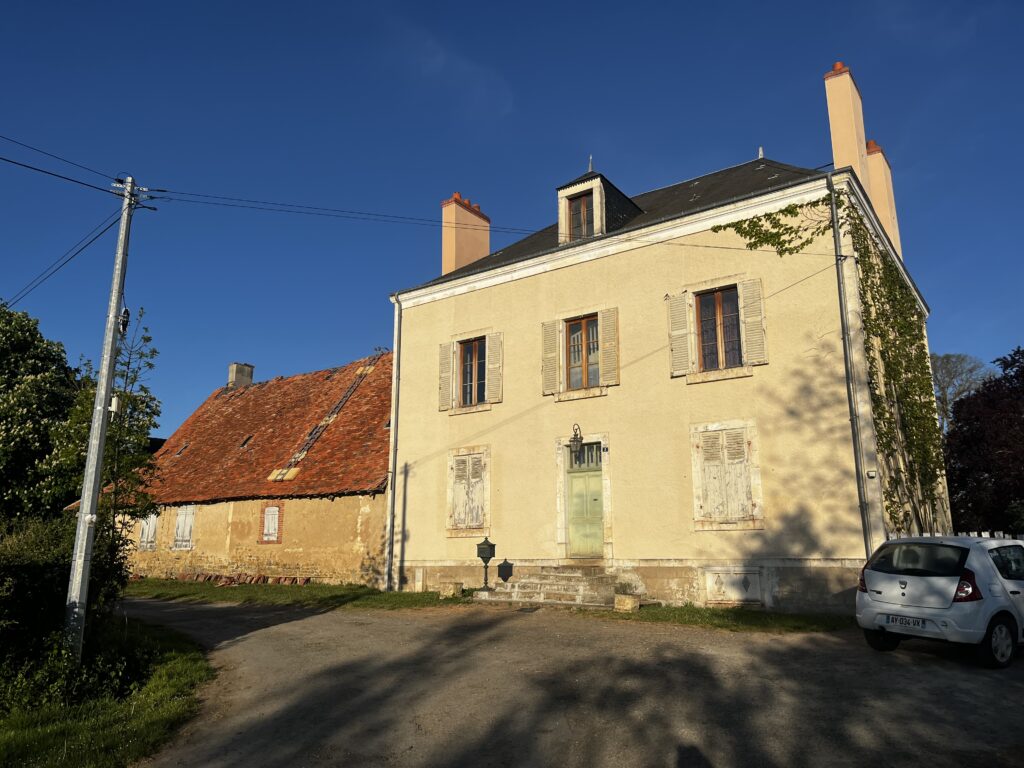
The Camino turned off the main road onto a quieter side road. I passed through the hamlet of Le Terrier, with its grand old houses, some with attached barns in various states of repair.
By 8:10, I was on a dirt and gravel road through trees and fields. I had already taken my gloves off. Today was supposed to be cooler than yesterday, but it already felt like it was warming up fast.
Eventually the road deteriorated into long, wet grass through the fields. By the time I reached the modest farming hamlet of Vineuil, my shoes were soaked through.
On Camino, clear skies does not always mean dry shoes.
And now, once again on asphalt. The lights in one of the houses came on as I approached. Somebody getting a late breakfast?
Again the Camino turned onto a gravel road. At some point I noticed that I was walking on the right hand side of the road. This is because Francine would always walk to my left.
The exception is on asphalt where there’s a chance of oncoming cars, in which case the rule is to walk single file on the left-hand side of the road.
One year ago today, Francine had her first brain MRI. The doctors at this point were still confident that what she had was treatable.
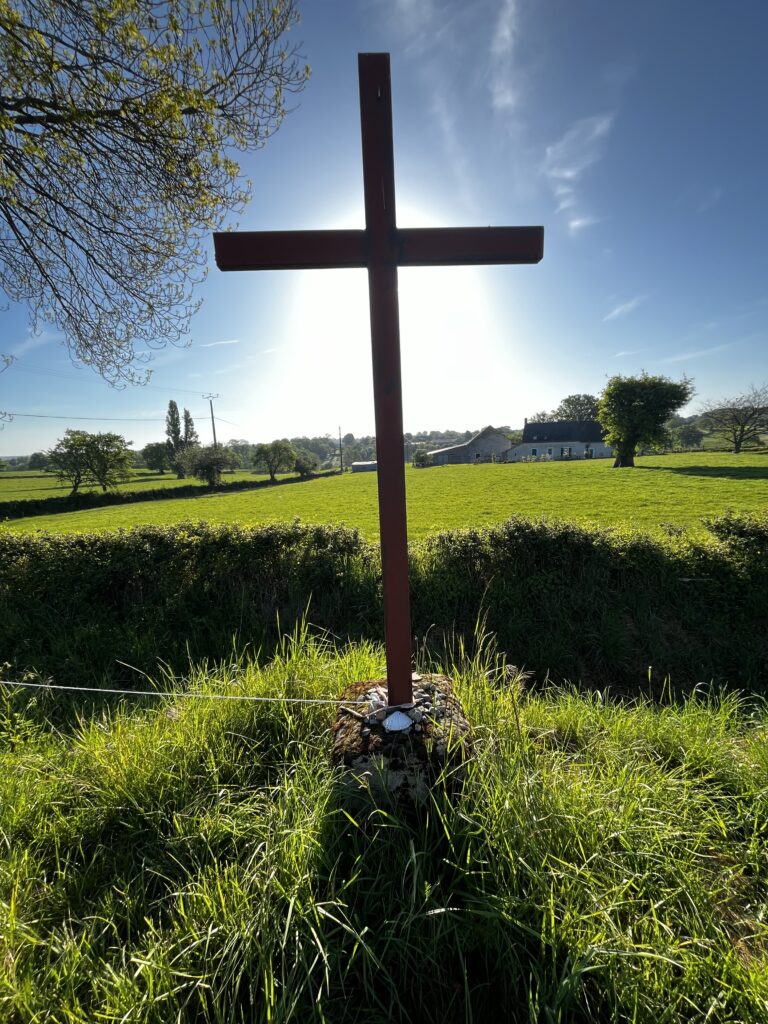
About 8:50, I passed a metal roadside cross at the foot of which someone had laid a Camino shell. I was now back to walking on asphalt again, and noted with amusement that I reflexively moved to the other side of the road.
Why did Francine usually walk on my left side? Because she’s left-handed. We could hold hands and both still have our dominant hands free. That’s actually a pretty good summary of our relationship right there.
I walked through the farming hamlet of Boulimbert almost without noticing.
Apparently this section of road is used to move cattle to the grazing fields. Due to an abundance of cow pats, I was forced to walk in the middle of the road. Well, there you go.
At the quiet, almost suburban hamlet of La Plaine, the Camino briefly joined a much busier road, and the cow pats suddenly ceased.
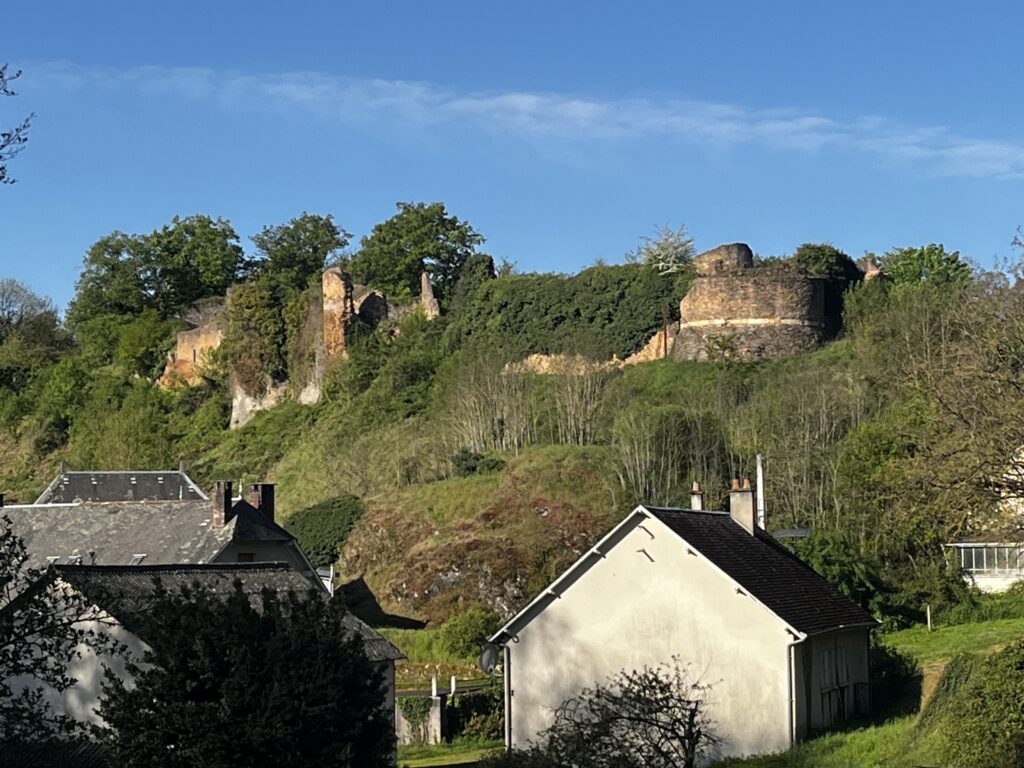
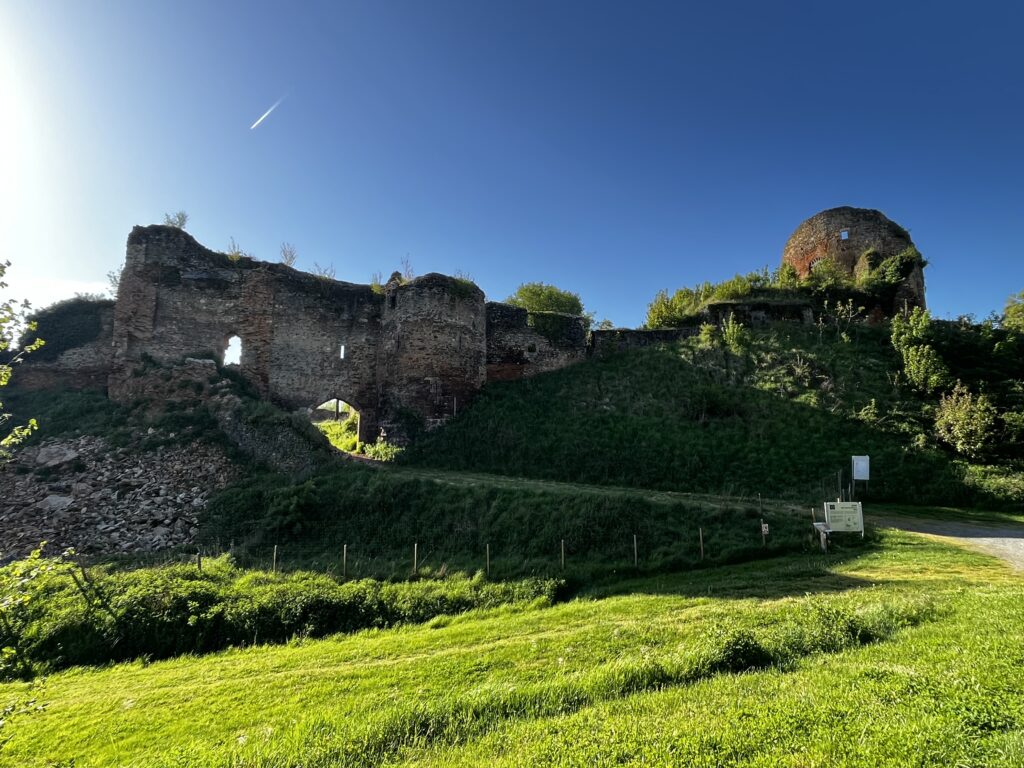
At about 9:20, the Camino crossed a bridge into the hillside hamlet of Cluis Dessous. This hamlet is dominated by the ruins of a massive castle. This is Château Cluis Dessous (not to be confused with Cluis Dessus, which was a different branch of the same feudal house, whose holdings were located in the next village).
I walked down to the ruins to get a closer look. The ruins themselves are off-limits, but you can get pretty close.
There’s something to be said, I think, about the romance of ruins. In the United States, we would have bulldozed it and probably put up a commercial development. Or else we would have reconstructed it into a sort of theme park.
But the presence of ruins changes a people. It reminds you constantly in a way you can’t deny that there were people here before you, and presumably there will be people here after you. Their fortunes and their empires – and ours – wax and wane, the mighty of one century becoming the source of legendary ruins in another.
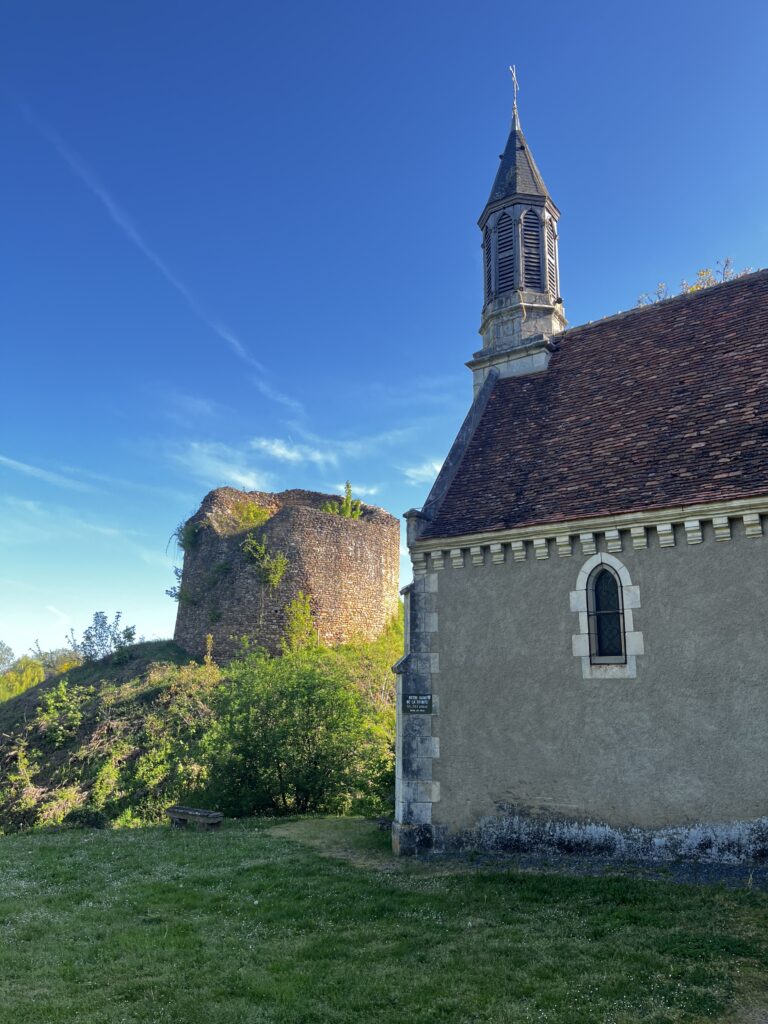
Next to the castle ruins is the 14th-century chapel of Notre-Dame de la Trinité. I was told by the young priest in La Châtre in his halting English that I must, under no circumstances, miss this place. Unfortunately, I had to be content with praying at the entrance, since it was locked.
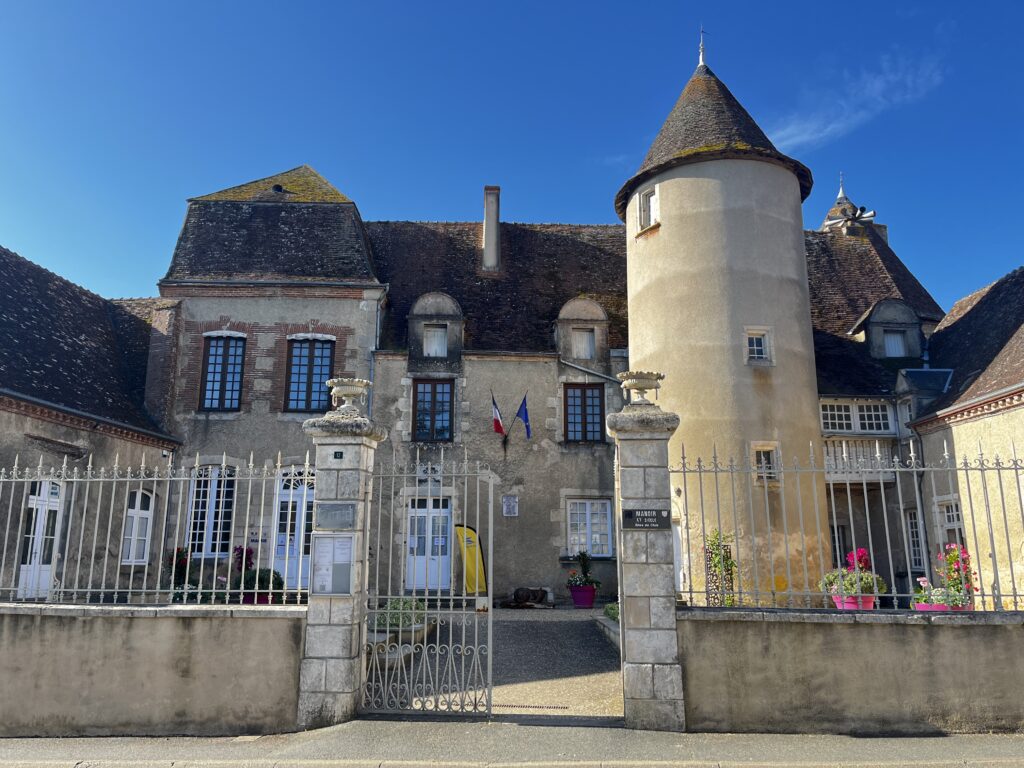
At about 9:45, I arrived in the village of Cluis, home of the feudal house of Cluis Dessus (not to be confused with Cluis Dessous). They did not, so far as I know, have a castle, but their manor house is now the town hall.
This looks as though it was once a prosperous, thriving village, but many of the shops are boarded up or for sale.
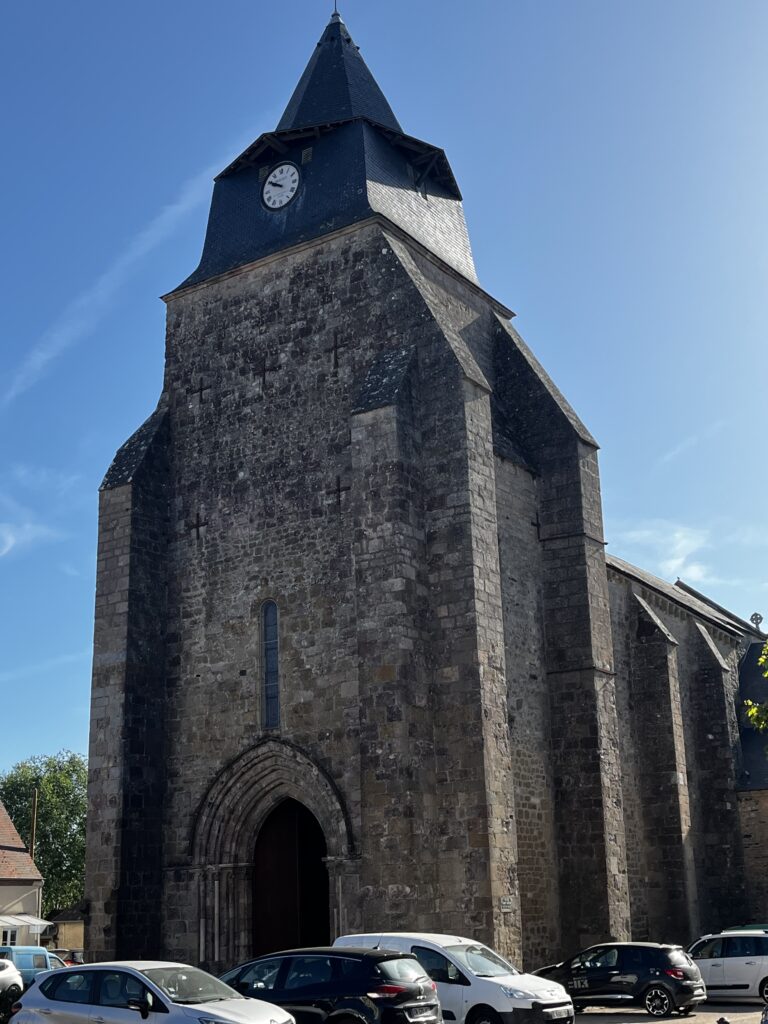
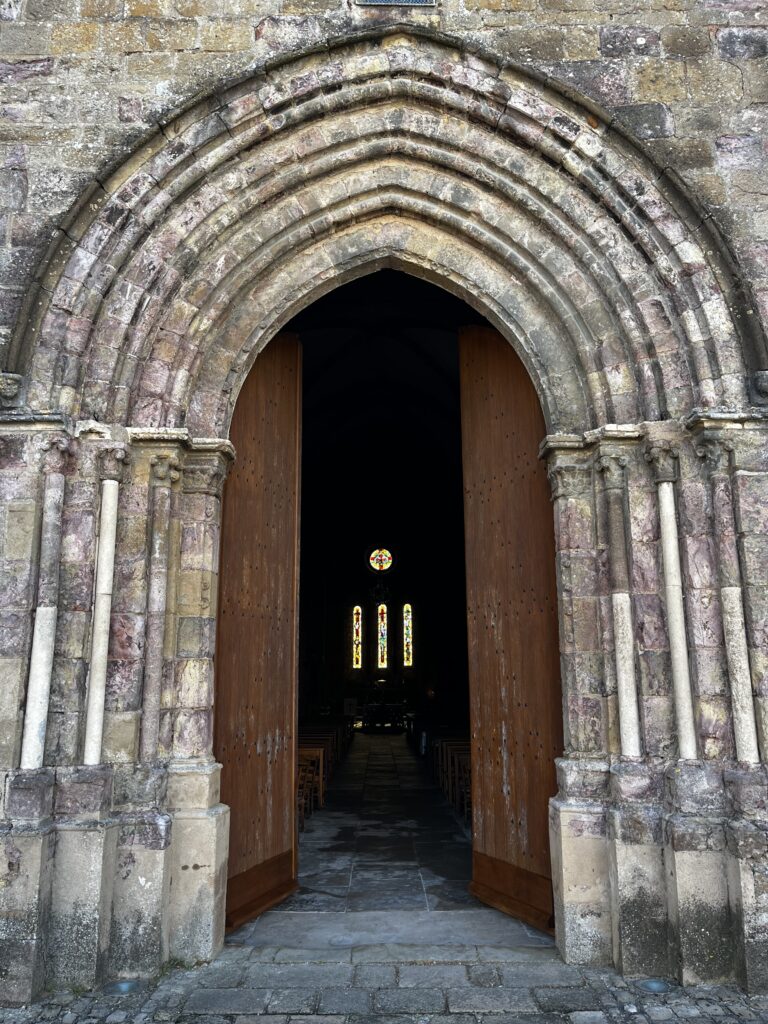
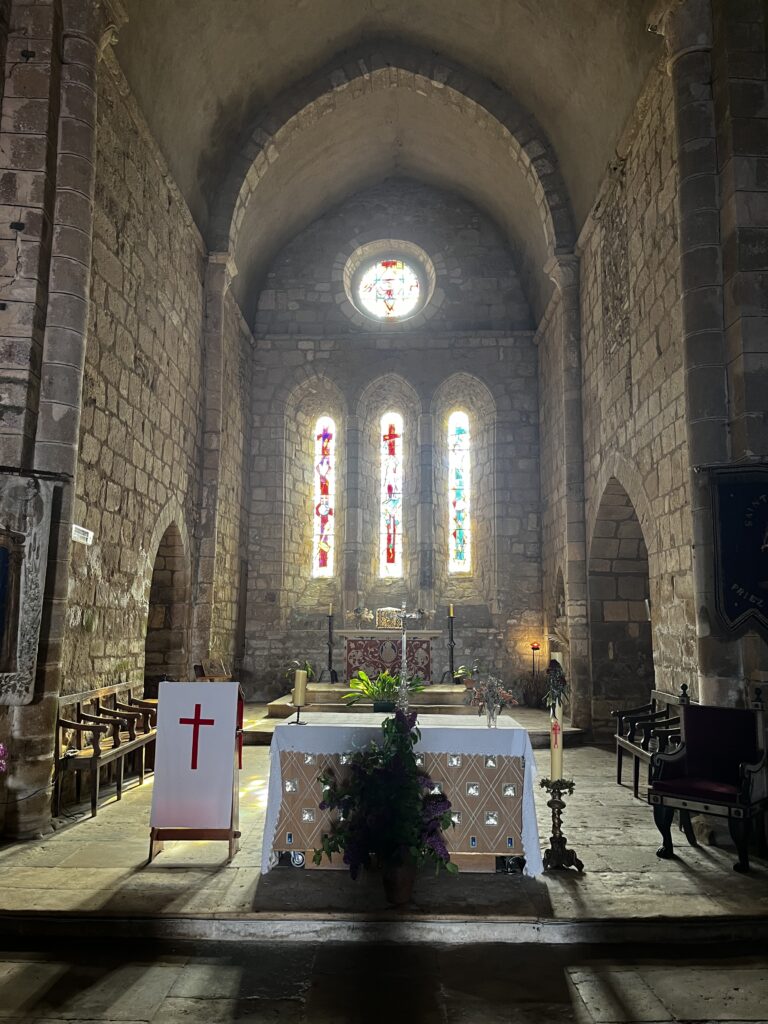
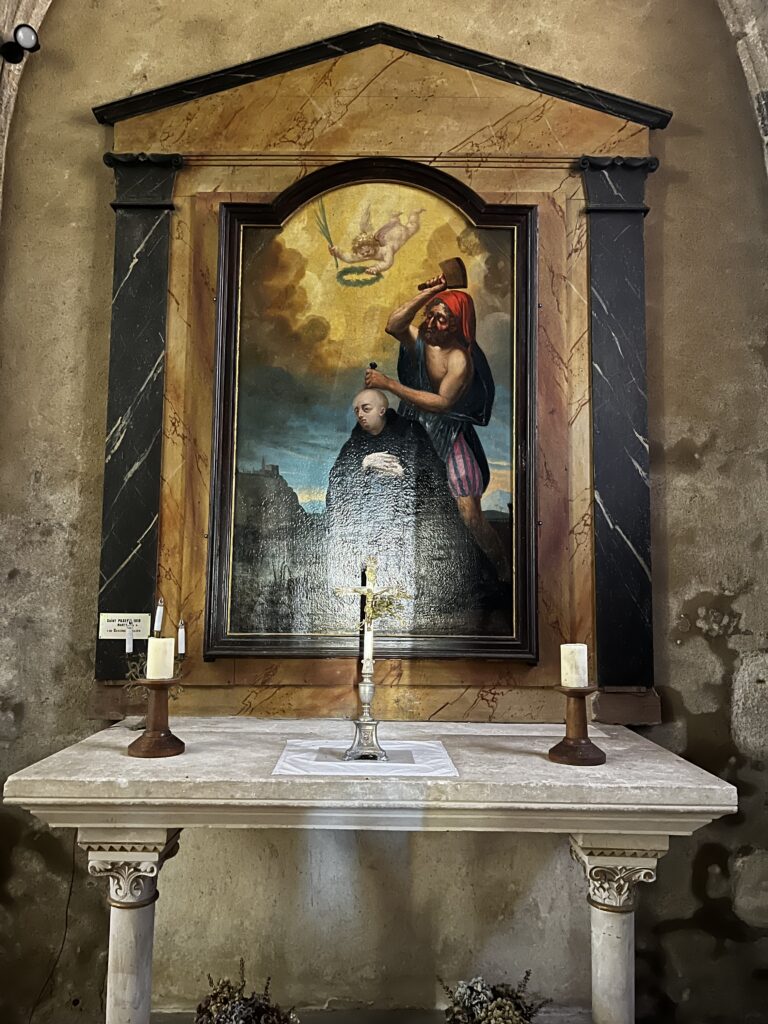
I visited the 16th century Church of Saint Paxent. It has a plain, almost Cistercian feel to it. Despite its size and a plethora of overwrought 17th and 18th century paintings, the place feels simple. Humble.
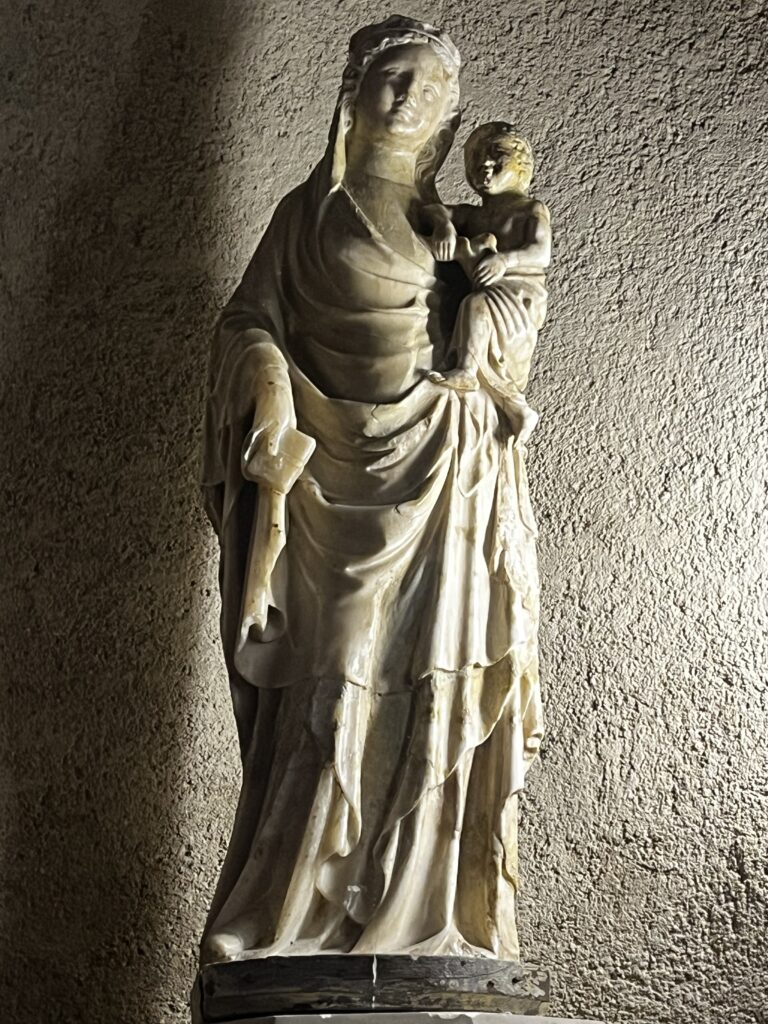
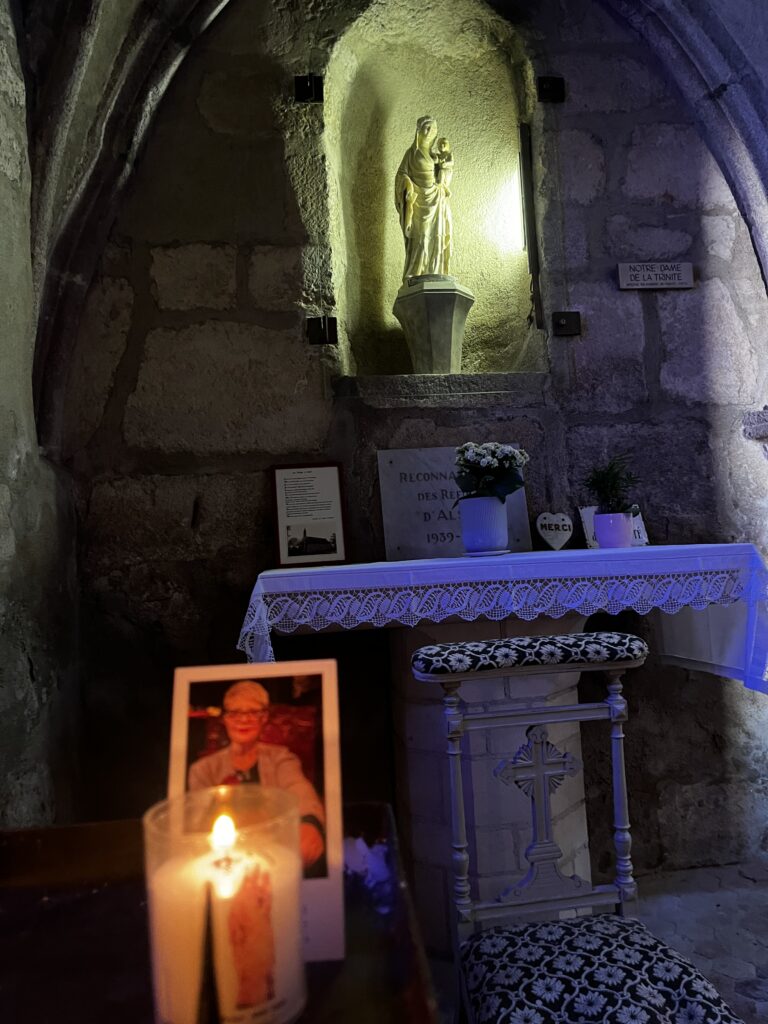
And then, in one of the side chapels, I understood what the priest in La Châtre had been trying to tell me. The original marble statue from the chapel by the castle was now here: Notre-Dame de la Trinité. The statue has been an object of veneration for more than 600 years. It is said that each of the persons of the Holy Trinity is represented symbolically somewhere in the statue. I confess I was too woolly-headed this morning to figure it out.
But her appeal is undeniable. I prayed here and lit a candle for Francine.
My hope then was to find a café where I might have second breakfast. My food stash was down to an apple and a small piece of cheese, but what I really wanted was coffee and a pastry. I was able to obtain the pastry from the local boulangerie, but coffee proved elusive.
It was past 10:15 before I left the village. It was closer to suburbia than to the countryside for a bit, but eventually I left the last of the houses behind.
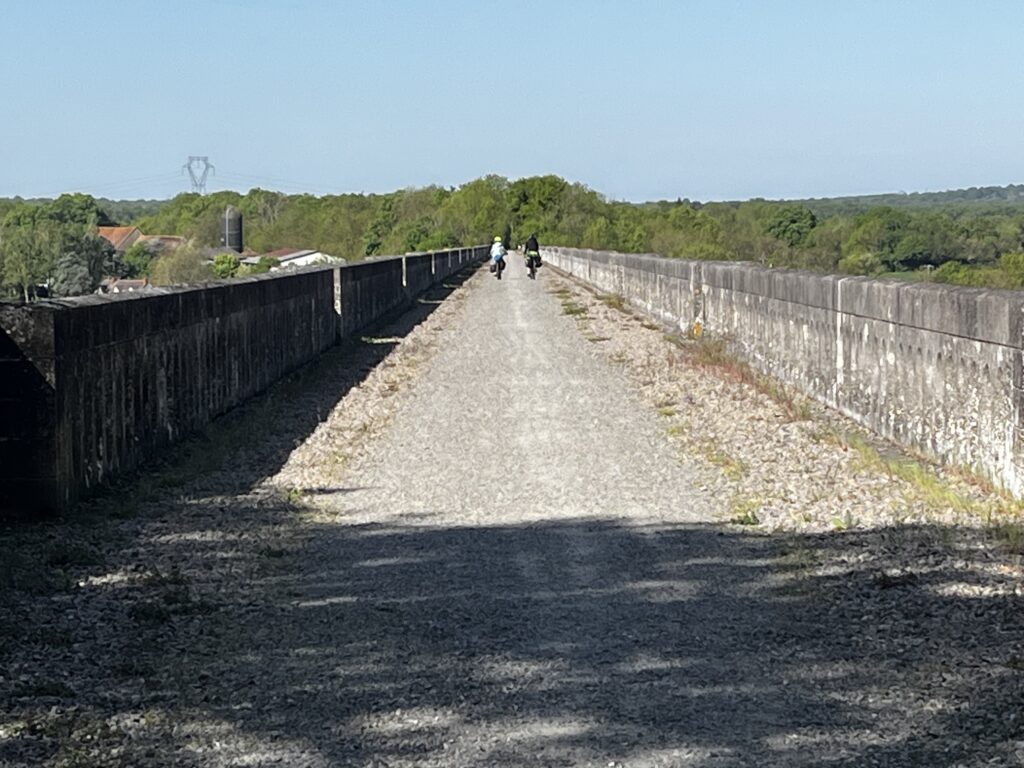
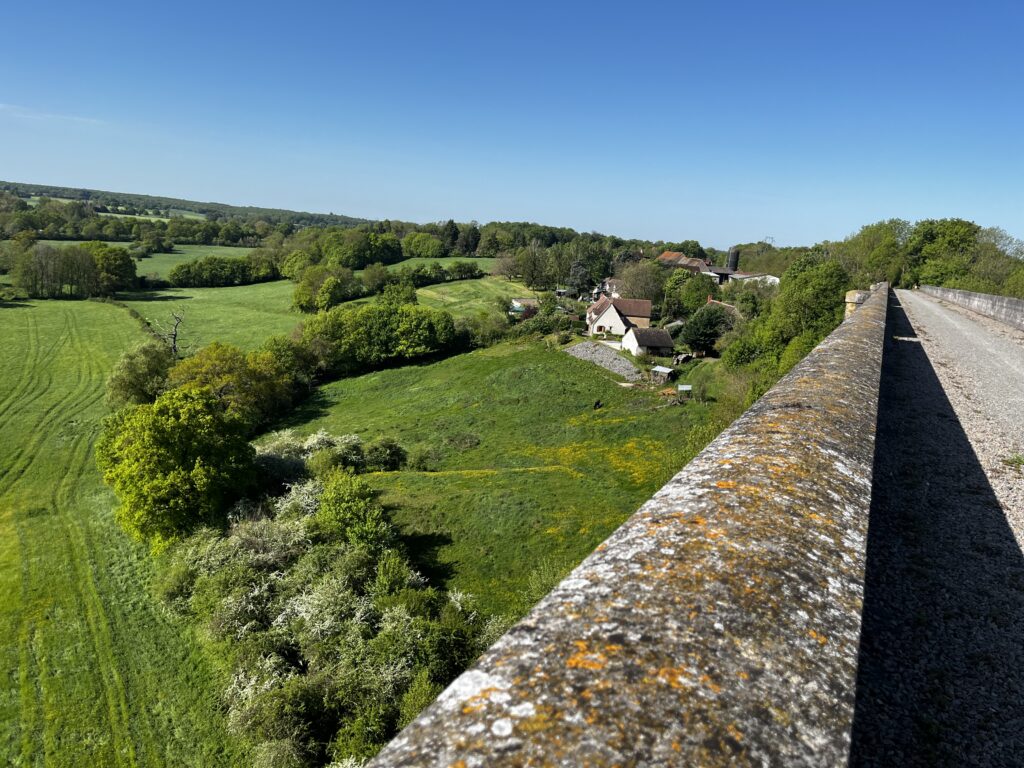
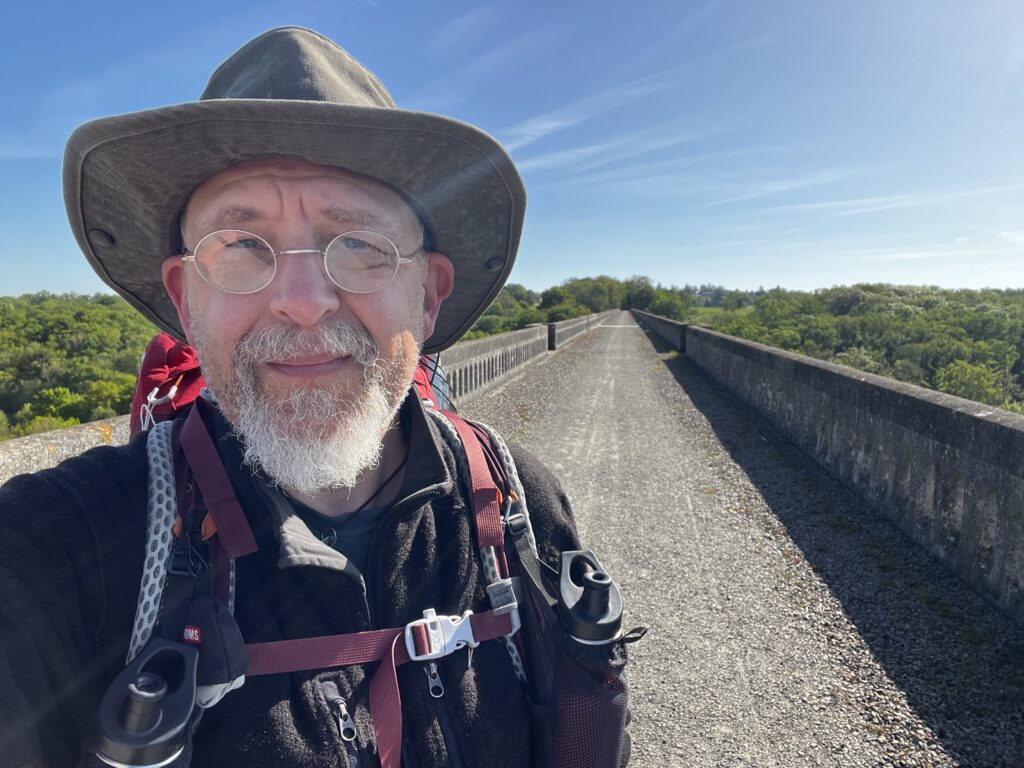
Soon enough, I was on a broad bike path through the woods on what I think was once a railroad bed. The Camino then passed over enormously long bridge over the valley, which confirmed my suspicions. The views were absolutely tremendous. It took me eight minutes to cross the bridge, and it was terrifying.
After the bridge, the Camino ducked down a narrow forest path in a descent so steep they thoughtfully provided handrails. The path deposited me on an asphalt road, and, after walking through the farming hamlet of Neuville, I was soon in the countryside again.
As I was walking and thinking, a quote from The Return of the King bubbled up. I looked it up later to make sure that would get it right:
‘Are you in pain, Frodo?’ said Gandalf quietly as he rode by Frodo’s side.
‘Well, yes I am,’ said Frodo. ‘It is my shoulder. The wound aches, and the memory of darkness is heavy on me. It was a year ago today.’
‘Alas! there are some wounds that cannot be wholly cured,’ said Gandalf.
‘I fear it may be so with mine,’ said Frodo. ‘There is no real going back. Though I may come to the Shire, it will not seem the same; for I shall not be the same. I am wounded with knife, sting, and tooth, and a long burden. Where shall I find rest?’
Gandalf did not answer.
(J.R.R. Tolkien, The Return of the King)
Good writing is satisfying. It entertains. It may even make you think. But great writing will strike you at the core of your being and provide comfort, or wisdom, or deeper questions every time you read it and long after you have finished.
I entered the little village of Hallé at about 11:20. By now, I had finally taken off my fleece. The village didn’t have a church so much as a chapel, smaller than my garage. It was locked.
Back to the countryside. I’ve noticed that today in particular there has been a lot more tree cover than in days passed. The fields and meadows are smaller, and the cows fewer.
Indeed, most of the next stretch I walked was through the woods.
By the time I entered the village of Pommiers, it was already past noon and I was feeling a little peckish. The village church was locked, but I did find an open bar. No food, alas, but I did have an Orangina there and a delightful conversation with the owner, who had worked in the United States for several years. In the end, he would not let me pay for my drink.
It was just past 12:30 when I walked through the tidy hamlet of Foy. Mostly older houses and cottages, but it looks as though a few have been renovated quite recently. And approximately every other yard had barking dogs.
As it turned out, my excursion into Foy had been an error – I had missed a turn. It was a relatively straightforward thing to get back on the Camino, but it probably added a kilometer to my day.
About 12:50, the Camino diverged from the asphalt and down a rocky rural road. Suddenly, I wanted ice cream.
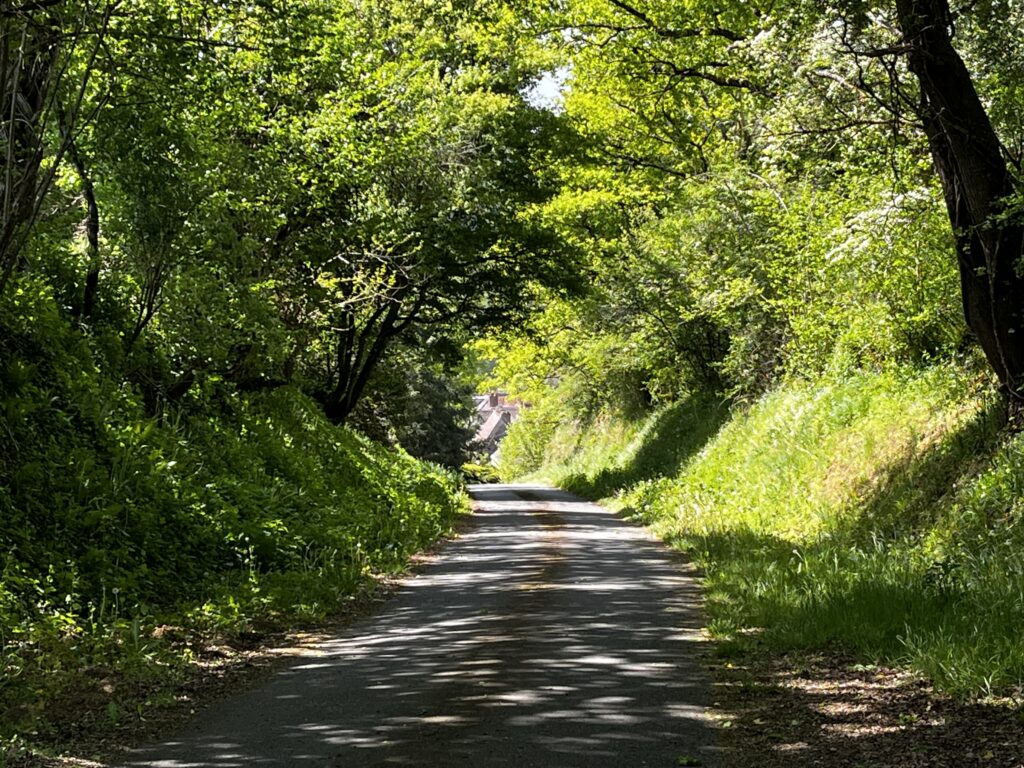
Twenty minutes later, I was back on asphalt. Mercifully, it didn’t last long, as I was soon on an almost perfect dirt hiking trail through the forest. I was beset by butterflies.
By about 1:35, I’d left the trees, and the path had transitioned into alternating asphalt and gravel, and finally an asphalt road.
Shortly thereafter, I passed through the hamlet of Les Minières. It had two signs, neither of them official, and consisted of a gîte and a large stately home with outbuildings.
From there, it was roadwalking the rest of the way into town.
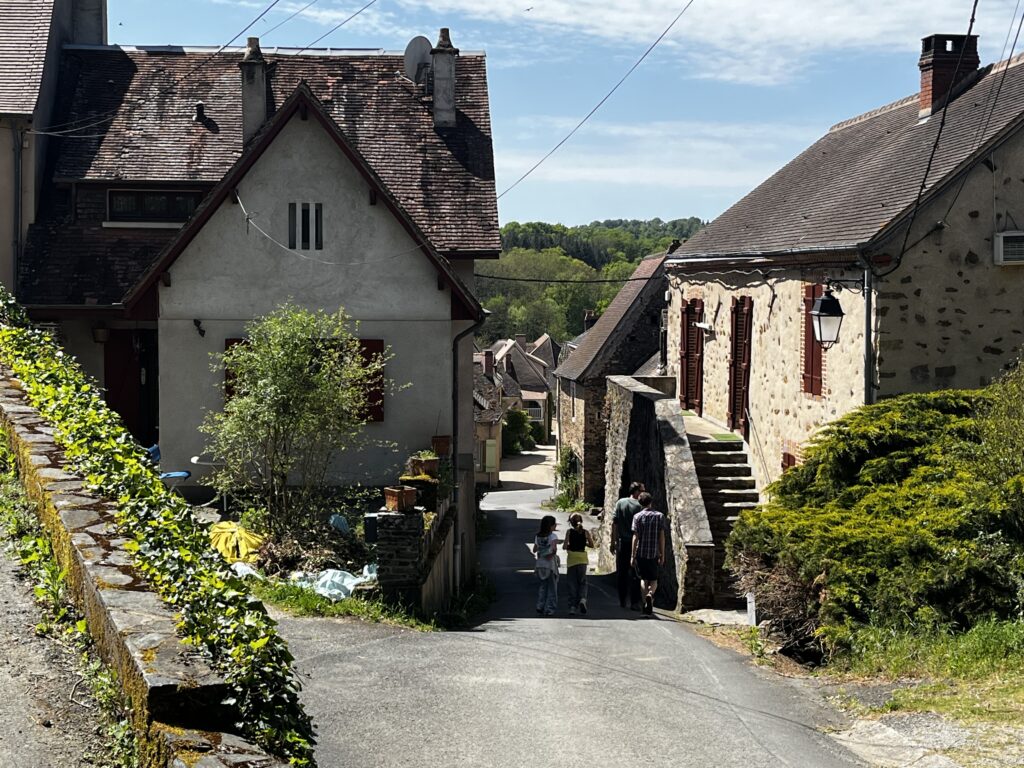
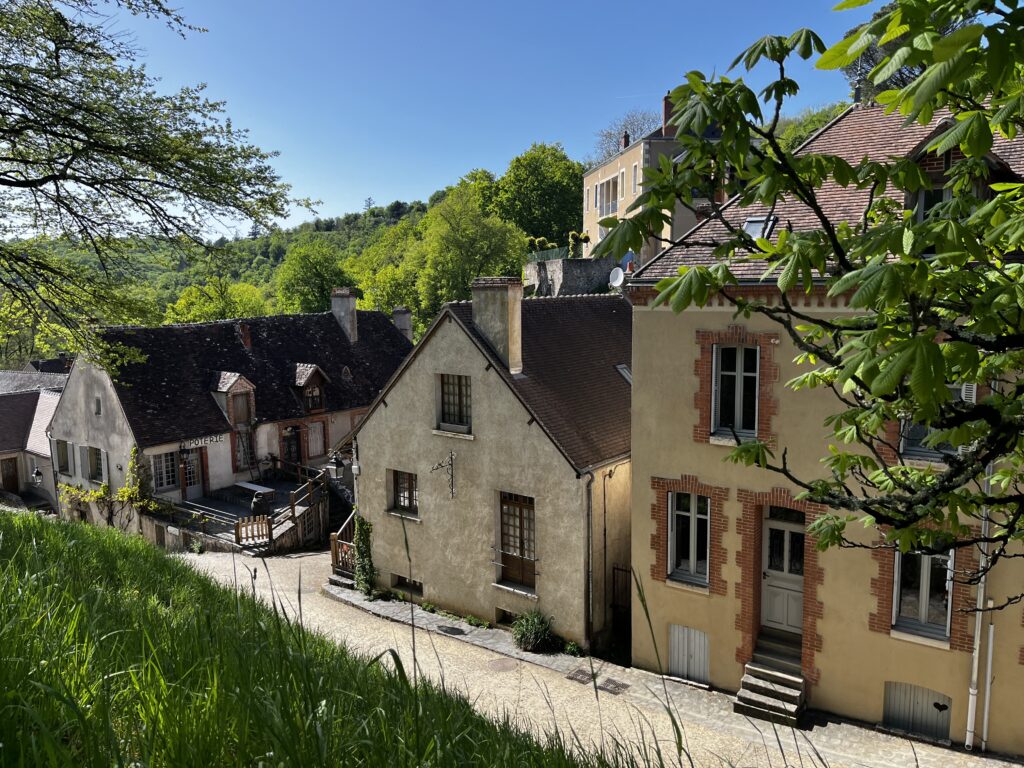
Just before 2 PM, through a break in the trees, I caught sight of the red roofs of the village. The road curved steeply down, and I soon found myself myself walking through one of the most beautiful villages in France.
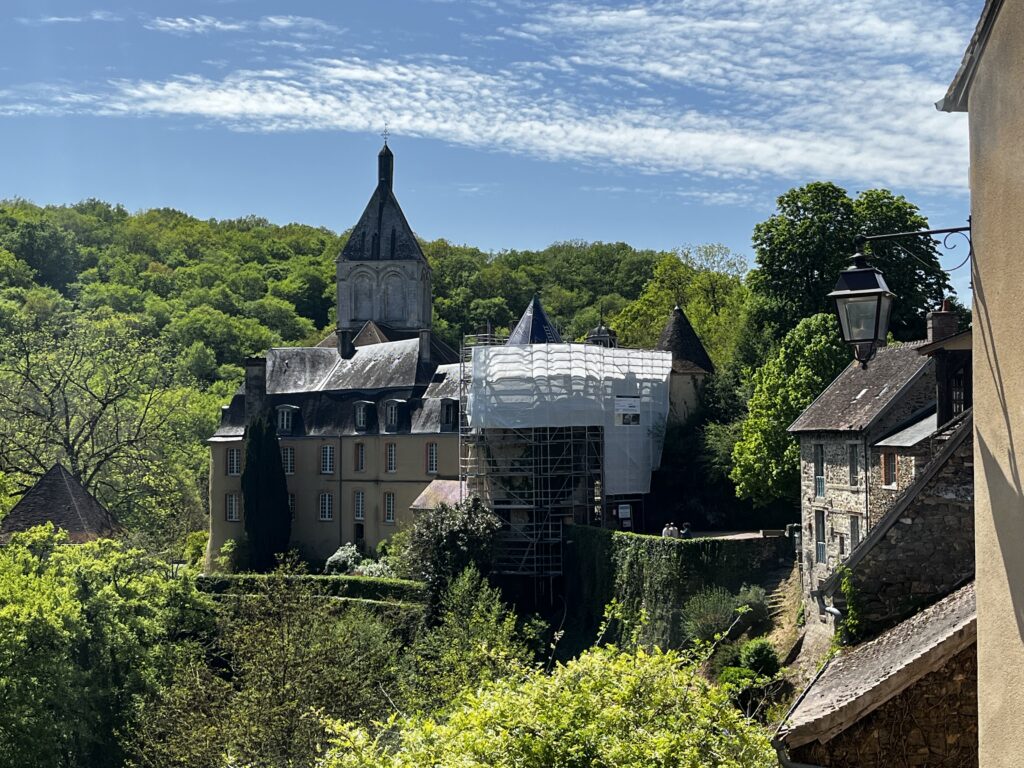
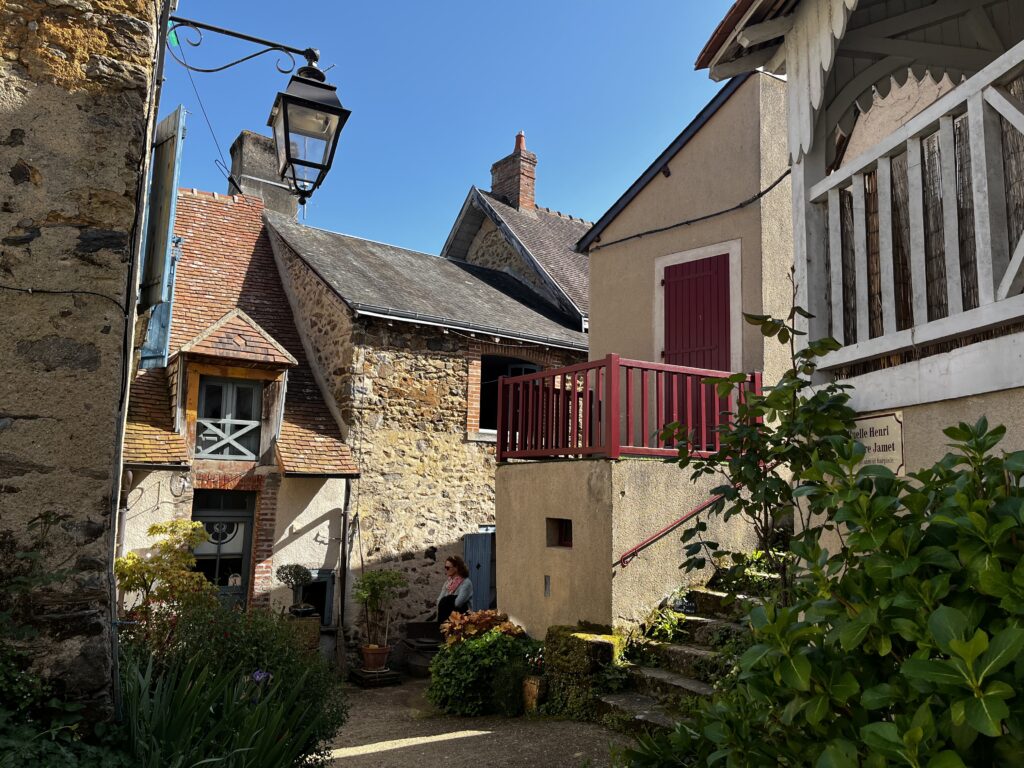
Gargilesse (or more properly, Gargilesse-Dampierre) is partially built around a deep ravine, which gives it an interesting three-dimensional plan. It’s full of galleries and art and sculpture studios. Even the hotel I’m staying at is called Hotel des Artistes. The owner is an absolute hoot.
I’m only staying in the hotel because the gîte was full for the week “due to the reception of the trainees of the Harp and Cello Academy of Gargilesse”.
I was trying to check in to the hotel as they were finishing the lunch rush. I sat at a table with a beer and the owner came up to me, speaking perfect English. The initial conversation went something like this:
“Are you not hungry?”
“Well you guys seemed really busy, and I’m just waiting to get into my room. I might eat later.”
“If you want to eat, it’s now. The kitchen boss says I need to shut down the kitchen and clean up, and I’m the kitchen boss, and I always listen to me.”
“OK great. What do you have?”
“We have chèvre… and we have chèvre.”
“Excellent. I’ll take the chèvre.”
“Good choice.”
The food was absolutely amazing. The room is tiny, but clean and inexpensive. The toilet is across the hall, and the shower is two flights down.
The hotel is built into the side of the hill, so there’s an entrance two flights down, and the main entrance is four flights down.
I sat down on the bed and inadvertently took a nap for about an hour. Once I was properly showered, I set out to explore the town.
Sadly the castle is currently closed for renovations.
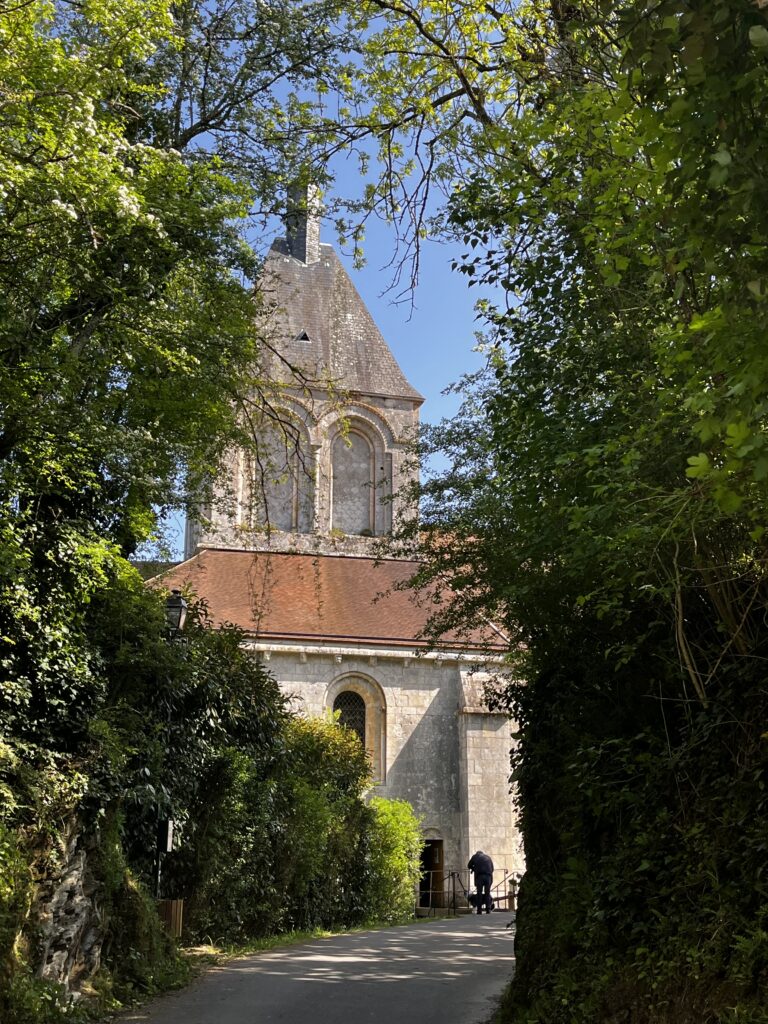
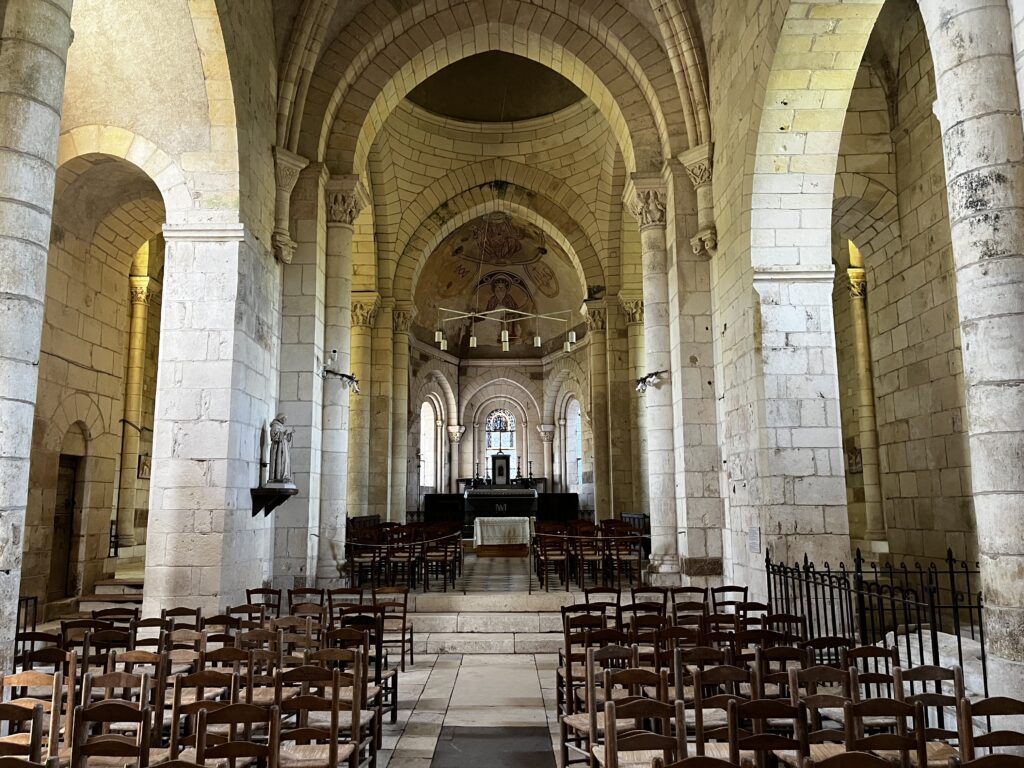
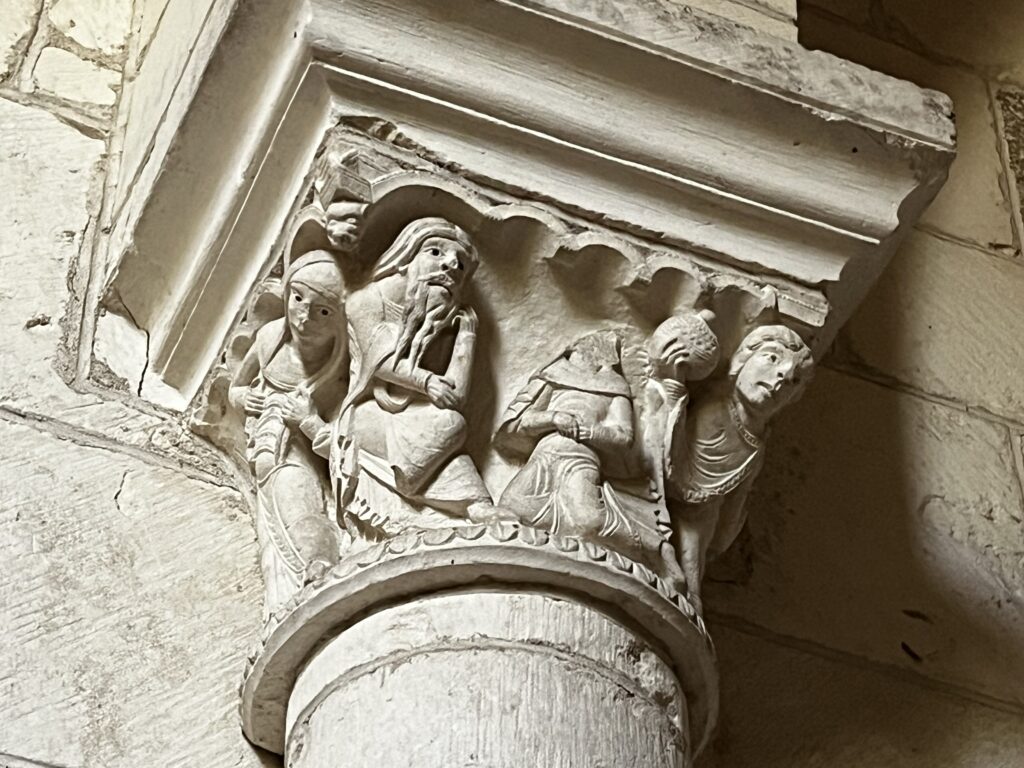
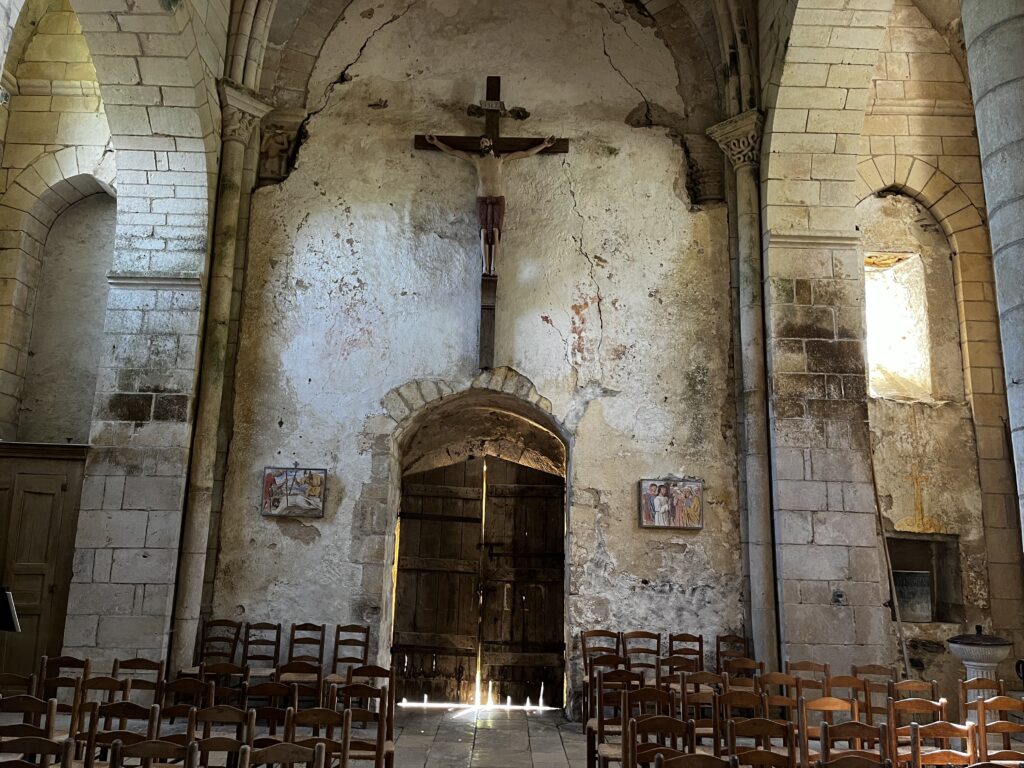
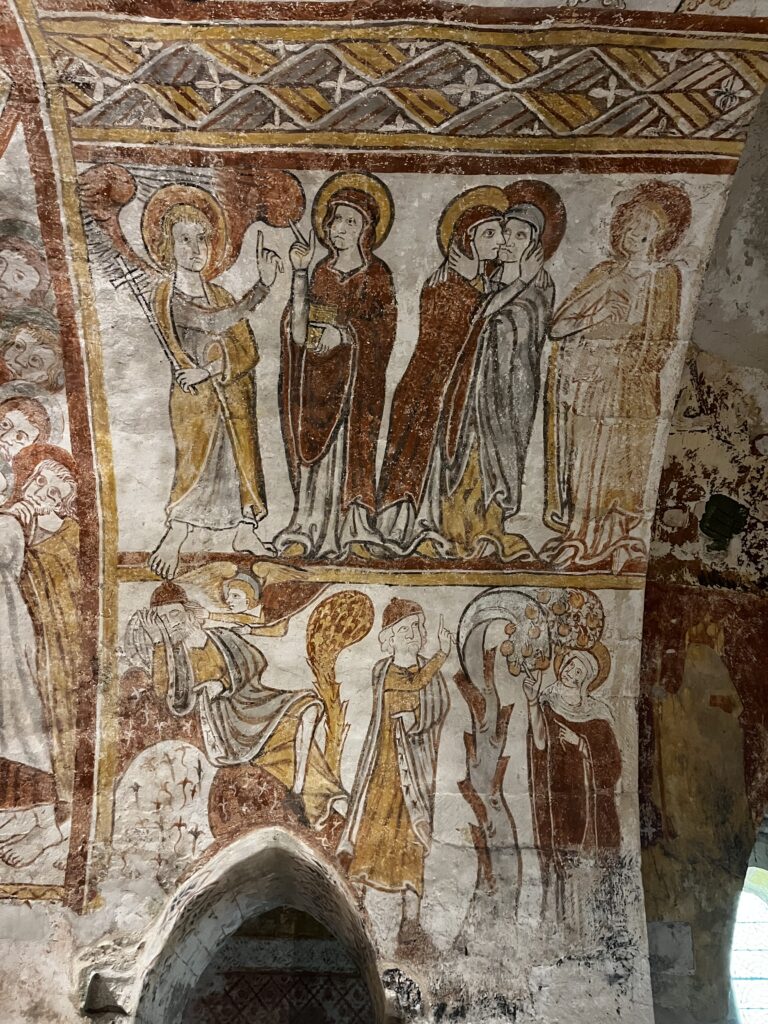
Like the town itself, the 12th-century church of Saint-Laurent-et-Notre-Dame is built on multiple elevations. The 13th-century frescoes in the apse are stunning, though in need of some restoration. In fact, the whole church could use some TLC.
It’s pretty clear that the nave used to be longer than it is. The walls of the main entrance to the church and the two bays are plugged with what can only charitably be called inferior workmanship.
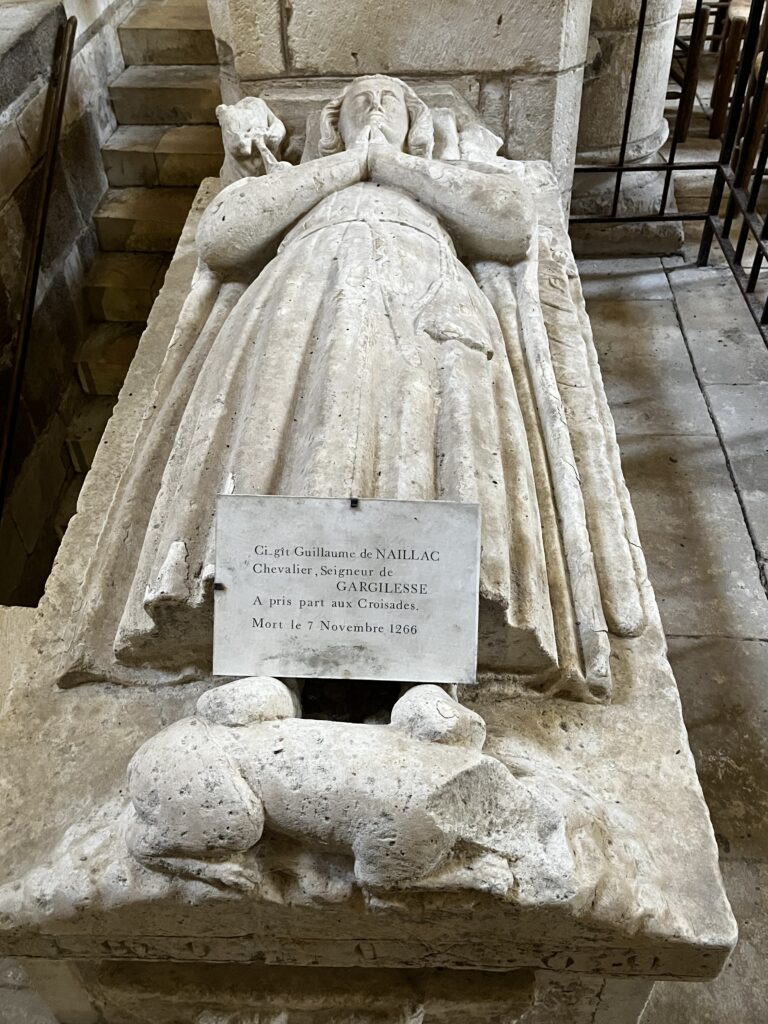
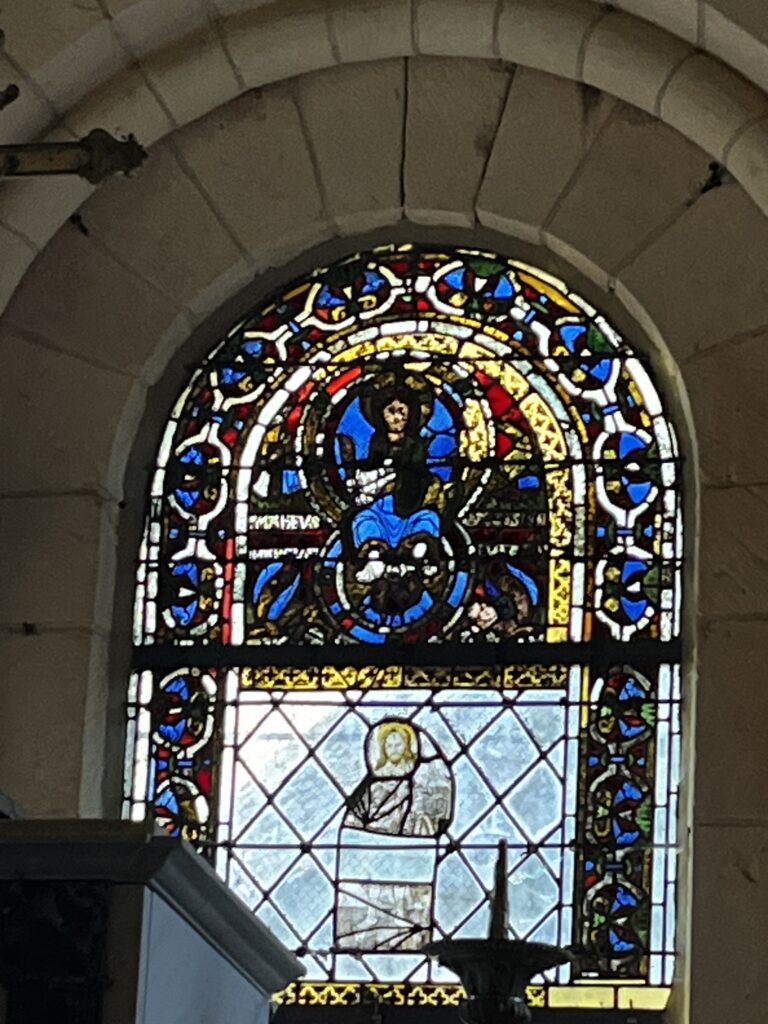
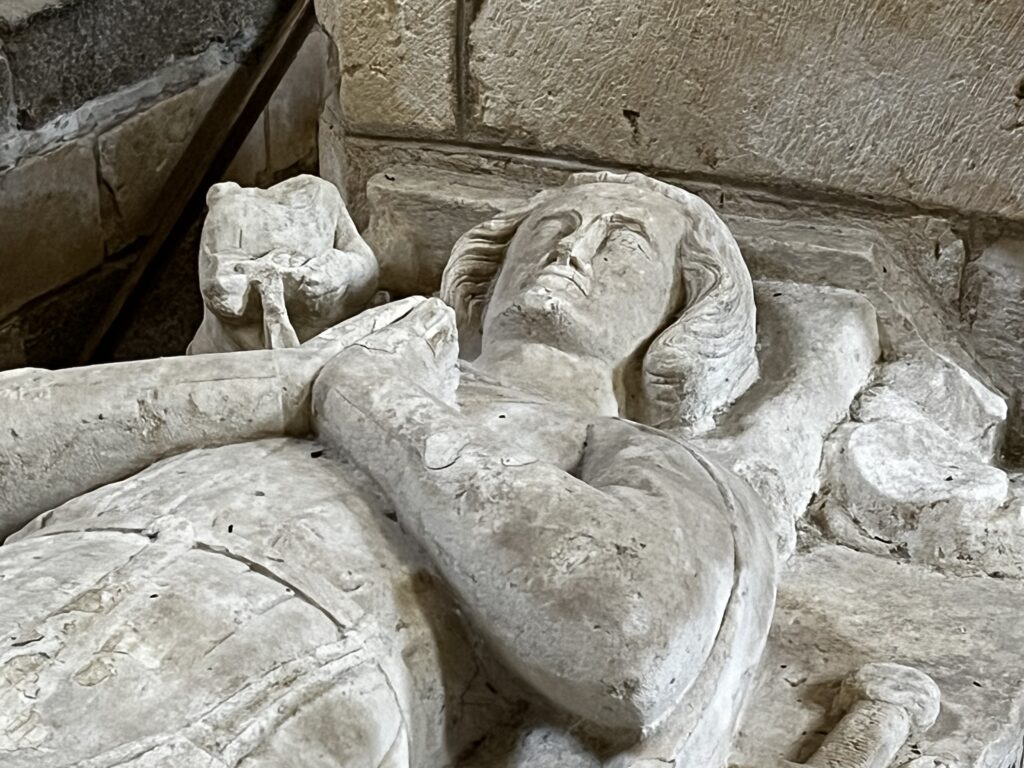
The little church’s varied treasures include a little stained-glass window, probably dating from before 1165, that depicts Christ in glory surrounded by the symbols of the four Evangelists, and the stone tomb of a local crusader, Guillaume de Naillac, buried here in 1266.
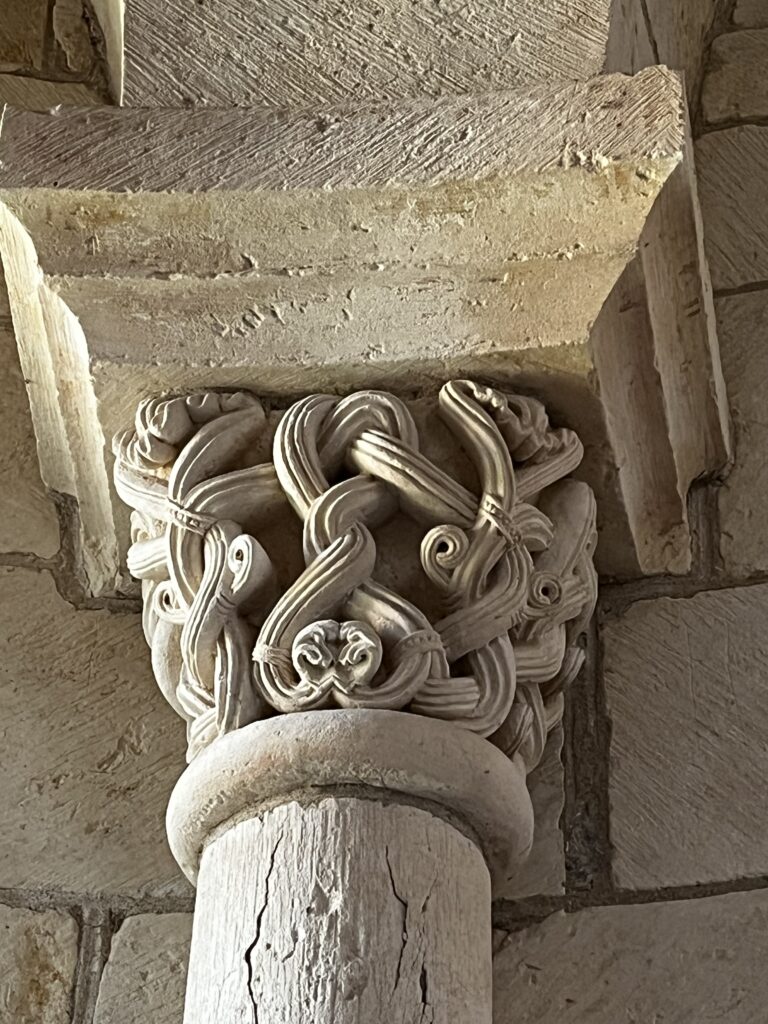
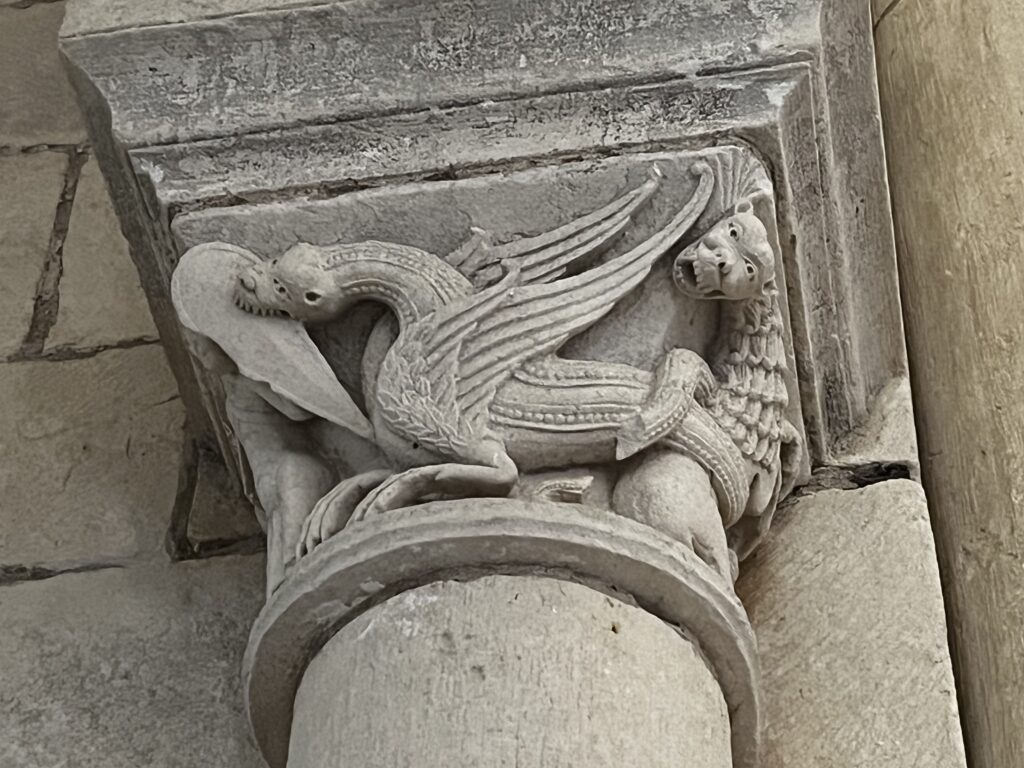
And the Romanesque capitals are just stunning.
I sat in one of the old choir stalls just taking it all in, and then prayed Vespers there.
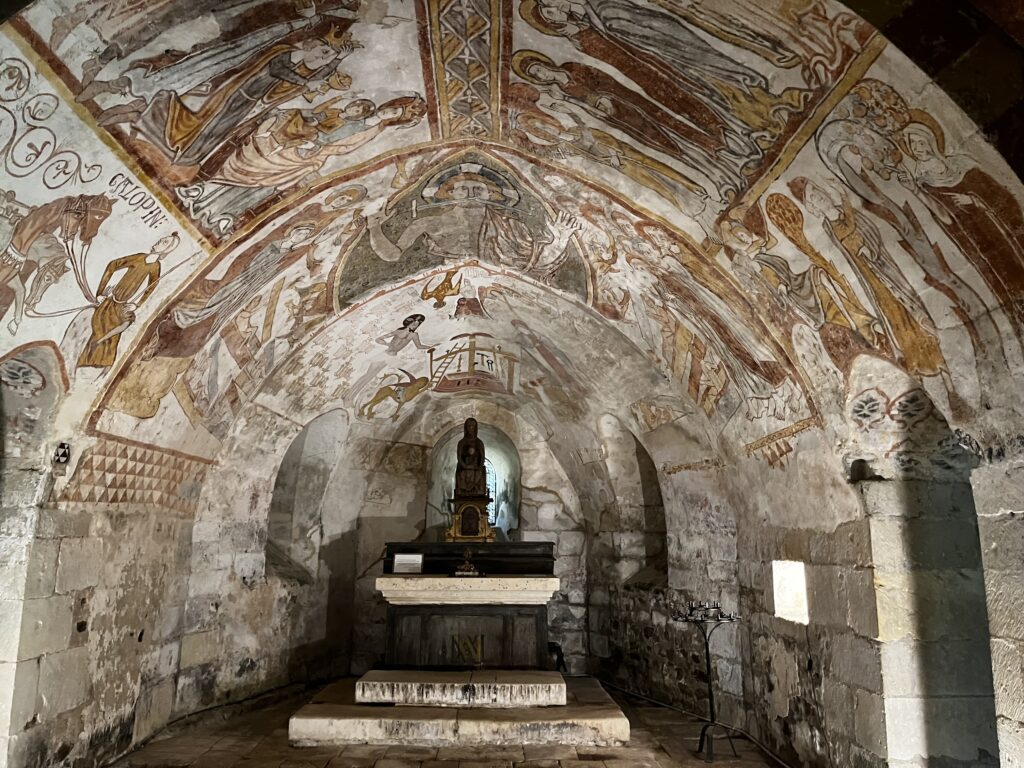
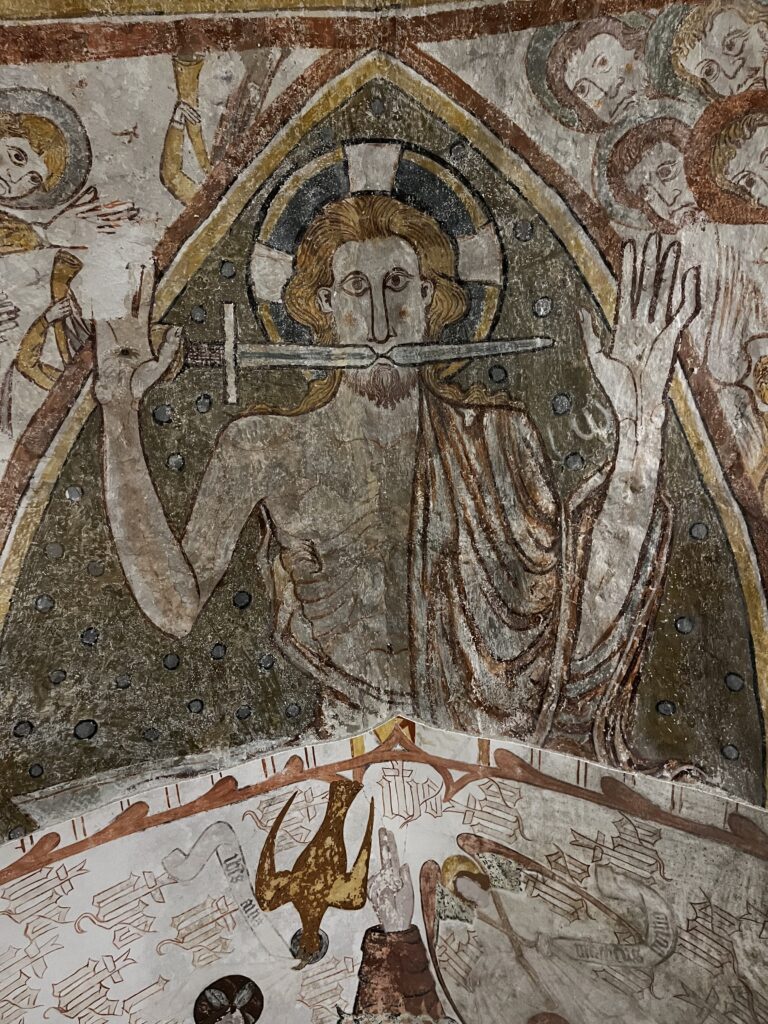
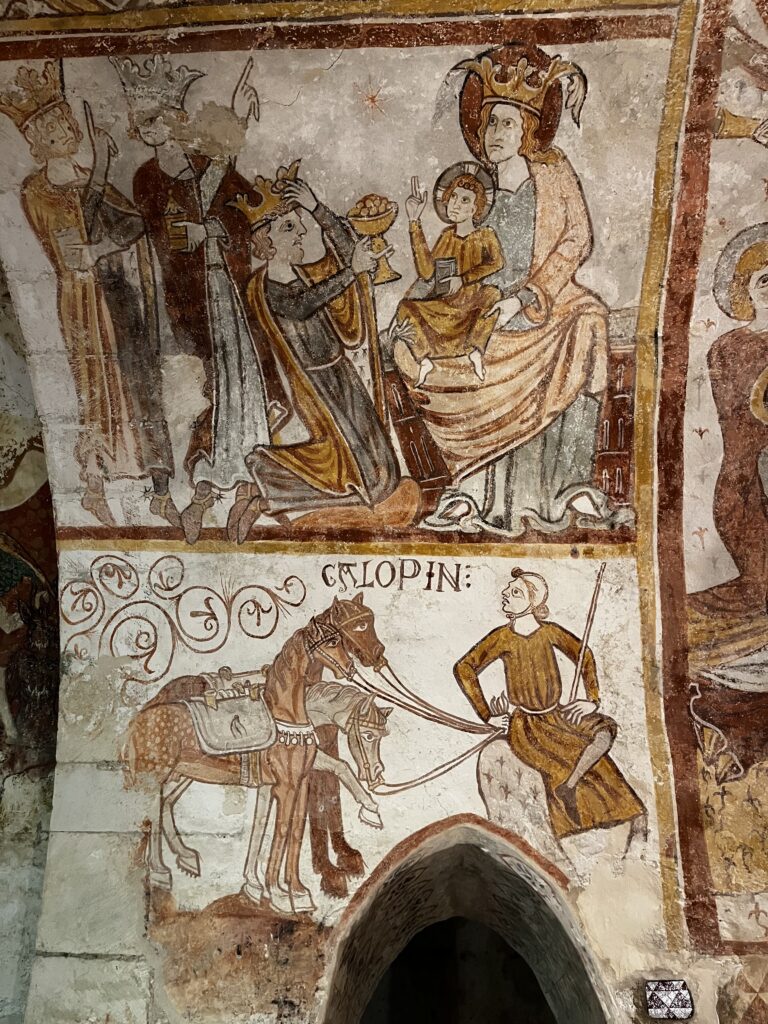
And then I went down into the crypt. Here, the 13th century frescoes survived and were only discovered in about 1960. They had been protected by some sort of plaster paint which had preserved them down here until their discovery. They’re an absolute treasure.
Gargilesse is where the two routes from Vézelay converge. I fully expected to see some additional pilgrims here, but so far no luck.
Date: 21 April 2026
Place: Gargilesse-Dampierre
Today started: Neuvy-Saint-Sépulchre
Today’s Photos!
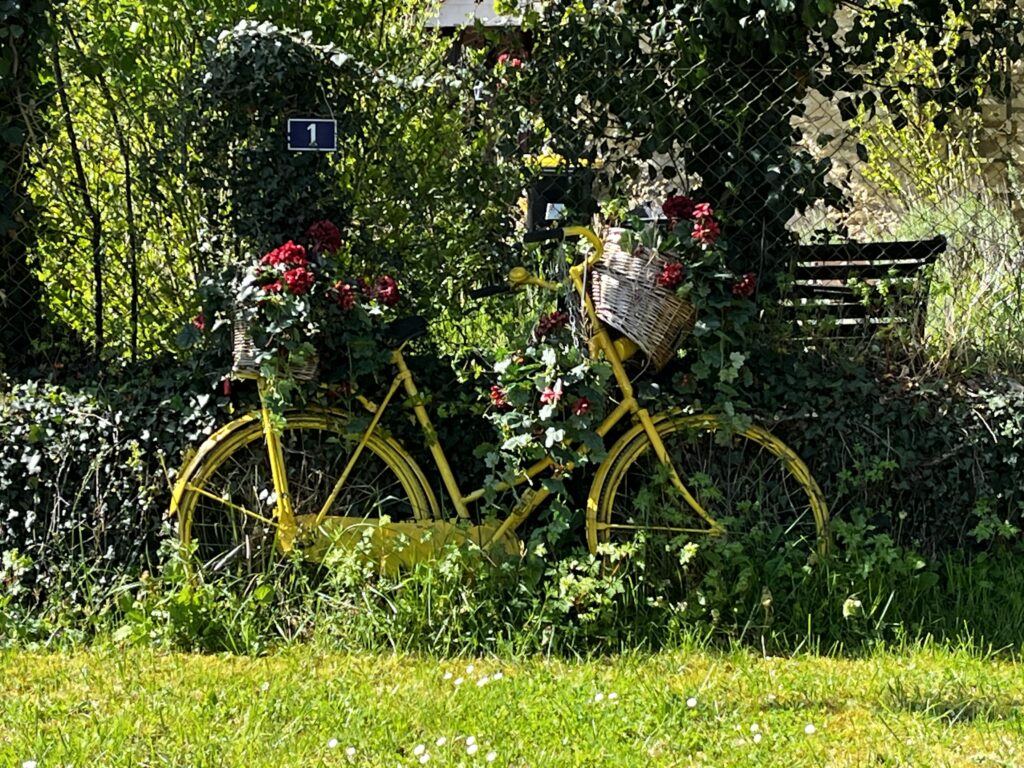
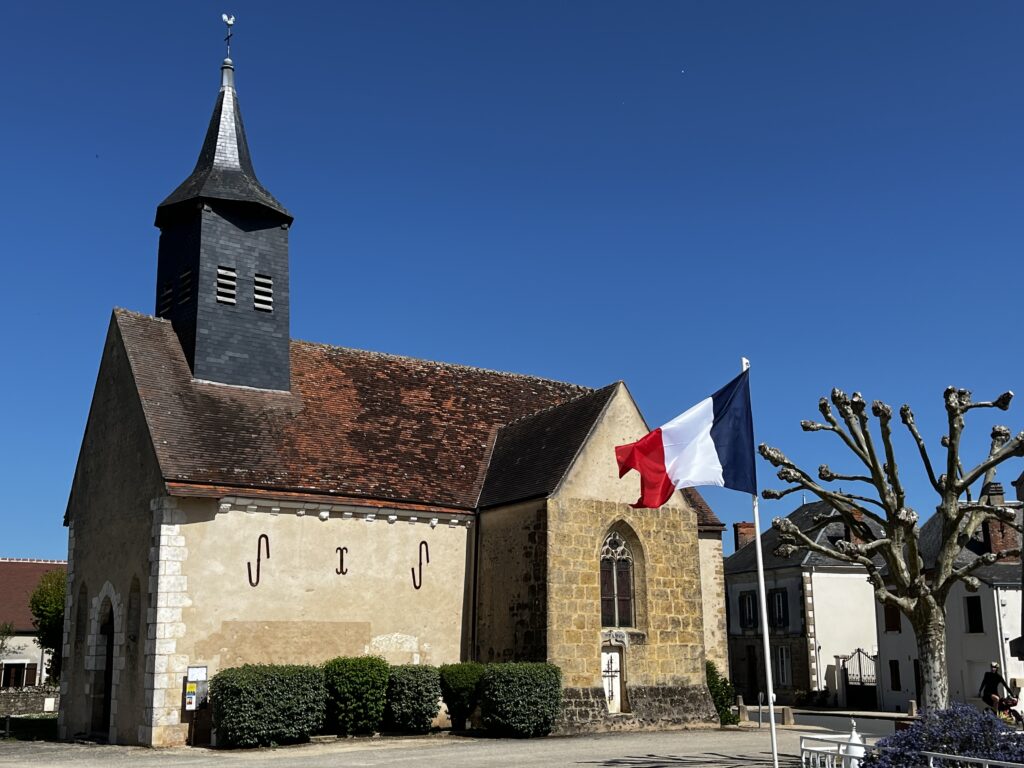
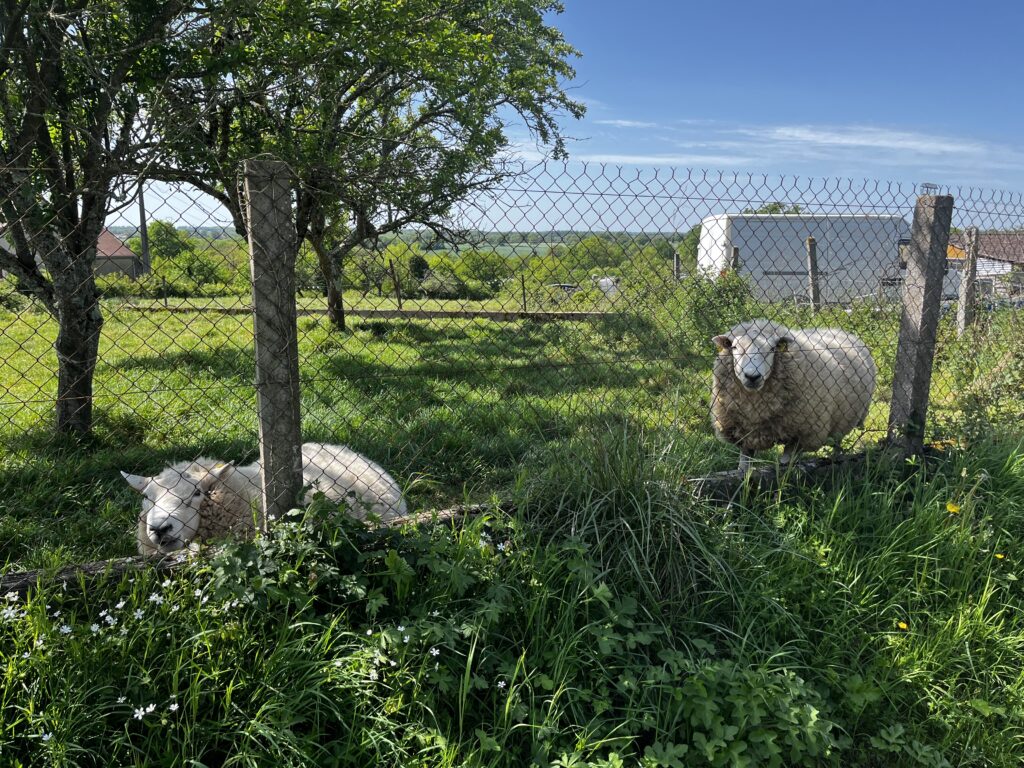
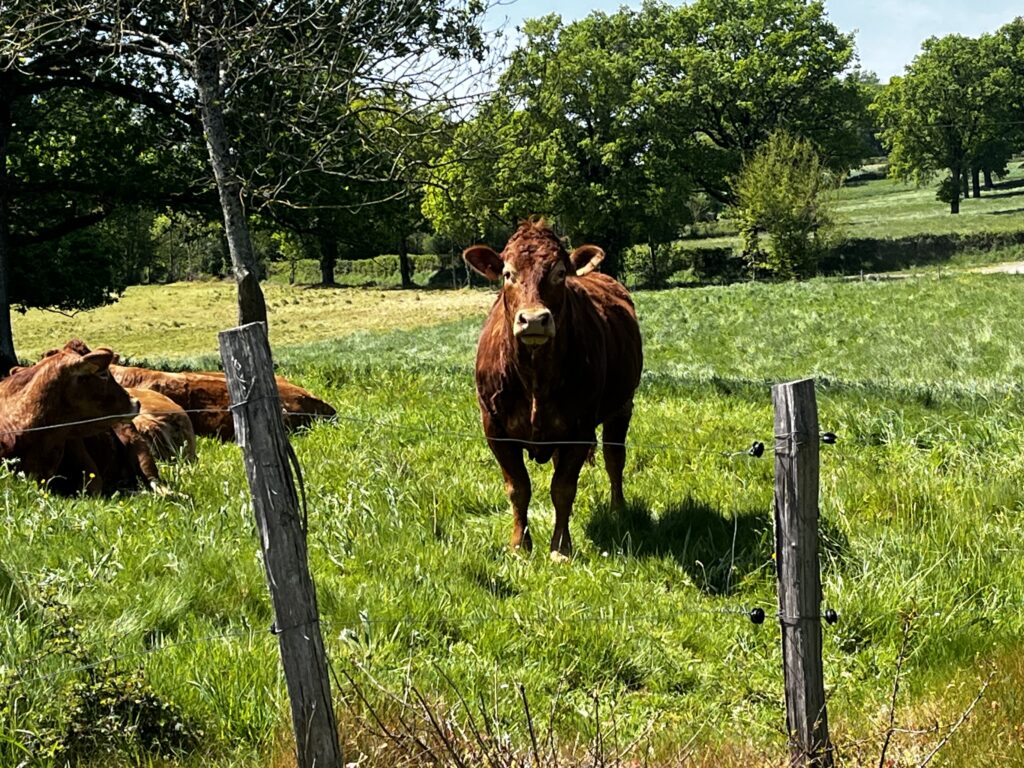
What a gorgeous spring day! Scenery and greenery definitely made it so!